Top 10 Best Under Sink Vent Picks
Best under sink vent solutions matter more than most homeowners realize, especially in tight cabinets where moisture, odors, and trapped air can quietly build up. The best under sink vent options are designed to improve airflow, reduce stale smells, and support a cleaner under-cabinet environment without taking up valuable storage space. As modern homes rely on tighter plumbing layouts and compact sink bases, vented cabinet accessories and airflow systems have become essential for comfort and protection.
Material quality, fan design, filtration, and installation style all play a role in performance, making this category more technical than it first appears. Understanding what separates a simple vent cover from a true ventilation upgrade can reveal why these products matter so much—and the details ahead may change how you evaluate every choice.
Detailed Reviews of the Best Under Sink Vent
1. Oatey 39016 Sure-Vent 1-1/2 in. to 2 in. 160 Branch,

- Complies to ASSE Standard 1050 and 1051
- For use as a secondary vent
- One size approved to handle up to 3" vent pipe

Best for: Code-compliant branch vent replacement.
PVC construction and a 20 DFU branch rating make the Oatey 39016 a practical secondary vent for small DWV runs. Its 1-1/2 inch inlet and 2 inch outlet give it a fit path for common under-sink and branch-line layouts, so a buyer can replace a secondary vent without chasing an unusual adapter setup.
The 1 x 1 x 1 inch body keeps the valve compact in cramped cabinet spaces, where every inch around the trap matters. A 2-port design with a solvent inlet connection and PVC outlet connection simplifies joining it into an existing drain assembly. ASSE 1050 and ASSE 1051 compliance gives you a clear standards match for venting applications, while the one-way air admittance function opens only when negative pressure develops. That matters under a sink because it helps protect trap seals and reduce gurgling on 2 inch and smaller DWV lines without adding a full vent stack.
Pros
- PVC body fits common plumbing layouts
- 1-1/2 inch inlet supports standard branch connections
- 2 inch outlet suits larger vent pipe transitions
- ASSE 1050 and 1051 compliance supports code-aware selection
Cons
- Single valve format means it is only for secondary venting, not a full drain assembly.
Use this when you need a compact AAV for a straightforward under-sink vent replacement. It makes the most sense for buyers matching standard 1-1/2 inch to 2 inch plumbing parts.
| Specification | Details |
|---|---|
| Material | PVC |
| Brand | Oatey |
| Item Dimensions | 1 x 1 x 1 inches |
| Inlet Connection Size | 1.5 inches |
| Inlet Connection Type | Solvent |
| Outlet Connection Type | PVC |
| Number of Ports | 2 |
| Outlet Connection Size | 2 inches |
| Specification Met | ASSE 1050, ASSE 1051 |
I would choose this for a simple under-sink vent fix where the plumbing already uses 1-1/2 inch and 2 inch parts. The compact footprint is the main advantage, especially in tight cabinets. It suits someone who wants a straightforward secondary vent with standard materials and clear compliance references.
2. Fernco AAV Air Admittance Valve Inline Kit Under Sink Vent
No products found.
Best for: Quick inline retrofit for tight cabinets.
An inline tee connector and 4-inch automatic placement above the branch drain make the Fernco AAV kit easy to place in cramped under-sink spaces. The 1-1/2 inch size and white PVC, plastic, and stainless steel mix support a retrofit where you want added venting without opening a wall or rebuilding the drain run.
Fernco lists this kit at 2.15 x 3.25 x 5.66 inches, so it stays small enough for cabinet installs where clearance is limited. The valve is rated for up to 8 DFU on a branch, which fits everyday residential sinks rather than heavier drain loads. A 1.5 inch thread size and tee connector type simplify alignment on a typical under-sink branch. The inline design is the key advantage: it automatically sits 4 inches above the horizontal branch drain, helping support proper placement and reducing the odds of gurgling or slow drainage when the fixture is poorly vented.
Pros
- Inline design helps position the AAV above the branch drain
- 8 DFU branch rating suits everyday residential use
- Tee connector supports straightforward under-sink installation
- Plastic, PVC, and stainless steel construction keeps the assembly practical
Cons
- The 8 DFU branch rating is lower than higher-capacity models, so it is not for larger multi-fixture runs.
This is a good pick for a compact retrofit where the goal is to stop gurgling without running a new vent line. It fits best in a standard cabinet install with a single sink or light branch load.
| Specification | Details |
|---|---|
| Size | 1-1/2 inch |
| Material | Plastic, Polyvinyl Chloride, Stainless Steel |
| Brand | Fernco |
| Color | White |
| Item Dimensions | 2.15 x 3.25 x 5.66 inches |
| Connector Type | Tee |
| Thread Size | 1.5 inch |
| Unit Count | 1 Count |
My read is that this kit makes the most sense when you want a tidy under-sink install with minimal fuss. The inline layout is especially useful if you need the valve placed higher without extra framing work. It is a sensible choice for someone focused on branch venting and simple routing rather than maximum capacity.
3. 2 Pcs 1-1/2 Inch NPT ABS In Line Vent Diaphragm
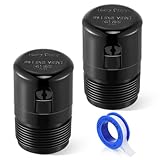
- 1-1/2 Inch NPT ABS In Line Vent: This 1-1/2'' NPT ABS in line vent can replace any secondary plumbing vent which protecting the...
- Durable ABS Construction: Made of durable and strong ABS material, it is durable and able to withstand stress without cracking...
- How it Works: Air admittance valves are operated by gravity; When water and waste move down a drain line, it creates negative air...
Best for: Two-pack for multiple vent replacements.
Two 1-1/2 inch NPT ABS vents in one pack give the Enhon setup immediate coverage for more than one fixture. The compact 2.67 x 1.92 x 1.92 inch size and dual-port layout make it useful when you need a replacement vent that can support lavatory sinks, tubs, showers, or a washing machine line.
ABS construction is the main draw here because it gives the vent a rigid body that resists cracking under plumbing stress. The NPT inlet connection and NPT outlet connection make it easy to match threaded drain components, while the 1.5 inch inlet and outlet sizes keep it centered on common secondary vent work. Its multi-approval list—UPC, IAPMO, ASME, ASTM, NSF, EPA, OSHA, CE, ANSI, ISO, and MSS—gives buyers a long compliance trail to check against project requirements. Since this comes as 2 pieces, it is practical for a bathroom-plus-laundry project or for keeping a spare on hand.
Pros
- 2-piece pack covers more than one install
- ABS body resists cracking under stress
- 1-1/2 inch NPT connections match threaded plumbing
- Wide compliance list supports specification matching
Cons
- The pack format is useful, but each unit is still limited to 1-1/2 inch vent sizing.
Choose this if you want two matching vents for a small remodel or for replacing multiple secondary vents at once. It is especially useful where threaded NPT connections are already in place.
| Specification | Details |
|---|---|
| Material | Acrylonitrile Butadiene Styrene (ABS) |
| Brand | Enhon |
| Item Dimensions | 2.67 x 1.92 x 1.92 inches |
| Inlet Connection Size | 1.5 inches |
| Inlet Connection Type | National Pipe Tapered |
| Outlet Connection Type | NPT |
| Number of Ports | 2 |
| Outlet Connection Size | 1.5 inches |
| Number of Pieces | 2 |
I like this option for buyers who want redundancy or are handling more than one under-sink or bath vent job. The 2-pack format makes planning easier, and the ABS body should suit straightforward replacement work. It is a practical pick if your plumbing is already threaded and you want the same part twice.
4. Oatey Plain In-Line Vent,ABS 39012-1 Each

- Made in China
Best for: Simple ABS vent for kitchens and baths.
Black ABS and a 1.5 inch size make the Oatey 39012 a straightforward replacement for a secondary plumbing vent. Its 6.7 x 5.5 x 2.1 inch body fits into typical cabinet space while giving the buyer a direct way to protect traps in kitchens and bathrooms from siphoning and sewer gas escape.
The reducer connector and 1.5 inch NPT thread size are the details that matter most when you are matching an existing drain setup. Because the vent is a single-piece unit with a black exterior finish, it installs without a complicated assembly path and is easy to identify inside a cabinet. Oatey positions it as a replacement for secondary plumbing vents protecting traps in kitchens and bathrooms, so it fits under-sink applications where the goal is to stop drain-induced siphoning. The ABS material gives it the rigidity expected in a compact plumbing part, and the size works well when space around the trap is limited.
Pros
- ABS material suits common drain retrofit work
- 1.5 inch size fits standard secondary vent applications
- Reducer connector helps tie into existing plumbing
- Single-piece format keeps installation simple
Cons
- It is sized for 1.5 inch threads, so it is not the right choice for 2 inch vent piping.
This is a clean pick for a basic under-sink replacement where the pipe size is already 1.5 inch. It works best for buyers who want a direct swap rather than a multi-part vent kit.
| Specification | Details |
|---|---|
| Size | 1.5 in. |
| Material | Acrylonitrile Butadiene Styrene |
| Brand | Oatey |
| Color | Black |
| Item Dimensions | 6.7 x 5.5 x 2.1 inches |
| Connector Type | Reducer |
| Thread Size | 1.5 inch |
| Thread Type | NPT |
| Number of Pieces | 1 |
I would point to this when the plumbing is already set up for a 1.5 inch threaded replacement and you want a very direct install. The simple one-piece format is appealing for routine under-sink repairs. It is most useful when you care more about fit and function than about extra accessories or a more elaborate kit.
5. Oatey 39245 AAV Plus Trap Pack

- Sure-Vent air admittance valve trap pack
- Use as an alternative to a secondary vent in a DWV system
- Vents up to 20 DFU Branch or 8 DFU Stack
Best for: Higher-capacity trap pack for remodels.
A 20 DFU branch rating and 8 DFU stack rating make the Oatey 39245 AAV Plus Trap Pack useful for more demanding venting layouts. The white, 8 x 7.75 x 2 inch package and included trap pack format give a remodeler a single unit that can support island sinks, remote bathrooms, or other secondary vent situations.
The DFU ratings are the key buyer signal here: up to 20 DFU on a branch and 8 DFU on a stack give this pack more capacity than many small under-sink vents. Oatey also notes that it can eliminate the need for a stack vent in some layouts, which is helpful in remodel work where routing a new vent line is difficult. The unit weighs 10.2 ounces, so it is light enough to handle during installation, and the 8 x 7.75 x 2 inch dimensions show that it is packaged as a compact plumbing solution rather than a bulky assembly. A white finish helps it blend into cleaner cabinet spaces.
Pros
- 20 DFU branch rating handles broader vent loads
- 8 DFU stack rating adds flexibility
- Compact package suits remodel storage and handling
- White finish blends into typical cabinet interiors
Cons
- The product data does not list the adapter material in detail, so buyers may need to confirm compatibility before installation.
This is a strong fit for a remodel where you need a venting solution with more capacity than a basic sink-only valve. It is especially useful for island sinks and remote bathrooms that need a practical alternative to a stack vent.
| Specification | Details |
|---|---|
| Manufacturer | oatey |
| Part Number | 39245 |
| Item Weight | 10.2 ounces |
| Product Dimensions | 8 x 7.75 x 2 inches |
| Color | White |
| Item Package Quantity | 1 |
From a practical standpoint, I’d choose this when the venting job is part of a remodel and the layout is less forgiving. The higher DFU limits make it more versatile than a basic under-sink valve. If you need one pack to cover a more demanding branch or stack situation, this is the one I’d shortlist.
6. HYDRO MASTER 1-1/2″ NPT ABS In-Line Air Vent, Plumbing Drain

- ABS construction
- Helps prevent sewer gas from entering your home
- 1-1/2-Inch NPT In-Line Vent
Best for: Ultra-light inline vent for tight runs.
ABS construction and a 1-1/2 inch NPT connection make the HYDRO MASTER inline air vent a simple replacement for sink, tub, or shower drainage. Its 1.9 x 1.9 x 2.7 inch body and 27.22 g weight let it fit where a compact under-sink part is easier to route than a larger vent assembly.
This model keeps the design minimal, with a black ABS exterior and a 1-1/2 inch thread size that matches common residential drain work. The NPT thread type and NPT connector type matter because they support threaded installation rather than a glued or specialty interface. At 27.22 g, it is one of the lighter options in the lineup, which makes handling simple during a quick plumbing swap. HYDRO MASTER positions it for sinks, tubs, and showers, so it is not limited to one fixture type. For a buyer focused on a compact under-sink vent, the small footprint is the main advantage when cabinet clearance is tight.
Pros
- Very small footprint suits tight cabinet spaces
- 1-1/2 inch NPT connection matches common plumbing
- ABS material offers a rigid vent body
- Light 27.22 g weight makes handling easy
Cons
- The product data does not list a DFU rating, so capacity planning depends on the fixture layout.
Pick this if you want a compact vent for a straightforward sink or bath drain path. It is best when size and simple threaded compatibility matter more than extra capacity details.
| Specification | Details |
|---|---|
| Size | 1.5 inches |
| Material | Acrylonitrile Butadiene Styrene |
| Brand | HYDRO MASTER |
| Color | Black |
| Item Dimensions | 1.9 x 1.9 x 2.7 inches |
| Connector Type | NPT Thread |
| Thread Size | 1-1/2 Inch |
| Thread Type | NPT |
| Item Weight | 27.22 g |
I’d look at this one for a small, direct vent replacement where the cabinet space is limited and the plumbing is already threaded. Its light weight and tiny footprint are the selling points. It should satisfy buyers who want a no-frills part for basic under-sink or bath venting.
7. Tuuber Air Admittance Valve Trap Assembly Kit with 1-1/2 inch
No products found.
Best for: Trap assembly kit for tubular drains.
A 1-1/2 inch tubular trap assembly and quick AAV install format make the Tuuber kit aimed at simple sink vent work. The 11 x 11 x 3 inch package and 15-ounce weight indicate a more complete assembly approach, which helps when you want a vent and trap solution for kitchen or bathroom sinks in one kit.
The kit is set up for tubular drain applications, and that matters because many under-sink installs rely on that style of connection rather than a standard threaded vent alone. Its 1.5 inch size and 1-1/2 inch connector type keep it aligned with common sink plumbing, while the UN thread type and brass exterior finish give the assembly a mixed-material hardware feel. Tuuber also describes it as preventing sewer gas and odors from escaping, which is the core need in a cabinet under a sink. Because it includes a trap assembly, it is more comprehensive than a standalone vent and may suit a buyer doing a broader sink rebuild.
Pros
- Trap assembly adds more than a bare vent
- 1-1/2 inch connector fits tubular drain applications
- Quick install format suits sink replacements
- 15-ounce weight reflects a more complete assembly
Cons
- The assembly format is less minimal than a standalone valve, so it takes more room under the sink.
This makes sense for a sink project where you want the trap and vent approach handled together. It is most useful for buyers working on tubular kitchen or bathroom drain plumbing.
| Specification | Details |
|---|---|
| Size | 1.5 inches |
| Material | Plastic |
| Brand | TUUBER |
| Color | White |
| Item Dimensions | 11 x 11 x 3 inches |
| Connector Type | 1-1/2 inch for use in tubular drain applications. |
| Thread Size | 1.5 inches |
| Thread Type | UN |
| Item Weight | 15 ounces |
I would pick this if the under-sink job is really a trap-and-vent refresh rather than a simple valve swap. The assembly style is appealing when you want fewer separate parts to source. It suits someone comfortable working with tubular drain plumbing and looking for a more complete kit.
8. Studor 20341 Mini-Vent Air Admittance Valve, 1-1/2 to 2 in,

- Compact air admittance valve with PVC adapter
- Ideal for a single fixture or group of fixtures; capacity of 160 DFUs (drain fixture units) on a branch and 24 DFUs on a stack
- Creates ventilation that prevents the loss of water seals in traps; uses gravity to automatically close seal and prevent...
Best for: High-capacity compact vent valve.
A 160 DFU branch capacity and PVC adapter make the Studor 20341 Mini-Vent a strong choice for more demanding under-sink venting. Its 3.5 x 3.5 x 6 inch size keeps the valve compact, while the 1-1/2 and 2 inch piping fit lets a buyer use it across common drain layouts without changing the overall vent concept.
The temperature rating of -40°F to 150°F gives this valve a wide service range, which matters if the plumbing experiences cold conditions or warm drain flow. Studor lists compliance with ANSI/ASSE 1050 and 1051, so buyers can compare it against code-oriented specs more easily. The single-port layout and barbed inlet and outlet connections make the part feel purpose-built for one venting point rather than a multi-branch assembly. Its gravity-closed seal is meant to prevent circulation of bathroom or drain odors and protect trap water seals, which is exactly the under-sink job most buyers are trying to solve. The 160 DFU branch rating is especially useful when a fixture group needs extra headroom.
Pros
- 160 DFU branch capacity supports heavier vent loads
- Fits 1-1/2 and 2 inch piping
- Temperature rating spans cold and warm conditions
- ANSI/ASSE compliance supports code matching
Cons
- The single-port barbed connection is less flexible than a multi-port adapter setup.
This is the pick for buyers who want a compact valve with a notably high branch rating. It suits a serious under-sink or fixture-group venting need where capacity matters more than a minimal parts count.
| Specification | Details |
|---|---|
| Material | Polyvinyl Chloride (PVC) |
| Brand | Studor |
| Item Dimensions | 3.5 x 3.5 x 6 inches |
| Inlet Connection Type | Barb |
| Outlet Connection Type | Barb |
| Number of Ports | 1 |
| Outlet Connection Size | 2 inches |
| Number of Packs | 1 |
My view is that this is the most compelling option for buyers who need a compact valve but want generous branch capacity. It should satisfy someone planning around one fixture or a small group of fixtures. If the goal is a cleaner venting solution with strong spec headroom, this one stands out on paper.
9. Oatey Sure-Vent 1-1/2 In. Air Admittance Valve Installation Kit –

- Sure-Vent air admittance valve installation pack
- Use as an alternative to a secondary vent in a DWV system
- Vents up to 20 DFU Branch or 8 DFU Stack
Best for: Installation kit with debris protection.
A protective sleeve and 1-1/2 inch to 2 inch pipe support make the Oatey Sure-Vent installation kit useful for buyers who want a more guided vent install. The white PVC body and 4.5 x 13.5 x 6.5 inch dimensions give the kit a clear under-sink role where grip during assembly and debris protection both matter.
This kit is rated for up to 20 DFU on a branch and 8 DFU on a stack, which gives it the same higher-capacity profile that remodelers often want. Oatey states that the protective sleeve improves grip during installation and keeps the valve free from debris, so the buyer gets a more forgiving install process as well as cleaner long-term operation. The valve also has 100% functional testing at 1/4 in. H2O and 30 in. H2O, which is a concrete indicator of how the unit is checked before use. Since it is approved for 1-1/2 inch to 2 inch vent pipe, it fits a broad set of under-sink replacement scenarios.
Pros
- Protective sleeve helps with grip and debris control
- 20 DFU branch rating handles demanding venting
- 1-1/2 to 2 inch pipe range adds flexibility
- Functional testing provides a clear quality check
Cons
- The kit has a larger package size, so it is less compact than a bare valve for very tight cabinets.
This is a smart choice when you want both installation help and strong vent capacity in one kit. It works best for buyers fitting a standard under-sink job into a broader DWV plan.
| Specification | Details |
|---|---|
| Material | PVC |
| Brand | Oatey |
| Item Dimensions | 4.5 x 13.5 x 6.5 inches |
| Exterior Finish | White |
| Inlet Connection Size | 2 inches |
| Inlet Connection Type | Flange |
| Outlet Connection Type | Flange |
| Outlet Connection Size | 1.5 inches |
| Number of Ports | 20 |
I’d recommend this to a buyer who wants a vent kit rather than just the valve itself. The protective sleeve and tested operation are the parts that make it feel more installation-friendly. It is especially appealing if you need a 1-1/2 inch to 2 inch solution and value a more guided setup.
10. Studor 20346 Redi-Vent Air Admittance Valve with PVC Adapter, 1-1/2-

- Compact air admittance valve with PVC adapter; ideal for a single fixture or group of fixtures up to 20 DFUs (drain fixture units...
- Creates ventilation that prevents the loss of water seal in trap
- Uses gravity to automatically close seal and prevent circulation of unpleasant bathroom or drain odors
Best for: Compact valve for single-fixture venting.
PVC construction and a 20 DFU branch rating give the Studor 20346 Redi-Vent a compact profile with serious under-sink capacity. At 2.65 x 2.65 x 3.6 inches, it stays small enough for tight cabinet installs, and the PVC adapter lets a buyer connect it to 1-1/2 inch or 2 inch piping without a bulky assembly.
The unit is designed for a single fixture or a group of fixtures up to 20 DFUs on a branch, which makes it flexible for both small and slightly broader under-sink layouts. Its gravity-closed seal helps prevent the loss of water seal in the trap, so the buyer gets direct protection against drain odors moving back into the room. A temperature range from -40°F to 150°F adds practical coverage for varied plumbing environments, and ANSI/ASSE 1050 and 1051 compliance gives it a familiar standards footing. The adapter and NPT thread type are useful for buyers who want a straightforward connection path without extra parts.
Pros
- 20 DFU branch capacity supports multiple fixture layouts
- Compact 2.65 inch square footprint fits tight spaces
- PVC adapter supports 1-1/2 and 2 inch piping
- Gravity-closed seal helps protect trap water seals
Cons
- The product is a single piece, so it does not include extra install hardware beyond the valve and adapter.
This is a strong under-sink vent choice when you want compact size without giving up capacity. It is especially useful for buyers who need one valve for a single fixture or a small fixture group.
| Specification | Details |
|---|---|
| Size | 1/4 Pint (4 fl oz) |
| Material | Polyvinyl Chloride |
| Brand | Studor |
| Color | White |
| Item Dimensions | 2.65 x 2.65 x 3.6 inches |
| Connector Type | Adapter |
| Thread Size | 1-1/2-inch, 2-inch |
| Thread Type | NPT |
| Number of Pieces | 1 |
I’d lean toward this when the cabinet is tight but the venting demand is not trivial. The compact size and 20 DFU branch rating give it a nice balance of fit and capacity. It should please a buyer who wants a tidy, standards-based vent for a single fixture or a small group.
Quick Comparison Table of Best Under Sink Vent Options
| Product Name | Material | Size | Capacity | Best For | Check Price |
|---|---|---|---|---|---|
| Oatey 39016 Sure-Vent 1-1/2 in. to | PVC | 1.5-2 in. | 20 DFU | Secondary venting | Check Price |
| Fernco AAV Air Admittance Valve Inline | PVC | 1.5 in. | Inline kit | Under-sink installs | Check Price |
| 2 Pcs 1-1/2 Inch NPT ABS | ABS | 1.5 in. | Secondary vent | Sink traps | Check Price |
| Oatey Plain In-Line Vent,ABS 39012-1 Each | ABS | 1.5 in. | Secondary vent | Kitchen baths | Check Price |
| Oatey 39245 AAV Plus Trap Pack | PVC | Trap pack | 20 DFU | Island sinks | Check Price |
| HYDRO MASTER 1-1/2″ NPT ABS In-Line | ABS | 1.5 in. | Inline vent | Sink venting | Check Price |
| Tuuber Air Admittance Valve Trap Assembly | Plastic | 1.5 in. | Trap assembly | Quick installs | Check Price |
| Studor 20341 Mini-Vent Air Admittance Valve | PVC | 1.5-2 in. | 160 DFU | Single fixtures | Check Price |
| Oatey Sure-Vent 1-1/2 In. Air Admittance | PVC | 1.5-2 in. | 20 DFU | Remodel jobs | Check Price |
| Studor 20346 Redi-Vent Air Admittance Valve | PVC | 1.5-2 in. | 20 DFU | Single fixtures | Check Price |
How to Choose the Right best under sink vent
Airflow and odor control
Choose the vent opening and airflow rating to match the size of the cabinet, not just the sink opening. A small under-sink space needs a compact vent that can move air steadily without creating dead spots, while a larger base cabinet needs a wider opening or higher airflow capacity to clear lingering odors fast. Good picks pair strong odor reduction with a balanced intake and exhaust path; weak ones feel restrictive, leave smells behind, or only freshen the air right around the vent.
For most buyers, choose the largest airflow rating that still fits your cabinet layout, especially for deep or fully packed sink bases.
| Cabinet size | Best vent type |
|---|---|
| Small base cabinet | Compact vent with moderate airflow |
| Medium base cabinet | Standard vent with balanced airflow |
| Large or crowded cabinet | Wide-opening vent with higher airflow |
Fit and installation requirements
Measure the sink base before buying and check the full clearance around the trap, supply lines, disposer, and any pull-out trays. The right vent fits without forcing you to reroute plumbing or lose usable storage. A good unit works with common cabinet widths and gives enough depth clearance for the mounting hardware; a poor fit crowds the trap, blocks access, or sits too close to moving parts.
Choose a low-profile model for tight cabinets, a surface-mount option for easier alignment, and a through-panel style only when you have a clean, open spot for the cutout and fasteners.
| Installation style | Best for |
|---|---|
| Low-profile mount | Tight cabinet clearances |
| Surface mount | Simple installs with easy access |
| Through-panel mount | Open cabinet walls and fixed layouts |
Moisture resistance and material quality
In damp undersink spaces, material quality matters more than flashy extras. Choose corrosion-resistant parts such as stainless steel, coated metal, or high-grade sealed polymers, and check that screws, brackets, and fasteners use the same rust-resistant standard. Good seals stay tight after repeated exposure to condensation and cleaning splashes, and a quality finish resists swelling, peeling, and discoloration.
Weak materials show early rust, warped housings, or loose joints. For humid kitchens or laundry sinks, pick the most sealed, corrosion-resistant construction you can find, with smooth edges and a finish that wipes clean without catching moisture.
| Material | Best for |
|---|---|
| Stainless steel | Maximum corrosion resistance |
| Coated metal | Balanced strength and moisture protection |
| Sealed polymer | Lightweight use in damp cabinets |
Noise, maintenance, and ease of use
For daily use, choose a vent that runs quietly, opens and closes smoothly, and has parts you can clean without removing the whole unit. A good model keeps airflow changes soft and controlled instead of rattling or whistling, and it uses removable grilles, filters, or covers that wipe down easily. Maintenance should be simple: clear access, washable surfaces, and a filter schedule that fits your routine.
A poor choice traps grime in seams, needs awkward disassembly, or becomes noisy as dust builds up. Pick the quietest model with washable or easy-swap parts if you want the least upkeep and the most consistent performance.
- Look for removable covers or grilles
- Choose smooth, nonporous surfaces
- Prefer washable or simple swap-in filters
- Avoid tight seams that trap residue
Safety, efficiency, and longterm value
For long-term value, focus on efficient operation, safe placement, and solid warranty support. A good under-sink vent uses low power for continuous use, keeps electrical parts away from splash zones, and leaves enough clearance from cleaners, leaks, and plumbing joints. Strong build quality shows in firm mounting points, sealed wiring, and hardware that does not loosen over time.
Weak units waste energy, need frequent attention, or fail early in damp conditions. Choose an efficient model with protected components and a clear warranty if you want the best balance of safety, durability, and everyday reliability.
Which Should You Choose?
- If you need a code-conscious replacement for an existing secondary vent on a 1-1/2 in. to 2 in. line, choose an air admittance valve that is rated for up to 20 DFU and approved for larger vent-pipe compatibility.
- If your sink is under a tight cabinet and you want the easiest install, choose an inline kit that automatically sets the valve above the horizontal drain for proper placement.
- If you’re replacing a basic secondary vent on a standard lavatory, tub, or shower drain, choose a 1-1/2 in. in-line vent with ABS construction and an NPT connection.
- If you want one vent to handle a single fixture or a small group of fixtures in a compact space, choose a compact AAV with PVC adapter rated around 160 DFUs on a branch.
Quick Best Under Sink Vent Buying Checklist
- Measure the cabinet space to confirm the vent fits around pipes, disposal units, and stored items.
- Check airflow performance to ensure it can move stale air and lingering moisture out of the cabinet.
- Look for moisture-resistant materials that hold up in a damp under-sink environment without rusting or warping.
- Review installation requirements so the unit matches your plumbing layout and can be mounted securely.
- Choose a low-maintenance design with easy access for cleaning, filter changes, or basic upkeep.
- Compare safety and warranty coverage to get dependable performance and better long-term value.
How an Under Sink Vent Balances Drain Pressure
An under sink vent helps a drain line move wastewater smoothly by reducing air pressure changes inside the pipe. When water flows down a trap and into the branch drain, it can create a vacuum that slows drainage or pulls water out of the trap. The vent opens the system to air so the pressure stays balanced, allowing water to leave without gurgling or backing up.
This is especially useful under sinks where the drain path is short, compact, and often hard to vent through the wall. A properly working vent also helps protect the water seal in the trap, which is important for controlling sewer gases.
In everyday use, the difference is usually a faster, quieter drain and fewer unpleasant odors.
Common Under Sink Vent Designs and Where They Fit
Under sink venting is not one-size-fits-all. Some setups use a mechanical air admittance valve, which opens when negative pressure forms and closes again afterward. Others rely on a conventional vent pipe that connects to the building’s venting system.
In compact installations, a loop vent or island-style arrangement may be used to satisfy layout constraints. The right design depends on local code, cabinet space, and how the sink drain connects to the rest of the plumbing.
Mechanical options are often favored for retrofit work because they are easier to place inside an existing cabinet. Traditional vents, on the other hand, are passive and can last a long time with little attention. The table below compares the main types at a glance.
| Type | Best for | Key trait |
|---|---|---|
| Air admittance valve | Retrofits and tight cabinets | Opens only under negative pressure |
| Conventional vent pipe | New plumbing runs | Connects to the main vent system |
| Island vent | Isolated sink locations | Uses a specialized looped route |
| Loop vent | Limited wall access | Routes air through a raised path |
Installation Details That Affect Performance
Even a good vent can underperform if it is installed in the wrong position. The vent must be placed high enough to stay above the trap arm’s water line, and the drain slope needs to remain consistent so wastewater can move without pooling. Joints should be sealed securely, but the vent opening itself must remain unobstructed.
For mechanical valves, mounting orientation matters because the internal diaphragm or spring mechanism needs to move freely. It is also important to leave enough room in the cabinet for future service, since some vent devices may need replacement or inspection.
Before tightening anything permanently, confirm that the layout allows the sink, trap, trap arm, and vent to align without forcing the pipe into a strained angle. Good fit and alignment are just as important as the vent component itself.
Maintenance and Troubleshooting for Reliable Venting
Under sink vents usually need little care, but a quick inspection can prevent performance problems. Check for loose fittings, mineral buildup, moisture around joints, or debris near the vent opening. If a mechanical valve starts to stick, it may cause slow draining, trap gurgling, or sewer odors.
Cleaning around the valve and verifying that it is installed upright can solve some issues, but worn internal parts may need replacement. If a sink drains slowly even after the trap is clear, the problem may be in the vent path rather than the drain itself.
Listening for bubbling sounds and checking whether nearby fixtures behave normally can help narrow it down. Regular cabinet checks are worthwhile because leaks or blocked airflow are often easier to fix early.
Mistakes That Can Reduce Vent Effectiveness
Several common errors can make an under sink vent seem unreliable. One frequent mistake is placing the vent too low, where it can be affected by standing water in the drain line. Another is using the wrong pipe size or reducing the line in a way that limits airflow.
Some installations also fail because the vent is hidden behind stored items and later blocked by cleaning supplies or bins. For mechanical valves, installing the unit in a sealed compartment with no air circulation can create performance issues over time.
It is also a mistake to assume any noisy drain needs a larger vent; sometimes the real issue is a clog, an undersized trap arm, or an incorrect slope. A careful layout avoids most of these problems before they start.
Frequently Asked Questions (FAQs)
What Does An Under Sink Vent Do?
An under sink vent helps move stale air and moisture out of the cabinet, improving airflow around plumbing and stored items. For the best under sink vent, look for a design that fits tightly in the cabinet while still allowing continuous ventilation and odor control.
How Do I Know If A Under Sink Vent Will Fit My Cabinet?
A under sink vent fits your cabinet when its size, mounting style, and clearance match the space around pipes, traps, and storage bins. Measure height, width, and depth first, then compare those numbers with the unit’s installation requirements before buying.
Which Materials Are Best For A Under Sink Vent?
A under sink vent made from corrosion-resistant plastic or coated metal usually performs best in damp cabinets. These materials resist rust, warping, and odor buildup, which matters because the under-sink area often has humidity, cleaning products, and occasional splashes.
How Important Is Airflow Capacity In A Under Sink Vent?
Airflow capacity is crucial in a under sink vent because it determines how quickly the cabinet exchanges stale air for fresher air. Choose a model sized for your cabinet volume so it can handle trapped moisture and odors without being underpowered.
Can A Under Sink Vent Help With Odors Under The Sink?
Yes, a under sink vent can help reduce odors under the sink by improving circulation and preventing stagnant air from building up. It works best when paired with a clean cabinet, dry plumbing, and a design that provides steady airflow instead of intermittent bursts.
Is A Under Sink Vent Hard To Install?
A under sink vent is often straightforward to install if it uses a simple mount and clear hardware instructions. The main challenge is working around pipes, disposals, and limited cabinet space, so a compact design usually makes installation easier and cleaner.
What Should I Look For In A High-Quality Under Sink Vent?
A high-quality under sink vent should combine durable materials, strong airflow, easy maintenance, and a secure fit. Look for features like moisture resistance, simple cleaning access, and a design that works well in tight cabinets without blocking stored items.
Final Suggestions
Choosing the best under sink vent can improve cabinet airflow, reduce trapped moisture, and help keep unpleasant odors from building up. The right model also offers a practical fit, durable construction, and easy upkeep for everyday use. With the right balance of performance and convenience, you can make your under-sink space cleaner and more functional moving forward.
