Can I Juice Without a Juicer
You might think juicing requires a specialized machine, but you can actually juice without a juicer by using simple kitchen tools you already have. By applying a few manual techniques and using items like a fine mesh strainer or cheesecloth, you can enjoy fresh juice without investing in a juicer.
Understanding the best methods and tools will help you get the most out of your fruits and vegetables. There are some key tips to keep in mind that make the process easier and more efficient. With a little practice, you’ll be able to create delicious, nutritious juices right at home.
Key Takeaways
- You can juice without a juicer using hand tools like a fine mesh strainer, cheesecloth, sharp knife, and sturdy spoon.
- Manually press citrus fruits by cutting them in half and squeezing with your hands or using a fork or spoon to increase juice yield.
- Blend fruits or vegetables with water, then strain the mixture through cheesecloth or a fine mesh sieve to separate juice from pulp.
- Rolling fruits on a countertop before juicing and applying steady pressure helps release more juice and reduces bitterness.
- Always wash produce thoroughly, use clean tools, and store fresh juice in airtight containers refrigerated at or below 40°F (4°C).
Essential Tools for Juicing Without a Juicer
Creativity plays a key role when you want to juice without a traditional juicer. You can rely on common hand tools and kitchen gear to extract juice efficiently. For example, a fine mesh strainer or cheesecloth helps separate pulp from liquid, ensuring smooth juice.
A sharp knife and cutting board are essential for chopping fruits and vegetables into manageable pieces. A sturdy spoon or muddler aids in pressing and mashing produce to release their juices. Additionally, a bowl or container is necessary to collect the extracted juice.
These readily available items make it possible to juice at home without specialized equipment. Using hand tools reduces costs and allows you to enjoy fresh juice with minimal preparation and cleanup.
Hand Juicing Techniques for Fresh Juice
You can extract fresh juice by manually pressing citrus fruits with your hands or using a simple tool like a fork or spoon to break down the pulp. Applying steady pressure helps release the juice efficiently without needing specialized equipment.
For other fruits, wrapping the pulp in cheesecloth and squeezing it allows you to collect juice cleanly and effectively.
Manual Citrus Pressing
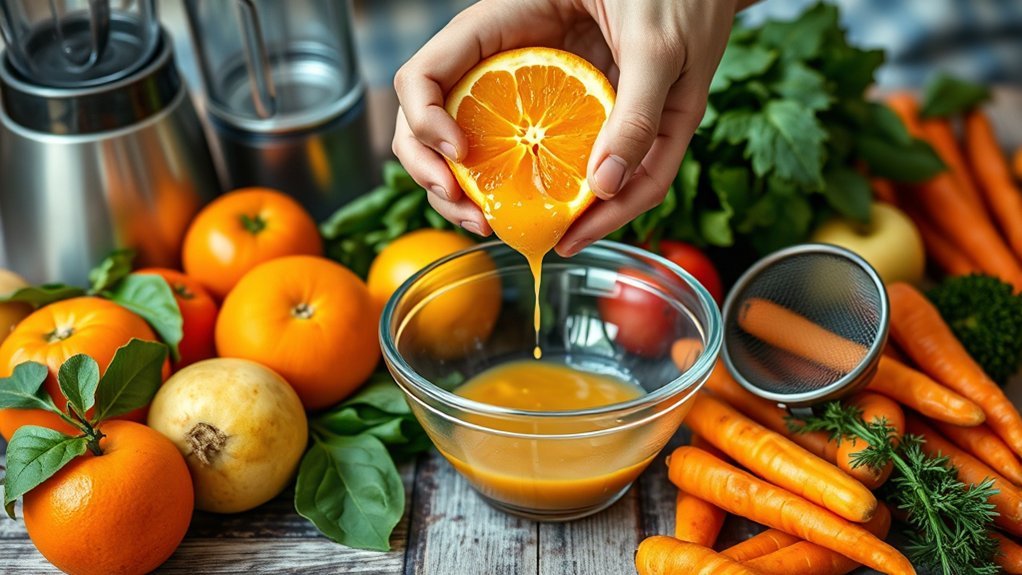
How can you extract fresh juice without a juicer? Manual citrus pressing offers a straightforward, effective method. Start by cutting your fruit, such as lemons, limes, or oranges, in half.
Hold one half firmly in your hand, then squeeze it over a bowl or glass. Applying steady pressure releases juice while minimizing bitterness from the pith.
For added efficiency, roll the fruit on a countertop beforehand to loosen juice inside. This technique demands no special tools beyond your hands, making it accessible anytime.
Research shows manual citrus pressing preserves flavor and nutrients better than mechanical juicers that generate heat. By mastering manual citrus pressing, you maintain control over extraction and yield fresh juice quickly.
Keep your focus on consistent pressure and avoid over-squeezing to prevent bitterness.
Using Forks And Spoons
Manual citrus pressing relies solely on hand strength, but when dealing with fruits that are harder to squeeze, tools like forks and spoons can enhance juice extraction. You can use a fork to pierce and twist inside the fruit, breaking cell walls to release more juice.
A spoon helps you scoop and press pulp thoroughly, improving juice yield and flavor balance. These kitchen hacks are simple yet effective alternatives when you don’t have a juicer.
| Tool | Best For | Benefit |
|---|---|---|
| Fork | Lemons, limes | Breaks internal fibers |
| Spoon | Oranges, grapefruits | Scoops and presses pulp |
| Both | Mixed fruits | Increases juice yield |
Try these methods to maximize freshness and juice output.
Cheesecloth Juice Extraction
Although juicers simplify the process, extracting juice with a cheesecloth is a highly effective hand method that preserves freshness and maximizes yield. To start, finely chop or crush your fruits and vegetables, then place the pulp into a clean cheesecloth.
Fold the cloth tightly and twist it while applying firm pressure to squeeze out the juice. This method respects juicing ethics by minimizing waste and avoiding electricity use, aligning with eco-conscious practices.
Additionally, the leftover pulp can support wildlife hydration by serving as natural food or water sources for animals, reducing environmental impact. Cheesecloth extraction lets you control the juicing process, ensuring fresh, nutrient-rich juice without needing expensive equipment, making it an excellent choice for sustainable living.
Using a Blender for Homemade Juice
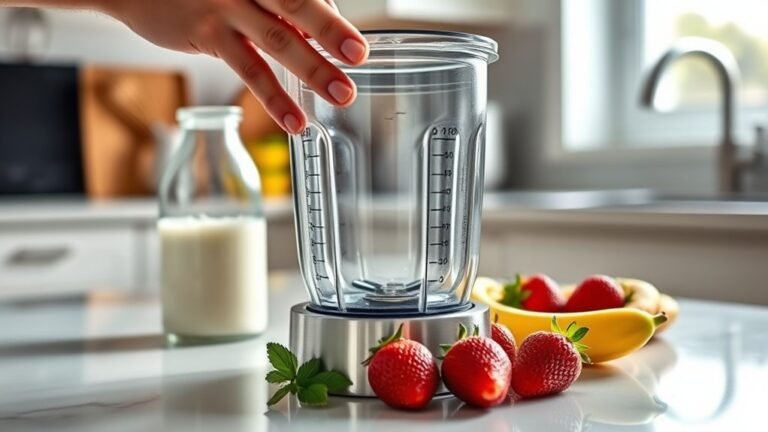
You can use a blender to make fresh juice by blending fruits and vegetables with a little water for smooth consistency. To get clear juice, strain the mixture through a fine mesh sieve or cheesecloth to separate the pulp effectively.
This method preserves most nutrients while giving you control over texture and thickness.
Blender Juice Preparation Tips
How can you achieve smooth, nutritious juice without a traditional juicer? Start by chopping your fruits and vegetables into smaller pieces to help your blender work efficiently. Follow proper juicing etiquette by washing all produce thoroughly to reduce bacteria.
Always use a high-speed blender for better pulp breakdown, but avoid overfilling to prevent spills. For kitchen safety, ensure your blender lid is secure before starting to avoid accidents.
Blend in pulses initially, then gradually increase speed for a smoother texture. Adding a small amount of water can ease blending. Remember to clean your blender immediately after use to prevent residue buildup and cross-contamination.
These tips help you make fresh juice safely and effectively, even without specialized equipment.
Straining Juice Effectively
Why does straining matter when making juice with a blender? Unlike a juicer, a blender pulverizes whole fruits and veggies, creating a thick pulp that can affect texture and taste. Straining ensures you get smooth juice by separating liquid from solids.
To strain effectively, start with a breadth first approach: pour the blended mixture through a fine mesh strainer or cheesecloth, pressing gently to extract maximum juice without forcing pulp through. Think of it like a jam session—you want each ingredient’s flavor to shine clearly, not get lost in heaviness.
Straining also helps reduce fiber, making the juice easier to digest and more enjoyable. By mastering this step, you’ll produce fresh, smooth juice without needing specialized equipment.
Using a Food Processor to Extract Juice Without a Juicer
Wondering if a food processor can stand in for a juicer? Yes, it can, but with some limits. A food processor chops fruits and vegetables finely, breaking cell walls to release juice. However, it doesn’t separate juice from pulp like a juicer does.
To extract juice, you’ll need to pulse ingredients until finely ground, avoiding unrelated topics or off topic ideas like blending for smoothies. Once processed, you’ll have a pulpy mixture rather than pure juice. This method works best for soft fruits like berries or citrus segments.
Straining Juice With a Fine Mesh Sieve or Cheesecloth
When you want to separate juice from pulp after using a food processor, a fine mesh sieve or cheesecloth can make all the difference. These tools effectively strain out solids, leaving you with a smoother liquid while preserving essential nutrients.
Using a fine mesh sieve offers precise texture pairing by controlling pulp consistency, which enhances mouthfeel. Cheesecloth, on the other hand, allows for thorough juice extraction while maintaining a delicate balance between clarity and body.
Both methods contribute to aroma enhancement by reducing bitterness from excess pulp. To use, pour your blended mixture slowly, letting gravity do the work, and gently press the pulp to extract more juice without forcing unwanted fibrous bits through. This approach ensures a clean, vibrant juice without needing a juicer.
Best Fruits and Vegetables for Juicing Without a Juicer
Which fruits and vegetables work best for juicing without a juicer? You’ll want to choose produce with high water content and soft textures, such as cucumbers, tomatoes, oranges, and watermelon, which release juice easily when mashed or blended.
Leafy greens like spinach and kale can be tricky alone but combine well with sweeter fruits in effective fruit pairing to balance taste and maximize nutrient intake. To minimize vitamin loss, especially vitamin C, juice these ingredients fresh and strain promptly.
Avoid fibrous or dry items like carrots or beets unless you have a strong blender, as they yield less juice and require more effort. By selecting the right produce and pairing fruits and vegetables thoughtfully, you can enjoy nutrient-rich juice without a juicer.
Maximizing Juice Yield Without a Juicer
Choosing produce with high water content sets you up for better juice extraction, but getting the most out of your ingredients without a juicer takes a few additional steps. Start by finely chopping fruits and vegetables to increase surface area, then use a clean cloth or nut milk bag to squeeze out as much liquid as possible.
Applying gentle heat, like briefly warming citrus fruits, can also help release extra juice. Prioritize fruit safety by thoroughly washing all produce to avoid contamination, which is crucial when handling raw ingredients.
Storing Fresh Juice Without a Juicer
How long your fresh juice lasts without a juicer depends largely on how you store it. Proper storage is key to maintaining juice clarity and ensuring strawberry preservation. Follow these steps to keep your juice fresh:
- Use airtight glass containers to minimize oxidation, which preserves freshness and clarity.
- Store juice in the refrigerator at or below 40°F (4°C) to slow bacterial growth and enzymatic reactions.
- Fill containers to the brim to reduce air exposure, helping maintain the flavor and vibrant color of your juice.
Common Mistakes to Avoid When Juicing Without a Juicer
A common pitfall when juicing without a juicer is relying too heavily on improper tools or techniques, which can lead to lower juice yield and compromised flavor. For example, using methods like steam distillation to extract juice isn’t effective here. It’s better suited for isolating fragrance oils in aromatherapy, not fruit juice. Avoid squeezing pulp by hand without adequate pressing tools; it wastes juice.
| Mistake | Why to Avoid It |
|---|---|
| Using inappropriate tools | Reduces juice yield and clarity |
| Over-blending pulp | Causes bitter flavors, hard to strain |
| Ignoring pulp texture | Results in inconsistent juice quality |
| Confusing steam distillation | Not suitable for juice extraction |
Stay focused on proper manual pressing or blending, then straining for best results.
Frequently Asked Questions
Is Juicing Without a Juicer Healthier Than Using a Juicer?
Juicing without a juicer isn’t inherently healthier, but juicing alternatives like blending retain more fiber. Just guarantee safety considerations, like thoroughly washing produce and using clean tools, to prevent contamination and enjoy nutritious drinks safely.
Can I Juice Leafy Greens Effectively Without a Juicer?
Think of juicing leafy greens like squeezing a sponge; you need the right juicing technique. You can effectively extract nutrients using equipment alternatives like blenders or cheesecloth, ensuring you get a fresh, nutrient-rich drink without a juicer.
How Long Does Juice Last Without Preservatives?
Your juice lasts about 24-48 hours without preservatives. To extend freshness, refrigerate immediately and use airtight containers.
Follow juicing timelines closely and consume quickly to maximize nutrients and flavor with these simple preservation tips.
Are There Any Safety Concerns When Juicing Without a Juicer?
“Better safe than sorry” applies here. When using manual methods, you should watch for safety concerns like contamination from unclean tools and ensure proper hygiene to avoid bacteria growth, keeping your juice fresh and safe to drink.
Can I Juice Nuts or Seeds Without a Juicer?
You can juice nuts or seeds without a juicer by soaking and blending them, but extracting clear liquid is tough.
You’ll notice a strong nut aroma and gritty seed texture, which affects smoothness and flavor clarity.
Conclusion
Juicing without a juicer is like painting with your hands instead of a brush—it might take extra effort, but the vibrant results are just as rewarding. By using simple tools and techniques, you can extract fresh, nutritious juice with ease.
Remember to strain well and store juice properly to keep it fresh. With patience and practice, you’ll master this hands-on approach and enjoy every drop of homemade goodness.
No fancy gadgets are needed when you learn how to juice without a juicer.