How to Use an Immersion Blender
Picture the smooth whirl of your favorite soup turning creamy right in the pot, no bulky blender needed. When you grab your immersion blender, you’re stepping into a simple, efficient way to blend, puree, and mix with ease. Using an immersion blender can transform your cooking experience by saving time and reducing cleanup.
But there’s more to getting those perfect textures than just plunging it in—knowing how to handle it properly can make all the difference. Let’s explore how to make the most of this handy kitchen tool.
Key Takeaways
- Chop ingredients into small pieces and use a tall, narrow container to reduce splatter during blending.
- Securely attach the blending shaft and check the cord for damage before use.
- Hold the blender firmly, start blending at low speed, and stabilize the container to avoid splashes.
- Detach the blending shaft and rinse it with warm, soapy water immediately after use for easy cleaning.
- Dry all parts thoroughly before storing the blender in a dry, safe place to prevent rust and damage.
How an Immersion Blender Works: Getting Started
Getting started with an immersion blender is easier than you might think. You just need to grasp some immersion blender basics to get comfortable. This handy gadget uses a motor to spin blades at high speed, letting you blend, puree, or whisk right in your pot or bowl.
You’ll appreciate how lightweight and maneuverable it is compared to traditional blenders. Just remember motor safety: avoid running it continuously for too long to prevent overheating. Also, never immerse the motor housing in water; only the detachable blending shaft is safe to clean under the tap.
Once you understand these fundamentals, you’re ready to dive into blending tasks with confidence and ease, making cooking quicker and more fun.
Prepare Ingredients and Set Up Your Immersion Blender
Where should you start when preparing ingredients for your immersion blender? First, chop your ingredients into smaller pieces to ensure smooth blending. Next, choose a container that fits the blender’s size. If it is too large, splatters happen; if too small, it gets messy.
Once your ingredients are ready, attach the blender securely and check the cord for any damage to ensure safety handling.
Here’s a quick guide for prep and setup:
| Step | Tip | Reason |
|---|---|---|
| Prepare Ingredients | Chop evenly | Prevents uneven blending |
| Container Size | Use a tall, narrow | Minimizes splatter |
| Set Up Blender | Secure attachment | Avoids accidents |
| Safety Handling | Check cord and grip | Prevents hazards |
This setup makes blending easier and safer!
Use Your Immersion Blender Safely and Effectively
Before you start blending, make sure you hold your immersion blender firmly and keep it steady to avoid splatters or accidents. Watch out for the sharp blades and never stick the blender in hot liquids without caution.
After blending, clean it carefully and regularly to keep it working smoothly and safely every time.
Proper Handling Techniques
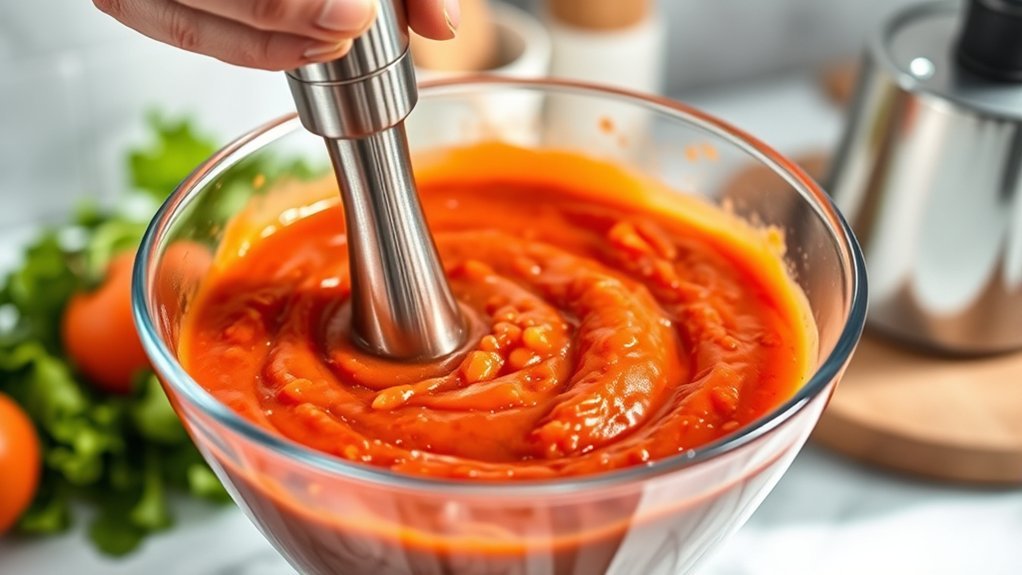
Mastering the proper handling techniques of your immersion blender guarantees you blend safely and get the best results every time. First, find comfortable techniques to grip the blender. Hold the handle firmly but not too tight, ensuring your hand stays steady.
Position your other hand to stabilize the container, keeping everything secure. Adopt a safety stance by standing with feet shoulder-width apart, giving you balance and control while blending. Keep your wrist straight to avoid fatigue, and always start blending at a low speed to prevent splatters.
Avoiding Common Hazards
How can you make sure your immersion blender stays a safe and reliable kitchen tool? It all starts with hazard awareness. Be mindful of common risks like splattering hot liquids, accidental blade contact, and electrical hazards.
Practicing hazard mitigation means keeping the blender immersed before turning it on and unplugging it when not in use. Here’s a quick guide to help you avoid slips and cuts:
| Hazard | How to Avoid It |
|---|---|
| Hot liquid splashes | Keep blender fully submerged |
| Blade contact | Always unplug before cleaning |
| Electrical shock | Avoid water on motor and plug |
Cleaning and Maintenance Tips
Wondering how to keep your immersion blender in tip-top shape? Start by cleaning it right after each use. Detach the blending shaft and rinse it under warm water with mild soap.
Be careful during blade safety; those sharp blades can cut you if you’re not paying attention. Never submerge the motor part in water; instead, wipe it with a damp cloth.
After cleaning, dry all parts thoroughly to prevent rust. For safe storage, keep the blender in a dry place, away from the edge of countertops to avoid accidental falls.
Consider using a protective cover for the blades or storing it in a drawer where it won’t get jostled. With these simple habits, your immersion blender will stay ready and safe whenever you need it.
Avoid Common Immersion Blender Mistakes
To get the best results, you’ll want to avoid some common immersion blender slip-ups. Watch out for splashes by keeping the blade fully submerged and picking the right container size.
Also, give your blender breaks to prevent the motor from overheating and keep it running smoothly.
Prevent Splashing And Spills
Splash-guards and steady hands play a huge role in keeping your kitchen clean when using an immersion blender. To master prevention splash, start by fully submerging the blender before turning it on. This simple step stops ingredients from flying everywhere.
Hold the blender firmly and keep it steady as you blend, avoiding sudden movements that cause spills. Using a deep, narrow container also helps with spill control by containing splatters.
If you notice splashing, lower the speed or pulse in short bursts. Pausing occasionally lets ingredients settle, reducing mess. By focusing on these small adjustments, you’ll prevent splash disasters and maintain a tidy workspace.
With a little care, immersion blending becomes a smooth, splash-free experience every time.
Avoid Overheating The Motor
How long should you run your immersion blender before giving it a break? To avoid overheating and motor strain, keep your blending sessions short, usually 20 to 30 seconds at a time. Then, pause for about 30 seconds to let the motor cool down before blending again. This habit helps your blender last longer and perform better.
Here’s a quick guide to avoid overheating:
| Usage Time | Cool Down Time | Motor Status |
|---|---|---|
| 20-30 sec | 30 sec | Optimal |
| 45-60 sec | 1-2 min | Warning: Hot motor |
| 60+ sec | 3+ min | Risk of damage |
Stay mindful of these intervals to protect your immersion blender’s motor and keep it running smoothly.
Use Proper Container Size
Keeping your immersion blender’s motor cool is important, but equally important is choosing the right container size for blending. Using a container that’s too shallow or wide can cause splatters, while one that’s too small might overflow or make it hard to blend evenly.
When picking the proper container, consider size carefully. There should be enough room for ingredients to move around without spilling. Tall, narrow containers work best because they keep your mixture contained and help the blender create a smooth vortex.
This makes blending more efficient and prevents messes. Paying attention to these size considerations not only protects your blender but also saves you time cleaning up afterward. So, always match your container to the job to get the best results with less hassle.
Tips for Smooth Immersion Blender Blends Every Time
Why does your immersion blender sometimes leave chunks when you’re aiming for silky smoothness? It’s usually about technique and a few smart tweaks. To consistently achieve that smooth texture and perfect emulsions, try these tips:
Achieving silky smooth blends often comes down to technique and a few simple, smart adjustments.
- Start blending at a low speed, then gradually increase to avoid splatters.
- Keep the blender fully submerged to prevent air bubbles and uneven mixing.
- Use a tall, narrow container to help ingredients circulate better.
- Pause occasionally to stir ingredients and reposition the blender for even blending.
- Blend in short bursts rather than long continuous runs to control texture.
With these simple tricks, you’ll get smooth, lump-free blends every time, making your soups, sauces, and smoothies truly irresistible.
Clean, Maintain, and Explore Creative Immersion Blender Recipes
Once you’ve mastered blending, it’s just as important to clean and maintain your immersion blender to keep it working smoothly for years. Develop simple cleaning routines: detach the blending arm and rinse it right after use to prevent residue buildup.
For tougher spots, soak the blade in warm, soapy water and scrub gently. Dry everything thoroughly before storing to avoid rust or damage.
Speaking of storage ideas, keep your blender in a dedicated drawer or hang it on a hook to save space and protect the blades. Now, don’t stop at soups. Try whipping up smoothies, sauces, or even homemade baby food.
Get creative with your immersion blender and explore new recipes. It’s a versatile tool that makes kitchen prep quicker and more fun!
Frequently Asked Questions
Can Immersion Blenders Be Used for Hot Soups Directly in the Pot?
Yes, you can blend hot soups right in the pot, but make sure your immersion blender uses immersion safe materials to avoid damage.
Also, watch out for blender overheating risks by blending in short bursts and letting it cool.
What Is the Difference Between an Immersion Blender and a Regular Blender?
Imagine making salsa right in your bowl. Immersion blenders let you blend directly, unlike regular blenders, which have more power and handle processors’ tasks better.
Are Immersion Blenders Safe for Use With Non-Stick Cookware?
Yes, you can safely use immersion blenders with non-stick cookware if you’re careful. Make sure the blade is made of safe materials and keep up with blade maintenance to avoid scratching or damaging your pans.
Can I Use an Immersion Blender to Whip Cream or Eggs?
Yes, you can totally use an immersion blender for cream whipping and egg whisking! It quickly aerates your mixture, making fluffy whipped cream or light, airy eggs without the hassle of manual whisking.
How Long Do Immersion Blender Blades Typically Last Before Needing Replacement?
You can expect your immersion blender’s blades durability to last around 2-3 years with regular use, while the motor lifespan often stretches longer.
Just keep it clean and avoid overworking to maximize both’s longevity.
Conclusion
Now that you know how to use your immersion blender like a pro, you’re set to whip up everything from soups to smoothies with ease. Did you know that nearly 60% of home cooks prefer immersion blenders for their quick cleanup and versatility?
Keep practicing those up-and-down motions, avoid overheating, and don’t forget to clean it right after. With a little care, your blender will be your kitchen’s secret weapon for years to come!
Mastering how to use an immersion blender ensures you get the best results every time, making your cooking faster and more enjoyable.