How to Toast Without a Toaster
You might not realize that you don’t need a toaster to get perfectly crisp toast. Toasting without a toaster is easy and can be done using common kitchen tools. With just an oven, skillet, or even a microwave, you can achieve evenly browned bread using simple techniques.
Each method requires careful timing and heat control to avoid sogginess or burning.
Before you reach for that toaster, consider these alternative approaches that can fit any kitchen setup and still deliver satisfying results.
Key Takeaways
- Toast bread evenly in a preheated oven at 350°F for 5–7 minutes, flipping halfway for crispness.
- Use a hot skillet with butter or oil, toasting bread 2–3 minutes per side until golden brown.
- Microwave bread with a paper towel underneath, heating in 30-second intervals while flipping to avoid sogginess.
- Grill bread over medium heat outdoors, using a campfire rack or foil-wrapped near coals for different textures.
- Manage heat carefully by flipping often and avoiding overcrowding to prevent uneven browning or burning.
Quick Guide: How to Toast Bread Without a Toaster
Wondering how to get perfectly toasted bread without a toaster? Start by selecting fresh, even slices of bread to ensure uniform heat distribution.
Preheat your oven or broiler to medium-high; this provides consistent heat essential for even browning. Place the bread directly on the oven rack or a baking sheet to allow hot air circulation, which enhances a crisp texture.
Preheat your oven or broiler to medium-high and toast bread on a rack or baking sheet for perfect crispness.
Keep a close eye on the bread, flipping it halfway through to toast both sides evenly. This method gives you control over browning intensity, preventing burning while achieving that ideal crunch.
Using this approach, you’ll enjoy toast with a crisp texture and consistent golden color, all without needing a traditional toaster.
Toast Bread on the Stovetop Using a Skillet
How can you achieve perfectly toasted bread without any special equipment? Using the skillet technique on your stovetop offers a simple, effective method. First, preheat your skillet over medium heat to ensure even toasting.
Next, decide between butter vs oil: butter adds rich flavor and crispness, while oil provides a lighter, more neutral taste. Then, follow these steps:
- Lightly spread butter or oil on both sides of the bread.
- Place the bread in the hot skillet, pressing gently to ensure contact.
- Toast each side for 2–3 minutes until golden brown, flipping carefully.
This method gives you control over browning and texture, making it easy to customize your toast without a toaster.
Use Your Oven or Broiler to Make Perfect Toast
When should you use your oven or broiler to make toast? Opt for these oven alternatives when you need to toast multiple slices at once or want evenly browned bread without stove methods’ hands-on effort.
Preheat the oven to 350°F or set the broiler to high. Place bread on a baking sheet, then toast for 5–7 minutes, flipping halfway. For broiler, watch closely to prevent burning.
| Method | Temperature | Time |
|---|---|---|
| Oven Toast | 350°F (175°C) | 5-7 minutes |
| Broiler Top | High Broil | 2-3 minutes |
| Broiler Bottom | High Broil | 2-3 minutes |
| Stove Method | Medium Heat | 2-4 minutes |
| Oven Alternative | 375°F (190°C) | 6-8 minutes |
This technique offers consistent, crispy toast without extra gadgets.
Microwave Toasting Tricks for Crispy Bread
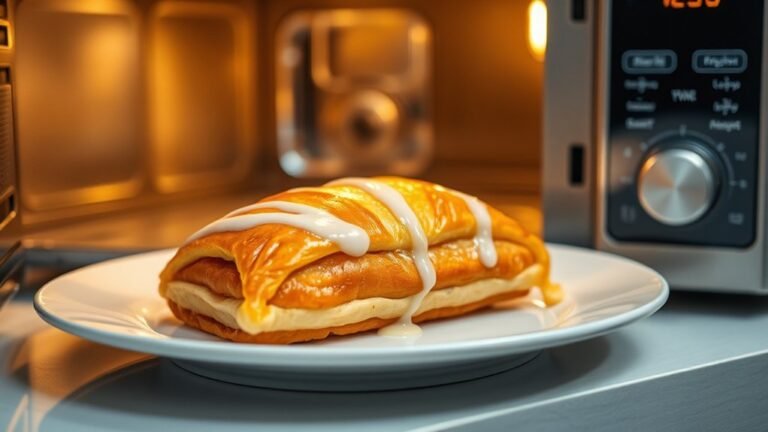
Why settle for soggy bread when you can achieve crispy toast using your microwave? With the right microwave tricks, you can enjoy crispy bread quickly without a toaster. Start by placing a paper towel beneath the bread slice to absorb moisture, preventing sogginess.
Then, microwave on high for 30-second intervals, checking after each to avoid overheating. Finally, flip the bread halfway through to ensure even crispness.
- Use a microwave-safe plate and paper towel to avoid steam buildup.
- Keep the bread thinly sliced for faster, crispier results.
- Avoid microwaving too long; it can toughen the bread.
These microwave tricks help you create crispy bread efficiently, making your microwave a handy tool for toasting.
Toast Bread Outdoors: Campfire and Grill Methods
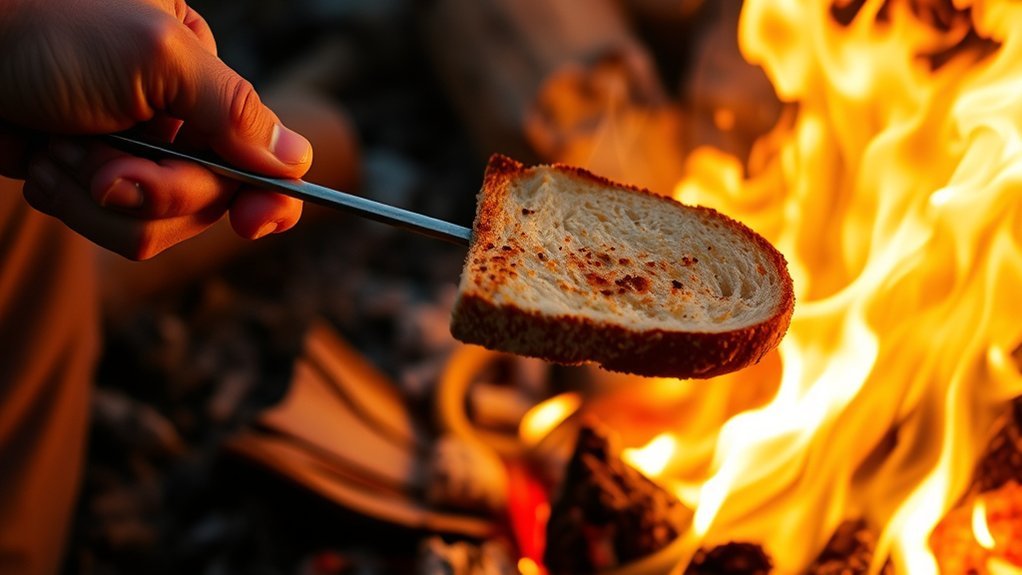
When toasting bread over a campfire, hold it close enough to get a steady heat without burning the edges. On a grill, place the bread directly on the grates and watch carefully to achieve even browning.
Both methods require attention and timing to get perfectly toasted bread outdoors.
Campfire Toasting Techniques
How can you achieve perfectly toasted bread without a conventional toaster while enjoying the great outdoors? Mastering campfire toasting techniques lets you enjoy warm, crispy bread right by the flames.
First, prioritize campfire safety: keep a safe distance, use long-handled tools, and avoid loose clothing near the fire. Next, select sturdy bread slices that won’t fall apart easily.
Then, try these methods:
- Skewer bread on a clean stick and hold it over glowing embers, rotating slowly for even toasting.
- Use a campfire toaster rack to place bread above the fire without burning.
- Wrap bread lightly in foil and warm it near the coals for a softer toast.
Grilling Bread Tips
Beyond campfire methods, grilling offers another excellent way to toast bread outdoors with control and flavor. When grilling bread, preheat your grill to medium heat to avoid burning. Place the slices directly on the grill grates for a few minutes, watching closely for even browning and those signature grill marks.
You can brush your bread lightly with olive oil or butter to enhance taste and prevent sticking. For softer toast, consider opening the grill lid to control heat and avoid over-toasting. Remember to flip the bread once the first side is golden brown.
Grilling bread also allows you to add toppings like garlic or herbs before toasting, boosting flavor. With these grilling bread tips, your outdoor toasting will be efficient, delicious, and perfectly crisp every time.
Grill Pan Tips for Even, Crispy Toast
Why settle for uneven toast when a grill pan can deliver perfectly crisp, golden slices? Using a grill pan ensures even browning and a satisfying crunch, but a few tips will help you get it just right.
Achieve perfectly crisp, golden toast with a grill pan for even browning and satisfying crunch every time.
First, preheat the grill pan over medium heat to create a consistent cooking surface. Then, lightly brush your bread with oil or butter to promote even browning and prevent sticking. Finally, press down gently with a spatula to ensure full contact with the ridges for those signature grill marks.
Use moderate heat to avoid burning while achieving a crispy texture. Flip the bread only once to maintain structural integrity. Clean the grill pan after each use to prevent residue buildup and uneven heat distribution.
Follow these steps, and your toast will come out perfectly crisp every time.
Toaster Oven Alternatives: Easy Indoor Options
Looking for quick, reliable ways to toast bread without a traditional toaster? You can easily achieve perfect toasting indoors using alternative appliances. Each method influences bread texture differently, so choose based on your preference and available tools.
| Appliance | Heating Method | Bread Texture Outcome |
|---|---|---|
| Oven Broiler | Top-down radiant | Crispy top, softer inside |
| Stovetop Skillet | Direct contact | Evenly browned, slightly chewy |
| Microwave + Grill | Microwave + grill | Quick, less crispy |
| Air Fryer | Hot air circulation | Crunchy, uniform |
| Toaster Oven | Convection + heat | Similar to toaster, consistent |
These options let you master toasting indoors without a toaster, ensuring the bread texture meets your taste every time.
Top Tips for Crispy Toast Without a Toaster
How can you achieve perfectly crispy toast without a traditional toaster? Focus on controlling heat and choosing the right bread. Your toast texture depends heavily on bread selection. Opt for slightly stale or firm slices that crisp well without becoming soggy.
Keep these tips in mind:
- Use a non-stick skillet or cast iron pan over medium heat for even browning.
- Butter the bread lightly to enhance crispness and flavor while preventing burning.
- Flip frequently to ensure both sides develop a golden crust and consistent toast texture.
Avoid These Common Toasting Mistakes
Toasting without a toaster requires careful attention to heat and timing to prevent uneven browning and burning. You’ll want to avoid using heat that’s too high or too low, as this can ruin your toast’s texture.
Uneven Browning Issues
Why does your bread sometimes toast unevenly when you’re using alternative methods? Uneven browning often results from inconsistent heat distribution or improper positioning. To achieve a consistent crust texture, keep these tips in mind:
Use a flat, heavy-bottomed pan to ensure even heat transfer. Adjust the bread’s position frequently, flipping or rotating every 30 seconds. Avoid overcrowding the pan, which can trap steam and soften the crust.
Overcooking And Burning
When do you know your bread has crossed the line from perfectly toasted to overcooked or burnt? You’ll spot it by a deep, uneven char or an acrid smell. To avoid overcooking pitfalls, monitor your bread closely and use short, incremental toasting intervals.
Flip the bread regularly for even heat exposure. Burning risks increase if you leave the bread unattended or use excessive heat, so stay present and patient. If you notice smoke or an overpowering burnt aroma, immediately remove the bread to prevent further damage.
Using Incorrect Heat Levels
Keeping a close eye on your bread’s color and smell helps prevent burning, but controlling the heat is just as important. Using incorrect heat can leave your toast unevenly cooked or burnt on one side. To master heat control, follow these tips:
Start with medium-low heat to allow even browning without scorching. Adjust the heat gradually; too high causes burning, too low results in soggy toast. Apply butter layering carefully; butter on cold bread can cause uneven toasting and flare-ups.
Avoid cranking the heat to speed up the process. It backfires by creating burnt edges and raw centers. Proper heat management ensures your toast is golden and crisp throughout. Remember, patience and steady heat are your best tools for perfect toast without a toaster.
Creative Toppings to Enjoy on Toast Without a Toaster
How can you elevate your toasted bread without a traditional toaster? Start by selecting creative toppings that complement your homemade toast’s texture and flavor. For a simple yet flavorful option, spread a teaspoon of softened butter evenly.
Next, add a sprinkle of cinnamon mixed with a teaspoon of sugar for a sweet touch. For savory lovers, mash half an avocado with a pinch of salt and a teaspoon of lemon juice, then spread it on warm toast.
You can also layer thin tomato slices, a teaspoon of olive oil, and a dash of black pepper for a fresh, vibrant taste. Remember, using precise teaspoon measurements ensures balanced flavors without overpowering your toast.
Experiment with these creative toppings to enjoy toast in a whole new way.
Frequently Asked Questions
Can You Toast Gluten-Free Bread Without a Toaster?
Yes, you can toast gluten-free bread using stovetop methods. Heat a skillet or pan, place your gluten-free alternatives directly on it, and flip until both sides are golden and crispy.
It’s quick and effective.
How Do You Store Bread to Keep It Fresh for Toasting?
Picture bread like treasure; storing bread in a cool, dry place or airtight bag preserves its freshness. For toasting prep, avoid the fridge because moisture ruins crust texture. Freeze extras and thaw before toasting for crisp perfection.
What Types of Bread Are Best for Stovetop Toasting?
You’ll want sturdy breads like sourdough, ciabatta, or whole wheat for stovetop toasting. They offer even toasting consistency and enhance flavor, giving you a crisp exterior while preserving moisture inside for a perfect bite.
Is It Safe to Use Aluminum Foil for Toasting Bread?
Yes, you can safely use aluminum foil for toasting bread if you avoid direct flame contact. For toasting safety, wrap the bread loosely, and consider alternative cooking methods like a pan or oven for even, controlled heat distribution.
Can Toasting Bread Affect Its Nutritional Value?
Toasting bread can slightly change its nutrition impact, but it’s no big shakes. Cooking methods like toasting mainly reduce moisture and may lower some heat-sensitive vitamins, yet overall, the nutritional value stays mostly intact.
Conclusion
Now that you know these toaster-free methods, you’re just moments away from perfect toast—crispy, golden, and delicious. Whether you choose the oven, skillet, or even the microwave, each technique delivers satisfying results without the usual appliance.
But here’s the twist: the secret to flawless toast lies in timing and attention. Master that, and you’ll never miss your toaster again.
Ready to surprise your taste buds? Your next great toast awaits, proving that you can easily make delicious toast without a toaster!