Top 10 Best Survival Water Filter: Must-See Picks
The best survival water filter can mean the difference between uncertainty and confidence when clean water is scarce. In emergency kits, backcountry packs, and disaster prep, filtration technology must do more than remove visible debris; it needs to handle bacteria, protozoa, sediment, and even taste issues without adding much bulk. That is why the best survival water filter matters so much for hikers, campers, and preppers alike.
From hollow fiber membranes to activated carbon and compact pump designs, today’s survival water filter choices blend portability with serious performance. Understanding how a portable water filter, emergency water purifier, and field-ready filtration system differ can reveal surprising tradeoffs in flow rate, maintenance, and durability.
The details behind these materials and mechanisms are where the real winners emerge—so the question becomes which designs actually earn trust when the water source is anything but clear?
In-depth Reviews of the Best Survival Water Filter
1. Practical Survival Reusable Emergency Water Filter Straws, 5-Pack

- CLEAN WATER ANYWHERE: Our water filter straws solve the real challenge of being on the move, finding water is rarely the problem...
- LIGHTWEIGHT & PORTABLE: Our filters weigh only 2 oz and measure 8 inches long, so you can take them with you anywhere. Be prepared...
- HIGH LEVEL FILTRATION: Each of the 5 filters removes over 99.99% of waterborne bacteria (such as E. coli and Legionella) and over...
Best for: Ultralight solo emergency carry.
At 8 inches long and 2 ounces, this reusable straw keeps a survival water filter small enough to ride in a pocket, daypack, or glove box. The hollow fiber membrane format lets you drink straight from questionable sources without a bottle setup, which matters when speed and portability matter more than gear weight.
Each filter is rated for 1,800 gallons, so a single 5-pack covers extended trips, backup storage, or multiple people without constant replacement. The plastic body keeps the package light, and the 1.5 x 1.5 x 8 inch profile makes it easy to tuck into a kit or pouch. A flushing plunger is included with every filter, which helps keep flow usable after repeated trips. The gravity-powered design works without batteries, fuel, or charging, so it fits emergency bags as well as camping setups. For buyers who want a simple personal filter that stays compact, the 5-pack format adds redundancy.
Pros
- 1,800-gallon rating per filter extends service life
- 8-inch length keeps each straw easy to pack
- Hollow fiber membrane filtration suits direct drinking
- 1 flushing plunger included per filter for maintenance
Cons
- No carrying pouch or bottle is included, so you need your own container or water source to use it comfortably.
This package makes sense for hikers, preppers, and travelers who want a compact personal filter with long use life. It is a practical pick when the priority is lightweight storage and straightforward field use.
| Specification | Details |
|---|---|
| Brand | Practical Survival |
| Material | Plastic |
| Capacity | 1800 gallons |
| Product Dimensions | 8″L x 1.5″W x 1.5″H |
| Item Weight | 2 oz |
| Included Components | 1 Flushing Plunger Per Filter |
| Purification Method | Hollow Fiber Membrane |
| Installation Type | Freestanding |
| Power Source | Gravity |
I’d point solo campers and emergency-kit builders toward this one first because it stays simple and compact while still offering long service life per straw. The 5-pack adds useful redundancy, and the included plunger on each unit makes upkeep easier than many bare-bones personal filters. If you want a small backup system instead of a big group setup, this fits well.
2. LifeStraw Personal Water Filter for Hiking, Travel and Emergency, Blue,
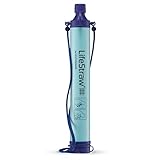
- Removes Bacteria & Parasites: The Microfiltration Membrane Removes 99.999999% of Waterborne Bacteria (Including E. Coli and...
- Removes Microplastics: Removes the Smallest Microplastics Found in the Environment (Down to 1 Micron), and Reduces Turbidity Down...
- Rigorous Testing: All Claims Are Verified with Laboratories Using Standard Testing Protocols Set by the US EPA, NSF, ASTM for...

Best for: Ultra-light personal emergency filter.
At 45 g and 3.75 x 1.39 x 12 inches, this plastic personal filter is sized for people who want a survival water filter that disappears into a pack. The microfiltration membrane handles direct drinking from water sources while keeping the format narrow enough for hikes, travel, and emergency kits where every ounce matters.
The filter removes 99.999999% of waterborne bacteria, including E. coli and Salmonella, and 99.999% of waterborne parasites, including Giardia and Cryptosporidium. It also reduces the smallest microplastics found in the environment down to 1 micron and lowers turbidity to 0.2 microns, which helps in silty or cloudy water. External NSF certification adds confidence for buyers who want a tested product. The plastic body keeps weight down, and the long tube-style form factor works well when you need a simple one-person option rather than a group system. For minimalist survival kits, the small footprint is the main appeal.
Pros
- 45 g weight keeps pack load minimal
- NSF external certification supports trust in performance
- Removes 99.999999% of bacteria for safer drinking
- Reduces microplastics down to 1 micron
Cons
- It is a single personal filter, so there is no included bottle, pouch, or shared drinking system for group use.
This works well for solo hikers, travelers, and backup kits where size is the main constraint. It focuses on personal filtration and leaves the rest of your setup flexible.
| Specification | Details |
|---|---|
| Brand | LifeStraw |
| Material | Plastic |
| Product Dimensions | 3.75″D x 1.39″W x 12″H |
| Item Weight | 45 g |
| External Testing Certification | NSF |
| Product Benefits | Reduce Parasites,Removes Bacteria |
I’d choose this if the main need is a dependable personal filter that stays very light and compact. It suits travelers and hikers who want strong contaminant reduction without extra accessories. The certification and microplastic reduction make it especially appealing for people who want a simple, field-ready solo option.
3. Practical Survival Reusable Emergency Water Filter Straws, 2-Pack

- CLEAN WATER ANYWHERE: Our water filter straws solve the real challenge of being on the move, finding water is rarely the problem...
- LIGHTWEIGHT & PORTABLE: Our filters weigh only 2 oz and measure 8 inches long, so you can take them with you anywhere. Be prepared...
- HIGH LEVEL FILTRATION: Each of the 2 filters removes over 99.99% of waterborne bacteria (such as E. coli and Legionella) and over...
Best for: Compact two-filter backup kit.
Weighing 56.7 g and measuring 8 inches long, this two-pack keeps a survival water filter setup small while still giving you a spare. The hollow fiber membrane format is useful when you need a reusable personal straw for hiking or emergencies, and the bundled plunger support helps keep the pair usable over time.
Each filter is rated for 1,100 gallons, so the 2-pack gives a meaningful reserve without adding much bulk. The plastic body and 1.5 x 1.5 x 8 inch dimensions make each unit easy to store in an emergency bag, glove box, or trail pack. This version includes a user manual, which helps new users get started without guessing at maintenance steps. The package comes as a bag rather than a boxy container, so it stays flexible in tight spaces. Compared with larger systems, it is aimed at personal use and backup planning, not group dispensing. That makes it a sensible fit for pairing with other supplies.
Pros
- 2-pack gives you a spare filter for backup
- 1,100-gallon rating per filter stretches use life
- 56.7 g total weight stays easy to pack
- User manual supports first-time setup
Cons
- It does not include a bottle or pouch, so you need a separate water container or source for practical use.
This is a practical choice when you want two personal filters instead of one and need them to stay easy to store. It fits backup kits, short trips, and people who like redundancy without bulk.
| Specification | Details |
|---|---|
| Brand | Practical Survival |
| Material | Plastic |
| Capacity | 1100 gallons |
| Product Dimensions | 8″L x 1.5″W x 1.5″H |
| Item Weight | 56.7 g |
| Included Components | User Manual |
| Purification Method | Hollow Fiber Membrane |
| Package Information | Bag |
| Installation Type | Freestanding |
I like this more as a backup or two-person contingency than as a primary group solution. The light weight and compact size make it easy to store, and the extra filter gives you a meaningful spare. Buyers who want a simple emergency kit addition should find it easy to justify.
4. Sawyer Products SP128 Mini Water Filtration System, Single, Blue

- Ideal for outdoor recreation, hiking, camping, scouting, domestic or international travel, and emergency preparedness
- High-performance 0.1 micron absolute inline filter fits in the palm of your hand and weighs just 2 ounces; 100% of MINI units...
- Attaches to included drinking pouch, standard 28 mm disposable water bottles, hydration packs, or use the straw to drink directly...
Best for: One-person squeeze and straw system.
A 0.1 micron absolute inline filter in a 4 x 3 x 8 inch package gives this Sawyer setup a clear edge for buyers who want a compact survival water filter with multiple drinking options. The included pouch, straw, and cleaning plunger mean you can filter from a source, a bottle, or a pouch without piecing together accessories yourself.
The system includes one MINI filter, one 16-ounce pouch, one drinking straw, and one cleaning plunger, so it arrives as a complete personal setup. Its 100,000-gallon capacity is far beyond typical trip-level use, which is useful for people who want one filter to last across many outings. The hollow fiber membrane and manual operation keep it independent of electricity, and the 2-ounce weight makes it easy to keep in a pack. Sawyer also states that each MINI unit is individually tested three times to performance standards, which adds reassurance for emergency use. The blend material and countertop installation type reflect a simple, portable format that is easy to manage in the field.
Pros
- 100,000-gallon capacity supports very long-term use
- 0.1 micron absolute filter targets fine contamination
- Includes pouch, straw, and plunger for flexible use
- 2-ounce weight keeps it highly portable
Cons
- The included drinking pouch is 16 ounces, so it is a small-capacity setup if you want to process water for more than one person at a time.
This is a strong fit for solo users who want a compact but complete filter kit. It works especially well for travel, hiking, and emergency bags where one reliable personal system is enough.
| Specification | Details |
|---|---|
| Brand | Sawyer |
| Product Dimensions | 4″L x 3″W x 8″H |
| Material | Blend |
| Capacity | 100000 gallons |
| Included Components | One MINI filter, one 16-ounce pouch, one drinking straw, one cleaning plunger |
| Package Information | Pouch |
| Installation Type | Countertop |
| Purification Method | Hollow Fiber Membrane |
| Power Source | Manual Operation |
| Special Feature | Protects against 99.999999% of bacteria, 99.9999% of protozoa, 100% of microplastics |
I’d recommend this for people who want a compact, all-in-one personal filter rather than a bare straw. The included pouch and cleaning plunger make it more usable straight out of the bag. It is especially appealing if you want one filter that can cover a lot of mileage over time.
5. LifeStraw Personal Water Filter for Hiking, Camping, Travel, and Emergency
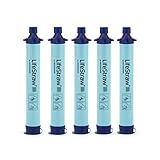
- Removes Bacteria & Parasites: The Microfiltration Membrane Removes 99.999999% Of Waterborne Bacteria (Including E. Coli And...
- Removes Microplastics: Removes The Smallest Microplastics Found In The Environment (Down To 1 Micron), And Reduces Turbidity Down...
- Rigorous Testing: All Claims Are Verified With Laboratories Using Standard Testing Protocols Set By The Us Epa, Nsf, Astm For...
Best for: Five-person personal filter bundle.
Five separate LifeStraw filters in one BPA-free plastic package make this a practical survival water filter choice for families or group kits. The hollow fiber membrane format works without electricity, so each person can carry their own filter and keep a simple, independent backup for hiking, camping, or emergency use.
Each filter is rated for 4,000 liters, which gives the five-pack a long service window across multiple outings or several users. The 3.75 x 12 x 1.39 inch package keeps the set compact for a family emergency bin or group travel bag. LifeStraw lists protection against 99.999999% of bacteria, 99.999% of parasites, and 99.999% of microplastics, dirt, sand, and cloudiness, which is useful when water sources are uncertain. Because no electricity or battery power is required, the set stays simple to deploy in the field. For people putting together a shared emergency cache, the real value is that everyone gets a dedicated filter instead of waiting to share one.
Pros
- 5 included filters support families or group kits
- 4,000-liter rating per filter extends use
- No electricity or battery power required
- BPA-free plastic keeps the materials straightforward
Cons
- It is a straw-only bundle, so there are no bottles, pouches, or pump components included for larger-volume filtering.
This makes sense for households, car kits, and group preparedness where multiple people need their own filter. It keeps the setup simple and avoids the bottleneck of a single shared device.
| Specification | Details |
|---|---|
| Brand | LifeStraw |
| Material | BPA-Free Plastic |
| Capacity | 4000 liters |
| Product Dimensions | 3.75″L x 12″W x 1.39″H |
| Included Components | 5 LifeStraw Personal Water Filters |
| Package Information | Filter Straw |
| Installation Type | Potable Drinking Water |
| Purification Method | Hollow Fiber Membrane |
| Power Source | No Electricity Or Battery Power Required |
I’d suggest this for families or groups that want individual filters instead of a shared system. The five-pack format makes planning easier, and the long rated life per filter adds reassurance for emergency storage. It is a sensible choice when everyone needs a personal backup.
6. Waterdrop Gravity Water Filter Straw, Camping Water Filter, 0.1 Micron
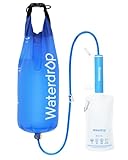
- 5-Stage Efficient Filtration: With adoption of premium-quality 0.1 um ultrafiltration membrane and other raw materials, the Water...
- Professional Combination: Waterdrop Gravity Water Filter Straw with 1.5 gal Gravity-Fed Water Bag is an exclusive water...
- Longer Lifespan: The Waterdrop Filter straw can provide safe drinking water up to 1,400 gallons (5,300 liters), and ensures the...
Best for: Gravity-fed group water solution.
A 1.5-gallon gravity-fed water bag paired with a 0.1 micron straw makes this Waterdrop kit a stronger fit for group survival water filtering than a simple personal straw. The hollow fiber ultrafiltration membrane and non-electric setup let you produce drinkable water for campmates without hand pumping every bottle.
The system includes a water filter straw, a 1.5-gallon gravity-fed water bag, and a 16-ounce water pouch, so it arrives with both storage and dispensing pieces. Its 1,400-gallon capacity keeps the setup useful over many trips, and the 6.77 x 3.39 x 10.91 inch size is still manageable for a pack or base camp kit. The five-stage filtration path is aimed at reducing chlorine, particulates, sediment, stones, sand, dirt, bad taste, and odor, which matters when the source water is visibly rough. Because it is non-electric, it remains useful during outages or remote travel. Buyers who want one kit that serves more than one person will appreciate the gravity-fed approach.
Pros
- 1.5-gallon gravity bag supports group use
- 0.1 micron ultrafiltration membrane handles fine particles
- 1,400-gallon capacity supports extended field use
- Non-electric operation works without batteries
Cons
- The water bag is 1.5 gallons, so large group refills still require repeated topping up from the source.
This is a good match for camps and emergency kits where you want to filter water for more than one person at once. It offers more convenience than a simple straw while staying portable.
| Specification | Details |
|---|---|
| Brand | Waterdrop |
| Material | Hollow Fiber Ultrafiltration Membrane |
| Capacity | 1400 gallons |
| Product Dimensions | 6.77″L x 3.39″W x 10.91″H |
| Included Components | Water Filter Straw *1, 1.5 Gal Gravity-Fed Water Bag *1, 16 oz Water Pouch *1 |
| Package Information | Bag |
| Installation Type | Freestanding |
| Purification Method | Hollow Fiber Ultrafiltration Membrane |
| Power Source | Non Electric |
I’d favor this for camps or emergency setups where multiple people need water from one kit. The included bag and pouch make it more flexible than a plain straw, and the gravity-fed design reduces effort. It is especially useful if you want a portable group option without moving to a full pump system.
7. LifeStraw Personal Water Filter for Hiking, Travel and Emergency, Navy,

- Removes Bacteria & Parasites: The Microfiltration Membrane Removes 99.999999% Of Waterborne Bacteria (Including E. Coli And...
- Removes Microplastics: Removes The Smallest Microplastics Found In The Environment (Down To 1 Micron), And Reduces Turbidity Down...
- Rigorous Testing: All Claims Are Verified With Laboratories Using Standard Testing Protocols Set By The Us Epa, Nsf, Astm For...
Best for: Four-pack for recurring travel.
Four separate LifeStraw filters in BPA-free plastic make this navy version a compact survival water filter bundle for repeat travelers and emergency prep. The no-electricity design and hollow fiber membrane let each unit work as a simple personal tool, which keeps the setup easy to assign across a small family or team.
Each filter is rated for 4,000 liters, so the 4-pack gives substantial total coverage without needing a pump or power source. The package size of 3.75 x 12 x 1.39 inches keeps the set slim enough for a vehicle kit or travel bag. LifeStraw’s listed protection against 99.999999% of bacteria, 99.999% of parasites, and 99.999% of microplastics, dirt, sand, and cloudiness is useful when conditions are unpredictable. The package type is a filter straw set, which means the focus is on direct drinking rather than bulk storage. For travelers who like having a spare in reserve, this bundle is easy to distribute and easy to store.
Pros
- 4 included filters give extra coverage for a small group
- 4,000-liter rating per filter supports repeated use
- No electricity or battery power required
- Slim package is easy to store in a kit
Cons
- There are no pouches or bottles included, so the set is limited to direct straw-style drinking.
This is a smart pick if you want multiple personal filters in one package without adding complexity. It works well for travel bags, car kits, and families who want individual backups.
| Specification | Details |
|---|---|
| Brand | LifeStraw |
| Material | BPA-Free Plastic |
| Capacity | 4000 liters |
| Product Dimensions | 3.75″L x 12″W x 1.39″H |
| Included Components | 4 LifeStraw Personal Water Filters |
| Package Information | Filter Straw |
| Installation Type | Freestanding |
| Purification Method | Hollow Fiber Membrane |
| Power Source | No Electricity Or Battery Power Required |
This bundle makes sense if you want extra filters without moving to a larger pump system. It is practical for recurring trips because every person can carry one, and the slim pack stores easily. I’d consider it a good middle ground between a single-person filter and a full camp setup.
8. Pro Portable Water Filter for Camping – Water Purifier Survival

- PUMPS 1.5 LITERS PER MINUTE FOR THE WHOLE GROUP: This portable water filter pump delivers clean drinking water for 4-6 hikers...
- 3-STAGE ULTRA FILTRATION TURNS SKETCHY WATER INTO SAFE DRINKING WATER: A 5-micron pre-filter, PP cotton stage, and ultrafiltration...
- EMERGENCY WATER FILTER FOR SURVIVAL, OFF-GRID & PREPPER KITS: Purpose-built as a survival water filter and emergency water...
Best for: High-output camp pump filter.
A hand-operated pump that moves 1.5 liters per minute gives this TRAILGO kit a strong edge when a survival water filter needs to serve a group. The 10 x 3.5 x 13.5 inch body, carry bag, and included inlet and outlet tubing make it more of a base-camp purifier than a pocket straw.
The kit includes a filter body, pre-filter, inlet and outlet tubes, clamps, instructions, and a carry bag, so the main components needed for operation are already in the box. Its 3,000-liter capacity is well suited to repeated camp use, and the 3-stage purification uses PP cotton filtration at 5 µm plus ultrafiltration at 0.01 µm. That combination helps reduce sediment before finer filtration handles cleaner drinking water output. Because it is hand operated, it avoids reliance on batteries or electricity, which is important in emergency or off-grid settings. The 4-6 person use case makes it a better fit for shared camps than solo ultralight trips.
Pros
- 1.5 liters per minute supports group drinking needs
- 3,000-liter capacity suits repeated camp use
- 5 µm plus 0.01 µm filtration stages add layered cleaning
- Carry bag and tubing are included for setup
Cons
- Its 10 x 3.5 x 13.5 inch size makes it much less packable than a straw filter for minimalist travel.
This is the right kind of filter when the goal is moving water for several people at camp. It trades pocket size for output, which is exactly what many group survival kits need.
| Specification | Details |
|---|---|
| Brand | TRAILGO |
| Product Dimensions | 10″L x 3.5″W x 13.5″H |
| Material | Plastic |
| Capacity | 3000 liters |
| Included Components | Filter body, Pre-Filter, Inlet & outlet tubes, clamps, Instructions, carry bag |
| Package Information | Plastic |
| Installation Type | Freestanding |
| Purification Method | 3 stage PP cotton and Ultra Filtration |
I’d pick this for base camps, hunting camps, or any emergency setup where several people need filtered water quickly. It is not the most compact option, but the output and included hardware make it more practical for shared use. Buyers who value volume over portability should be happy with it.
9. Straw Water Filter 5 Pack – Outdoor Camping & Hiking

- [5-Pack for Group Outdoor Activities] A 5-pack designed for group travel — everyone gets their own straw for camping, road...
- [Food-Grade Materials] Made with BPA-free, food-grade ABS and a hollow fiber UF membrane, ensuring safe contact with drinking...
- [Effortless Sip While Moving] The low-effort sipping design lets you drink directly from water sources without stopping, keeping...
Best for: Organized family emergency bundle.
Five filters plus five syringes, five rope clips, a water pouch, and silicone tubing make this Lormandy kit a well-rounded survival water filter package for group planning. The ABS body and gravity-powered hollow fiber UF membrane keep the focus on simple, portable field use.
Each filter is part of a 5-pack, and the included accessories support more than one person using the system at the same time. The 1320-gallon capacity gives the bundle a useful operating window for travel or emergency storage, while the 8 x 1.2 x 1.2 inch dimensions keep each filter slim enough to pack. The 0.36 kg weight is still light enough for a kit built around family readiness. The leak-proof and lightweight features matter when you want to store the set in a go-bag without worrying about mess. With potable drinking water installation and gravity power, it stays simple to deploy in an outage or at camp.
Pros
- 5 filters support family or team use
- Includes syringes, rope clips, pouch, and tubing
- 1320-gallon capacity provides decent reserve use
- Gravity-powered setup works without electricity
Cons
- The system relies on gravity and accessories, so it is less convenient for quick direct drinking than a single personal straw.
This is a strong option for families who want a more organized emergency kit with multiple components in one box. It provides the pieces needed for shared use without forcing you to source extras separately.
| Specification | Details |
|---|---|
| Brand | Lormandy |
| Material | Acrylonitrile Butadiene Styrene |
| Capacity | 1320 gallons |
| Product Dimensions | 8″L x 1.2″W x 1.2″H |
| Included Components | 5*water filters, 5*syringes, 5*rope clips, 1*water pouch, 1*1m silicone tubing |
| Installation Type | Potable Drinking Water |
| Purification Method | hollow fiber UF membrene |
| Power Source | Gravity |
| Item Weight | 0.36 kg |
I’d recommend this to buyers building a family emergency setup because the accessories make the kit feel complete. The five filters and extra tubing pieces add flexibility for shared use, and the compact size keeps storage manageable. It is a practical planning purchase rather than a minimalist grab-and-go straw.
10. Sawyer Products SP129 Squeeze Water Filtration System w/Two 32-Oz Squeeze

- Lightweight, easy to use portable water filter removes harmful bacteria, protozoa, cysts, sediment, And 100% of microplastics...
- High-Performance 0.1 micron absolute inline filter fits in the palm of your hand and weighs just 2 ounces
- 100% of squeeze units individually tested three times to performance standards by sawyer
Best for: Squeeze filter for bottle users.
Two 32-ounce squeeze pouches make this Sawyer system a good survival water filter choice for people who want to fill bottles or drink straight from a pouch. The 0.1 micron inline filter and 2-ounce weight keep the kit light, while the removable cap and included pouch give it more versatility than a basic straw.
The package includes one squeeze water filter, one 32-ounce collapsible pouch, and one replaceable pop-up drinking component, so it is set up for immediate field use. Its 100,000-gallon capacity is far beyond what most travelers will consume on a trip, which makes it useful for long-term emergency storage as well. The hollow fiber membrane handles filtration without batteries, and the filter also fits standard water bottles, which matters if you already carry reusable containers. The 4 x 2.5 x 7.5 inch size stays compact for a pack or vehicle kit. Buyers who want a filter that works with bottles instead of only direct drinking will find the flexibility useful.
Pros
- Includes two 32-ounce squeeze pouches for water collection
- 100,000-gallon capacity supports very long service
- Fits standard water bottles for flexible use
- 2-ounce weight keeps the kit portable
Cons
- The kit centers on squeeze and pouch use, so it is less streamlined for quick straw-style drinking from a source.
This is a practical pick for travelers and preppers who already like using bottles or pouches. It offers more versatility than a pure personal straw while still staying compact.
| Specification | Details |
|---|---|
| Brand | Sawyer |
| Product Dimensions | 4″L x 2.5″W x 7.5″H |
| Material | Blend |
| Capacity | 100000 gallons |
| Included Components | 1 Squeeze water filter; 1 32-oz collapsible pouches; 1 replaceable pop-up drinki |
| Package Information | Bag,Bottle |
| Installation Type | Potable Drinking Water |
| Purification Method | Hollow Fiber Membrane |
| Power Source | Ac/DC |
I’d choose this if you want a compact filter that works with bottles and collapsible pouches instead of only one drinking method. The large rated capacity makes it attractive for long-term preparedness, and the included accessories help it feel more complete than many minimalist kits. It suits users who like versatility in the field.
Quick Comparison Table of Top Survival Water Filters
| Product Name | Type | Weight | Capacity | Best For | Check Price |
|---|---|---|---|---|---|
| Practical Survival Reusable Emergency Water Filter | Filter straws | 2 oz | 1800 gallons | Solo emergency use | Check Price |
| LifeStraw Personal Water Filter for Hiking | Personal straw | 45 g | Unlisted | Backpacking travel | Check Price |
| Practical Survival Reusable Emergency Water Filter | Filter straws | 56.7 g | 1100 gallons | Compact backup kit | Check Price |
| Sawyer Products SP128 Mini Water Filtration | Squeeze system | 2 ounces | 100000 gallons | Ultralight survival | Check Price |
| LifeStraw Personal Water Filter for Hiking | Personal straw | BPA-free plastic | 4000 liters | Everyday trail use | Check Price |
| Waterdrop Gravity Water Filter Straw, Camping | Gravity straw | Unlisted | 1400 gallons | Group camping setup | Check Price |
| LifeStraw Personal Water Filter for Hiking | Personal straw | BPA-free plastic | 4000 liters | Emergency readiness | Check Price |
| Pro Portable Water Filter for Camping | Pump filter | Unlisted | 3000 liters | Group water filtering | Check Price |
| Straw Water Filter 5 Pack | 5-pack straws | Unlisted | 1320 gallons | Family travel kits | Check Price |
| Sawyer Products SP129 Squeeze Water Filtration | Squeeze system | 2 ounces | 100000 gallons | High-volume emergencies | Check Price |
How to Choose the Right best survival water filter
Filtration performance and contaminant removal
Choose the smallest pore size that still matches your water risks: 0.1 micron is the safe all-around target for survival use because it stops bacteria and protozoa while still moving water at a usable pace. Go finer only when the water source demands it, because ultra-fine filters slow flow and clog faster in silty water. For most buyers, a hollow-fiber unit with 0.1-micron pores, strong sediment loading capacity, and a clean flow rate beats a slower ultra-fine option.
Pick the 0.1-micron model for general backcountry and emergency kits, and move to a finer, slower filter only when maximum pathogen control matters more than speed.
| Type | Best for |
|---|---|
| 0.1 micron hollow-fiber | Most survival kits, bacteria and protozoa protection, balanced flow |
| 0.2 micron filter | Faster drinking water from cleaner sources |
| Sub-0.1 micron filter | Higher caution use, slower output, lighter sediment loads |
Capacity and water source compatibility
Match capacity to how many people and how much water you need each day. Solo travelers need a compact filter that produces at least a few liters per day without constant pumping, while families and group shelters need a higher-output system that can fill bottles, bags, or a shared reservoir quickly. Clear water favors straw and bottle filters; murky water calls for a pump, squeeze, or reservoir system with prefiltering and easier sediment management.
Pick a reservoir or pump for camps and groups, a bottle filter for travel, and a straw filter only for personal emergency drinking when simplicity matters most.
| Type | Best for |
|---|---|
| Straw filter | Solo emergency drinking from direct water sources |
| Bottle filter | Travel, day hikes, and simple personal use |
| Squeeze/reservoir filter | Camping, daily water collection, small groups |
| Pump filter | Murky water and higher daily output needs |
Durability and field reliability
Prioritize a housing that shrugs off drops, compression, and repeated wet-dry cycles, because survival filters fail fastest at seals and seams. Look for thick polymer shells, reinforced connection points, tight O-rings, and replaceable cartridges or cores so one damaged part does not end the system. A good field filter keeps working after being packed hard, rinsed often, and used in cold or dusty conditions.
Poor choices show up as loose fittings, thin brittle plastic, and cartridges with no service path. Choose a rugged, repairable model for remote use, and a simpler sealed unit only for short emergency storage or occasional travel.
| Feature | Good sign |
|---|---|
| Housing | Thick polymer or reinforced shell |
| Seals | Multiple O-rings and tight, leak-free joints |
| Parts | Replaceable cartridge, gasket, or tubing |
| Use case | Rugged trips, repeated field use, cold-weather handling |
Ease of use and portability
Pick the lightest filter that still fits your emergency routine, because portability matters only when you actually carry it. For hike-and-go use, choose a compact unit that stows in a pocket, hip belt, or side pouch and sets up in one or two steps. Simpler systems win for evacuation bags and travel kits: fewer parts, fewer priming steps, and a fast rinse after use.
Heavy pump rigs belong in base camps, not daily carry. Choose a bottle or small squeeze filter for personal portability, a straw for minimalist emergency kits, and a reservoir system when shared water and easy packing both matter.
- Under 8 oz: strong choice for ultralight carry
- 8-16 oz: good for general hiking and travel
- Simple one-step setup: best for emergencies and evacuations
- Multiple loose parts: best only when output matters more than speed
Maintenance and longterm value
For long-term value, choose a filter that cleans easily, uses widely available replacement cartridges, and stores without special handling. A strong survival pick includes straightforward backflushing, clear cleaning instructions, and parts you can replace before performance drops. Good units list cartridge life in gallons or liters and keep working after months of storage with a sealed, dry element.
Poor units hide maintenance needs or require hard-to-find parts. Pick a model with simple rinsing and easy cartridge swaps for regular use, and reserve short-life specialty filters for backup packs only.
| Maintenance | Best for |
|---|---|
| Easy backflush | Frequent field use and fast cleanup |
| Replaceable cartridge | Long-term ownership and emergency readiness |
| Long shelf life | Bug-out bags and stored kits |
| Simple rinse-only care | Travel and occasional outings |
Which Should You Choose?
- If you want the simplest grab-and-go option for hiking, travel, or an emergency kit, choose a personal straw filter with a compact 0.1-micron or microfiltration membrane.
- If you need enough filtered water for 4-6 people at camp or during a group emergency, choose a hand pump filter with a higher flow rate and no-battery operation.
- If you’ll be filtering water for several people and want everyone to have their own backup, choose a multi-pack of reusable straw filters.
- If you want a lightweight system that can also handle sediment and microplastics, choose a squeeze-style filter with a 0.1-micron absolute filter and included squeeze bags.
Quick Best Survival Water Filter Buying Checklist
- Check the filtration level. Make sure the filter is rated to remove common waterborne threats such as bacteria, protozoa, and sediment.
- Match the format to your use. Choose a bottle, straw, pump, or gravity design that fits your travel, hiking, or emergency setup.
- Review flow rate. A faster flow can make filtering easier in the field, especially when you need several liters quickly.
- Inspect durability. Look for a rugged body, secure seals, and parts that can handle rough outdoor conditions without cracking.
- Plan for maintenance. Prefer a model with simple cleaning steps and replacement filters that are easy to source later.
- Consider weight and pack size. A compact filter is easier to carry in a bug-out bag, backpack, or vehicle kit.
How Survival Water Filters Remove Contaminants
Survival water filters work by pushing water through media that trap or reduce harmful particles before you drink. Many portable filters use hollow-fiber membranes with microscopic pores that block protozoa and sediment, while activated carbon can improve taste and reduce some chemicals and odors. Some systems also include ion exchange or additional treatment stages for broader contaminant reduction.
The exact performance depends on pore size, flow rate, and how the filter is built, so two products that look similar can behave very differently in the field. Understanding what a filter actually removes helps you match it to the water sources you expect to encounter, from muddy streams to clearer alpine runoff.
Types of Survival Water Filters and Their Trade-Offs
Survival filters come in several formats, and each one suits a different style of travel. Straw filters are ultralight and simple, squeeze filters let you process water into a bottle or bag, gravity systems handle larger volumes with minimal effort, and pump filters can be useful when you need more control over intake water. Ultraviolet devices and chemical treatments are sometimes grouped with filters, but they work differently and may be better as backup methods.
The main trade-off is usually speed versus portability versus ease of use. Choosing the right format depends on whether your priority is fast individual drinking, group water collection, or a compact emergency kit.
| Type | Best for | Key trade-off |
|---|---|---|
| Straw | Solo use and ultralight kits | Only treats water as you drink it |
| Squeeze | Trail use and flexible fill-up | Needs clean containers or bags |
| Gravity | Camp setups and groups | Slower setup, larger footprint |
| Pump | Murky sources and controlled filtration | More effort and more moving parts |
Field Maintenance That Keeps a Filter Working
A survival water filter performs best when it is cleaned and stored correctly. Many clog because fine sediment builds up inside the filter element, so backflushing or rinsing according to the manufacturer’s instructions is important. After use, let the filter dry when possible, because trapped moisture can promote mold, odor, or internal damage during storage.
Keep dirty hoses, caps, and reservoirs separate from clean-water parts to avoid cross-contamination. It also helps to pack the filter where it will not freeze, since frozen water inside a membrane can cause cracks that are hard to detect.
A few minutes of care after each trip can greatly extend service life and preserve flow rate in the field.
Common Mistakes That Can Put Water Safety at Risk
One of the biggest mistakes is assuming that clear-looking water is automatically safe. Many pathogens are invisible, and sediment alone does not tell you whether a source is biologically contaminated. Another error is letting unfiltered water touch the clean side of the system, which can happen through hands, bottle threads, caps, or shared containers.
Some users also exceed the filter’s intended capability by relying on a model that does not address certain chemicals or viruses. Finally, replacing or ignoring maintenance intervals can reduce performance over time.
A survival filter is most reliable when it is used as part of a disciplined routine that includes source awareness, clean handling, and backup treatment when needed.
When to Use a Filter With Other Water Treatment Methods
In many survival situations, the safest approach is layering methods instead of trusting one tool alone. Filtration is excellent for removing sediment and many microbes, but other treatments can add protection or improve water quality. Boiling can neutralize biological threats when fuel and time are available.
Chemical tablets are lightweight backups for emergencies or when a filter is damaged. Activated carbon helps with taste and some organic compounds, though it is not a substitute for pathogen control.
In especially uncertain environments, combining a filter with a secondary method can be the most practical plan. The right combination depends on water clarity, time constraints, group size, and how critical hydration is to the situation at hand.
Frequently Asked Questions (FAQs)
What Makes The Best Survival Water Filter Worth Buying?
The best survival water filter is worth buying because it turns uncertain water sources into safer drinking water when clean supplies are unavailable. It matters most in emergencies, camping, and travel because it combines contaminant removal, portability, and dependable performance in one compact tool.
How Do I Choose The Right Type Of Best Survival Water Filter?
Choose the right best survival water filter by matching the design to your situation and water needs. Straw filters suit quick personal use, bottle filters work for on-the-go drinking, and gravity filters are better when you need to process larger amounts for multiple people.
What Contaminants Should A Best Survival Water Filter Remove?
A best survival water filter should remove bacteria, protozoa, and visible sediment at a minimum. Some models also reduce microplastics and improve taste, but the key is a fine enough filter pore size and reliable protection against common wilderness water hazards.
Is Flow Rate Important In A Best Survival Water Filter?
Yes, flow rate is important in a best survival water filter because it affects how quickly you can get drinkable water in the field. A faster filter is convenient, but very fine filtration may slow output, so balance speed with the level of protection you need.
How Much Maintenance Does A Best Survival Water Filter Need?
A best survival water filter needs regular maintenance such as backflushing, rinsing, or replacing cartridges when performance drops. Simple upkeep helps prevent clogging, keeps water flowing smoothly, and extends the useful life of the filter during repeated outdoor or emergency use.
Can A Best Survival Water Filter Work With Muddy Water?
A best survival water filter can work with muddy water, but performance improves if you pre-filter large debris first. Letting sediment settle or using a cloth before filtration reduces clogging and helps the main filter last longer while keeping flow more consistent.
What Size Best Survival Water Filter Is Best For Emergency Kits?
The best size for a best survival water filter in an emergency kit is usually the most compact model that still meets your water needs. Small filters save space and weight, while larger gravity systems are better if you expect to supply several people at once.
Final Suggestions
In summary, the best survival water filter gives you a practical way to turn uncertain water sources into safer drinking water when reliability matters most. With the right balance of filtration, portability, and maintenance, it can support camping, travel, and emergency readiness with confidence. Choose carefully now, and you’ll be better prepared for whatever comes next.