Top 10 Best Water Filter For PFAS: Must-See Picks
Best water filter for pfas choices are drawing attention as concern grows around persistent contaminants in drinking water. These filters rely on advanced media such as activated carbon, ion exchange, and reverse osmosis to target hard-to-catch compounds that standard systems may miss. When comparing a pfas water filter or a PFAS removal filter, details like micron rating, flow rate, cartridge lifespan, and certifications can reveal major differences in performance.
Material quality, system design, and contaminant reduction claims also matter for homes that want cleaner-tasting water and added peace of mind. The best water filter for pfas is rarely the simplest-looking option, and the most important clues are often buried in the specs—so the real question is which features deserve your trust?
Detailed Reviews of the Best Water Filter for Pfas
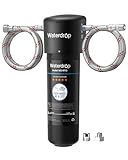
1. Waterdrop 10UA Under Sink Water Filter System, NSF/ANSI 42 Certified
- Less than $25.99 per replacement filter WD-RF10(Search " B085G66JTZ "on Amazon), save over 50% of cost on subsequent use.
- [After Sales Assistance] Waterdrop Backs the WD-10UA's high-end technical performance with a comprehensive prorated performance...
- [Innovative Design] Only a cold-water source should be used to power the filter. Its twist-and-lock construction and...
Best for: Under-sink system for municipal tap water.
Compact under-sink hardware measuring 3.9 by 3.6 by 12.3 inches gives this Waterdrop system a small footprint that fits tight cabinets while handling the everyday job of filtering kitchen tap water. Its NSF/ANSI approved components and activated carbon setup give buyers a point-of-use option for reducing PFAS, PFOA/PFOS, and chlorine without giving up cold-water flow at the sink.
A 11,000-gallon capacity makes this system a longer-term under-sink choice for households that want fewer replacements between changes. The package includes one system, two hoses, a 3/8″–1/2″ converter set, screws, and Teflon tape, so most of the basic install parts are already in the box. It uses a mechanical, non-powered setup, which keeps the install simple and avoids outlet planning under the sink. The filter is intended for municipal tap water and cold water only, so it suits a kitchen supply line rather than a well or hot-water feed. NSF/ANSI 42 and 372 certification support the contaminant-reduction claims buyers care about most.
Pros
- 11,000-gallon capacity reduces change frequency
- NSF/ANSI 42 and 372 certification supports PFAS-focused use
- Compact 3.9″ x 3.6″ x 12.3″ size fits under sinks
- Included hoses, converter set, screws, and tape simplify installation
Cons
- Cold-water municipal use only, so it is not suitable for well water or hot-water lines
A strong pick for shoppers who want a low-profile under-sink PFAS filter with straightforward parts in the box. It suits kitchen setups that need a dedicated cold-water solution rather than a pitcher or countertop unit.
| Specification | Details |
|---|---|
| Brand | Waterdrop |
| Installation Type | Under Sink |
| Purification Method | Activated Carbon |
| Capacity | 11000 gallons |
| Product Dimensions | 3.9″L x 3.6″W x 12.3″H |
| Material | NSF/ANSI Approved Components |
| Included Components | System×1 ·hose×2 ·3/8″–1/2″ Convertor set×1 ·screws×2 ·Teflon tape×1 |
| Special Feature | NSF/ANSI 42&372, PFAS, PFOA/PFOS and Chlorine Reduction |
| Power Source | Mechanical |
I’d point buyers to this if they want a set-it-under-the-sink option for municipal tap water and prefer not to use a pitcher every day. The long capacity and compact cabinet-friendly size make it practical for busy kitchens. I also like that the install parts are included, because that lowers the friction for a first-time setup.
2. ZeroWater 32-Cup Water Filter Dispenser Removes PFOA/PFAS

- Filtered Water Dispenser: The 32 Cup 5-stage Ready-Read Water Filter Dispenser has an integrated TDS Meter to instantly check the...
- 5-Stage Filtration: Removes virtually all total dissolved solids (TDS) for the purest tasting water; Total Dissolved Solids are...
- IAPMO certified and BPA free: The filter is IAPMO certified to reduce PFOA/PFOS, lead, chromium and mercury. All material is BPA...

Best for: Large countertop dispenser with TDS meter.
A 32-cup dispenser with an integrated TDS meter gives ZeroWater a clear advantage for households that want to monitor water quality before pouring. The 7.5-liter capacity keeps plenty of filtered water on the counter, and the five-stage ion exchange filter targets PFAS-conscious buyers who want a large, non-powered option.
The countertop format uses a 13.13″ x 6″ x 10.38″ body, so it offers big-batch storage without taking over the whole fridge shelf. Included components are the dispenser, one five-stage ZeroWater ion exchange filter, and a TDS meter, which means the system is set up to show when dissolved solids reach the change point. The change-filter indicator is especially useful for PFAS buyers who want a measurable trigger instead of guessing by taste. Its plastic construction keeps the dispenser lightweight for refilling and cleaning. Because it is non-powered, it works anywhere on the counter without outlet placement or cords.
Pros
- 32-cup capacity reduces refill frequency
- Integrated TDS meter helps track filter life
- 5-stage ion exchange filtration suits PFAS-focused buyers
- Non-powered countertop design needs no outlet
Cons
- Large 13.13″ length needs significant counter space
This dispenser makes sense for families that want a visible, measurable filtration routine in a countertop format. It is a practical pick when you want a bigger reservoir than a pitcher but still want a simple, non-electric setup.
| Specification | Details |
|---|---|
| Brand | ZeroWater |
| Capacity | 7.5 liters |
| Product Dimensions | 13.13″L x 6″W x 10.38″H |
| Material | Plastic |
| Included Components | 1 x 32-Cup Dispenser, 1 x 5-Stage ZeroWater Ion Exchange Filter, 1 x TDS Meter |
| Installation Type | Countertop |
| Purification Method | Ion Exchange |
| Special Feature | Change Filter Indicator, Included TDS Meter |
| Power Source | Not Powered |
I’d choose this for households that drink a lot of water and want a large dispenser with a built-in reading of filter condition. The meter makes it easier to stay on top of replacement timing, which is useful if PFAS reduction is one of the main goals. It feels most useful for busy kitchens that want volume and visibility in one unit.
3. CuZn UC-200 Under Sink Water Filter, NSF/ANSI 42 & 372,

- UNBEATABLE FILTER VALUE: Dollar for dollar nothing compares to performance and value of the UC-200 with an unbeatable 5 year...
- 3-STAGE FILTRATION: Using a precise blend of Micro Sediment Membranes, KDF-55 and Coconut Shell Carbon, delivering clean, crisp...
- INLINE FILTER SIMPLE DIY: Designed for direct connect for kitchen or bathroom sink with minimal space. No drilling required, all...
Best for: Long-life under-sink filter for tight cabinets.
A 14-inch wide inline body gives the CuZn UC-200 a slim under-sink footprint that works well when cabinet space matters. Its NSF approved material components and three-stage filtration approach give tap-water buyers a no-drama setup for reducing lead and aesthetic impurities while keeping beneficial minerals in the water.
The unit measures 5.5″ deep by 14″ wide by 5.5″ high, so it sits low and narrow along a cabinet wall instead of taking over the whole storage area. CuZn rates the filtration life at 5 years, which is the key figure for buyers comparing service intervals rather than just daily output. The filter uses micro sediment membranes, KDF-55, and coconut shell carbon, a three-part structure that addresses sediment, heavy metals, and taste-related issues in one inline path. NSF 42 testing is listed for reducing aesthetic impurities, and the product benefits include lead reduction. That combination suits homeowners who want a long-run under-sink filter with minimal ongoing attention.
Pros
- 5-year filtration life lowers replacement frequency
- Three-stage media includes micro sediment membranes, KDF-55, and coconut shell carbon
- 14-inch width fits along the cabinet wall
- NSF 42 testing supports taste and aesthetic impurity reduction
Cons
- NSF 42 certification is for aesthetic impurities rather than broad PFAS-specific certification
This is a sensible under-sink choice for buyers who want a long-service inline filter and care about the mechanics more than a pitcher workflow. It fits best in kitchens where cabinet space and low-maintenance operation matter.
| Specification | Details |
|---|---|
| Brand | CuZn |
| Product Dimensions | 5.5″D x 14″W x 5.5″H |
| Material | NSF Approved Material Components |
| External Testing Certification | NSF 42 – Reduces aesthetic impurities |
| Product Benefits | Removes Lead |
| Filtration Life | 5 years |
| Filtration Stages | 3-stage filtration |
| Purification Media | Micro Sediment Membranes, KDF-55, Coconut Shell Carbon |
I’d recommend this to shoppers who want an inline under-sink filter with a very long service interval and a compact shape. It feels more like a low-maintenance water upgrade than a gadget, which is appealing if you prefer to install once and forget about it. If your main focus is everyday tap quality and lead reduction, it is easy to see the appeal.
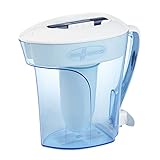
4. ZeroWater 10-Cup Pitcher Water Filter Removes PFOA/PFAS
- Check Your TDS: The 10 Cup 5-Stage Ready-Pour Water Filter Pitcher Dispenser has a TDS Meter to check the levels of dissolved...
- Advanced Filtration: Our 5-Stage Ion Exchange Filter removes virtually all dissolved solids (TDS) for the purest tasting water...
- IAPMO Certified & BPA-Free: Our 5-Stage filter is IAPMO Certified to reduce PFOA/PFOS, lead, chromium, and mercury. All Culligan...
Best for: Compact pitcher with TDS reading.
A 10-cup pitcher with a built-in TDS meter gives ZeroWater a simple, fridge-friendly way to watch dissolved solids before pouring. Its freestanding design and five-stage ion exchange filter make it a practical pick for buyers who want PFAS-conscious filtration without installing anything under the sink.
The pitcher measures 11.63″ long, 5.93″ wide, and 11″ high, so it can live in the refrigerator or on a counter without needing a dedicated base. Included components are the 10-cup pitcher, a five-stage water filter, and the TDS meter, which means the change timing is visible from day one. The ergonomic handle helps with daily lifting when the pitcher is full, and the freestanding format keeps setup simple for renters or small kitchens. Its BPA-free construction is part of the safety profile buyers often look for in a drinking-water container. For PFAS buyers, the combination of ion exchange and TDS tracking is the main appeal.
Pros
- 10-cup size fits fridge storage and daily use
- Built-in TDS meter shows when to change the filter
- 5-stage ion exchange filtration suits PFAS-focused shopping
- Ergonomic handle makes full-pitcher pouring easier
Cons
- 10-cup capacity is smaller than the larger dispenser models
This pitcher works well for smaller households or anyone who wants an uncomplicated PFAS-conscious filter at the fridge or counter. The meter adds clarity, which is helpful when you want a simple signal for replacement timing.
| Specification | Details |
|---|---|
| Brand | ZeroWater |
| Product Dimensions | 11.63″L x 5.93″W x 11″H |
| Material | Plastic |
| Included Components | 10-Cup Water Pitcher Filter, 5-Stage Water Filter, TDS Meter |
| Installation Type | Freestanding |
| Purification Method | Ion Exchange |
| Special Feature | Built In TDS Meter, Change Filter Indicator |
| Power Source | Non-powered |
I’d steer casual users to this if they want a pitcher format and want the meter to tell them when the filter is nearing the end of its useful life. It is especially appealing for apartments, office fridges, or anyone who does not want to install hardware. The size is manageable, and the monitoring feature makes it feel very straightforward to use.
5. Epic Pure Water Filter Pitchers for Drinking Water, 10 Cup

- Helps reduce the contaminants that matter: The Epic Pure filter helps reduce PFAS (PFOA and PFOS), lead, fluoride, chlorine...
- Independently tested: The Epic Pure filter is independently tested to NSF/ANSI 42, NSF/ANSI 53 and NSF/ANSI 401, with added...
- Drop-in fit for any Epic pitcher: Fits every Epic pitcher, including Pure, Pure XP, Nano and Nano XP. Made with BPA-free...
Best for: Lightweight pitcher with broad contaminant focus.
A 170-gram polypropylene body keeps Epic Pure XP unusually light for a 10-cup filter pitcher. Its PFAS-reducing cartridge and NSF/ANSI certification give buyers a portable gravity-fed option for drinking water that aims well beyond basic taste improvement.
The pitcher uses a 4″ x 4″ x 4″ housing, so it is compact enough for easy handling and efficient fridge placement. The included replaceable inner cartridge is the key consumable, and Epic describes the filter as removing up to 99.99% of tap water contaminants, including fluoride, chlorine, lead, Forever Chemicals, and microplastics. That scope matters for buyers who want one pitcher to handle a wide contaminant profile rather than just chlorine. The polypropylene build keeps the unit light, and the NSF and ANSI certifications give the filter claims more structure. Because it is gravity-fed, there is no power requirement or counter installation.
Pros
- 170-gram weight makes handling easy
- Replaceable inner cartridge supports ongoing use
- NSF and ANSI certification support contaminant claims
- PFAS and fluoride reduction targets broad tap-water concerns
Cons
- 4-inch cube-like size limits reservoir capacity compared with larger pitchers
This is a good fit for buyers who want a very light pitcher with serious contaminant-reduction goals. It works best for households that prioritize portability and broad filtration over high-volume storage.
| Specification | Details |
|---|---|
| Brand | Epic Water Filters |
| Product Dimensions | 4″D x 4″W x 4″H |
| Material | Polypropylene (PP) |
| Item Weight | 170 g |
| External Testing Certification | ANSI, NSF |
| Product Benefits | Reduces PFAS, Removes Fluoride, Replaceable Inner Cartridge |
| Capacity | 10 Cup |
| Power Source | Gravity-fed |
I like this for readers who want a light, compact pitcher and care about a broad contaminant list, not just one or two headline items. The replaceable cartridge format makes it easy to keep using without changing the whole pitcher. It feels especially suitable for small kitchens and people who want something easy to lift and store.
6. Clearly Filtered Water Filter Pitcher, 10 Cup BPA Free Water

- Unmatched Contaminant Protection: Your tap water faces threats most filters never address; the Clearly Filtered pitcher is backed...
- Family-Sized 80 Fl Oz Capacity: Stop refilling constantly; this large pitcher holds 80 fl oz (approximately 10 cups / 2.4 L...
- Premium Medical-Grade Materials: The pitcher filtering your water should be as clean as the water itself; that is why Clearly...
Best for: Broad-spectrum filter for health-focused households.
Medical-grade Tritan gives Clearly Filtered a sturdier-feeling pitcher body than basic plastic models, and the 80-fluid-ounce capacity is generous for everyday drinking water. Its affinity filtration approach and NSF-standard testing make it a strong fit for buyers who want PFAS-focused filtration with a wide contaminant target list.
The pitcher measures 10.87″ long, 5.25″ wide, and 11.4″ high, so it fits comfortably on a countertop or in a fridge shelf without being oversized. Included components are the pitcher, one filter, and a priming bag, which gets the system started without extra accessory hunting. Clearly Filtered says the pitcher targets 386+ contaminants, including PFAS/PFOA, fluoride, lead, arsenic, microplastics, chlorine, and perchlorate, with up to 99.99% removal for many of them. Its NSF/ANSI 42, 53, 401, and 473 compliance claims give the filtration profile a structured testing backdrop. The medical-grade Tritan material is the other practical advantage for regular daily handling.
Pros
- 386+ contaminant target list includes PFAS/PFOA
- 80-fluid-ounce capacity supports daily household use
- Medical-grade Tritan body adds a premium material profile
- NSF/ANSI 42, 53, 401, and 473 compliance claims support the filter design
Cons
- Priming bag adds an extra startup step before first use
This pitcher suits buyers who want a serious contaminant-reduction story and are willing to do a little setup work at the start. It is a strong option for families that want one pitcher to cover a wide range of water concerns.
| Specification | Details |
|---|---|
| Brand | Clearly Filtered |
| Product Dimensions | 10.87″L x 5.25″W x 11.4″H |
| Material | Medical-Grade Tritan |
| Capacity | 80 fluid ounces |
| Included Components | Pitcher, 1 Filter, Priming Bag |
| Installation Type | Countertop |
| Purification Method | Affinity Filtration |
| Special Feature | Independently Tested to comply NSF/ANSI Standards 42, 53, 401, 473 |
| Power Source | Manual |
I’d recommend this to shoppers who want one of the broadest contaminant lists in a pitcher and prefer a material that feels more premium than basic plastic. It is the kind of filter I’d choose for a household that cares about PFAS plus several other common tap-water concerns. The included priming bag also tells me the system is meant to be used carefully from the start.
7. Culligan ZeroWater 12-Cup Pitcher Water Filter Removes PFAS

- 5-stage advanced water filter pitcher: Our filter’s 5-Stage Advanced Water Filtration technology removes 99.9% of dissolved...
- Certified to reduce lead and Total PFAS: This water filter pitcher is certified by IAPMO to reduce Total PFAS (also known as...
- Powerful filtration for total confidence: Each water pitcher is equipped with a powerful Culligan with ZeroWater Technology...
Best for: Large pitcher with PFAS reduction.
A 96-fluid-ounce body gives Culligan ZeroWater more serving capacity than a standard pitcher, which is useful when several people drink from the same jug. Its five-stage filtration, TDS meter, and PFAS-reduction certification make it a practical countertop option for buyers focused on both quantity and water quality.
The pitcher measures 10.3″ long, 5″ wide, and 10.5″ high, so the larger capacity still comes in a manageable countertop form. It includes a built-in TDS meter and change-filter indicator, giving users a clear sign of when filtration performance is fading. The filter uses a mix of activated carbon and ion exchange, a combination aimed at reducing dissolved solids and contaminants such as lead, chlorine, mercury, and total PFAS. The BPA-free plastic and polystyrene body keeps the unit light enough for regular refills. For households that want a bigger serving count without moving to an undersink system, the 96-fluid-ounce size is the main draw.
Pros
- 96-fluid-ounce capacity serves more water per fill
- Built-in TDS meter helps manage filter changes
- 5-stage filtration targets lead, chlorine, mercury, and total PFAS
- BPA-free plastic construction suits daily household use
Cons
- Countertop footprint is larger than smaller 10-cup pitchers
This is a good fit for families that want a larger pitcher and want PFAS reduction without installation work. The meter adds clarity, and the bigger body reduces how often you need to refill it.
| Specification | Details |
|---|---|
| Brand | Culligan |
| Product Dimensions | 10.3″L x 5″W x 10.5″H |
| Material | BPA Free Plastic, Polystyrene |
| Capacity | 96 fluid ounces |
| Included Components | User Manual |
| Installation Type | Countertop |
| Purification Method | Activated Carbon, Ion Exchange |
| Special Feature | Built In TDS Meter, Change Filter Indicator, Ergonomic Handle, Lightweight, Reduce TDS |
| Power Source | Manual Operation |
I’d point to this for buyers who want a larger pitcher and like having a TDS meter in the lid path. It gives more usable water per fill than smaller models, which matters in a family kitchen. If you want a PFAS-focused pitcher that still feels easy to move and refill, this one is worth a close look.
8. Epic Pure XP Water Filter Pitcher with Advanced CoreXchange™ Filter

- Helps reduce the contaminants that matter: The Pure XP filter helps reduce PFAS (forever chemicals), lead, fluoride, chlorine...
- NSF certified filter, independently tested: The Pure XP filter is NSF certified to NSF/ANSI 42 and NSF/ANSI/CAN 372, and...
- Patented CoreXchange, less plastic waste: Dual-layer CoreXchange filtration pairs nano-fiber outer media with a carbon fiber block...
Best for: Countertop gravity pitcher with long-capacity filter.
A 3.5-liter pitcher with a 100-gallon filter gives Epic Pure XP a strong case for households that want fewer cartridge changes. Its gravity-fed ion exchange and nanofiltration setup makes it a useful pick for PFAS-focused buyers who prefer a countertop format with generous day-to-day output.
The pitcher measures 10″ by 6″ by 12″, so it has a taller, wider profile than compact fridge pitchers while still staying countertop-friendly. The included 100-gallon filter is the key number here, since it tells buyers how long the cartridge can last before replacement rather than just how much water the container holds. Epic lists ion exchange and nanofiltration as the purification methods, which helps explain why it is aimed at reducing forever chemicals and related contaminants. The plastic body keeps the unit lightweight enough for moving, and the gravity-fed operation means no outlet or pump is needed. For larger households, the 3.5-liter capacity is the everyday convenience factor.
Pros
- 100-gallon filter reduces replacement frequency
- 3.5-liter capacity supports family use
- Ion exchange and nanofiltration address PFAS-focused concerns
- Gravity-fed operation needs no power
Cons
- 12-inch height may be tall for low refrigerator shelves
This pitcher makes sense if you want a gravity-fed setup with more staying power between filter changes. It is especially appealing for households that drink a lot of water and want PFAS-conscious filtration without a powered system.
| Specification | Details |
|---|---|
| Brand | Epic Water Filters |
| Product Dimensions | 10″L x 6″W x 12″H |
| Material | Plastic |
| Capacity | 3.5 liters |
| Included Components | Pitcher and 100 Gallon Filter |
| Installation Type | Countertop |
| Purification Method | Ion Exchange, Nanofiltration |
| Power Source | Gravity-fed |
| Special Feature | Reduce Forever Chemicals |
I’d suggest this to readers who want a larger-capacity pitcher and do not want to think about filters every few weeks. The 100-gallon cartridge is the headline advantage, and the PFAS-reduction focus makes it more relevant than a basic taste filter. It feels best for households that want a practical, higher-output jug on the counter.
9. iSpring RCC7AK-BN NSF Certified, 75 GPD, Alkaline 6-Stage Reverse Osmosis

- PATENTED DESIGN – The top-mounted fastener allows for easy countertop installation entirely from above, eliminating the hassle...
- MINERAL BOOST – The patent-pending natural mineral AK stage delivers spring water with a balanced, healthy pH and multiple...
- SEE WHAT’S CAUGHT – The transparent first-stage filter housing makes it easy to monitor contaminant buildup, ensuring timely...
Best for: Under-sink RO with mineral stage.
A 75-gallon capacity and six-stage reverse osmosis setup give the iSpring RCC7AK-BN a serious under-sink footprint for buyers who want a more complete filtration path. Its top-mounted fastener, brushed nickel faucet, and no-power design make it a strong fit for kitchens that want PFAS-conscious filtration plus a dedicated drinking tap.
The system measures 15.5″ long, 16″ wide, and 18″ high, so it needs real cabinet space but brings a full under-sink package in return. Included components are the RO system, brushed nickel faucet, storage tank, and extra tool set, which covers the main pieces needed for installation and daily use. The transparent first-stage filter housing is useful because it lets you see buildup, making filter changes easier to manage. Its 6-stage purification includes reverse osmosis, alkaline, activated carbon, and carbon block stages, while the AK mineral stage is intended to restore balanced pH and essential minerals. For buyers who want a more complete system than a pitcher, this is the most appliance-like option in the group.
Pros
- 75-gallon capacity supports a full under-sink system
- Six-stage filtration includes reverse osmosis and alkaline stages
- Transparent first-stage housing helps monitor buildup
- Brushed nickel faucet and storage tank are included
Cons
- 18-inch height requires substantial cabinet clearance
This is a strong pick for shoppers who want a full reverse osmosis setup with a mineral stage and a dedicated faucet. It fits best in kitchens with enough cabinet room for a more permanent filtration system.
| Specification | Details |
|---|---|
| Brand | iSpring |
| Product Dimensions | 15.5″L x 16″W x 18″H |
| Material | Acrylonitrile Butadiene Styrene, Plastic, Polyethylene, Polypropylene, Polystyrene |
| Capacity | 75 gallons |
| Included Components | RO System, Brushed Nickel Faucet, Storage Tank, Extra Tool Set |
| Installation Type | Under Sink |
| Purification Method | Reverse Osmosis, Alkaline, Activated Carbon, Carbon block |
| Power Source | No Power Needed |
| Special Feature | Multi Stage Filtrartion, NSF certified |
I’d recommend this to buyers who want an under-sink system rather than a pitcher and are comfortable giving up cabinet space for it. The mineral stage and separate faucet make it feel like a more complete drinking-water station. If PFAS reduction is part of a broader push for better-tasting water, this is a compelling setup.
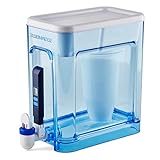
10. ZeroWater 22-Cup Water Filter Dispenser Removes PFOA/PFAS
- Filtered Water Dispenser: The 22 Cup 5-stage Ready-Read Water Filter Dispenser has an integrated TDS Meter to instantly check the...
- 5-Stage Filtration: Removes virtually all total dissolved solids (TDS) for the purest tasting water; Total Dissolved Solids are...
- IAPMO certified and BPA free: The filter is IAPMO certified to reduce PFOA/PFOS, lead, chromium, mercury and chlorine. All...
Best for: Large electric dispenser with TDS meter.
A 22-cup dispenser with corded-electric operation gives ZeroWater a different answer for buyers who want a larger countertop unit with consistent filtration support. The built-in TDS meter and five-stage ion exchange filter make it a practical choice for households comparing PFAS-focused dispensers.
The dispenser measures 5.5″ long, 10.4″ wide, and 11.3″ high, which gives it a compact countertop profile relative to its 5.2-liter capacity. Included components are the dispenser, one five-stage ZeroWater ion exchange filter, and a TDS meter, so the system arrives with the core monitoring piece already in place. The corded-electric power source separates it from the non-powered pitchers in the lineup, which may matter to buyers who like a more appliance-like experience. The built-in change-filter indicator helps keep the filter on a replacement cycle instead of relying on taste alone. For a family kitchen, the capacity and meter combination are the main value points.
Pros
- 22-cup capacity holds a large batch of water
- Built-in TDS meter tracks dissolved solids
- Corded-electric operation supports an appliance-like setup
- Five-stage ion exchange filtration suits PFAS-conscious use
Cons
- Corded-electric design requires an outlet on the counter
This dispenser suits households that want a larger water reserve and do not mind a corded appliance on the counter. It is a good middle ground between a small pitcher and a full under-sink system.
| Specification | Details |
|---|---|
| Brand | ZeroWater |
| Product Dimensions | 5.5″L x 10.4″W x 11.3″H |
| Material | Plastic |
| Capacity | 5.2 liters |
| Included Components | 1 x 22-Cup Dispenser, 1 x 5-Stage ZeroWater Ion Exchange Filter, 1 x TDS Meter |
| Installation Type | Countertop |
| Purification Method | Ion Exchange |
| Special Feature | Built In TDS Meter, Change Filter Indicator, Compatible With ZeroWater Replacement Filters |
| Power Source | Corded Electric |
I’d choose this for someone who wants more capacity than a pitcher but still wants the filtration system visible on the counter. The electric setup makes it feel more like a small appliance, which some users prefer for a kitchen water station. It is especially useful if you want the meter right there to help guide replacement timing.
Quick Comparison Table of Best Water Filters for PFAS
| Product Name | Filtration Type | Capacity | Installation | Best For | Check Price |
|---|---|---|---|---|---|
| Waterdrop 10UA Under Sink Water Filter | Under sink | Standard | Easy install | Compact sink use | Check Price |
| ZeroWater 32-Cup Water Filter Dispenser Removes | 5-stage | 32 cups | Dispenser | Large family use | Check Price |
| CuZn UC-200 Under Sink Water Filter | 3-stage | Standard | Under sink | Long-life value | Check Price |
| ZeroWater 10-Cup Pitcher Water Filter Removes | 5-stage | 10 cups | Pitcher | Small kitchens | Check Price |
| Epic Pure Water Filter Pitchers for | Dual-layer | 10 cups | Pitcher | High contaminant removal | Check Price |
| Clearly Filtered Water Filter Pitcher, 10 | Affinity filter | 80 oz | Pitcher | Broad contaminant removal | Check Price |
| Culligan ZeroWater 12-Cup Pitcher Water Filter | 5-stage | 96 oz | Pitcher | PFAS reduction | Check Price |
| Epic Pure XP Water Filter Pitcher | Ion exchange | 3.5 liters | Pitcher | Forever chemicals | Check Price |
| iSpring RCC7AK-BN NSF Certified, 75 GPD | 6-stage RO | 75 GPD | Under sink | Whole-home style filtration | Check Price |
| ZeroWater 22-Cup Water Filter Dispenser Removes | 5-stage | 22 cups | Dispenser | Mid-size households | Check Price |
How to Choose the Best Water Filter for PFAS
Pfas reduction technology
For PFAS reduction, choose the technology that matches how aggressive you need the filtration to be. Reverse osmosis gives the strongest broad PFAS reduction and suits buyers who want the most complete treatment at a single tap, while activated carbon works well for point-of-use filtration when the carbon bed is deep and the system is independently certified for PFAS reduction. Ion exchange media adds targeted capture and belongs in systems that list specific PFAS test results, not vague contaminant claims.
Look for NSF/ANSI or equivalent third-party certification for PFAS reduction, plus clear contaminant listings and test details. Best pick: reverse osmosis for maximum reduction, carbon block for simpler use, and ion exchange for buyers who want targeted PFAS capture with documented certification.
| Type | Best for | What to check |
|---|---|---|
| Reverse osmosis | Highest PFAS reduction | Certified PFAS claims, multi-stage membrane system |
| Activated carbon | Simple point-of-use treatment | Deep carbon block, PFAS-specific certification |
| Ion exchange | Targeted PFAS capture | Listed PFAS test data, resin/media capacity |
Flow rate and capacity
Choose flow rate and capacity around your household’s peak demand, not just average use. A single-person or low-demand home can use a modest under-sink system, while families need a higher output that keeps up with cooking, drinking, and filling bottles without a long wait. Look at gallons per minute for faucet systems and gallons per day for reverse osmosis units, then match capacity to the number of people and how often water runs at once.
Good filters list both flow and rated life clearly; weak ones hide the numbers. Best pick: compact lower-output systems for one to two people, mid-output units for families, and high-capacity models for homes with heavy daily use.
| Household need | Output target | Capacity signal |
|---|---|---|
| 1-2 people | Lower GPM or modest GPD | Clear cartridge life rating |
| 3-4 people | Moderate GPM or higher GPD | Published peak-demand support |
| Large or high-use home | Higher GPM or high GPD | Long service interval and stable flow |
Installation and system fit
Install the system where it fits your space and your plumbing, then choose the format that keeps use simple. Under-sink units suit buyers who want a dedicated drinking-water tap and do not mind a more involved install. Countertop filters fit renters and smaller kitchens because they avoid cabinet work, while whole-home systems serve buyers who want PFAS treatment at every faucet and shower point.
Check for standard fittings, drain access for reverse osmosis, and enough cabinet clearance for the tank and cartridges. Best pick: under-sink for most kitchens, countertop for renters or tight spaces, and whole-home for broad household treatment.
| Type | Best for | Fit check |
|---|---|---|
| Under-sink | Daily drinking water | Cabinet space, faucet hole, drain access |
| Countertop | Renters and small kitchens | Limited plumbing changes, stable surface |
| Whole-home | Full-house protection | Main line compatibility, service access |
Maintenance and replacement costs
Maintenance should stay simple enough that you replace parts on schedule, not after performance drops. Look for twist-off or quick-connect cartridges, clearly labeled replacement intervals, and filter packs that include every stage you need. Indicator alerts matter because they remove guesswork, especially on reverse osmosis systems with multiple cartridges and a membrane.
Good systems show separate timelines for sediment, carbon, and membrane changes; poor systems bundle everything into one vague reminder. Best pick: quick-swap filters with clear alerts for busy households, and multi-stage systems with labeled replacement schedules for buyers who want precise upkeep.
Water quality and extra contaminant reduction
For extra contaminant reduction, choose a filter that tackles lead, chlorine, and taste and odor along with PFAS. A strong carbon block or reverse osmosis system handles that broader job well, while a sediment prefilter protects the main media from clogging and extends service life. If you want lower dissolved solids, reverse osmosis gives the strongest TDS reduction and creates the cleanest tasting water, but buyers who want to keep more mineral content should choose carbon-based filtration with documented PFAS performance.
Best pick: reverse osmosis for maximum purity and TDS reduction, carbon block for better taste with mineral retention, and any serious system with a sediment prefilter for longer life.
Which Should You Choose?
- If you want the strongest overall PFAS reduction and don’t mind a more advanced system, choose a reverse osmosis under-sink setup with multi-stage filtration.
- If you need a simple countertop or fridge-friendly option for a small household, choose a 10-cup pitcher with a high-capacity PFAS-focused filter.
- If you fill lots of water for a family and want fewer filter changes, choose a large dispenser with a built-in TDS meter and 5-stage filtration.
- If you want an under-sink filter for everyday tap-water improvement with low maintenance, choose a long-life under-sink cartridge designed for sustained contaminant reduction.
Quick Best Water Filter For Pfas Buying Checklist
- Check PFAS certification. Look for third-party testing or standards that confirm the filter is designed to reduce PFAS compounds.
- Match the system type to your space. Choose an under-sink, countertop, or whole-home setup that fits your kitchen and plumbing.
- Review flow rate and capacity. Make sure the filter can handle your daily water use without slow dispensing or frequent refills.
- Confirm replacement schedule. Pick a model with clear cartridge life guidance so performance stays consistent over time.
- Compare total maintenance effort. Consider how easy it is to swap filters, monitor alerts, and keep the system clean.
- Look for broad contaminant reduction. A strong PFAS filter should also help reduce other common water quality issues like taste, odor, and lead.
How PFAS Filtration Removes Contaminants at the Molecular Level
PFAS are a large family of synthetic chemicals that can slip through many standard carbon filters because they are small, persistent, and chemically stable. The best water filter for PFAS usually relies on adsorption, ion exchange, or a membrane barrier to capture these compounds before they reach the tap. Granular activated carbon can be effective for some PFAS, especially longer-chain types, while reverse osmosis and specialized ion exchange media can remove a broader range.
Performance depends on contact time, media quality, and the specific PFAS present in the water supply.
In practice, no single technology works equally well for every contamination profile, which is why treatment selection should match the water test results and the target PFAS compounds.
Comparing Filter Technologies for PFAS Reduction
Different filter formats solve the PFAS problem in different ways. Point-of-use systems are often preferred for drinking and cooking water because they treat a smaller volume and can use more advanced media economically. Whole-house systems can improve water entering showers and appliances, but they are usually bulkier and may not provide the same level of reduction as a dedicated drinking-water unit.
Reverse osmosis is highly effective but produces wastewater and usually needs a storage tank. Activated carbon is simpler to maintain, though it must be sized correctly for adequate contact time.
| Type | Best for | Trade-off |
|---|---|---|
| Activated carbon | Common PFAS reduction in drinking water | Media saturates and needs timely replacement |
| Reverse osmosis | Broad contaminant removal at the tap | Uses more space and sends some water to drain |
| Ion exchange | Targeted PFAS reduction in specific water conditions | Performance depends on resin quality and capacity |
| Whole-house carbon | Reducing exposure at multiple fixtures | Less efficient per gallon than point-of-use systems |
Filter Maintenance and Replacement Signs
PFAS treatment depends heavily on keeping the filter media active. Once carbon or resin becomes saturated, captured contaminants can pass through more easily, so replacement schedules matter as much as the original system choice. Most manufacturers base maintenance on gallons filtered, water quality, or a service interval rather than visible wear.
If water pressure drops, flow becomes unusually slow, or the unit reaches its rated capacity, those are practical warnings that the media may be near the end of its useful life.
It also helps to flush new cartridges when required and keep housing seals clean to prevent leaks. For households with high water use, tracking filter dates can prevent accidental overuse and preserve PFAS reduction performance.
Installation Factors That Affect Real-World Performance
Even a strong PFAS-rated filter can underperform if installation is poor. Sediment buildup, improper tubing connections, or bypass leaks can reduce contact time and allow untreated water to mix back in. Reverse osmosis systems need correct pressure and drainage, while under-sink carbon or ion exchange units need enough space for service access.
If the system includes multiple stages, the order of the cartridges matters because prefilters protect the final PFAS-removal stage from clogging too quickly.
It is also important to confirm that the faucet, plumbing, or refrigerator connection is compatible before buying. A clean installation with the right fittings helps the system deliver the performance claimed in testing.
Health, Certification, and Water Testing Considerations
When reducing PFAS exposure, look for evidence that the filter was tested against recognized standards rather than relying on marketing claims alone. Third-party certification can help verify that the system performs as stated under defined conditions. Water testing is equally important because PFAS levels can vary by neighborhood, well depth, and seasonal water changes.
A test report can reveal whether you need a system focused on one compound family or a broader treatment approach.
It is also wise to consider other contaminants that may be present alongside PFAS, such as chlorine, lead, or sediment. The best setup is often one that addresses the full water profile, not just a single chemical class.
Frequently Asked Questions (FAQs)
What Makes The Best Water Filter For Pfas Effective?
The best water filter for PFAS is effective because it uses media or membranes that can capture these persistent chemicals before they reach your glass. Systems with reverse osmosis, activated carbon, or ion exchange often perform well, especially when they include verified reduction claims and proper maintenance schedules.
Should I Choose Reverse Osmosis For Pfas Removal?
Yes, reverse osmosis is a strong option for PFAS removal because it forces water through a very fine membrane that blocks many dissolved contaminants. A system with a carbon prefilter usually works better, since it helps protect the membrane and improves overall treatment efficiency.
Do Carbon Filters Work Well Against Pfas?
Carbon filters can work well against PFAS when they use enough high-quality activated carbon and are sized for the water volume you use. Performance depends on contact time and cartridge life, so larger-capacity filters usually do a better job than small basic cartridges.
What Certifications Should I Look For In A Pfas Filter?
Look for certifications or testing that specifically mention PFAS reduction, because that provides stronger proof than general filtration claims. Independent verification is important, and clear documentation should show which compounds were tested, how much reduction was achieved, and under what flow conditions.
How Often Do Pfas Filters Need Replacement?
PFAS filters need replacement according to the manufacturer’s capacity limit, because exhausted media can lose effectiveness over time. The exact timing depends on water quality and usage, but systems with indicator alerts or documented cartridge ratings make upkeep much easier to manage.
Can A Pfas Filter Improve Water Taste Too?
Yes, a PFAS filter can improve water taste too because many systems also reduce chlorine, sediment, and odor-causing compounds. That makes the water cleaner-tasting, especially in households that notice a chemical or metallic flavor from tap water.
Is An Under-Sink Pfas Filter Better Than A Pitcher?
An under-sink PFAS filter is usually better than a pitcher because it typically provides stronger reduction capacity, faster flow, and larger treatment volume. Pitchers are convenient for light use, but under-sink systems are better suited for families that want consistent filtration at the tap.
Final Suggestions
Choosing the best water filter for pfas helps create cleaner, better-tasting water while reducing exposure to stubborn contaminants. With the right filtration method, capacity, and maintenance plan, these systems deliver practical everyday value for many homes. A well-chosen filter can make a lasting difference, so move forward with confidence and choose the setup that fits your water needs best.