Top 10 Best Right Angle Die Grinder Picks
best right angle die grinder models matter when precision and access are nonnegotiable. In tight engine bays, welded assemblies, and hard-to-reach corners, the difference between a smooth finish and a frustrating job often comes down to tool geometry, motor efficiency, and control. The best right angle die grinder combines compact design with the torque, speed, and balance needed for metal finishing, deburring, and surface prep.
Variations like a right-angle die grinder or angle die grinder can differ in comfort, spindle design, and abrasive compatibility, which affects how each tool performs under load. With materials, bearings, collet size, and airflow all influencing results, the details deserve a closer look.
The next section breaks down what separates ordinary tools from the ones worth attention.
In-depth Reviews of the Best Right Angle Die Grinder
1. Milwaukee Electric – M12 Fuel 1/4 INCH Right Angle DIE

- POWERSTATE Brushless Motor
- Shadowless LED work light for maximum visibility
- Spindle lock for easy accessory changes with one wrench
Best for: Cordless control for service mechanics.
A POWERSTATE brushless motor gives the Milwaukee M12 FUEL right angle die grinder cordless power for cutting, grinding, and sanding in cramped service bays. The 12-volt lithium-ion platform keeps it mobile where hoses get in the way, while the 1/4-inch format suits common accessories. Metal cleaning and surface prep become easier when access matters more than bulk.
A shadowless LED work light helps brighten the exact spot you are working on, which matters when the head is tucked behind brackets or under a chassis. The spindle lock lets you swap accessories with one wrench, so changeovers stay quick during mixed tasks. An ergonomic barrel grip improves control in tight spaces, and the black-and-red layout keeps the tool easy to identify in a busy box. Because it is aimed at professional service mechanics, it fits repeated metal cleaning, surface prep, and cutting without tying the job to an air line. The cordless format also means fewer setup steps when moving from one bay to another.
Pros
- POWERSTATE brushless motor supports cutting, grinding, and sanding
- 12-volt lithium-ion power adds cordless mobility around the vehicle
- Shadowless LED work light improves visibility in confined spaces
- Spindle lock allows accessory changes with one wrench
Cons
- Uses a 12-volt battery platform, so it is less suited to users who want nonstop pneumatic runtime from an air line.
For mechanics who need a compact grinder that travels with them, this Milwaukee focuses on access, visibility, and quick accessory changes. It is a practical pick when tight-space work matters more than compressor dependency.
| Specification | Details |
|---|---|
| Brand | Milwaukee |
| Voltage | 12 |
| Power Source | Lithium Ion Battery |
| Recommended Uses For Product | Cutting, Grinding, Sanding |
| Color | Black/Red |
I would point buyers toward this one if they work in automotive service and want a grinder that stays maneuverable around panels, hoses, and engine bays. The LED light and spindle lock are the features that make daily use easier, while the cordless platform is the real advantage for moving quickly between jobs without air equipment.
2. Ingersoll Rand 301B 1/4″ Collet Air Die Grinder

- 1/4" COLLET AIR DIE GRINDER: The Ingersoll Rand 301B is a compact right-angle air die grinder with a 0.25 hp motor that delivers...
- PRECISE CONTROL & ACCESS: The self-locking throttle keeps this burr grinder disengaged until activated, providing added safety and...
- DURABLE & RELIABLE DESIGN: Built with a rugged aluminum housing and precision ball-bearing construction, this die grinder tool is...

Best for: Pneumatic pick for tight metalwork.
A 0.25 hp air motor makes the Ingersoll Rand 301B a compact right-angle die grinder for grinding, cutting, and polishing in hard-to-reach places. The 21,000 rpm free speed gives it enough pace for detail work while keeping the tool compact for automotive and fabrication tasks. Its 1/4-inch collet matches common burrs and stones used in shop work.
The self-locking throttle is a meaningful safety feature because it stays disengaged until you activate it, which helps when the tool is carried between tasks or set down on a bench. Because it is sold individually, buyers can add it to an existing air setup without paying for duplicates they do not need. The black body keeps the package straightforward, and the imported metal construction is aimed at regular shop use rather than occasional hobby work. Since an air compressor is not included, this model makes the most sense for users who already have pneumatic supply and want a dedicated right-angle grinder for tight spaces and precision finishing.
Pros
- 0.25 hp air motor supports grinding, cutting, and polishing
- 21,000 rpm helps maintain efficient material removal
- 1/4-inch collet fits common accessories for shop use
- Self-locking throttle adds a safer startup control
Cons
- An air compressor is not included, so it only works as intended for buyers who already have pneumatic equipment.
This is a practical air grinder for users who already run compressors and need a compact tool for precise work. It fits shops that value a simple right-angle layout and controlled activation more than cordless convenience.
| Specification | Details |
|---|---|
| Brand | Ingersoll Rand |
| Power Source | Air Powered |
| Color | Black |
| Special Feature | Air, die grinder |
| Collet Size | 1/4 inch |
My take is that this suits a buyer who already owns air tools and wants a straightforward grinder for fabrication or automotive cleanup. The 21,000 rpm speed and self-locking throttle are useful everyday features, and the compact air-powered format keeps it focused on tight-space work rather than portability.
3. Milwaukee Electric – M12 Fuel 1/4 INCH Right Angle DIE
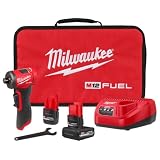
- Generates 0.4 HP motor output Greater mobility & access 4-mode RPM control with responsive variable-speed trigger precision allows...
Best for: Cordless option for detailed metal work.
A 0.4 HP motor gives this Milwaukee M12 FUEL right angle die grinder the output needed for metal work while keeping the tool battery powered. The angled style improves access in awkward spots, and the brushless platform is meant for more power, more runtime, and longer life. For buyers who need a mobile grinder for tight access, that combination matters immediately.
The 4-mode RPM control adds useful precision because you can match speed to the task instead of using one fixed setting for every burr or wheel. A responsive variable-speed trigger further helps when moving from light sanding to more aggressive grinding. The metal body gives the tool a shop-ready feel, and the 1/4-inch right angle layout is the familiar setup most users want for accessory compatibility. Because it is battery powered, this model is especially useful for service work where access changes constantly and dragging an air hose would slow the job. It is a strong fit for users who want Milwaukee mobility with controlled speed in compact spaces.
Pros
- 0.4 HP motor output supplies compact grinding power
- 4-mode RPM control supports task-specific speed selection
- Variable-speed trigger improves control on delicate work
- Battery-powered design increases mobility in tight spaces
Cons
- Battery power improves mobility, but it does not provide the continuous air-tool runtime some heavy shop users prefer.
This Milwaukee makes sense for users who want controlled speed and cordless access in the same tool. It is especially appealing for metalworkers and mechanics who bounce between fine finishing and more aggressive material removal.
| Specification | Details |
|---|---|
| Brand | Milwaukee |
| Material | Metal |
| Style | Angled |
| Power Source | Battery Powered |
| Color | Red |
I’d recommend this to readers who want a cordless grinder with more control than a basic single-speed tool. The 4-mode RPM control stands out for detail work, and the battery-powered layout is helpful when the job site changes often or the work area is too cramped for hoses.
4. AIRCAT 6280 .75 HP Angle Die Grinder with Spindle Lock,
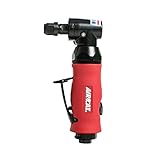
- Angle Die Grinder: Quiet, efficient power; 18,000 RPM; .75 HP non-stall motor
- Easy Control: Speed control switch located at the top of the grip for added control
- Tuned Exhaust System: Patented silencing technology reduces the noise level to 79 dBA
Best for: Quiet shop grinder with top control.
An 18,000 RPM, .75 HP non-stall motor gives the AIRCAT 6280 the kind of steady angle-grinding power that suits shop use. The compact 7-inch length keeps it manageable in confined areas, while the carbon steel body adds a traditional pneumatic-tool feel. Buyers who want a quieter right angle die grinder will notice the difference from the start.
The tuned exhaust system is a real advantage because the patented silencing technology brings the noise level down to 79 dBA, which makes long sessions easier on the ears. A speed control switch on the top of the grip gives you immediate access to the throttle setting without shifting your hand around the body. The composite handle and grip are shaped for comfort, and the Erickson-style precision collet helps keep accessories seated accurately. With a 7-inch by 3.4-inch by 1.7-inch footprint, it remains compact enough for bodywork, fabrication, and other jobs that happen near obstacles. This is a strong choice when quiet operation and control matter together.
Pros
- 18,000 RPM and .75 HP motor support steady grinding power
- 79 dBA noise level helps reduce shop noise
- Top-mounted speed control switch improves handling
- 7-inch compact length aids access in confined areas
Cons
- It is air powered, so buyers without a compressor setup will need additional equipment to use it.
For buyers who want a quieter pneumatic grinder with real speed control, this AIRCAT is easy to appreciate. It fits workshops where comfort and noise reduction matter as much as raw output.
| Specification | Details |
|---|---|
| Brand | AIRCAT |
| Material | Carbon Steel |
| Product Dimensions | 7″L x 3.4″W x 1.7″H |
| Style | Ergonomic |
| Power Source | Air Powered |
I think this is a smart pick for someone who spends real time in a shop and wants a right angle grinder that is easier to live with acoustically. The top-mounted control and 79 dBA noise level are the features that make it feel more refined during longer sessions, especially in enclosed work areas.
5. Chicago Pneumatic CP875 – Air Angle Die Grinder Tool, 1/4

- SPEED and POWER: Complete high-speed grinding efficiently with 0.3 HP / 220 W output and 22,500 RPM free speed for demanding...
- ERGONOMICS: Reach confined work areas with a compact 90-degree angle head, 4.88-inch length, and lightweight 0.99 lb design for...
- SAFETY: Prevent accidental start-ups with a safety throttle lever, while the built-in air regulator supports controlled pneumatic...
Best for: Compact air grinder for quick finishing.
A 0.3 HP motor with 22,500 RPM gives the Chicago Pneumatic CP875 quick response for grinding and polishing. Its 90-degree angle head keeps the tool compact for tight areas, and the 4.88-inch length makes it easy to tuck into close quarters. For buyers who want a short, nimble right angle die grinder, those dimensions matter a lot.
The aluminum body keeps the tool light enough for extended handling, which is useful when finishing multiple parts or working overhead. A built-in safety throttle lever adds protection against accidental start-ups, so it is easier to manage during busy shop routines. Since the head is angled and the body is compact, it suits wheel work, edge cleanup, and polished surfaces where access is limited but control still matters. The air-powered setup is a fit for users who already have compressor access and want a smaller grinder dedicated to short, precise tasks. Because the tool stays focused on portability and speed, it works well for users who value quick access over extra features.
Pros
- 22,500 RPM supports fast grinding and polishing
- 0.3 HP output gives compact pneumatic power
- 90-degree angle head improves access in tight spaces
- Aluminum body helps keep handling easy over longer use
Cons
- Its 4.88-inch length is very compact, but that also means there is less body leverage for users who prefer a longer grip area.
This Chicago Pneumatic model is a good match for users who want a short, quick grinder for finishing work. It is especially useful when access is tight and the job calls for a light, compact air tool.
| Specification | Details |
|---|---|
| Brand | Chicago Pneumatic |
| Material | Aluminum |
| Product Dimensions | 4.88″L |
| Style | Angled/Tool |
| Power Source | Air Powered |
I’d suggest this to someone who wants a short, fast air grinder for polishing and cleanup rather than heavy material removal. The small footprint and high speed make it easy to place in tight spots, and the safety throttle is a useful detail for everyday shop handling.
6. WORKPRO Air Angle Die Grinder, 20000 RPM, 1/4″ & 1/8″

- 【1/4" Air Right Angle Die Grinder】 The 90-degree head allows flexibility in many applications for reaching tight or angled...
- 【High Free Speed 】The Pneumatic angle die grinder operates at a maximum speed of 20,000 RPM continuous power with an air...
- 【Ideal for One-Handed Grip 】The small, lightweight design provides easy operation and greater access to tight spots. The air...
Best for: Dual-collet kit for versatile shop tasks.
A 20,000 RPM right-angle air grinder with both 1/4-inch and 1/8-inch collets gives the WORKPRO kit immediate flexibility for different accessories. The 90-degree head reaches tight spots while the 16-ounce weight keeps the tool manageable in hand. For buyers who want one grinder for multiple small-shop tasks, that mix of collet sizes and compact weight is valuable.
This model includes 1/4-inch and 1/8-inch collets, so it can handle a wider range of bits, burrs, and polishing tools without forcing a separate purchase. The integral safety-lock throttle lever helps prevent accidental startup, a useful safeguard when the tool is passed around or stored with other air tools. Its metal-and-plastic construction keeps it practical rather than oversized, and the black, red, silver, and white finish makes it easy to spot in a toolbox. The note to remove the dust plug before inserting the air connector is worth following because it affects setup. For users who need a flexible air grinder for deburring, porting, and polishing, the kit approach is especially helpful.
Pros
- 20,000 RPM provides useful speed for grinding jobs
- 1/4-inch and 1/8-inch collets add accessory flexibility
- 16-ounce weight supports easier handling
- Safety-lock throttle lever helps prevent accidental startup
Cons
- The air connector requires removing the dust plug first, so setup is a little more involved than with a ready-to-go plugged-in tool.
This WORKPRO kit is a smart option for users who want one grinder that can handle more than one accessory size. It fits light shop work especially well because the included collets broaden what you can do with it.
| Specification | Details |
|---|---|
| Brand | WORKPRO |
| Material | Metal, Plastic |
| Power Source | Corded Electric |
| Color | Black, Red, Silver, White |
| Item Weight | 16 ounces |
I see this as a practical buy for someone who wants a kit-style grinder with more accessory flexibility than the bare minimum. The dual collets are the big advantage, and the safety-lock throttle makes it feel more thoughtful for general shop use where the tool may be swapped between tasks often.
7. SHALL Right Angle Die Grinder, 90 Degree, 1/4″ & 1/8″

- Complete Air Die Grinder Kit: Including one pneumatic right angle die grinder (20,000 RPM), 24PC sanding discs, 1PC base, 1PC...
- Sanding Discs Set: 5x2-inch torque louver disc 80 mesh, 2x2-inch wool grinding disc, 2x2-inch purple fiber torque sanding disc...
- Product Parameters: Clamping capacity: 1/8" & 1/4"; Air inlet diameter: 1/4" (6.3mm); Air consumption: 113l/min (4cfm); Operating...
Best for: Accessory-rich starter grinder kit.
A 20,000 RPM pneumatic grinder paired with 24 sanding discs gives the SHALL kit immediate sanding and finishing capability. The 1/4-inch and 1/8-inch collets expand what accessories you can mount, while the lightweight design helps with longer sessions. Buyers who want a right angle die grinder plus consumables in one box get a lot of task coverage here.
The kit includes a base, compressed air connection, lubricant, and two chuck keys, so the setup is geared toward getting into use without hunting for every small part separately. The disc assortment is specific: 5 two-inch torque louver discs at 80 mesh, 2 wool grinding discs, 2 purple fiber torque sanding discs, and 15 nylon torque sanding discs in coarse, medium, and fine grades. That range lets you move from heavier cleanup to smoother finishing with the same tool platform. The clamping capacity of 1/8 inch and 1/4 inch keeps accessory changes practical. For buyers who want a stocked kit for sanding and polishing jobs, the included pieces make a noticeable difference.
Pros
- 20,000 RPM supports steady pneumatic grinding
- 1/4-inch and 1/8-inch collets increase accessory options
- 24 included sanding discs add immediate task readiness
- Lightweight design helps with longer hand-held use
Cons
- It is an air tool kit, so it depends on a compressor and air setup to be useful.
This SHALL kit works well for users who want more than a bare grinder and prefer a package with useful extras. It is especially attractive for sanding and finishing because the disc assortment is already included.
| Specification | Details |
|---|---|
| Brand | SHALL |
| Power Source | Air |
| Color | Red |
| Special Feature | Lightweight |
| Included Components | Die Grinder |
I’d favor this for a buyer who wants a kit that can start working immediately with sanding discs and small accessories already included. The value here is the breadth of the bundle, and that makes it a sensible choice for light fabrication, cleanup, and polishing tasks in a home or small shop.
8. SEESII 1/4″ Right Angle Die Grinder Kit w/ 2 Batteries,23PCS

- 【Work Anywhere Without Limits】 Experience true mobility with this cordless die grinder—no air hoses, no compressors, no...
- 【50% More Powerful Brushless Motor for Grinding】 Built with a 0.4 HP brushless motor, this power die grinder delivers up to...
- 【Dual Batteries for Extended Runtime】 Equipped with 2x2000mAh batteries, the battery die grinder delivers a combined runtime...
Best for: Cordless kit for mobile grinding.
A 0.4 HP brushless motor and 24,500 RPM output give the SEESII right angle die grinder serious cordless pace for grinding, polishing, sanding, deburring, and engraving. The 18-volt battery platform means no hoses or compressor are needed, so the tool moves freely under cars and into engine bays. With two batteries included, the kit is aimed at uninterrupted mobility.
The 1/4-inch right angle format is useful for common accessories, and the brushless motor is specifically described as 50% more powerful for grinding compared with the prior class of tool the brand references. That makes it more appealing for users who want a battery grinder that does more than light detailing. Because the kit includes 23 pieces, it is not just a bare tool; it gives you a broader starting point for different tasks. The blue finish is easy to spot in a crowded toolbox, and the cordless design removes the drag of hoses when reaching awkward angles. For mobile users, that freedom is the main benefit.
Pros
- 24,500 RPM supports fast cordless grinding
- 0.4 HP brushless motor adds strong output
- Two included batteries help reduce downtime
- 23-piece kit broadens task versatility
Cons
- The kit is battery powered, so buyers who want a purely pneumatic tool for continuous shop-air use will not get that setup here.
This SEESII kit is a good fit for users who value mobility and want a cordless grinder with enough speed for real work. It makes the most sense for garage, vehicle, and other access-limited jobs where hoses get in the way.
| Specification | Details |
|---|---|
| Brand | Seesii |
| Voltage | 18 volts |
| Power Source | Battery Powered |
| Recommended Uses For Product | Deburring, Engraving, Grinding, Polishing, Sanding |
| Color | Blue |
I would choose this for someone who wants a cordless die grinder with enough speed and battery support to feel practical beyond light duty. The two batteries and 23-piece kit make it especially appealing if you move between jobs often and want a self-contained setup that does not depend on shop air.
9. 1/4 inch angle air die grinder with 22 pcs 2-inch
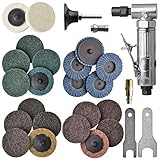
- 1/4 inch angle die grinder has a free speed of up to 20,000 RPM with 0.32HP motor, small size, and high power, suitable for...
- The 90-degree head design for reaching tight or angled grinding jobs, The pneumatic angle die grinder features a built-in speed...
- Ergonomically designed, lightweight aluminum body with low vibration design to reduce hand fatigue,durable ball-bearing...
Best for: Lightweight air grinder for precision work.
A 0.32 HP motor and 20,000 RPM give this TOOLPEAK angle air die grinder compact power for tight-space work. The 90-degree head helps reach angled grinding jobs, and the lightweight aluminum body is paired with a low-vibration design. For buyers doing precision machining or engraving, those specifics support steadier control.
The built-in speed regulator is useful because it gives you better control over how aggressively the tool cuts or smooths, which matters when the job shifts between metal removal and detail finishing. A durable ball-bearing motor adds a mechanical quality that suits repeat use, and the rear exhaust helps direct airflow away from the work area. The polished aluminum body keeps the tool compact and easy to handle while still feeling appropriate for shop use. Because it is air powered, it belongs with users who already have a compressor and want a small right-angle grinder for precise tasks rather than broad material removal. The 22-piece accessory bundle also expands what you can do immediately.
Pros
- 20,000 RPM gives the tool useful speed for fine grinding
- 0.32 HP motor suits compact precision work
- Built-in speed regulator improves control
- Low-vibration aluminum body helps reduce hand fatigue
Cons
- It is air powered, so it depends on compressor access rather than offering cordless portability.
This TOOLPEAK model fits users who care about precision and want a small grinder that is easier to steer in tight spaces. The speed regulator and low-vibration body are the details that make it feel more controlled in use.
| Specification | Details |
|---|---|
| Brand | TOOLPEAK |
| Material | Aluminum |
| Style | Angled |
| Power Source | Air Powered |
| Color | Polished Color |
My advice is that this one suits detail-oriented users who want a compact air grinder with more control than a bare-bones model. The speed regulator and low-vibration design are the key benefits, especially if you do repeated precision work and want the tool to stay manageable in the hand.
10. AIRCAT 6255 .4 HP Composite Right Angle Die Grinder, 18,000

- 18,000 RPM and .4 HP Motor: A quiet, powerful tool ideal for shop or home applications (82 dBA)
- Versatile: Deburring, high-speed blending, smoothing, and porting in confined areas
- Tuned Exhaust System: Patented silencing technology reduces the noise level to 82 dBa
Best for: Quiet compact grinder for blended finishing.
An 18,000 RPM, .4 HP pneumatic motor gives the AIRCAT 6255 enough speed for deburring, blending, smoothing, and porting in confined areas. The 7.1-inch body keeps the tool compact, while the 82 dBA sound level makes it easier to use in a shop or home setting. Buyers who want a right angle die grinder with a smaller footprint will notice that balance immediately.
The composite handle is shaped for comfort, which matters during longer finishing sessions where grip quality affects control. A patented tuned exhaust system reduces noise, and that quieter profile can be especially helpful when the grinder is used indoors or around other people. The 7.1-inch by 3.1-inch by 1.5-inch dimensions make it slim enough to reach into awkward spaces without feeling oversized. Because it is a pneumatic tool, it suits buyers who already rely on air power and want a grinder focused on finishing-style work rather than heavy stock removal. For users who value compactness and a calmer noise level, this model has a clear appeal.
Pros
- 18,000 RPM supports finishing tasks in tight areas
- .4 HP motor provides steady pneumatic output
- 82 dBA noise level helps reduce operating noise
- Compact 7.1-inch body improves access in confined spaces
Cons
- It is pneumatic, so it needs an air supply and is not a standalone cordless tool.
This AIRCAT is a sensible choice for buyers who want a quieter compact grinder for finishing work. It is particularly useful when the job is in a confined space and comfort matters as much as speed.
| Specification | Details |
|---|---|
| Brand | AIRCAT |
| Material | Metal |
| Product Dimensions | 7.1″L x 3.1″W x 1.5″H |
| Style | Pencil |
| Power Source | pneumatic-powered |
I’d pick this for someone who wants a slim grinder that feels easier to use over longer finishing jobs. The noise level and compact body are the strongest reasons to buy it, especially if you work in an environment where quieter pneumatic tools are appreciated.
Quick Comparison Table of Best Right Angle Die Grinders
| Product Name | Power Source | Speed | Collet Size | Best For | Check Price |
|---|---|---|---|---|---|
| Milwaukee Electric – M12 Fuel 1/4 | Battery | Up to 4-mode | 1/4 inch | Metal work | Check Price |
| Ingersoll Rand 301B 1/4″ Collet Air | Air Powered | 21,000 rpm | 1/4 inch | Tight spaces | Check Price |
| Milwaukee Electric – M12 Fuel 1/4 | Battery Powered | 4-mode RPM | 1/4 inch | Mobile grinding | Check Price |
| AIRCAT 6280 .75 HP Angle Die | Air Powered | 18,000 rpm | Precision collet | Quiet shop use | Check Price |
| Chicago Pneumatic CP875 – Air Angle | Air Powered | 22,500 rpm | 1/4 inch | Fast polishing | Check Price |
| WORKPRO Air Angle Die Grinder, 20000 | Corded Electric | 20,000 rpm | 1/4 & 1/8 inch | Detail grinding | Check Price |
| SHALL Right Angle Die Grinder, 90 | Air | 20,000 rpm | 1/4 & 1/8 inch | Sanding kits | Check Price |
| SEESII 1/4″ Right Angle Die Grinder | Battery Powered | 18V | 1/4 inch | Cordless access | Check Price |
| 1/4 inch angle air die grinder | Air Powered | 20,000 rpm | 1/4 inch | Tight grinding | Check Price |
| AIRCAT 6255 .4 HP Composite Right | pneumatic-powered | 18,000 rpm | Unknown | Confined areas | Check Price |
How to Choose the Best Right Angle Die Grinder
Power and speed range
Choose power and speed around the work you actually do, not the highest number on the spec sheet. For cutting and heavy deburring, pick a grinder with strong torque and a top speed in the 18,000 to 25,000 RPM range, then favor a model that holds speed under pressure instead of one that surges and stalls. For polishing and finishing, a wider variable-speed range with a smooth low end gives better control.
Pneumatic models suit long, continuous use and high speed, while electric models suit portability and simpler setup. Pick a high-airflow pneumatic unit for shop air and continuous metal removal, or an electric variable-speed grinder for mixed tasks and all-day convenience.
| Type | Best for | What to look for |
|---|---|---|
| High-speed pneumatic | Cutting and aggressive deburring | Strong airflow demand, steady RPM under load |
| Variable-speed electric | Polishing and mixed-use work | Wide speed range, smooth low-speed control |
| Constant-speed pneumatic | Production grinding | Reliable output and minimal slowdown |
Head size and access
For tight spaces, the head size matters as much as raw power. Choose a compact angle head when you work inside engine bays, under panels, or along weld seams, and check the overall tool length so your hand does not get forced into an awkward position. A slim body improves sightlines and control in corners, while a longer neck helps reach recessed spots without rubbing the housing against the work.
Confirm that the collet or chuck accepts the accessory sizes you use most, especially common 1/4-inch shanks and compatible discs or mandrels. Pick a compact head and short body for collision repair and cabinetry metalwork, or a longer-reach profile for deeper access and cleaner line-of-sight control.
| Form factor | Best for | Key advantage |
|---|---|---|
| Compact head | Tight corners and enclosed spaces | Better access around obstructions |
| Short body | Close-in control work | Less wrist strain and easier aiming |
| Extended reach | Recessed areas | Improved reach without crowding the workpiece |
Ergonomics and handling
Grip shape and balance decide whether the tool feels precise or tiring. Choose a barrel or pencil-style grip for fine control, or a fuller grip when you need more purchase with gloves. A textured rubber or knurled surface keeps the tool steady during long sessions, and balanced weight around the head reduces wrist fatigue during overhead or side work.
Low vibration is not a luxury here; it improves accuracy and keeps your hand relaxed. Check trigger placement too, because a thumb- or lever-style control that falls naturally under your fingers makes repeat passes cleaner.
Pick a lightweight, well-balanced grinder with a secure grip and low vibration for detailed finishing; choose a larger, more substantial handle only when you need maximum stability for heavier passes.
Durability and build quality
Durability comes from the housing, gears, bearings, and collet working as a system. Metal or reinforced composite housings handle shop abuse better than thin plastic shells, and hardened steel gears stay smoother under repeated load. Sealed bearings and dust-resistant construction matter because grinding throws fine debris straight into the tool.
A good collet clamps firmly, releases cleanly, and shows no wobble with a straight shank installed. Look for easy access to brushes, grease points, and common wear parts, plus replacement parts that are easy to source.
Pick a serviceable grinder with sealed internals and a quality collet for daily shop use, or a simpler heavy-duty model only when maintenance support is readily available.
Safety and control features
Safety and control features separate a comfortable grinder from one that feels sketchy in use. A paddle or safety-lock throttle gives you immediate shutoff, and it should sit where your hand can release it without searching. Adjustable exhaust direction keeps air and debris away from your face and workpiece, which matters during close-quarter grinding.
Guard compatibility is important when the accessory calls for one, so confirm the tool accepts the right guard or shroud instead of forcing a mismatch. Smooth startup and stable speed control prevent jerkiness at contact and help preserve finish quality.
Pick a grinder with a paddle throttle, directional exhaust, and smooth speed response for frequent daily use; choose a basic on/off setup only for occasional, straightforward grinding tasks.
| Feature | Best for | What good looks like |
|---|---|---|
| Paddle or safety-lock throttle | Fast shutoff and safer handling | Easy release, no sticky return |
| Adjustable exhaust | Clean, comfortable operation | Air directed away from hands and face |
| Guard compatibility | Disc work and protected grinding | Secure fit with the required accessory setup |
Which Should You Choose?
- If you want a cordless grinder for jobsite mobility and no air hose hassles, choose a battery-powered right-angle model with a brushless motor and variable-speed control.
- If you mainly do light-duty grinding, polishing, or cleanup in tight metalworking spots, choose a compact 1/4-inch collet air grinder with a high-RPM motor for precision work.
- If you need the most control for changing materials and delicate finishing, choose a right-angle grinder with multiple speed settings and a responsive trigger.
- If you work long shifts and want a calmer tool for shop use, choose a quiet, low-vibration pneumatic grinder with an ergonomic grip and spindle lock.
Quick Best Right Angle Die Grinder Buying Checklist
- Match the power source Choose pneumatic or electric based on your shop setup and mobility needs.
- Check the head profile A slimmer angle head helps reach tight seams, welds, and confined corners.
- Review speed control Variable RPM is useful for grinding, deburring, polishing, and finishing tasks.
- Prioritize comfort A balanced body and low vibration reduce fatigue during longer sessions.
- Inspect durability Metal gearing, sealed bearings, and solid collets improve long-term reliability.
- Confirm accessory fit Make sure the collet size and attachment compatibility match your common burrs and bits.
How a Right Angle Die Grinder Reaches Tight Spaces
A right angle die grinder uses a compact head that turns the abrasive or accessory at 90 degrees to the motor body, letting the tool work where a straight grinder cannot fit. That layout is especially useful inside wheel wells, around engine bays, along weld seams, and near brackets or gussets. The design also improves visibility because the operator can keep the body of the tool out of the direct line of work while guiding the head into the target area.
Most models accept rotary accessories such as burrs, sanding rolls, mounted points, and cut-off wheels, so the same tool can deburr, shape, clean, and smooth surfaces without switching platforms. The main advantage is access, but control also matters, since the short head allows more precise contact in cramped locations.
Pneumatic vs Electric Right Angle Die Grinders
Right angle die grinders are commonly sold in pneumatic and electric versions, and each format suits a different working style. Pneumatic models are usually lighter at the head, run well for long sessions, and are common in fabrication shops that already have compressed air. Electric models are easier to use in garages and mobile setups because they do not require an air system, though they may be bulkier depending on the battery or corded motor.
Air tools often deliver a very high free speed and a slim body, while electric tools tend to emphasize portability and convenience. Matching the type to the job helps avoid frustration, especially when the grinder will be used in awkward positions or for extended detail work.
| Type | Best for | Main trade-off |
|---|---|---|
| Pneumatic | Shop use with available air | Needs compressor and hose management |
| Corded electric | Continuous work near power | Less mobile than air tools |
| Cordless electric | Field repairs and quick tasks | Run time depends on battery capacity |
Accessory Compatibility and Collet Sizes
Accessory fit is one of the most important compatibility details for any right angle die grinder. The collet or chuck must match the shank diameter of the bit or burr, and many tools are built around common sizes such as 1/4 inch or 1/8 inch. Smaller shanks are often used for precision grinding and fine finishing, while larger shanks can better support heavier cutting or shaping tasks.
It is also important to confirm the tool’s speed range, because accessories have operating limits that should not be exceeded. Users who switch between deburring, sanding, and cutting should check whether the grinder accepts standard accessories from common tool families, since that makes replacements easier to source and keeps the tool more versatile over time.
| Accessory size | Typical use | Notes |
|---|---|---|
| 1/8 inch | Detail work and fine finishing | Common on small burrs and mounted points |
| 1/4 inch | General grinding and shaping | Widely available for many abrasive accessories |
| 6 mm | Metric-compatible tool systems | Often found on imported equipment and accessories |
Common Mistakes That Shorten Tool Life
Many premature failures come from simple misuse rather than a manufacturing defect. One frequent mistake is forcing the grinder into the work, which overheats the accessory and places extra strain on the motor or air turbine. Another is using an accessory above its rated speed, especially with cut-off wheels or wire attachments that can fail violently if oversped.
Users also sometimes ignore debris buildup around the head, which can trap heat and reduce performance. Letting the tool free-spin against a surface for too long can wear consumables unevenly, while using the wrong burr material can leave poor finishes and unnecessary chatter.
Keeping the tool aligned, applying light pressure, and matching the attachment to the material usually produces cleaner results and extends service life.
Cleaning and Maintenance for Reliable Performance
Routine maintenance keeps a right angle die grinder smooth, quiet, and ready for precision work. After use, brush away abrasive dust, metal chips, and residue around the collet, vents, and head housing. For pneumatic tools, a few drops of air-tool oil and clean, dry air help protect internal vanes and bearings.
Electric models benefit from checking cords, switches, batteries, and ventilation openings so airflow is not restricted. Worn collets should be replaced if they no longer grip securely, since a loose accessory can damage the workpiece and create safety hazards.
It is also wise to inspect bearings or the head for excess play, because wobble often becomes more noticeable before a major failure. Storing the tool in a dry case or cabinet reduces corrosion and contamination between jobs.
Frequently Asked Questions (FAQs)
What Is A Right Angle Die Grinder Used For?
A right angle die grinder is used for grinding, deburring, polishing, and shaping in tight spaces where a straight tool cannot fit. Its 90-degree head makes it especially useful for weld cleanup, port work, and detailed finishing around corners and edges.
How Do I Choose The Best Right Angle Die Grinder?
The best right angle die grinder matches your tasks with the right speed, power, and head size. Look for a slim angle head, comfortable grip, and stable RPM so the tool can reach confined areas without sacrificing control or finish quality.
Is A Pneumatic Or Electric Right Angle Die Grinder Better?
A pneumatic right angle die grinder is better for continuous shop use when you have a strong air supply, while an electric model is better for portability and simpler setup. Pneumatic tools are often lighter, but electric models reduce compressor dependence.
What Size Collet Should I Look For?
A right angle die grinder commonly uses 1/4-inch or 1/8-inch collets, and the right choice depends on your accessories. Smaller collets suit fine detail work, while 1/4-inch options handle larger burrs and more aggressive material removal.
Why Does Rpm Matter In A Right Angle Die Grinder?
RPM matters in a right angle die grinder because it affects how fast the bit cuts and how smooth the finish looks. Higher speeds suit light grinding and polishing, while controlled variable speed helps prevent overheating and overcutting delicate materials.
What Features Improve Comfort During Long Use?
Comfort features in a right angle die grinder include a balanced body, low vibration, and a grip that stays secure under pressure. A compact head and well-placed throttle also reduce wrist strain when working in awkward positions or overhead.
How Do I Maintain A Right Angle Die Grinder?
A right angle die grinder should be cleaned regularly, lubricated if required, and checked for worn collets or loose parts. Keeping dust out of the head and inspecting accessories before use helps preserve speed, accuracy, and tool life.
Final Suggestions
Choosing the best right angle die grinder comes down to power, access, comfort, and durability. The right tool helps you work faster in tight spaces while delivering cleaner finishes and better control. With the right features in place, a quality grinder becomes a versatile shop essential that supports precision work with confidence.