Top 10 Best Commercial Water Filter: Must-See Picks
The best commercial water filter can shape water quality, equipment lifespan, and customer confidence in one critical step. In busy food service, hospitality, and industrial settings, filtration is more than a convenience—it is a safeguard against sediment, chlorine taste, scaling, and inconsistent flow. The best commercial water filter systems use advanced media, high-capacity housings, and durable stainless steel or reinforced components to handle demanding use without sacrificing performance.
As you compare commercial water filtration systems and industrial water filter options, details like micron rating, flow rate, maintenance intervals, and contaminant reduction become essential. With so many technologies and configurations available, the differences can be surprisingly subtle—and the right choice often depends on what is hidden inside the system.
In-depth Reviews of the Best Commercial Water Filter
1. Everpure EV932401 Water Purification Unit, 18″L x 18″W x 21″H,

- This is a genuine OEM (Original Equipment Manufacturer) part
- Everpure is dedicated to strategically delivering custom solutions to foodservice operators
- Use genuine OEM parts for safety reliability and performance
Best for: Compact OEM inline purifier.
Aluminum construction and an undersink or inline installation make the Everpure EV932401 a straightforward fit for foodservice water lines where ice quality matters. The unit’s compact profile and 1.9-pound weight keep handling simple while its ultraviolet filtration method targets cleaner feed water for ice machines and other commercial equipment.
Measuring 19.25 inches long, 17.75 inches wide, and 26 inches high, this replacement unit fits into a controlled service area without taking over the whole cabinet. The aluminum body supports a commercial environment where parts get changed and accessed regularly, while the bottle package format keeps the replacement piece organized for service teams. Its ultra filtration method pairs with cyst reduction, bacteria growth inhibition, and scale control, so the buyer gets water that is better suited for ice production and fewer mineral-related interruptions. The corded electric power source supports continuous operation, and the OEM replacement format helps maintain compatibility in a like-for-like service swap.
Pros
- Aluminum construction for commercial handling
- Undersink or inline installation for flexible placement
- Ultra filtration with cyst reduction for cleaner ice water
- Bacteria growth and scale inhibition for lower ice-machine issues
Cons
- No explicit flow rate is listed, so buyers needing a high-throughput spec have to rely on the unit’s OEM replacement use case rather than a published gallons-per-minute rating.
For operators replacing a compatible Everpure ice water unit, this model keeps the focus on cleaner water and simpler service. It suits kitchens and beverage stations where a direct replacement matters more than chasing extra features.
| Specification | Details |
|---|---|
| Brand | Everpure |
| Material | Aluminum |
| Product Dimensions | 19.25″L x 17.75″W x 26″H |
| Item Weight | 1.9 pounds |
| Special Feature | Inhibits Bacteria Growth & Scale, Cyst Reduction |
| Purification Method | Ultra Filtration |
| Installation Type | Undersink or Inline |
| Power Source | Corded Electric |
| Included Components | Replacement Part |
| Package Information | Bottle |
I’d point this to buyers who already run compatible Everpure equipment and want a clean replacement path for ice service. The appeal is the narrow, practical focus: it’s made to slot into an existing setup and address scale, bacteria, and cyst concerns without adding installation complexity. If your priority is keeping an ice line dependable, this is an easy one to justify.
2. 3M High Flow Series Ice Water Filtration System ICE120-S

- GREAT TASTING ICE: Provides consistent quality water for commercial ice machines by reducing sediment and chlorine taste and odor...
- RECIPE QUALITY WATER for restaurants, cafés, quick service restaurants, coffee shops, convenience store, and other foodservice...
- LESS DOWNTIME AND FEWER SERVICE CALLS with built-in scale inhibitor which helps prevent corrosion and helps to extend the life of...
Best for: Fast-flow ice filtration.
Polypropylene housing and a 16.38-inch height give the 3M High Flow Series ICE120-S a slender footprint that suits crowded commercial equipment rooms. Its flow rate up to 1.5 gpm helps ice machines keep up with demand while reducing sediment and chlorine taste at the point of use.
At 3.75 inches wide and 3.75 inches deep, this filter can tuck into tight service spaces without dominating the cabinet. The NSF certification matters for buyers who need a commercial filtration system with recognized testing, and the built-in scale inhibitor adds practical value by helping reduce lime-scale growth while protecting pumps, valves, and seals. Its polypropylene construction keeps the system lightweight at 2.6 pounds, which makes replacement handling easier during routine maintenance. The listed benefits also include microbial cyst reduction and microplastics removal, giving the buyer a system aimed at cleaner-tasting ice and fewer scale-related service interruptions in foodservice environments.
Pros
- 1.5 gpm flow rate for steady ice-machine supply
- NSF certification for commercial confidence
- Built-in scale inhibitor to reduce lime-scale growth
- Polypropylene body keeps the 2.6-pound unit easy to service
Cons
- The system is focused on ice applications, so buyers needing a broader beverage or brewing filter should look elsewhere.
For operators who want a slim, ice-focused filter with a published flow rate, this model makes sense. It is a strong fit for counters and machine rooms where space is limited but consistent ice quality still matters.
| Specification | Details |
|---|---|
| Material | Polypropylene (PP) |
| Product Dimensions | 3.75″D x 3.75″W x 16.38″H |
| Item Weight | 2.6 pounds |
| External Testing Certification | NSF |
| Product Benefits | Inhibits Lime-Scale Growth, Reduces Microbial Cysts, Removes Impurities, Removes Microplastics |
| Flow Rate | Up to 1.5 gpm |
| Brand | 3M |
| Model | ICE120-S |
I see this as a smart pick for smaller commercial ice setups that need a narrow filter and a known flow rate. It should satisfy buyers who want to reduce taste issues, sediment, and scale without taking up much room. If your main job is keeping an ice machine supplied with cleaner water, it feels purpose-built for that task.
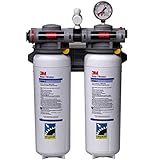
3. 3M Water Filtration System for Commercial Ice Maker Machines ICE260-S,
- GREAT TASTING ICE AND COFFEE: Provides consistent quality water for commercial ice machines and coffee brewers by reducing...
- RECIPE QUALITY WATER for restaurants, cafés, quick service restaurants, coffee shops, convenience stores, and other foodservice...
- LESS DOWNTIME AND FEWER SERVICE CALLS with built-in scale inhibitor which helps prevent corrosion and helps to extend the life of...
Best for: High-capacity beverage filtration.
A 70,000-gallon capacity puts the 3M ICE260-S in a different lane from smaller point-of-use filters, making it a strong match for heavy beverage service. The 18.6-inch length and countertop installation support commercial setups that feed both ice machines and coffee brewers from one system.
This Aqua-Pure system uses activated carbon purification, which is a practical choice when chlorine taste and odor need to be pulled down across daily service. Its polypropylene body keeps the unit manageable, while the included head/manifold, cartridges, and user’s manual give the buyer the core pieces needed for setup. The listed flow rate reaches up to 6.68 gpm, which helps a busy kitchen or café keep up with repeated draws without bottlenecks. Special features include bacteria and microbial cyst reduction plus chlorine reduction, so the water feed is aimed at both taste and sanitation-related concerns in high-volume foodservice environments.
Pros
- 70,000-gallon capacity for high-volume service
- Up to 6.68 gpm flow rate for busy beverage stations
- Activated carbon method for taste and odor control
- Included head/manifold and cartridges simplify system setup
Cons
- Countertop installation can be less discreet than under-sink filtration, so buyers with limited visible space may need to plan the placement carefully.
This is a good fit for operations that push a lot of water through ice and coffee equipment every day. It balances high capacity with the kind of filtration detail that matters in cafés, restaurants, and convenience stores.
| Specification | Details |
|---|---|
| Brand | Aqua-Pure |
| Product Dimensions | 18.6″L x 5.5″W x 24.5″H |
| Material | Polypropylene |
| Capacity | 70000 gallons |
| Included Components | Head/Manifold, Cartridges, User’s Manual |
| Installation Type | Countertop |
| Purification Method | Activated Carbon |
| Power Source | Corded Electric |
| Special Feature | Bacteria and Microbial Cyst Reduction, Chlorine Reduction |
I’d favor this for businesses that need one filter to support more than just an ice maker. The large capacity and stronger flow rating make it a sensible choice when water demand stays high throughout the day. Buyers who want a filter they can set up and use across beverage equipment will likely appreciate it most.
4. iSpring RCS5T+T20M, 500 GPD Light Commercial Reverse Osmosis Water Filter

- 5-STAGE FILTERS: 1-3rd stages remove PFAS (includes PFOA and PFOS), rust, sand, chlorine, disinfection byproducts and odor. 4th...
- GREAT CAPACITY: Advanced 500GPD membrane saves 60% of water, with LOW WASTE 1.5:1 pure to drain water ratio. Great for light...
- HIGH EFFICIENCY BOOSTER PUMP: No worries for low water pressure. Built in booster pump increases the production of purified water...

Best for: Light commercial RO with low waste.
Resin housing and a 500 GPD membrane make the iSpring RCS5T+T20M a focused reverse osmosis system for light commercial water needs. Its under-sink installation and compact 14-by-11-by-18-inch size keep the footprint manageable while the 1.5:1 pure-to-drain ratio helps reduce wastewater in daily operation.
The five-stage layout is the main draw here, with stages 1 through 3 handling PFAS, rust, sand, chlorine, disinfection byproducts, and odor before the RO membrane tackles heavy metals and pesticide residues. The fifth stage polishes chlorine and taste, which matters for drinking water, coffee, and general service use. A 500-gallon capacity and 36-pound weight place this system squarely in light commercial territory, while the included housings, filters, parts, tubing, faucet, mounting bracket, tank, and shut-off valve give the buyer a complete installation package. The 60% water-savings claim and low-waste ratio are especially useful where water efficiency matters alongside filtration performance.
Pros
- 500 GPD membrane for light commercial demand
- Five-stage filtration for broad contaminant reduction
- 1.5:1 pure-to-drain ratio for lower waste
- Complete included parts package for installation
Cons
- At 36 pounds, it is less convenient to move and service than lighter point-of-use filters.
For offices, salons, restaurants, and labs that need a compact RO system, this is a practical middle ground. It emphasizes filtration depth, water efficiency, and a complete install kit in one package.
| Specification | Details |
|---|---|
| Brand | iSpring |
| Material | Resin |
| Product Dimensions | 14″L x 11″W x 18″H |
| Item Weight | 36 pounds |
| Capacity | 500 gallons |
| Installation Type | Under Sink |
| Purification Method | Reverse Osmosis, Activated Carbon, Carbon block |
| Included Components | housings, filters, parts, tubing, faucet, mounting bracket, tank, shut-off valve |
| Special Feature | Chlorine Reduction |
I like this for buyers who need a compact commercial RO system without oversizing the job. The stage count and included parts make it easier to plan around a full under-sink install, and the low-waste ratio is a meaningful bonus for daily use. It feels especially appropriate when water quality needs are serious but not industrial.
5. Viqua VH410-F22 UV Water Filter System, 18 GPM, Stainless Steel

- High-Capacity Whole House UV Water Filter System at 18 GPM for Large Homes: The VH410-F22 is a point-of-entry uv water filter...
- Chemical-Free UV Water Treatment for Well Water and City Water: This uv water purifier uses ultraviolet light to treat your home...
- Durable Stainless Steel UV Chamber Eliminates UV Degradation Over Time: The corrosion-resistant stainless steel UV chamber is...
Best for: Whole-house UV for larger properties.
Stainless steel construction and an 18 GPM rating put the Viqua VH410-F22 in the whole-house category for larger homes and light commercial sites. The rack-mounted format and 25.1-inch length support central installation, while ultraviolet treatment handles water without changing taste or adding chemicals.
This system includes a UV chamber, S410RL-HO UV lamp, QSO-410 quartz sleeve, sediment filter, and carbon filter, so the buyer gets more than a single treatment stage. The 18-gallon capacity listed in the data and the 11.5-inch width help frame how it fits into a dedicated utility area, while the 28.2-inch height shows it is meant for a vertical install. Its whole-house installation type means the treated water reaches every tap, shower, and appliance, which is valuable for properties that want all-point coverage. The heavy-duty, rack-mounted design is a practical match for installations where the system needs to stay fixed and accessible for maintenance.
Pros
- 18 GPM rating for whole-house coverage
- Stainless steel body for utility-room use
- UV treatment without changing water taste
- Includes UV lamp, quartz sleeve, sediment filter, and carbon filter
Cons
- The rack-mounted whole-house format takes more dedicated space than a point-of-use purifier, so it is not ideal for cramped under-sink installs.
This model fits buyers who need central treatment across an entire property rather than one tap. It works well where chemical-free water treatment and broad coverage are both priorities.
| Specification | Details |
|---|---|
| Brand | Viqua |
| Material | Stainless Steel |
| Product Dimensions | 25.1″L x 11.5″W x 28.2″H |
| Capacity | 18 gallons |
| Included Components | UV chamber, S410RL-HO uv lamp, QSO-410 quartz sleeve, sediment and carbon filter |
| Installation Type | Whole House |
| Purification Method | Ultraviolet |
| Special Feature | Heavy Duty, Rack Mounted System |
| Power Source | Corded Electric |
I’d recommend this when the goal is treatment at the point water enters the building. Buyers with larger homes or light commercial properties will appreciate the whole-house approach and the chemical-free UV process. It makes the most sense when you want consistent water at every outlet, not just at a single sink or ice machine.
6. iSpring CRO1000 4-Stage Tankless Commercial Reverse Osmosis Water Filtration System,1000

- Commercial RO System with Reliable Features: CRO1000 is a true commercial-grade high output, 1,000 GPD, reverse osmosis water...
- Protect Your Family and Household Appliances from Sediment, Chlorine, and More. Say goodbye to smelly, bad tasting water! Our...
- PMP1000 is designed to boost water pressure up to 120 psi. Optimizes water filtration performance on high capacity reverse osmosis...
Best for: High-output tankless RO.
A 1,000 GPD output and tankless layout make the iSpring CRO1000 a serious commercial reverse osmosis option for continuous demand. The under-sink format keeps the system centralized, while the built-in pressure gauges help operators monitor performance without guessing at line conditions.
This four-stage system is rated for working water pressures from 80 to 130 psi and a maximum TDS level of 2000 ppm, which gives the buyer clear operating boundaries for planning installation. The 0.7 GPM output speed is paired with a water booster pump in the included components, helping maintain delivery in commercial settings that need on-demand filtered water. Its reverse osmosis purification method provides a strong barrier against dissolved contaminants, and the tankless design reduces the bulk associated with stored-water systems. At 36 pounds, it remains substantial, but the format is aimed at service locations where steady production matters more than compact simplicity.
Pros
- 1,000 GPD output for heavy demand
- Tankless design for on-demand filtered water
- Built-in pressure gauges for easier monitoring
- Includes a booster pump for supported pressure management
Cons
- The 0.7 GPM output is modest compared with the system’s daily production rating, so point-of-draw speed may not match the bigger capacity on paper.
This is a good match for buyers who care about high daily output and want a tankless RO setup. It fits commercial environments that can support the pressure range and need dependable filtered water on demand.
| Specification | Details |
|---|---|
| Brand | iSpring |
| Model Name | CRO1000 |
| Capacity | 1000 gallons_per_day |
| Maximum Flow Rate | 0.7 gpm |
| Installation Type | Under Sink |
| Purification Method | Reverse Osmosis |
| Special Feature | Multi Stage Filtration, Tankless |
| Supported Water TDS Level Maximum (PPM) | 2000 |
| Included Components | Filter, RO System, Water Booster Pump |
I’d steer buyers here if they need a commercial RO system that can keep producing rather than waiting on a storage tank. The pressure gauges and booster pump inclusion make it feel thoughtfully specified for real-world installs. It suits operations that want a high-output RO system and have the plumbing to support it.
7. Pentair Everpure H-1200 Dual-Cartridge Drinking Water System, EV928200

- FRESHER, CLEARER, BETTER-TASTING WATER - Everpure Micro-Pure precoat filtration, trusted in restaurants since 1933, reduces...
- COMPLETE SYSTEM, EVERYTHING TO INSTALL - Includes the filter head, two Quick-Change cartridges, a dedicated side faucet, and...
- REDUCES UP TO 99.6% TOTAL PFAS - IAPMO R&T certified against NSF/ANSI 53 for Total PFAS (forever chemicals); also reduces MTBE and...
Best for: Dual-cartridge drinking water system.
Aluminum construction and dual Quick-Change cartridges make the Pentair Everpure H-1200 a practical under-sink system for busy drinking water points. Its 21-inch width and dedicated side faucet support a cleaner service layout, while the NSF certification gives buyers a recognized standard for commercial filtration use.
The Micro-Pure precoat filtration is the key feature here, reducing chlorine taste and odor, lead, microplastics, and VOCs while retaining naturally occurring minerals. At 5 pounds, the system is manageable during installation, and the 5-inch depth helps fit it into the under-sink footprint described in the data. The package includes the filter head, two cartridges, a dedicated faucet, and mounting hardware, so the buyer gets a complete system rather than a partial kit. The product benefits also mention lime-scale growth reduction and THM reduction, which matter for operators who want clearer water at a dedicated tap without overcomplicating the setup.
Pros
- Dual Quick-Change cartridges for simpler maintenance
- NSF certification for trusted filtration use
- Micro-Pure filtration reduces lead, VOCs, and microplastics
- Complete install package with faucet and mounting hardware
Cons
- The dedicated side faucet means it is not a whole-system replacement and needs a separate tap at the sink.
This is a strong choice for locations that want a dedicated drinking-water tap with broad contaminant reduction. It works best when clean-tasting water at one point of use matters more than whole-building treatment.
| Specification | Details |
|---|---|
| Material | Aluminum |
| Product Dimensions | 5″D x 21″W x 9″H |
| Item Weight | 5 pounds |
| External Testing Certification | NSF |
| Product Benefits | Inhibits Lime-Scale Growth, Reduces Chlorine, Reduces THMs, Reduces VOCs |
| Included Components | filter head, two Quick-Change cartridges, a dedicated side faucet, and mounting hardware |
| Brand | Pentair Everpure |
I’d choose this for buyers who want a dedicated sink tap and care about taste plus contaminant reduction in one package. The dual-cartridge setup makes service feel straightforward, and the complete hardware bundle reduces planning friction. It’s especially appealing for foodservice or office kitchens that want a cleaner drinking-water station.
8. iSpring WGB32B Commercial-Grade Whole House Water Filter System

- Chlorine-Free, Pure Water: Shield your family and appliances with the WGB32B whole house water filter-eradicating up to 99% of...
- Easy DIY Setup: Utilize our manual and YouTube guides for straightforward installation. Featuring 1" NPT inlet/outlet and 20" x...
- Premium Filtration: The first stage sediment filter reaches 5 microns, while the second and third stage CTO Carbon Block filters...
Best for: Whole-house filter with long service life.
A 100,000-gallon capacity and 1-inch NPT inlet and outlet put the iSpring WGB32B in the whole-house category for high-demand water service. The tankless format and 15 GPM flow support broad coverage, while the 24.5-by-8-by-28-inch frame fits a central utility installation.
This polypropylene system uses mechanical filtration and chemical absorption to remove up to 99% of chlorine along with sediments, rust, tastes, odors, and herbicides. The included system, three filters, housing wrench, and user manual make the package more complete for DIY installation, and the 20-inch by 4.5-inch filters indicate a larger cartridge format for sustained use. Because it is water-pressure powered, there is no electrical supply requirement listed, which can simplify placement in a utility area. The tankless design also keeps the footprint focused on flow rather than storage, making it a good option for buyers who want whole-house treatment without a complex support setup.
Pros
- 100,000-gallon capacity for long service intervals
- 15 GPM flow for whole-house use
- 1-inch NPT inlet and outlet for robust plumbing connection
- Mechanical filtration plus chemical absorption for broad contaminant removal
Cons
- The system relies on water pressure, so it is not the right pick when an electrically powered purifier is preferred.
For homes or facilities that want one central filter feeding the whole property, this model is a practical option. It focuses on high flow, long life, and broad reduction of common water issues.
| Specification | Details |
|---|---|
| Brand | iSpring |
| Material | Polypropylene |
| Product Dimensions | 24.5″L x 8″W x 28″H |
| Capacity | 100000 gallons |
| Included Components | 1 system, 3 filters, filter housing wrench, and user manual |
| Installation Type | DIY |
| Purification Method | Mechanical filtration, Chemical Absorption |
| Special Feature | Tankless |
| Power Source | Water Pressure |
I’d recommend this to buyers who want a whole-house system with serious capacity and straightforward plumbing requirements. The 15 GPM flow and long cartridge life make it attractive for larger households or commercial-style setups where water usage is constant. It is a good fit when you want broad filtration without adding electrical complexity.
9. 3M High Flow Series Ice Water Filtration System ICE190-S

- GREAT TASTING ICE: Provides consistent quality water for commercial ice machines by reducing sediment, chlorine taste and odor...
- RECIPE QUALITY WATER for restaurants, cafés, quick service restaurants, coffee shops, convenience stores, and other foodservice...
- LESS DOWNTIME AND FEWER SERVICE CALLS with built-in scale inhibitor which helps to extend the life of pumps, valves, seals and...
Best for: Long-life inline ice filter.
A 54,000-gallon capacity and 24-inch height make the 3M High Flow Series ICE190-S a tall inline filter suited to commercial ice machines. Its plumb-in-before-the-ice-maker installation keeps the system out of the way while the activated carbon method handles chlorine taste, odor, sediment, and scale reduction.
The polypropylene body and 4.25-inch square footprint help this unit fit into tight mechanical spaces without sacrificing service access. At up to 5 gpm, it can support ice production for restaurants, cafés, and convenience stores that need a stable water supply. The included head, HF90-S cartridge, and user manual cover the core components a buyer needs to get it into service. Special features add bacteria reduction to the listed sediment, chlorine, bad taste and odor, cyst, and scale reduction, so the filter is targeting both water quality and equipment maintenance. The built-in scale inhibitor is especially useful for protecting pumps, valves, and seals over time.
Pros
- 54,000-gallon capacity for extended service life
- Up to 5 gpm flow for commercial ice machines
- Inline installation keeps the filter out of the way
- Scale inhibitor helps protect pumps, valves, and seals
Cons
- It is configured for plumb-in use before an ice maker, so it is not a general-purpose faucet filter.
This fits operators who want a dedicated ice-machine filter with solid throughput and maintenance-focused design. It is especially useful where keeping scale down matters as much as taste.
| Specification | Details |
|---|---|
| Brand | Aqua-Pure |
| Product Dimensions | 4.25″L x 4.25″W x 24″H |
| Material | Polypropylene |
| Capacity | 54000 gallons |
| Included Components | ICE190-S Water Filtration System: Head, HF90-S Cartridge and User’s Manual |
| Installation Type | Plumb in-line before ice maker |
| Purification Method | Activated Carbon |
| Special Feature | Bacteria, sediment, chlorine, bad taste and odor, cyst and scale reduction |
| Power Source | Plumbed In-line |
I’d pick this for a business that wants a straight-ahead inline ice filter with a long cartridge life. The flow rate and scale control make it a sensible operational choice for foodservice settings that care about ice quality and equipment upkeep. It feels especially well matched to machines that run often and need dependable upstream filtration.
10. Premier Light Commercial 800 GPD – 20″ Reverse Osmosis Water

- Up to 800 gallons per day GPD. Light Commercial Reverse Osmosis Water Filtration System delivers Pure Filtered water at a high...
- Assembled by hand in California, USA with all NSF components: Membrane Housing, Cartridges, Fittings & Tubing.
- Pre-Assembled with booster pump and all filters included for easy Installation and Use.
Best for: Pre-assembled commercial RO system.
A 20-inch reverse osmosis format with 800 GPD capacity makes the Premier Light Commercial unit a practical fit for restaurants, bars, schools, and cafeterias. The pre-assembled package includes a booster pump and all filters, which reduces the number of separate parts a buyer has to source before installation.
Built with carbon block material and listed as NSF certified, this system focuses on familiar commercial requirements rather than flashy extras. Its under-sink installation keeps the layout centralized, while the 45-pound weight reflects the included components and commercial-grade build. The system is rated for up to 2,000 ppm TDS, which gives buyers a clear limit for water conditions in the field. Reverse osmosis plus sedimentation covers the core treatment path, and the 4th-stage low-pressure membranes help it reach its stated output. Because it is assembled by hand in California, USA, the buyer gets a packaged system aimed at straightforward deployment in service environments that need consistent filtered water.
Pros
- 800 GPD output for light commercial use
- Pre-assembled with booster pump for easier setup
- NSF certified components for commercial confidence
- Supports up to 2000 ppm TDS input water
Cons
- At 45 pounds, it is heavier than smaller under-sink filters and may take more effort to position during installation.
This system fits operators who want a packaged RO solution with the key pieces already included. It makes sense when the priority is dependable production and a straightforward install path for commercial water service.
| Specification | Details |
|---|---|
| Brand | Premier Water Systems |
| Material | carbon block |
| Capacity | 800 gallons |
| Included Components | Cartridge |
| Installation Type | Under Sink |
| Purification Method | Reverse Osmosis, Sedimentation |
| Item Weight | 45 pounds |
| Supported Water TDS Level Maximum (PPM) | 2000 |
| Special Feature | NSF certified |
I’d suggest this to buyers who want a commercial RO system that arrives with the important pieces already grouped together. The booster pump and pre-assembled design reduce the number of decisions at install time, which is helpful in busy settings. It should satisfy operations that need stronger daily output without moving to a larger industrial footprint.
Quick Comparison Table of Best Commercial Water Filters
| Product Name | Filtration Method | Capacity | Installation | Best For | Check Price |
|---|---|---|---|---|---|
| Everpure EV932401 Water Purification Unit, 18″L | Ultrafiltration | 18 in | Undersink | Foodservice use | Check Price |
| 3M High Flow Series Ice Water | Carbon block | 1.5 gpm | Inline | Ice machines | Check Price |
| 3M Water Filtration System for Commercial | Activated carbon | 70000 gal | Countertop | Ice and coffee | Check Price |
| iSpring RCS5T+T20M, 500 GPD Light Commercial | Reverse osmosis | 500 GPD | Under sink | Light commercial RO | Check Price |
| Viqua VH410-F22 UV Water Filter System | UV | 18 GPM | Whole house | Large homes | Check Price |
| iSpring CRO1000 4-Stage Tankless Commercial Reverse | Reverse osmosis | 1000 GPD | Under sink | High-output commercial | Check Price |
| Pentair Everpure H-1200 Dual-Cartridge Drinking Water | Precoat filtration | Dual cartridge | Countertop | Drinking water | Check Price |
| iSpring WGB32B Commercial-Grade Whole House Water | Mechanical filtration | 100000 gal | DIY | Whole house filtration | Check Price |
| 3M High Flow Series Ice Water | Carbon block | 54000 gal | Inline | High-flow ice machines | Check Price |
| Premier Light Commercial 800 GPD | Reverse osmosis | 800 GPD | Under sink | Light commercial use | Check Price |
How to Choose the Right best commercial water filter
Filtration capacity and flow rate
Match capacity to peak demand first, not average use. A small office with one faucet and light refill traffic runs well on a compact unit near 100 to 300 gallons per day, while a café, clinic, or breakroom with several users needs a much higher output and a faster flow rate so service never stalls. Watch for a clean, steady stream instead of a trickle, and compare pressure loss as cartridges load up.
The best choice is a system rated for at least your busiest hour, so pick a higher-output unit with stable flow for multi-user sites and a smaller under-sink model for light commercial use.
| Type | Best for | Signal of a good pick |
|---|---|---|
| Low-GPD point-of-use unit | Single faucet, light traffic | Compact rating with steady flow |
| Mid-output commercial system | Small office, shared breakroom | Enough GPD for peak rushes |
| High-output multi-user system | Café, clinic, busy workstation | Strong flow with low pressure drop |
Contaminant reduction and media type
Choose the media around the contaminant you need to remove, not the label alone. Carbon is the first pick for chlorine, taste, and odor; sediment stages handle rust, grit, and visible particles; reverse osmosis targets dissolved solids and heavy metals; specialty media tackles scale, iron, or specific industrial concerns. Strong products name the exact contaminant reduction claim and list certifications for those claims, not just broad purifies water language.
For taste and odor, choose carbon; for cloudy water, choose sediment plus carbon; for dissolved contaminants or metal reduction, choose RO or a certified specialty system.
| Media type | Best for | What to check |
|---|---|---|
| Carbon | Chlorine, taste, odor | Certified claim on those contaminants |
| Sediment | Rust, grit, particles | Micron rating and dirt-holding capacity |
| Reverse osmosis | Dissolved solids, heavy metals | Specific reduction claims and storage needs |
| Specialty media | Scale, iron, niche issues | Targeted certification and media match |
Installation fit and system size
Measure the installation space before you compare anything else. Under-sink units need enough height for the housing, room to twist cartridges out, and clear access to shutoff valves; wall-mounted systems need open wall width and enough depth to route tubing cleanly. Check inlet and outlet sizes so the fittings match your plumbing, commonly 3/8-inch or 1/2-inch connections in commercial settings.
A good layout leaves space for maintenance without disconnecting half the line, while a poor fit traps the cartridge against pipes or the cabinet wall. Pick the footprint that matches your plumbing path: slim under-sink units for tight cabinets and wall-mounted manifolds for open utility spaces.
| Fit type | Best for | What good looks like |
|---|---|---|
| Compact under-sink | Tight cabinets | Room for cartridge removal |
| Wall-mounted system | Open utility areas | Clear tubing runs and service access |
| High-clearance housing | Frequent cartridge changes | Easy twist-off or lift-out access |
Maintenance, lifespan, and serviceability
Choose maintenance based on how much downtime your site can absorb. Longer replacement intervals reduce interruptions, but the real winner is a system with cartridges that are easy to source and fast to swap. Look for housings that open without special tools, sanitary flushing steps that are simple to follow, and cartridges with clear service indicators or elapsed-life markings.
Poor serviceability shows up as hard-to-reach canisters, messy changeouts, and replacement parts that are difficult to find. Pick quick-change cartridges and accessible housings for busy businesses, or a standard serviceable system for sites with scheduled maintenance windows.
- Check replacement interval in gallons or months, not vague claims.
- Verify cartridge availability for the exact model.
- Prefer housings with tool-free or quick-turn access.
- Choose clear service steps for flushing and sanitizing.
Durability, safety, and support
Put durability and safety at the top when the system runs all day. Food-safe wetted materials, corrosion-resistant housings, and pressure ratings that match commercial supply lines are non-negotiable. Look for leak-prevention features such as reinforced fittings, pressure-relief valves, and solid O-ring seals, along with documentation that supports commercial use through testing and certifications.
Strong support matters too: a clear warranty, accessible replacement parts, and responsive customer service shorten downtime when service is needed. Choose stainless-steel or high-grade reinforced housings with full documentation for demanding sites, and select certified, food-safe plastic systems for lighter commercial use with simpler plumbing.
Which Should You Choose?
- If you mainly need clean water for one commercial ice machine, choose a high-flow ice filter sized for your machine’s demand and focused on sediment, chlorine taste, odor, and scale reduction.
- If you run a restaurant or café that also brews coffee and serves drinks, choose a larger-capacity system that handles both ice and beverage water while filtering chlorine, cysts, and scale at higher flow rates.
- If your site needs very pure water for multiple fixtures or a larger operation, choose a commercial reverse osmosis system with around 500 to 1000 GPD output and multi-stage filtration for PFAS, heavy metals, and dissolved contaminants.
- If you want whole-building protection from microbes and contaminants at the point of entry, choose a whole-house system with UV disinfection and a flow rate matched to your peak water usage.
Quick Best Commercial Water Filter Buying Checklist
- Measure water demand by peak usage so the system can handle busy periods without slowing service.
- Match the filtration media to the main water issues in your location, such as sediment, chlorine, or scale.
- Confirm flow rate is strong enough for multiple fixtures or appliances running at the same time.
- Check installation space and plumbing connections before choosing a unit size or mounting style.
- Review maintenance intervals so cartridge changes and cleaning fit your operation schedule.
- Verify warranty and certifications to support long-term reliability and documented performance.
How Commercial Water Filtration Systems Remove Contaminants
Commercial water filters typically use staged filtration to tackle different contaminants in sequence. A sediment prefilter traps rust, sand, and debris before they can clog finer media downstream. Carbon filtration is then used to reduce chlorine, odor, and many taste-affecting compounds, while specialty media can target iron, scale, or heavy metals depending on the application.
Some systems also use membrane technology, such as reverse osmosis, to remove dissolved solids at a much finer level. The result is cleaner water with more consistent quality for kitchens, beverage equipment, or processing lines.
Understanding this layered approach helps explain why one unit may perform better for taste improvement while another is built for deeper purification.
Common Commercial Water Filter Types and Their Uses
Commercial water filters are not one-size-fits-all, and different designs serve different water problems. Cartridge systems are common for straightforward sediment and taste control. Carbon block units are often chosen when chlorine reduction and improved clarity are priorities.
Reverse osmosis systems provide a higher level of dissolved solids removal, but they usually require more plumbing space and wastewater handling. UV systems do not filter particles; instead, they disinfect water by damaging microorganisms, so they are often paired with other filtration stages.
Selecting the right type depends on whether the goal is better flavor, particle removal, microbial control, or protection for equipment that is sensitive to scale and sediment.
| Type | Best for | Key trade-off |
|---|---|---|
| Cartridge | Basic sediment and taste improvement | Frequent replacement when water is dirty |
| Carbon block | Chlorine and odor reduction | Can slow flow if undersized |
| Reverse osmosis | Low dissolved solids and high purity | More space and wastewater |
| UV | Microbial disinfection | Needs clear water to work properly |
Installation Requirements for Commercial Water Filters
Proper installation matters as much as filtration performance. Many commercial systems need enough wall clearance for cartridge changes, an accessible shutoff valve, and a drain connection if the design produces wastewater or requires flushing. Water pressure must stay within the manufacturer’s operating range so the unit can filter effectively without stressing housings or seals.
In foodservice settings, installers also plan for local plumbing codes, backflow prevention, and easy service access. A poorly placed system can create maintenance headaches, reduce flow to fixtures, or make filter changes inconvenient.
Before purchase, it is wise to confirm inlet and outlet sizes, mounting needs, and whether the system should be installed before or after pumps, softeners, or other treatment equipment.
Maintenance and Replacement Practices That Protect Performance
Even the best commercial water filter loses effectiveness if it is not maintained on schedule. Sediment cartridges should be replaced before they become heavily loaded, because clogged media can reduce flow and raise pressure across the system. Carbon media eventually exhausts and stops absorbing chlorine and odor compounds, even if the unit still appears clean.
Housings, O-rings, and seals should be inspected for leaks during each service interval. Many operators also keep a log of pressure drop, water taste, and service dates so they can spot decline early.
Flushing a new cartridge or media bed after installation helps remove loose fines and prepares the system for use. Consistent upkeep protects water quality and reduces unplanned downtime.
- Check pressure drop regularly.
- Replace cartridges before severe clogging.
- Inspect seals and housings for leaks.
- Flush new media before normal operation.
- Keep service records for each unit.
Water Quality Problems a Commercial Filter May Not Solve Alone
A commercial water filter can improve many common issues, but some water problems require additional treatment. Very hard water can still leave scale on equipment unless a softener or scale-control system is used. Microbiological contamination may need UV disinfection, chlorination, or other sanitation measures beyond particulate filtration.
High levels of dissolved salts or certain chemicals may also pass through standard carbon or sediment filters. In some facilities, incoming water changes seasonally, so a filter that works well for one problem may not address later changes in source water.
Testing the water first helps identify what the filter can remove and what extra treatment is needed. This prevents overreliance on a single system and supports safer, more consistent water quality across the facility.
Frequently Asked Questions (FAQs)
What Should I Look For In The Best Commercial Water Filter?
The best commercial water filter should match your water quality problems, daily demand, and available installation space. Look for a system with the right flow rate, certified contaminant reduction, and cartridges that are easy to replace so it stays dependable during heavy use.
How Do I Choose The Right Filtration Type For A Commercial Setting?
The right commercial water filter depends on what you need to remove, such as sediment, chlorine, hardness, or finer dissolved contaminants. Carbon works well for taste and odor, while reverse osmosis or specialty media handles more demanding water quality issues.
Why Does Flow Rate Matter In A Commercial Water Filter?
Flow rate matters because a commercial water filter must keep water moving fast enough for multiple users or fixtures at once. A low-flow system can cause bottlenecks, so choose a model rated for peak demand and consider how performance changes as the filter loads.
How Often Should A Commercial Water Filter Be Maintained?
A commercial water filter should be maintained according to the cartridge life, water volume, and local water quality. Systems with heavy sediment or high usage usually need more frequent checks, and easy-access housings make flushing and replacement much simpler.
Are Certifications Important For A Commercial Water Filter?
Yes, certifications are important for a commercial water filter because they help confirm tested performance and material safety. Look for documented claims tied to specific contaminants and food-safe construction so the system is suitable for demanding business use.
What Installation Factors Should I Check Before Buying?
You should check plumbing connections, available clearance, and the mounting location before buying a commercial water filter. Measuring the footprint and confirming inlet and outlet sizes helps avoid costly fit issues and makes maintenance access much easier.
How Do I Know If A Commercial Water Filter Is Worth The Investment?
A commercial water filter is worth the investment when it improves water quality, protects equipment, and reduces service interruptions. The best value comes from a durable system with manageable maintenance, reliable flow, and a design that supports your daily workload.
Final Suggestions
Choosing the best commercial water filter helps improve water quality, protect equipment, and keep daily operations running smoothly. With the right balance of capacity, filtration performance, and easy maintenance, these systems deliver dependable value across a wide range of commercial needs. Take time to compare features carefully, and you’ll be ready to choose with confidence.