Top 5 Best Large Fixed Blade Knife: Must-See Picks
Best large fixed blade knife options stand out when strength, control, and durability matter most. In demanding outdoor tasks, blade geometry, steel composition, and handle design all influence how well a knife performs under pressure. That is why the best large fixed blade knife is often judged by more than size alone; full-tang construction, edge retention, corrosion resistance, and sheath quality all shape long-term reliability.
From survival knife features to heavy-duty chopping capability, these tools bridge the gap between tactical readiness and practical field use. The best large fixed blade knife choices also reflect modern manufacturing advances that improve balance, toughness, and grip security.
What separates a dependable tool from an overbuilt one becomes clear once the details start to matter—keep reading to see which features truly define the category.
Detailed Reviews of the Best Large Fixed Blade Knife
1. Freelander Japanese Fixed Blade Knife with Sheath, Heavy Duty Machete

- Premium D2 Steel: Crafted from high-quality D2 steel, this survival camping knife offers outstanding hardness and long-lasting...
- 6mm Thick Spine: Built with an ultra-thick 6mm spine, this survival machete delivers exceptional durability and powerful chopping...
- Non-Slip Handle: The ergonomic synthetic rubber handle provides a secure, comfortable grip even in wet or harsh conditions. Paired...

Best for: Heavy-duty brush clearing.
A 6mm thick spine in D2 steel gives the Freelander a blade profile that favors hard chopping and repeated outdoor use. That combination helps the knife split wood, clear brush, and handle survival chores without feeling delicate, while the fixed-blade format keeps the edge in play for slicing and utility work.
The D2 steel blade is paired with an ABS handle and a black finish, so the knife is set up for rugged campsite handling rather than fine kitchen-style work. Its 6mm spine is the main advantage here, adding the mass needed for splitting and brush clearing. The included sheath makes carry and storage easier when moving between camp tasks. With the Japanese style and alloy steel blade material listed in the data, it leans toward a practical outdoor tool that can cover cutting, slicing, and heavier survival jobs. For buyers who want one fixed blade for mixed camp chores, the balance is squarely on durability and impact work.
Pros
- 6mm spine adds chopping strength for wood and brush
- D2 steel supports long-lasting sharpness for repeated use
- ABS handle gives a practical grip for outdoor carry
- Sheath included for safer transport and storage
Cons
- The ABS handle is utility-focused rather than a premium grip material, so it may feel less refined than leather or micarta on extended use.
Pick this if your priority is a hard-use fixed blade for camping and survival tasks. It makes the most sense when chopping power matters more than fine-detail control.
| Specification | Details |
|---|---|
| Brand | Freelander |
| Model Name | Freelander |
| Blade Material | Alloy Steel |
| Handle Material | Acrylonitrile Butadiene Styrene (ABS) |
| Color | Black |
| Style | Japanese |
| Special Feature | Outdoor |
| Recommended Uses For Product | Outdoor, Camping |
| Included Components | Sheath |
I’d point this knife at campers and survival-minded buyers who want a thick blade that can take rough use. The 6mm spine is the key reason to choose it, because it shifts the knife toward chopping and splitting instead of delicate slicing. If you want a straightforward fixed blade with a sheath and a no-nonsense outdoor focus, this one fits well.
2. KA-BAR Full Size US Marine Corps Straight Edge Fixed Blade

- Edge Angles - 20 Degrees
- Overall length 11.875 inches
Best for: Classic field and camp carry.
An 11.875-inch overall length gives the KA-BAR USMC the reach expected from a full-size fixed blade, and its 1095 carbon steel blade keeps the profile rooted in field use. That size makes it useful for camping, hunting, and general utility work when a longer straight-edge knife is easier to control than a short blade.
The 20-degree edge angle is a concrete clue about how this knife is tuned: it favors a serviceable working edge for outdoor chores and general cutting. A stacked leather handle adds traditional grip feel, while the leather sheath keeps the carry setup consistent with the knife’s classic field role. The blade is epoxy powder coated, which helps suit it to hard-use environments by giving the steel a protective finish. Made in the USA and listed with close combat, camping, and hunting uses, it remains a recognizable full-size fixed blade for buyers who want a proven format with a long, familiar handle and dependable straight-edge geometry.
Pros
- 11.875-inch overall length gives full-size reach
- 1095 carbon steel blade suits hard-use field tasks
- 20-degree edge angle supports practical cutting performance
- Leather sheath and stacked leather handle match a traditional carry setup
Cons
- The straight-edge, fixed-blade profile is less specialized for fine slicing detail than a slimmer outdoor utility knife.
This is the one for buyers who want a classic large fixed blade with a military field heritage. It suits camping and hunting especially well when tradition, size, and straightforward cutting matter.
| Specification | Details |
|---|---|
| Brand | Ka-Bar |
| Model Name | USMC KA-BAR FIGHTING KNIFE |
| Blade Material | Carbon Steel |
| Handle Material | Leather |
| Color | As Shown |
| Style | American |
| Special Feature | Lightweight |
| Recommended Uses For Product | Close combat, Camping, Hunting |
| Included Components | Knife |
My take is that this is the safest pick for someone who wants a large fixed blade with a long-established shape and feel. The leather handle and sheath matter here because they give it a classic carry experience, while the 1095 carbon steel blade keeps it firmly in the serious field-knife category. If you value heritage and proven proportions, this will make sense quickly.
3. Mossy Oak 14-inch Bowie Knife, Hunting Knife with Wood Handle
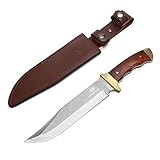
- Knife Dimensions: Overall Length: 14 inch (355 mm); Blade Length: 8-1/2 inch (215 mm); Wood Handle Length: 5-1/2 inch (140 mm...
- Razor Sharp Clip Point Blade: The 3CR13 blade has excellent strength, edge retention, and corrosion resistance for lasting...
- Full-Tang Wood Handle: Classic design handle made of rosewood provides comfortable grip and balance with brass pommel/guard
Best for: Tall bowie for camp utility.
A 14-inch overall length and an 8-1/2-inch blade make the Mossy Oak Bowie the longest knife in this group, which gives it plenty of presence for camping and general outdoor cutting. The 3.7 mm blade thickness keeps the profile workable for piercing and detail work while still giving the knife enough structure for field use.
The 3CR13 stainless blade is specified for strength, edge retention, and corrosion resistance, so the knife is set up for users who want an easier-care outdoor blade. At 14 ounces, it stays in a manageable weight range for carrying on hikes or around camp. The rosewood handle measures 5-1/2 inches long with a 53/64-inch thickness, and that fuller grip helps with balance during extended use. Full-tang construction adds structural continuity from blade to handle, which matters when the knife is used for camping chores rather than only display. For buyers wanting a large Bowie profile with a wood handle and practical dimensions, this is an obvious candidate.
Pros
- 14-inch overall length gives substantial reach and presence
- 8-1/2-inch blade supports camp cutting and piercing
- 3.7 mm blade thickness balances strength with usability
- Full-tang rosewood handle improves balance and control
Cons
- The 3CR13 blade steel is practical, but it is not the premium steel choice for buyers prioritizing maximum edge retention.
Choose this if you want a large Bowie-style fixed blade that feels substantial without getting overly specialized. It fits camping buyers who want a classic shape and a wood handle with useful proportions.
| Specification | Details |
|---|---|
| Brand | Mossy Oak |
| Model Name | 14-inch Bowie Knife, Wood Handle |
| Blade Material | Stainless Steel |
| Handle Material | Rosewood |
| Color | Brown |
| Style | Hunting |
| Special Feature | Full Tang |
| Recommended Uses For Product | Camping |
| Included Components | Knife |
I’d recommend this for buyers who want a large fixed blade with a classic Bowie silhouette and a wooden handle. The dimensions are the main selling point, because the long blade and full-tang build make it feel like a true camp knife rather than a compact utility tool. If you want size, balance, and a traditional look, this one delivers that mix.
4. Kizer Drop Bear Fix 7 Fixed Blade Knife, 6.51″ AEB-L

- Built Thick, Built to Last: The Kizer Drop Bear Fix 7 fixed blade knife with sheath boasts a 4.7mm thick blade designed to tackle...
- Unbreakable Survival Readiness, Corrosion-Resistant: Made from AEB-L steel, this fixed blade hunting knife with sheath offers...
- Ergonomic Grip: The contoured Micarta handle of the hunting survival knife provides a firm, non-slip grip for fatigue-free use...
Best for: Compact survival workhorse.
A 4.7mm thick blade in AEB-L steel gives the Kizer Drop Bear Fix 7 a sturdy survival-first profile that can handle wood splitting, prying, and heavy cutting. The fixed blade comes with a sheath and rotatable clip, so the knife is easier to carry when the job moves between hunting and field use.
The 6.51-inch blade length keeps the knife compact compared with the larger bowie-style options, but the skeletonized tang construction adds rigidity where it counts. AEB-L steel is a practical choice for a hard-use blade because it is paired here with a corrosion-resistant focus in the product data. The Micarta handle adds grip confidence, and the hammer pommel plus integrated bow drill divot extend the tool’s usefulness beyond simple cutting. For users who want a smaller fixed blade that still has survival features built in, this one covers a lot of ground without depending on sheer size alone. The sheath with rotatable clip also improves carry flexibility in the field.
Pros
- 4.7mm blade thickness supports hard-use tasks
- AEB-L steel adds a corrosion-resistant blade option
- Micarta handle improves grip for field work
- Hammer pommel and bow drill divot add survival utility
Cons
- The 6.51-inch blade is shorter than the large bowie-style knives here, so it gives up some reach for chopping.
This is a strong pick if you want a compact fixed blade with serious survival features. It makes the most sense for hunters and field users who value portability but still need a tough blade.
| Specification | Details |
|---|---|
| Brand | Kizer |
| Model Name | Drop Bear Fix 7 |
| Blade Material | AEB-L |
| Handle Material | Micarta |
| Color | Green |
| Style | Compact |
| Recommended Uses For Product | Hunting, Survival |
| Included Components | Sheath with Rotatable Clip |
My read is that this is the best fit for someone who wants a compact fixed blade with real survival-minded features. The blade thickness, Micarta handle, and sheath setup matter more here than raw length. If you value carry flexibility and extra utility features over maximum chopping reach, this is the smarter choice.
5. A026 Fixed Blade Bowie Knife, Sleipner Steel, 61HRC, 9.17″ Blade,

- SLEIPNER STEEL BLADE: Crafted from premium Sleipner steel hardened to 61HRC, delivering exceptional edge retention, toughness, and...
- FULL-TANG FIXED BLADE: Features a 9.17-inch blade and 15.08-inch overall length with a 6.0mm thick spine, providing superior...
- G10 HANDLE: The textured G10 handle measures 5.35 inches long and 0.866 inches thick, offering a secure, non-slip grip in wet or...
Best for: Long blade for serious outdoor jobs.
A 9.17-inch Sleipner steel blade hardened to 61HRC gives the LENGREN Bowie a strong mix of edge retention and toughness for camping work. Combined with a 15.08-inch overall length and a 6.0mm thick spine, it has the size and structure to handle heavy outdoor cutting without feeling underbuilt.
The G10 handle measures 5.35 inches long and 0.866 inches thick, which gives the knife a grippy, purposeful handle shape for wet or dry use. Full-tang construction adds strength through the entire knife, a useful trait when the blade is being asked to do survival and hunting jobs. The sheath is included, making it easier to carry the long blade safely in camp or on the trail. Because the product is listed for camping and uses an American Bowie style, it will appeal to buyers who want a long fixed blade with a modern handle material and a clearly work-focused steel choice. The 61HRC hardness is especially relevant for edge retention on repeated tasks.
Pros
- 61HRC Sleipner steel supports strong edge retention
- 9.17-inch blade gives substantial cutting reach
- 6.0mm thick spine adds backbone for hard use
- G10 handle improves grip in wet or dry conditions
Cons
- The 15.08-inch overall length makes it less compact for low-profile carry than shorter fixed blades.
Buy this if you want a long Bowie with modern steel and a grip-friendly handle. It suits campers and outdoor users who need reach, toughness, and a fixed blade that feels ready for heavier jobs.
| Specification | Details |
|---|---|
| Brand | LENGREN |
| Model Name | Bowie |
| Blade Material | Sleipner Steel |
| Handle Material | Fiberglass |
| Color | Black |
| Style | American |
| Special Feature | Full Tang |
| Recommended Uses For Product | Camping |
| Included Components | Sheath |
I’d choose this for a buyer who wants a larger fixed blade with modern steel performance and a handle that should stay secure in messy conditions. The long blade and thick spine are the reasons it belongs in serious outdoor use. If you like a Bowie profile but want something geared toward hard work instead of display, this one fits that brief well.
Quick Comparison Table of Best Large Fixed Blade Knives
| Product Name | Blade Steel | Blade Length | Style | Best For | Check Price |
|---|---|---|---|---|---|
| Freelander Japanese Fixed Blade Knife with | D2 steel | 6mm spine | Japanese | Camping survival | Check Price |
| KA-BAR Full Size US Marine Corps | 1095 carbon steel | 11.875 inches | American | Close combat | Check Price |
| Mossy Oak 14-inch Bowie Knife, Hunting | 3CR13 steel | 8.5-inch blade | Bowie | Camping hunting | Check Price |
| Kizer Drop Bear Fix 7 Fixed | AEB-L steel | 6.51 inches | Compact | Survival tasks | Check Price |
| A026 Fixed Blade Bowie Knife, Sleipner | Sleipner steel | 9.17-inch blade | American | Hunting survival | Check Price |
How to Choose the Right best large fixed blade knife
Blade length and intended use
Choose blade length around 6 to 9 inches for the best all-around large fixed blade knife, because that range gives enough reach for camp chores, survival prep, and heavier utility work without losing control. Shorter blades handle detail work and safer slicing; longer blades chop better and handle brush or batoning with more authority. Look for a blade thick enough to take abuse, usually around 0.18 to 0.25 inch, with a drop-point or spear-point profile for a strong balance of piercing and general use.
Pick the 6-7 inch range for controlled camping tasks, 7-8 inches for mixed outdoor use, and 8-9 inches for hard-use field work.
| Type | Best for |
|---|---|
| 6-7 inch blade | Camping, food prep, general utility, easier control |
| 7-8 inch blade | All-purpose survival and camp use |
| 8-9 inch blade | Chopping, batoning, heavy outdoor work |
Steel type and edge retention
Choose steel by the kind of use you expect, not by name alone. Stainless steel gives the best corrosion resistance for wet, humid, coastal, or low-maintenance carry, while high-carbon steel rewards users who want fast sharpening and strong toughness for hard use. Good edge retention matters on any large fixed blade knife, but a steel that holds an edge and still sharpens cleanly is the right target, not the hardest steel on the list.
Look for proven heat treatment, a sharpness-friendly edge, and a steel that resists chipping under impact. Pick stainless for damp environments and easy care, and pick high-carbon steel for users who value quick field sharpening and rugged performance.
| Steel type | Best for |
|---|---|
| Stainless | Wet climates, boat use, low-maintenance carry |
| High-carbon | Field sharpening, heavy cutting, hard use |
| Balanced premium steel | Users who want both edge life and toughness |
Handle comfort and grip security
For handle comfort, choose a shape that fills the hand without forcing a tight grip, because a large fixed blade knife gets used longer and harder than a compact blade. Gentle palm swells, a defined index choil, and rounded edges reduce hot spots during chopping and slicing. Texture matters just as much: fine jimping and grippy scales hold better than slick polish, especially with wet hands.
Full tang construction gives the best strength and steadier balance, so it is the right choice for rough outdoor work. Pick a contoured, full-tang handle for all-day field use, and pick a simpler, slimmer grip only for lighter carry and occasional tasks.
| Handle type | Best for |
|---|---|
| Contoured full tang | Extended use, chopping, demanding outdoor work |
| Textured straight handle | Simple control, gloves, faster clean-up |
| Slim low-profile grip | Reduced bulk for easier carry |
Sheath quality and carry options
A good sheath protects the edge, keeps the knife secure, and matches how you carry in the field. Choose a sheath with positive retention, a closure that stays shut under movement, and full blade coverage down to the guard or handle flare. Belt carry works best for quick access, MOLLE works best for tactical or modular loadouts, and pack carry fits hikers who want lower belt bulk.
Drainage matters for wet conditions, and rigid materials such as molded polymer or reinforced leather hold up better than loose, floppy covers. Pick a belt sheath for everyday outdoor access, MOLLE for gear integration, and pack-compatible carry for long treks.
| Carry type | Best for |
|---|---|
| Belt sheath | Fast access, general camping, frequent draw use |
| MOLLE sheath | Pack systems, tactical gear, modular setup |
| Pack carry | Hiking, long-distance carry, lower belt clutter |
Weight, balance, and overall durability
Weight and balance decide whether a large fixed blade knife feels agile or tiring. Forward balance helps chopping and batoning because the blade carries momentum, while a more centered balance gives easier all-day carry and better slicing control. For durability, look for a reinforced spine, solid handle scales, and tight fit at the guard or bolster area, with no gaps or flex in the handle assembly.
A practical large knife usually lands in a range that feels substantial but not sluggish; too light loses chopping authority, and too heavy becomes a burden. Pick a forward-balanced, rugged model for camp and survival work, and pick a more neutral, moderate-weight knife for long hikes and general field carry.
| Balance/weight style | Best for |
|---|---|
| Forward-balanced, heavier | Chopping, batoning, survival use |
| Neutral balance, moderate weight | All-day carry, mixed outdoor tasks |
| Very light large blade | Pack weight reduction, lighter duty use |
Which Should You Choose?
- If you want a hard-use camp knife for splitting wood, prying, and heavy cutting, choose a thick full-tang blade with a robust spine and a compact 6.5-inch to 7-inch blade.
- If you want a proven survival or field knife with classic fighting-knife proportions, choose an 11.5-inch to 12-inch fixed blade with a straight edge and a leather sheath.
- If you want a large hunting or bushcraft Bowie for all-around outdoor work, choose a 14-inch knife with an 8-inch-plus blade, a comfortable wood handle, and balanced weight.
- If you want maximum edge retention for demanding utility tasks, choose a high-hardness steel fixed blade with a durable, corrosion-resistant finish and a secure sheath.
Quick Best Large Fixed Blade Knife Buying Checklist
- Blade length fits the job Choose a length that gives enough reach for cutting while staying controllable for detailed work.
- Steel matches the environment Pick a corrosion-resistant or tough high-carbon steel based on moisture, abrasion, and sharpening needs.
- Full tang construction Confirm the blade steel runs through the handle for better strength and impact resistance.
- Grip feels secure Test handle texture, contour, and palm support so the knife stays stable in wet or gloved hands.
- Sheath is reliable Make sure the sheath holds the knife firmly, covers the edge fully, and supports the carry method you prefer.
- Balance suits the task Look for a knife that feels stable in hand, with enough forward weight for chopping but not so much that it becomes tiring.
Blade Geometry and Cutting Performance
Large fixed blade knives are designed to deliver power, control, and durability in tasks that would quickly wear down smaller blades. Blade geometry has a major effect on how they perform. A high flat grind or saber grind generally improves slicing, while a thicker stock and more convex edge can add strength for hard use.
Many large fixed blades also include a drop point profile, which gives a strong tip and a versatile belly for skinning, food prep, and general camp work. Understanding how the blade shape changes cutting feel helps explain why some models excel in slicing brush or rope, while others are better for prying, chopping, or baton use.
| Geometry | Best for |
|---|---|
| Flat grind | Efficient slicing and lighter cutting work |
| Saber grind | Balanced strength and utility |
| Convex edge | Heavy-duty tasks and edge durability |
| Drop point | General outdoor and camp use |
Fixed Blade Steel Types and Edge Retention
The steel used in a large fixed blade knife affects how long the edge lasts, how easy it is to sharpen, and how well it resists corrosion. Carbon steels often sharpen quickly and take a very fine edge, but they need more care to avoid rust. Stainless steels reduce maintenance and handle wet environments better, though some are harder to touch up in the field.
Powder metallurgy steels can offer a strong mix of toughness and edge retention, but they are not always the simplest to sharpen with basic tools. Matching steel traits to your environment matters as much as blade length, especially if the knife will see frequent outdoor use.
| Steel Type | Key Advantage |
|---|---|
| Carbon steel | Easy sharpening and keen edges |
| Stainless steel | Better rust resistance |
| Tool steel | Strong toughness for hard use |
| Powder metallurgy steel | Excellent edge retention |
Handle Materials and Grip Control
A large fixed blade is only as controllable as its handle. Because the knife has more mass than a smaller utility blade, the grip must stay secure when hands are wet, gloved, or tired. Micarta and G-10 are popular because they resist moisture, provide texture, and hold up well under rough use.
Rubberized handles can improve comfort and shock absorption, which is useful when chopping or repeated cutting creates strain. Wood can look excellent and feel warm in the hand, but it typically needs more attention to prevent swelling or wear.
A well-shaped handle also reduces hot spots, improving comfort during long sessions in camp or field conditions.
- Micarta: grippy and weather resistant
- G-10: rigid and low maintenance
- Rubber: comfortable with added cushioning
- Wood: classic feel, but needs more care
Sheath Design and Carry Options
The sheath is a critical part of any large fixed blade setup because it affects safety, transport, and convenience. A secure sheath should fully cover the edge, retain the knife during movement, and allow fast access when needed. Kydex is valued for its rigid retention and low maintenance, while leather offers a traditional look and quiet carry but usually needs more care.
Nylon sheaths can be lightweight and adaptable, though they vary widely in rigidity and protection. Belt carry is the most common option, but some sheaths also support pack mounting or vertical and horizontal orientation.
The best sheath matches the knife’s size and intended use, not just its style.
| Sheath Material | Main Benefit |
|---|---|
| Kydex | Secure retention and easy cleaning |
| Leather | Quiet carry and classic appearance |
| Nylon | Light weight and flexible mounting |
Maintenance Habits That Extend Knife Life
Regular maintenance keeps a large fixed blade working safely and prevents avoidable wear. After use, wipe the blade clean and dry it thoroughly, especially if it has contacted moisture, acidic foods, sap, or dirt. If the blade is carbon steel, apply a light protective oil to reduce oxidation.
Check the edge for chips and the handle for looseness or cracks, since a large knife can experience significant stress during chopping or batoning. Sharpening before the edge becomes severely dull preserves steel and keeps the knife easier to control.
Storing the knife dry in its sheath is important, but long-term storage is better with the blade lightly coated and kept in a low-humidity place.
- Clean and dry after every use
- Oil carbon steel lightly
- Inspect the edge and handle regularly
- Store in a dry place outside long-term sheath storage when possible
Frequently Asked Questions (FAQs)
What Makes The Best Large Fixed Blade Knife Different From A Smaller Knife?
The best large fixed blade knife offers more reach, leverage, and chopping power than a smaller knife. Its fixed design also removes folding parts, which increases strength and makes it better for demanding outdoor, survival, or utility tasks.
Which Steel Is Best For A Large Fixed Blade Knife?
The best large fixed blade knife often uses stainless or high-carbon steel depending on the job. Stainless resists rust better in wet conditions, while high-carbon steel is usually easier to sharpen and can hold a strong working edge for hard use.
How Important Is Full Tang Construction In A Large Fixed Blade Knife?
Full tang construction is very important in a large fixed blade knife because it improves strength and balance. When the blade steel runs through the handle, the knife is better suited for chopping, prying, and repeated heavy-duty use.
What Handle Features Matter Most On A Large Fixed Blade Knife?
The best large fixed blade knife should have a handle that stays secure, comfortable, and easy to control. Textured scales, palm swells, and finger indexing help reduce slip and fatigue, especially when the knife is used with gloves or in damp conditions.
How Should A Sheath Fit A Large Fixed Blade Knife?
A good sheath for a large fixed blade knife should hold the blade securely and protect the edge completely. It should also allow smooth re-sheathing, strong retention, and a carry style that matches your belt, pack, or field setup.
Is A Heavier Large Fixed Blade Knife Always Better?
A heavier large fixed blade knife is not always better because extra weight can make long carry and fine control harder. The best choice balances mass for chopping with enough agility for slicing, carving, and general handling comfort.
What Should I Look For If I Want A Versatile Large Fixed Blade Knife?
A versatile large fixed blade knife should combine a practical blade length, durable steel, and a comfortable full tang handle. That mix lets it handle chopping, slicing, campsite work, and emergency tasks without feeling overly specialized.
Final Suggestions
In summary, the best large fixed blade knife combines strength, control, and dependable materials for demanding outdoor and utility tasks. With the right blade steel, handle design, sheath, and balance, it becomes a versatile tool that performs when it matters most. Choose carefully, and you’ll have a capable knife ready for tough jobs and future adventures.