Top 10 Best Drywall Sander With Vacuum Picks
The best drywall sander with vacuum can transform dusty finishing work into a cleaner, more controlled process. In drywall sanding, dust management is just as important as surface quality, especially when working on large walls, ceilings, or renovation jobs where airborne particles can spread quickly. That is why the best drywall sander with vacuum matters: it combines sanding performance with integrated dust extraction to improve visibility, reduce cleanup, and support a smoother finish.
From vacuum drywall sander designs to sanding systems built for joint compound and gypsum board, these tools rely on smart airflow, pad motion, and filtration to handle demanding tasks. Understanding how a drywall sanding machine, dust-free sanding setup, and abrasive control work together reveals why some models stand out far above the rest—so let’s uncover what separates them.
In-depth Reviews of the Best Drywall Sander with Vacuum
1. Drywall Sander, 1000W Popcorn Ceiling Removal Tool, Automatic Drywall Sander

- [1000W Pure Copper Motor & 2200RPM High Efficiency - Works Perfectly in Any Scene] High-power high-speed electric drywall sander...
- [Dustless Drywall Sander - More Efficient, Easier] Say goodbye to laborious and inefficient traditional sanding tools! The Promtex...
- [Flexibly Used Extension Pole - Customizable According to Your Needs] Whether you are working on low walls or high ceilings, the...

Best for: High-power ceiling removal workhorse.
A 1000W pure copper motor gives this drywall sander the muscle to handle drywall, painted walls, ceilings, cement walls, and loose plaster with less effort. The 2200RPM top speed and 6 adjustable settings from 800 to 2200RPM give the buyer a wider sanding range, from slower control on finishing passes to faster removal on rough surfaces.
The battery-powered setup keeps the tool portable, while the included AC adapter current of 1A gives it a practical charging path between jobs. A single grit setting keeps the focus on general sanding and ceiling removal rather than multi-grit finishing kits, which suits users who want one straightforward machine for prep work. The 1000W output matters most when covering large surfaces because it helps the disc keep moving through paint coatings and loose plaster without bogging down as easily. With only one grit number listed, this model fits buyers who care more about power and speed control than accessory complexity.
Pros
- 1000W pure copper motor for stronger sanding output
- 6 speed settings from 800 to 2200RPM for control
- Battery powered for easier movement around rooms
- Works on drywall, ceilings, cement walls, and loose plaster
Cons
- Only one grit number is listed, so it is more of a general sanding tool than a multi-grit finishing system.
This model makes sense for buyers who want strong sanding power and simple speed control for wall and ceiling prep. It fits renovation jobs where broad surface coverage matters more than accessory variety.
| Specification | Details |
|---|---|
| Brand | Protmex |
| Power | 1000W |
| Motor Type | Pure Copper Motor |
| Maximum Speed | 2200RPM |
| Speed Settings | 6 Adjustable Speeds |
| Speed Range | 800-2200RPM |
| Power Source | Battery Powered |
| AC Adapter Current | 1 A |
| Grit Type | 1 |
| Grit Number | 1 |
I’d point this one at someone who wants a powerful, uncomplicated drywall sander for ceilings and large wall areas. The 1000W motor and broad speed range are the real draw, especially if the job involves paint, plaster, or popcorn texture. It feels most appropriate for buyers who value straightforward operation over a pile of accessories.
2. MYTOL 7.2A Drywall Sander with Vacuum, LED, 6-Speed

- 【After Sales Service】 - Good Ideal for Your Family & Friends🎁If you have any questions, please check the MANUAL and CONTACT...
- 【7.2-Amp POWERFUL COPPER MOTOR】MYTOL drywall sander with a 7.2AMP copper motor provides adequate power in sanding work, brings...
- 【AUTO DUST VACUUM SYSTEM】The power wall sander with vertical suction and 10-hole sand disc design has a stronger vacuum effect...
Best for: Corded control for precise sanding.
A 7.2-amp copper motor gives this MYTOL sander the current needed for steady drywall, floor, and ceiling sanding. The 900 to 1800RPM variable range with 6 speed levels lets the buyer slow down for careful finishing or increase output for heavier material removal, which is exactly what you want when dust control and surface consistency matter.
Because it runs on 120 volts of alternating current, this corded unit is aimed at uninterrupted work rather than quick touch-ups. The very fine grit type points toward smoother surface prep, which helps when the goal is sanding compound or refining a finished wall before paint. A 7.2A AC adapter current also signals a motor setup intended for consistent load handling during longer sessions. For buyers comparing vacuum drywall sanders, the appeal here is controlled sanding with enough power to keep pace on ceilings, drywall, and other home renovation surfaces without relying on battery life.
Pros
- 7.2-amp copper motor for dependable sanding power
- 900-1800RPM range for more precise control
- 6-level variable speed adjustment for different tasks
- Corded 120V operation for continuous work sessions
Cons
- No size or hose details are listed, so workspace fit and dust-routing setup are harder to judge from the data alone.
This MYTOL model suits buyers who want corded consistency and adjustable speed in a drywall sander with vacuum-style use in mind. It is a practical pick for finishing work where control matters as much as power.
| Specification | Details |
|---|---|
| Brand | MYTOL |
| Motor Current | 7.2 A |
| Motor Type | Copper Motor |
| Voltage | 120 volts_of_alternating_current |
| Power Source | Corded Electric |
| Speed Range | 900-1800RPM |
| Speed Levels | 6-level variable speed |
| Grit Type | Very Fine |
I’d choose this for someone who wants a reliable corded sander for drywall and ceiling work, especially if the job calls for more careful control than raw speed. The variable RPM range makes it easier to match the tool to finishing versus removal. It should satisfy buyers who prefer a straightforward electric setup over cordless convenience.
3. Drywall Sander, Upgraded 8-Amp Popcorn Ceiling Removal Tool, Bench Grinders

- 【TELESCOPIC DESIGN & LIGHTWEIGHT】Collapsible design and a 3.9–5.5 ft extendable pole let you reach ceilings, walls with...
- 【AUTO DUST VACUUM SYSTEM】Built with an integrated vacuum system and a 10-hole sanding disc, this sander delivers efficient...
- 【POWERFUL PURE COPPER MOTOR】Equipped with an 8-AMP pure copper motor, this drywall sander delivers strong and stable power for...
Best for: Lightweight telescoping reach for ceilings.
A collapsible frame with a 3.9–5.5 ft extendable pole gives this IMQUALI sander the reach to handle ceilings and tall walls without extra ladders in many setups. The tool weighs 8.59 lbs on its own, and the full kit comes in at 10 lbs, which helps keep overhead sanding less exhausting during longer renovation sessions.
The integrated vacuum system works with a 10-hole sanding disc, so dust collection is part of the sanding process instead of an afterthought. That matters when you want cleaner ceilings and less sweeping afterward. The included carry bag makes the fold-down design easier to transport and store, which is useful for jobsite mobility. With 120 volts of alternating current and an 8A power draw, this corded model is aimed at sustained sanding rather than brief patch jobs. Buyers who need a drywall sander with vacuum for overhead work will appreciate how the pole length, dust management, and light kit weight work together.
Pros
- 3.9–5.5 ft extendable pole for ceiling reach
- 8.59 lb tool weight for easier overhead use
- Integrated vacuum system with 10-hole sanding disc
- Folds into a carry bag for simpler storage and transport
Cons
- The 10 lb kit includes the rod, hose, and bag, so the total setup is not as minimal as the bare tool weight suggests.
This is a strong fit for anyone sanding ceilings or tall walls and wanting less dust in the room. The lightweight, telescoping format makes it especially appealing for users who move between rooms or need easier overhead handling.
| Specification | Details |
|---|---|
| Brand | IMQUALI |
| Voltage | 120 volts_of_alternating_current |
| Power Source | Corded Electric |
| AC Adapter Current | 8 A |
| Grit Type | Very Fine |
| Extendable Pole | 3.9–5.5 ft |
| Tool Weight | 8.59 lbs |
| Full Kit Weight | 10 lbs |
My take is that this one is best for buyers who care about reach and portability as much as sanding performance. The extendable pole and lighter weight make it easier to manage on ceilings, while the integrated vacuum system helps keep dust under control. It is a smart pick for home remodelers who want a more mobile setup.
4. Electric Drywall Vacuum Sander, 780W&NSK Bearing, Dustless for Ceiling&Wall

- [95.5% High-Efficiency Dustless Vacuum System]: This drywall sander features an upgraded built-in vacuum extraction system that...
- [780W 6.5A Brass Motor & 7-Speed Precision Control]: Equipped with a heavy-duty 6.5-amp pure brass motor, this sander delivers...
- [360°Swivel Floating Head with Corner Access Design]: The floating sanding head rotates 360°to automatically fit flat walls...
Best for: Compact dust control for small spaces.
A 780W motor paired with an upgraded vacuum extraction system gives this Gioventù sander a compact approach to drywall dust control. Its 8.8 x 8.8 x 6 inch body size makes it easier to store and maneuver, which helps when the buyer is working in tighter rooms, around trim, or in areas where a smaller tool footprint matters.
The built-in vacuum system is rated to capture up to 95.5% of fine drywall and plaster dust, a concrete advantage for cleaner air and less cleanup after sanding. A zippered dust bag and 6.6 ft dust hose add to that containment setup, keeping debris routed away from the work surface. The 7-amp pure brass motor and 120V corded power supply point to a steady, workshop-style tool rather than a light touch-up sander. Extra fine grit support makes it more suitable for smoother surface prep, especially when the buyer wants less airborne dust during interior renovation work.
Pros
- Captures up to 95.5% of fine drywall and plaster dust
- 780W 7-amp pure brass motor for steady power
- 6.6 ft dust hose and zippered dust bag for collection
- Compact 8.8 x 8.8 x 6 inch dimensions for tighter spaces
Cons
- The compact body dimensions may feel restrictive for buyers who want a larger reach setup for expansive ceilings.
This model is a good match for buyers who want strong dust control in a smaller package. It is especially useful for interior jobs where cleanup reduction matters as much as sanding performance.
| Specification | Details |
|---|---|
| Brand | Gioventù |
| Power | 780W |
| Motor Current | 7 A |
| Motor Type | Pure Brass Motor |
| Voltage | 120 volts |
| Power Source | Corded Electric |
| Product Dimensions | 8.8″L x 8.8″W x 6″H |
| Grit Type | Extra Fine |
| Dust Hose Length | 6.6 ft |
| Dust Capture | Up to 95.5% |
I’d recommend this to someone working in smaller rooms or who really wants better dust containment. The 95.5% capture claim, dust bag, and hose setup are the main reasons it stands out for cleanup-sensitive projects. It should make sense for buyers who prioritize a compact footprint over long-reach hardware.
5. Electric Drywall Sander with Vacuum, 780W 7A, 26′ Cord for

- [780W 6.5-Amp Brass Motor with 7 Variable Speeds]: Built with a durable 6.5-amp brass motor, this electric drywall sander provides...
- [360°Floating Swivel Head with Locking Ceiling Fixture]: Equipped with a dedicated locking fixture to hold the unit vertical for...
- [Integrated Vacuum System with 99% Dust Capture]: The built-in dust extraction system pairs with a zippered dust bag and 6.56ft...
Best for: Long-cord ceiling sanding setup.
A 780W 7-amp brass motor gives this Gioventù drywall sander the steady output needed for long sanding sessions on ceilings and walls. The 26 ft power cord is the differentiator here, letting the buyer move across larger areas without changing outlets as often, while the 74-inch height supports overhead work with a more extended stance.
Seven variable speed settings from 900 to 1800RPM give a practical range for both lighter finishing and heavier popcorn ceiling removal. The 8.5 x 8.5 inch footprint keeps the tool compact at the head, while the 74-inch overall height helps when working upward. Because it runs on 120 volts and corded power, this model is geared toward sustained jobs instead of battery management. The 360° floating swivel head with a locking ceiling fixture adds a useful advantage for overhead sanding, since it helps maintain contact on ceilings without fighting the angle. Buyers needing a drywall sander with vacuum support for bigger rooms will notice the reach and cord length most.
Pros
- 26 ft power cord for wider room coverage
- 7 speed settings from 900 to 1800RPM for task control
- 360° floating swivel head for ceiling contact
- 74-inch height for easier overhead sanding
Cons
- No hose length or dust-collection capacity is listed, so the vacuum-side setup is less detailed than the reach specifications.
This sander is a strong fit for larger rooms and ceiling-heavy projects where cord reach matters. The long cord and swivel head make it better suited to extended sanding runs than compact touch-up work.
| Specification | Details |
|---|---|
| Brand | Gioventù |
| Power | 780W |
| Motor Current | 7 A |
| Motor Type | Brass Motor |
| Voltage | 120 volts |
| Power Source | Corded Electric |
| Product Dimensions | 8.5″L x 8.5″W x 74″H |
| Speed Settings | 7 Variable Speeds |
| Speed Range | 900-1800RPM |
| Cord Length | 26 ft |
I think this one is a good choice for buyers who need reach and uninterrupted movement across larger spaces. The 26-foot cord is the biggest practical advantage, and the swivel head adds ceiling-friendly control. It suits someone tackling broader drywall or popcorn-removal jobs rather than quick patch sanding.
6. Drywall Sander, Electric Drywall Sander with Vacuum, Automatic Dust Removal,

- 【HIGH POWER PURE-COPPER MOTOR 】This electric drywall sander features 780W high power pure-copper motor, which offers high...
- 【95.5% AUTOMATIC DUST REMOVAL】Drywall sander with vacuum dust Collector system eligible for above 95.5% dust upon absorption...
- 【EASY TO SANDING CEILING AND CORNER】Patented fixing lock structure with excellent automatic leveling capabilities, keep the...
Best for: Heavy-duty dust capture for bigger jobs.
A 780W pure-copper motor gives this drywall sander the muscle to keep moving through long sanding passes without bogging down as quickly as lower-output units. That kind of power matters when you want smoother wall prep and less stop-start work on ceilings, corners, and patch areas that need repeated passes.
The corded 120-volt setup with a 7.9A draw keeps power delivery consistent for extended sessions, which is useful when you are working through a full room rather than a quick touch-up. Its fine grit type suits finishing work where a cleaner surface matters more than aggressive material removal. The 7ft dust hose and included dust bag help keep debris moving away from the work area, and the added 14ft flexible retractable dust tube gives you a longer reach when pairing it with a shop vacuum. The automatic dust removal claim of above 95.5% absorption is aimed at reducing airborne mess while sanding.
Pros
- 780W pure-copper motor supports efficient sanding
- Above 95.5% dust absorption helps limit cleanup
- 7ft dust hose plus dust bag improve debris collection
- 14ft flexible retractable dust tube expands vacuum hookup options
Cons
- The fine grit setup is better for finishing than for fast heavy stock removal
For buyers who want stronger sanding power with serious dust capture, this model focuses on the basics that matter most. It fits renovation work where cleaner air and steadier performance are both priorities.
| Specification | Details |
|---|---|
| Brand | Gioventù |
| Power | 780W |
| Voltage | 120 volts |
| Power Source | Corded Electric |
| AC Adapter Current | 7.9 A |
| Grit Type | Fine |
| Dust Hose | 7 ft |
| Dust Tube | 14 ft flexible retractable dust tube |
| Dust Removal | Above 95.5% automatic dust absorption |
I would point this one at someone who wants a straightforward, high-power sanding setup with a vacuum-assisted cleanup advantage. The strong motor, corded power, and long dust-tube reach make sense for ceiling work and room-by-room drywall finishing. If dust control is a top concern, the collection system is the main reason to consider it.
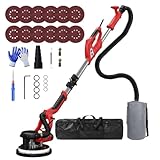
7. Drywall Sander, 2026 Upgraded 8-Amp Popcorn Ceiling Removal Tool
- 【AUTO DUST VACUUM SYSTEM】The drywall sander tool has a built-in vacuum system and the 10-hole sand disc design enable it...
- 【POWERFUL PURE COPPER MOTOR】This lijadora para drywall is equipped with a 8-AMP copper motor which provides strong power in...
- 【PACKAGE CONTENTS & AFTER SALES】What’s included: 1* 8 Amp Electric Drywall Sander, 1* Extension Rod, 1* Flexible Dust...
Best for: Light carry for overhead sanding.
At 8.59 pounds, this collapsible drywall sander stays light enough to move overhead without feeling cumbersome during ceiling work. The retractable extension rod that adjusts from 3.9 feet to 5.5 feet gives you the reach to match different heights, which is exactly what matters when sanding ceilings or tall wall sections with vacuum support.
The total package weight of Sander plus Rod plus Dust Hose plus Dust Collection Bag is only 10 pounds, so the full setup remains manageable when you have to move between rooms or carry it up stairs. Its 120-volt corded electric power and 8A current supply steady output for longer sanding sessions. The very fine grit type favors smoother finishing work, and the collapsible design helps it fit into the included carry bag for storage. Those features make it especially practical for popcorn ceiling removal tasks where reach, transport, and cleanup all matter at once.
Pros
- 8.59-pound tool weight reduces overhead strain
- 3.9-foot to 5.5-foot extension rod adapts to different heights
- 10-pound total setup stays easy to carry and store
- Collapsible design fits neatly into the carry bag
Cons
- The very fine grit is less suited to aggressive removal than to finishing and ceiling cleanup
This is a good fit for users who need a lighter setup that is easier to transport between jobs. The adjustable reach and compact storage make it especially appealing for ceiling sanding and popcorn removal.
| Specification | Details |
|---|---|
| Brand | IMQUALI |
| Weight | 8.59 pounds |
| Total Weight | 10 pounds |
| Extension Rod Length | 3.9 feet to 5.5 feet |
| Voltage | 120 volts |
| Power Source | Corded Electric |
| AC Adapter Current | 8 A |
| Grit Type | Very Fine |
I’d recommend this to someone who values portability as much as sanding performance. The low tool weight and adjustable rod make overhead work less awkward, while the compact fold-up design is helpful if storage space is tight. It feels especially well matched to ceiling projects and moving from room to room.
8. Drywall Sander, 2025 Upgraded 8-Amp Popcorn Ceiling Removal Tool, Blue

- 【POWERFUL PURE COPPER MOTOR】This sander tool is equipped with a 8-AMP copper motor which provides strong power in sanding work...
- 【AUTO DUST VACUUM SYSTEM】The lijadora para drywall has a built-in vacuum system and the 10-hole sand disc design enable it...
- 【TELESCOPIC DESIGN & LIGHT WEIGHT】The handle of this wall sander is collapsible. This design will save your space and make it...
Best for: Variable-speed control for mixed surfaces.
An 8-amp pure copper motor paired with 7-level variable speed control from 800 to 1800 RPM gives this sander more control over how fast it cuts and how smooth it finishes. That range helps when you need one tool to handle drywall, ceilings, floors, paint coatings, and plaster without changing your approach for each surface.
The 120-volt corded electric setup keeps the power feed consistent during longer jobs, which is useful when sanding a whole wall or multiple patched areas. The very fine grit type supports smoother finishing work, while the 7-speed adjustment lets you slow down for delicate areas or increase speed when you need more efficient material removal. The product is also listed for use on drywall, ceilings, floors, paint coatings, and plaster, so it covers more than one kind of renovation task. As a vacuum-style drywall sander, it is positioned for cleaner sanding work where dust management matters alongside surface quality.
Pros
- 8-amp copper motor provides strong sanding power
- 7-level speed control from 800 to 1800 RPM adds precision
- Very fine grit supports smoother finish work
- Works on drywall, ceilings, floors, paint coatings, and plaster
Cons
- The very fine grit and finish-focused speed range are less ideal for rapid heavy material removal
For buyers who want more control over sanding speed, this model brings useful flexibility to the job. It suits mixed renovation work where a single vacuum-equipped sander needs to handle several surface types.
| Specification | Details |
|---|---|
| Brand | IMQUALI |
| Power | 8-AMP |
| Voltage | 120 volts |
| Power Source | Corded Electric |
| AC Adapter Current | 8 A |
| Grit Type | Very Fine |
| Speed Range | 800 to 1800 RPM |
| Speed Levels | 7-level variable speed |
I see this as the most versatile pick for someone working on different surfaces instead of only drywall. The adjustable speed range makes it easier to match the tool to the task, and the copper motor adds confidence when the work stretches on. It should appeal to users who want more control than a basic single-speed sander offers.
9. Electric Drywall Sander with Vacuum Dust Collector,Popcorn Ceiling Removal
No products found.
Best for: Expanded speed range for tougher prep.
A 9-speed motor that adjusts from 800 to 2100 RPM gives this drywall sander the widest speed range in the group, which is useful when you need both slower finesse and faster prep. That flexibility helps on drywall, popcorn ceilings, paint stripping, and floor residue cleanup where the right pace changes from one task to the next.
The 120-volt corded electric design keeps output consistent while you move through sanding and cleanup jobs, and the medium grit type gives it a more all-around feel than a finish-only setup. Its product dimensions of 9 inches long, 9 inches wide, and 22.64 inches high point to a compact footprint that is easier to store after use. The enhanced sanding disc is meant to produce even grinding, which matters when you want fewer uneven spots across a broad surface. An ergonomic collapsible handle adds storage convenience and makes the tool easier to stow between jobs.
Pros
- 9-speed motor from 800 to 2100 RPM adapts to different tasks
- Medium grit broadens use beyond finishing-only work
- 9 x 9 x 22.64 inch dimensions support compact storage
- Enhanced sanding disc helps with even grinding
Cons
- The medium grit is less specialized for ultra-fine finishing than a very fine grit model
This model makes sense for users who want a wider speed range and a more versatile sanding profile. It fits well for mixed prep work where drywall dust control and surface correction both matter.
| Specification | Details |
|---|---|
| Brand | Borsstyne |
| Dimensions | 9″L x 9″W x 22.64″H |
| Grit Type | Medium |
| Voltage | 120 volts |
| Power Source | Corded Electric |
| Speed Range | 800 to 2100 RPM |
| Speed Levels | 9-speed motor |
I’d steer this toward someone who wants flexibility more than a single specialty. The wider RPM range gives you room to slow down for detail work or speed up for larger sections, and the medium grit keeps it useful across more jobs. It feels like a practical all-rounder for renovation cleanup and surface prep.
10. Drywall Sander, IMQUALI 2026 Upgraded 8-Amp Popcorn Ceiling Removal Tool

- 【TELESCOPIC DESIGN & LIGHT WEIGHT】This drywall tools is collapsible. This design will save your space and make it easy to...
- 【AUTO DUST VACUUM SYSTEM】The sander tool has a built-in vacuum system and the 10-hole sand disc design enable it achieve a...
- 【POWERFUL PURE COPPER MOTOR】This lijadora para drywall is equipped with a 8-AMP copper motor which provides strong power in...
Best for: Compact reach with easy storage.
A collapsible frame with a retractable extension rod that moves from 3.9 feet to 5.5 feet gives this drywall sander practical reach without taking up much space when stored. The 8.59-pound tool weight keeps overhead handling more manageable, which is valuable for ceiling sanding and popcorn removal where control matters as much as vacuum support.
The 120-volt corded electric power system and 8A current provide steady operation for sanding sessions that last beyond a quick patch job. Its very fine grit type points toward smoother finishing work, especially on ceiling surfaces that need cleanup after removal. The combined weight of the Sander, Rod, Dust Hose, and Dust Collection Bag is only 10 pounds, so the whole kit stays light enough to move from room to room. Because the unit folds down and fits into a carry bag, it is easier to store in a closet or vehicle between jobs while still giving you usable overhead reach when needed.
Pros
- Retractable rod from 3.9 feet to 5.5 feet suits different working heights
- 8.59-pound tool weight is easy to handle overhead
- 10-pound total kit weight simplifies transport
- Collapsible frame supports compact storage
Cons
- The very fine grit is more suited to finishing than to aggressive stripping
This is a practical choice for anyone who needs a vacuum-ready sander that does not occupy much storage space. The lighter weight and adjustable reach make it a strong fit for ceiling work and mobile use.
| Specification | Details |
|---|---|
| Brand | IMQUALI |
| Weight | 8.59 pounds |
| Total Weight | 10 pounds |
| Extension Rod Length | 3.9 feet to 5.5 feet |
| Voltage | 120 volts |
| Power Source | Corded Electric |
| AC Adapter Current | 8 A |
| Grit Type | Very Fine |
My take is that this one works best for users who care about easy handling and compact storage. The adjustable rod gives it useful overhead reach, while the light overall kit weight makes repeated setup less tiring. It is especially appealing if you are focused on ceiling sanding or need to carry the tool around often.
Quick Comparison Table of Best Drywall Sanders with Vacuum
| Product Name | Power | Speed | Dust Control | Best For | Check Price |
|---|---|---|---|---|---|
| Drywall Sander, 1000W Popcorn Ceiling Removal | 1000W | 2200RPM | Vacuum | High-speed sanding | Check Price |
| MYTOL 7.2A Drywall Sander with Vacuum | 7.2A | 1800RPM | With vacuum | Family projects | Check Price |
| Drywall Sander, Upgraded 8-Amp Popcorn Ceiling | 8A | Lightweight | Dust bag | Ceiling removal | Check Price |
| Electric Drywall Vacuum Sander, 780W&NSK Bearing | 780W | Variable speed | 95.5% dustless | Clean wall sanding | Check Price |
| Electric Drywall Sander with Vacuum, 780W | 780W | 7 speeds | Vacuum dust | Long-reach jobs | Check Price |
| Drywall Sander, Electric Drywall Sander with | 780W | Automatic | 95.5% dust removal | Dust-free sanding | Check Price |
| Drywall Sander, 2026 Upgraded 8-Amp Popcorn | 8A | Retractable rod | Carry bag | Height-adjustable work | Check Price |
| Drywall Sander, 2025 Upgraded 8-Amp Popcorn | 8A | 7 speeds | Vacuum | Popcorn ceiling removal | Check Price |
| Electric Drywall Sander with Vacuum Dust | 9-speed | 2100RPM | Dust collector | Versatile sanding | Check Price |
| Drywall Sander, IMQUALI 2026 Upgraded 8-Amp | 8A | Retractable rod | Carry bag | Extended reach sanding | Check Price |
How to Choose the Best Drywall Sander with Vacuum
Vacuum suction and dust capture
For drywall sanding, choose a sander with strong, steady dust extraction rather than one that only looks powerful on paper. Match airflow to the size of the work: small repairs need consistent pickup, while whole-room sanding needs a vacuum path that keeps fine powder moving nonstop. A long hose helps reach ceilings without dragging the vacuum, and a wider diameter keeps clogs down.
Sealed dust ports matter because loose fittings leak dust back into the room. Pick a unit with tight seals, a hose long enough for your layout, and dust capture that stays consistent across full passes.
| Type | Best for |
|---|---|
| Narrow hose, compact vacuum path | Small patch work and short sanding runs |
| Long hose, medium diameter | Wall sanding and mixed room jobs |
| Sealed ports with high airflow | Ceilings, larger rooms, and fine dust control |
Sanding head and pad performance
Pick the sanding head size that matches the surfaces you touch most often. A larger head speeds up broad wall and ceiling work, while a smaller head gives better control around corners, edges, and repair spots. Good pads stay flat without feeling rigid, so the abrasive follows the surface and leaves a more even finish; poor pads chatter, dig in, or leave visible tracks.
Variable speed is valuable because coarse sanding needs faster removal and finishing coats need lighter, cleaner passes. Choose a wide, flexible head with adjustable speed for all-around drywall work, and a compact head only when detail control matters most.
| Type | Best for |
|---|---|
| Large sanding head | Ceilings and long wall runs |
| Compact sanding head | Corners, patch work, and tight spaces |
| Flexible pad with variable speed | Multi-stage finishing from rough to final coat |
Weight, reach, and ergonomics
For overhead sanding, weight and balance matter more than raw power. Choose the lightest tool that still feels stable in your hands, because extra weight turns ceiling work into fatigue fast. A balanced handle layout keeps the head from pulling forward, and a rear grip or dual-handle setup gives better control during long passes.
Telescoping reach should extend far enough to cover ceilings without overreaching, yet lock firmly so the pole does not wobble. The best choice for most buyers is a lightweight, well-balanced sander with a secure telescoping pole and a handle arrangement that keeps wrists straight.
| Type | Best for |
|---|---|
| Lightweight, short reach | Small rooms and low walls |
| Balanced dual-handle layout | Long sanding sessions and better steering |
| Telescoping pole with firm lock | Ceilings and tall wall sections |
Durability and build quality
Inspect the housing, joints, hoses, and connectors as closely as the sanding head itself. A durable drywall sander uses a tough motor shell, tight-fit joints, and reinforced hose ends that resist cracking and loosening on jobsites. Weak plastic at stress points, flimsy couplers, and soft hoses wear out quickly and leak dust.
Brush access matters too, because easy access speeds cleaning and keeps the motor running smoothly. Choose a model with reinforced connection points, a sturdy housing, and brush access that lets you service wear parts without a long teardown; that is the right pick for regular, heavy use.
Compatibility and maintenance
Compatibility and maintenance decide how smoothly the tool works after the first day. Confirm that the bag, filter, and vacuum connection match your setup, because mismatched parts cut suction and spread dust. Quick-change pads and abrasives save time during finish work, and they keep you from forcing worn pieces back onto the head.
Easy-clean features matter just as much: removable dust channels, washable filters, and access points that clear buildup preserve airflow. Pick a sander with standard-fit consumables, fast pad changes, and cleaning access that keeps dust moving freely; that is the best choice for frequent users and messy renovation work.
Which Should You Choose?
- If you want strong all-around power for frequent wall or ceiling sanding, choose a 7A to 8A drywall sander with variable speed control.
- If dust control is your top priority in finished or occupied spaces, choose a model with a built-in vacuum and high-efficiency dust extraction.
- If you need to reach high ceilings or work overhead without strain, choose a telescopic, lightweight sander with an extendable pole.
- If you’re tackling heavy-duty popcorn ceiling removal or large renovation jobs, choose a high-wattage sander with a wide speed range and strong motor.
Quick Best Drywall Sander With Vacuum Buying Checklist
- Dust control: Choose a drywall sander with strong vacuum attachment and reliable dust capture.
- Reach: Make sure the pole or handle length works for both walls and ceilings.
- Weight: Pick a model light enough for overhead sanding without excessive fatigue.
- Speed control: Look for adjustable sanding speed to handle rough and finishing passes.
- Pad flexibility: Verify the sanding head moves smoothly across joints and corners.
- Maintenance: Check that filters, hoses, and sanding pads are easy to clean or replace.
How a Drywall Sander With Vacuum Captures Dust at the Source
A drywall sander with vacuum combines a sanding head, a dust shroud, and a hose connection to pull debris away as the abrasive spins or oscillates. Instead of letting fine joint compound spread across the room, the vacuum creates negative pressure at the sanding surface, which helps trap dust before it becomes airborne. This is especially useful during ceiling work, where gravity sends powder everywhere.
The best results come when the hose seal is tight and the vacuum can keep steady airflow through long passes. If either part is undersized, dust collection drops quickly and cleanup becomes more difficult.
The system works best when the sanding disc stays flat against the wall and the operator uses light, even pressure rather than forcing the tool into the surface.
Pole Sanders Versus Handheld Models
Drywall sanders with vacuum are commonly sold in two styles: pole-mounted tools and compact handheld units. Pole sanders are designed for walls and ceilings, giving you reach without ladders and helping you keep the abrasive flat over wide areas. Handheld models are smaller and easier to guide around corners, patch repairs, or tight rooms, but they usually cover less area per pass.
The right style depends on the scale of the job and how often you need overhead reach. Pole units tend to be more efficient for full-room finishing, while handheld versions are often better for touch-ups and detailed work.
| Type | Best for | Typical trade-off |
|---|---|---|
| Pole sander | Large walls and ceilings | Greater reach, less maneuverable in tight spaces |
| Handheld sander | Small repairs and corners | More control, slower on large surfaces |
| Variable-length pole | Mixed room layouts | More versatile, usually heavier |
Matching the Sander to the Right Vacuum and Hose
Performance depends heavily on compatibility between the sander, hose, and vacuum. Many sanders need a specific hose diameter or an adapter to maintain proper suction at the head. If the hose is too narrow, airflow can be restricted; if it is too loose at the connection, dust escapes at the joint.
Shop vacs with fine-filtration bags and filters generally handle drywall powder better than standard household vacuums, which can clog quickly. Another important factor is hose length.
Longer hoses improve reach, but they can reduce suction if the vacuum is not strong enough to compensate. A balanced setup keeps dust control steady without making the tool feel awkward or top-heavy.
| Component | What to check | Why it matters |
|---|---|---|
| Hose diameter | Matches the sander port or adapter | Prevents leaks and airflow loss |
| Vacuum filtration | Fine dust-capable filter or bag | Helps capture drywall powder efficiently |
| Hose length | Long enough for the room, not excessive | Affects suction strength and mobility |
| Connection fit | Tight, secure seal | Reduces dust escaping at the junction |
Routine Cleaning and Maintenance for Better Dust Collection
Keeping the tool clean is essential if you want strong suction and a smooth sanding feel. Dust buildup inside the shroud, hose, or filter can lower airflow and make the sander feel sluggish. After each use, empty the vacuum container, tap or clean the filter as directed by the manufacturer, and inspect the hose for cracks or pinched sections.
The sanding pad should also be checked for wear, since a damaged pad can leave scratches or reduce contact with the wall. Regular maintenance takes only a few minutes, but it can extend the life of the tool and preserve dust control over time.
- Remove caked dust from the shroud after use.
- Inspect the hose for clogs or tears.
- Clean or replace filters before airflow drops noticeably.
- Check pads, discs, and hook-and-loop backing for wear.
Safety Practices When Sanding Drywall Indoors
Even with a vacuum attached, drywall sanding creates fine particles that can irritate eyes, skin, and lungs. Good safety habits start with personal protection: a properly fitted dust mask or respirator, wraparound eye protection, and clothing that covers exposed skin. It also helps to keep the work area ventilated and to isolate the room with plastic sheeting when possible.
Watch for trailing hoses so you do not trip or catch the tool on furniture. Because long sanding sessions can strain shoulders and wrists, take breaks and use a stable stance, especially when working above chest height.
Safe habits make the job easier and help limit cleanup afterward.
Before you begin, confirm that the vacuum cord and hose are clear of the sanding path and that lighting is strong enough to reveal uneven joints.
Frequently Asked Questions (FAQs)
What Makes The Best Drywall Sander With Vacuum Worth Buying?
The best drywall sander with vacuum is worth buying because it removes dust while smoothing joint compound, keeping the work area cleaner and visibility better. A strong vacuum port, flexible sanding head, and adjustable speed help deliver smoother finishes with less cleanup afterward.
How Important Is Vacuum Suction In A Drywall Sander?
Vacuum suction is essential in a drywall sander with vacuum because it controls airborne dust and keeps debris from clogging the pad. A model with a tight hose connection and efficient airflow will usually sand more consistently and reduce mess on floors, walls, and nearby surfaces.
Should I Choose A Lightweight Drywall Sander With Vacuum?
Yes, a lightweight drywall sander with vacuum is easier to control, especially during ceiling work and long sanding sessions. Lower weight reduces arm strain and helps you maintain steady pressure, which is important for avoiding gouges and uneven spots on drywall seams.
What Sanding Head Features Matter Most?
The most important sanding head features in a drywall sander with vacuum are flexibility, coverage, and consistent contact with the surface. A head that pivots well can follow walls and corners more naturally, while a larger pad helps cover broad areas faster with fewer passes.
Is Variable Speed Useful On A Drywall Sander With Vacuum?
Yes, variable speed is useful on a drywall sander with vacuum because it lets you match sanding intensity to the task. Lower speeds are helpful for finishing and detail work, while higher speeds can remove rough compound more quickly without forcing the tool.
How Do I Maintain A Drywall Sander With Vacuum?
Maintain a drywall sander with vacuum by cleaning the hose, filter, and dust port after use so airflow stays strong. Replace worn sanding pads promptly and check connectors for dust buildup, since clogged parts can reduce suction and leave more residue on the wall.
Can A Drywall Sander With Vacuum Help With Professional-Quality Results?
Yes, a drywall sander with vacuum can help achieve professional-quality results because it keeps dust under control and promotes smoother, more even sanding. Consistent suction, balanced handling, and a responsive sanding head make it easier to blend seams and prepare walls for finishing.
Final Suggestions
In summary, the best drywall sander with vacuum combines strong dust control, comfortable handling, and dependable sanding performance for cleaner, smoother results. It is a practical choice for tackling drywall seams, ceilings, and large wall areas with less mess and less fatigue. Choose the right features, and you will make every sanding job easier and more efficient.