Top 8 Best Angle Grinder For Masonry Picks
The best angle grinder for masonry can make demanding cut and grind work feel far more precise. From brick and concrete to stone and mortar, this tool category depends on power delivery, wheel compatibility, dust control, and vibration management to handle abrasive materials efficiently. A masonry angle grinder must balance torque, guard design, and disc speed while helping reduce edge chipping and surface fatigue.
Whether the job involves tuckpointing, surface prep, or shaping dense blocks, the right masonry grinding tool can change both output and consistency. In this guide, we break down what separates a capable angle grinder for masonry from a standard model, and the differences may surprise you.
In-depth Reviews of the Best Angle Grinder for Masonry
1. AVID POWER Angle Grinder, 7.5-Amp 4-1/2 inch Electric Grinder Power

- Powerful & Longer Service Life: This metal grinder is equipped with a 900W 7.5-Amp motor delivering up to 12,000 RPM, providing...
- Versatile for Metal Work: AVID POWER grinder power tool is designed for metal cutting, grinding, polishing applications like...
- Also Well-suited for Masonry & Concrete Tasks: This side grinder can also handle a variety of masonry jobs with diamond discs (not...

Best for: DIY masonry and metal work.
A 900W, 7.5-amp motor gives the AVID POWER grinder enough punch for cutting, grinding, and polishing on home projects without feeling underpowered. The 4-1/2 inch format keeps it compact for rebar, pipe, and tool-sharpening work, so buyers who need a nimble masonry helper get a tool that fits tighter spaces and lighter-duty jobs.
Up to 12,000 RPM is the key number here, because that speed helps the wheel bite into material quickly when you are trimming masonry-adjacent metal like rebar or cleaning up rough edges. The corded electric setup keeps power delivery steady during longer sessions, which is useful when you do not want battery fade mid-task. ABS and aluminum in the body help keep the grinder light enough for control while still giving it a tougher housing than an all-plastic tool. At 11.02 x 2.76 x 2.76 inches, it is compact enough to maneuver around brackets, posts, and tight cut lines.
Pros
- 900W motor for dependable cutting and grinding power
- 12,000 RPM supports quick material removal
- 4-1/2 inch size improves control in tight work areas
- Corded electric power avoids runtime interruptions
Cons
- No dust-shrouded masonry guard is listed, so it is less specialized for controlled brick and concrete cutting than a dedicated tuck-pointing grinder.
For light masonry-adjacent work and general metal prep, this AVID POWER model keeps the format compact and the output strong. It suits homeowners who want one grinder for trimming, sharpening, and cleanup tasks without stepping up to a larger tool.
| Specification | Details |
|---|---|
| Brand | AVID POWER |
| Motor Power | 900W |
| Amperage | 7.5-Amp |
| Maximum Speed | 12,000 RPM |
| Tool Size | 4-1/2 inch |
| Material | Acrylonitrile Butadiene Styrene, Aluminum |
| Product Dimensions | 11.02″L x 2.76″W x 2.76″H |
| Style | Corded Angle Grinder |
| Power Source | Corded Electric |
I would point this one at DIY buyers who need a compact grinder for cleanup, trimming, and light cutting rather than heavy masonry demolition. The speed and power look well matched to smaller jobs, and the corded design is a plus when you want consistent output. It is the kind of grinder that makes sense if maneuverability matters as much as cutting ability.
2. AVID POWER Angle Grinder, 7.5-Amp 4-1/2 inch Electric Grinder Power

- Powerful & Longer Service Life: This metal grinder is equipped with a 900W 7.5-Amp motor delivering up to 12,000 RPM, providing...
- Versatile for Metal Work: AVID POWER grinder power tool is designed for metal cutting, grinding, polishing applications like...
- Also Well-suited for Masonry & Concrete Tasks: This side grinder can also handle a variety of masonry jobs with diamond discs (not...
Best for: Compact grinder for light-duty tasks.
The 4-1/2 inch wheel format on the AVID POWER grinder keeps the tool small enough for careful control while still handling cutting, grinding, and polishing jobs. With a 900W, 7.5-amp motor behind it, this model gives DIY users the kind of output that works well for rebar trimming, pipe work, and cleanup around masonry edges.
A maximum 12,000 RPM makes the grinder responsive when you need faster passes on metal or rough material near brick and concrete. The corded electric setup is a practical advantage for longer tasks, since there is no battery to manage while you work. ABS and aluminum construction keep the body reasonably durable without making the tool bulky, and the 11.02 x 2.76 x 2.76-inch footprint helps it fit into awkward spots around supports or joints. Extra carbon brushes are also mentioned, which matters because replaceable wear parts can help extend usable motor time over the life of the tool.
Pros
- 900W output supports home DIY grinding tasks
- 12,000 RPM helps speed up cuts and cleanup
- ABS and aluminum housing balances weight and toughness
- Extra carbon brushes support longer motor service life
Cons
- The 4-1/2 inch size limits reach on deeper masonry cuts compared with larger 6- or 7-inch grinders.
This is a practical pick for users who want a nimble corded grinder for smaller masonry-adjacent jobs and metal work. It makes the most sense when control and compact size matter more than maximum cutting depth.
| Specification | Details |
|---|---|
| Brand | AVID POWER |
| Motor Power | 900W |
| Amperage | 7.5-Amp |
| Maximum Speed | 12,000 RPM |
| Tool Size | 4-1/2 inch |
| Material | Acrylonitrile Butadiene Styrene, Aluminum |
| Product Dimensions | 11.02″L x 2.76″W x 2.76″H |
| Style | Corded Angle Grinder |
| Power Source | Corded Electric |
I see this as a sensible choice for homeowners who need a lighter grinder for occasional work around masonry, metal, and tool maintenance. The compact size is the big advantage because it is easier to guide along edges and in cramped spaces. If you are not chasing deep cuts, the speed and motor rating should feel adequate and efficient.
3. Makita 9557PBX1 4-1/2″ Paddle Switch Cut-Off/Angle Grinder

- Powerful 7.5 AMP motor for high output power in a more compact tool (only 4.5 pounds)
- Small diameter barrel grip (only 2 to 1/2 inches) for added comfort
- Labyrinth construction seals and protects the motor and bearings from dust and debris for longer tool life
Best for: Paddle-switch control for DIY users.
A 7.5-amp motor inside the Makita 9557PBX1 gives this grinder high output in a compact 4-1/2 inch format. That combination is useful when the job involves controlled cutting, grinding, or smoothing where a smaller body makes it easier to work close to masonry edges and hardware.
At only 4.5 pounds, the tool is easier to hold steady during longer passes than many heavier grinders, which helps when you are chasing a straight line or cleaning up a rough joint. The small 2-1/2 inch barrel grip improves hand comfort and gives better control for detailed work. Labyrinth construction and the zig-zig varnish both protect the motor and bearings from dust and debris, which matters in gritty jobsite conditions. The lock-on/off feature supports continuous operation, and the AC/DC switch adds flexibility if the power source changes on site. The paddle switch is also oversized, making the tool easier to manage during active cutting.
Pros
- 4.5-pound weight improves handling during long cuts
- 2-1/2 inch barrel grip supports better control
- Labyrinth construction helps protect internal parts from dust
- Lock-on/off and AC/DC switching add jobsite flexibility
Cons
- The 4-1/2 inch wheel size is less suited to deeper masonry removal than larger grinders.
This Makita makes sense for buyers who value control, comfort, and dust protection in a compact grinder. It fits well for smaller masonry-adjacent cuts, general grinding, and users who prefer a lighter tool in hand.
| Specification | Details |
|---|---|
| Brand | Makita |
| Amperage | 7.5 AMP |
| Wheel Size | 4-1/2 inch |
| Weight | 4.5 pounds |
| Barrel Grip Diameter | 2-1/2 inches |
| Construction | Labyrinth construction |
| Switch Type | Extra large paddle switch |
| Power Source | electric-powered |
| Product Dimensions | 15.47″L x 11.38″W x 6.1″H |
I would recommend this to anyone who wants a compact grinder that feels manageable in the hand and offers extra protection against dust exposure. The weight and grip dimensions matter more than they first appear, especially for precise work. It is a strong fit for users who do not want a bulky grinder crowding a small workspace.
4. DEWALT Angle Grinder, 4-1/2 in., 11 Amp, 11,000 RPM, Dust

- POWER AND PERFORMANCE: Grinder tool with 11 Amp AC/DC 11,000 RPM motor designed for faster material removal and higher overload...
- DUST PROTECTION: Dust Ejection System helps protect the hand grinder by ejecting damaging dust and debris particles through the...
- VERSATILE: One of the most capable power angle grinders in its class; One-Touch Guard allows 360-degree tool-free rotation with a...
Best for: High-power masonry and concrete work.
An 11-amp motor and 11,000 RPM put the DEWALT 4-1/2 inch grinder into a stronger class for concrete and masonry tasks. The faster material removal is useful when you need a tool that can keep up with tougher surfaces and still stay compact enough for edge work, cleanup, and general grinding.
The Dust Ejection System is one of the most useful details here, because it helps move damaging particles away from the tool through the air intake vents. That matters when you are cutting or grinding concrete, where fine debris is unavoidable. The One-Touch Guard rotates 360 degrees without tools, making it faster to adapt the guard position as the cut line changes. The grinder also uses AC/DC power compatibility, which gives it more flexibility across different jobsite setups. At 15 x 6 x 4 inches, it stays relatively manageable for a tool with this level of output and overload protection.
Pros
- 11-amp motor delivers strong output for masonry work
- 11,000 RPM supports fast material removal
- Dust Ejection System helps protect the grinder from debris
- One-Touch Guard enables quick 360-degree guard adjustment
Cons
- The 4-1/2 inch size limits the depth and reach available for larger masonry cuts.
For buyers focused on concrete, masonry, and hard-surface grinding, this DEWALT offers serious power in a familiar compact size. It is a good match when dust management and quick guard changes matter as much as raw speed.
| Specification | Details |
|---|---|
| Brand | DEWALT |
| Motor Amperage | 11 Amp |
| Maximum Speed | 11,000 RPM |
| Wheel Size | 4-1/2 in. |
| Dust Protection | Dust Ejection System |
| Guard | One-Touch Guard |
| Power Source | AC/DC |
| Product Dimensions | 15″L x 6″W x 4″H |
| Material | Blend, Heat-Treated |
I would choose this for masonry jobs where power and dust control are both high priorities. The 11-amp motor gives it more authority than lighter compact grinders, and the guard system adds practical convenience. If you regularly work around concrete, this one feels better matched to that environment than basic general-purpose models.
5. DEWALT Angle Grinder, 4-1/2 in., 11 Amp, 11,000 RPM, No
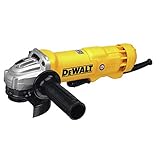
- POWER AND PERFORMANCE: Grinder tool with 11 Amp AC/DC 11,000 RPM motor designed for faster material removal and higher overload...
- DUST PROTECTION: Dust Ejection System helps protect the hand grinder by ejecting damaging dust and debris particles through the...
- NO LOCK-ON SAFETY: No lock-on paddle switch on one of the most capable power angle grinders in its class; One-Touch Guard for...
Best for: Safe, no-lock grinding control.
A no-lock paddle switch sets this DEWALT model apart for users who want immediate hand control during masonry and metal work. The 11-amp, 11,000 RPM motor still brings the same strong removal power, so the tool remains relevant for concrete grinder applications and tougher cutting tasks.
The dust ejection design helps keep abrasive debris out of the tool by pushing particles away through the air intake vents, which is especially valuable on dusty masonry jobs. The 360-degree One-Touch Guard gives quick adjustment without tools, so you can reposition protection as the cut angle changes. AC/DC corded power keeps the grinder running consistently across different work setups. Its 15.63 x 4.5 x 4.81-inch size keeps the body relatively compact for a grinder in this class, while the no-lock paddle switch adds a safety-oriented control style for users who prefer momentary activation over a locking trigger.
Pros
- 11-amp motor provides strong grinding power
- 11,000 RPM supports quick material removal
- No-lock paddle switch adds safer momentary control
- Dust Ejection System helps reduce internal buildup
Cons
- The no-lock paddle switch may feel less convenient for continuous grinding than a lock-on design.
This model fits buyers who want DEWALT power with a more safety-conscious switch style. It is a sensible choice for masonry users who value quick control and dust management over continuous run convenience.
| Specification | Details |
|---|---|
| Brand | DEWALT |
| Motor Amperage | 11 Amp |
| Maximum Speed | 11,000 RPM |
| Wheel Size | 4-1/2 in. |
| Switch Type | With No Lock |
| Dust Protection | Dust Ejection System |
| Guard | One-Touch Guard |
| Power Source | Corded Electric |
| Product Dimensions | 15.63″L x 4.5″W x 4.81″H |
I like this option for users who want the same strong DEWALT grinding capability but prefer a switch that does not latch on. That detail matters if you want tighter control during intermittent cuts or cleanup passes. It is especially appealing for those who work in dusty masonry conditions and want built-in debris handling.
6. Genesis Angle Grinder 15 Amp 7 Inch 8,500 RPM Corded
No products found.
Best for: Heavy-duty 7-inch masonry cutter.
A 15-amp motor and 7-inch wheel size make the Genesis GAG1570 a much larger grinder for masonry cutting and cleanup. That extra size gives the tool the reach and power needed for jobs like cutting tile, stone, brick, and cement block, where smaller grinders can feel limited.
The 8,500 RPM top speed is lower than some compact grinders, but the combination with a 15-amp motor is aimed at tougher material removal rather than finesse work. This model explicitly supports cutting tile, stone, brick, and cement block with an optional masonry cutting blade, which makes its intended use easy to understand. The lock-off power switch helps prevent unintentional operation, and the spindle lock simplifies wheel changes when you move between tasks. Tool-free wheel guard adjustment adds convenience on job sites, while the 21 x 13 x 5-inch size reflects a larger platform suitable for bigger cuts and more demanding surfaces.
Pros
- 15-amp motor supports tougher masonry jobs
- 7-inch wheel size increases cutting reach
- Lock-off power switch helps prevent accidental activation
- Tool-free wheel guard adjustment speeds setup changes
Cons
- An optional masonry cutting blade is needed for brick, stone, and cement block work, so it is not a complete masonry setup on its own.
This Genesis is the right kind of grinder for buyers who need a larger, more forceful tool for real masonry cutting. It fits best where reach, motor strength, and wheel changes matter more than compact handling.
| Specification | Details |
|---|---|
| Brand | Genesis |
| Motor Amperage | 15 Amp |
| Maximum Speed | 8,500 RPM |
| Wheel Size | 7 inch |
| Material | Aluminum |
| Power Source | Corded Electric |
| Switch Type | Lock-Off Power Switch |
| Special Features | Spindle Lock, Tool-Free Wheel Guard Adjustment |
| Product Dimensions | 21″L x 13″W x 5″H |
I would steer this toward users who need a bigger grinder for masonry materials rather than a small all-purpose tool. The 7-inch size and 15-amp motor make it more suitable for larger, rougher cuts. If you are working on brick, stone, or cement block often, this is the kind of machine that feels purposefully sized for the task.
7. DEWALT Angle Grinder Tool, 6 in., 13 Amp, 9,000 RPM,

- HIGH POWER: 6 inch angle grinder with 13 Amp motor delivers 9,000 RPM for fast, aggressive metal grinder applications on a variety...
- DUST PROTECTION: High performance grinder tool with Dust Ejection System designed to eject damaging dust and debris through the...
- MULTI-SURFACE: Concrete grinder and masonry applications; 9,000 RPM delivers fast material removal on tough surfaces
Best for: Aggressive cutting on hard surfaces.
A 13-amp motor in a 6-inch DEWALT grinder gives this tool a strong balance of size and output for masonry work. The 9,000 RPM speed is high enough for fast material removal, while the larger wheel format helps when the buyer needs more reach than a 4-1/2 inch grinder can offer.
The Dust Ejection System is valuable on concrete and masonry jobs because it helps protect the grinder by moving debris out through the air intake vents. That feature matters in abrasive environments where fine dust can shorten tool life. This model also includes power loss reset, which helps prevent accidental restarts after an interruption. The 6-inch wheel size is a major practical difference, since it gives broader coverage on tough surfaces and makes the tool more appropriate for larger grinding passes. The yellow, corded, classic-style layout keeps the design straightforward for users who want a no-frills jobsite grinder.
Pros
- 13-amp motor delivers strong power for hard surfaces
- 6-inch wheel size improves reach on larger areas
- 9,000 RPM supports fast aggressive grinding
- Dust Ejection System helps manage debris exposure
Cons
- The 6-inch format is larger and less nimble than compact 4-1/2 inch grinders for tight corners.
This DEWALT is a strong fit for users who want a larger grinder for concrete and masonry rather than a small detail tool. It makes more sense when coverage and cutting power matter more than compact handling.
| Specification | Details |
|---|---|
| Brand | DEWALT |
| Motor Amperage | 13 Amp |
| Maximum Speed | 9,000 RPM |
| Wheel Size | 6 in. |
| Dust Protection | Dust Ejection System |
| Power Source | Corded Electric |
| Color | Yellow |
| Style | Classic |
| Material | Blend |
I would pick this for users who want more cutting width and a stronger motor than the usual compact grinders offer. The 6-inch wheel is the real selling point because it broadens the kinds of masonry tasks it can handle. If you work on larger surfaces regularly, this feels more efficient than a smaller 4-1/2 inch tool.
8. Makita GA5040X1 SJSII Angle Grinder with Tuck Point Guard, 5″

- Powerful 10.0 AMP motor delivers more output and 11,000 RPM
- SJSII provides a leaf spring and cam gear drive mechanism that is engineered to reduce vibration
- Includes 5" dust extraction tuck point guard for clean and accurate tuck pointing and cutting
Best for: Tuck-pointing and dust control.
A 10.0-amp motor paired with 11,000 RPM gives the Makita GA5040X1 the speed needed for clean cutting and grinding on masonry surfaces. The included 5-inch dust extraction tuck point guard makes it especially useful when the job calls for cleaner, more accurate tuck pointing along joints and cracks.
The SJSII mechanism uses a leaf spring and cam gear drive to reduce vibration, which helps keep the tool steadier during extended cutting. That is useful when you are trying to follow mortar lines or keep a consistent path on stone or brick. Labyrinth construction protects the motor and bearings from dust and debris, a meaningful feature for gritty masonry work. The vibration-absorbing handle can be installed in various positions on the tuck point guard, so users can tailor the grip to the cut angle. At 17.3 x 8 x 9 inches, it has a larger footprint suited to controlled, specialty work rather than general compact grinding.
Pros
- 10.0-amp motor provides strong output for masonry cutting
- 11,000 RPM supports fast, clean passes
- 5-inch dust extraction tuck point guard improves accuracy
- SJSII vibration reduction helps steady the tool
Cons
- The tuck point guard makes this more specialized for pointing and dust-managed cutting than for general-purpose grinding.
This Makita is the most relevant choice here for buyers focused on tuck pointing, mortar cleanup, and cleaner masonry cuts. It brings together speed, dust management, and vibration control in a way that supports precision work.
| Specification | Details |
|---|---|
| Brand | Makita |
| Motor Amperage | 10.0 AMP |
| Maximum Speed | 11,000 RPM |
| Guard Size | 5″ dust extraction tuck point guard |
| Construction | Labyrinth construction |
| Special Feature | SJSII |
| Handle | Vibration absorbing handle |
| Product Dimensions | 17.3″L x 8″W x 9″H |
| Color | Green,black |
I would choose this if the job is mostly tuck pointing or masonry cleanup where dust control and accuracy matter. The guard and vibration-reduction system make it feel specialized rather than general-purpose. For homeowners or pros doing joint work, that specialization is exactly what makes it appealing.
Quick Comparison Table of Best Angle Grinders for Masonry
| Product Name | Power | Size | Dust Protection | Best For | Check Price |
|---|---|---|---|---|---|
| AVID POWER Angle Grinder, 7.5-Amp 4-1/2 | 7.5-Amp | 4-1/2 inch | No | Light DIY masonry | Check Price |
| AVID POWER Angle Grinder, 7.5-Amp 4-1/2 | 7.5-Amp | 4-1/2 inch | No | Light DIY masonry | Check Price |
| Makita 9557PBX1 4-1/2″ Paddle Switch Cut-Off/Angle | 7.5-Amp | 4-1/2 inch | Labyrinth seal | Compact cutting | Check Price |
| DEWALT Angle Grinder, 4-1/2 in., 11 | 11-Amp | 4-1/2 in. | Dust ejection | Faster material removal | Check Price |
| DEWALT Angle Grinder, 4-1/2 in., 11 | 11-Amp | 4-1/2 in. | Dust ejection | Safety-focused use | Check Price |
| Genesis Angle Grinder 15 Amp 7 | 15 Amp | 7 inch | No | Brick and stone cutting | Check Price |
| DEWALT Angle Grinder Tool, 6 in. | 13 Amp | 6 in. | Dust ejection | Masonry applications | Check Price |
| Makita GA5040X1 SJSII Angle Grinder with | 10.0 AMP | 5 | Dust extraction guard | Tuck pointing | Check Price |
How to Choose the Best Angle Grinder for Masonry
Motor power and grinding speed
Choose motor power by the hardest masonry you cut most often. For brick and block, a mid-power grinder handles scoring and cleanup cleanly; for dense concrete, patio slabs, and stone, step up to a higher-wattage tool that keeps the wheel moving through the cut instead of stalling. Check no-load RPM as well: higher speed helps with faster material removal, while a strong load-rated output keeps that speed from collapsing under pressure.
The best pick for most masonry buyers is a high-wattage grinder with brisk no-load RPM and steady torque under load; light-duty users should choose a mid-power model, while frequent concrete cutters should pick the highest-power option in the group.
| Power level | Best for |
|---|---|
| Mid-power | Brick, block, occasional mortar cleanup |
| High power | Concrete, stone, heavier cutting and grinding |
| Higher RPM with stable load response | Fast removal without bogging down |
Disc size and masonry compatibility
Pick disc size by the scale of the job and the space you work in. A 4.5-inch grinder suits control, trimming, and tight spots; a 5-inch option gives a stronger balance of reach and maneuverability; a 7-inch grinder handles deeper cuts, larger slabs, and more aggressive grinding. Confirm that the tool accepts diamond cutting and grinding wheels, because masonry work depends on those accessories rather than generic abrasive discs.
Also check arbor size and guard clearance so wheel swaps are straightforward and safe. The best choice for most homeowners is a 5-inch grinder with standard arbor compatibility; detail work belongs to 4.5-inch models, and heavy slab cutting belongs to 7-inch models.
| Disc size | Best for |
|---|---|
| 4.5-inch | Detail cuts, edges, tight spaces |
| 5-inch | General masonry work, balanced control |
| 7-inch | Deeper cuts, larger surfaces, heavy removal |
Dust control and safety features
Choose safety features that control dust and reduce reaction force, because masonry work throws fine debris and can grab the wheel hard. A dust shroud or vacuum attachment support keeps the work area cleaner and helps visibility on long cuts. Antikickback protection and soft start both matter: one reduces sudden wheel reaction, the other eases startup so the tool does not jump in your hands.
Side handles, spindle locks, and restart protection round out a safer setup for frequent wheel changes and interruptions. The best pick for serious masonry work is a grinder with dust extraction support, soft start, and antikickback protection; casual users should still insist on a side handle and spindle lock.
| Feature | Best for |
|---|---|
| Dust shroud or vacuum support | Cleaner cutting and better visibility |
| Soft start | Controlled startup and less jerk |
| Antikickback protection | Safer handling on tough cuts |
| Side handle and spindle lock | Control and easy accessory changes |
Durability and build quality
Durability matters because masonry dust is abrasive and works its way into weak tools fast. Favor a metal gear housing, reinforced internal components, and tight sealing around vents and switches, since those traits hold up better against gritty concrete dust and repeated hard use. Brush access also matters on corded grinders: easy service keeps the tool working longer and reduces downtime.
Inspect the fit of housings and covers, and avoid loose seams or flimsy plastic around stressed areas. The best choice for regular masonry use is a grinder with a metal gear case, sealed body, and accessible brushes; occasional users can choose a simpler build, but frequent contractors should pick the most serviceable model available.
| Build feature | Best for |
|---|---|
| Metal gear housing | Heavy use and impact resistance |
| Reinforced motor parts | Longer life under load |
| Good sealing | Protection from masonry dust |
| Easy brush access | Maintenance and long-term service |
Handling and comfort for extended use
Comfort decides whether the grinder feels precise or tiring after a few minutes. Choose a grip that fits your hand without forcing a tight squeeze, and look for a balanced body that does not pitch forward under the wheel. Vibration reduction matters on extended cutting and grinding because it preserves control and reduces fatigue.
Weight should match the task: lighter tools suit overhead work and repeated edge trimming, while heavier models feel steadier on long straight cuts. Adjustable side handles add control in cramped spaces and let you set a safer wrist angle.
The best pick for long sessions is a well-balanced grinder with vibration reduction and adjustable handles; overhead users should prioritize low weight, and precision users should choose the most comfortable grip shape.
| Comfort trait | Best for |
|---|---|
| Lightweight body | Overhead and repeated cutting |
| Balanced weight distribution | Stable tracking on long cuts |
| Vibration reduction | Long sessions and better control |
| Adjustable side handle | Tight spaces and varied hand positions |
Which Should You Choose?
- If you need a compact grinder for light to medium masonry touch-ups or DIY work, choose a 4-1/2 inch corded model with about 7.5 amps and high RPM.
- If you want faster cutting, more overload protection, or frequent use on tougher masonry, choose an 11-amp or higher 4-1/2 inch grinder with dust protection.
- If you’re cutting brick, stone, cement block, or removing mortar, choose a larger 7-inch grinder with around 15 amps and masonry blade compatibility.
- If you need smoother control for tuckpointing or tighter masonry work, choose a 5- to 6-inch grinder with a tuck-point guard and vibration-reducing design.
Quick Best Angle Grinder For Masonry Buying Checklist
- Verify motor power: Make sure the grinder has enough output to cut or grind brick, concrete, and stone without stalling.
- Check disc compatibility: Confirm it accepts the diamond wheel size you plan to use and that the arbor and guard fit correctly.
- Look for dust management: Choose a model that supports a shroud or vacuum connection to reduce airborne masonry dust.
- Prioritize safety controls: Seek soft start, anti-kickback protection, spindle lock, and a secure side handle for better control.
- Assess build quality: Metal gear housing, sealed internals, and durable switches help the tool withstand abrasive masonry work.
- Consider comfort: A balanced body, low vibration, and a comfortable grip make long cutting sessions easier and more accurate.
How an Angle Grinder Cuts Masonry Cleanly
An angle grinder removes masonry by spinning an abrasive or diamond wheel at high speed, which abrades the surface rather than slicing it like a saw. For brick, block, stone, and mortar, the most effective setup is usually a diamond blade matched to the material and the cut type. Continuous-rim blades tend to leave a cleaner edge on tile and softer stone, while segmented blades clear dust faster and handle tougher concrete more aggressively.
The grinder’s power, wheel diameter, and guard position all affect control and cut depth. Keeping the tool moving steadily helps reduce chipping, overheating, and uneven wear on the blade.
| Blade Type | Best for |
|---|---|
| Continuous-rim diamond | Cleaner cuts in tile and softer masonry |
| Segmented diamond | Fast cutting in concrete, block, and brick |
| Turbo diamond | Balanced speed and smoother edges on mixed masonry |
Masonry Materials and the Right Wheel Match
Not all masonry behaves the same under an angle grinder, so the wheel should match the material’s density and abrasiveness. Dense concrete and reinforced block can wear out a soft blade quickly, while older brick and mortar may chip if the wheel is too aggressive. Stone also varies widely: granite demands a tougher diamond bond, while sandstone and limestone can benefit from a smoother, less aggressive cut.
The wrong pairing can create excessive dust, shorten blade life, and increase the chance of binding. Matching the wheel to the job improves cutting speed and keeps edges more predictable.
| Material | Wheel Preference |
|---|---|
| Brick | General-purpose diamond blade |
| Concrete block | Segmented diamond blade |
| Granite | Hard-bond diamond blade |
| Limestone | Smoother-cutting diamond blade |
Dust Control When Working on Brick and Concrete
Masonry cutting creates a large amount of fine silica dust, which is harmful to breathe and messy to clean up. A grinder with dust extraction is ideal, but even a basic setup can be improved with a shroud and a connected vacuum rated for fine debris. Wet cutting can reduce airborne dust dramatically, though it is not appropriate for every job or every tool.
Positioning the cut so dust falls away from the user also helps. Good dust control is not just about cleanliness; it also improves visibility, lets the blade track more accurately, and reduces wear on nearby surfaces and tools.
- Use a dust shroud whenever possible.
- Pair the grinder with a vacuum designed for fine particles.
- Keep the cut line clear so the blade does not regrind debris.
- Consider wet methods only when the tool and setting allow it.
Common Cutting Mistakes That Damage Masonry
Many poor results come from technique rather than the grinder itself. Forcing the tool through the cut can glaze the blade, overheat the motor, and chip the masonry edge. Starting with too much depth in a single pass also increases the chance of kickback.
Another common mistake is using a blade that is dull, damaged, or meant for a different material. Cutting without marking the line clearly can lead to wandering cuts, while failing to secure the workpiece makes vibration worse.
A smoother result usually comes from shallow passes, steady pressure, and letting the wheel do the work at its own speed.
- Do not force the blade deeper than it can cut cleanly.
- Make multiple shallow passes on thick masonry.
- Secure the workpiece before starting.
- Replace worn or chipped wheels promptly.
Maintenance Habits That Keep the Grinder Performing Well
Regular maintenance keeps an angle grinder reliable when cutting abrasive masonry. After use, brush dust from the vents and housing so debris does not pack into the motor area. Inspect the guard, flange, arbor nut, and wheel for wear or cracks before each job.
A blade that has glazed over or lost cutting speed should be replaced rather than pushed harder, since dull wheels raise heat and strain the tool. Check the power cord or battery contacts for damage, and store the grinder dry so moisture does not corrode internal parts.
Small habits like these extend tool life and help preserve cutting accuracy.
| Maintenance Task | Why It Matters |
|---|---|
| Clean vents after use | Helps prevent overheating |
| Inspect wheel condition | Reduces vibration and breakage risk |
| Check guard and flange | Supports safer, steadier operation |
| Store in a dry place | Prevents corrosion and damage |
Frequently Asked Questions (FAQs)
What Size Angle Grinder Works Best For Masonry?
A 4.5-inch or 5-inch angle grinder works best for masonry when you need a balance of control, reach, and everyday cutting ability. Larger 7-inch models suit deeper cuts and heavier demolition, but smaller grinders are easier to guide on brick joints and block edges.
Do I Need A Special Disc For Masonry Work?
Yes, a special diamond disc is needed for masonry work because standard abrasive wheels wear out quickly on brick, concrete, and stone. Segmented diamond blades cut aggressively and handle heat better, while continuous-rim options give smoother results on tile or finer finishes.
How Much Power Should A Masonry Angle Grinder Have?
A masonry angle grinder should have enough power to maintain speed under load, especially when cutting dense block or cured concrete. Higher wattage or amp ratings help prevent bogging down, which improves cut quality and reduces strain on the motor during long passes.
What Safety Features Matter Most For Masonry Grinding?
The most important safety features for masonry grinding are soft start, a secure side handle, and anti-kickback protection. These reduce sudden torque, improve control, and help keep the tool steady when a wheel bites into hard material or dusty edges.
Is Dust Control Important When Using An Angle Grinder On Masonry?
Yes, dust control is very important when using an angle grinder on masonry because cutting brick and concrete creates fine silica dust. A compatible dust shroud or vacuum attachment improves visibility, reduces cleanup, and supports safer working conditions during extended grinding sessions.
Can One Grinder Handle Both Cutting And Surface Grinding?
Yes, one grinder can handle both cutting and surface grinding on masonry if it has the right disc setup and enough power. A diamond cutting wheel handles slicing, while a cup wheel or grinding disc is better for smoothing mortar, leveling surfaces, and removing excess material.
What Makes A Masonry Angle Grinder Durable?
A durable masonry angle grinder has sealed components, sturdy gear housing, and good protection against abrasive dust. Metal construction and serviceable parts matter because masonry work is harsh, and a well-built tool keeps performing consistently through repeated cutting and grinding tasks.
Final Suggestions
Choosing the best angle grinder for masonry comes down to power, disc compatibility, dust control, and safe handling. The right tool cuts cleaner, works faster, and stands up to demanding brick, block, and concrete tasks. With a smart choice, you can tackle tough masonry projects more confidently and achieve better results every time.