Top 10 Best Bench Grinder For Knife Sharpening
Best bench grinder for knife sharpening matters when edge geometry, heat control, and wheel quality decide how cleanly a blade performs. In workshops and home setups alike, the right grinder can shape steel, refine bevels, and support consistent sharpening without damaging temper or finish. The best bench grinder for knife sharpening is often judged by motor stability, wheel balance, and tool rest precision, but those factors only tell part of the story.
Bench grinder for knife edges, knife sharpening grinder, and grinding wheel technology all influence how well a machine handles hardened steel, stainless blades, and delicate maintenance work. From abrasive materials to vibration control and spark management, the details separate a rough grind from a refined result.
The key differences may surprise you, especially once performance, durability, and control start to matter.
Detailed Overview of the Best Bench Grinder for Knife Sharpening
1. 10 Inch Variable Speed Wet Sharpening System, 90-160RPM Wet Bench

- Variable Speed: Powerful full enclosed motor (1.0A - 1.2A) provides 90~160 RPM rotation speed
- 10-inch Wet Wheel: Aluminum oxide grinding wheel with water trough under keeps tools from overheating
- 8-inch Strop Wheel: Leather Stropping wheel removes burrs and leaves tools refined. NOTE: DON'T sharpen against the direction of...
Best for: Precision wet sharpening for knives.
An alloy steel body and a 10-inch wet wheel give this KFMK system the mass and contact area needed for controlled knife sharpening. The 8-inch leather strop follows the grind with a finishing stage, so edge work can move from shaping to burr removal in one setup. Variable speed from 90 to 160 RPM keeps the process slow enough for careful blade work.
A full enclosed motor rated at 1.0A to 1.2A gives steady drive while the water trough under the grinding wheel helps keep edges from overheating during sharpening. The very fine grit wheel suits users who want refinement rather than aggressive metal removal, which matters on kitchen knives and other thin edges. At 10″ x 10″ x 10″, the machine fits a compact bench footprint, and the 15.58 kg weight adds stability during slower passes. The included angle guide helps you hold a repeatable sharpening angle, while the jig support gives the blade a steadier path across the wheel for more consistent results.
Pros
- 90-160 RPM variable speed supports controlled knife sharpening
- 10-inch aluminum oxide wet wheel helps limit heat on blades
- 8-inch leather strop removes burrs and refines the edge
- Angle guide and jig support improve repeatable edge angles
Cons
- The 10″ x 10″ x 10″ footprint is compact, but the 15.58 kg weight makes it less convenient to move often between work areas.
This is a strong pick for anyone sharpening knives who wants slow, careful material removal and a cleaner finish. The wet wheel and strop combination makes it especially useful for fine edge work rather than fast stock removal.
| Specification | Details |
|---|---|
| Material | Alloy Steel |
| Brand | KFMK |
| Color | Gray |
| Product Dimensions | 10″L x 10″W x 10″H |
| Item Weight | 15.58 kg |
| Grit Type | Very Fine |
| Number of Items | 1 |
| Number of Packs | 1 |
I’d point this toward buyers who care more about edge quality than speed. The low RPM range, wet wheel, and leather strop make it a practical bench option for kitchen knives, chisels, and similar blades that benefit from careful finishing. If you want a compact grinder that favors control, this one makes sense.
2. BUCKTOOL 10″ 1.2A Variable Speed Wet Sharpening System,Two Way Rotation

- VARIABLE SPEED: Powerful 1/5 HP 1.2-amp motor, rotated with 90~160 RPM variable speed for maximum precision during sharpening...
- COOLING ACTION: 10-inch aluminum oxide sharpening wheel and 8-inch leather stropping wheel to polish and finish your sharpened...
- UNIVERSAL JIG: Two-position jig support adjusts to both horizontal and vertical positions and ensures that your tools are...

Best for: Controlled wet sharpening with reverse rotation.
A 1.2-amp motor paired with 90 to 160 RPM gives this BUCKTOOL wet sharpener a controlled pace for knife edges that need careful handling. The 10-inch aluminum oxide wheel handles sharpening, while the 8-inch leather stropping wheel finishes the edge in the same workflow. Two-way rotation adds flexibility for matching your sharpening direction to the task.
The 1/5 HP motor provides enough drive for steady sharpening without pushing the wheel too aggressively, which is useful on fine kitchen blades and workshop tools. Its water tray keeps metal cooler and helps reduce residue buildup, so the wheel stays cleaner through longer sessions. The universal jig support adds more consistent blade positioning, which matters when you repeat the same bevel across multiple knives. With dimensions of 18.11″ x 10.63″ x 15.75″, this is a larger bench unit that gives you more room around the wheel and strop. Corded electric power also means you are not managing batteries during sharpening sessions.
Pros
- 90-160 RPM variable speed supports careful edge control
- Two-way rotation adds flexibility for different sharpening motions
- 10-inch wheel and 8-inch strop cover both sharpening and finishing
- Water tray helps keep blades cool and reduce residue buildup
Cons
- The 18.11″ x 10.63″ x 15.75″ size takes more bench space than smaller sharpeners.
This model fits buyers who want a slower, wet sharpening process with room for both shaping and finishing. It is a practical choice if you sharpen knives regularly and want the extra control of reverse rotation plus a jig-supported setup.
| Specification | Details |
|---|---|
| Brand | Bucktool |
| Product Dimensions | 18.11″L x 10.63″W x 15.75″H |
| Style | Wet sharpening system |
| Power Source | Corded Electric |
| Color | Red Black |
I like this for someone who wants a more deliberate sharpening routine and values the water-cooled approach. The two-way rotation and universal jig support make it easier to stay consistent on repeated knife jobs. If your priority is controlled edge work rather than aggressive grinding, this is a sensible bench grinder style to look at.
3. BUCKTOOL 6″ 1/3HP Low Speed Bench Grinder,High Precision Wobble Free

- 1/3HP 6-Inch Low-Speed Bench Grinder: Powerful 1/3HP motor delivers 1750 RPM, perfect for slow, controlled grinding to achieve...
- Dual Grit Grinding Wheels: Includes 60-grit Brown Aluminum Oxide wheel and 80-grit White Aluminum Oxide wheel, suitable for...
- Adjustable Work Rest & Stable Cast Aluminum Base: Tool-free adjustable work rest and rubber-footed cast aluminum base reduce...
Best for: Low-speed control for precise edge work.
A 1/3 HP motor turning at 1750 RPM gives this BUCKTOOL grinder a slower, more controlled pace than high-speed shop grinders. The 6-inch low-speed format is a good match for knife sharpening because it helps you remove metal with less urgency and more accuracy. Dual grit wheels add both coarse correction and finer cleanup in one machine.
The included 60-grit brown aluminum oxide wheel handles heavier reshaping, while the 80-grit white aluminum oxide wheel is better suited to refinement after the initial grind. That combination lets you restore a worn blade edge first and then smooth it without switching machines. The adjustable work rest helps hold the blade at a steadier angle, which is important when you are trying to keep a consistent bevel on kitchen knives or tools. A stable cast aluminum base supports wobble-free work, and the 13.78″ x 7.87″ x 12.6″ dimensions keep it bench-friendly. Corded electric power also gives continuous runtime for longer sharpening sessions.
Pros
- 1750 RPM low-speed motor supports controlled sharpening
- 60-grit and 80-grit wheels handle shaping and refinement
- Adjustable work rest helps maintain a steady bevel angle
- Cast aluminum base improves stability during sharpening passes
Cons
- The 6-inch wheel size gives less contact area than 10-inch wet sharpeners, so very long blades may take more passes.
This is a good fit for people who want a traditional dry grinder with slower, more manageable sharpening behavior. It offers enough wheel variety and stability for knives, tools, and hobby work without moving into oversized shop equipment.
| Specification | Details |
|---|---|
| Brand | Bucktool |
| Material | Aluminum |
| Product Dimensions | 13.78″L x 7.87″W x 12.6″H |
| Style | 6″ Low Speed |
| Power Source | Corded Electric |
I would recommend this to someone who wants a slower grinder without the complexity of a wet system. The lower RPM and dual-wheel setup make it practical for general knife maintenance and light reshaping. If you prefer a stable, simple bench machine for regular edge work, this one has the right balance.
4. BUCKTOOL 2×42″ Belt Sander 6″ Bench Grinder Combo for Metalworking,3.5A
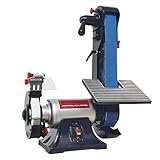
- HIGH EFFICIENCY: This sander meets CSA standards, with heavy-duty construction can extend using life, equipped with an induction...
- MULTI-FUNCTION SANDER: This combo 2"x42" belt sander 6" bench grinder includes a 2-Inch x 42-Inch high-quality metal sanding belt...
- MULTI-ANGLE SANDING: The belt can tilt from 0 to 90 degrees for sanding to meet your project, the belt housing can swivel from...
Best for: Multi-use bench combo for workshop sharpening.
A 2×42-inch sanding belt paired with a 6-inch bench grinder gives this BUCKTOOL combo two different ways to handle sharpening and finishing tasks. The 3.5A motor and 3450 RPM no-load wheel speed add stronger material removal than slow wet systems, which helps when a knife edge needs more than a light touch. The belt section broadens its use beyond sharpening alone.
The 2-inch by 42-inch high-quality metal sanding belt handles general-purpose sanding and finishing on metals, wood, and plastics, so the machine serves more than one shop job. With a 1/3HP, 3.5 amp induction motor, it has enough force to keep working under load during longer sessions. The 4480 FPM belt speed is useful when you need quicker cleanup or profiling before fine sharpening. CSA standards indicate a more formal safety and compliance profile, and the 17.99″ x 11.3″ x 24.53″ footprint shows it is a larger benchtop station. This is better for users who want one machine for both sharpening and broader workshop tasks.
Pros
- 2×42-inch belt expands the machine beyond simple sharpening
- 3450 RPM wheel speed supports faster metal removal
- 3.5A induction motor helps the machine run under load
- Works on metals, wood, and plastics for broader shop use
Cons
- The 24.53-inch height makes it much bulkier than a standard bench grinder, so it needs more vertical clearance.
This combo makes sense if you want a sharpening station that can also handle sanding and finishing jobs. It is not the smallest choice, but it offers more versatility for a workshop that sees mixed materials and blade maintenance.
| Specification | Details |
|---|---|
| Brand | Bucktool |
| Product Dimensions | 17.99″L x 11.3″W x 24.53″H |
| Grit Type | Medium |
| Voltage | 120 volts |
| Power Source | Corded Electric |
I’d choose this if you want more than a knife sharpener and you have bench space for a larger combo unit. The belt plus grinder layout makes it handy for mixed workshop work, especially if you also sand or finish other materials. For a pure knife-focused setup, it is more machine than you need, but for all-around shop use it makes sense.
5. Woodskil 6″ 1/2HP High Speed Bench Grinder for sharpening,CSA Listed

- Powerful 1/2HP 2.8A Motor with 3450 RPM: Equipped with a high-speed motor, this 6×3/4×1/2 inch bench grinder delivers fast and...
- Versatile Coarse & Fine Grinding Wheels: Includes 36-grit and 60-grit aluminum oxide wheels for both rough shaping and fine...
- Stable Rigid Steel Base: Pre-drilled and heavy-duty steel base ensures a wobble-free operation, keeping the grinder steady during...
Best for: Fast dry sharpening for home workshops.
A 1/2HP motor turning at 3450 RPM gives this Woodskil grinder the speed needed for quick knife sharpening and general edge cleanup. The 6-inch size keeps it in the familiar bench-grinder format, while the alloy steel body supports shop use in a compact frame. Dual grinding wheels let you move from rough shaping to finer finishing without changing tools.
The included 36-grit wheel handles heavier reshaping, and the 60-grit wheel provides a finer pass for smoothing a knife edge afterward. That range is useful when a blade needs a quick correction before it can be refined. At 2.8A, the motor has enough current for everyday sharpening work in a home shop setting. The angled style changes how the unit sits on the bench, which can help with visibility and hand placement during use. With dimensions of 12.4″ x 9.53″ x 9.14″, it remains relatively compact for a high-speed grinder. Corded electric power also means consistent output across longer sessions.
Pros
- 3450 RPM supports fast knife sharpening and edge cleanup
- 1/2HP motor provides strong everyday grinding power
- 36-grit and 60-grit wheels handle coarse and finer work
- Compact 12.4″ x 9.53″ x 9.14″ size suits home benches
Cons
- The high 3450 RPM speed is less forgiving for thin knives than slower wet sharpeners.
This is a practical pick for buyers who want a straightforward dry grinder with enough speed for regular sharpening. It works best for home workshops where quick edge maintenance matters more than ultra-slow polishing.
| Specification | Details |
|---|---|
| Brand | Woodskil |
| Material | Alloy Steel |
| Product Dimensions | 12.4″L x 9.53″W x 9.14″H |
| Style | Angled |
| Power Source | electric, gas, Corded Electric |
I think this suits a buyer who wants fast sharpening in a compact bench footprint. The dual grits and 3450 RPM motor make it useful for routine edge maintenance and light reshaping. If you are comfortable working with a faster dry grinder and want a simple workshop tool, this is a solid fit.
6. 10-Inch Knife Sharpening System,Variable Speed Wet Bench Grinder for Knife,
No products found.
Best for: Wet grinder for knives and fine tools.
A 10-inch 220-grit aluminum oxide wheel gives this hightall wet grinder a fine starting point for controlled knife sharpening. The paired 8-inch leather honing wheel follows with polishing, so the machine handles both edge restoration and finishing in one workflow. Variable speed from 90 to 300 RPM keeps the process slow enough for delicate blades.
The forward and reverse switch adds direction control, which helps when you want to choose how the blade meets the wheel for a given task. The built-in water tank keeps the grinding stone cool, reducing the chance of heat damage during sharpening sessions. At 20″ x 8.2″ x 15.7″, the machine is long enough to give the wheels and work area more separation, which can make blade handling easier. The 26-pound weight adds bench stability, especially during careful passes on knives, chisels, scissors, or axes. Its fine grit classification reflects a focus on edge refinement rather than heavy stock removal. Corded electric power supports continuous use without battery changes.
Pros
- 90-300 RPM variable speed offers a wide control range
- Forward and reverse switch adds sharpening direction control
- 10-inch 220-grit wheel supports fine edge restoration
- Water tank helps keep blades cool during sharpening
Cons
- The 26-pound weight makes it less convenient to move once placed on a bench.
This is a strong choice for users who want a wet sharpening system with more speed range than many rivals. It suits knife work that needs careful heat control, a smoother finish, and the option to reverse the wheel direction.
| Specification | Details |
|---|---|
| Material | Alloy Steel |
| Brand | hightall |
| Color | Yellow |
| Product Dimensions | 20″L x 8.2″W x 15.7″H |
| Item Weight | 26 pounds |
| Grit Type | Fine |
| Number of Items | 1 |
| Number of Packs | 1 |
I’d consider this if you want a wet sharpener with a broader RPM range and a reverse option. The 220-grit wheel and leather hone make it well suited to knives and other fine edges that need careful finishing. It is a better match for patient sharpening than for quick grinding, which is exactly what some users want.
7. Ecarke 3″ Mini Bench Grinder Compatible with Dewalt 20V (Tool

- 【Compatible with Your DeWalt 20V Battery】Designed to work perfectly with the DeWalt 20V battery (BATTER NOT INCLUDE), this...
- 【AC Adapter】This electric bench grinder equipped with a AC adapter supporting 110-240V input. The precise stepless speed dial...
- 【Improve Shock Absorption】Constructed from durable strong stainless steel, this bench grinder is built for long-term...
Best for: Cordless mini grinder for small jobs.
A 3-inch mini bench grinder that runs on a DeWalt 20V battery gives this Ecarke unit cordless mobility for small sharpening tasks. The stepless speed dial from 2000 to 10000 RPM lets you tune the wheel for delicate knife touch-ups or more aggressive edge cleanup. Its compact iron-and-metal body keeps the machine small on the bench or in a portable kit.
The AC adapter supports 110-240V input, so the tool can also run from mains power when a battery is not in play. That flexibility is useful for users who move between job sites and a workbench. With dimensions of 9.8″ x 4.9″ x 4.8″, it occupies very little space, which can matter in a small shop or apartment setup. The battery-powered design is practical when you want quick access without cord management. Because it is a 3-inch grinder, it favors small, precise jobs over large blade work. The modern style also keeps it visually simple for portable use.
Pros
- 2000-10000 RPM stepless control adapts to fine or aggressive work
- 3-inch size keeps it compact for small sharpening tasks
- Battery-powered design adds cordless portability
- AC adapter supports 110-240V input for flexible power use
Cons
- The 3-inch wheel gives less surface area for longer knives, so it is less efficient for full-size blades.
This works best for users who want a portable grinder for small sharpening jobs rather than a full-size bench machine. The speed range and dual power options make it flexible, but the compact wheel size keeps it in the light-duty category.
| Specification | Details |
|---|---|
| Brand | Ecarke |
| Material | Iron, Metal |
| Product Dimensions | 9.8″L x 4.9″W x 4.8″H |
| Style | modern |
| Power Source | Battery Powered |
I’d recommend this to someone who needs a small, portable sharpener for light bench use and quick touch-ups. The stepless speed control is the key feature here, because it lets you slow things down for careful work. If your knives are small and you value mobility over size, this is a sensible compact option.
8. WEN BG4270T 10-Inch Two-Direction Water Cooled Wet/Dry Sharpening System

- Features a 10-inch 220 grit sharpening stone and an 8-inch leather-stropping wheel
- Reverse the rotational direction with the simple flip of a switch
- 115 RPM provides maximum precision during sharpening
Best for: Portable mini grinder for Milwaukee users.
A 3-inch grinder that works with a Milwaukee 18V battery gives this Ecarke model cordless reach for small sharpening tasks. The stepless dial from 2000 to 10000 RPM covers fine touch-ups and faster material removal in a compact tool. The iron-and-metal body keeps the unit lightweight enough for portable sharpening setups.
The AC adapter supports 110-240V input, so the machine can also be powered from mains when a battery is not available. That dual-power arrangement is useful for users who split time between a shop bench and mobile work. Its 9.8″ x 4.9″ x 4.8″ dimensions make it easy to store without dedicating much space. Since the grinder is only 3 inches, it suits small blades, detail sharpening, and quick maintenance more than larger kitchen knives. The modern style keeps the package simple and practical for carry-along use. For users already invested in Milwaukee batteries, the compatibility is the main convenience factor.
Pros
- Milwaukee 18V battery compatibility adds cordless flexibility
- 2000-10000 RPM stepless dial supports careful control
- 3-inch size is useful for small sharpening jobs
- 110-240V AC adapter expands power options
Cons
- The 3-inch wheel size is limited for full-length knife sharpening compared with larger bench grinders.
This is a good match for Milwaukee battery users who want a compact sharpener for smaller knives and detail work. It trades wheel size for portability, which makes sense if your priority is convenience and flexibility rather than heavy-duty grinding.
| Specification | Details |
|---|---|
| Brand | Ecarke |
| Material | Iron, Metal |
| Product Dimensions | 9.8″L x 4.9″W x 4.8″H |
| Style | modern |
| Power Source | Battery Powered |
I’d point this toward someone who already uses Milwaukee 18V batteries and wants a small grinder that can travel. It is not the best choice for big knives, but it is convenient for detail sharpening and quick touch-ups. If portability matters more than wheel diameter, this one has a clear appeal.
9. Ecarke 3″ Mini Bench Grinder Compatible with Milwaukee 18V (Tool

- 【Compatible with Your Milwaukee Battery】Designed to work perfectly with the Milwaukee 18V battery (BATTER NOT INCLUDE), this...
- 【AC Adapter】This electric bench grinder equipped with a AC adapter supporting 110-240V input. The precise stepless speed dial...
- 【Improve Shock Absorption】Constructed from durable strong stainless steel, this bench grinder is built for long-term...
Best for: Wet sharpening with two-direction control.
A 10-inch 220-grit sharpening stone gives this WEN system a fine surface for careful knife sharpening. The 8-inch leather-stropping wheel adds finishing in the same machine, while the 115 RPM speed keeps the process slow and controlled. Reverse rotation is available with a simple switch, which helps tailor the sharpening direction to the blade.
Universal jig support expands accessory compatibility, including the WEN 42704B Sharpening Kit, which is useful if you want more setup flexibility. The onboard carrying handle makes the 35.5-pound unit easier to reposition than many heavy wet sharpeners, even though it still has substantial mass. An angle guide and honing compound are included, so the machine arrives with tools for setting and refining an edge. The adjustable water reservoir helps keep the wheel wet during use, which supports cooler sharpening on knives and chisels. At 16.9″ x 10.8″ x 16.5″, it has a larger bench presence but remains manageable for dedicated sharpening stations.
Pros
- 115 RPM speed supports very precise knife sharpening
- Reverse rotation helps match the wheel direction to the task
- 10-inch stone and 8-inch strop cover sharpening and finishing
- Universal jig support improves accessory compatibility
Cons
- The 35.5-pound weight makes it more of a stationary sharpening station than a portable tool.
This is a solid option for buyers who want a slow wet sharpener with good accessory support and a finish-ready strop. It makes the most sense for dedicated bench use where careful blade work is the priority.
| Specification | Details |
|---|---|
| Material | leather |
| Brand | WEN |
| Color | Multicolor |
| Product Dimensions | 16.9″L x 10.8″W x 16.5″H |
| Item Weight | 35.5 pounds |
| Grit Type | 220 |
| Number of Items | 1 |
| Number of Packs | 1 |
| Global Trade Identification Number | 00044459427001 |
I’d recommend this to someone who wants a dedicated wet station with a slower RPM and a useful accessory package. The reverse direction and universal jig support make it easier to work methodically on knives and chisels. If you value control and finishing quality over portability, this is an appealing setup.
10. 6-Inch Variable Speed Bench Grinder with Grinding Wheel Dresser, 1725–3450

- 【Powerful Brushless Motor — Bench Grinder Performance】The 2.5A brushless induction motor delivers steady torque, quieter...
- 【Wide Variable Speed (1725–3450 RPM) — For Sharpening, Grinding & Metalwork】 Easily dial in the right speed for any...
- 【User-Friendly Adjustments — Designed for DIY & Workshop Use】 Tool-free adjustable guides, a stable work rest, a water tray...
Best for: Fast, compact grinder with dresser.
A 2.5A brushless induction motor gives this Greteefor grinder steady torque for sharpening and polishing in a 6-inch bench format. The variable speed range from 1725 to 3450 RPM lets you slow down for careful edge work or speed up for quicker metal removal. A wheel dresser is included, which helps keep the grinding surface in shape.
The 36-grit and 60-grit grinding wheels provide both coarse correction and finer cleanup, making it easier to move a knife from repair to finishing. That pairing is useful in a home shop where one machine must handle different edge conditions. The brushless motor is paired with quieter operation, which helps in shared garages or indoor workshops. At 14″ x 11″ x 10″, the grinder stays bench-friendly without feeling oversized. Corded electric power keeps output consistent during longer sharpening tasks. The green finish and variable-speed style make the unit easy to identify as a general-purpose workstation tool rather than a specialty wet sharpener.
Pros
- 1725-3450 RPM range allows speed control for different knife jobs
- 2.5A brushless induction motor provides steady torque
- 36-grit and 60-grit wheels cover rough and fine work
- Included wheel dresser helps maintain wheel shape
Cons
- Its dry 6-inch design lacks the water-cooled blade protection of wet sharpeners.
This is a practical pick if you want a compact dry grinder with enough speed range to handle knife sharpening and general workshop use. It suits buyers who want a wheel dresser and a straightforward two-wheel setup in one bench machine.
| Specification | Details |
|---|---|
| Brand | Greteefor |
| Product Dimensions | 14″L x 11″W x 10″H |
| Style | Variable Speed Bench Grinder( 1725 -3450 RPM) |
| Power Source | Corded Electric |
| Color | Green |
I think this works well for a buyer who wants a flexible bench grinder without moving into a wet system. The variable speed and included wheel dresser make routine sharpening easier to manage. If you want a compact, general-purpose grinder that can still handle knife edges with care, this is a good fit.
Quick Comparison Table of Top Bench Grinders for Knife Sharpening
| Product Name | Power Source | Speed | Wheel Setup | Best For | Check Price |
|---|---|---|---|---|---|
| 10 Inch Variable Speed Wet Sharpening | Corded electric | 90-160 RPM | Wet wheel + strop | Fine knife sharpening | Check Price |
| BUCKTOOL 10″ 1.2A Variable Speed Wet | Corded electric | 90-160 RPM | Wet wheel + strop | Precision sharpening | Check Price |
| BUCKTOOL 6″ 1/3HP Low Speed Bench | Corded electric | 1750 RPM | 60/80 grit wheels | Controlled sharpening | Check Price |
| BUCKTOOL 2×42″ Belt Sander 6″ Bench | Corded electric | 3450 RPM | 6″ grinder + belt | Multi-purpose shop use | Check Price |
| Woodskil 6″ 1/2HP High Speed Bench | Corded electric | 3450 RPM | 36/60 grit wheels | Fast knife sharpening | Check Price |
| 10-Inch Knife Sharpening System,Variable Speed Wet | Corded electric | 90-300 RPM | 220 grit + strop | Delicate edge work | Check Price |
| Ecarke 3″ Mini Bench Grinder Compatible | Battery powered | Stepless dial | 3″ mini wheel | Portable touch-ups | Check Price |
| WEN BG4270T 10-Inch Two-Direction Water Cooled | Corded electric | 115 RPM | Wet/dry wheel + strop | Universal sharpening | Check Price |
| Ecarke 3″ Mini Bench Grinder Compatible | Battery powered | Stepless dial | 3″ mini wheel | Portable touch-ups | Check Price |
| 6-Inch Variable Speed Bench Grinder with | Corded electric | 1725-3450 RPM | Grinding wheel + dresser | Variable-speed sharpening | Check Price |
How to Choose the Best Bench Grinder for Knife Sharpening
Wheel type and grit selection
For knife sharpening, pick aluminum oxide or another friable wheel that sheds dull grains as it works, because that keeps the cutting action cooler and more predictable on hard steel. Use coarse grit only for repairing chips or establishing a new bevel, medium grit for routine shaping, and fine grit for refining the edge before honing; coarse wheels remove metal fast but leave deeper scratches, while fine wheels leave a cleaner finish but work slower. A 6-inch wheel with a moderate width gives a stable contact patch for most kitchen and shop knives, and a narrower face suits delicate control.
| Wheel type | Best for |
|---|---|
| Coarse aluminum oxide | Repairing damage and resetting bevels |
| Medium grit friable wheel | General knife sharpening and shaping |
| Fine grit wheel | Finishing edges before stropping |
| Wider wheel face | Stable, even contact on longer blades |
Speed control and motor performance
Choose a grinder with a low-to-moderate RPM range or variable speed, because controlled wheel speed keeps the edge from overheating and gives you more time to guide the blade cleanly. Strong torque matters more than raw speed for sharpening knives, since the motor should hold steady under light pressure instead of stalling or surging. Around 1/3 to 1/2 horsepower suits regular knife work and light grinding, while heavier use benefits from a more powerful motor with smooth startup and low vibration.
The best choice for most buyers is a variable-speed grinder with solid torque and a calm, even run.
| Motor setup | Best for |
|---|---|
| Variable-speed motor | Controlled knife sharpening and heat control |
| Steady low-RPM motor | Simple, repeatable edge work |
| Higher-torque motor | Frequent sharpening and light shaping |
| Low-vibration startup | Cleaner edge tracking and better control |
Heat management and edge protection
Heat control starts with speed choice, so select a grinder that runs slowly or adjusts across a useful range to protect thin knife edges from blueing. Guards and a properly set rest keep the blade at a consistent angle and stop you from lingering too long on one spot, which is where temper loss begins. Look for spark guards that direct debris away from your hands and face, plus enough spacing around the wheel for a calm, controlled pass.
Thin fillet knives and high-carbon blades need the most careful heat management, so the best pick is a slow, adjustable machine with a well-positioned rest and effective shielding.
| Heat-control feature | Best for |
|---|---|
| Variable speed | Reducing heat on thin or hard knife steels |
| Well-placed tool rest | Keeping a steady grinding angle |
| Spark guard | Directing debris away during longer sessions |
| Wide wheel spacing | Safer, cooler passes on knife edges |
Stability and sharpening accuracy
Stability matters because a moving grinder ruins bevel consistency, so choose a rigid base, solid feet, and enough weight to keep the machine planted during light pressure. Adjustable tool rests should lock firmly and move in small, repeatable increments, not drift after a few passes. Check for wheels that spin true with minimal wobble, since balance problems show up as uneven bevels and chatter marks on the blade.
Clear sightlines to the wheel and simple rest adjustments make it easier to hold the same angle from heel to tip. For most users, the best choice is a heavy, stable grinder with a precise rest and balanced wheels.
| Stability feature | Best for |
|---|---|
| Heavy base | Preventing movement during sharpening |
| Locking tool rest | Repeatable bevel angles |
| Balanced wheel | Reducing wobble and chatter |
| Clear sightline | Accurate edge tracking |
Safety and maintenance features
Safety and maintenance features should be easy to inspect and use, so look for full wheel covers, clear eye shields, and spark guards that leave the work area visible but protected. A good grinder also makes wheel changes straightforward with standard hardware and tool access, because regular dressing and replacement keep sharpening consistent. Dust and grit should stay controlled around the base rather than spreading across the bench, and replacement wheels need to be easy to find in the correct diameter and bore size.
For most buyers, the best pick is a grinder with strong guarding, simple wheel service, and common replacement wheel sizes for long-term use.
Which Should You Choose?
- If you want the safest choice for knife sharpening and hate overheating edges, choose a 10-inch wet sharpening system with low variable speed and a water-cooled wheel.
- If you sharpen both knives and want a polished, refined finish, choose a wet grinder with a dual-wheel setup that includes a leather stropping wheel.
- If you need a compact grinder for occasional sharpening and general shop use, choose a 6-inch low-speed bench grinder with controlled RPM and wobble-free operation.
- If you sharpen often and want the fastest edge recovery on tougher blades, choose a 6-inch high-speed bench grinder with a strong motor and fine grit wheel.
Quick Best Bench Grinder For Knife Sharpening Buying Checklist
- Wheel grit matches the task Use coarser grit for edge repair and finer grit for refining the knife bevel.
- Speed is controllable A grinder with manageable RPM helps reduce heat buildup and protects the blade temper.
- Tool rests adjust easily Precise rests make it easier to hold a consistent sharpening angle on every pass.
- The base feels solid A stable grinder with low vibration improves control and reduces uneven sharpening marks.
- Safety guards are in place Eye shields, wheel covers, and spark guards add protection during sharpening sessions.
- Maintenance is simple Easy wheel replacement and cleanup keep the grinder ready for regular knife sharpening.
How a Bench Grinder Shapes Knife Edges
A bench grinder sharpens a knife by removing small amounts of metal and establishing a new edge angle. The coarse wheel does the heavy shaping, while a finer wheel or lighter touch refines the bevel and reduces deep scratches. For knife work, the main goal is control: too much pressure or heat can quickly over-temper the steel and ruin the edge.
A grinder is best used for re-profiling damaged blades, restoring a dull edge, or setting a consistent bevel before final honing. With steady passes and short contact time, it can speed up sharpening without sacrificing accuracy.
| Wheel condition | Typical result |
|---|---|
| Coarse and aggressive | Fast steel removal for repairs and re-profiling |
| Medium grit | Balanced shaping with fewer deep scratches |
| Fine grit or polished wheel | Smoother edge before honing and stropping |
Bench Grinder Wheel Types for Knife Sharpening
Different wheel materials affect how quickly a knife sharpens and how much control you have over the edge. Aluminum oxide wheels are common and versatile, making them a practical choice for general sharpening. Silicon carbide wheels cut harder materials more aggressively and can help with tougher steels, but they may wear faster.
CBN wheels stay flat and run cool, which is useful when preserving blade hardness. Diamond wheels can also offer precise cutting, especially on very hard steels, though they are usually better for light, controlled passes than heavy grinding.
Matching the wheel to the blade steel helps reduce overheating and improves edge consistency.
| Wheel type | Strength | Trade-off |
|---|---|---|
| Aluminum oxide | General-purpose use | Less aggressive on very hard steel |
| Silicon carbide | Fast cutting | Can wear faster with regular use |
| CBN | Runs cool and stays flat | Higher setup commitment |
| Diamond | Excellent on hard steels | Best for controlled, lighter passes |
Cooling and Heat Control During Sharpening
Heat is one of the biggest risks when sharpening knives on a bench grinder. If the edge turns blue or straw-colored, the steel may have lost hardness near the bevel, making the blade less durable. To avoid this, use light pressure, short contact times, and frequent pauses between passes.
Many users keep a cup of water nearby for immediate cooling, but dunking a blade repeatedly should be done carefully to avoid uneven results. A properly dressed wheel also cuts more efficiently, which reduces friction and heat buildup.
When the grinder feels like it is forcing the work, the wheel may need maintenance.
- Use brief passes instead of holding the blade in one spot.
- Let the wheel do the cutting rather than pressing hard.
- Check the edge temperature often with touch-free observation.
- Dress glazed wheels so they cut cleanly.
Mounting and Workspace Setup for Better Control
A stable setup makes knife sharpening much safer and more precise. The grinder should be firmly bolted to a solid bench so it does not move or vibrate during use. Good lighting helps you track the bevel and spot heat discoloration early.
The tool rest should be adjusted close enough to support the blade without creating a gap that could catch the edge. Keep the area clear of clutter, and position the grinder so sparks are directed away from people, cords, and flammable materials.
If the workspace is cramped or poorly lit, even a good grinder becomes harder to control and less effective for fine edge work.
| Setup element | Why it matters |
|---|---|
| Solid mounting | Reduces vibration and blade chatter |
| Proper tool rest height | Improves angle control |
| Clear lighting | Makes bevel tracking easier |
| Spark direction | Helps protect the workspace and nearby items |
Maintenance Habits That Keep the Grinder Accurate
Regular maintenance helps a bench grinder stay predictable for knife sharpening. Wheels should be dressed periodically so they remain flat, open, and capable of cutting cleanly instead of glazing over. Check the tool rests and guards for looseness, because vibration can change the grinding angle and reduce safety.
Bearings and motor housing should stay clean, since dust buildup can shorten the machine’s service life. It also helps to inspect the wheels for chips, cracks, or uneven wear before each session.
A grinder in poor condition can leave uneven bevels, overheat steel, and create more work during finishing. Small upkeep tasks make a noticeable difference in edge quality.
- Dress the wheel when cutting feels slow or uneven.
- Inspect wheels for damage before sharpening.
- Keep rests tight and aligned.
- Clear metal dust from the machine regularly.
Frequently Asked Questions (FAQs)
What Wheel Grit Is Best For Knife Sharpening On A Bench Grinder?
The best wheel grit for knife sharpening on a bench grinder depends on the job, with medium to fine grit working best for most edges. A coarser wheel removes damage faster, while a finer wheel helps refine the bevel and leave a cleaner cutting edge.
Why Does Speed Matter When Sharpening Knives On A Bench Grinder?
Speed matters on a bench grinder for knife sharpening because too much RPM can overheat the blade and damage its temper. A controlled speed helps you remove metal gradually, keep the edge cooler, and make more accurate passes along the bevel.
Can A Bench Grinder Damage A Knife Edge?
Yes, a bench grinder can damage a knife edge if you use too much pressure, the wrong wheel, or excessive speed. Knife sharpening works best with light passes, proper angle control, and cooling breaks that prevent discoloration and edge warping.
What Features Help Improve Sharpening Accuracy?
The best bench grinder for knife sharpening includes a stable base, adjustable tool rests, and wheels that run true. These features help maintain a consistent angle, reduce wobble, and make it easier to form an even bevel across the blade.
Are Safety Guards Important For Knife Sharpening?
Yes, safety guards are important for knife sharpening because they protect you from sparks, debris, and accidental wheel contact. Eye shields, spark deflectors, and secure wheel covers all improve safety while you guide the blade across the grinder.
How Do I Keep A Knife From Overheating During Grinding?
You keep a knife from overheating during grinding by using short passes, light pressure, and frequent pauses. Dipping the blade in water between passes also helps control heat and protects the steel from losing hardness at the edge.
What Should I Look For In A Grinder For Regular Knife Sharpening?
The best bench grinder for knife sharpening should offer smooth operation, easy angle control, and wheels suitable for edge work. A reliable motor, low vibration, and simple maintenance make regular sharpening easier and more consistent over time.
Final Suggestions
Choosing the best bench grinder for knife sharpening helps you maintain sharper edges with better control, less effort, and more consistent results. The right combination of wheel type, speed control, stability, and safety features makes sharpening more precise and efficient. With the right setup, you can keep blades performing at their best and stay ready for every cutting task ahead.
