Top 6 Best Bench Grinder For Lathe Tools
The best bench grinder for lathe tools can define how cleanly edges, bevels, and profiles perform in the workshop. For machinists and woodturners alike, this category blends motor power, wheel balance, and abrasive technology to shape steel with precision while reducing heat buildup and chatter. A bench grinder for lathe tools is not just about removing material; it influences tool geometry, surface consistency, and long-term edge retention.
As bench grinders for lathe tools continue to evolve, details like wheel grit, adjustable rests, and vibration control matter more than ever. In this guide, the best bench grinder for lathe tools is examined through the features that separate dependable shop equipment from frustrating compromises, and the differences may be more important than they first appear.
Detailed Overview of the Best Bench Grinder for Lathe Tools
1. BUCKTOOL 8″ 3/4HP Low Speed Bench Grinder fit CBN Wheel,Wobble

- Powerful 4.8A 1750RPM low-speed induction motor, Rating power 3/4Hp; Peak power 1-1/4Hp, easy to drive CBN wheel
- Extra wide 1-1/2 Inch first-class WA grinding wheel(can work with 1-1/2 inch CBN wheel), best for carpenters, turners, carvers...
- Super 3Watts LED with individual switch, great for detail sharpen
Best for: Lathe turners needing CBN compatibility.
A 1750 RPM induction motor and an extra-wide 1-1/2 inch grinding wheel slot make the BUCKTOOL 8-inch grinder a practical match for lathe-tool sharpening. That slower speed helps keep edge heat down while still giving enough torque to work with CBN wheels and the included WA wheel setup for controlled grinding.
The 4.8A motor is rated at 3/4 HP with a 1-1/4 HP peak, so it has enough pull for routine tool shaping without forcing you into aggressive passes. Its left wheel is 8 x 1 x 5/8 inch at 80 grit, while the right wheel is 8 x 1-1/2 x 5/8 inch at 120 grit, giving you a roughing side and a finer finishing side in one machine. The cast-iron body adds mass for steadier grinding, and the 16.73 x 11.02 x 14.17 inch footprint keeps it bench-friendly. A 3-watt LED with its own switch plus an angle-adjustable eye shield with 3X magnification helps with close edge work.
Pros
- 1750 RPM speed helps limit heat on lathe tools
- 1-1/2 inch wheel support works with CBN wheels
- Dual grits cover shaping and refining on one machine
- 3W LED and 3X magnifier improve edge visibility
Cons
- The right wheel is 1-1/2 inches wide, so users who want standard 1-inch wheel matching on both sides will need to plan around the mixed wheel widths.
For turners who want a slower grinder that accepts a CBN wheel, this BUCKTOOL setup makes sense. It combines controlled speed with wider-wheel flexibility, which is useful for frequent lathe-tool touchups.
| Specification | Details |
|---|---|
| Brand | Bucktool |
| Style | 8″ Low Speed |
| Power Source | Corded Electric |
| Material | Cast Iron |
| Motor Speed | 1750 RPM |
| Peak Power | 1-1/4 HP |
| Product Dimensions | 16.73″L x 11.02″W x 14.17″H |
| Wheel Size | 8 x 1 x 5/8 inch |
| Wheel Width | 1-1/2 inch on right wheel |
I’d point lathe-tool users to this model if they want a slower grinder that can handle a wider wheel setup without feeling underpowered. The cast-iron build, 1750 RPM speed, and 3X magnifier all support careful sharpening rather than rushed stock removal. It feels especially sensible for turners who value control and clear visibility over maximum aggression.
2. RIKON 80-805 Professional 8-Inch Low Speed Bench Grinder, 1/2 HP,
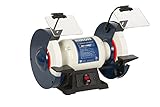
- LOW-SPEED SHARPENING: 1/2 HP motor runs at 1,750 RPM to help reduce heat buildup during sharpening and provide controlled...
- TWO GRINDING WHEELS: Includes 8" x 1" 60- and 120-grit wheels on a 5/8" arbor for rough grinding, shaping and finer sharpening.
- ADJUSTABLE TOOL SUPPORT: Dual adjustable tool rests support work at useful angles; the left rest has a groove for sharpening drill...
Best for: General sharpening with stable rests.
Two 8-inch wheels at 60 and 120 grit give the RIKON 80-805 a straightforward sharpening setup for lathe tools and other bench work. The 1/2 HP motor runs at 1,750 RPM, which keeps heat in check while letting you move from rough shaping to finer edge cleanup on the same machine.
This grinder uses 8 x 1 inch wheels on a 5/8 inch arbor, so it accepts common wheel sizes and keeps replacements simple. The dual adjustable tool rests matter because they let you set a consistent angle for chisels and lathe gouges instead of freehand guessing every pass. The left rest includes a groove for sharpening drill bits, which adds versatility beyond turning tools. A cast-iron base with anti-vibration rubber feet helps reduce movement on the bench, and the 16.38 x 10.75 x 11.25 inch size keeps it compact enough for a shared workspace. The aluminum construction keeps the machine lighter than many iron-heavy grinders while still supporting steady use.
Pros
- 1750 RPM low speed reduces heat during sharpening
- 60- and 120-grit wheels cover coarse and fine work
- Dual adjustable rests help maintain repeatable angles
- Anti-vibration rubber feet improve bench stability
Cons
- The included wheels are standard 8 x 1 inch stock, so users wanting extra-wide CBN wheels for lathe tools will need to confirm wheel fit before buying.
For a buyer who wants a dependable, conventional grinder for sharpening and shaping, this RIKON covers the basics well. It is especially useful if you value adjustable rests and a stable base more than specialty wheel compatibility.
| Specification | Details |
|---|---|
| Brand | RIKON Power Tools |
| Motor Power | 1/2 HP |
| Motor Speed | 1,750 RPM |
| Wheel Size | 8″ x 1″ |
| Wheel Grits | 60 and 120 |
| Arbor Size | 5/8″ |
| Product Dimensions | 16.38″L x 10.75″W x 11.25″H |
| Material | Aluminum |
| Power Source | Corded Electric |
| Special Feature | Adjustable tool rests |
I’d choose this for someone who wants a practical grinder for everyday sharpening rather than a specialty machine. The slower speed and dual grits are the main strengths, and the adjustable rests make angle control easier for lathe tools. It should satisfy users who like a familiar setup with solid bench stability and straightforward operation.
3. BUCKTOOL 6″ 1/3HP Low Speed Bench Grinder,High Precision Wobble Free

- 1/3HP 6-Inch Low-Speed Bench Grinder: Powerful 1/3HP motor delivers 1750 RPM, perfect for slow, controlled grinding to achieve...
- Dual Grit Grinding Wheels: Includes 60-grit Brown Aluminum Oxide wheel and 80-grit White Aluminum Oxide wheel, suitable for...
- Adjustable Work Rest & Stable Cast Aluminum Base: Tool-free adjustable work rest and rubber-footed cast aluminum base reduce...

Best for: Compact grinder for small shops.
A 6-inch wheel format and 1750 RPM low-speed operation make this BUCKTOOL grinder a compact option for precise lathe-tool touchups. Its 1/3 HP motor suits lighter sharpening sessions, while the paired 60-grit and 80-grit wheels give you two useful cutting stages in a smaller footprint.
The 60-grit brown aluminum oxide wheel handles initial shaping, and the 80-grit white aluminum oxide wheel gives a finer finish for cleaning up edges. That pairing is useful when you want to touch up gouges, chisels, or other small cutting tools without moving to a larger machine. The cast aluminum base helps keep the unit manageable on a tighter bench, and the 13.78 x 7.87 x 12.6 inch dimensions make it the smallest grinder in this group. A corded electric power source keeps it simple for shop use, and the low-speed design gives more control during careful passes. The adjustable work rest adds another layer of angle control for repeat sharpening.
Pros
- 6-inch format saves bench space in small shops
- 1750 RPM speed supports controlled sharpening
- 60- and 80-grit wheels suit shaping and cleanup
- Cast aluminum base keeps the unit compact and manageable
Cons
- The 6-inch wheel size gives less working surface than 8-inch models, so larger lathe tools may feel more cramped on the wheel face.
This is the grinder to look at if space is tight and your lathe-tool work is light to moderate. It favors control and compactness over bulk, which makes it a sensible pick for hobby benches and smaller workshops.
| Specification | Details |
|---|---|
| Brand | Bucktool |
| Style | 6″ Low Speed |
| Power Source | Corded Electric |
| Motor Speed | 1750 RPM |
| Motor Power | 1/3 HP |
| Wheel Size | 6 inch |
| Wheel Grits | 60 and 80 |
| Material | Aluminum |
| Product Dimensions | 13.78″L x 7.87″W x 12.6″H |
My take is that this works best for a smaller bench where every inch matters. It has the right low-speed character for careful sharpening, but the 6-inch size keeps it in the lighter-duty category. If your lathe tools are small or you sharpen occasionally, it should feel convenient and easy to place.
4. BUCKTOOL 10″ 1.5HP Low Speed Bench Grinder,High Precision Wobble Free

- Powerful Low Speed Bench Grinder: 1.5 HP 13A motor and 1750 RPM low-speed bench grinder design deliver smooth, powerful...
- 10 Inch Precision Grinding: 10 ×1×3/4 inch wobble-free wheel ensures stable, accurate results, fixing uneven or warped edges...
- Built to Last for Heavy Use: Industrial housing and durable motor provide long-lasting performance, solving frustrations with...
Best for: Heavy-duty lathe and chisel work.
A 1.5 HP motor and 1750 RPM speed put the BUCKTOOL 10-inch grinder in heavy-duty territory for sharpening lathe tools and chisels. The 10 x 1 x 3/4 inch wobble-free wheel gives a wider, steadier surface for consistent edge work, which matters when you want even contact across longer tool edges.
This machine uses a 13A motor and an industrial housing, so it is aimed at frequent sharpening and shaping rather than occasional touchups. The 10-inch wheel size gives more contact area than 8-inch grinders, which can make wider tools easier to control on the face of the wheel. Its 20.47 x 12.8 x 16.54 inch footprint is larger, so it suits a dedicated bench better than a cramped corner. The low-speed design helps keep the work cooler, and the wobble-free wheel is the key feature for reducing uneven grind lines. For users who sharpen often, that steadiness can save time on cleanup and rework.
Pros
- 10-inch wheel offers more contact area for wider tools
- 1750 RPM low speed helps control heat buildup
- 1.5 HP motor provides strong torque for repeated sharpening
- Wobble-free wheel supports more even edge results
Cons
- The 20.47-inch length makes it a large bench machine, so it takes noticeably more workspace than 8-inch grinders.
For high-use shops, this BUCKTOOL gives you size, power, and a wider wheel in one package. It makes the most sense if your lathe tools see regular sharpening and you want a machine that feels steady during longer sessions.
| Specification | Details |
|---|---|
| Brand | Bucktool |
| Style | 10″ Low Speed Pro |
| Power Source | Corded Electric |
| Motor Speed | 1750 RPM |
| Motor Power | 1.5 HP |
| Motor Current | 13A |
| Wheel Size | 10 x 1 x 3/4 inch |
| Product Dimensions | 20.47″L x 12.8″W x 16.54″H |
| Material | Aluminum |
I’d steer serious users toward this if they sharpen lathe tools often and want a larger wheel face. The extra size and 1.5 HP motor suit heavier sessions better than compact grinders. It is less about portability and more about giving you a broad, steady platform for repeatable results.
5. WEN BG4286 3-Amp 8-Inch Slow Speed Bench Grinder, Orange,black

- Soft start 3-amp motor turns the 8-by-1-inch grinding wheels at speeds of up to 1750 RPM
- Perfect for reviving old tools, knives, chisels, bits and more
- Low speed provides maximum precision with minimal heat to your workpiece
Best for: Straightforward slow-speed sharpening.
A soft-start 3-amp motor and 1750 RPM wheel speed make the WEN BG4286 a calm, controlled choice for lathe-tool sharpening. The 8-by-1-inch wheel format keeps the footprint familiar, while the orange and black housing makes it easy to spot in a busy shop.
The grinder includes one 60-grit wheel and one 120-grit wheel, so you can move from rough cleanup to finer finishing without hunting for extras. Pivoting tool rests help support the workpiece at a chosen angle, and the adjustable eye guards add a layer of protection while keeping the edge visible. A sturdy base with pre-drilled mounting holes matters because it lets you bolt the unit down for better stability. At 14.5 x 7.75 x 8 inches, it is one of the more compact bench grinders here, and the metal-and-plastic construction keeps the overall package practical for home shops. The slow speed helps preserve edge temper during sharpening.
Pros
- Soft-start 3-amp motor reduces abrupt startup feel
- 1750 RPM supports cooler, more controlled sharpening
- 60- and 120-grit wheels cover two common sharpening stages
- Pre-drilled mounting holes help secure the grinder to the bench
Cons
- The 8-by-1-inch wheel format is standard width, so it does not offer the extra wheel face of wider grinder setups for lathe tools.
This WEN makes sense for a buyer who wants a simple, bench-friendly grinder with the basics already included. It is a practical fit for occasional or routine lathe-tool sharpening where controlled speed matters more than specialty features.
| Specification | Details |
|---|---|
| Brand | WEN |
| Motor Current | 3-amp |
| Motor Speed | 1750 RPM |
| Wheel Size | 8-by-1-inch |
| Wheel Grits | 60 and 120 |
| Product Dimensions | 14.5″L x 7.75″W x 8″H |
| Material | Metal, Plastic |
| Power Source | AC |
I like this for a straightforward home shop where ease of setup matters. The included wheel pair and mounting holes make it feel ready for regular use, and the low speed keeps sharpening manageable. It is a sensible pick for someone who wants a compact grinder without extra complexity.
6. Laguna G8 Dual-Speed Bench Grinder, 1725/3450 RPM, 110-120V (MBGG8-001)

- Dual Speeds: 3450 RPM for efficient stock removal, 1725 RPM for precise polishing and sharpening
- Extra-Wide Flat Tool Rests: Facilitate quick and precise angle adjustments
- Aluminum Oxide Wheels: 60-grit for shaping, 120-grit for sharpening
Best for: Dual-speed precision sharpening.
Dual speeds of 1725 and 3450 RPM give the Laguna G8 more range than a single-speed bench grinder for lathe tools. That split lets you move from faster stock removal to slower, more exact sharpening on one machine, which is useful when you want both shaping and finishing without switching equipment.
The aluminum oxide wheels come in 60-grit and 120-grit versions, so the grinder covers both aggressive shaping and finer sharpening work. Extra-wide flat tool rests help you set angles quickly and keep the tool supported during longer passes. A flexible LED light improves visibility in dim shops, while adjustable spark deflectors and 3X magnifier-equipped eye shields add detailed viewing and safety support. The heavy cast-iron base cuts movement during use, and industrial-grade bearings point to smoother operation under regular sharpening loads. Because it runs on 110-120V corded power, it fits standard workshop outlets without special wiring.
Pros
- Dual-speed range supports both shaping and finishing
- Extra-wide flat rests make angle changes easier
- 3X magnifier-equipped shields help with edge detail
- Heavy cast-iron base improves stability during grinding
Cons
- The two-speed setup adds more controls than a single-speed grinder, so users who want the simplest possible sharpening routine may find it less direct.
For lathe-tool users who want both speed range and precision support, this Laguna has a lot going for it. It is especially appealing if you sharpen often and care about stable rests, clear visibility, and controlled finishing.
| Specification | Details |
|---|---|
| Brand | Laguna |
| Power Source | Corded Electric |
| Speed | 1725/3450 RPM |
| Voltage | 110-120V |
| Material | Cast Iron, Metal |
| Wheel Grits | 60 and 120 |
| Tool Rests | Extra-wide flat tool rests |
| Special Features | Flexible LED light, adjustable spark deflectors, 3X magnifier eye shields |
| Color | Black |
| Style | Bench |
I’d recommend this to someone who wants more control than a basic slow grinder offers. The dual speeds make it more flexible for different sharpening tasks, and the lighting plus magnifier features help when you are working closely on lathe tools. It feels especially suited to users who value precision and stability in the same machine.
Quick Comparison Table of Best Bench Grinders for Lathe Tools
| Product Name | Motor | Wheel Size | Material | Best For | Check Price |
|---|---|---|---|---|---|
| BUCKTOOL 8″ 3/4HP Low Speed Bench | 3/4HP 1750RPM | 8-inch | Cast Iron | Turners and carvers | Check Price |
| RIKON 80-805 Professional 8-Inch Low Speed | 1/2 HP 1750RPM | 8-inch | Aluminum | Controlled sharpening | Check Price |
| BUCKTOOL 6″ 1/3HP Low Speed Bench | 1/3HP 1750RPM | 6-inch | Aluminum | Fine precision work | Check Price |
| BUCKTOOL 10″ 1.5HP Low Speed Bench | 1.5HP 1750RPM | 10-inch | Aluminum | Heavy-duty grinding | Check Price |
| WEN BG4286 3-Amp 8-Inch Slow Speed | 3-amp 1750RPM | 8-inch | Metal, Plastic | Tool and chisel sharpening | Check Price |
| Laguna G8 Dual-Speed Bench Grinder, 1725/3450 | Dual-speed 1725/3450 | 8-inch | Cast Iron, Metal | Fast shaping and sharpening | Check Price |
How to Choose the Right Best Bench Grinder for Lathe Tools
Motor power and wheel speed
Choose horsepower around 1/2 to 3/4 for regular lathe-tool sharpening, and step up to 1 HP when you sharpen often or work on wider turning tools in long sessions. That range keeps the wheel from stalling when you press lightly and helps the grinder hold speed instead of bogging down. Aim for a unit that keeps RPM steady under load, with low vibration and a balanced wheel assembly, because chatter leaves a rougher edge and heats the steel faster.
For most woodturners and small-shop metalworkers, a 3/4 HP grinder with stable speed is the best pick.
Wheel size and abrasive type
For lathe tools, 6-inch wheels suit compact benches and narrower gouges, while 8-inch wheels give a flatter, gentler grind that suits larger chisels, skews, and frequent reshaping. Use coarse grit, around 36 to 60, for fast metal removal, then finer grit around 80 to 120 for cleanup and edge refinement. Aluminum oxide is the standard choice for HSS lathe tools, and friable white aluminum oxide releases dull grains cleanly for cooler cutting.
Pick a wheel thickness that stays stable: 1 inch is the practical sweet spot for most sharpening, while thinner wheels suit narrow access work.
| Wheel type | Best for |
|---|---|
| 6-inch, 1-inch thick | Small benches and general sharpening with quick access |
| 8-inch, 1-inch thick | Broader bevels and cooler grinding on gouges and skews |
| 36-60 grit | Heavy reshaping and repairing damaged edges |
| 80-120 grit | Refining the bevel after rough grinding |
| White aluminum oxide | HSS lathe tools and cooler edge control |
Tool support and adjustment precision
Look for a rigid tool rest with a flat face, minimal flex, and positive angle markings that stay put when tightened. A good rest locks squarely and gives you repeatable bevel control, while a flimsy one drifts under pressure and throws off your grind. For lathe tools, the grinder should allow a close wheel-to-rest gap so the workpiece cannot dip into the opening; tight clearance supports safer, cleaner sharpening.
Jigs help most when they are simple and repeatable: choose a platform or gouge jig that sets the same angle every time, especially for skews, spindle gouges, and bowl gouges.
| Support feature | Best for |
|---|---|
| Heavy steel tool rest | Rigid support and less flex during sharpening |
| Micro-adjustable angle stop | Repeatable bevels on skews and chisels |
| Gouge jig | Consistent flute-to-bevel control on curved tools |
| Close wheel gap | Safer, more precise edge presentation |
Safety and heat management
Choose a grinder with large eye shields, full spark guards, and a wheel cover that encloses most of the abrasive surface, because lathe-tool sharpening throws fine sparks and grit straight ahead. Solid guards matter more than decorative shields; you want coverage that blocks debris without flexing. Heat control matters just as much: a cooler-running wheel, a friable abrasive, and moderate pressure protect the edge from blueing and temper loss.
A paddle switch or large front-mounted switch gives faster shutoff than a tiny rear switch, so pick the layout that lets you stop the machine without reaching around moving parts. For frequent sharpening, choose the grinder with full guards and quick-access switching.
Build quality and longterm maintenance
A stable grinder starts with a heavy base, rubber feet, and mounting holes that let you bolt it down, because walking across the bench ruins accuracy and creates extra wear. Durable cast housings, sealed bearings, and a straightforward motor layout signal longer service life and less maintenance noise. Wheel balancing features matter for lathe tools because even small vibration leaves ripples on the bevel, so choose models with balanced arbors or easy balancing kits.
Also check that replacement wheels, dressing tools, and tool-rest parts are standard sizes and easy to source. For the buyer who wants years of steady sharpening, pick the bolted-down, cast-body grinder with sealed bearings and common accessory sizes.
| Build feature | Best for |
|---|---|
| Bolt-down base | Bench stability and less movement |
| Cast housing | Durability and vibration control |
| Sealed bearings | Lower upkeep and longer motor life |
| Balancing kit or balanced arbor | Smoother grinding on fine bevels |
| Common wheel sizes and parts | Easy replacement and long-term ownership |
Which Should You Choose?
- If you sharpen lathe tools often and want maximum control with minimal heat, choose an 8-inch low-speed grinder around 1,750 RPM.
- If you plan to use CBN wheels for cleaner, flatter tool grinding, choose a grinder with enough power for a 1-1/2-inch wheel and a strong 3/4 HP class motor.
- If you mainly dress smaller lathe chisels, gouges, or hobby tools and want precise, wobble-free grinding, choose a 6-inch low-speed grinder with a compact 1/3 HP setup.
- If you need fast stock removal as well as careful final sharpening for heavier shop work, choose a dual-speed grinder with both low-speed sharpening and a higher-speed grinding mode.
Quick Best Bench Grinder For Lathe Tools Buying Checklist
- Confirm wheel size matches your lathe tools. A larger wheel can help create smoother bevels on gouges and skews.
- Choose enough motor power for steady grinding. Consistent torque helps the wheel cut evenly without stalling under pressure.
- Look for stable tool rests and angle controls. Precise rests make it easier to repeat the same sharpening angle every time.
- Check for effective spark and debris protection. Good guards and shields improve safety while sharpening high-speed steel tools.
- Prioritize vibration reduction. Less vibration means cleaner edges, better control, and less fatigue during sharpening sessions.
- Verify wheel and accessory availability. Easy access to replacement wheels keeps your grinder useful for long-term lathe-tool maintenance.
How a Bench Grinder Shapes Lathe Tool Edges
A bench grinder is used to remove metal quickly and establish the cutting geometry needed for lathe tools. On high-speed steel tools, it can form a fresh edge, reshape the tip after damage, and restore the side and end relief that let the tool cut cleanly. The grinder does not finish the edge; that is usually done with a honing stone or diamond lap after grinding.
For lathe work, consistency matters more than speed, because a controlled bevel produces predictable cutting action and less chatter. A well-set grinder also helps keep tool profiles repeatable, which is especially useful when you sharpen the same gouge or parting tool often.
Wheel Types and Their Effect on Lathe Tool Sharpening
Different wheel materials and grits change how aggressively a bench grinder cuts and how much control you have over the edge. Aluminum oxide wheels are common for HSS lathe tools because they cut steadily and are easy to dress. White or friable wheels shed dull grains faster, which can reduce heat build-up.
CBN wheels stay flatter longer and can be excellent for repeatable tool grinding, especially on dedicated sharpeners. Coarse grits remove material fast, while finer grits leave a smoother surface that needs less honing.
The right wheel depends on whether you are reshaping damaged tools or simply touching up an existing edge.
| Wheel Type | Best for | Main Benefit |
|---|---|---|
| Aluminum oxide | General HSS sharpening | Versatile and widely available |
| White friable | Heat-sensitive edge work | Runs cooler under load |
| CBN | Frequent repeat sharpening | Stays flat and cuts consistently |
| Coarse grit | Reprofiling damaged tools | Fast stock removal |
Why Wheel Balance and Speed Matter for Tool Geometry
Wheel balance and grinder speed directly affect the accuracy of your tool angles. If the wheel is out of balance, vibration can create uneven bevels and make it harder to hold a steady presentation. That is especially noticeable when sharpening narrow lathe tools, where a slight wobble can change the cutting edge from one side to the other.
Speed also matters because overly aggressive surface speed can overheat the tool and burn away temper at the edge. A grinder that runs smoothly and keeps a consistent RPM helps preserve control, produces a cleaner grind pattern, and reduces the amount of rework needed after sharpening.
Maintenance Habits That Keep a Bench Grinder Accurate
Regular maintenance helps the grinder stay safe and precise for lathe tool work. Dress the wheels often so they remain flat and cut evenly; a glazed or grooved wheel will round over bevels and make repeat sharpening harder. Check the tool rests for square alignment and make sure the gap between the rest and wheel stays small enough to support the tool without trapping it.
Inspect the wheels for chips, cracks, or excessive wear, and replace any wheel that no longer runs true. Keeping the grinder clean also matters, because abrasive dust can interfere with switches, guards, and adjustments over time.
- Dress wheels before precision sharpening sessions
- Confirm tool rest alignment frequently
- Inspect wheels for damage before use
- Remove metal dust from vents and housings
Common Sharpening Errors That Shorten Lathe Tool Life
Several mistakes can make a good grinder perform poorly on lathe tools. Holding the tool too long in one spot can overheat the edge and weaken the steel, while forcing too much pressure can round the bevel and create a rough finish. Another common issue is grinding without a clear reference angle, which leads to inconsistent tool shapes and poor cutting performance on the lathe.
Many users also skip the final honing step, leaving microscopic burrs that tear rather than shear the material. Keeping a light touch, using a repeatable stance, and checking the edge frequently can prevent most of these problems and extend tool life.
Frequently Asked Questions (FAQs)
What Wheel Size Is Best For Sharpening Lathe Tools?
An 8-inch wheel is often best for sharpening lathe tools because it creates a flatter bevel and reduces the risk of overgrinding. A 6-inch wheel still works for smaller shops, but the larger diameter usually gives smoother, more controlled results on gouges and chisels.
Why Does Wheel Speed Matter On A Bench Grinder For Lathe Tools?
Wheel speed matters on a bench grinder for lathe tools because too much speed can overheat the cutting edge and damage the temper. A steady, moderate speed helps remove metal cleanly while giving you better control over bevel shape and finish quality.
Which Wheel Grit Should I Use For Lathe Tool Sharpening?
A medium grit is usually the most practical choice for lathe tool sharpening because it removes steel efficiently without leaving an overly rough edge. Finer grits are useful for finishing, while coarser wheels are better for repairing damaged edges or reshaping a bevel.
Do I Need A Jig For Sharpening Lathe Tools?
A jig is highly useful for sharpening lathe tools because it helps you hold a consistent angle and repeat the same bevel every time. This is especially helpful for spindle gouges, skews, and parting tools where accuracy affects cutting performance.
How Important Is Vibration Control In A Bench Grinder?
Vibration control is very important in a bench grinder for lathe tools because a shaky machine makes it harder to maintain a clean, even edge. Stable bearings, balanced wheels, and a solid base improve accuracy and reduce hand fatigue during sharpening.
What Safety Features Should I Look For In A Grinder?
Safety features should include wheel guards, spark shields, and a reliable power switch for quick shutdown. These protections help contain debris and reduce risk while you sharpen lathe tools close to the wheel with both hands focused on control.
Can A Bench Grinder Damage Lathe Tools?
Yes, a bench grinder can damage lathe tools if you use too much pressure or let the edge overheat. Light passes, proper wheel selection, and frequent cooling help preserve the tool’s temper and keep the cutting edge sharp and durable.
Final Suggestions
Choosing the best bench grinder for lathe tools can make sharpening faster, safer, and far more consistent. With the right wheel size, stable support, and solid safety features, you can maintain crisp edges and better control on every tool. Invest in a grinder that matches your sharpening routine, and your lathe work will stay accurate and efficient.