Top 5 Best Blender For Making Butter: Must-See Picks
The best blender for making butter depends on more than raw power alone. In this category, motor torque, blade geometry, jar design, and heat management all affect how well ingredients transform from coarse chunks into a smooth, spreadable result. Whether you need a butter blender for nut-based recipes or a blender for making butter from dairy, performance can vary widely between models.
Subtle differences in speed control, blending stability, and material quality can change the final texture, efficiency, and cleanup. This guide explores the features that separate average machines from truly capable ones, with attention to durability, consistency, and everyday kitchen convenience.
The details matter, and the right choice may surprise you once you see how these machines really perform.
Detailed Reviews of the Best Blender for Making Butter
1. 1800W Countertop Blenders for Kitchen, Blender for Smoothie with 70

- 【Powerful Blendin【Powerful Blending Performance】 Built with an 1800W motor, speeds reaching 25,000 RPM, and a 6 blade...
- 【6 Preset Programs & Adjustable Speed】 Six types presets—Juice, Smoothies, Ice Crush, Soup, Sauce, and Grinder—take the...
- 【Lid Safety Lock & Thermal Protection】 A dual-tab locking lid helps keep ingredients contained and reduces splashing during...

Best for: High-power pick for thick nut butter.
An 1800W motor with 25,000 RPM gives this H-Duka blender the force to break down nuts, ice, and frozen fruit into a smooth butter base without long processing. The 3D 6-leaf stainless steel blade set adds cutting edges that matter when you want a spreadable texture instead of grainy leftovers.
The 4.4-pound capacity gives enough room for nut butter batches without forcing you to stop and reload constantly, which helps when you want a full jar’s worth at once. Product dimensions of 9.25″D x 8.1″W x 19.7″H make it a tall countertop machine that still fits a standard prep area. The touch control panel, pulse technology, and multiple speeds give more control over how fine the mixture gets, which matters for moving from chopped nuts to creamy butter. Adjustable time and automatic cleaning also make repeated butter batches easier to manage after sticky ingredients are finished.
Pros
- 1800W motor helps crush dense nuts and ice for smoother butter.
- 25,000 RPM supports fast breakdown of tough ingredients.
- 3D 6-leaf stainless steel blades improve contact with stubborn mixtures.
- Automatic cleaning reduces cleanup after sticky butter recipes.
Cons
- The 4.4-pound capacity is smaller than full-family pitchers, so larger butter batches may take more than one round.
This is a strong choice for anyone making nut butter often and wanting fast breakdown with simple controls. It favors creamy results over manual stirring and works well for smaller to medium batches.
| Specification | Details |
|---|---|
| Brand | H-Duka |
| Color | Black |
| Capacity | 4.4 pounds |
| Product Dimensions | 9.25″D x 8.1″W x 19.7″H |
| Motor Power | 1800W |
| Speed | 25,000 RPM |
| Blade Material | Stainless Steel |
| Special Feature | Adjustable Time |
| Special Feature | Automatic Cleaning |
| Special Feature | Pulse Technology |
I’d point butter makers toward this model if they want strong motor output without getting tangled up in complicated settings. The pulse control and adjustable time help when nuts need a few short bursts before turning creamy. It suits cooks who make nut butter regularly and want a machine that can handle sticky, dense mixtures with less fuss.
2. Ninja SS151 TWISTi Blender DUO, High-Speed 1600 WP Smoothie Maker

- TOTAL TEXTURE CONTROL: Built-in Twist Tamper + high-speed blades to power through tough ingredients with 1600 Peak-Watt Power for...
- BUILT-IN TWIST TAMPER: Pushes ingredients down toward the high-speed blades for thick results.
- HYBIRD-EDGE BLADES ASSEMBLY: Delivers better breakdown of frozen whole fruits and veggies, nuts, seeds, and ice for smoother...
Best for: Compact high-speed blender for small batches.
A 34-fluid-ounce cup and 1600-peak-watt motor make the Ninja SS151 a compact option for thick blends that need force, not a huge pitcher. The built-in Twist Tamper is the key advantage for butter making because it pushes dense ingredients down into the blades instead of leaving them stuck at the top.
The 34-fluid-ounce capacity is useful when you want a smaller butter batch for personal use or recipe testing without filling a large container. Its 6.5″D x 8.3″W x 13.8″H footprint keeps the machine relatively compact on the counter, which helps in tighter kitchens. Hybrid-edge blades are aimed at nuts, seeds, ice, and frozen ingredients, so the same setup can handle roasted nuts for butter and then a quick cleanup. Dishwasher-safe parts reduce the effort after sticky spreads, and SmartTorque technology helps maintain speed under heavy loads instead of bogging down mid-blend.
Pros
- 1600 peak watts provide the force needed for thick nut mixtures.
- Built-in Twist Tamper helps push ingredients into the blade path.
- 34-fluid-ounce cup is practical for small butter batches.
- Dishwasher-safe parts simplify cleanup after sticky spreads.
Cons
- The 34-fluid-ounce capacity limits larger batch butter making, so it is less convenient for big family-sized portions.
This fits someone who makes nut butter in smaller amounts and wants help keeping thick mixtures moving. It is especially useful if you value a tamper and easy cleanup more than extra jar space.
| Specification | Details |
|---|---|
| Brand | Ninja |
| Color | Gray |
| Capacity | 34 fluid ounces |
| Product Dimensions | 6.5″D x 8.3″W x 13.8″H |
| Motor Power | 1600 Peak-Watt Power |
| Special Feature | Dishwasher Safe |
| Blade Type | Hybrid-Edge Blades Assembly |
| Technology | SmartTorque Technology |
| Included Feature | Built-in Twist Tamper |
I’d choose this for a buyer who makes nut butter in modest amounts and wants a compact machine that keeps thick mixtures from stalling. The tamper is the standout practical feature here because it reduces the need to stop and scrape. If you want an easy countertop fit and don’t need a large pitcher, this one makes sense.
3. Electric Butter Churner for Butter Maker

- 【61oz 1.8L Extra-Large Glass Jar】 Electric Butter Churner is equipped with a spacious 61oz transparent glass jar and sturdy...
- 【10-Minute Fast Homemade Butter Making】 Make fresh homemade treats in minutes with our electric butter maker! Featuring...
- 【Hands-Free & One-Touch Easy Operation】 Ditch tiring hand-cranking and wrist strain from traditional manual butter churners...
Best for: Dedicated butter-maker for family batches.
A 61-ounce glass jar makes this electric butter churner immediately more specialized for butter than a standard blender, and the clear jar lets you watch texture change as it churns. Stainless steel blades inside a glass container give you a dedicated setup for making butter in visible, manageable batches.
The 1.8L jar size gives room for family use, baking projects, or cooking-class portions without feeling cramped, which is exactly what butter-making needs when cream or nuts need consistent movement. At 4.5″L x 4.5″W x 11″H, the machine has a narrow footprint that sits neatly on a counter while still offering a larger jar. The 2.6-pound weight makes it easy to move or store after use. Glass and stainless steel are also helpful for a butter workflow because the transparent jar lets you track consistency and the blade material is suited to repeated mixing. The product description also highlights fast homemade butter making, which matches the churn-focused design.
Pros
- 61-ounce glass jar supports larger butter batches.
- Transparent glass lets you monitor texture as it churns.
- Stainless steel blades handle repeated mixing of butter ingredients.
- 2.6-pound weight makes it easy to move and store.
Cons
- The churner is specialized for butter making, so it is less versatile than a full blender for soups or frozen drinks.
This is the clear pick for buyers who mainly want a butter-making machine instead of an all-purpose blender. It works best when batch size, visibility, and a dedicated churn process matter more than extra blending functions.
| Specification | Details |
|---|---|
| Brand | Ugdgtgo |
| Material | Glass, Stainless Steel |
| Color | Transparent |
| Capacity | 61oz / 1.8L |
| Product Dimensions | 4.5″L x 4.5″W x 11″H |
| Item Weight | 2.6 pounds |
| Jar Type | Glass Jar |
| Blade Material | Stainless Steel |
I’d recommend this most to people who want a dedicated butter maker and prefer to see the process as it happens. The glass jar and 61-ounce size make it practical for home batches without feeling oversized. If you’re focused on butter more than general blending, this is the most purpose-specific option in the group.
4. COZII Professional Kitchen Blender 2000W, 64oz Smoothie Blender – 21oz
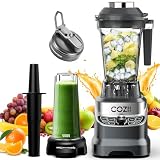
- Professional Power, Instant Blending:Powered by a robust 2000W motor and 6 durable stainless steel blades, this blender for...
- MATERIAL SAFETY:Coutertop kitchen blender has a 64-oz large capacity pitcher, and a 21-oz to-go cup that can blended directly on...
- HIGH-END SMART:Features 7 SMART PRESET PROGRAMS (combine unique timed pulsing, blending, and pausing patterns) for Smoothies...
Best for: Full-size blender for bigger butter batches.
A 2000W motor and six stainless steel blades give the COZII blender enough force for dense ingredients, which is exactly what helps when making nut butter. The 64-ounce pitcher plus the included 21-ounce to-go cup make it easy to blend a larger batch and portion it afterward.
The 1.85-liter capacity is useful for users who want a larger butter batch in one session rather than several small rounds. Product dimensions of 5.5″D x 8″W x 10″H keep the base compact relative to its pitcher size, so it is still manageable on a counter. The 21-ounce to-go cup adds flexibility when you want a smaller test batch or need to move a portion without transferring from the main pitcher. Its special features include self cleaning, easy clean, quiet blender, and low noise blender, which matter after sticky butter ingredients coat the jar. The 2000W motor and six stainless steel blades give the machine the kind of power and cutting surface that thick spreads need.
Pros
- 2000W motor handles dense nut mixtures with strong output.
- 64-ounce pitcher suits larger butter batches.
- 21-ounce to-go cup adds a separate smaller-use option.
- Self-cleaning feature helps with sticky residue after butter making.
Cons
- The product note says not to run it continuously for more than 3 minutes, so butter making may need short processing intervals.
This is a good fit for buyers who want a larger blender that can handle nut butter and still serve other blending jobs. The extra cup and self-cleaning feature add practical value when you make sticky spreads often.
| Specification | Details |
|---|---|
| Brand | COZII |
| Color | Sky Grey |
| Capacity | 1.85 liters |
| Product Dimensions | 5.5″D x 8″W x 10″H |
| Motor Power | 2000W |
| Blade Count | 6 |
| Pitcher Size | 64 oz |
| Included Cup | 21 oz to-go cup |
| Special Feature | Self Cleaning |
| Special Feature | Low Noise Blender |
I’d steer people here if they want one blender that can make butter in larger batches and still handle everyday smoothies. The 64-ounce pitcher is the main reason, because it gives more room for thick mixtures to circulate. The short-run guidance is worth noting, but for a careful user, this is a very practical high-power option.
5. Ninja Detect Power Blender Pro, BlendSense Tech, 72oz, 1800PW, TB201

- 1800-PEAK-WATT POWER: This Ninja smoothie blender features an 1800-peak-watt motor base that powers through tough ingredients like...
- SMOOTH RESULTS: BlendSense technology automatically adjusts speed and time based on your ingredients so you just press the dial...
- CRUSHES ICE TO SNOW: Total Crushing and Chopping blades crush ice to snow and blend frozen fruit for smoothies and frozen drinks...
Best for: Large-batch blender with smart control.
A 72-fluid-ounce pitcher paired with an 1800-peak-watt motor makes this Ninja useful for bigger nut-butter batches that need room to move. BlendSense technology adds automatic speed and time adjustment, which helps when dense ingredients need the machine to adapt instead of staying at one fixed setting.
The 72-fluid-ounce capacity is the largest pitcher in this group, so it suits buyers who want family-size butter batches or extra yield for several uses. Product dimensions of 6.88″D x 8.38″W x 17.5″H show a full-size vertical blender that takes up more counter height but offers the volume to match. The total crushing and chopping blade assembly is helpful for nuts because it gives aggressive contact for breaking down hard ingredients. Adjustable speed control, multiple speeds, a pour spout, and a removable blade give this model flexibility when you want to pour butter cleanly and simplify cleanup afterward. The smart display-style dial also helps you see what mode is active during use.
Pros
- 72-fluid-ounce pitcher supports large butter batches.
- 1800 peak watts provide power for dense ingredients.
- BlendSense technology adjusts speed and time automatically.
- Pour spout helps transfer thick butter more cleanly.
Cons
- Its 17.5-inch height makes it a taller countertop appliance, so it needs more vertical clearance than compact models.
This suits a buyer who wants more batch capacity and smart automation in the same machine. It is especially useful for family kitchens that make nut butter often and want cleaner pouring afterward.
| Specification | Details |
|---|---|
| Brand | Ninja |
| Color | Silver |
| Capacity | 72 fluid ounces |
| Product Dimensions | 6.88″D x 8.38″W x 17.5″H |
| Motor Power | 1800 Peak Watt |
| Special Feature | Adjustable Speed Control |
| Special Feature | Multiple Speeds |
| Special Feature | Pour Spout |
| Special Feature | Removable Blade |
I’d recommend this to someone who wants the biggest practical batch size here and likes the idea of automatic speed adjustment. The large pitcher is the main draw for nut butter because it gives thick mixtures more room to circulate. If you want a full-size blender that can serve other uses too, this is a confident pick.
Quick Comparison Table of Top Blenders for Making Butter
| Product Name | Power | Capacity | Special Feature | Best For | Check Price |
|---|---|---|---|---|---|
| 1800W Countertop Blenders for Kitchen, Blender | 1800W | 4.4 lb | Touch control | Nut butters | Check Price |
| Ninja SS151 TWISTi Blender DUO, High-Speed | 1600W | 34 oz | Twist tamper | Thick blends | Check Price |
| Electric Butter Churner for Butter Maker | Glass jar | 61 oz | Stainless blades | Butter churning | Check Price |
| COZII Professional Kitchen Blender 2000W, 64oz | 2000W | 1.85 L | Self cleaning | Heavy-duty blending | Check Price |
| Ninja Detect Power Blender Pro, BlendSense | 1800W | 72 oz | BlendSense tech | Large batches | Check Price |
How to Choose the Best Blender for Making Butter
Motor power and blade performance
For nut butter and whipped dairy blends, choose a blender with strong torque first and raw wattage second: a powerful motor keeps thick ingredients moving instead of stalling. Look for hardened stainless-steel blades with a four- to six-point layout and a curved edge profile, because that shape pulls the mix back into the vortex and cuts down on grainy pockets. Multiple speed steps plus a pulse setting give you tighter control over texture, while overload protection is essential for long, sticky runs.
Pick a high-torque, multi-speed blender with overload protection if you want the smoothest butter from nuts, seeds, or cream.
| Feature | Best for |
|---|---|
| High torque motor | Dense nut butter and thick cream |
| Curved 4-6 blade system | Smoother circulation and finer texture |
| 3-10 speed steps plus pulse | Better control over final spreadability |
| Overload protection | Long blending sessions with sticky mixtures |
Bowl capacity and batch size
Match capacity to your batch habit, not just the biggest jar on the shelf. A single household that makes small portions should choose a compact jar around 32 to 48 ounces, because it keeps the ingredients close to the blades and improves circulation. Families and frequent batch makers should move up to a 64-ounce or larger container for fuller loads and less stopping to scrape.
Watch the max-fill line closely; overfilling causes splashing, trapped air, and uneven butter. Choose a compact jar for quick solo batches and a larger pitcher for nut butter or higher-volume recipes.
| Capacity | Best for |
|---|---|
| 32-48 oz | Singleserving batches and small kitchens |
| 48-56 oz | Everyday butter making with moderate portions |
| 64 oz or more | Family batches and larger nut-butter runs |
| Clear fill markings | Safer loading and better circulation |
Jar and material durability
For durability, choose the jar material around your workload and how often you use it. BPA-free plastic is the easiest daily option because it is lighter and less prone to cracking when thick butter strains the container; glass feels sturdier and resists odors, while stainless steel handles heat and heavy use best. A heat-resistant jar matters for long blending sessions, especially when friction warms the mix.
Check for a tight lid seal with a gasket that sits firmly in place, since thick butter pushes against weak lids and leaks around loose edges. Pick BPA-free plastic for easy daily use, glass for odor resistance, and stainless steel for the toughest, hottest jobs.
| Material | Best for |
|---|---|
| BPA-free plastic | Lightweight handling and regular use |
| Glass | Odor resistance and a sturdier feel |
| Stainless steel | Heat resistance and heavy-duty blending |
| Tight gasket lid | Leak control with thick mixtures |
Ease of cleaning and maintenance
Cleaning should be part of the purchase decision, because butter residue clings to seams and blade hubs. Choose dishwasher-safe jars, lids, and blades when you want the fastest cleanup, but also check for removable blade assemblies so you can rinse stuck paste from the underside. Wide-mouth jars save time by letting your hand or sponge reach the bottom without scraping blindly.
The best low-maintenance models have smooth interiors, few ridges, and minimal crevices around the handle and base. Pick a wide-mouth, dishwasher-safe blender with removable blades if you plan to use it often and clean it fast.
- Dishwasher-safe parts for quick cleanup
- Removable blades for trapped residue
- Wide mouth for easy hand washing
- Smooth interior walls with few seams
Safety and control features
Safety and control matter most when the mix is thick and the motor is working hard. A nonslip base keeps the blender steady on the counter, which is essential when you are processing dense nuts or chilled butter. Pulse control gives you short bursts for chunk reduction and smoother finishing without overworking the mix.
Secure locking lids and automatic shutoff protect both the user and the motor during heavy runs, and a solid locking mechanism should click into place without wobble. Choose a blender with a grippy base, pulse function, and locked lid if you want the safest, most controlled butter-making setup.
| Feature | Best for |
|---|---|
| Nonslip base | Stable blending on smooth counters |
| Pulse function | Texture control and short blending bursts |
| Automatic shutoff | Protection during heavy, extended use |
| Secure locking lid | Safe handling of thick, pressurized blends |
Which Should You Choose?
- If you want to make butter itself, not just blend ingredients into it, choose an electric butter churner with a large glass jar and a churn-focused design.
- If you’ll also use the machine for nut butters, frozen fruit, and thick smoothies, choose a high-powered countertop blender with at least 1800W and strong stainless steel blades.
- If you regularly process very dense ingredients and want less stopping to scrape down the jar, choose a high-torque blender with a built-in tamper and stall-resistant controls.
- If you need a family-size batch and want the easiest all-purpose option, choose a 64oz to 72oz blender with smart speed adjustment and a powerful motor.
Quick Best Blender For Making Butter Buying Checklist
- Check motor strength. Choose a blender with enough power to handle dense nut butters without stalling.
- Match jar size to your batch. Pick a capacity that fits your usual butter quantity without overfilling.
- Look for durable materials. Prioritize sturdy, food-safe jars and components that can handle frequent thick blending.
- Choose easy-clean parts. Removable blades and wide openings make sticky butter cleanup much simpler.
- Review speed control options. Variable speeds and pulse settings help you fine-tune smoothness and consistency.
- Confirm stability and safety. A non-slip base and secure lid help keep blending controlled and mess-free.
How Blender Jar Shape Affects Butter Texture
The shape of the jar can influence how evenly cream circulates during blending. A tall, narrow jar often keeps ingredients moving in a tighter vortex, which helps the fat separate more efficiently and can reduce splashing. Wider jars may be easier to scrape and clean, but they sometimes allow more mixture to spread out, which can slow the churning process.
For butter making, a container with enough headspace is important because cream expands and thickens before the butter solids fully form. Clear jars are also useful because they let you monitor the transition from whipped cream to separated butter and buttermilk without stopping the machine.
| Jar shape | Best for | Trade-off |
|---|---|---|
| Tall and narrow | Efficient circulation | Less room for large batches |
| Wide and short | Easy scraping and cleanup | Less consistent vortex |
| Medium, tapered | Balanced mixing and visibility | May be less specialized |
What Happens During the Butter-Making Process
Butter forms when the fat globules in cream are agitated long enough to clump together and separate from the liquid buttermilk. At first, the cream thickens and traps air like whipped cream. As blending continues, the structure breaks down, and you will notice yellow granules or clumps appearing.
Those clumps are the beginning of butter. A good blender for this task needs to maintain steady movement without overheating or stalling during the transition stage, since this is when the mixture becomes heavier and more resistant.
Once the butter solids collect, the remaining liquid should be drained, and the butter should be rinsed and worked lightly to remove extra moisture.
Blender Types Compared for Butter Making
Different blender styles can make butter, but they do not perform the task in the same way. High-speed countertop blenders are usually the most reliable because they can keep cream moving and handle the thickening phase. Immersion blenders can work in smaller quantities, though they often need a deep, narrow container to prevent splashing and inconsistent contact.
Personal blenders may be convenient for small batches, but their smaller capacity can limit output. The best option depends on batch size, jar design, and motor consistency rather than raw speed alone.
A blender that can run steadily without forcing the user to stop and shake the contents is typically more practical for butter production.
| Blender type | Best for | Limitation |
|---|---|---|
| Countertop blender | Regular butter batches | Can be bulky |
| Immersion blender | Small batches | Requires suitable container |
| Personal blender | Minimal portions | Limited capacity |
Cleaning and Maintenance After Butter Production
Butter-making leaves behind fat residue that can cling to blades, gaskets, and jar walls, so prompt cleaning is important. Rinsing with warm water first helps loosen the oily film before it hardens. After that, a mild dish soap wash is usually enough to remove remaining butter particles and buttermilk residue.
Pay special attention to seals and blade assemblies, since trapped dairy can cause odors if left behind. If the blender includes removable parts, taking them apart for cleaning makes the job easier and helps preserve the appliance.
Dry all components completely before reassembly to reduce moisture buildup and keep the unit in good condition for the next use.
- Rinse immediately after use with warm water.
- Wash removable parts with mild soap.
- Check seals and blade crevices for residue.
- Dry all parts fully before storing.
- Inspect rubber or silicone components for wear.
Common Mistakes That Reduce Butter Yield
Several small errors can make butter making less efficient. Starting with cream that is too warm can cause the fat to separate too quickly and unevenly, while cream that is extremely cold may take much longer to churn. Filling the jar too full can restrict movement and lead to spills, and underfilling may prevent the mixture from creating enough motion to separate properly.
Another frequent mistake is stopping too early, right when whipped cream turns thick, before the butter granules actually form. Overprocessing after separation can also make the butter greasy and difficult to rinse.
For more consistent results, use a steady batch size, keep an eye on texture changes, and stop when solid butter clearly appears.
Frequently Asked Questions (FAQs)
What Power Level Is Best For Making Butter In A Blender?
A powerful motor is best for making butter in a blender because dense nut mixtures need strong torque to start smoothly and stay moving. Look for a model with multiple speeds and a pulse setting so you can break down ingredients without overheating the jar.
Can A Regular Blender Make Smooth Nut Butter?
Yes, a regular blender can make smooth nut butter if it has enough power, a sturdy jar, and blades that create strong circulation. The best blender for making butter handles thick ingredients better when you work in small batches and stop to scrape down the sides.
What Jar Material Works Best For Butter-Making Blends?
A durable jar works best for butter-making blends because thick mixtures put extra stress on the container and lid. BPA-free plastic is lightweight, glass resists stains, and stainless steel is tough, so the right choice depends on your kitchen routine and cleaning preference.
Why Does Capacity Matter When Making Butter In A Blender?
Capacity matters when making butter in a blender because too little space can trap ingredients under the blades, while too much can reduce contact and slow processing. A moderate-size jar usually gives the best balance for circulation, scraping, and even texture development.
How Important Is Pulse Control For Butter Recipes?
Pulse control is very important for butter recipes because it helps you manage thick ingredients in short bursts instead of forcing the motor to run continuously. The best blender for making butter uses pulse settings to prevent overheating and to refine texture gradually.
How Do I Keep A Blender Stable While Making Butter?
Keep a blender stable while making butter by choosing a model with a non-slip base and setting it on a flat, dry counter. A secure lid and balanced jar design also reduce movement when the mixture becomes dense and resistant.
What Cleaning Features Should I Look For In A Butter Blender?
Look for cleaning features in a butter blender that make sticky residue easier to remove, such as removable blades, a wide-mouth jar, and dishwasher-safe parts. These details save time because nut oils can cling to corners and seams after blending.
Final Suggestions
Choosing the best blender for making butter comes down to power, capacity, durability, and simple cleanup. The right model turns tough ingredients into smooth, rich spreads while saving time in the kitchen. With the right features in place, you can enjoy better texture, easier prep, and more consistent results every time.


