Top 3 Best Commercial Cold Press Juicer
The best commercial cold press juicer matters when juice quality, consistency, and uptime all depend on the machine. In busy cafés, juice bars, and foodservice kitchens, slow masticating technology, durable stainless steel components, and high-torque motors can shape everything from yield to flavor clarity. A commercial cold press juicer is also judged by feed chute design, pulp separation, and how well it handles leafy greens, dense produce, and long service hours.
The best commercial cold press juicer should balance extraction efficiency with easy cleaning and dependable performance, but the differences between models are often more technical than they first appear. This guide examines the details that separate a strong juicing machine from a truly commercial-grade performer, and the most important comparison is still ahead.
Detailed Overview of the Best Commercial Cold Press Juicer
1. Commercial 300W Cold Press Juicer Machines High Yield

- Commercial-Grade Cold Press Technology: Designed both for Home & Commercial. Extract 80%+ Juice Yield with Slow Squeezing...
- Unmatched Speed & Efficiency: Process ANY Fruit or Vegetable (Except Sugarcane) in 3-5 Seconds. Continuous Feed Chute Lets You Add...
- Dual Outlet & Ultra-High Juice Yield: Patented Auger Squeezes Every Drop from Hard Carrots to Soft Berries. Save 30%+ on Produce...
Best for: High-speed commercial batch juicer.
A 300W motor and slow-squeezing 36–60 RPM give Flyseago a clear edge for buyers who need fast turnover without losing cold-press control. Its continuous feed chute keeps ingredients moving, while the commercial-grade setup suits kale, celery, ginger, wheatgrass, and hard fruit in a busy prep line.
The dual-outlet design is paired with patented auger extraction, so hard carrots and fibrous produce are squeezed more thoroughly before pulp exits. At 8.27″D x 6.69″W x 18.9″H, it takes a compact footprint for a countertop machine that still handles whole-fruit processing. The stainless steel and plastic build keeps the unit practical for regular kitchen use, and the quiet motor matters when juicing near staff or customers. Overheat protection adds a useful safeguard during repeated batches, while pulp control helps you tune output for clearer juice or thicker texture. For commercial cold press work, the 3–5 second processing claim makes speed a real advantage, not just a marketing line.
Pros
- 300W motor supports continuous commercial juicing
- 36–60 RPM slow squeezing helps preserve enzymes
- Continuous feed chute reduces stop-and-start loading
- Overheat protection and pulp control improve day-to-day use
Cons
- No sugarcane compatibility is listed, so sugarcane is outside its stated use case.
Flyseago fits buyers who want a compact cold press machine that can keep up with busy produce prep. It makes the most sense for kitchens focused on leafy greens, hard vegetables, and fast batch service.
| Specification | Details |
|---|---|
| Brand | Flyseago |
| Color | Silver |
| Special Feature | Overheat Protection, Pulp Control, Quiet Motor, Whole Fruit Processing |
| Product Dimensions | 8.27″D x 6.69″W x 18.9″H |
| Material | Plastic, Stainless Steel |
| Motor Power | 300W |
| Speed | 36–60 RPM |
| Juice Yield | 80%+ |
| Processing Time | 3–5 Seconds |
| Compatibility | Fruit or Vegetable Except Sugarcane |
I’d point this one to buyers who care about throughput first and want a cold press machine that stays practical on a counter. The continuous feed chute, 80%+ yield claim, and whole-fruit processing make it appealing for steady prep, especially if your produce list leans toward greens and hard roots. It feels most useful in busy home kitchens or light commercial settings where speed and yield both matter.
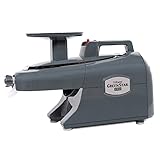
2. Tribest Greenstar Pro GS-P502-B Pro Jumbo Twin-Gear Cold Press Slow
- Unleash Nature's Nutrition - The Greenstar Pro is a premium masticating juicer that extracts the maximum nutrients from fruits and...
- Cold Press Juicing Perfection - With its advanced All Stainless-Steel Jumbo Twin Gears and three-stage juicing process, this cold...
- Versatile and Convenient - From juicing a wide variety of fruits and vegetables to making baby foods, nut butters, and frozen...
Best for: Stainless twin-gear nutrition extractor.
All stainless-steel jumbo twin gears give Tribest a serious materials advantage for buyers prioritizing juice quality and long-term kitchen use. Its manual operation and three-stage juicing process suit people who want a slower, more controlled extraction from fruits and vegetables without depending on a powered motor.
The 6.8″D x 18.6″W x 12.4″H footprint gives you a wide, stable footprint for a countertop juicer that relies on heavy-duty gear work. Stainless steel construction matters here because the gears and body are both tied to food contact and repeated use. The three-stage juicing process is the key difference, since it works to squeeze more liquid from produce while protecting texture and nutrient retention. Because it is manual, the machine suits users who prefer direct control over feed speed and batch pace. The gray finish keeps the look professional, and the twin-gear format is especially relevant for leafy greens, herbs, and mixed produce where extraction efficiency matters.
Pros
- All stainless-steel twin gears support thorough extraction
- Three-stage juicing process improves yield from produce
- Manual operation gives precise control over feed pace
- Wide countertop footprint supports stable use
Cons
- Manual operation means the user provides the force, so it is slower than powered commercial juicers.
Tribest makes the strongest sense for buyers who value juice quality and gear-driven extraction over raw speed. It suits kitchens that process produce carefully and want a stainless-steel juicer that feels purposefully engineered for nutrient-focused batches.
| Specification | Details |
|---|---|
| Brand | Tribest |
| Color | Gray |
| Special Feature | Manual |
| Product Dimensions | 6.8″D x 18.6″W x 12.4″H |
| Material | Stainless Steel |
| Juicing System | All Stainless-Steel Jumbo Twin Gears |
| Process | Three-stage juicing process |
| Type | Cold press masticating juicer |
I’d recommend this to someone who is more interested in extraction quality than brute-speed output. The stainless twin gears and three-stage process make it attractive for careful juicing of greens, herbs, and mixed produce. Since it is manual, it suits a buyer who is comfortable trading convenience for control and a more hands-on workflow. That balance makes it a strong fit for focused home juicing or specialty prep.
3. TECHTONGDA Commercial Cold Press Slow Juicer 1500W, 68RPM Stepless Speed

- High-Yield Performance: Powered by a 1500W high-power motor, this commercial slow juicer uses spiral cold pressing and a slow...
- 529 Lb/H Output & Stepless Speed: Equipped with 68RPM low-speed cold pressing system, this commercial juicer supports stepless...
- Automatic Residue Juice Separation: The residue-juice separation design features one outlet for pomace discharge and the other for...
Best for: Heavy-duty high-output floor juicer.
A 1500W motor and 529 lb/h output position TECHTONGDA for buyers who need serious commercial throughput from a cold press machine. Its 68RPM low-speed system and stepless speed regulation let it handle different fruits and vegetables while keeping the texture finer than ordinary juicers.
The stainless steel build matches the machine’s commercial intent, especially with a towering 23″D x 17″W x 43″H format that points to floor-space use rather than a small countertop role. Spiral cold pressing and slow screw extrusion work together to improve juice yield while reducing rough pulp texture. The stepless speed control is useful when switching between produce types, because you can adjust the extraction behavior instead of forcing one fixed pace. At 68RPM, it stays in slow-press territory while still pushing high-volume output. That combination suits commercial settings where both consistency and batch capacity matter across varied ingredients.
Pros
- 1500W motor supports high-volume commercial juicing
- 529 lb/h output suits heavy batch production
- 68RPM low-speed system helps preserve cold-press texture
- Stepless speed regulation adapts to different produce
Cons
- Its 23″ x 17″ x 43″ size takes significant floor space, so it is not a compact countertop option.
TECHTONGDA is aimed at buyers who need output first and cannot compromise on batch volume. It fits commercial spaces where a full-height juicer can live on the floor and work through varied produce efficiently.
| Specification | Details |
|---|---|
| Brand | TECHTONGDA |
| Color | black |
| Special Feature | spiral cold pressing |
| Product Dimensions | 23″D x 17″W x 43″H |
| Material | Stainless Steel |
| Motor Power | 1500W |
| Speed | 68RPM |
| Output | 529 Lb/H |
| Speed Control | Stepless Speed Regulation |
My take is that this one is for serious volume, not occasional home juicing. The 1500W motor, 529 lb/h output, and stepless speed control make it the clear fit when you need a machine that can keep pace with commercial demand. I’d choose it for a prep area or juice bar setup where floor space is available and throughput matters more than compact size.
Quick Comparison Table of Best Commercial Cold Press Juicers
| Product Name | Power | Material | Size | Best For | Check Price |
|---|---|---|---|---|---|
| Commercial 300W Cold Press Juicer Machines | 300W | Stainless Steel | 18.9″ H | Home & commercial use | Check Price |
| Tribest Greenstar Pro GS-P502-B Pro Jumbo | Manual | Stainless Steel | 18.6″ W | Maximum nutrient extraction | Check Price |
| TECHTONGDA Commercial Cold Press Slow Juicer | 1500W | Stainless Steel | 43″ H | High-volume commercial juicing | Check Price |
How to Choose the Right Best Commercial Cold Press Juicer
Juicing capacity and output
Match hopper size to the pace of service you actually run. Small counters and tasting bars do best with a compact hopper that feeds steadily without crowding the countertop, while busy juice bars need a wider feed chute and a larger juice collection system so staff spend less time stopping to reload. Judge output by two numbers: how much juice comes out per batch and how many liters or ounces the machine moves in an hour.
Also check the pulp bin size; a bigger bin keeps production moving and reduces emptying breaks. For grab-and-go service, choose a juicer with fast bottle-fill flow and a spout that pours cleanly into narrow containers.
Pick the smallest hopper that still supports your peak rush, or a high-capacity unit with a large pulp bin for continuous service.
| Type | Best for |
|---|---|
| Compact hopper, smaller bin | Light service, tasting counters, limited space |
| Wide hopper, mid-size bin | Steady daily use with moderate traffic |
| Large hopper, oversized bin | High-volume bars, batch production, grab-and-go |
Motor strength and pressing efficiency
Choose slow, high-torque pressing for the best mix of yield and drink quality. A strong commercial cold press juicer does not rely on speed; it pushes produce through smoothly, extracts more juice from leafy greens and dense items like carrots and beets, and leaves drier pulp behind. Good machines keep foam low and limit oxidation, so the juice looks cleaner and holds flavor longer.
For front-of-house use, check the noise rating and listen for a low, steady hum rather than sharp vibration. Pick a high-torque unit with consistent output, low foam, and quiet operation for open counters, and reserve faster but louder models for back-of-house production.
| Type | Best for |
|---|---|
| Low-speed, high-torque | Leafy greens, celery, mixed produce, higher yield |
| Mid-torque, balanced output | General service with varied produce and moderate volume |
| Quiet operation focus | Shared spaces, cafes, front counter service |
Build quality and foodsafe materials
Prioritize stainless steel and BPA-free contact parts anywhere juice touches the machine. The auger, screen, and housing should feel dense, not flimsy, with tight seams and a finish that resists staining from turmeric, beets, and citrus. Good commercial parts keep their shape under repeated use, while weak plastic parts crack, warp, or cloud after heavy washing.
Confirm that the feed chamber, juice path, and seals are marked for food contact and commercial duty, not just home use. For the most dependable pick, choose a model with stainless steel internals and BPA-free exterior contact parts for daily service and sanitation-friendly durability.
| Material | Best for | Signals of quality |
|---|---|---|
| Stainless steel | Auger, screen, housing | Rigid feel, stain resistance, long service life |
| BPA-free plastic | Lids, pusher, juice channels | Food-safe marking, clear fit, no flex at pressure points |
| Soft or thin plastic | Light duty only | Visible flex, fast staining, weaker wear resistance |
Cleaning, safety, and workflow
Select a juicer that comes apart fast, rinses cleanly, and reassembles without guesswork. Removable parts save the most time between batches, especially when the screen and pulp path can be cleared under running water without special tools. A reverse function is essential for clearing jams, and clog-reduction features keep leafy fiber from packing into the feed zone.
Safety matters just as much: look for lid locks, a stable base, and interlocks that stop the motor when the unit is open. For cramped prep areas, choose a compact footprint with a cord that stays out of the workflow and a layout that leaves room for bottles, bins, and hands at the counter.
| Feature | Best for |
|---|---|
| Tool-free removable parts | Fast washing between batches |
| Reverse function and anti-clog design | Dense greens and long service runs |
| Lid interlock and stable footing | Shared kitchens, busy counters, safer operation |
Which Should You Choose?
- If you want an efficient all-rounder for a café, small shop, or heavy home use, choose a commercial cold press juicer with a 300W motor and slow 36–60 RPM operation.
- If your top priority is maximum nutrient retention and you juice a lot of leafy greens, choose a twin-gear masticating juicer with premium extraction and fine pulp separation.
- If you need a machine that can handle nonstop daily output and larger batches, choose a high-power commercial slow juicer with a 1500W motor and stepless speed control.
- If you regularly juice kale, celery, ginger, or wheatgrass, choose a cold press model built for high-yield leafy-green extraction and low-speed pressing.
Quick Best Commercial Cold Press Juicer Buying Checklist
- Check daily output needs: Make sure the juicer can keep up with your busiest service periods.
- Inspect material quality: Choose food-safe, durable parts that withstand frequent commercial use.
- Review pulp handling: A large pulp bin helps maintain steady production without constant emptying.
- Evaluate cleaning ease: Removable components and smooth surfaces save time between batches.
- Look for safety locks: Secure lids and interlocks help prevent accidents during high-volume use.
- Consider footprint and noise: The right size and quieter operation improve workspace efficiency.
How a Commercial Cold Press Juicer Extracts Juice
A commercial cold press juicer works by crushing produce slowly and pressing it through a fine screen, rather than spinning blades at high speed. This low-speed method helps reduce heat buildup and limits air incorporation, which can support better flavor and a smoother finish in the juice. Because the machine separates juice from pulp more gently, it often yields more liquid from leafy greens, herbs, soft fruits, and dense vegetables.
Most commercial units use a feed chute, auger or twin gears, and a collection system for juice and pulp. The exact design affects speed, yield, and how much prep is needed before feeding produce into the machine.
Horizontal Versus Vertical Cold Press Juicers
Commercial cold press juicers are commonly built in either horizontal or vertical layouts, and each format behaves differently in a busy kitchen. Horizontal machines are often strong performers with leafy greens, wheatgrass, and fibrous ingredients because the auger has a longer grinding path. Vertical designs usually take up less counter space and can be faster for softer produce, making them useful where workflow and footprint matter.
The right format depends on the ingredients you process most often and how the juicer will fit into your line. Understanding the trade-off between pulp handling, footprint, and prep time can make daily operation much easier.
| Type | Best for |
|---|---|
| Horizontal | Leafy greens and fibrous produce |
| Vertical | Smaller prep areas and mixed produce |
| Twin-gear | High yield and fine filtration |
Cleaning and Sanitizing After Service
Regular cleaning is essential for keeping a commercial cold press juicer performing well and producing safe juice. Pulp residue can dry quickly on screens, augers, and juice outlets, so parts should be rinsed soon after use rather than left overnight. Many models include removable components that can be washed separately, which speeds up turnaround between batches and reduces buildup in hard-to-reach areas.
Sanitizing matters just as much as visible cleaning, especially in foodservice settings. Use approved cleaning and sanitizing procedures for all food-contact surfaces, and make sure parts are fully dry before reassembly. Consistent care helps preserve extraction efficiency and extends the life of the machine.
Common Operating Mistakes That Reduce Yield
Even a strong commercial cold press juicer can underperform if it is used incorrectly. One common mistake is overloading the feed chute, which can strain the motor and leave more juice trapped in the pulp. Another is forcing ingredients too quickly instead of allowing the auger to work at a steady pace.
Cutting produce into manageable pieces also matters, since oversized chunks can jam the feed system or reduce extraction efficiency.
Mixing very hard and very soft ingredients in one rushed batch can create uneven results. It is usually better to alternate textures gradually and keep an eye on pulp output. Smooth operation, not speed alone, tends to produce the best return.
- Pre-cut produce to the recommended size.
- Feed ingredients at a steady pace.
- Do not overfill the hopper.
- Watch for unusual noise or vibration.
Space, Power, and Utility Requirements
Before installing a commercial cold press juicer, it helps to confirm that the machine matches your workspace and utility setup. These units can vary in footprint, weight, and electrical demand, so a tight prep area may need a compact body and enough clearance for feeding, juice collection, and pulp discharge. In a busy kitchen, stable placement on a level counter or equipment stand is important for smooth operation.
Power compatibility should also be checked in advance, especially if the juicer will be used with other high-demand appliances on the same circuit. Some units are better suited to front-of-house juice bars, while others are built for back-of-house production with more room for storage and cleanup.
| Requirement | Why it matters |
|---|---|
| Counter clearance | Supports feeding and safe operation |
| Stable surface | Reduces vibration and movement |
| Electrical capacity | Prevents overloads during service |
| Pulp disposal access | Speeds cleanup and batch changes |
Frequently Asked Questions (FAQs)
What Makes The Best Commercial Cold Press Juicer Worth Buying?
The best commercial cold press juicer is worth buying because it extracts high-quality juice with less heat and less foam, which helps preserve flavor and texture. It also supports heavier daily use, with stronger components and larger feed systems that keep service moving efficiently.
How Much Capacity Should A Commercial Cold Press Juicer Have?
A commercial cold press juicer should have enough capacity to match your busiest serving window without constant stopping. Look for a wide feed chute, a large pulp container, and a design that supports repeated batches so staff can work faster with less downtime.
Why Does Motor Speed Matter In A Cold Press Juicer?
Motor speed matters in a cold press juicer because slower extraction usually reduces heat and improves juice clarity. A high-torque, low-speed design is especially useful for leafy greens, celery, and firm produce, where consistent pressing matters more than rapid spinning.
What Materials Are Best For A Commercial Cold Press Juicer?
The best materials for a commercial cold press juicer are stainless steel and BPA-free food-contact plastics because they balance durability and safety. These materials better resist cracking, staining, and wear, which is important when the machine is used many times each day.
How Easy Should A Commercial Cold Press Juicer Be To Clean?
A commercial cold press juicer should be easy to clean because quick turnaround is essential in a busy kitchen or juice bar. Removable parts, smooth surfaces, and a simple rinse-and-reassemble design help reduce buildup and keep production moving between orders.
What Safety Features Should A Commercial Cold Press Juicer Include?
A commercial cold press juicer should include lid locks, safety interlocks, and a stable base to reduce accidental starts and tipping. These features are especially important in high-traffic environments where multiple staff members may use the machine throughout the day.
How Do I Choose The Right Commercial Cold Press Juicer For My Business?
The right commercial cold press juicer depends on your daily volume, menu variety, and available counter space. Compare yield, build quality, cleanup time, and noise level so you can choose a model that supports efficient service and reliable long-term use.
Final Suggestions
Choosing the best commercial cold press juicer can improve juice quality, speed up prep, and help your business serve consistent results with less waste. With the right balance of capacity, durability, and easy maintenance, this equipment becomes a reliable part of daily operations. Focus on the features that match your workflow, and you’ll be set up for smoother service ahead.