Top 10 Best Drywall Sander With Vacuum Attachment
Best drywall sander with vacuum attachment tools have transformed dusty wall finishing into a cleaner, more controlled process. By pairing sanding heads with dust extraction, these systems help reduce airborne particles, improve visibility, and support a smoother finish across drywall seams, patchwork, and ceiling surfaces. The best drywall sanding machine with vacuum attachment often combines adjustable speed, flexible reach, and efficient suction for better control on large renovations.
From dustless drywall sander designs to vacuum-assisted drywall sanding tools, the category keeps evolving with better ergonomics, abrasive performance, and debris collection. Understanding these innovations matters because surface quality, cleanup time, and working comfort all depend on the right balance of power and filtration.
The details behind each model reveal far more than first impressions, and that is where the real differences begin.
Detailed Reviews of the Best Drywall Sander with Vacuum Attachment
1. Drywall Sander, 1000W Popcorn Ceiling Removal Tool, Automatic Drywall Sander

- [1000W Pure Copper Motor & 2200RPM High Efficiency - Works Perfectly in Any Scene] High-power high-speed electric drywall sander...
- [Dustless Drywall Sander - More Efficient, Easier] Say goodbye to laborious and inefficient traditional sanding tools! The Promtex...
- [Flexibly Used Extension Pole - Customizable According to Your Needs] Whether you are working on low walls or high ceilings, the...

Best for: High-power sanding for big wall jobs.
A 1000W pure copper motor gives this drywall sander the muscle to handle heavy sanding on drywall, painted walls, ceilings, cement walls, paint coatings, and loose plaster. The 800-2200RPM range lets a buyer slow down for control or ramp up for faster material removal, which matters when one tool has to cover both finishing passes and bigger cleanup work.
Six adjustable speeds create a practical spread for different surfaces, so the same tool can soften rough patches or move faster on stubborn coating. The battery-powered setup keeps the sanding head free of a cord at the tool end, which helps when working overhead or moving across large wall sections. A 1 AC adapter current is listed for the charging setup, and the 1 grit type designation points to a simple, no-frills sanding approach. For buyers comparing vacuum-attachment drywall sanders, this model is aimed at broad surface prep rather than specialty finishing. It fits jobs where power and adjustable speed matter more than compact size or extra attachments.
Pros
- 1000W pure copper motor provides strong sanding power
- 800-2200RPM range supports different sanding stages
- Six adjustable speeds add control on varied surfaces
- Works on drywall, ceilings, cement walls, and loose plaster
Cons
- No vacuum attachment details are listed in the product data, so dust collection capability is unclear.
Choose this if you want a high-power sander for broad wall and ceiling prep. It suits users who value speed range and surface versatility more than a compact accessory package.
| Specification | Details |
|---|---|
| Brand | Protmex |
| Power Source | Battery Powered |
| Motor | 1000W Pure Copper Motor |
| Speed Range | 800-2200RPM |
| Adjustable Speeds | 6 |
| AC Adapter Current | 1 A |
| Grit Type | 1 |
| Grit Number | 1 |
I’d point this one toward buyers who want broad sanding ability and a strong motor for larger wall jobs. The wide speed range is the real advantage if you move between aggressive removal and lighter finishing. I would not pick it for someone whose main priority is a clearly documented dust-collection setup, because that part of the listing is thin.
2. Hyde Tools 09165 Dust-Free Drywall Vacuum Hand Sander with 6-Foot

- REDUCE DRYWALL DUST: Connects to a wet/dry vacuum to help capture sanding dust at the source, reducing airborne dust and cleanup...
- VACUUM HAND SANDER KIT: Includes a drywall hand sander, sanding screen, 6-Foot vacuum hose and coupling adaptor that fits wet/dry...
- SUITABLE FOR WALLS AND CEILINGS: Designed for drywall repairs, patching, joint compound sanding and general wall and ceiling...
Best for: Manual vacuum-compatible dust control.
A 17-inch-by-3.4-inch-by-8-inch hand sander keeps the footprint compact while still giving enough body to sand walls in controlled passes. The coarse grit setup makes it useful for more aggressive drywall work, and the wet/dry vacuum attachment lets the buyer pull dust away at the source instead of letting it spread across the room.
The EasyClamp system is the key feature here because it speeds up sanding screen changes without fussing over the attachment process. Hyde includes a 6-foot hose plus a coupling adapter that fits 1 3/4-inch, 1 1/2-inch, and 2 1/2-inch wet/dry hose sizes, which makes compatibility easier for households or crews using different vacuums. One reversible sanding screen comes in the box, so a buyer can start working right away. The corded electric setup and 6 A adapter current suggest a straightforward shop-oriented tool. For dust-conscious drywall work, the attachment flexibility is the main reason to look at it.
Pros
- Attaches to any wet/dry vacuum for dust-free sanding
- 6-foot hose gives workable reach during wall sanding
- Adapter fits 1 3/4-inch, 1 1/2-inch, and 2 1/2-inch hoses
- EasyClamp system speeds sanding screen replacement
Cons
- Coarse grit is the only grit type listed, so it is less suited to fine finishing passes.
This hand sander makes sense for buyers who already own a wet/dry vacuum and want simple dust control. It is a practical choice for smaller drywall jobs where hose compatibility and easy screen changes matter.
| Specification | Details |
|---|---|
| Brand | Hyde |
| Product Dimensions | 17″L x 3.4″W x 8″H |
| Grit Type | Coarse |
| Power Source | Corded Electric |
| AC Adapter Current | 6 A |
| Hose Length | 6 Feet |
| Compatible Hose Sizes | 1 3/4″, 1 1/2″, 2 1/2″ |
I’d recommend this to someone who values dust control over fancy features. The hose compatibility is genuinely useful if you want to connect to an existing wet/dry vacuum without special adapters. It feels like the right pick for straightforward drywall sanding where simplicity, reach, and cleanup control matter more than power-driven speed.
3. MYTOL 7.2A Drywall Sander with Vacuum, LED, 6-Speed

- 【After Sales Service】 - Good Ideal for Your Family & Friends🎁If you have any questions, please check the MANUAL and CONTACT...
- 【7.2-Amp POWERFUL COPPER MOTOR】MYTOL drywall sander with a 7.2AMP copper motor provides adequate power in sanding work, brings...
- 【AUTO DUST VACUUM SYSTEM】The power wall sander with vertical suction and 10-hole sand disc design has a stronger vacuum effect...
Best for: Speed control for fine drywall finishing.
A 7.2-amp copper motor gives this drywall sander a clear power advantage for sustained wall and ceiling work. The 900-1800RPM variable range and very fine grit point it toward smoother finishing, which helps when the goal is to refine drywall rather than strip material quickly.
Six speed levels let the user match the sanding pace to the surface, and that matters when moving from broader drywall areas to more delicate touch-ups. The corded electric design with 120-volt input supports steady operation on longer jobs, while the 7.2 A current rating gives a concrete sense of the motor’s load. MYTOL lists this model for drywall sanding, floor sanding, and ceiling sanding, so it is aimed at multi-surface use rather than one narrow task. The very fine grit designation makes it a better fit for finishing work than aggressive removal. Buyers who want controlled sanding and a vacuum-ready workflow will appreciate the focus on smoother results.
Pros
- 7.2-amp copper motor supplies strong sanding power
- 900-1800RPM range suits both moderate and finer work
- Six speed levels improve control on different surfaces
- Very fine grit supports smoother finishing passes
Cons
- No vacuum hose or dust-bag specifications are listed in the data, so the dust-management setup is not fully defined.
This model fits buyers who want a fine-grit sander with adjustable speed for drywall finishing. It makes the most sense when smoother results and steady corded power matter more than a highly detailed accessory list.
| Specification | Details |
|---|---|
| Brand | MYTOL |
| Power Source | Corded Electric |
| Voltage | 120 volts_of_alternating_current |
| AC Adapter Current | 7.2 A |
| Speed Range | 900-1800RPM |
| Speed Levels | 6 |
| Grit Type | Very Fine |
My take is that this is the better fit for buyers focused on finishing quality rather than aggressive stock removal. The very fine grit and six speed levels give it a more controlled feel for drywall prep. I would favor it for users who want a corded machine with enough power to stay consistent across ceilings and walls.
4. Drywall Sander, 2026 Upgraded 8-Amp Popcorn Ceiling Removal Tool
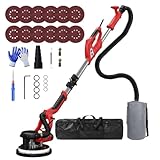
- 【AUTO DUST VACUUM SYSTEM】The drywall sander tool has a built-in vacuum system and the 10-hole sand disc design enable it...
- 【POWERFUL PURE COPPER MOTOR】This lijadora para drywall is equipped with a 8-AMP copper motor which provides strong power in...
- 【PACKAGE CONTENTS & AFTER SALES】What’s included: 1* 8 Amp Electric Drywall Sander, 1* Extension Rod, 1* Flexible Dust...
Best for: Lightweight reach for overhead sanding.
A retractable extension rod that stretches from 3.9 feet to 5.5 feet gives this drywall sander a practical advantage on ceilings and taller wall sections. The 8.59-pound tool weight keeps handling manageable, and the collapsible design makes storage and transport easier after the job is done.
The total working package weighs only 10 pounds for the sander, rod, dust hose, and dust collection bag, which is a meaningful number when the tool is held overhead for long stretches. A 120-volt corded setup and 8 A current rating place it in the stronger powered category, so the lighter body does not come at the expense of basic electrical capacity. The very fine grit designation points to finish-oriented work, while the telescopic design helps the user match height without a ladder shuffle for every pass. For popcorn ceiling removal and ceiling sanding, the combination of reach and lower weight is the main buying reason.
Pros
- Extends from 3.9 feet to 5.5 feet for different heights
- 8.59-pound sander weight reduces overhead strain
- 10-pound total package is easier to carry and store
- Dust hose and dust collection bag are included
Cons
- The product data does not list the dust hose length, so reach at the vacuum setup is unclear.
This is a sensible option for ceiling work where reach and lower carried weight matter. It will suit buyers who want an easier overhead sanding setup without giving up corded power.
| Specification | Details |
|---|---|
| Brand | IMQUALI |
| Voltage | 120 volts |
| Power Source | Corded Electric |
| AC Adapter Current | 8 A |
| Grit Type | Very Fine |
| Extension Rod Length | 3.9 feet to 5.5 feet |
| Tool Weight | 8.59 pounds |
| Total Package Weight | 10 pounds |
I’d steer overhead work toward this model because the telescopic rod solves a real ceiling-sanding problem. The lower weight is helpful when you have to keep the tool up for a while. It feels like the right choice for buyers who want a lighter package and a more flexible reach range for ceilings and tall walls.
5. Electric Drywall Sander with Vacuum Dust Collector,Popcorn Ceiling Removal

- 【DUSTLESS VACUUM SYSTEM】 This electric drywall sander features an advanced built-in dust control system that automatically...
- 【COLLAPSIBLE & TELESCOPIC EXTENSION DESIGN】This electric sander for drywall folds down compactly to drastically reduce storage...
- 【LIGHTWEIGHT 9‑INCH LARGE SANDING BASE】9‑inch wide sanding pad and lightweight 9.59 LBS net weight for faster drywall...
Best for: Compact vacuum-dust collector setup.
A 9-inch-by-9-inch-by-22.64-inch body gives this drywall sander a compact footprint for a tool that pairs with a vacuum dust collector. The super fine grit makes it well suited to smoothing and finishing work, so the buyer gets a machine that leans toward cleaner final passes rather than rough material stripping.
The built-in dust control system is the central feature here because it automatically absorbs fine particles during use, and the flexible dust hose plus high-capacity collection bag help keep dust from escaping into the room. A 120-volt corded design provides steady power for longer sanding sessions, while the 9-level variable speed control gives a more granular way to match sanding pace to the surface. That many speed choices are useful when moving between drywall, ceiling patches, and other finish surfaces. The compact dimensions also make storage simpler after the job is finished. For vacuum-attachment buyers, this is the most clearly dust-focused option in the group.
Pros
- Built-in dust control system automatically absorbs fine particles
- High-capacity collection bag supports longer sanding sessions
- 9-level variable speed control improves surface matching
- Super fine grit supports smoother finishing work
Cons
- The listing does not provide the hose length, so working reach with the dust hose is not specified.
This is a strong pick for buyers who want vacuum-assisted dust management in a compact form. It fits users who care most about cleaner sanding and fine finishing control.
| Specification | Details |
|---|---|
| Brand | Borsstyne |
| Product Dimensions | 9″L x 9″W x 22.64″H |
| Grit Type | Super Fine |
| Voltage | 120 volts |
| Power Source | Corded Electric |
| Variable Speed Control | 9-Level |
I think this is the most appealing choice for buyers who want dust control to be a top priority. The built-in collection system and high-capacity bag make it feel purpose-made for cleaner drywall work. It should satisfy users who want a compact machine with detailed speed control and a finishing-oriented grit.
6. Goldblatt Dust Free Drywall Hand Sander with 6.5 ft Vacuum

- Dust-Free Sander : Reducing up to 90% of dust and mess for cleaner drywall sanding. Both the ergonomic design and the soft rubber...
- Sandpaper : Sandpaper with Grit 120, rough enough, perfect for handling sanding jobs from removing the unevens, all dust are suck...
- 360° Pivoting Elbow & 6.5ft Hose : 360° pivoting elbow for ease of use on vertical surfaces. The hose length is up to 6.5ft...
Best for: Lightest hand-sanding cleanup control.
A 2.4-pound hand sander with a 6.5 A connection keeps the setup compact while cutting dust at the source. That low weight matters when you’re feathering seams, patching spots, or sanding overhead areas where a heavier electric unit would be awkward. The included 120-grit screen gives you a rough cutting action for knocking down uneven compound before finishing.
Goldblatt pairs the hand sander with a vacuum connection and says it can reduce up to 90% of dust and mess, which is the main reason to pick it for smaller drywall jobs. The soft rubber grip and ergonomic shape help keep pressure steady during longer passes, so your hand stays more controlled on edges and corners. Its rough 120-grit screen is useful for removing high spots without instantly loading up. Because it must be used with a vacuum machine and sand screen only, it fits buyers who already have dust collection in place and want a simpler, lighter sanding tool.
Pros
- 2.4-pound weight makes overhead and spot sanding easier
- 6.5 A vacuum connection supports dust collection setup
- 120-grit screen handles uneven compound removal
- Soft rubber grip improves comfort during hand sanding
Cons
- Requires a separate vacuum machine and sand screen only, so it is not a standalone sanding kit.
For small drywall touch-ups and hand-guided sanding, this is a straightforward dust-reduction choice. It suits buyers who value light weight and want cleaner sanding with an existing vacuum setup.
| Specification | Details |
|---|---|
| Brand | Goldblatt |
| Item Weight | 2.4 pounds |
| AC Adapter Current | 6.5 A |
| Grit Number | 120 |
| Grit Type | Rough |
I’d pick this if the work is mostly patches, seams, or tighter spaces where a full-size pole sander feels clumsy. The dust reduction claim and the light 2.4-pound build make sense together, especially for anyone who already owns a vacuum and wants a simpler way to keep debris down while sanding by hand.
7. Electric Drywall Sander with Vacuum, 780W 7A, 26′ Cord for

- [780W 6.5-Amp Brass Motor with 7 Variable Speeds]: Built with a durable 6.5-amp brass motor, this electric drywall sander provides...
- [360°Floating Swivel Head with Locking Ceiling Fixture]: Equipped with a dedicated locking fixture to hold the unit vertical for...
- [Integrated Vacuum System with 99% Dust Capture]: The built-in dust extraction system pairs with a zippered dust bag and 6.56ft...
Best for: Long-cord option for big rooms.
A 780W, 7-amp motor gives this corded drywall sander enough power for continuous surface sanding across larger walls and ceilings. The 26-foot cord is the feature that matters most if you want fewer outlet changes while moving around a room. With 7 speed settings and 900 to 1800 RPM control, it can shift from gentler finishing work to faster material removal.
Gioventù pairs the motor with a 360° floating swivel head and a locking ceiling fixture, which helps the sanding head stay positioned when you’re working overhead. The 8.5 x 8.5 x 74-inch body gives you a tall reach profile for walls and ceilings without changing tools. Fine grit makes more sense for smoothing and finishing than aggressive stock removal, and the 120-volt corded power source keeps output consistent. For buyers comparing drywall sanders with vacuum attachment, the long cord and variable speed range are the biggest practical advantages here.
Pros
- 780W motor supports steady sanding power
- 7 speed settings let you match the task
- 26-foot cord reduces outlet changes across large areas
- 360° swivel head improves ceiling and wall access
Cons
- Fine grit is better for smoothing than heavy removal, so it is less ideal for aggressive first-pass sanding.
This fits larger rooms and ceiling work where cord length and speed control matter more than portability. If you want a powered sander that can stay plugged in and keep moving, it makes a lot of sense.
| Specification | Details |
|---|---|
| Brand | Gioventù |
| Product Dimensions | 8.5″L x 8.5″W x 74″H |
| Voltage | 120 volts |
| Power Source | Corded Electric |
| Grit Type | Fine |
I like this for homeowners who need a powered sander that can keep up on larger drywall sections without feeling underpowered. The 26-foot cord and 7-speed range are the real buying points, because they reduce stop-and-start work and make it easier to dial in the sanding pace for different surfaces.
8. Electric Drywall Sander with Vacuum Dust Collector,Popcorn Ceiling Removal
No products found.
Best for: Dust control with variable speed.
A built-in dust control system with a flexible hose and collection bag makes this model the most cleanup-focused pick in the group. The 9-level speed control gives you more precision for sanding different drywall conditions, from smoothing patches to working on textured surfaces. At 9 x 9 x 22.64 inches, it stays compact enough to move through typical interior spaces without feeling oversized.
Borsstyne centers the design on automatic dust capture, and that matters because drywall sanding creates fine airborne particles fast. The super-fine grit points this model toward finishing work, where a smoother surface matters more than aggressive cutting. Its 120-volt corded power source keeps the tool running consistently, while the flexible dust hose helps maintain collection while you move the head around. The high-capacity collection bag is useful for longer sessions because you are not stopping as often to empty dust. For buyers who want a dust-collecting drywall sander with a vacuum attachment style setup, the combination of hose, bag, and variable speed is the key value.
Pros
- Built-in dust control reduces airborne particles
- 9 variable speeds improve task matching
- Super-fine grit supports smoother finishing passes
- High-capacity collection bag reduces frequent emptying
Cons
- Super-fine grit is not the best match for rough initial material removal on heavily uneven surfaces.
This is a good fit for cleaner indoor sanding where dust control matters as much as surface finishing. It should appeal most to buyers who want a compact corded sander with flexible speed control and collection hardware.
| Specification | Details |
|---|---|
| Brand | Borsstyne |
| Product Dimensions | 9″L x 9″W x 22.64″H |
| Voltage | 120 volts |
| Power Source | Corded Electric |
| Grit Type | Super Fine |
My read is that this one suits finish-oriented drywall work better than rough shaping. The 9-speed control and compact frame make it easier to handle, and the dust system is the reason to consider it if you care about keeping the work area cleaner while sanding inside finished rooms.
9. Drywall Sander, Upgraded 8-Amp Popcorn Ceiling Removal Tool, Bench Grinders

- 【TELESCOPIC DESIGN & LIGHTWEIGHT】Collapsible design and a 3.9–5.5 ft extendable pole let you reach ceilings, walls with...
- 【AUTO DUST VACUUM SYSTEM】Built with an integrated vacuum system and a 10-hole sanding disc, this sander delivers efficient...
- 【POWERFUL PURE COPPER MOTOR】Equipped with an 8-AMP pure copper motor, this drywall sander delivers strong and stable power for...
Best for: Tall reach, lighter carry weight.
An extendable pole that adjusts from 3.9 to 5.5 feet gives this sander a clear reach advantage for ceilings and taller wall sections. The full kit weighs 10 pounds, which keeps it manageable when moving between rooms or carrying it up stairs. An integrated vacuum system and 10-hole sanding disc make dust pickup central to the tool’s sanding workflow.
IMQUALI combines the telescopic pole with a collapsible design, so the unit can extend for overhead work and fold down into the included carry bag afterward. The 8-amp power rating gives it enough drive for general drywall sanding, while the very fine grit points it toward smoother finishing passes. The included dust hose and collection bag support the vacuum-assisted setup and help keep cleanup more contained. Because the tool package weighs 10 pounds with the pole, hose, and bag included, it stays more portable than many larger electric sanders. That makes it practical for buyers who want a vacuum-attached drywall sander that can travel easily from room to room.
Pros
- 3.9–5.5 ft extendable pole helps with ceilings
- 10-pound full kit is easy to move between rooms
- Integrated vacuum system supports cleaner sanding
- 10-hole sanding disc improves dust pickup
Cons
- Very fine grit is better for finishing than for removing heavy texture or rough patch edges.
This is a strong choice for overhead drywall work where reach and portability matter together. It makes the most sense for buyers who want a lighter, telescoping sander with dust collection included.
| Specification | Details |
|---|---|
| Brand | IMQUALI |
| Voltage | 120 volts_of_alternating_current |
| Power Source | Corded Electric |
| AC Adapter Current | 8 A |
| Grit Type | Very Fine |
I’d recommend this for buyers who need one tool to handle ceilings, walls, and transport without a lot of bulk. The extendable pole is the standout practical feature, and the dust system plus carry bag make it easier to use in more than one room without turning cleanup into a second project.
10. Drywall Sander, Electric Drywall Sander with Vacuum, Automatic Dust Removal,

- 【HIGH POWER PURE-COPPER MOTOR 】This electric drywall sander features 780W high power pure-copper motor, which offers high...
- 【95.5% AUTOMATIC DUST REMOVAL】Drywall sander with vacuum dust Collector system eligible for above 95.5% dust upon absorption...
- 【EASY TO SANDING CEILING AND CORNER】Patented fixing lock structure with excellent automatic leveling capabilities, keep the...
Best for: High-absorption vacuum system.
A 780W pure-copper motor paired with a dust collector rated to absorb above 95.5% of dust puts this model at the top end for cleanup performance. The 7-foot dust hose and included dust bag help keep debris moving away from the sanding head while you work. A separate 14-foot flexible retractable dust tube adds reach for shop-vacuum connections.
Gioventù gives this sander a 120-volt corded setup with a 7.9 A current draw, so it delivers steady power for continuous drywall sanding. The fine grit is suited to smoothing and finishing rather than aggressive removal, which matches the high-dust-control focus. The vacuum side is unusually flexible: the 7-foot hose and dust bag work for immediate collection, while the 14-foot retractable tube is there for connecting to a shop vacuum when you want a longer run. That combination is useful for buyers who care most about keeping airborne dust down during indoor work. If your main need is the best drywall sander with vacuum attachment performance, the dust capture hardware is the headline feature.
Pros
- 95.5% dust absorption helps keep work areas cleaner
- 780W motor supplies strong sanding power
- 14-foot flexible dust tube supports shop-vac hookup
- 7-foot dust hose and dust bag improve collection flexibility
Cons
- Fine grit is less suitable for heavy texture removal than for smoothing and finish sanding.
This is a strong pick when dust containment is the main buying criterion. It works best for homeowners or pros who want a corded sander with serious vacuum-assisted cleanup and enough power for ongoing interior sanding.
| Specification | Details |
|---|---|
| Brand | Gioventù |
| Voltage | 120 volts |
| Power Source | Corded Electric |
| AC Adapter Current | 7.9 A |
| Grit Type | Fine |
I’d choose this if dust collection is the priority and I wanted one tool that can work with either its own bag or a shop vacuum connection. The 95.5% absorption claim, the 7-foot hose, and the extra 14-foot tube make it especially appealing for enclosed spaces where keeping dust under control matters most.
Quick Comparison Table of Best Drywall Sanders with Vacuum Attachment
| Product Name | Power | Dust Control | Cord Type | Best For | Check Price |
|---|---|---|---|---|---|
| Drywall Sander, 1000W Popcorn Ceiling Removal | 1000W | Vacuum use | Battery | Ceiling sanding | Check Price |
| Hyde Tools 09165 Dust-Free Drywall Vacuum | Hand sander | Dust-free | Corded | Light dust removal | Check Price |
| MYTOL 7.2A Drywall Sander with Vacuum | 7.2A motor | Vacuum attached | Corded | Variable-speed sanding | Check Price |
| Drywall Sander, 2026 Upgraded 8-Amp Popcorn | 8A motor | Vacuum ready | Corded | Popcorn ceilings | Check Price |
| Electric Drywall Sander with Vacuum Dust | 120V | Dust collector | Corded | Clean sanding | Check Price |
| Goldblatt Dust Free Drywall Hand Sander | 6.5A | Dust-free | Vacuum attached | Manual sanding | Check Price |
| Electric Drywall Sander with Vacuum, 780W | 780W 7A | Vacuum attached | Corded | Long-reach sanding | Check Price |
| Electric Drywall Sander with Vacuum Dust | 120V | Dust collector | Corded | Fine dust control | Check Price |
| Drywall Sander, Upgraded 8-Amp Popcorn Ceiling | 8A motor | Dust hose | Corded | Lightweight ceilings | Check Price |
| Drywall Sander, Electric Drywall Sander with | 780W | Automatic dust | Corded | Dust removal | Check Price |
How to Choose the Best Drywall Sander with Vacuum Attachment
Dust collection and vacuum compatibility
For a drywall sander with vacuum attachment, pick a hose setup that matches your vacuum inlet without forcing adapters. A 1.25-inch or 1.5-inch hose with a secure locking collar gives the cleanest fit for most workshop vacuums, while universal adapters help only when the connection seals tightly. Look for a shroud that wraps the sanding disc fully and keeps dust moving toward the port instead of spilling at the edges.
Bagged collection suits long jobs with heavy dust, while direct-to-vacuum setups suit users who want nonstop airflow and less emptying. Choose the system with the tightest hose fit and the most complete shroud coverage for cleaner overhead sanding and less airborne dust.
| Type | Best for | What to look for |
|---|---|---|
| Direct vacuum hookup | Frequent sanding and long sessions | 1.25- to 1.5-inch hose, sealed collar, low air leaks |
| Bagged collection | Portable cleanup and lighter duty use | Large-capacity bag, easy emptying, fine dust retention |
| Universal adapter | Mixed vacuum setups | Multiple collar sizes and a snug, airtight fit |
Motor power and sanding performance
Choose motor strength according to the size of the job, not just the biggest number on the box. Smaller patch work and occasional wall sanding do well with a moderate motor in the 600 to 800 watt range or a comparable amperage rating, while full-room resurfacing and heavy compound removal call for stronger output around 800 watts and up. A good sander keeps pad speed steady under pressure and does not bog down on joint compound ridges.
Variable speed matters because low settings protect fresh finish coats and high settings remove material faster. Pick the model with the most stable speed control and the strongest recovery for ceiling work, wide walls, and repeated passes.
| Motor class | Best for | Performance cue |
|---|---|---|
| Light-duty | Repairs and small rooms | Smooth start-up and steady sanding on skim coats |
| Mid-range | Most home drywall projects | Consistent speed with moderate pressure |
| High-output | Large surfaces and heavy material removal | Strong pad rotation and low slowdown on ceilings |
Head design and reach
Pick the head shape that matches the surfaces you sand most often. Round heads cover broad areas quickly and suit open walls and ceilings, while rectangular heads reach seams, edges, and narrow transitions with more control. Swivel action matters because the head stays flat across slight dips, taped joints, and uneven patches instead of skipping.
Extension poles should adjust far enough for overhead work without forcing your shoulders up; a useful range is usually around 3 to 6 feet of extension. For corners and tight transitions, choose a head that reaches close to trim and keeps contact at the edge.
Select the shape that fits your most common task: round for large panels, rectangular for precise finishing and tight areas.
| Head type | Best for | Key advantage |
|---|---|---|
| Round | Large wall fields and ceilings | Fast coverage and even broad sanding |
| Rectangular | Seams, edges, and detail work | Sharper control near corners and trim |
| Swivel head | Uneven surfaces and long passes | Stays in contact across dips and ridges |
Comfort, weight, and control
Choose a sander that feels controlled in one hand, not one that fights your grip after a few minutes. Lighter models suit overhead sanding and long wall passes, while heavier units suit users who want more planted contact on broad surfaces. Good handles use rubberized or textured grips, and the best layouts place the trigger where your fingers land naturally without twisting the wrist.
Vibration control matters because it reduces hand fatigue and helps keep the sanding disc flat. Adjustable handles and a balanced center of gravity make side reaches and ceiling edges easier.
Pick the lightest well-balanced model with a secure grip and low vibration for long sessions and precise maneuvering.
- Light weight: best for ceilings and extended use
- Textured grip: best for steady control with dusty hands
- Low vibration: best for smoother finish quality and less fatigue
- Adjustable handle: best for changing angles on walls and corners
Maintenance, durability, and value
For value, choose the sander that is easiest to keep running cleanly after repeated dust-heavy use. Pads should swap without tools or with a simple hook-and-loop system, and replacement discs should be easy to find in common grits such as 80, 120, and Strong housing, tight hose ports, and solid pole joints matter because weak connections loosen under vibration and dust.
A removable filter or easy-access dust path saves time after major sanding sessions. Look for clear parts support and a complete accessory set with extra discs, adapters, and a carry case.
Pick the model with the most durable joints and the simplest maintenance routine for long-term use and less downtime.
| Feature | Good sign | Why it matters |
|---|---|---|
| Pad change | Tool-free or hook-and-loop swap | Fast disc replacement during long jobs |
| Housing and joints | Rigid body and tight fittings | Less wobble and longer service life |
| Filter access | Easy open-and-clean design | Quicker maintenance after heavy dust use |
Which Should You Choose?
- If you want the cleanest job on a busy worksite, choose a hand sander that attaches to a wet/dry vacuum and emphasizes dust-free sanding.
- If you’re sanding ceilings, large wall sections, or popcorn texture often, choose an electric pole sander with strong motor power, variable speed, and an extendable handle.
- If you need better control for smaller rooms or detail work, choose a lighter drywall sander with a vacuum hose, LED light, and comfortable grip.
- If storage, portability, and easy transport matter most, choose a collapsible, telescoping sander with a carry bag and compact design.
Quick Best Drywall Sander With Vacuum Attachment Buying Checklist
- Vacuum connection: Confirm the sander fits your shop vac or dust extractor without constant adapter changes.
- Dust capture: Prioritize models with tight shrouds and reliable suction to reduce airborne drywall dust.
- Motor strength: Choose enough power to handle joint compound removal without bogging down on larger areas.
- Reach and maneuverability: Make sure the pole length and head articulation work for ceilings, walls, and corners.
- Comfort: Look for manageable weight, balanced handling, and low vibration for extended sanding jobs.
- Easy upkeep: Check that pads, filters, and hoses are simple to replace and clean after use.
How a Drywall Sander With Vacuum Attachment Collects Dust
A drywall sander with a vacuum attachment works by pairing the sanding head with active dust capture at the source. As the sanding pad abrades joint compound, fine particles are pulled through ports in the head and into a connected vacuum hose before they can spread through the room. This setup can greatly reduce cleanup and improve visibility on the wall surface while you work.
For the system to perform well, the vacuum must maintain enough airflow to move dust through the hose without clogging. Many sanding heads also include a brush skirt or shroud that helps seal the workspace around the pad.
When the suction and sanding motion are balanced, the tool can remove material evenly while keeping airborne dust to a minimum.
Poles, Handheld Units, and Fixed-Head Designs Compared
Drywall sanders with vacuum support are commonly sold in several design styles, each suited to different work conditions. Long-reach pole sanders are useful for ceilings and high walls because they reduce the need for ladders. Handheld sanders are easier to control in tight spaces, corners, and small repairs.
Fixed-head designs often feel more stable on flat areas and can be simpler for consistent passes. The vacuum connection works with all three, but the hose routing and weight distribution affect comfort.
A lighter tool may be easier to maneuver, while a longer pole can improve reach but take more effort to control.
| Type | Best for | Key trade-off |
|---|---|---|
| Long-reach pole | Ceilings and tall walls | More reach, less maneuverability |
| Handheld | Small jobs and corners | Great control, shorter reach |
| Fixed-head | Broad flat surfaces | Stable sanding, less flexibility |
Vacuum Hose Fitment and Attachment Compatibility
Compatibility between the sander and vacuum matters as much as sanding performance. Most drywall sanders use standard hose adapters, but the fit can vary between brands and shop vac styles. A loose connection reduces suction and can let dust leak at the joint, while an overly tight fit may be difficult to remove after repeated use.
Hose diameter also affects performance because mismatched sizes can restrict airflow or require adapters. Some systems use a dedicated dust bag instead of a vacuum, but true vacuum attachment usually offers stronger dust control.
Before starting a project, it helps to confirm the hose length, adapter size, and whether the vacuum can support continuous use without losing suction over time.
Maintenance Steps That Keep Dust Extraction Working
Regular maintenance helps a drywall sander with vacuum attachment keep its dust collection efficient. Fine gypsum dust can build up quickly inside the pad, ports, hose, and filter, so cleaning after each session is important. Empty the vacuum container often, especially during large sanding jobs, because a packed canister reduces airflow.
Check the sanding pad for wear, since damaged hook-and-loop backing can cause paper to slip or wear unevenly. If the hose begins to clog, disconnect it and clear buildup before it hardens.
It also helps to inspect seals, gaskets, and adapters for air leaks. Simple upkeep extends tool life and keeps dust capture consistent across longer projects.
- Brush dust from ports and shrouds after use.
- Shake out or clean filters as recommended by the vacuum maker.
- Replace worn sanding discs before they lose grip.
- Store the hose without sharp bends to prevent blockages.
Common Sanding Errors That Reduce Dust Control
Even a good vacuum-equipped sander can perform poorly if used with the wrong technique. Pressing too hard against the wall can overload the motor, slow the sanding head, and reduce airflow through the dust ports. Moving too quickly may leave ridges or uneven patches that need extra passes, while lingering in one spot can create grooves in the compound.
Using clogged abrasive discs also makes the tool work harder and increases visible dust. Another frequent mistake is sanding with a weak vacuum or a poorly sealed hose connection, which allows dust to escape around the head.
Light, steady pressure and overlapping passes usually produce smoother results and better dust capture.
Frequently Asked Questions (FAQs)
What Should I Look For In The Best Drywall Sander With Vacuum Attachment?
The best drywall sander with vacuum attachment should combine strong dust extraction, enough motor power, and a head that stays flat on the wall. Look for secure hose compatibility, variable speed, and a lightweight pole so sanding stays clean and controlled on ceilings and seams.
Why Is Vacuum Attachment Important On A Drywall Sander?
A vacuum attachment on a drywall sander is important because it pulls fine gypsum dust away as you work, improving visibility and reducing cleanup. It also helps keep filters, floors, and nearby surfaces cleaner, which matters most during large patching or full-room finishing.
How Much Power Do I Need In A Drywall Sander?
You need enough power in a drywall sander to keep the pad moving smoothly without stalling under compound buildup. Higher power helps on larger wall sections and textured surfaces, while variable speed lets you slow down for finishing edges and delicate areas.
Are Lightweight Drywall Sanders Better For Long Jobs?
Lightweight drywall sanders are often better for long jobs because they reduce arm and shoulder fatigue while working overhead. A balanced tool with a comfortable grip is easier to control, especially when sanding ceilings, tall walls, and long seams for extended periods.
What Head Type Works Best For Drywall Sanding?
The best head type for drywall sanding depends on the surface, but a swivel or pivoting head is usually the most versatile. It helps the pad stay flush on uneven joints and corners, while a larger round head can cover broad wall areas faster.
How Do I Know If A Drywall Sander Will Fit My Vacuum?
A drywall sander will fit your vacuum if the hose diameter and connector system match, or if it includes the right adapters. Check whether it connects directly to a shop vac or dust extractor so you do not lose suction during sanding.
What Maintenance Does A Drywall Sander With Vacuum Attachment Need?
A drywall sander with vacuum attachment needs regular cleaning of the pad, hose, and dust filter to maintain suction and performance. Replace worn sanding discs and inspect connections for dust leaks so the tool keeps collecting debris efficiently on future projects.
Final Suggestions
Choosing the best drywall sander with vacuum attachment can make drywall finishing cleaner, faster, and far less tiring. With the right mix of dust control, power, reach, and comfort, it becomes easier to achieve smooth results on walls and ceilings. Invest in a model that fits your workflow, and every sanding project will feel more manageable and more professional.
