Top 10 Best Food Processor Commercial Picks
Best food processor commercial equipment can change how a busy kitchen handles prep, speed, and consistency. In professional food service, the difference often comes down to motor power, bowl capacity, blade design, and how well a machine manages heavy-duty chopping, slicing, shredding, and mixing without slowing the line. The best commercial food processor models are engineered for durability, cleaner operation, and dependable results under constant use.
Yet not every machine performs the same once ingredients, workload, and workflow demands increase. Understanding what separates a commercial food processor from a standard unit can reveal why some designs excel in high-volume kitchens while others fall short.
This guide breaks down the details that matter most, so the right features come into focus when the pressure is on.
In-depth Reviews of the Best Food Processor Commercial
1. Hakka Commercial Food Processor, 1800W Electric Vegetable Cutter Heavy-Duty Veggie

- ✅ Limitless Speed Control – Adjust speed freely from 1000 to 2500 RPM for precise cutting, chopping, stirring, and rubbing of...
- ✅ Patented Stainless Steel Blade – Specially designed blade ensures efficient, smooth, and consistent food processing with...
- ✅ High-Quality Stainless Steel Construction – Entire machine made from food-grade stainless steel for longevity, hygiene, and...

Best for: High-power batch prep kitchens.
A 1800W motor and food-grade stainless steel body give this Hakka processor the muscle and sanitation profile commercial prep buyers usually want. The adjustable speed range from 1000 to 2500 RPM lets the operator match chopping, stirring, or rubbing to the ingredient, which helps reduce overprocessing during bulk prep and keeps texture more controlled across mixed produce runs.
The machine’s 12.5″ x 20.5″ x 17.5″ footprint gives it a substantial worktop presence without being oversized for a dedicated prep station. Its stainless steel construction matters in daily service because it wipes down quickly and stands up to repeated contact with wet vegetables and sticky ingredients. The patented stainless steel blade is another useful detail, since blade consistency affects whether carrots, herbs, and onions come out evenly cut or crushed. With safety lock protection included, staff can run it more confidently during busy service periods. The silver finish also makes it easier to visually track cleanliness in a commercial kitchen.
Pros
- 1800W wattage supports demanding batch prep
- 1000 to 2500 RPM speed control improves cut consistency
- Food-grade stainless steel construction simplifies sanitation
- Safety lock adds a useful layer for staff operation
Cons
- No bowl capacity is listed, so buyers must judge batch size from the workstation setup rather than a stated container volume.
For kitchens that need speed control more than a single fixed setting, this Hakka unit makes practical sense. It suits prep lines that value stainless steel construction and controlled cutting over casual countertop use.
| Specification | Details |
|---|---|
| Brand | HAKKA FOOD PROCESSING |
| Wattage | 1800 watts |
| Special Feature | Adjustable Speed Control, Safety Lock |
| Product Dimensions | 12.5″D x 20.5″W x 17.5″H |
| Color | Silver |
I’d point commercial buyers to this model when they need a fast prep machine that still leaves room for texture control. The speed range is the real advantage here, especially for kitchens handling different vegetables and prep styles in one shift. Its stainless steel build also makes it a sensible fit where cleanup and hygiene matter every day.
2. Waring Food Processor with 4-Quart Capacity
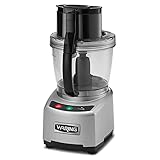
- Capacity: 4-quart commercial food processor with LiquiLock sealed bowl system prevents leaks while processing soups, sauces...
- Motor: 2 Horsepower heavy duty food processor motor delivers consistent performance for high-volume batch processing in commercial...
- Attachments: Includes shredding disc, slicing disc, whipping disc, and standard S blade for chopping, pureeing, and emulsifying...
Best for: Liquid prep and large batches.
A 4-quart sealed bowl and a 2 peak HP commercial motor make this Waring processor especially useful for soups, sauces, and marinades that need liquid-safe handling. The LiquiLock design keeps the bowl sealed, so batch prep can move beyond dry chopping and into wetter mixtures without constant spill concerns.
That 3.79-liter capacity gives the processor enough room for larger commercial batches while still staying manageable on a prep counter. The 14″ x 9″ x 19″ dimensions reflect a vertical footprint that can fit into a working line without swallowing the whole station. Thermal overload protection is an important operational detail because it helps support continuous-duty service during longer prep cycles. The black housing and commercial-grade construction also make it a straightforward choice for kitchens that want a liquid-friendly bowl and dependable motor support in the same machine. The clear-view bowl adds one more practical benefit: staff can monitor texture without stopping the workflow.
Pros
- 4-quart bowl supports larger batch prep
- LiquiLock sealed bowl handles liquids cleanly
- 2 peak HP motor suits continuous-duty service
- Thermal overload protection helps during long runs
Cons
- The product data does not list interchangeable slicing or dicing discs, so its versatility is centered more on liquid and batch processing than blade-based variety.
This model fits operations that regularly process liquids and want a sealed bowl rather than a dry-prep-only machine. It is a strong match for commercial kitchens that need size, motor strength, and spill control in one unit.
| Specification | Details |
|---|---|
| Brand | Waring |
| Color | Black |
| Special Feature | Auto Shut Off, Built In Grinder, Ice Crushing, Manual, Programmable, Safety Lock, Shock Resistant |
| Capacity | 3.79 liters |
| Product Dimensions | 14″D x 9″W x 19″H |
I’d recommend this to buyers who regularly make soups, sauces, or dressings in larger volumes. The sealed bowl is the feature that changes how useful it is in a commercial setting, because liquid prep can be handled more cleanly than with many standard processors. If your menu includes wet mixtures as often as chopped ingredients, this one makes sense.
3. VEVOR Commercial Food Processor 550W Electric Vegetable Slicer 6 Blades

- Multi-Functional Food Processor: This food processor offers 2 size of feeding holes to adapt to different sizes of vegetables...
- Assuring Materia: This fruit and vegetable cutter is made of food-grade stainless steel and high-quality cast aluminum alloy with...
- Powerful Performance: This food cutter is equipped with a 550w high-efficient motor,with high rotation speed of 1600r/min. The...
Best for: Disc-driven slicing and shredding.
Six detachable cutting disks and two feeding-hole sizes give this VEVOR processor a clear advantage for mixed vegetable prep. The 550W motor is a practical fit for slicing, shredding, and batching produce in a smaller commercial setup, while the interchangeable blade system lets the operator switch formats without changing machines.
The included disks cover multiple cut styles, including 3 mm shred, 4 mm shred, 7 mm shred, 2 mm slice, and 4 mm slice, which means prep teams can match thickness to menu needs instead of settling for one cut. Its 17″ x 8.2″ x 22″ size gives it a tall, narrow profile that can work well where counter width is limited. Food-grade stainless steel and cast aluminum alloy are the key material callouts here, since they matter for contact safety and frame rigidity. The silver anodized surface also helps the unit look cleaner and resist wear in active kitchens. Rubber feet add steadiness during operation, which is useful when the machine is running at speed.
Pros
- Six cutting disks expand slicing and shredding options
- Two feeding-hole sizes help with ingredient variety
- Food-grade stainless steel supports food contact use
- Rubber feet improve stability during operation
Cons
- The wattage is 550W, so buyers needing a heavy batch motor for large-volume continuous processing may want a stronger drive system.
This VEVOR works best for prep lines that value cut variety and fast disk changes more than raw motor power. It is a smart pick for kitchens that process many vegetable types and want multiple slice sizes from one compact machine.
| Specification | Details |
|---|---|
| Brand | VEVOR |
| Special Feature | Interchangeable Blade |
| Product Dimensions | 17″D x 8.2″W x 22″H |
| Color | Silver |
| Wattage | 550 watts |
My read is that this machine will satisfy buyers who care more about slicing flexibility than brute-force chopping. The six disks are genuinely useful in a restaurant or prep room where ingredient thickness changes from task to task. If your workflow is heavy on vegetables and you want a compact cutter with multiple outputs, this is the one to look at.
4. Hakka Commercial Food Processor, 1800W Electric Vegetable Cutter Heavy-Duty Veggie

- ✅ Limitless Speed Control – Adjust speed freely from 1000 to 2500 RPM for precise cutting, chopping, stirring, and rubbing of...
- ✅ Patented Stainless Steel Blade – Specially designed blade ensures efficient, smooth, and consistent food processing with...
- ✅ High-Quality Stainless Steel Construction – Entire machine made from food-grade stainless steel for longevity, hygiene, and...
Best for: Tall stainless workhorse.
At 1800W with a 12.5″ x 20.5″ x 15.5″ body, this Hakka unit gives commercial prep teams a strong motor in a slightly shorter footprint than the taller version. The lower height can make it easier to place under shelves or in tighter prep zones while still keeping the same adjustable speed range for controlled cutting and stirring.
The 1000 to 2500 RPM speed span is the key operational feature, because it lets staff slow the machine down for delicate ingredients and speed it up for denser vegetables. Food-grade stainless steel is used across the machine, which matters for sanitation when the unit sees repeated daily contact with moisture and scraps. The patented stainless steel blade supports smooth, consistent processing, which is useful when the kitchen needs even pieces for uniform cooking. Safety lock protection is included, so it has a more practical fit in busy back-of-house settings where multiple staff may use the same equipment. Its silver finish also keeps the visual profile clean and professional.
Pros
- 1800W motor handles demanding prep
- 1000 to 2500 RPM range improves control
- Food-grade stainless steel aids cleanup
- Safety lock supports staff use in busy kitchens
Cons
- The listing does not provide a bowl or bin capacity, so batch planning depends on the kitchen’s own workflow rather than a stated volume.
This version is a good fit for buyers who want the same Hakka power in a slightly more space-conscious form. It suits prep stations that need adjustable speed and stainless steel construction without a taller machine profile.
| Specification | Details |
|---|---|
| Brand | HAKKA FOOD PROCESSING |
| Special Feature | Adjustable Speed Control, Safety Lock |
| Product Dimensions | 12.5″D x 20.5″W x 15.5″H |
| Color | Silver |
| Wattage | 1800 watts |
I see this as the better Hakka choice when counter clearance matters. It still brings the same adjustable-speed handling and stainless steel construction, but the shorter height may fit more naturally in a compact prep area. Buyers who want a commercial cutter with strong output and a friendlier footprint should be happy with it.
5. Waring Food Processor with 4-Quart Capacity & Continuous-Feed with Dicing
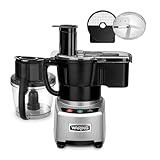
- Motor: 2 Horsepower commercial-grade electric food processor delivers powerful performance for high-volume food preparation in...
- Capacity: 4-quart sealed batch bowl with patented LiquiLock system processes soups, sauces, dressings, and liquids without leakage...
- Versatility: Over 20 processing options including dicing, shredding, slicing, chopping, pureeing, and emulsifying with included...
Best for: High-volume liquid and dry prep.
A 4-quart batch bowl and a 2 horsepower commercial-grade motor place this Waring model squarely in heavy prep territory. The sealed LiquiLock system lets it process soups, sauces, dressings, and liquids without leakage, which makes it far more useful than a dry-only processor in a professional kitchen.
The product’s 14″ x 15″ x 18″ dimensions show a larger countertop presence than smaller units, which is the tradeoff for the stronger batch capacity. Over 20 processing options are listed, including dicing, shredding, slicing, chopping, pureeing, and emulsifying, so a single unit can cover several prep tasks instead of requiring separate equipment. The clear 4-quart bowl helps staff monitor progress at a glance, and the sealed design is especially important for fluid ingredients that would normally demand careful handling. Because it is targeted at commercial and foodservice environments, it is suited to repeat use where speed and consistency matter across long service periods.
Pros
- 4-quart capacity supports larger batch work
- 2 horsepower motor handles heavy prep loads
- LiquiLock seal prevents leakage with liquids
- Over 20 processing options increase versatility
Cons
- The larger 14″ x 15″ x 18″ footprint will take more counter space than compact commercial processors.
This is a strong fit for kitchens that need one processor to cover both wet and dry prep. Its capacity and motor strength make the most sense where volume and versatility are both priorities.
| Specification | Details |
|---|---|
| Brand | Waring |
| Color | Clear |
| Special Feature | Auto Shut Off, Built In Grinder, Ice Crushing, Programmable, Safety Lock, Shock Resistant |
| Capacity | 4 quarts |
| Product Dimensions | 14″D x 15″W x 18″H |
I’d choose this for a kitchen that regularly moves between chopping produce and mixing liquid bases. The 4-quart sealed bowl is what makes it feel like a true commercial tool rather than a general-purpose countertop appliance. If you need versatility and volume in the same unit, this one is easy to justify.
6. Robot Coupe R101B CLR Food Processor, 2.5 Qt Polycarbonate Clear

- INDUCTION MOTOR: Robot Coupe's R101BCLR is built with a fan-cooled, 1⁄4-HP motor than spins at 1725 RPM for consistent food...
- 2.5 QUART CLEAR BATCH BOWL: The 2.5 qt. clear plastic batch bowl is great for mixing up small batches of a single ingredient, or...
- "S" BLADE WITH SMOOTH AGES: Fantastic for a variety of processing tasks, the smooth "S" blade that comes with the bowl assembly...
Best for: Small-batch precision prep.
A 1/4-HP induction motor spinning at 1725 RPM gives this Robot Coupe a focused role in small-batch commercial prep. The 2.5-quart clear bowl is useful when the operator wants to watch texture closely, especially for ingredients that need careful control rather than large-volume throughput.
Its fan-cooled motor is a useful operating detail because it supports consistent processing during repeated tasks in a busy prep cycle. The clear polycarbonate bowl makes it easier to see ingredients as they move, which helps with tasks like small mixes and multi-ingredient prep. At 12.69″ x 15″ x 23″ it has a tall profile, so it suits a station where vertical room is available. The included smooth S blade is a practical piece of hardware for everyday processing jobs, and the manual operation keeps the machine straightforward for staff who want direct control over each run. For kitchens that value precision over bulk, this setup is well aligned.
Pros
- 1725 RPM motor supports consistent processing
- 2.5-quart clear bowl helps monitor texture
- Fan-cooled design supports repeated use
- Manual control gives the operator direct oversight
Cons
- The 2.5-quart bowl is smaller than many commercial batch processors, so it is less suited to large-volume output.
This Robot Coupe is the right kind of machine for tighter batch work and careful monitoring. It fits commercial kitchens that need reliable small-quantity processing more than a big output machine.
| Specification | Details |
|---|---|
| Brand | Robot Coupe |
| Special Feature | Manual |
| Product Dimensions | 12.69″D x 15″W x 23″H |
| Color | Clear |
| Wattage | 1725 watts |
My advice is to look at this model if your kitchen makes smaller, more controlled batches and you want clear visibility while working. The bowl size and manual operation both point toward precise prep rather than brute capacity. It should suit teams that value consistency and close observation more than maximum throughput.
7. Garvee 15L/16 Quart Commercial Food Processor, Stainless Steel Electric Chopper
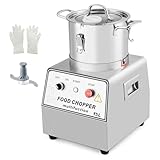
- Multi-Functional Design - Beyond basic chopping, this versatile food processor performs blending, dicing, emulsifying, and...
- Powerful 1400W Motor for Fast & Consistent Prep - Equipped with a robust 1400W commercial-grade motor, this commerical electric...
- Heavy-Duty Stainless Steel Blades & Easy-Clean Bowl - Featuring sharp S-curve blades and a durable, food-grade stainless steel...
Best for: Large-capacity chopping station.
A 15L or 16-quart capacity and a 1400W motor give this Garvee processor the scale needed for bigger prep jobs. The stainless steel build supports heavy kitchen use, while the interchangeable blade setup makes it practical for kitchens that need more than one type of cut from a single machine.
The 16″ x 15″ x 23.6″ dimensions show a sizeable footprint, which matches the larger bowl volume and makes sense for higher-output stations. Beyond chopping, it handles blending, dicing, emulsifying, and grinding, so it can replace several appliances when counter space is limited. The machine is intended for both commercial kitchens and high-demand home use, but its scale is especially relevant where ingredient loads are frequent. The silver finish and stainless steel construction are useful in real kitchens because they are easier to wipe down after handling roots, herbs, and wetter ingredients. With a 1400W drive, it has the power profile expected from a serious prep machine.
Pros
- 15L/16-quart capacity handles larger batches
- 1400W motor supports fast prep cycles
- Interchangeable blade system increases versatility
- Stainless steel construction suits frequent cleanup
Cons
- The 16″ x 15″ x 23.6″ size needs a substantial amount of counter and vertical space.
This Garvee makes sense for kitchens that want a larger prep station with multiple processing modes. It is best for operators who need capacity first and are willing to give up some space for it.
| Specification | Details |
|---|---|
| Brand | Garvee |
| Special Feature | Interchangeable Blade |
| Product Dimensions | 16″D x 15″W x 23.6″H |
| Color | Silver |
| Wattage | 1400 |
I’d steer bigger prep teams toward this one when they want a machine that can absorb volume and still cover several tasks. The large capacity is the main attraction, but the blade flexibility is what makes it more useful day to day. If your prep load is consistently heavy, this is a sensible pick.
8. Waring Food Processor with 2.5 Quart Capacity with Flat Lid

- Motor: Heavy duty 3/4 Horsepower commercial food processor motor delivers consistent performance for professional kitchen...
- Capacity: 2.5 quart unbreakable clear-view bowl with patented LiquiLock seal system prevents spills and maximizes liquid...
- Design: Low profile space-saving design fits under standard kitchen counters while providing full food processor functionality for...
Best for: Low-profile counter fit.
A 2.5-quart unbreakable bowl and a 3/4 horsepower commercial motor make this Waring model a compact but serious prep tool. Its low-profile 13″ x 7″ x 11″ design is the defining advantage, because it can sit under standard counters where taller machines would not fit.
The LiquiLock seal system is important here because it prevents spills while supporting liquid processing in a smaller bowl. That means the machine can handle more than just dry chopping, even though its footprint is modest. The clear-view bowl helps staff keep an eye on ingredients without opening the lid, which is helpful in a fast-paced kitchen. At 600 watts, it is less about brute force and more about dependable commercial performance in a space-conscious format. The black color and compact body make it easy to integrate into an existing line, especially where under-counter clearance is a concern.
Pros
- Low-profile design fits under standard counters
- 2.5-quart bowl supports compact batch prep
- LiquiLock seal helps prevent spills
- 3/4 horsepower motor suits commercial use
Cons
- The 2.5-quart capacity is smaller than larger foodservice processors, so it is less suited to big-batch production.
This Waring is ideal for kitchens that need commercial capability in a shorter body. It works best where counter clearance matters just as much as processing performance.
| Specification | Details |
|---|---|
| Brand | Waring |
| Special Feature | Auto Shut Off, Built In Grinder, Manual, Safety Lock, Shock Resistant |
| Product Dimensions | 13″D x 7″W x 11″H |
| Color | Black |
| Wattage | 600 watts |
I’d recommend this when space is tight but the kitchen still needs a legitimate commercial processor. The low-profile build is the differentiator, and the sealed bowl adds real utility for wetter prep jobs. Buyers who value fit and reliability over capacity will likely be pleased with it.
9. 5 in 1 Commercial Food Processor, Electric Vegetable Chopper

- 5 In 1 Multifunctional: This commercial food processor can meet all your needs for slicing (2.5mm), dicing (9/12/16mm), and...
- Commercial-Grade Power: This electric vegetable chopper is built-in 100W pure copper motor, which is low noise, heat-resistant and...
- Stainless Steel Blade Set: The vegetable dicer machine features thickened 304 stainless steel blade is sharp and durable, ensuring...
Best for: Compact 5-function veggie cutter.
Five cutting functions and a built-in 100W pure copper motor make this YIRCELOM unit a compact option for focused vegetable prep. Its listed slicing and dicing sizes give the operator fixed cut choices, which is useful when consistency matters more than having endless accessories.
The machine handles slicing at 2.5 mm and dicing at 9 mm, 12 mm, or 16 mm, with shredding at 2.5 mm, so prep staff can choose a cut that matches the recipe without improvising. Its 9.8″ x 8.1″ x 13.8″ footprint is compact enough for a smaller prep counter or support station. The 100W pure copper motor is described as low-noise and heat-resistant, which helps in tighter spaces where quieter operation can matter. Because it is aimed at restaurants, cafeterias, and central kitchens, the form factor is more about repeatable vegetable processing than all-purpose food mixing. The black finish also keeps it visually discreet on the line.
Pros
- Five-in-one design covers multiple vegetable cuts
- Fixed cut sizes improve portion consistency
- 100W pure copper motor supports quiet operation
- Compact dimensions fit smaller prep spaces
Cons
- The 100W motor is far smaller than heavy commercial food processors, so it is not the right choice for high-volume, heavy-duty batch work.
This is a practical pick for teams that need straightforward vegetable cutting in a compact form. It suits kitchens that want consistent slices and dice sizes without a larger commercial machine.
| Specification | Details |
|---|---|
| Brand | YIRCELOM |
| Special Feature | 5 in 1 |
| Product Dimensions | 9.8″D x 8.1″W x 13.8″H |
| Color | Black |
| Wattage | 100 watts |
My opinion is that this one works best as a focused prep helper rather than a main heavy-duty processor. The set cut sizes are its biggest strength, because they make vegetable prep predictable. If your kitchen needs compact, repeatable slicing and dicing more than raw power, it should do the job well.
10. Waring Food Processor with 2.5 Quart Capacity

- Capacity: 2.5 quart commercial food processor with 3/4 Horsepower motor delivers powerful performance for chopping, pureeing, and...
- Motor: Heavy duty food processor with 3/4 Horsepower motor handles tough food processing tasks with consistent results, making...
- Design: Patented LiquiLock seal bowl system prevents leaks during liquid processing while extra large feed tube accommodates whole...
Best for: Compact commercial liquid prep.
A 2.5-quart sealed bowl and a 3/4 horsepower motor give this Waring processor a strong balance of compact size and commercial output. The LiquiLock bowl system is the feature that matters most here, because it keeps liquids contained while still letting the machine chop, puree, and emulsify in a professional setting.
The 10.38″ x 14.5″ x 14.5″ dimensions make it a relatively compact commercial unit, which is useful when the prep station has limited room. The extra large feed tube is another important detail because it reduces the need to pre-cut ingredients so finely before processing. The black housing and shock-resistant feature support a back-of-house environment where equipment gets handled often. At 600 watts, it sits in the practical middle ground for commercial prep jobs that do not require a giant batch machine. Safety lock and built-in grinder features add to its utility for kitchens that want one processor to cover more than a single task.
Pros
- 2.5-quart bowl suits smaller commercial batches
- 3/4 horsepower motor handles everyday prep
- LiquiLock seal supports liquid processing
- Extra large feed tube reduces pre-cutting time
Cons
- The 2.5-quart capacity limits how much can be processed at once compared with larger commercial models.
This model makes sense for kitchens that want sealed liquid handling in a smaller, more manageable body. It is a good match for operations that need a compact commercial processor without giving up everyday versatility.
| Specification | Details |
|---|---|
| Brand | Waring |
| Special Feature | Auto Shut Off, Built In Grinder, Manual, Safety Lock, Shock Resistant |
| Product Dimensions | 10.38″D x 14.5″W x 14.5″H |
| Color | Black |
| Wattage | 600 watts |
I’d choose this for a kitchen that needs compact commercial performance and regular liquid prep. The bowl seal and feed tube are the two details that really improve day-to-day use, especially when prep time is tight. Buyers wanting a smaller unit that still feels professional should find it very workable.
Quick Comparison Table of Top Commercial Food Processors
| Product Name | Power | Capacity | Key Feature | Best For | Check Price |
|---|---|---|---|---|---|
| Hakka Commercial Food Processor, 1800W Electric | 1800W | Large | Speed control | Heavy-duty prep | Check Price |
| Waring Food Processor with 4-Quart Capacity | 2 HP | 4-quart | LiquiLock bowl | Liquids and sauces | Check Price |
| VEVOR Commercial Food Processor 550W Electric | 550W | Varies | 6 blades | Vegetable slicing | Check Price |
| Hakka Commercial Food Processor, 1800W Electric | 1800W | Large | Speed control | Fast chopping | Check Price |
| Waring Food Processor with 4-Quart Capacity | 2 HP | 4-quart | Continuous-feed | High-volume prep | Check Price |
| Robot Coupe R101B CLR Food Processor | 1/4 HP | 2.5-quart | Clear batch bowl | Small batches | Check Price |
| Garvee 15L/16 Quart Commercial Food Processor | 1400W | 16-quart | Interchangeable blade | Bulk processing | Check Price |
| Waring Food Processor with 2.5 Quart | 600W | 2.5-quart | Flat lid | Compact kitchens | Check Price |
| 5 in 1 Commercial Food Processor | 100W | Multi-size | 5 in 1 | Slicing and dicing | Check Price |
| Waring Food Processor with 2.5 Quart | 600W | 2.5-quart | Auto shut off | Everyday prep | Check Price |
How to Choose the Best Food Processor Commercial
Motor power and processing performance
Motor strength is the heart of a commercial food processor, determining how efficiently it handles heavy prep loads without bogging down or overheating.
A high-horsepower motor with strong torque is essential for dense ingredients such as chilled butter, thick dough, hard cheeses, and large batches of nuts, delivering consistent results in less time. Buyers should also pay attention to multiple speed settings, since low speeds are ideal for even slicing and coarse chopping, while higher speeds improve smooth purees, emulsions, and fine mincing. A responsive pulse function adds control for delicate tasks, helping prevent overprocessing and giving chefs the ability to create uniform textures with short bursts.
Reliable processing performance matters across everyday kitchen tasks: kneading dough requires steady power and torque, vegetables need clean cuts without bruising, and nuts demand enough force to break down evenly without stalling the machine. A well-built commercial processor should maintain output under load, offer smooth transitions between speeds, and support fast, repeatable prep during busy service. In a demanding kitchen, that combination of power, precision, and control helps improve workflow, reduce waste, and produce consistent food quality.
Capacity and bowl design
Output capacity and bowl geometry determine how efficiently a processor handles real kitchen volume, not just how much it can hold. A larger work bowl supports batch prep for sauces, slaws, doughs, and chopped vegetables, while a smaller or poorly shaped container can slow service and force frequent emptying during rush periods.
Bowl size should match peak demand as well as routine prep, since an undersized unit can overflow during high-volume production and an oversized one may reduce contact between ingredients and blades. Wide feed chutes are equally valuable because they accept whole carrots, potatoes, cheese blocks, and herbs with less pre-cutting, saving labor and speeding service. The internal shape also affects results: a well-designed bowl promotes consistent circulation so ingredients move evenly through the cutting zone, reducing unprocessed pockets and improving texture control for purees, minced aromatics, and emulsified dressings.
Look for secure lids, tight seals, and splash-resistant construction. These details help contain liquid ingredients, protect the motor area, and reduce mess during continuous use. For busy prep stations, a properly fitted lid with overflow resistance is essential for safer, cleaner operation and more dependable performance across repeated commercial cycles.
Durability and build quality
Rugged construction is the backbone of dependable kitchen performance. A food processor built with a heavy-duty housing, a wide non-slip base, and reinforced internal parts stays steady during demanding prep tasks such as shredding dense vegetables, kneading dough, or processing large batches of sauces. That stability reduces vibration, protects the motor, and helps deliver smoother, more consistent results in busy service environments.
Stainless steel blades are especially valuable because they resist corrosion, hold a sharper edge longer, and handle repeated contact with acidic ingredients and hard foods without dulling quickly. Reinforced drive shafts, sealed switches, and durable bowl mounts also matter, since these components absorb daily wear far better than lightweight alternatives. In a commercial kitchen, that means fewer breakdowns during rush periods and less downtime between orders.
Commercial-grade materials and easy access to replacement parts extend the machine’s service life. High-impact polymers, metal gearing, and replaceable seals or lids make long-term operation more practical, especially in settings that run multiple prep cycles each day. Brands that offer spare blades, pusher assemblies, and drive components provide added peace of mind, because maintenance becomes simpler and the unit can stay productive for years instead of being replaced prematurely.
Safety, controls, and ease of use
Built-in safeguards and intuitive operation are essential in a high-traffic kitchen, where speed must never compromise safety.
Reliable locking mechanisms and interlock systems keep the bowl, lid, and feed tube properly secured, preventing accidental starts and reducing the risk of spills or blade exposure. That matters in busy prep stations where staff may be assembling ingredients quickly between orders. Simple, clearly labeled controls—such as pulse, on, off, and variable speed settings—help operators process vegetables, dough, sauces, or salsas with minimal training and fewer mistakes.
In a commercial setting, overload protection and thermal cooling features are equally valuable because they help the motor shut down safely during heavy-duty use, then recover without damage. This extends service life and protects your investment during repeated batches of dense ingredients or long prep cycles.
Ergonomic handles, non-slip grips, and easy-to-align components also improve day-to-day efficiency. A processor that assembles quickly, with a secure work bowl and dishwasher-safe parts, saves time during opening and closing routines while reducing fatigue for staff. These usability details can make a noticeable difference in a deli, restaurant, or catering kitchen where every second counts.
Cleaning and maintenance factors
Easy-clean construction is essential in a busy kitchen because it directly affects speed, sanitation, and uptime. Food-grade housings with smooth, nonporous surfaces help prevent puree, dough, and sauce from clinging in seams or textured corners, which reduces residue buildup and keeps the unit looking professional after repeated use. Dishwasher-safe bowls, lids, feed tubes, and removable accessories save labor during peak service, allowing staff to clean parts quickly without manual scrubbing. That matters in restaurants, deli prep areas, and catering kitchens where equipment may be used dozens of times per shift.
Blade removal also plays a major role in safe, thorough sanitizing. A processor with easy-release cutting assemblies lets staff reach hidden edges, wash away starches and oils, and inspect for wear without struggling with fixed components. Quick-disassembly designs support better hygiene, especially after handling onions, herbs, cheeses, or sticky emulsions that can trap debris around the spindle.
In daily workflows, low-maintenance construction means fewer interruptions, shorter turnaround between batches, and less risk of cross-contamination. Durable seals, wipe-clean controls, and corrosion-resistant materials further reduce upkeep, making the machine more dependable for consistent commercial food prep.
Quick Best Food Processor Commercial Buying Checklist
- Match motor strength to workload Choose enough power to handle dense vegetables, dough, and repeated prep without slowing down.
- Check bowl capacity Pick a size that fits your batch volume so you can work efficiently without constant emptying.
- Look for durable construction Prioritize commercial-grade materials, sturdy bases, and long-lasting blades for heavy use.
- Review safety features Seek interlocks, overload protection, and secure lids to reduce mistakes during busy service.
- Evaluate controls and speed options Simple controls with pulse and variable speeds make prep more precise and flexible.
- Consider cleaning convenience Removable, dishwasher-safe parts and smooth surfaces can save time during cleanup.
How a Commercial Food Processor Actually Handles Volume
A commercial food processor is built around a high-torque motor, a large work bowl, and interchangeable blades that let it chop, slice, shred, puree, and knead with consistent results. Unlike a blender, which relies on liquid movement, a food processor uses a wide base and sharp, low-profile cutting action to process dense ingredients efficiently. Feed tubes help guide produce into the blade path, while pulse controls give operators more precision for short bursts.
In busy kitchens, this design reduces prep time for onions, herbs, dough, sauces, and grated cheese. The key advantage is repeatable output: pieces stay more uniform, which helps with cooking consistency and portion control.
Commercial Food Processor Types and Their Typical Uses
Commercial models are often grouped by bowl capacity and format, with each type serving different kitchen demands. Continuous-feed processors are useful when a team needs to handle large amounts of vegetables quickly, while batch bowls are better for sauces, spreads, and mixed preparations that require closer control. Combination units can switch between multiple attachments for broader versatility.
Floor-standing systems are less common in smaller kitchens but can suit industrial prep environments. Choosing the right format is less about one machine being universally better and more about matching workflow, ingredient mix, and available counter space.
| Type | Best for | Typical Strength |
|---|---|---|
| Batch bowl | Sauces, dips, small prep runs | Control and consistency |
| Continuous-feed | Vegetables, shredding, high output | Fast throughput |
| Combination unit | Mixed prep tasks | Versatility |
| Heavy-duty floor model | Large-volume prep stations | Capacity and endurance |
Cleaning and Maintenance Practices That Extend Service Life
Regular cleaning is essential because residue around the blade hub, lid gasket, and feed tube can affect performance and sanitation. After each use, most removable parts should be washed, rinsed, and fully dried before reassembly. Blade edges should be handled carefully and checked for dullness, bending, or nicks that can reduce cut quality.
It also helps to inspect seals and locking mechanisms, since worn parts can lead to leaks or poor bowl fit. Exterior surfaces should be wiped with a non-abrasive cloth to protect switches and housing.
Scheduled maintenance, such as checking drive couplings and replacing worn components early, helps prevent downtime and keeps the machine running smoothly under repeated use.
Safety Habits Every Kitchen Team Should Follow
Because commercial food processors use powerful motors and exposed cutting surfaces, safe operation depends on routine habits. The lid and pusher should always be locked before starting the machine, and ingredients should be added only through the proper opening. Hands should never enter the bowl while the unit is connected to power.
Staff should keep fingers clear when removing blades and use designated tools for scraping or dislodging food. Stable placement on a dry counter reduces movement during operation, and overloaded bowls should be avoided because they can strain the motor.
Clear training is especially important in shared kitchens where multiple employees use the same equipment during a busy service period.
When a Food Processor Is Not the Right Tool
Although a commercial food processor is highly versatile, some kitchen jobs are better handled by other equipment. A blender is usually the better choice for very smooth liquids, emulsified drinks, and high-liquid purées. A slicer works better when the goal is repetitive, uniform slicing of large volumes of produce or deli meats.
A mixer is the right tool for whipping, aerating, and mixing doughs that need a different motion than chopping blades provide. In other words, the best commercial setup often uses multiple machines rather than forcing one appliance to do everything.
Understanding these boundaries helps a kitchen avoid unnecessary wear and produce better results.
| Equipment | Best for | Main Advantage |
|---|---|---|
| Food processor | Chopping, shredding, slicing, mixing | Versatility |
| Blender | Liquids and smooth purées | Ultra-smooth texture |
| Commercial slicer | Uniform slices at scale | Speed and precision |
| Stand mixer | Doughs and aerated mixtures | Controlled mixing motion |
Frequently Asked Questions (FAQs)
What Should I Look For In The Best Food Processor Commercial?
The best food processor commercial combines strong motor power, durable construction, and a bowl size that matches your prep volume. Look for stable bases, stainless steel blades, and simple controls that can handle chopping, slicing, and pureeing without slowing down during busy kitchen use.
How Much Power Does A Commercial Food Processor Need?
A commercial food processor needs enough power to process dense ingredients smoothly and consistently. Higher torque helps with tougher jobs like nut grinding or dough mixing, while multiple speed settings and a pulse option give better control for delicate tasks and uniform results.
Why Does Bowl Capacity Matter In A Commercial Food Processor?
Bowl capacity matters in a commercial food processor because it determines how much food you can prepare in one batch. A larger bowl reduces refills during high-volume service, while a smaller bowl may be better for tighter spaces or lower daily output.
What Materials Are Best For A Commercial Food Processor?
The best materials for a commercial food processor are stainless steel, reinforced plastic, and heavy-duty components designed for repeated use. These materials help resist wear, support frequent cleaning, and keep the unit stable when processing dense or sticky ingredients.
Are Safety Features Important In A Commercial Food Processor?
Yes, safety features are important in a commercial food processor because they help prevent accidents during fast-paced prep. Look for locking lids, interlock systems, overload protection, and secure non-slip feet so the machine stays controlled and reliable under heavy use.
How Easy Should A Commercial Food Processor Be To Clean?
A commercial food processor should be easy to clean because frequent use creates constant cleanup demands. Dishwasher-safe parts, removable blades, and smooth surfaces reduce residue buildup and make it faster to sanitize between batches, especially in busy food service settings.
What Makes A Commercial Food Processor Worth Buying?
A commercial food processor is worth buying when it saves time, handles large batches, and delivers consistent cuts with minimal effort. Strong performance, dependable durability, and easy maintenance make it a practical tool for kitchens that need speed and efficiency every day.
Final Suggestions
Choosing the best food processor commercial can streamline prep work, improve consistency, and help busy kitchens handle more tasks with less effort. With the right balance of power, capacity, durability, and easy cleaning, it becomes a dependable tool for daily production. Take the time to match features to your workflow, and you’ll set your kitchen up for smoother service ahead.


