Top 7 Best Gas Heating Stoves: Must-See Picks
Best gas heating stoves combine fast warmth, efficient fuel use, and reliable control in one compact category. For many homes, the appeal goes beyond simple comfort: modern gas heating stove designs can improve room ambiance, reduce reliance on electric heat, and deliver consistent performance with less upkeep. As materials, burner engineering, and heat circulation improve, the gap between basic space heating and precision climate support keeps narrowing.
The best gas heating stoves also stand out for venting flexibility, safety features, and finish options that suit different interiors. From cast-iron construction to advanced ignition systems, this category continues to evolve in ways that matter for daily use.
What separates one model from another may be more surprising than it first appears, and that is exactly where this guide gets interesting.
In-depth Reviews of the Best Gas Heating Stoves
1. Duluth Forge Ventless Natural Gas Stove – 25,000 BTU, T-Stat

- POWERFUL HEATING: Delivers 25,000 BTUs of heat to warm up to 1,100 square feet; operates on Natural Gas.
- THERMOSTAT CONTROL: Variable heat settings automatically cycle the stove on and off to maintain your desired room temperature.
- REALISTIC FLAME DISPLAY: Dual burner creates two rows of real flames around five hand-painted ceramic fiber logs, with a large...
Best for: Natural-gas heating for larger rooms.
A 25,000 BTU output gives this Duluth Forge stove enough heating power for spaces up to 1,100 square feet. Natural gas operation keeps the setup tied to a household gas line, and the ventless format lets you place warmth where a flue would otherwise get in the way.
The 33.5-inch depth, 13-inch width, and 25-inch height make it a relatively narrow floor stove that can fit along a wall without demanding a wide footprint. At 56 pounds, it is substantial enough to stay put yet still manageable for installation. The ceramic and concrete construction supports the realistic log presentation, while the dual burner creates two rows of flame around five hand-painted ceramic fiber logs. Variable heat settings with thermostat control help the stove cycle on and off to hold a steady room temperature instead of blasting heat nonstop. Vent-free operation also delivers 99.9% efficiency, so more of the heat stays in the room.
Pros
- 25,000 BTU output heats up to 1,100 square feet
- Thermostat control cycles heat automatically
- Dual burner creates two rows of flames
- Vent-free design delivers 99.9% efficiency
Cons
- Natural gas only, so it will not suit homes that rely on propane service.
This is a strong fit for buyers who want serious room heating with a compact footprint and automatic temperature control. It works best in larger living spaces where natural gas is already available and a ventless setup makes sense.
| Specification | Details |
|---|---|
| Brand | Duluth Forge |
| Material | Ceramic, Concrete |
| Color | Natural Gas |
| Product Dimensions | 33.5″D x 13″W x 25″H |
| Item Weight | 56 pounds |
| Heat Output | 25,000 BTU |
| Heating Coverage | Up to 1,100 square feet |
| Fuel Type | Natural Gas |
| Ventilation Type | Vent Free |
I’d point this one toward anyone who wants dependable whole-room heat without sacrificing floor space. The thermostat control and 25,000 BTU output make it practical for everyday use, while the log-and-flame display adds a fireplace feel without requiring a chimney. It makes the most sense for natural-gas homes that need a straightforward heating solution.
2. Duluth Forge Ventless Liquid Propane Gas Stove – 25,000 BTU,
- POWERFUL HEATING: Delivers 25,000 BTUs of heat to warm up to 1,100 square feet; operates on liquid propane.
- THERMOSTAT CONTROL: Variable heat settings automatically cycle the stove on and off to maintain your desired room temperature.
- REALISTIC FLAME DISPLAY: Dual burner creates two rows of real flames around five hand-painted ceramic fiber logs, with a large...

Best for: Propane homes needing flexible heating.
A 25,000 BTU propane setup gives this Duluth Forge stove the output to warm areas up to 1,100 square feet. The ventless format keeps installation simpler than a vented stove, and the metal body gives the unit a straightforward, practical profile for propane-focused homes.
With dimensions of 33.5 inches deep, 13 inches wide, and 25 inches high, it keeps a slim stance that can tuck into a smaller wall section while still delivering meaningful heat. The 56-pound weight gives it enough mass for stable placement. Five hand-painted ceramic fiber logs sit behind a dual burner that creates two rows of flame, which gives the firebox more visual depth than a single-flame setup. Thermostat control automatically cycles the stove to maintain the set temperature, and the 99.9% efficient vent-free design keeps more heat indoors instead of sending it outside through a flue.
Pros
- 25,000 BTU output serves up to 1,100 square feet
- Runs on liquid propane for LPG homes
- Thermostat control maintains room temperature automatically
- Vent-free design keeps heat in the room at 99.9% efficiency
Cons
- It is propane-specific, so it is not the right pick for a natural-gas-only household.
This stove fits buyers who already use propane and want a simple, high-output heater for a large room. The automatic temperature control and compact profile make it practical for steady winter heat without adding venting hardware.
| Specification | Details |
|---|---|
| Brand | Duluth Forge |
| Material | Metal |
| Color | Liquid Propane |
| Product Dimensions | 33.5″D x 13″W x 25″H |
| Item Weight | 56 pounds |
| Heat Output | 25,000 BTU |
| Heating Coverage | Up to 1,100 square feet |
| Fuel Type | Liquid Propane |
| Ventilation Type | Vent Free |
I’d choose this for a propane home that wants simple installation and dependable room heat. The thermostat feature matters if you want less babysitting, and the 25,000 BTU rating gives it enough reach for a sizeable living area. Buyers who prefer propane over natural gas will appreciate that the rest of the stove stays straightforward and space-efficient.
3. Duluth Forge Dual Fuel Ventless Gas Stove – 26,000 BTU,

- TECHNOLOGY - 26, 000 BTU Patented DUAL FUEL TECHNOLOGY using Natural Gas or Liquid Propane Blue Flame Heater Which Heats up to...
- DEPENDABLE - Thermostat Remote Control Included – This remote controlled unit allows you to set your desired heat temperature...
- STYLISH - 6 hand painted realistic detailed logs using superior ceramic fiber material for long lasting life
Best for: Dual-fuel choice with remote control.
A 26,000 BTU dual-fuel burner gives this Duluth Forge stove the flexibility to run on natural gas or liquid propane. The included remote control adds day-to-day convenience, letting you adjust temperature without walking back to the unit while the six hand-painted logs provide a fuller firebox display.
The stove measures 16.9 inches deep, 28 inches wide, and 26.2 inches high, so it has a broader face than slimmer models and a presence that suits a main room. At 80 pounds, it is the heaviest unit in this group, which helps explain its substantial ceramic build and large log presentation. It heats up to 1,200 square feet, giving it more room coverage than 25,000 BTU models. The system includes batteries for the remote, with 4 AA and 2 AAA batteries supplied, so the controls are usable right away. The black finish also makes the stove visually easy to anchor in a darker fireplace setting.
Pros
- 26,000 BTU output covers up to 1,200 square feet
- Dual-fuel setup works with natural gas or propane
- Remote control is included for easier temperature adjustment
- Six hand-painted ceramic fiber logs create a fuller firebox look
Cons
- The 80-pound weight makes it more cumbersome to move and place than lighter ventless stoves.
This is a good fit for buyers who want fuel flexibility and a little more heating reach than standard 25,000 BTU models. The remote control and larger flame presentation make it especially appealing in a primary living space.
| Specification | Details |
|---|---|
| Brand | Duluth Forge |
| Material | Ceramic |
| Color | Black |
| Product Dimensions | 16.9″D x 28″W x 26.2″H |
| Item Weight | 80 pounds |
| Heat Output | 26,000 BTU |
| Heating Coverage | Up to 1,200 square feet |
| Fuel Type | Natural Gas or Liquid Propane |
| Included Batteries | 4 AA and 2 AAA |
I’d recommend this to shoppers who want more fuel flexibility and a little extra heat coverage. The remote is a real convenience if you plan to use the stove often, and the larger BTU rating helps in rooms that need stronger output. It suits buyers who value function first but still want a more substantial fireplace look.
4. Pleasant Hearth VFS2-PH20DT 20,000 BTU 23.5 in. Compact Gas vent

- Dual fuel technology allows the unit to be operated with Propane or Natural Gas
- Up to 20,000 BTU's/hr heats up to 700 sq. ft.
- Thermostat control knob automatically maintains your ideal heat level
Best for: Compact square stove for smaller rooms.
A 20,000 BTU output makes this Pleasant Hearth stove a better fit for spaces up to 700 square feet than for open-plan areas. Its 23.5-inch by 23.5-inch by 23.5-inch cube shape gives it a compact footprint, which helps when the installation space is tight and the stove needs to sit neatly in a corner or against a wall.
The dual-fuel design accepts propane or natural gas, so the unit works with either fuel source instead of locking you into one line. At 58 pounds, it sits in the manageable middle range for ventless stoves, which supports steadier placement once installed. The vent-free design means no flue or chimney is required, and the thermostat control knob automatically maintains the chosen heat level rather than forcing manual adjustments. A dual burner adds two rows of flame for a fuller fire appearance, and the separately sold variable-speed blower gives buyers a way to push heat more actively through the room if needed.
Pros
- 20,000 BTU output suits up to 700 square feet
- Dual-fuel compatibility works with propane or natural gas
- Compact 23.5-inch cube shape fits tighter spaces
- Vent-free design avoids the need for a flue or chimney
Cons
- The blower is sold separately, so air circulation is less flexible unless that accessory is added.
This stove makes sense for smaller rooms where a compact footprint matters more than maximum output. It offers flexible fuel use and simple thermostat control for buyers who want a practical ventless heater rather than a large centerpiece unit.
| Specification | Details |
|---|---|
| Brand | Pleasant Hearth |
| Product Dimensions | 23.5″D x 23.5″W x 23.5″H |
| Item Weight | 58 pounds |
| Heat Output | 20,000 BTU |
| Heating Coverage | Up to 700 sq. ft. |
| Fuel Type | Propane or Natural Gas |
| Ventilation Type | Vent Free |
| Special Feature | Thermostat control knob |
| Special Feature | Dual burner |
I’d steer apartment-sized or smaller-room buyers toward this one because the cube footprint is easy to place and the output is scaled to the space. The dual-fuel setup gives flexibility, and the vent-free format keeps installation simpler. If you do not need huge coverage, it is a very practical middle-ground choice.
5. Bluegrass Living Panorama Vent Free Dual Fuel 3-Sided Gas Stove
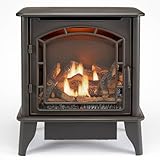
- DUAL FUEL TECHNOLOGY: Patented system allows operation with either Natural Gas or Liquid Propane, offering flexible installation...
- REALISTIC FLAME PRESENTATION: U-Burner chassis and hand-painted ceramic fiber logs produce a lifelike, two-row flame effect...
- REMOTE CONTROL FUNCTIONALITY: Includes a thermostat remote with LCD screen to adjust temperature, mode, and flame. Easy-to-use...
Best for: Three-sided view for room focal points.
Three-sided viewing gives this Bluegrass Living stove a wider fireplace presentation than standard front-only units. Its 23,000 BTU output covers up to 1,100 square feet, so it has enough power for a living room while the U-burner chassis and hand-painted logs keep the flame effect visible from more than one angle.
The stove measures 25.75 inches deep, 25.75 inches wide, and 28.31 inches high, which creates a broad, upright footprint that suits a central wall or an open living area. The black metal body pairs with the three-sided design to make the fire visible across the room instead of only head-on. Dual-fuel capability allows operation with natural gas or liquid propane, giving more flexibility at installation time. The thermostat remote includes an LCD screen, which gives clearer temperature readout than a basic remote. Because the unit is vent free, you avoid needing a flue while still getting a 23,000 BTU heat source for everyday room use.
Pros
- 23,000 BTU output heats up to 1,100 square feet
- Three-sided view shows the fire from multiple angles
- Dual-fuel operation supports natural gas or propane
- Thermostat remote with LCD screen adds easier control
Cons
- The broad three-sided footprint takes more wall space than a narrow stove.
This is the pick for buyers who want the stove to be seen, not hidden. It balances solid heating coverage with a more decorative fireplace presence, especially in rooms where multiple viewing angles matter.
| Specification | Details |
|---|---|
| Brand | Bluegrass Living |
| Material | Metal |
| Color | Black |
| Product Dimensions | 25.75″D x 25.75″W x 28.31″H |
| Heat Output | 23,000 BTU |
| Heating Coverage | Up to 1,100 sq. ft. |
| Fuel Type | Natural Gas or Liquid Propane |
| Special Feature | Three-sided view |
| Special Feature | Thermostat remote with LCD screen |
I’d recommend this to anyone who wants the heater to double as a visual centerpiece. The three-sided viewing makes it feel more open and social than a standard front-facing stove, and the thermostat remote adds useful convenience. It is especially appealing if the stove will be placed where people can see it from more than one direction.
6. Pleasant Hearth VFS2-PH30DT 30,000 BTU 32″ Intermediate Gas vent free

- Your purchase includes One Pleasant Heart 32-Inch Intermediate Gas Vent Free Stove in Black. Blower is not included
- Stove dimensions – 14.37” D x 31.93” W x 28.27” H | Firebox dimensions – 12.25” D x 26.07” W x 12.08” H...
- Features – Built-in Thermostat | Overheat sensor | Made of Cold rolled steel | Up to 30,000 BTU/hr. | Dual fuel technology (LP...
Best for: High-output stove for bigger spaces.
A 30,000 BTU rating puts this Pleasant Hearth model above the smaller ventless stoves in raw heating output. The 32-inch width gives it a wider presence in the room, and the black cold-rolled steel body is paired with a built-in thermostat and overheat sensor for more controlled day-to-day use.
This stove measures 14.37 inches deep, 31.93 inches wide, and 28.27 inches high, while the firebox itself measures 12.25 inches deep, 26.07 inches wide, and 12.08 inches high. Those dimensions translate into a larger heat chamber without taking up an especially deep footprint. It covers up to 1,000 square feet and uses dual-fuel technology, so it works with either propane or natural gas. The unit weighs 78 pounds, which reflects the heavier steel and cast-iron construction. Clearance requirements call for 5 inches from the wall and 36 inches above the stove, so placement needs to account for those measured limits.
Pros
- 30,000 BTU output provides stronger room heat
- Heats up to 1,000 square feet
- Dual-fuel technology works with propane or natural gas
- Built-in thermostat and overheat sensor add control
Cons
- The blower is not included, so forced-air heat distribution requires an extra purchase.
This stove fits buyers who want higher output and are willing to plan around its clear installation requirements. It is a strong choice for larger rooms where measured safety clearances and steady thermostat control matter.
| Specification | Details |
|---|---|
| Brand | Pleasant Hearth |
| Material | Alloy Steel, Cast Iron |
| Color | Black |
| Product Dimensions | 14.37″D x 31.93″W x 28.27″H |
| Item Weight | 78 pounds |
| Heat Output | 30,000 BTU/hr |
| Heating Coverage | Up to 1,000 sq. ft. |
| Fuel Type | Propane or Natural Gas |
| Clearance Space | 5″ min from wall, 36″ min above stove |
I’d favor this for buyers who want more heat output than a mid-size stove without moving into a fireplace insert setup. The thermostat and overheat sensor add reassurance, and the wider body suggests a more substantial heating presence. It suits rooms where the installation space and clearance requirements can be met cleanly.
7. ProCom Ventless Dual Fuel Gas Stove – 25,000 BTU, Remote
- TECHNOLOGY & STYLE: 25,000 BTU patented Dual Fuel Technology using Natural Gas or Propane Gas to heat up to 1,100 sq. ft...
- DEPENDABLE SPACE HEATER WITH REMOTE CONTROL: Remote control on the gas fireplace automatically cycles the room heater on and off...
- ECONOMICAL ROOM HEATER: 99.9% efficient with vent free gas burner; No outside duct or chimney needed for the Natural Gas and...
Best for: Space-saving remote-controlled heater.
At 13 inches deep and 32.25 inches wide, this ProCom stove uses a slim footprint while still delivering 25,000 BTUs of heat. The black metal body and ventless format keep the profile compact, and the remote control handles temperature cycling without requiring constant manual adjustments.
The stove heats up to 1,100 square feet, which makes the output useful well beyond a small den or office. Five improved realistic logs provide the visual depth buyers expect from a gas stove without crowding the firebox. Dual-fuel technology allows use with natural gas or propane, so the unit fits different fuel setups. At 50 pounds, it is the lightest stove in this set, which can make handling and positioning easier than with heavier steel models. The 25.8-inch height gives it enough vertical presence to read like a true floor stove while still staying relatively compact in the room.
Pros
- 25,000 BTU output heats up to 1,100 square feet
- Dual-fuel operation accepts natural gas or propane
- Remote control cycles heat automatically
- 50-pound weight makes handling easier than heavier stoves
Cons
- It uses only five logs, so the firebox looks less layered than models with larger log sets.
This is a practical choice for buyers who want an efficient heater with an easy-to-place footprint. The remote and dual-fuel setup make it especially convenient in rooms where space and control both matter.
| Specification | Details |
|---|---|
| Brand | ProCom |
| Material | Metal |
| Color | Black |
| Product Dimensions | 13″D x 32.25″W x 25.8″H |
| Item Weight | 50 pounds |
| Heat Output | 25,000 BTU |
| Heating Coverage | Up to 1,100 sq. ft. |
| Fuel Type | Natural Gas or Propane Gas |
| Special Feature | Remote control |
I’d pick this for someone who wants a compact stove that still pushes meaningful heat into a medium-to-large room. The remote control is handy for daily use, and the lighter weight makes installation easier than bulkier units. It is the most attractive option here for buyers who want convenience and a smaller footprint first.
Quick Comparison Table of Top Gas Heating Stoves
| Product Name | BTU | Fuel Type | Coverage | Best For | Check Price |
|---|---|---|---|---|---|
| Duluth Forge Ventless Natural Gas Stove | 25,000 BTU | Natural Gas | 1,100 sq. ft. | Medium rooms | Check Price |
| Duluth Forge Ventless Liquid Propane Gas | 25,000 BTU | Liquid Propane | 1,100 sq. ft. | Propane heating | Check Price |
| Duluth Forge Dual Fuel Ventless Gas | 26,000 BTU | Dual fuel | 1,200 sq. ft. | Largest coverage | Check Price |
| Pleasant Hearth VFS2-PH20DT 20,000 BTU 23.5 | 20,000 BTU | Dual fuel | 700 sq. ft. | Compact spaces | Check Price |
| Bluegrass Living Panorama Vent Free Dual | 23,000 BTU | Dual fuel | 1,100 sq. ft. | Three-sided view | Check Price |
| Pleasant Hearth VFS2-PH30DT 30,000 BTU 32″ | 30,000 BTU | Vent free | 1,000 sq. ft. | High heat output | Check Price |
| ProCom Ventless Dual Fuel Gas Stove | 25,000 BTU | Dual fuel | 1,100 sq. ft. | Remote control use | Check Price |
How to Choose the Best Gas Heating Stoves?
Heating capacity and room size
Match output to the space you actually heat, not just the room label. For a small, enclosed room, a lower-output stove gives steadier comfort without overheating; for a larger living area, choose a higher-BTU unit with enough reach to warm the far side of the room. Ceiling height, drafty windows, and open doorways all increase the load, so buyers with tall ceilings or open plans need a stronger unit than a simple square-foot chart suggests.
For zone heating, pick a focused stove with adjustable output; for whole-room warmth, choose a higher-capacity model with broad heat circulation.
| Type | Best for |
|---|---|
| Low-BTU compact stove | Small bedrooms, dens, and closed rooms |
| Mid-range output stove | Standard living rooms with normal insulation |
| High-BTU large stove | Open plans, tall ceilings, and cooler spaces |
Safety features and venting
Choose safety and venting first, because the right setup depends on the room as much as the stove. A good unit includes an oxygen depletion sensor, automatic shutoff protection, and clear instructions for required clearances around walls, flooring, and furniture. For a sealed room or a home that already has chimney access, a vented or direct-vent model gives the cleanest fit; for quick supplemental heat in a suitable space, vent-free units belong only where local rules and room size allow them.
Pick the stove that matches the room’s vent path and keeps a full safety buffer from combustibles.
| Type | Best for |
|---|---|
| Direct-vent stove | Homes needing sealed combustion and outside venting |
| Vented stove | Spaces with an existing flue or chimney path |
| Vent-free stove | Approved rooms needing simple supplemental heat |
Fuel efficiency and heat output
Focus on how steadily the stove turns gas into usable warmth, not just the top-end rating. A strong choice offers multiple flame settings or a reliable thermostat, so you can hold a stable temperature instead of cycling between too hot and too cool. Even heat spread matters more than a sharp blast from the center, so look for a firebox and burner layout that warms the room evenly with fewer hot spots.
For daily comfort, pick a model with adjustable output and stable room control; for occasional use, a simpler multi-setting stove is enough.
| Control type | Best for |
|---|---|
| Manual flame levels | Simple, direct heat control |
| Thermostat control | Steady room temperature and regular use |
| Multi-setting burner system | Balancing output across different weather conditions |
Build quality and material durability
Choose materials that match how often you plan to use and clean the stove. Cast iron gives a heavy, durable feel and holds heat well, steel offers lighter construction with solid everyday performance, and enamel finishes add easier wiping with a cleaner look. Good units use thick panels, tight joints, heat-resistant coatings, and a firebox that resists warping after repeated use.
Glass doors should sit securely and stay clear of sloppy seals, while the finish should tolerate soot and regular cleaning without dulling fast. For frequent operation, pick cast iron or heavy-gauge steel; for easier upkeep, choose enamel-coated steel with a well-sealed glass front.
| Material | Best for |
|---|---|
| Cast iron | Heavy use and strong heat retention |
| Steel | Balanced weight and everyday durability |
| Enamel-coated body | Simple cleaning and a smoother finish |
Controls, installation, and maintenance
Choose controls and installation based on how hands-on you want the stove to be. Electronic ignition, a clear thermostat, and remote control make daily use easier in family rooms and frequently occupied spaces; manual controls suit buyers who want a simpler setup with fewer parts. Check that the unit matches your fuel supply, whether propane or natural gas, before you narrow the shortlist.
For maintenance, favor a stove with accessible burners, removable panels, and a firebox that opens wide enough for routine cleaning and service. For the easiest ownership, pick electronic ignition, remote control, and straightforward access for cleaning.
- Electronic ignition for easier start-up
- Remote control for convenient temperature changes
- Natural gas or propane match confirmed before purchase
- Accessible burners and panels for cleaning and servicing
Which Should You Choose?
- If you heat a medium-sized room with natural gas already in place, choose a ventless natural-gas stove around 25,000 BTUs with thermostat control.
- If you need propane for a cabin or off-grid setup, choose a 25,000-BTU liquid-propane model with variable heat settings.
- If you want the most flexibility for changing fuel sources later, choose a dual-fuel stove that works with either natural gas or propane and covers about 1,100 to 1,200 square feet.
- If you have a smaller space and want efficient supplemental heat, choose a compact 20,000-BTU vent-free stove sized for about 700 square feet.
Quick Best Gas Heating Stoves Buying Checklist
- Measure the room first. Choose a gas heating stove with output that fits the exact space you want to warm.
- Check venting requirements. Make sure the stove matches your home’s vented, vent-free, or direct-vent setup.
- Look for safety shutoffs. Prioritize models with oxygen depletion sensors and automatic shutoff protection.
- Compare heat control options. Select a stove with adjustable flame settings or a thermostat for steadier comfort.
- Inspect construction materials. Favor durable steel, cast iron, or enamel finishes that handle regular heating cycles.
- Confirm maintenance access. Choose a design that makes burner cleaning, glass care, and servicing simple.
How Gas Heating Stoves Produce and Distribute Heat
Gas heating stoves create warmth by burning natural gas or propane in a controlled chamber and transferring that heat into the room through radiant energy, convection, or a mix of both. Radiant models warm nearby people and objects quickly, while convection designs circulate heated air more evenly through the space. Many units use a sealed combustion system, which draws outside air for burning and keeps room air cleaner.
A thermostatic control can cycle the burner on and off to hold a steadier temperature. Understanding this process helps explain why some stoves feel instantly warm near the unit, while others are better at lifting the overall room temperature.
Direct-Vent, Vent-Free, and Freestanding Models Compared
Gas heating stoves are often grouped by how they handle combustion gases and where they can be installed. Direct-vent models send exhaust outdoors through a dedicated pipe and draw combustion air from outside, making them a common choice for tighter homes. Vent-free models do not require a chimney or flue, but they must meet room-size and oxygen-depletion requirements.
Freestanding stoves can be direct-vent or vent-free and are valued for flexible placement. The right style depends on the room layout, existing venting options, and the level of installation work you are willing to do.
| Type | Best for |
|---|---|
| Direct-vent | Homes that need sealed combustion and outdoor exhaust |
| Vent-free | Spaces where venting is impractical and local rules allow it |
| Freestanding | Rooms needing flexible placement and a traditional stove look |
Installation Requirements That Affect Performance
Proper installation has a major effect on how safely and efficiently a gas heating stove runs. Clearance to walls, flooring, furniture, and mantel materials must match the manufacturer’s instructions, because excess heat can damage surrounding surfaces. The gas supply line also needs the correct size and pressure so the burner receives enough fuel without drop-off.
For vented units, vent length, elbow count, and termination location all influence draft and combustion quality. A licensed professional can verify these details, test for leaks, and confirm that the stove is operating within specification before regular use begins.
Safety Practices for Everyday Use
Even the best gas heating stoves require routine safety habits. Keep the area around the appliance clear of curtains, decorations, and other combustible items, and never dry clothing directly on the unit. Make sure carbon monoxide and smoke alarms are installed and tested regularly, especially in homes with any fuel-burning appliance.
If the flame looks yellow, sooty, or uneven, shut the stove down and have it inspected. Proper room ventilation and annual servicing also help reduce the risk of incomplete combustion.
Consistent attention to these basics keeps the stove operating as intended while protecting the home environment.
Cleaning and Maintenance to Preserve Efficiency
Regular maintenance helps a gas heating stove hold its output and last longer. Dust buildup on louvers, glass panels, and surrounding surfaces can interfere with airflow and reduce the appliance’s clean appearance. At least once a season, the exterior should be wiped with a soft cloth and the burner area checked for debris, following the owner’s manual.
A technician should inspect the pilot assembly, ignition components, venting, and gas connections on a scheduled basis. If your model uses a blower, filters and fan parts may also need cleaning.
Small upkeep tasks often prevent larger performance problems later.
- Turn the unit off and let it cool before cleaning.
- Use a dry or lightly damp cloth on approved surfaces only.
- Check the flame pattern for changes that suggest blockage.
- Schedule professional inspection if ignition becomes slow or inconsistent.
Frequently Asked Questions (FAQs)
What Size Room Can A Gas Heating Stove Warm Effectively?
A gas heating stove can warm a room effectively when its heat output matches the space, the insulation level, and the ceiling height. For best results, choose a stove sized for the area you want to heat so it can deliver steady comfort without overworking.
Are Vent-Free Gas Heating Stoves Safe For Home Use?
A vent-free gas heating stove can be safe for home use when it includes proper safety protections and is installed in a suitable room. It should have an oxygen depletion sensor and follow clear clearance rules, since air quality and ventilation matter in smaller spaces.
What Fuel Type Should I Choose For A Gas Heating Stove?
The right fuel type for a gas heating stove depends on whether your home uses natural gas or propane. Natural gas is convenient where it is already available, while propane is useful in locations without a gas line and often requires a separate tank setup.
How Important Is Thermostat Control On A Gas Heating Stove?
Thermostat control is very important on a gas heating stove because it helps maintain a stable room temperature instead of wide heat swings. A good thermostat or adjustable flame setting improves comfort, reduces constant manual changes, and supports more consistent heating.
What Materials Are Best For A Durable Gas Heating Stove?
Cast iron and steel are among the best materials for a durable gas heating stove because they handle repeated heating cycles well. Enamel-coated finishes and heat-resistant glass can also improve longevity, especially when you want a stove that keeps its appearance over time.
Do Gas Heating Stoves Require Professional Installation?
Many gas heating stoves require professional installation, especially when venting, gas line work, or clearance checks are involved. A qualified installer can confirm safe placement, correct fuel connections, and proper airflow, which helps the stove operate reliably from the start.
How Do I Maintain A Gas Heating Stove For Long-Term Performance?
You maintain a gas heating stove by keeping the burner area clean, checking the glass or firebox regularly, and following the manufacturer’s service schedule. Routine care helps preserve heat output, supports safer operation, and reduces buildup that can affect performance.
Final Suggestions
In summary, the best gas heating stoves combine dependable warmth, practical safety features, and efficient room-by-room comfort. They offer a versatile way to add targeted heat while giving you control over installation style, fuel choice, and daily use. With the right fit for your space, you can enjoy steady comfort and confidence every heating season.


