Top 10 Best Geyser For Home: Must-Read Guide
Best geyser for home choices can shape daily comfort, energy use, and long-term safety. In modern households, a water heater is no longer just a utility; it is a blend of heating technology, insulation quality, tank material, and protection features that directly affect performance. The right geyser for home use must balance fast heating, consistent hot water, and efficient power consumption without compromising durability.
From storage water heaters to instant geyser designs, each option brings different strengths for kitchens, bathrooms, and family routines. Understanding pressure handling, corrosion resistance, and thermostat controls helps narrow the field before you compare the top models.
This guide breaks down the details that matter most, so the final choice becomes much clearer as you read on.
Detailed Overview of the Best Geyser for Home
1. Rheem 18kW 240V Tankless Electric Water Heater, Gray
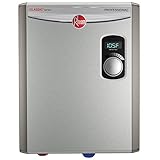
- External digital thermostatic control with LED display (+/1 degree accuracy)
- Most advanced self-modulation, adjust power to meet hot water demand
- Durable Copper immersion two heating elements, field Serviceable. Flow Rate- up to 4.4 GPM
Best for: High-output whole-home electric pick.
Rheem’s 18kW heating system pairs with copper immersion elements and a 14.5″ x 18.25″ cabinet to deliver hot water for mid-range whole-home use without a storage tank. The external digital thermostat with LED display keeps adjustments simple, while the compact footprint helps it fit where a bulky tank would not.
The 18kW electrical rating is the key number here, because it gives this unit enough output for a single shower application or other moderate home demand. Rheem lists a flow rate up to 4.4 GPM, which is what allows multiple fixtures to run within its capacity window when inlet conditions cooperate. The bottom 3/4-inch NPT water connections simplify replacement work, and the threaded setup is aimed at easier installation. Copper immersion heating elements add direct heating performance, and the field-serviceable design matters if the unit ever needs maintenance. The gray finish and 14.5-inch width keep the unit manageable for utility rooms with limited wall space.
Pros
- 18kW output supports mid-range whole-home hot water use
- Up to 4.4 GPM helps serve a shower and other fixtures
- Copper immersion heating elements support efficient heat transfer
- Bottom 3/4-inch NPT connections make replacement simpler
Cons
- Requires hard electrical planning for an 18kW tankless unit, so it is not a quick plug-in swap.
Rheem fits buyers who want a compact electric tankless heater for moderate household demand. It makes sense for homes that need efficient hot water without storing a tank of heated water.
| Specification | Details |
|---|---|
| Brand | Rheem |
| Capacity | 18 gallons |
| Power Source | AC Power |
| Product Dimensions | 14.5″W x 18.25″H |
| Special Feature | LED Display |
| Heating Elements | Copper immersion two heating elements |
| Flow Rate | Up to 4.4 GPM |
| Water Connections | Bottom 3/4 inch NPT |
I would point a buyer toward this model when the goal is dependable electric hot water in a compact footprint. The LED control and copper heating elements give it practical appeal, and the 4.4 GPM rating is enough for many everyday home setups. It feels most appropriate for someone upgrading from a smaller point-of-use heater or replacing a tank with something space-saving.
2. GE Appliances 18 Gallon Versatile Plug and Play Electric Water
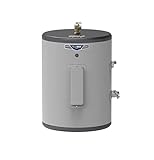
- WHOLE HOME FLEXIBILITY - Can provide hot water to a single hookup, or to a small house, condo, or apartment
- EASY INSTALLATION - Installs in minutes with existing plumbing. Uses standard 3/4-in NPT compatible water connections and connects...
- COMPACT DESIGN - Ideal in limited spaces like kitchens, bathrooms, laundry rooms, cabins, RVs, garages, sheds, etc

Best for: Compact plug-in home heater.
GE’s 18-gallon tank gives this water heater enough stored hot water for a small house, condo, or apartment while keeping the footprint compact at 19.25″ wide. The 120-volt plug-in setup is the main convenience here, because it lets the unit work with existing plumbing and standard household power.
The 18-gallon capacity is the central tradeoff: it offers a real reserve for short draws without taking up the space of a larger tank. GE also lists 45 liters, which confirms this is aimed at light home coverage rather than high-demand, whole-house tankless use. The 19.25″ x 25.75″ dimensions make placement easier in tight rooms, and the 3/4-inch NPT connection standard matters if you want to tie into familiar plumbing. Because it can work as a standalone heater or a booster inline with another system, it suits homes with long pipe runs or an extra hot-water need in laundry or bath areas. The compact design is also useful in garages, sheds, or cabins.
Pros
- 18-gallon tank provides stored hot water for small-home use
- 120-volt electric connection supports easier household integration
- 3/4-inch NPT water connections match standard plumbing
- Can work inline as a hot water booster
Cons
- Stored-tank format uses 25.75 inches of height, so it takes more fixed space than a tankless unit.
This GE heater makes sense for buyers who want a simple electric unit that can cover a small home or supplement an existing system. Its strength is flexibility, especially where standard 120-volt service and compact placement matter.
| Specification | Details |
|---|---|
| Brand | GE |
| Capacity | 45 liters |
| Power Source | Electric |
| Product Dimensions | 19.25″W x 25.75″H |
| Special Feature | Whole Home Flexibility |
| Special Feature | Hot Water Booster |
| Special Feature | Compact Design |
| Special Feature | Easy Installation |
I like this model for buyers who value simplicity over maximum output. It is a practical fit for apartments, small homes, and spaces where 120-volt compatibility matters more than raw flow rate. The booster function is especially useful if hot water drops off at far fixtures or along long pipe runs.
3. GE Appliances 10 Gallon Versatile Plug and Play Electric Water
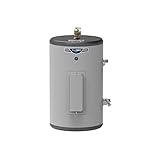
- EASY INSTALLATION - Installs in minutes with existing plumbing. Uses standard 3/4-in NPT compatible water connections and connects...
- COMPACT DESIGN - Offers flexibility and space savings in places like kitchens, bathrooms, laundry rooms, RVs, cabins, barns...
- LEADING WARRANTY- 8- year limited replacement or 8-year tank and parts/1-year labor warranty for peace of mind
Best for: Small-space electric storage option.
GE’s 10-gallon tank and 14.75-inch width make this heater easy to place in kitchens, bathrooms, laundry rooms, RVs, cabins, and garages. The adjustable thermostat adds control over water temperature, while the rustproof construction gives the tank a more practical edge for locations where moisture is common.
The 10-gallon capacity is aimed at compact hot-water needs rather than full-home heavy usage, which makes it a fit for point-of-use setups. GE’s 24.5-inch height keeps the unit manageable in closets and utility spaces where wall height is limited. The 3/4-inch NPT water connections allow straightforward plumbing integration, and the 120-volt supply means it can work with a standard electrical setup. The rustproof tank is valuable in damp areas, and the adjustable thermostat helps the user tune output for handwashing, dish rinsing, or other daily tasks. It can also work as a booster, which adds usefulness when a main heater is too far away.
Pros
- 10-gallon capacity suits compact hot-water needs
- Adjustable thermostat gives temperature control
- Rustproof construction helps in damp utility spaces
- 120-volt supply supports standard electrical hookup
Cons
- 10-gallon storage limits how long it can supply repeated hot-water draws before recovery is needed.
This GE unit is a sensible choice for small spaces and lighter household routines. It works best where a compact electric tank and adjustable temperature control matter more than high continuous flow.
| Specification | Details |
|---|---|
| Brand | GE |
| Capacity | 10 gallons |
| Power Source | Electric |
| Product Dimensions | 14.75″W x 24.5″H |
| Special Feature | Rustproof |
| Special Feature | Adjustable Thermostat |
| Water Connections | 3/4-in NPT |
| Voltage | 120-Volt |
I’d recommend this for someone who needs a compact, no-nonsense heater for a smaller area of the home. The 10-gallon tank is modest, but that is exactly why it fits kitchens, laundry rooms, and similar spots so well. It is a good match if you want electric convenience and a simple temperature adjustment without taking up much room.
4. Westinghouse Tankless Water Heater Electric 18kW 240V Wifi Whole House

- INSTANT HOT WATER – Westinghouse Tankless Water Heater Electric 18kW heats 50% faster with copper. Flow varies with inlet temp...
- INSTALLATION REQUIREMENTS – Westinghouse Tankless Water Heater Electric 18kW: 240V / 75A / 0.5–4.2 GPM / 3/4" NPT; Temp...
- PRECISE TEMPERATURE CONTROL – Westinghouse Tankless Water Heater Electric 18kW features LED display and Wi-Fi app control...
Best for: Smart electric whole-house option.
Westinghouse pairs an 18kW heating system with copper elements and a very slim 14.17-inch-wide body, giving this unit a wall-friendly profile for whole-house electric use. Wi-Fi support and voice integration with Google Assistant and Alexa add control options that suit a connected home.
The 18kW rating is the central performance figure, and Westinghouse backs it with flow numbers that vary by inlet temperature: 4.2 GPM at 77°F inlet and 2.6 GPM at 57°F inlet when targeting 104°F output. It needs 0.5 GPM to start, which tells you it is intended for real household draw rather than tiny trickles. The required 240V / 75A electrical setup is important for planning, and the 3/4-inch NPT connection spec matches standard plumbing expectations. The 86-140°F temperature range is broad enough for normal home use, while self-modulating operation helps it adapt output to demand. Copper heating elements and ETL certification add confidence for buyers comparing electric whole-house units.
Pros
- 18kW output supports whole-house electric hot water use
- Wi-Fi and voice control add convenient monitoring options
- Self-modulating operation adjusts output to demand
- Copper heating elements support fast heating response
Cons
- Requires a 240V / 75A electrical setup, so installation planning is more demanding than with plug-in units.
Westinghouse is a strong fit for homes that want a connected tankless heater with precise control. It works best when the electrical system can support its requirements and the buyer wants a slim, modern wall unit.
| Specification | Details |
|---|---|
| Brand | Westinghouse |
| Power Source | Hard Wiring Required |
| Product Dimensions | 14.17″W x 3.94″H |
| Color | Gray 18 |
| Special Feature | Copper heating elements |
| Special Feature | ETL Certified |
| Special Feature | Self-Modulating |
| Special Feature | Works with Google Assistant, Alexa, and Wi-Fi |
I see this as a good fit for tech-minded buyers who also want a compact heater that can handle a whole-house setup. The slim profile is a real advantage in tight mechanical spaces, and the temperature-control features are practical for everyday use. It makes the most sense when the home’s electrical capacity is already suitable for a hardwired tankless install.
5. APUS 18kW Tankless Water Heater Electric, 240V, Up to 4.4

- 𝐈𝐍𝐒𝐓𝐀𝐍𝐓 𝐇𝐎𝐓 𝐖𝐀𝐓𝐄𝐑 𝐎𝐍 𝐃𝐄𝐌𝐀𝐍𝐃 — The 18kW tankless water...
- 𝐔𝐋𝐓𝐑𝐀-𝐒𝐋𝐈𝐌, 𝐒𝐏𝐀𝐂𝐄-𝐒𝐀𝐕𝐈𝐍𝐆 𝐃𝐄𝐒𝐈𝐆𝐍 — Measuring...
- 𝟗𝟗.𝟖% 𝐓𝐇𝐄𝐑𝐌𝐀𝐋 𝐄𝐅𝐅𝐈𝐂𝐈𝐄𝐍𝐂𝐘 — Self-modulating technology adjusts power...
Best for: High-efficiency slim electric unit.
APUS keeps this 18kW heater extremely narrow at 11.42 inches wide and 3.54 inches deep, so it can disappear onto a wall while still supporting up to 4.4 GPM. The self-modulating design means the heater can match output to demand instead of running at full force all the time.
The 18kW output and up to 4.4 GPM flow rate place it in the same practical range as other whole-home electric units, but APUS emphasizes a 99.8% thermal efficiency figure that appeals to buyers focused on reducing waste. Its 13.7 x 11.42 x 3.54-inch form factor is especially useful in small utility rooms, because the depth is only a few inches. The system is intended for 2 x 40 AMP breakers and 2 sets of 8 AWG cable, so electrical planning is a real part of the purchase. APUS also lists ±1°F stable temperature control and separation of water and electricity, both of which matter when consistency and safety are priorities in a family home.
Pros
- 18kW output supports everyday whole-home electric demand
- Up to 4.4 GPM can cover 2–3 simultaneous uses
- 99.8% thermal efficiency helps reduce wasted heating
- ±1°F stable temperature control improves comfort consistency
Cons
- Requires two 40 AMP breakers and hard wiring, so it is not a simple replacement for a lower-power heater.
APUS is a smart pick for buyers who want a slim electric tankless heater with strong efficiency claims and precise temperature control. It is especially useful in homes where wall space is tight but demand still reaches multiple fixtures.
| Specification | Details |
|---|---|
| Brand | APUS |
| Power Source | Breaker:2 x 40 AMP |
| Cable Required | 2 set of 8 AWG |
| Product Dimensions | 11.42″W x 13.7″H |
| Special Feature | Demand Hot Water |
| Special Feature | High Efficiency |
| Special Feature | Separation of Water and Electricity |
| Special Feature | ±1°F Stable Temperature Control |
| Color | Gray |
My take is that this is one of the better options for someone prioritizing space savings and stable output. The narrow cabinet is a genuine advantage, and the efficiency-focused design makes it appealing for routine home use. I would choose it for a compact mechanical area where precise hot-water delivery matters more than having a storage tank.
6. TNKLS WTRHTR11.8KW TITAN

- Endless Hot Water
- Space Savings
- Energy Saving, UL compliant & ETL Lead Free Certified
Best for: Ultra-compact electric tankless fit.
Titan’s 2.5-inch-wide body is the defining feature here, giving this unit a tiny wall footprint for homes where space is at a premium. The AC/DC power support and UL compliant, ETL lead-free certified construction make it appealing for buyers who want a compact tankless heater with formal safety credentials.
With dimensions of just 2.5″ x 7″, this heater is far smaller than a storage tank, so it is aimed squarely at space savings. The product messaging centers on endless hot water and energy saving, which means it is suited to users who prefer on-demand heating over stored volume. Titan also highlights a patented design assembly, suggesting a focused mechanical layout rather than a generic box design. The cream color may matter if the unit is visible in a utility area or small interior space. Because it is extremely compact, it works best where the installation plan values minimal intrusion more than high-capacity output. The included install kit on select heaters is an extra practical note for setup-minded buyers.
Pros
- 2.5-inch width saves wall space
- AC/DC power support adds installation flexibility
- UL compliant and ETL lead-free certified
- Patented design assembly supports a compact layout
Cons
- The tiny 2.5″ x 7″ size signals a very specialized unit rather than a high-capacity whole-house heater.
Titan is most appealing for buyers who need a minimal-footprint heater and care about compact installation. It is a strong space-saver, but it makes the most sense when the hot-water demand is modest and placement is tight.
| Specification | Details |
|---|---|
| Brand | Titan |
| Power Source | Ac/dc |
| Product Dimensions | 2.5″W x 7″H |
| Special Feature | Endless Hot Water |
| Special Feature | Patented Design Assembly |
| Color | cream |
I would steer buyers here if wall space is the main constraint. The dimensions are exceptionally small, and that makes this unit useful in very tight mechanical spots. It is a niche choice, but for the right home layout, the compact form is the whole reason to buy it.
7. Rinnai RUCS75iN Tankless Hot Water Heater, Natural Gas

- Endless Hot Water: Our tankless hot water heaters let you enjoy unlimited hot water flow throughout the house with a compact and...
- Energy and Space Efficient Tankless Gas Water Heater: This small hot water heater conserves energy, only heating when necessary...
- Optimal Water Pressure: This tankless water heater offers a high-performance hot water flow rate up to 7.5 GPM for a powerful...
Best for: Efficient gas tankless for larger homes.
Rinnai’s natural-gas platform and 7.5-gallon capacity make this unit a practical fit for homeowners who want continuous hot water with a compact gas heater. The 34-inch-wide format is substantial, but it reflects a whole-home appliance that aims to stay energy efficient by heating only when needed.
The 7.5-gallon capacity indicates a tankless-style reserve figure rather than a large storage tank, and the key value here is continuous supply through gas-powered heating. Rinnai positions this model as energy and space efficient, which matters for buyers who want lower operating waste and less mechanical clutter. The 34″ x 14.5″ dimensions show it is a larger wall unit, so placement needs to be planned carefully. Multiple venting options, including PVC/CPVC with an adaptor, widen installation choices in a home. The product also emphasizes optimal water pressure, which is important if several fixtures share the system. For households that prefer natural gas over electricity, this is a strong fit.
Pros
- Natural gas power suits homes already set up for gas service
- Energy and space efficient operation reduces wasted heating
- Multiple venting options add placement flexibility
- Compact tankless design supports continuous hot water
Cons
- The 34-inch width requires more wall space than smaller electric tankless units.
Rinnai is a strong option for gas-connected homes that want efficient continuous hot water. It is most useful when the buyer can accommodate the larger wall unit and wants a proven tankless format for everyday family use.
| Specification | Details |
|---|---|
| Brand | Rinnai |
| Capacity | 7.5 gallons |
| Power Source | Gas Powered |
| Product Dimensions | 34″W x 14.5″H |
| Special Feature | Endless Hot Water |
| Special Feature | Energy and Space Efficient |
I like this for homes where gas is available and a larger wall-mounted unit is acceptable. The appeal is steady hot water without the footprint of a big storage tank. It is especially sensible for buyers who care more about efficient whole-home performance than about having a very small cabinet.
8. ThermoMate 27kW Tankless Water Heater Electric Max 6.6 GPM ETL

- Electrical & Installation Requirements: Before purchasing, please ensure your home's main panel has a total electrical capacity of...
- Instant & Endless Hot Water: Powering up to 6.6 GPM of on-demand hot water, the ThermoMate 240V electric tankless water heater...
- Heavy-Duty Cast Aluminum Heating Element: Engineered with a premium cast aluminum heating block and iron-chromium-aluminum alloy...
Best for: High-flow electric for demanding homes.
ThermoMate’s 27kW output and 6.6 GPM rating make it one of the stronger electric options in this set for larger household demand. The 13.15-inch width keeps the body fairly compact, and the advanced water-and-electricity separation structure adds a reassuring safety-oriented design detail.
The 27kW rating is what gives this unit its higher hot-water potential, and ThermoMate says it can supply up to 6.6 GPM on demand. That flow figure matters if several fixtures may run at once. Installation requirements are significant: a main panel with at least 150 Amps, three separate 40 Amp double-pole breakers, and three sets of 8 AWG copper wires. Those numbers matter because they define who can realistically install it. The standard 3/4-inch NPT connections simplify plumbing compatibility, while the self-modulating feature helps match power use to demand. The gray housing and 13.15″ x 17.09″ dimensions make it a wall-friendly appliance for homes with the electrical capacity to support it.
Pros
- 27kW output supports higher household hot-water demand
- Up to 6.6 GPM provides strong on-demand flow
- Self-modulating operation helps match heating to use
- Advanced water-and-electricity separation adds a safety-focused design
Cons
- Requires a 150-amp main panel and three 40-amp breakers, so electrical compatibility is a major hurdle.
ThermoMate suits buyers with a larger electrical service who want a high-flow electric tankless heater. It is a strong fit for demanding homes, but only when the installation requirements are already within reach.
| Specification | Details |
|---|---|
| Brand | thermomate |
| Power Source | ac |
| Product Dimensions | 13.15″W x 17.09″H |
| Special Feature | Self-Modulating |
| Special Feature | advanced water-and-electricity separation structure |
| Flow Rate | Up to 6.6 GPM |
| Water Connections | 3/4″ NPT |
| Electrical Requirement | 150 Amps main panel |
This is the kind of heater I’d consider for a home with serious electrical capacity and multiple hot-water users. The higher flow rating is the main attraction, and the self-modulating design is useful in daily use. It is best for buyers who want stronger electric performance and can meet the wiring requirements without compromise.
9. 27kW Tankless Water Heater Electric, NOVIEEX 240V 3s Instant Hot

- 【HIGH-POWER 27kW PERFORMANCE】 Built for demanding hot water needs, this 27kW tankless water heater delivers high-power heating...
- 【WHOLE HOUSE HEAVY DUTY】 The NOVIEEX 27kW tankless hot water heater electric is a heavy-duty solution custom-built to satisfy...
- 【3-4 MULTI-POINT LUXURY FLOW】 It delivers a massive, industry-topping water flow of up to 7.4 Gallons Per Minute (GPM). This...
Best for: Safety-focused high-power electric unit.
NOVIEEX combines a 27kW heating system with a 14.13-inch-wide body and multiple protection features, giving buyers a compact electric option with a strong safety checklist. The LED display adds easy status reading, while the 7.4-gallon capacity points to a unit meant for fast, on-demand hot water rather than storage.
The 27kW rating is the headline number, and NOVIEEX pairs it with a maximum current of 112.5A and 240V operation, which tells you this is a serious electrical appliance. The unit needs three 40A double-pole breakers and three sets of 8 AWG wires plus ground, so installation is clearly for qualified setups. At 14.13″ x 15.86″ x 3.18″, it keeps a compact wall profile despite the high power. The 3/4-inch NPT connections match standard plumbing needs, while anti-freezing protection, low water flow protection, overheat protection, and flame failure protection make it appealing for buyers who want layered safeguards. The LED display is a practical finishing touch for daily use.
Pros
- 27kW output supports high-demand hot water use
- Multiple protection features add safety coverage
- LED display makes operation easier to monitor
- 3/4-inch NPT connections simplify plumbing compatibility
Cons
- Requires three 40A breakers and 112.5A maximum current, so the electrical setup is demanding.
NOVIEEX is aimed at buyers who want a compact electric unit with a strong safety feature set. It makes the most sense in homes where the electrical system can support the load and protection features matter to the decision.
| Specification | Details |
|---|---|
| Brand | NOVIEEX |
| Capacity | 7.4 gallons |
| Power Source | Electric |
| Product Dimensions | 14.13″W x 15.86″H |
| Special Feature | Anti-Freezing Protection |
| Special Feature | Flame Failure Protection |
| Special Feature | LED Display |
| Special Feature | Low Water Flow Protection |
| Special Feature | Overheat Protection |
I’d place this high on the list for someone who wants protective features as much as hot-water output. The combination of high power and layered safeguards is practical for a home that will use the heater regularly. It is a good match when the buyer has the right wiring and wants a compact electric unit with visible controls.
10. Vancepic Natural Gas Tankless Water Heater Indoor,4.3 GPM | 3-4

- ...
- ±𝟏°𝐅 𝐏𝐫𝐞𝐜𝐢𝐬𝐞 𝐓𝐞𝐦𝐩𝐞𝐫𝐚𝐭𝐮𝐫𝐞 𝐂𝐨𝐧𝐭𝐫𝐨𝐥: Intelligent...
- 𝐎𝐱𝐲𝐠𝐞𝐧-𝐅𝐫𝐞𝐞 𝐂𝐨𝐩𝐩𝐞𝐫 𝐇𝐞𝐚𝐭 𝐄𝐱𝐜𝐡𝐚𝐧𝐠𝐞𝐫: Built...
Best for: Natural-gas whole-house comfort pick.
VancEpic delivers up to 100,000 BTU and 4.3 GPM from a natural-gas platform, which gives it the kind of continuous hot-water output many homes need. The 14.4-inch-wide body and LED display keep the unit straightforward, while the AirBoost combustion system is the standout mechanical feature.
The 100,000 BTU rating and 4.3 GPM flow rate are the key performance figures here, and together they show this heater is meant to support 3 to 4 water outlets. That makes it a practical whole-house option for routine family use. The 4.23-gallon capacity is secondary to the continuous gas output, but it still helps define the unit’s compact tankless format. At 14.4″ x 24.6″, it takes a manageable amount of wall space for an indoor gas heater. The ±1°F temperature control is important for comfort, because it helps reduce abrupt swings at the tap. The LED display adds an easy-read interface for everyday adjustments.
Pros
- 100,000 BTU output supports continuous household hot water
- 4.3 GPM can serve 3–4 outlets
- ±1°F temperature control helps keep water consistent
- LED display makes status and settings easy to read
Cons
- At 24.6 inches tall, it needs a dedicated indoor wall area for installation.
VancEpic is a solid choice for gas-equipped homes that want consistent whole-house hot water. It is especially appealing when steady temperature control and multi-outlet support matter to the family routine.
| Specification | Details |
|---|---|
| Brand | VancEpic |
| Capacity | 4.23 gallons |
| Power Source | Natural Gas |
| Product Dimensions | 14.4″W x 24.6″H |
| Special Feature | LED Display |
| Flow Rate | 4.3 GPM |
| BTU | 100,000 BTU |
| Temperature Control | ±1°F |
My advice is that this one fits a household that wants gas-fired continuity and easy temperature management. The 4.3 GPM rating is useful for several fixtures, and the LED display keeps operation approachable. It is a practical indoor option when the goal is dependable hot water without the bulk of a storage tank.
Quick Comparison Table of Best Geysers for Home
| Product Name | Capacity | Power Source | Size | Best For | Check Price |
|---|---|---|---|---|---|
| Rheem 18kW 240V Tankless Electric Water | 18 gallons | AC Power | 14.5 x 18.25 | Fast heating | Check Price |
| GE Appliances 18 Gallon Versatile Plug | 45 liters | Electric | 19.25 x 25.75 | Small homes | Check Price |
| GE Appliances 10 Gallon Versatile Plug | 10 gallons | Electric | 14.75 x 24.5 | Compact spaces | Check Price |
| Westinghouse Tankless Water Heater Electric 18kW | Tankless | Hard wired | 14.17 x 3.94 | Whole-house use | Check Price |
| APUS 18kW Tankless Water Heater Electric | Tankless | Hard wired | 11.42 x 13.7 | High-demand homes | Check Price |
| TNKLS WTRHTR11.8KW TITAN | Tankless | AC/DC | 2.5 x 7 | Space-saving needs | Check Price |
| Rinnai RUCS75iN Tankless Hot Water Heater | 7.5 gallons | Gas powered | 34 x 14.5 | Gas hot water | Check Price |
| ThermoMate 27kW Tankless Water Heater Electric | Tankless | AC | 13.15 x 17.09 | High-flow homes | Check Price |
| 27kW Tankless Water Heater Electric, NOVIEEX | 7.4 gallons | Electric | 14.13 x 15.86 | Heavy hot water use | Check Price |
| Vancepic Natural Gas Tankless Water Heater | 4.23 gallons | Natural gas | 14.4 x 24.6 | Multi-outlet homes | Check Price |
How to Choose the Best Geyser for Home?
Capacity and household demand
Choose capacity from real household demand, not from guesswork. For 1 to 2 people with short showers, 6 to 10 litres works for an instant geyser, while 15 to 25 litres suits a small family that needs back-to-back bathing. For 3 to 4 people, a 25 to 35 litre storage geyser gives more comfort and fewer cold-water breaks; larger families usually need 35 litres and above.
Check recovery time closely: a fast-recovery unit matters when several people bathe in sequence. If the geyser also serves kitchen or utility washing, pick the next size up so hot water does not run short.
| Type | Best for | What to check |
|---|---|---|
| 6-10 L instant | 1-2 users, quick sink or shower use | Fast flow at a single outlet |
| 15-25 L storage | Small families | Recovery time and insulated tank |
| 25-35 L storage | 3-4 users, repeated bathing | Stable hot water across showers |
| 35 L+ storage | Large homes, multiple bathrooms | High recovery and strong pressure support |
Heating efficiency and power use
Match wattage to how quickly you need hot water, then judge how well the unit holds heat. Higher wattage heats water faster, but a good geyser also keeps standby loss low with thick insulation and a tight tank seal. Look for precise thermostat control, since narrow temperature control stops unnecessary reheating and keeps use steady.
Energy-saving modes help in homes that use hot water at fixed times. For most buyers, a fast-heating unit with strong insulation is the right balance.
Pick a lower-wattage model for light daily use, a higher-wattage model for busy households, and choose the one with the clearest thermostat settings and insulation rating you can verify.
| Feature | Good sign | Poor sign |
|---|---|---|
| Wattage | Enough for quick heat-up | Slow heating for family use |
| Insulation | Thick foam, low heat loss | Frequent reheating |
| Thermostat | Precise, stable control | Wide temperature swings |
| Modes | Power-saving or eco setting | Always-on heating |
Safety features and protection
Safety is non-negotiable, so check the controls that prevent overheating, pressure stress, and dry running. A reliable geyser has a working thermostat, an overheat cut-off, a pressure relief valve, and automatic shutoff that reacts cleanly when water flow stops. Dry-heating prevention matters most in homes with irregular water supply or busy bathrooms, because it protects the heating element from damage.
Also inspect the wiring path, terminal cover, and earth connection for clean, enclosed routing. The safest pick for most homes is a model with all four protections: thermostat control, pressure valve, dry-run protection, and automatic shutoff.
| Safety feature | Why it matters | Best sign |
|---|---|---|
| Thermostat | Prevents overheating | Stable temperature cut-off |
| Pressure valve | Handles tank pressure safely | Clear valve support and drainage |
| Dry-heating protection | Saves the element from burnout | Automatic stop on no water |
| Wiring design | Reduces electrical risk | Neat enclosed connections |
Build quality and tank material
Tank material decides how long the geyser stays dependable, so compare the body, lining, and protection system together. Stainless steel gives strong corrosion resistance, glass-lined tanks handle scale well in many homes, and enamel-coated tanks offer solid everyday durability when paired with anode protection. Do not stop at the tank label: check for a sacrificial anode or similar anticorrosion system, sturdy pipe fittings, and a tank shell with tight seams.
Solid wall mounting points and leak-resistant joints matter just as much as the inner material. For hard-water homes, choose a corrosion-protected glass-lined or stainless-steel tank; for normal use, a well-coated enamel tank with an anode is a sound pick.
| Material | Best for | Key strength |
|---|---|---|
| Stainless steel | Frequent use, corrosion-prone areas | High rust resistance |
| Glass-lined | Hard water and long service life | Good scale control |
| Enamel-coated | General home use | Balanced durability |
Installation, space, and maintenance
Measure the installation space first, then confirm the geyser matches your bathroom layout and plumbing pressure. Wall-mounted units need enough clearance for safe fitting, drain access, and future maintenance, while compact spaces benefit from slimmer tanks or instant units. Check that inlet and outlet points match your plumbing position and that the unit supports your home’s water pressure without strain.
Easy drain access saves effort during cleaning, and a removable access panel makes servicing simpler. Strong warranty coverage and a service network in your area matter because a geyser is only as convenient as its maintenance support.
For small bathrooms, choose a compact wall-mounted model; for larger utility spaces, choose a storage unit with simple drain access and local service support.
Which Should You Choose?
- If you want endless hot water for a busy household and have a strong 240V electrical setup, choose a high-capacity tankless electric unit around 18kW to 27kW.
- If you live in an apartment, condo, or small home and need a quick replacement with minimal hassle, choose a compact plug-and-play storage heater in the 10-gallon to 18-gallon range.
- If you need to run multiple showers or appliances at the same time and your service panel can handle heavy demand, choose a high-output tankless electric model with at least 4.4 GPM and multiple dedicated breakers.
- If your home already uses gas and you want reliable whole-house hot water with good efficiency, choose an indoor natural gas tankless heater sized for about 4.3 GPM or more.
Quick Best Geyser For Home Buying Checklist
- Choose the right capacity based on family size, bathing habits, and other hot-water needs.
- Compare heating speed so the geyser can deliver hot water without long waiting times.
- Check safety features such as thermostat control, pressure relief, and overheat protection.
- Inspect tank material for corrosion resistance, leak protection, and long-term durability.
- Review energy efficiency to keep electricity use sensible during regular home operation.
- Confirm installation fit by measuring space, plumbing compatibility, and maintenance access.
How a Geyser Heats Water Inside the Tank
A storage geyser works by bringing cold water into a heated tank, where a thermostat controls the heating element until the set temperature is reached. As hot water is drawn out, fresh cold water enters from below and the cycle starts again. In gas models, a burner heats the tank or a heat exchanger, while electric models rely on an immersion element.
This simple process is why recovery time matters: a larger family may notice delays if the tank size is too small or the heating power is low. Understanding this mechanism helps explain why insulation, thermostat accuracy, and tank capacity all affect daily comfort and energy use.
Storage Geyser vs Instant Geyser
Storage and instant geysers solve different household needs. A storage geyser keeps a reserve of hot water ready for repeated use, which suits families, bathing routines, and kitchens with multiple draw points. An instant geyser heats water only when needed, so it is compact and avoids maintaining a hot tank all day.
However, instant units usually work best for short, focused use rather than simultaneous showers. Storage models generally offer steadier flow and can serve more than one outlet if sized properly.
The right option depends on usage pattern, available wall space, and whether your home needs a continuous hot-water supply or quick point-of-use heating.
| Type | Best for |
|---|---|
| Storage geyser | Families and repeated use |
| Instant geyser | Small spaces and quick heating |
| Gas geyser | High demand with fuel access |
Installation Factors That Affect Performance
Even a high-quality geyser can underperform if installation is poorly planned. Wall strength, pipe routing, venting, and electrical load all influence safety and everyday efficiency. The unit should be mounted close to the point of use when possible to reduce heat loss through long pipe runs.
Proper inlet and outlet connections also matter, because reversed plumbing can affect operation or damage the system. For electric models, a dedicated circuit with correct wiring and earthing is important.
For gas units, ventilation and exhaust management must be handled carefully. Professional installation is often worth it because it helps the geyser run as intended and reduces the risk of leaks, shocks, or inefficient heating.
Maintenance That Extends Geyser Life
Regular care keeps a geyser working efficiently and can prevent expensive damage. One common task is checking for sediment buildup, especially in areas with hard water, because mineral deposits reduce heating efficiency and can strain the tank. The pressure relief valve should also be inspected to ensure excess pressure can escape safely.
Wiping the exterior, monitoring for rust around fittings, and checking for unusual noises are simple habits that help spot trouble early. In many homes, replacing worn anode rods and flushing the tank periodically can improve tank life.
Good maintenance also supports consistent water temperature, lower energy waste, and fewer sudden breakdowns during heavy use.
- Inspect the pressure relief valve regularly.
- Flush sediment from the tank when needed.
- Watch for leaks, corrosion, or strange sounds.
- Service electrical or gas components professionally.
Safety Features Homeowners Should Not Ignore
Safety features are a major part of any geyser decision because hot water systems operate under heat, pressure, and in some cases fuel combustion. A thermostat prevents overheating, while a thermal cut-out acts as a backup if temperatures rise too far. Pressure relief valves protect the tank from dangerous buildup.
For electric units, proper grounding and moisture-resistant wiring reduce shock risk. Gas geysers should include flame supervision and dependable venting to prevent harmful gas accumulation.
Families with children or older adults may also prefer anti-scald controls, since extremely hot water can cause burns quickly. A geyser with strong safety protections is not just convenient; it is a practical safeguard for daily household use.
Frequently Asked Questions (FAQs)
How Do I Choose The Right Capacity For The Best Geyser For Home?
The right capacity for the best geyser for home depends on how many people bathe back-to-back and whether the unit also serves sinks or a bathtub. A small household may manage with a compact tank, while larger families usually need more stored hot water and faster recovery.
What Geyser Type Works Best For A Family Home?
The best geyser for home often depends on usage patterns, but storage models suit families that need several hot-water draws in a row. Instant models fit smaller households or point-of-use needs because they heat water on demand and save wall space in compact rooms.
Which Safety Features Matter Most In A Home Geyser?
The best geyser for home should include thermostat control, pressure relief protection, and dry-heating prevention. These features help regulate temperature, reduce overheating risk, and protect the tank when water supply is inconsistent or the heater runs too long.
How Important Is Tank Material In A Home Geyser?
Tank material is very important in the best geyser for home because it affects rust resistance, leak protection, and lifespan. Glass-lined or enamel-coated tanks with corrosion protection usually last longer in hard-water areas and handle repeated heating cycles more reliably.
Does Energy Efficiency Really Matter When Buying A Geyser For Home?
Yes, energy efficiency matters in the best geyser for home because it directly affects operating cost and heat retention. Better insulation, accurate thermostats, and standby-loss control help keep water hot longer, so the unit reheats less often during daily use.
What Installation Factors Should I Check Before Buying A Home Geyser?
You should check wall space, water pressure, plumbing layout, and electrical compatibility before choosing the best geyser for home. Proper mounting support and easy access for maintenance also matter, especially if the unit needs periodic cleaning or valve inspection.
How Do I Maintain A Geyser For Reliable Home Use?
Regular maintenance keeps the best geyser for home working safely and efficiently. Flush sediment when needed, inspect valves and fittings for leaks, and test the thermostat and pressure relief parts so small issues do not turn into costly repairs.
Final Suggestions
Choosing the best geyser for home comes down to matching capacity, safety, efficiency, and build quality with your household routine. A well-chosen model delivers dependable hot water, lower hassle, and better long-term value for everyday comfort. Focus on the features that matter most to your space and usage, and you will enjoy a warmer, more convenient home with confidence.