Top 10 Best Grinder For Sharpening Tools: Must-See Picks
Best grinder for sharpening tools choices can transform dull, uneven edges into reliable cutting performance. In workshops, garages, and job sites, sharpening technology matters just as much as power, because wheel quality, motor stability, and speed control all shape the final edge. The best grinder for sharpening tools is not simply about removing metal; it is about managing heat, preserving tool geometry, and improving consistency across blades, chisels, and drill bits.
As grinder for tool sharpening options evolve, features like abrasive wheels, adjustable rests, and balanced housings become more important for accuracy and control. From metalworking to woodworking, the right machine can influence efficiency, surface finish, and tool life.
The details behind these tools reveal which models truly stand apart—so keep reading to see what separates a sharp edge from a disappointing one.
In-depth Reviews of the Best Grinder for Sharpening Tools
1. WEN BG4270T 10-Inch Two-Direction Water Cooled Wet/Dry Sharpening System

- Features a 10-inch 220 grit sharpening stone and an 8-inch leather-stropping wheel
- Reverse the rotational direction with the simple flip of a switch
- 115 RPM provides maximum precision during sharpening

Best for: Precision sharpening with wet/dry control.
A 10-inch 220-grit sharpening stone gives this WEN system the coarse, steady cutting surface needed for re-establishing tool edges without rushing the metal. Paired with an 8-inch leather-stropping wheel, it lets you move from shaping to final refinement on the same machine, which is exactly what matters when sharpening chisels, planer blades, and other shop tools.
The 115 RPM operating speed keeps the stone moving slowly enough for careful edge work, helping reduce the chance of overheating a blade during sharpening. A simple switch reverses the rotational direction, so you can match the wheel movement to the task and your preferred hand position. The adjustable water reservoir supports wet sharpening by keeping the stone properly conditioned, while the included angle guide helps maintain repeatable bevels. Universal jig support adds compatibility with a wide range of accessories, including the WEN 42704B Sharpening Kit, making this a flexible choice for users who want one sharpening station for several tool types. The onboard carrying handle also makes repositioning easier in a crowded shop.
Pros
- 10-inch 220-grit stone handles initial edge work
- 8-inch leather strop refines the sharpened edge
- 115 RPM speed supports controlled sharpening
- Reverse-direction switch improves setup flexibility
Cons
- At 35.5 pounds, it is less convenient to move frequently between work areas than a lighter benchtop sharpener.
For woodworkers who want a wet sharpening station with both shaping and finishing steps, this WEN setup is very practical. It suits users who value slow, controlled sharpening and compatibility with common jig accessories.
| Specification | Details |
|---|---|
| Brand | WEN |
| Model | BG4270T |
| Wheel Size | 10-inch sharpening stone; 8-inch leather-stropping wheel |
| Grit Type | 220 |
| Speed | 115 RPM |
| Product Dimensions | 16.9″L x 10.8″W x 16.5″H |
| Item Weight | 35.5 pounds |
| Material | Leather |
| Special Features | Reverse direction switch, adjustable water reservoir, angle guide, jig support |
I’d pick this for anyone who sharpens chisels, planer blades, and similar shop tools on a regular basis and wants a slower, wetter process instead of a fast dry wheel. The combination of a large stone, strop wheel, and accessory support makes it especially appealing for careful hand-tool maintenance. It feels most useful when edge quality matters more than speed.
2. 10 Inch Variable Speed Wet Sharpening System, 90-160RPM Wet Bench

- Variable Speed: Powerful full enclosed motor (1.0A - 1.2A) provides 90~160 RPM rotation speed
- 10-inch Wet Wheel: Aluminum oxide grinding wheel with water trough under keeps tools from overheating
- 8-inch Strop Wheel: Leather Stropping wheel removes burrs and leaves tools refined. NOTE: DON'T sharpen against the direction of...
Best for: Variable-speed wet sharpening for careful edges.
A 10-inch wet wheel with an aluminum oxide grinding surface gives this KFMK system the cutting action needed for tool sharpening while the built-in water trough helps keep heat under control. The 8-inch leather stropping wheel adds the finishing stage, so the machine handles both edge formation and cleanup in one setup, which is useful for blades that need a cleaner final edge.
The adjustable 90 to 160 RPM range lets you slow down for delicate honing or speed up for more assertive grinding, giving you more control over how aggressively the wheel removes material. Its full enclosed motor is rated at 1.0A to 1.2A, a useful detail for shoppers who want a compact powered sharpener with modest electrical demands. The angle guide helps set a repeatable bevel, and the jig support broadens what can be mounted for different tool shapes. At 10 inches on each side for the overall body footprint, it fits a small sharpening station without taking over the bench. The alloy steel construction also gives the unit a workshop-ready feel for repeated use.
Pros
- 90–160 RPM range allows controlled sharpening
- 10-inch wet wheel helps limit overheating
- 8-inch leather stropping wheel refines edges
- Angle guide and jig support improve setup consistency
Cons
- The 10″ x 10″ x 10″ footprint leaves less room for oversized tool rests or larger sharpening accessories on a crowded bench.
This KFMK sharpener makes sense for users who want slow wet sharpening with adjustable speed and a finishing strop. It is a practical fit for maintaining chisels, knives, and similar tools with more control than a fixed-speed grinder.
| Specification | Details |
|---|---|
| Brand | KFMK |
| Material | Alloy Steel |
| Product Dimensions | 10″L x 10″W x 10″H |
| Power | 1.0A – 1.2A |
| Speed Range | 90~160 RPM |
| Wheel Size | 10-inch wet wheel; 8-inch strop wheel |
| Wheel Material | Aluminum oxide; leather |
| Grit Type | Very Fine |
| Special Features | Water trough, angle guide, jig support |
I’d favor this if you want a compact wet sharpener that still gives you speed control and a stropping wheel. The variable RPM range is the main reason it stands out for tool sharpening, especially when you need a calmer setup for final edge work. It should suit detail-oriented users who prefer precision over brute force.
3. RIKON 80-805 Professional 8-Inch Low Speed Bench Grinder, 1/2 HP,
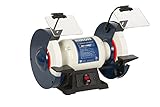
- LOW-SPEED SHARPENING: 1/2 HP motor runs at 1,750 RPM to help reduce heat buildup during sharpening and provide controlled...
- TWO GRINDING WHEELS: Includes 8" x 1" 60- and 120-grit wheels on a 5/8" arbor for rough grinding, shaping and finer sharpening.
- ADJUSTABLE TOOL SUPPORT: Dual adjustable tool rests support work at useful angles; the left rest has a groove for sharpening drill...
Best for: Low-speed grinder for general shop sharpening.
A 1/2 HP motor running at 1,750 RPM gives this RIKON grinder enough speed for shaping and sharpening while keeping heat buildup more manageable than a high-speed bench grinder. The pair of 8″ x 1″ wheels in 60 and 120 grit adds a practical two-stage setup, so rough grinding and finer edge preparation happen on the same machine.
The 5/8″ arbor is a standard, useful detail for compatibility with common wheel sizes and accessories, which matters when replacing consumables over time. Dual adjustable tool rests make it easier to support different tool angles, and the left rest includes a groove specifically for drill-bit sharpening. A cast-iron base with anti-vibration rubber feet helps keep the grinder steadier during edge work, which is valuable when you need a consistent angle on chisels or blades. With product dimensions of 16.38″L x 10.75″W x 11.25″H, it occupies a manageable bench area without feeling undersized for shop use.
Pros
- 1/2 HP motor supports controlled grinding
- 60 and 120 grit wheels cover rough and finer work
- Dual adjustable rests help set sharpening angles
- Cast-iron base with rubber feet reduces movement
Cons
- It uses dry grinding wheels rather than a wet stone system, so it offers less built-in cooling for heat-sensitive edges.
This RIKON is a strong fit for shops that want a straightforward bench grinder for sharpening and shaping. It works best for users who value stable grinding, adjustable rests, and a conventional wheel setup.
| Specification | Details |
|---|---|
| Brand | RIKON Power Tools |
| Motor | 1/2 HP |
| Speed | 1,750 RPM |
| Wheel Size | 8″ x 1″ |
| Grits | 60 and 120 |
| Arbor | 5/8″ |
| Product Dimensions | 16.38″L x 10.75″W x 11.25″H |
| Power Source | Corded Electric |
| Special Features | Dual adjustable tool rests, groove for drill bits, anti-vibration rubber feet |
I like this more for general bench sharpening than for delicate wet honing. The slower 1,750 RPM speed and the 60/120 wheel pairing make it versatile for a shop that handles mixed tool maintenance. If you want a sturdy, conventional grinder for frequent edge work, this is an easy one to understand and use.
4. BUCKTOOL 10″ 1.2A Variable Speed Wet Sharpening System,Two Way Rotation

- VARIABLE SPEED: Powerful 1/5 HP 1.2-amp motor, rotated with 90~160 RPM variable speed for maximum precision during sharpening...
- COOLING ACTION: 10-inch aluminum oxide sharpening wheel and 8-inch leather stropping wheel to polish and finish your sharpened...
- UNIVERSAL JIG: Two-position jig support adjusts to both horizontal and vertical positions and ensures that your tools are...
Best for: Wet sharpener with two-way rotation.
A 10-inch aluminum oxide sharpening wheel gives this Bucktool system the surface needed for controlled wet sharpening, while the 8-inch leather stropping wheel handles the final polish. The two-way rotation matters because it gives the user more flexibility in how the wheel meets the edge, which is useful when sharpening different tool profiles.
The 1/5 HP, 1.2-amp motor turns at 90 to 160 RPM, a combination that favors precision over speed and helps reduce the chance of overheating delicate edges. The water tray keeps tools cool while also helping prevent residue buildup on the wheel, which matters during longer sessions on chisels or shop blades. A two-position universal jig support broadens setup options for different edge geometries, and the corded electric design keeps the machine simple to power in a workshop. Measuring 18.11″L x 10.63″W x 15.75″H, it gives you a substantial wet-sharpening footprint without requiring a full grinder cabinet.
Pros
- 90–160 RPM range supports precise sharpening
- 10-inch aluminum oxide wheel handles edge preparation
- 8-inch leather stropping wheel finishes the edge
- Water tray helps keep tools cool and cleaner
Cons
- The larger 18.11-inch length takes more bench space than compact sharpeners, so it may crowd smaller work areas.
This Bucktool system suits users who want a wet sharpener with flexibility in wheel direction and jig setup. It is especially sensible for woodworkers who sharpen often and want cooling plus finishing in the same station.
| Specification | Details |
|---|---|
| Brand | Bucktool |
| Power | 1.2-amp |
| Motor | 1/5 HP |
| Speed Range | 90~160 RPM |
| Wheel Size | 10-inch; 8-inch stropping wheel |
| Wheel Material | Aluminum oxide; leather |
| Product Dimensions | 18.11″L x 10.63″W x 15.75″H |
| Power Source | Corded Electric |
| Special Features | Two-way rotation, water tray, two-position universal jig support |
I’d recommend this to someone who wants wet sharpening with more control over how the wheel interacts with the edge. The variable speed and water tray make it a practical choice for keeping heat down during tool maintenance. It feels most useful in a woodworking shop where repeatable bevels matter.
5. 6-Inch Variable Speed Bench Grinder with Grinding Wheel Dresser, 1725–3450

- 【Powerful Brushless Motor — Bench Grinder Performance】The 2.5A brushless induction motor delivers steady torque, quieter...
- 【Wide Variable Speed (1725–3450 RPM) — For Sharpening, Grinding & Metalwork】 Easily dial in the right speed for any...
- 【User-Friendly Adjustments — Designed for DIY & Workshop Use】 Tool-free adjustable guides, a stable work rest, a water tray...
Best for: Variable-speed grinder for mixed metalwork.
A brushless induction motor with 2.5A output gives this Greteefor grinder the torque and speed range needed for both sharpening and heavier grinding jobs. The 6-inch format keeps it compact on the bench, while the included 36-grit and 60-grit wheels let you move from fast stock removal to finer edge cleanup without swapping machines.
The 1,725 to 3,450 RPM range is broad enough to handle different materials and sharpening stages, which is useful if you move between rough shaping and finishing passes. Because the motor is brushless, the grinder is set up for quieter operation and longer service life than simpler brushed models, a practical advantage for frequent workshop use. The product dimensions of 14″L x 11″W x 10″H make it easier to fit into a smaller tool area, and the corded electric design keeps power delivery consistent. With 1/2″ arbor wheels, it uses a common format that supports straightforward wheel changes when maintenance is needed.
Pros
- 2.5A brushless motor supports steady torque
- 1725–3450 RPM range fits multiple sharpening stages
- 36-grit and 60-grit wheels cover coarse and fine work
- 6-inch size keeps the grinder bench-friendly
Cons
- It uses dry grinding wheels only, so it does not provide water-cooled sharpening for heat-sensitive tool edges.
This Greteefor model is a sensible pick for users who want one grinder for sharpening, grinding, and polishing tasks. It works best in a shop that values speed range and compact size over wet-sharpening features.
| Specification | Details |
|---|---|
| Brand | Greteefor |
| Motor | 2.5A brushless induction motor |
| Speed Range | 1725–3450 RPM |
| Wheel Sizes | 6-inch |
| Grits | 36 grit and 60 grit |
| Product Dimensions | 14″L x 11″W x 10″H |
| Power Source | Corded Electric |
| Style | Variable Speed Bench Grinder( 1725 -3450 RPM) |
| Color | Green |
I’d lean toward this if you want a compact bench grinder that can do more than just sharpening. The speed range and wheel pairing make it useful for rough shaping and touch-up work on metal tools. It should satisfy users who prefer a dry grinder with stronger motor performance and a smaller footprint.
6. VEVOR Water-Cooled Grinder Knife Sharpener 1.2A 90–160 RPM Variable Speed

- 2-in-1 Grinding & Polishing: This VEVOR water-cooled grinding machine features a 10" wet grinding wheel and an 8" leather...
- Variable-Speed Grinding: Powered by a 1.2A high-performance motor with an adjustable speed of 90–160 RPM, this knife sharpening...
- Multi-Angle Flexible Sharpening: Supports both horizontal and vertical sharpening. The included angle gauge and grinding Jig...
Best for: Wet grinder with polishing wheel combination.
A 10-inch wet grinding wheel paired with an 8-inch leather stropping wheel gives this VEVOR machine the classic two-step setup for sharpening, deburring, and edge polishing. The water-cooled design is the key detail here, because it lets you work on chisels and knives with more control over heat than a standard dry bench grinder.
The 1.2A motor runs at an adjustable 90 to 160 RPM, which is a useful range for users who want a slower, more measured sharpening process. At 22.2 pounds, it is substantially lighter than many full-size wet grinders, making it easier to place on a bench or move between storage and use. The machine is listed for 120V operation, so it fits standard shop power in many workspaces. The multi-angle sharpening support is valuable when you need to maintain different bevels, and the included water tray keeps the wheel conditioned during longer sessions. That combination suits users who sharpen several tool types and want a single station for grinding and polishing.
Pros
- 10-inch wet wheel supports controlled sharpening
- 8-inch leather stropping wheel handles finishing
- 90–160 RPM speed range improves control
- 22.2-pound weight makes placement easier
Cons
- It is limited to 120V operation, so it is meant for standard workshop power rather than higher-voltage setups.
This VEVOR sharpener is a practical match for users who want wet grinding plus stropping in a lighter package. It is especially good for anyone maintaining knives, chisels, or similar tools that benefit from cooler sharpening.
| Specification | Details |
|---|---|
| Brand | VEVOR |
| Power | 1.2A |
| Speed Range | 90–160 RPM |
| Wheel Size | 10″ wet grinding wheel; 8″ leather stropping wheel |
| Item Weight | 22.2 pounds |
| Power Requirement | 120V |
| Special Features | Water tray, multi-angle flexible sharpening |
| Number of Items | 1 |
| Item Highlight | Wet/Dry Stone Grinding Machine with Water Tray |
I would point someone to this if they want a cooler-running sharpener with a lighter body than many wet systems. The combination of adjustable speed, water tray, and stropping wheel makes it practical for careful edge work. It is a good fit for users who value control and don’t want a bulky machine on the bench.
7. Scheppach Tiger 2000S Professional Sharpening & Honing System by Bigger

Best for: Professional honing system with extra-fine finish.
An extra-fine grit setup puts this Scheppach Tiger 2000S in the finishing category, which matters when the goal is a polished, ready-to-use edge rather than aggressive stock removal. Its corded electric power and 230-volt specification suit a dedicated sharpening station where fine honing is the priority.
The 13.7″L x 11.22″W x 10.83″H footprint gives it a relatively compact profile for a professional-style sharpening and honing system. Extra-fine grit is the key attribute here, because it favors edge refinement and smooth finishing on tools that already have their basic shape. The corded electric power source keeps operation consistent during extended honing sessions, and the 230-volt AC requirement indicates it is intended for a more specialized workshop setup. For users who already have coarse grinding covered elsewhere, this machine makes sense as the final stage that improves edge quality on chisels, knives, and other precision tools.
Pros
- Extra-fine grit supports polished edge finishing
- Compact footprint fits a dedicated sharpening station
- Corded power suits sustained workshop use
- Professional honing format favors final edge refinement
Cons
- The data does not list any coarse grinding wheel, so it is less suitable for heavy edge reshaping than a dual-wheel grinder.
This Scheppach system is best when you need the finishing side of sharpening more than the rough shaping side. It fits a workshop that already has a grinder and wants a dedicated honing step for cleaner edges.
| Specification | Details |
|---|---|
| Brand | Scheppach |
| Product Dimensions | 13.7″L x 11.22″W x 10.83″H |
| Grit Type | Extra Fine |
| Voltage | 230 volts_of_alternating_current |
| Power Source | Corded Electric |
I’d choose this for finishing work rather than for initial grinding. The extra-fine grit points strongly toward users who care about edge refinement after shaping is done. It feels like the right pick for someone who wants a dedicated honing machine in a more specialized shop setup.
8. VEVOR Bench Grinder, 6-inch Single Speed Bench Grinder, 3450RPM High-Speed

- High-Speed Grinding: This 6-inch bench grinder is powered by a robust 250W, 2.1A induction motor that runs at 3450 RPM high speed...
- Efficient Grinding Wheels: Our single speed table grinder includes 2 durable brown fused alumina wheels: the 36-grit wheel for...
- Transparent Eye Shield: The clear, transparent eye shield can be adjusted to multiple angles to suit your different working needs...
Best for: High-speed dry grinder for fast touch-ups.
A 250W induction motor spinning at 3450 RPM gives this VEVOR bench grinder the speed and power needed for quick grinding and sharpening passes. The included 36-grit and 60-grit brown fused alumina wheels make it easy to choose between faster material removal and finer edge cleanup on the same compact machine.
The cast iron and steel plate construction adds mass and rigidity, which helps the grinder stay planted while you work on metal tools. At 15″L x 7.9″W x 10.2″H, it takes up relatively little bench space, making it practical for garages and smaller workshops. The 2.1A induction motor is the centerpiece here, since it supports steadier operation at high speed compared with lighter-duty motors. With two wheel grits included, you can do rough shaping on one wheel and switch to finer sharpening on the other, which is useful for chisels, bits, and general metal maintenance. The corded electric setup keeps the power delivery consistent during longer sessions.
Pros
- 250W motor provides strong grinding power
- 3450 RPM speed handles quick sharpening
- 36 and 60 grit wheels support two-stage work
- Cast iron and steel plate improve bench stability
Cons
- Its 3450 RPM operating speed is better for faster dry grinding than for heat-sensitive wet sharpening tasks.
This VEVOR grinder makes sense when speed and bench efficiency matter more than water-cooled sharpening. It is a solid fit for users who want a compact dry grinder for general tool touch-ups and metalwork.
| Specification | Details |
|---|---|
| Brand | VEVOR |
| Motor | 250W, 2.1A induction motor |
| Speed | 3450 RPM |
| Wheel Grits | 36 grit and 60 grit |
| Material | Brown Fused Alumina, Cast Iron, Steel Plate |
| Product Dimensions | 15″L x 7.9″W x 10.2″H |
| Power Source | Corded Electric |
| Style | Single Speed / 2.1A Induction Motor with Light |
| Wheel Size | 6-inch |
I’d recommend this to someone who wants quick, repeatable sharpening on a compact bench grinder. The high-speed motor and the two wheel grits make it easy to move from roughing to finer work without much setup. It is a good choice for general shop sharpening when you do not need water cooling.
9. Woodskil 6″ 2.5A Variable Speed Bench Grinder for Sharpening,2000–3400 RPM

- Variable Speed Control: Easily adjust speed from 2000 to 3400 RPM with the control knob, giving you better control for different...
- Dual Grinding Wheels: Equipped with 36 grit and 60 grit grinding wheels, allowing you to switch between fast material removal and...
- Adjustable Tool Rest: Comes with adjustable tool rests that provide stable support while grinding, helping you maintain better...
Best for: Adjustable-speed sharpening for tool variety.
A 2.5A motor with a 2000 to 3400 RPM range gives this Woodskil grinder useful flexibility for both material removal and finer sharpening. The dual 36-grit and 60-grit wheels mean you can choose between aggressive shaping and a cleaner edge on the same 6-inch platform, which is practical for mixed tool maintenance.
The adjustable control knob is the key feature for dialing in speed to match different metal tools, whether you are touching up screwdrivers or shaping a chisel edge. The 6-inch format keeps the machine manageable on a bench, and the 14.56″L x 9.84″W x 11.02″H dimensions show that it stays fairly compact for a dual-wheel grinder. Because it runs on corded electric power, it delivers consistent output for longer sessions. The included adjustable tool rest adds another layer of control, letting you support the workpiece at a stable angle while the wheel does the cutting. That combination makes the machine versatile for users who handle a range of sharpening jobs.
Pros
- 2000–3400 RPM range offers speed control
- 36 and 60 grit wheels cover coarse and fine work
- Adjustable tool rest helps maintain angles
- Compact 6-inch format saves bench space
Cons
- The product data does not list a wet-cooled wheel or water tray, so it is less suited to heat-sensitive edge work than a wet sharpening system.
This Woodskil grinder is a strong fit for users who want adjustable dry sharpening in a compact form. It works well for a shop that needs one machine for several common hand tools and metal edges.
| Specification | Details |
|---|---|
| Brand | Woodskil |
| Power | 2.5A |
| Speed Range | 2000 to 3400 RPM |
| Wheel Grits | 36 grit and 60 grit |
| Product Dimensions | 14.56″L x 9.84″W x 11.02″H |
| Power Source | Corded Electric |
| Style | 6 Inch Variable Speed Bench Grinder |
I’d call this a practical all-around bench grinder for someone who wants adjustable speed without moving up to a large machine. The wheel pairing makes it useful for both fast correction and finer sharpening, and the tool rest helps with consistency. It is a good pick for general tool maintenance in a modest workspace.
10. Hoteche 3-in-1 Electric Multi-Functional Sharpener 65W Universal Sharpening Station Grinding

- 【Powerful & Efficient Performance】The Hoteche 3-in-1 Electric Multi-Functional Sharpener comes with a 65W motor and a maximum...
- 【Versatile Sharpening for Multiple Tool Sizes】This sharpener is designed to handle drill bits with diameters ranging from 3mm...
- 【Professional Quality & Precision】Featuring a max wheel diameter of 51mm, this sharpener offers professional-grade precision...
Best for: Compact sharpener for drill bits and blades.
A 65W motor paired with a 4800 RPM maximum speed gives this Hoteche sharpener the fast cutting action needed for small-tool sharpening. The corundum grinding surface and fine grit make it especially relevant for drill bits, blades, and other cutting tools that need quick touch-ups in a compact station.
The machine handles drill bit diameters from 3mm to 13mm, which is a useful range for users who maintain small and mid-sized bits in the shop. Its 6.38″L x 5.63″W x 6.1″H body makes it extremely compact, so it fits easily on a shelf or crowded workbench. Fine grit is the right finish for light sharpening and cleanup rather than heavy reshaping, and the single-item package keeps the setup simple. The yellow housing also makes it easy to spot among other tools. Because it is a dedicated sharpening station rather than a full bench grinder, it is best when the buyer wants quick, targeted maintenance on specific tool types.
Pros
- 65W motor handles quick sharpening tasks
- 4800 RPM maximum speed suits small tools
- 3mm to 13mm drill bit range adds versatility
- Very compact body saves bench space
Cons
- Its small size and fine grit focus mean it is less suited to heavy grinding or reshaping larger chisels and blades.
This Hoteche sharpener is a smart fit for users who mainly maintain drill bits and similar small cutting tools. It is compact, simple, and specialized for quick sharpening jobs rather than broad workshop grinding.
| Specification | Details |
|---|---|
| Brand | Hoteche |
| Material | Corundum |
| Power | 65W |
| Maximum Speed | 4800 RPM |
| Drill Bit Range | 3mm to 13mm |
| Product Dimensions | 6.38″L x 5.63″W x 6.1″H |
| Grit Type | Fine |
| Number of Items | 1 |
| Color | Yellow |
I would point to this if your sharpening needs are concentrated on drill bits and small cutting tools. The tiny footprint and fine-grit setup make it easy to keep nearby for fast maintenance. It is a better specialty sharpener than a general grinder, so it makes the most sense for focused shop use.
Quick Comparison Table of Best Grinders for Sharpening Tools
| Product Name | Power | Speed | Wheel Type | Best For | Check Price |
|---|---|---|---|---|---|
| WEN BG4270T 10-Inch Two-Direction Water Cooled | 115 RPM | 220 grit | Wet/Dry | Precision sharpening | Check Price |
| 10 Inch Variable Speed Wet Sharpening | 1.0–1.2A | 90–160 RPM | Wet wheel | Controlled honing | Check Price |
| RIKON 80-805 Professional 8-Inch Low Speed | 1/2 HP | 1750 RPM | 60/120 grit | Heavy-duty sharpening | Check Price |
| BUCKTOOL 10″ 1.2A Variable Speed Wet | 1.2A | 90–160 RPM | Wet wheel | Cool sharpening | Check Price |
| 6-Inch Variable Speed Bench Grinder with | 2.5A | 1725–3450 RPM | Grinding wheel | General workshop use | Check Price |
| VEVOR Water-Cooled Grinder Knife Sharpener 1.2A | 1.2A | 90–160 RPM | Wet wheel | Knife and chisel care | Check Price |
| Scheppach Tiger 2000S Professional Sharpening | 230V | Low speed | Extra fine | Professional honing | Check Price |
| VEVOR Bench Grinder, 6-inch Single Speed | 2.1A | 3450 RPM | Dual wheels | Fast grinding | Check Price |
| Woodskil 6″ 2.5A Variable Speed Bench | 2.5A | 2000–3400 RPM | 36/60 grit | Versatile sharpening | Check Price |
| Hoteche 3-in-1 Electric Multi-Functional Sharpener 65W | 65W | 4800 RPM | Corundum | Multi-tool sharpening | Check Price |
How to Choose the Right Best Grinder for Sharpening Tools
Grinding wheel type and grit
Choose the wheel that matches the work, not the label on the box. For fast reshaping of axes, mower blades, and badly nicked chisels, pick a coarse wheel around 36 to 60 grit; it removes metal quickly and keeps the job moving. For final edge setting, 80 to 120 grit gives a cleaner bevel and less cleanup on finer tools.
Aluminum oxide is the safe all-around choice for carbon-steel hand tools, while diamond wheels suit hardened alloys and stay flatter for longer. Pick aluminum oxide for general shop sharpening and diamond for frequent work on hard tool steels.
| Wheel type | Best for |
|---|---|
| 36-60 grit coarse wheel | Heavy reshaping and fast stock removal |
| 80-120 grit fine wheel | Edge refinement and finishing |
| Aluminum oxide | General sharpening of hand tools and carbon steel |
| Diamond | Hard tool steels and flatter, longer-lasting cutting surfaces |
Motor power and speed control
Match power and speed control to the kind of sharpening you do most often. A grinder in the 1/2 to 1 horsepower range, or roughly 375 to 750 watts and up, keeps wheel speed steady when pressing a chisel or plane iron into the stone. Variable speed matters when you move between soft steel, hardened steel, and delicate edges, because lower speed reduces heat and lets you work more deliberately.
Look for a broad RPM range with smooth control, not just one fast setting. Pick a variable-speed grinder with solid mid-range power for mixed tool sharpening, and a fixed-speed unit only for simple, occasional edge work.
| Power and speed | Best for |
|---|---|
| 1/2-1 HP, steady output | General sharpening with consistent pressure |
| Variable speed | Mixed steels and heat-sensitive edges |
| Lower RPM control | Delicate finishing and cooler grinding |
| Single fixed speed | Basic sharpening with simple, repeatable tasks |
Tool rest and angle adjustments
Prioritize a tool rest that locks firmly and adjusts in small steps, because accurate sharpening comes from holding a repeatable angle every time. A wide, rigid rest gives better support for chisels and plane irons, while a narrow or flexing rest causes uneven bevels and rounded edges. Angle guides help beginners and anyone who sharpens the same tools often, especially for bevels around 25 to 30 degrees on common hand tools.
For blades and longer edges, choose a grinder with a stable base and enough rest space to move the tool smoothly. Pick a rigid adjustable rest for precision work and an angle guide package for repeatable shop sharpening.
| Feature | Best for |
|---|---|
| Wide, rigid tool rest | Chisels and plane irons |
| Fine-angle adjustment | Repeatable bevels |
| Angle guide | Beginners and frequent repeat sharpening |
| Heavy stable base | Long blades and smooth control |
Heat management and safety features
Heat control protects the temper of your tools, so choose a grinder that runs cool and gives you room to work carefully. A slower or variable-speed machine, combined with a wheel that cuts cleanly, keeps the edge from turning blue. Spark guards and clear eye shields are essential, and they should cover the wheel well without blocking visibility.
Also check for low vibration and secure mounting feet, because a grinder that walks or chatters ruins control and comfort. Pick a cooler-running, well-guarded grinder for fine cutting tools, and a heavier, vibration-damped model for frequent bench use.
- Choose low-heat operation for chisels, plane irons, and fine blades.
- Look for spark guards that fully cover the wheel arc.
- Use a clear eye shield with enough height and width to catch debris.
- Prefer rubber feet or bolt-down mounting for steady grinding.
Durability and maintenance needs
Durability matters when sharpening becomes part of normal shop work, so look for a grinder that stays true and stays easy to service. Balanced wheels and simple dressing access keep the surface flat, which matters for precise edges and even wear. A heavy metal housing, sealed or sturdy bearings, and a solid spindle indicate a machine that handles regular use without wobble.
Cleanup also counts: choose a model with easy dust access, simple guard removal, and straightforward wheel changes. Pick a heavy-duty, easy-service grinder for daily shop sharpening, and a simpler maintenance-friendly model for occasional tool tuning.
Which Should You Choose?
- If you sharpen chisels, plane irons, or other fine-edge hand tools and want the coolest, most controlled finish, choose a 10-inch wet sharpening system with a leather stropping wheel and very low RPM.
- If you want one machine that lets you slow down for delicate work or speed up for quicker sharpening, choose a variable-speed wet grinder with a 10-inch wheel and reversible rotation.
- If you mainly sharpen general workshop tools and want a straightforward dry grinder for fast edge cleanup, choose an 8-inch low-speed bench grinder with 60- and 120-grit wheels.
- If you need compact, flexible sharpening for mixed tasks in a small shop, choose a 6-inch variable-speed bench grinder with a dresser and broad speed range.
Quick Best Grinder For Sharpening Tools Buying Checklist
- Choose the right wheel type. Match the grinder wheel to the tools you sharpen, with coarse grit for shaping and finer grit for finishing edges.
- Check motor strength. A steady motor helps maintain consistent speed while sharpening hardened steel and larger cutting tools.
- Look for adjustable rests. A solid tool rest makes it easier to hold a repeatable angle on chisels, knives, and plane irons.
- Prioritize heat control. Features that reduce friction and overheating help preserve the temper of delicate tool edges.
- Confirm safety hardware. Spark guards, eye shields, and a stable base improve control and protect the user during sharpening.
- Plan for maintenance. Easy wheel dressing, accessible parts, and simple cleanup keep the grinder accurate and ready for regular use.
How Bench Grinders Sharpen Tools Without Overheating the Edge
A grinder sharpens by removing a very thin layer of metal until the cutting edge is restored to a clean, even bevel. The wheel’s abrasive grains do the cutting, while the tool rest helps control angle and consistency. For sharpening, the biggest technical concern is heat: if the edge turns blue or straw-colored, the steel may lose hardness.
That is why light pressure, frequent cooling, and a suitable wheel grade matter so much. A grinder with steady speed and minimal vibration makes it easier to keep the edge uniform across the full width of the blade.
In practice, the best setup produces a controlled grind rather than a fast one. You want metal removal that is predictable, smooth, and repeatable.
Wheel Types and Their Effects on Sharpening Results
Different wheel materials change how aggressively a grinder cuts and how fine the finished edge feels. Aluminum oxide wheels are common for general tool sharpening because they balance cutting speed and durability. Silicon carbide wheels cut more aggressively and are useful on carbide tools or for harder materials, though they can wear faster on steel.
Diamond and CBN wheels are preferred for precision and longevity, especially when sharpening high-speed steel or maintaining consistent geometry over time. Wheel grit also affects finish quality: coarser wheels remove material quickly, while finer wheels leave a smoother edge that needs less follow-up work.
| Wheel type | Best for | Main trade-off |
|---|---|---|
| Aluminum oxide | General steel tools | Moderate cutting speed |
| Silicon carbide | Carbide and hard materials | Wears faster on steel |
| Diamond | Precision sharpening | Higher initial setup complexity |
| CBN | High-speed steel tools | Works best with dedicated grinders |
Setting Up the Tool Rest for Consistent Angles
A well-positioned tool rest is one of the most important parts of sharpening accuracy. If the rest sits too far from the wheel, the workpiece can catch or wobble as the gap changes. If it sits too low or too high, the bevel angle becomes inconsistent from pass to pass.
The ideal setup keeps the rest close to the wheel and aligned squarely, so the tool moves smoothly without binding. This matters for chisels, plane irons, and garden tools, where a stable angle determines how cleanly the edge performs after sharpening.
Before grinding, inspect the rest for wear, looseness, and flatness. Even small dips or rounded corners can transfer unevenness to the edge.
Routine Maintenance That Keeps a Grinder Cutting Cleanly
Routine care helps a grinder stay accurate and reduces the risk of damaging tools. Wheels should be dressed periodically to remove glazed areas, expose fresh abrasive, and restore a true round profile. The rest and guards should be checked for vibration, loose fasteners, or accidental shifts in alignment.
Dust buildup around the motor housing can restrict airflow, so cleaning the vents is important for temperature control. If the grinder uses a dry wheel, storing it in a stable environment also helps prevent cracking or imbalance.
A machine that runs smoothly is easier to control and produces a cleaner, more repeatable sharpening edge.
- Dress the wheel when cutting slows or the surface looks shiny.
- Check wheel balance if vibration increases.
- Clear metal dust from vents and the work area.
- Tighten rests, shields, and mounting hardware regularly.
Common Sharpening Errors That Damage Blades
Many sharpening problems come from technique rather than the grinder itself. Pressing too hard can overheat the edge and create a wavy bevel. Holding the blade at an inconsistent angle can round the cutting edge instead of restoring it.
Skipping wheel dressing allows glazing, which causes the wheel to rub rather than cut. Another frequent mistake is letting the tool rest sit too far from the wheel, increasing the chance of snagging or losing control.
On delicate blades, overgrinding can shorten tool life quickly, so short passes are usually safer than long, aggressive ones. Careful setup and patience produce better results than forcing the process.
When in doubt, remove less material, cool the edge often, and inspect the bevel between passes.
Frequently Asked Questions (FAQs)
What Features Matter Most In The Best Grinder For Sharpening Tools?
The best grinder for sharpening tools combines a stable motor, adjustable tool rests, and the right wheel grit for controlled edge work. These features help you sharpen chisels, plane irons, and blades without removing too much material or overheating the steel.
What Wheel Grit Is Best For Sharpening Tools?
A medium or fine wheel grit is best for sharpening tools when you want a clean edge with less metal removal. Coarser grits work for reshaping damaged edges, while finer grits are better for finishing and polishing the bevel.
Why Does Variable Speed Help When Sharpening Tools?
Variable speed helps the best grinder for sharpening tools because different steels and edge shapes need different levels of control. Slower speeds reduce heat on delicate edges, while faster settings can speed up shaping on tougher, thicker tools.
How Important Is The Tool Rest On A Sharpening Grinder?
The tool rest is very important on the best grinder for sharpening tools because it sets a consistent sharpening angle. A rigid, adjustable rest improves accuracy, reduces wobble, and makes it easier to repeat the same bevel on every pass.
Can A Grinder Damage Sharpening Tools If Used Incorrectly?
Yes, a grinder can damage sharpening tools if excessive pressure or speed causes overheating and edge loss. Keep the tool moving, use light passes, and avoid blue discoloration, which can signal heat damage that weakens the steel.
What Safety Features Should I Look For In A Sharpening Grinder?
Safety features on the best grinder for sharpening tools should include spark guards, eye shields, and a stable base. These additions help contain debris, improve visibility, and reduce movement while you sharpen metal edges.
How Do I Maintain A Grinder Used For Sharpening Tools?
Maintain the best grinder for sharpening tools by dressing the wheel regularly, checking the rests for alignment, and cleaning away metal dust. Keeping the wheel balanced and the machine secure helps preserve sharpening accuracy and extend tool life.
Final Suggestions
Choosing the best grinder for sharpening tools gives you cleaner edges, better control, and more consistent results across chisels, blades, and other workshop essentials. With the right wheel, stable support, and heat-conscious operation, this category delivers real value for both routine maintenance and precise edge repair. Take the time to match the grinder to your sharpening needs, and you’ll set yourself up for sharper, safer, and more efficient work.