Top 2 Best Italian Coffee Grinder: Must-See Picks
Best italian coffee grinder models stand out for their precision engineering and espresso-focused performance. In a market where grind consistency can make or break flavor, these machines blend traditional craftsmanship with modern burr technology, durable materials, and refined grind settings. The best italian coffee grinder options are often praised for delivering cleaner extraction, better aroma, and greater control across espresso, moka pot, and other brewing methods.
From stainless steel components to stable motor design and heat management, each detail can influence the cup. Exploring an italian coffee grinder, a best grinder for italian coffee, and an Italian-made coffee grinder reveals why these machines earn such a strong reputation.
What separates the standout performers from the rest becomes clear once the details start to matter.
Detailed Reviews of the Best Italian Coffee Grinder
1. Eureka Mignon Silenzio Espresso Grinder, White, 55mm
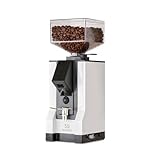
- Sound-Insulated Case: A thick metal case filled with rubber mounts, gaskets, and covers make for muted sound and low resonance
- Stepless 55mm Burrs: The Silenzio's upgraded 55mm burrs are built from resilient, hardened steel
- Bottom-Burr Adjust: By adjusting below the motor mount, you can remove the top burr for cleaning without losing your grind setting
Best for: Quiet espresso grinder for small kitchens.
A thick metal case packed with rubber mounts, gaskets, and covers gives the Eureka Mignon Silenzio a muted grind and lower resonance, which matters when you want espresso prep that does not dominate the room. Its white stainless steel body and compact 5.6 x 5 x 13.8-inch footprint also help it fit neatly beside a machine on a crowded counter.
The upgraded 55mm stepless burrs are made from hardened steel, so you get fine control over espresso grinding and a more even grind profile for daily shots. Bottom-burr adjustment lets you remove the top burr for cleaning without losing your grind setting, which saves time when you want to keep the grinder tuned. The side-mounted timed dosing control helps you repeat the same dose instead of guessing by eye. At 13.8 inches tall, it stays compact enough for a home setup, while the stainless steel exterior adds a clean, easy-to-match finish for modern kitchens.
Pros
- 55mm hardened steel burrs support fine espresso adjustment
- Sound-insulated metal case reduces grinding noise and resonance
- Bottom-burr adjustment keeps your grind setting when cleaning
- Timed dosing helps deliver repeatable doses shot after shot
Cons
- The compact 5.6-inch width still leaves little room for a large hopper, so it is better suited to focused espresso use than bulk grinding.
For espresso drinkers who care about low noise and repeatable doses, this grinder makes a strong case. It fits best in a home setup where counter space is limited and consistency matters more than high-volume grinding.
| Specification | Details |
|---|---|
| Brand | Eureka |
| Color | White |
| Material | Stainless Steel |
| Style | Mid-Century Modern |
| Product Dimensions | 5.6″L x 5″W x 13.8″H |
| Burr Size | 55mm |
| Burr Material | Hardened Steel |
| Adjustment Type | Stepless |
| Dosing | Timed Dosing |
| Special Feature | Sound-Insulated Case |
I would point espresso buyers toward this model if they want a quieter grinder with precise control and a compact footprint. The stepless 55mm burrs and timed dosing make it especially appealing for people dialing in shots at home, while the sound-insulated body is a real advantage in apartments or early-morning kitchens. It feels most useful for focused espresso routines rather than broad all-purpose grinding.
2. Eureka Mignon Libra Espresso Grinder | Grind by Weight |

- Espresso Grinder: Designed to grind just for espresso, the Libra grinds directly into your portafilter
- Weight Based Dosing: Eureka's first grind by weight product, the Libra is programmed in grams and can save two different doses
- Silent Technology: The exclusive anti-vibration solution reduces the grinding noise (around 64 dB) to provide a pleasant and quiet...
Best for: Espresso-only weight dosing users.
Eureka’s first grind-by-weight grinder programs doses in grams and can save two presets, so espresso drinkers can move from setup to repeatable shots without remeasuring each time. Grinding directly into the portafilter keeps the workflow tight for home bars that pull espresso daily. The black stainless steel body gives it a compact, modern footprint on the counter.
The Libra is purpose-built for espresso, and that narrow focus matters if you want consistency rather than a do-everything machine. Its 55 mm hardened steel burrs handle fine espresso grinding with a setup aimed at balance between grind quality and everyday speed. The listed 6″ x 6″ x 14″ dimensions make it a relatively compact grinder for a dedicated espresso station, while the stainless steel construction gives it a clean, durable finish. Silent Technology keeps noise around 64 dB, which is useful for early-morning shots or shared spaces. Because it grinds directly into the portafilter, it reduces transfer and keeps dosing steps simple.
Pros
- Grind-by-weight dosing programs in grams for repeatable espresso shots
- Two saved dose settings make switching between drinks faster
- 55 mm hardened steel burrs support consistent espresso grinding
- Silent Technology keeps noise around 64 dB for quieter use
Cons
- Espresso-focused grinding only, so it is not suited to brew methods outside that range
If your priority is precise espresso dosing, the Libra makes that process much easier to repeat. It fits best in a home espresso setup where quiet grinding and direct portafilter dosing matter most.
| Specification | Details |
|---|---|
| Brand | Eureka |
| Color | Black |
| Material | Stainless Steel |
| Style | Modern |
| Product Dimensions | 6″L x 6″W x 14″H |
| Burr Size | 55mm |
| Noise Level | Around 64 dB |
| Dosing Type | Grind by Weight |
| Saved Doses | 2 |
| Grinding Style | Direct to portafilter |
I’d point this grinder at someone who makes espresso regularly and wants fewer variables from shot to shot. The saved gram-based doses are the biggest practical advantage, and the quieter operation is a real bonus in a small kitchen. If you mainly drink espresso and want a compact grinder that keeps workflow tidy, this is an easy one to like.
Quick Comparison Table of Top Italian Coffee Grinders
| Product Name | Burr Size | Noise Level | Dosing Method | Best For | Check Price |
|---|---|---|---|---|---|
| Eureka Mignon Silenzio Espresso Grinder, White | 55mm | Low noise | Stepless grind | Quiet espresso grinding | Check Price |
| Eureka Mignon Libra Espresso Grinder | Espresso | 64 dB | Grind by weight | Weight-based dosing | Check Price |
How to Choose the Right best italian coffee grinder
Grind consistency and burr type
Choose burrs that hold a tight particle range, because espresso needs fine, uniform grounds and moka pot needs a slightly coarser but still even grind. Flat burrs usually deliver sharper consistency and cleaner espresso shots, while conical burrs give forgiving performance, lower mess, and smoother everyday use. Look for burrs in stainless steel or hardened steel, not soft plated parts, and check that the grinder offers fine step sizes with minimal retention.
The right pick for most home buyers is a conical-burr grinder with precise espresso steps; choose flat burrs when shot consistency matters most.
| Type | Best for | What to look for |
|---|---|---|
| Flat burr | Espresso-first use | Tight particle spread, fine adjustment steps, low clumping |
| Conical burr | Espresso and moka pot | Low retention, steady feed, easy dialing-in |
| Steel burrs | Frequent home grinding | Hard, wear-resistant surfaces and consistent edges |
Motor power and grind speed
For home use, choose a grinder that runs quietly enough for early mornings, keeps RPM steady under load, and does not heat the grounds during longer sessions. Strong motors are not just about speed; they need controlled torque so the burrs cut evenly instead of stalling or churning. Good units stay calm, keep particle size stable from first gram to last, and manage heat with slower, efficient grinding.
Poor ones scream, surge, and warm the beans. The best choice for apartment users and daily drinkers is a low-noise grinder with steady RPM and thermal control, not the fastest model on paper.
| Drive style | Best for | What to look for |
|---|---|---|
| Low-RPM motor | Quiet kitchens | Stable speed, lower vibration, less heat |
| Mid-speed motor | Balanced daily use | Even grind with minimal surge under load |
| Fast motor | Short grinding bursts | Heat management and good cooling path |
Build quality and materials
Build quality starts with the burr set, but the housing and contact points matter just as much. Choose stainless steel burrs, a rigid body, and food-safe plastics or metals at every touchpoint, including the hopper, grounds bin, and chute. Good finishes feel smooth, edges are clean, and parts fit tightly without wobble.
A heavier base helps stability on the counter and reduces vibration during grinding. Poor construction shows in loose dials, thin panels, and rough seams.
The best choice for long-term daily use is a sturdy, weighted grinder with stainless burrs and certified food-safe components.
| Material | Best for | Signal of quality |
|---|---|---|
| Stainless steel burrs | Durability | Sharp edges, wear resistance, consistent grind |
| Metal housing | Stability | Less flex, firmer feel, better longevity |
| Food-safe plastics | Lightweight parts | Clean finish, no rough mold lines, secure fit |
Ease of use and cleaning
Ease of use matters when you adjust grind settings often or clean the grinder after each bag. Look for clear markings, a dial that moves in small, repeatable steps, and a hopper and grounds bin that open without fighting the machine. A good grinder lets you remove the burr chamber or upper burr quickly, and the parts should brush clean without hidden corners that trap fines.
Poor designs bury residue in narrow channels and use vague settings that are hard to return to. For most buyers, the best pick is a grinder with simple numbered settings, removable parts, and a chute you can clean in seconds.
- Clear, labeled grind steps for repeatable dialing
- Removable hopper and grounds bin for quick rinsing
- Accessible burr chamber for brushing out fines
- Smooth interior surfaces with few creases or ledges
Size, capacity, and kitchen fit
Size and capacity should match the way you brew, not just the amount of space on the counter. A compact grinder suits small kitchens and solo espresso routines, while a larger body and wider hopper fit households that make several drinks in a row. Check the footprint first, then the bean hopper size and grounds container volume.
Good compact models save space without feeling cramped, and good larger models stay stable while handling more beans at once. Poor fits crowd the counter or force constant refilling.
The right choice is a compact grinder for one to two daily cups and a higher-capacity model for multiple drinks or family use.
| Size type | Best for | What to check |
|---|---|---|
| Compact | Solo brewing | Small footprint, easy storage, modest hopper |
| Medium | Couples | Balanced counter fit and daily capacity |
| Large | Multiple cups | Wider base, larger hopper, stable stance |
Which Should You Choose?
- If you want a quieter grinder for early-morning espresso at home, choose a sound-insulated model with a heavy metal body and low-resonance build.
- If you care most about dialing in espresso shots with more flavor clarity, choose stepless 55mm burrs for finer adjustment and more even grinding.
- If you want the easiest workflow with less measuring and waste, choose grind-by-weight dosing that dispenses directly into the portafilter.
- If you mainly make espresso and want a dedicated machine for repeatable results, choose an espresso-only grinder with programmable dose memory.
Quick Best Italian Coffee Grinder Buying Checklist
- Check grind consistency. Choose a grinder that produces uniform grounds for reliable espresso and moka pot extraction.
- Review burr design. Look for conical or flat burrs with settings that match your preferred brewing style.
- Inspect build materials. Favor sturdy, food-safe construction that can handle regular use without excessive wear.
- Evaluate grind settings. Make sure the adjustment range is precise enough for fine and medium grinds.
- Consider cleanup. Removable parts and easy-access burrs make maintenance quicker and help preserve flavor.
- Match capacity to routine. Select a size that fits your daily bean volume without taking up unnecessary counter space.
How Italian Coffee Grinders Create a Consistent Grind
Italian coffee grinders are usually built around burr-based grinding, which crushes beans instead of chopping them. That difference matters because burrs produce a more even particle size, helping water extract flavor at a steady rate. Many Italian designs also emphasize stable motor speed and sturdy burr alignment, both of which reduce heat and clumping during grinding.
When the grind is consistent, espresso shots tend to flow more predictably, while moka pot brews avoid excessive bitterness from overly fine dust. In many models, grind adjustment is graduated in small steps, so users can fine-tune for different brewing methods without large jumps in texture.
Flat Burr and Conical Burr Designs Compared
Italian grinders commonly use either flat burrs or conical burrs, and each style shapes the grinding experience differently. Flat burrs are often valued for uniform particle size and precise espresso-focused results, while conical burrs can run more quietly and may retain less coffee in some setups. The choice also affects heat, speed, and the feel of the grind adjustment.
Understanding these differences helps explain why two grinders with similar build quality can still perform differently in daily use. The best design depends on whether the grinder will live mostly in an espresso station, a multi-brew kitchen, or a compact home setup.
| Type | Best for | Typical trait |
|---|---|---|
| Flat burr | Espresso precision | Very even particle distribution |
| Conical burr | Mixed brewing styles | Often quieter and forgiving |
| Stepped adjustment | Simple daily use | Easy to repeat settings |
| Stepless adjustment | Fine espresso tuning | More exact control |
Keeping Burrs Clean for Better Flavor
Regular cleaning is one of the most effective ways to preserve grinder performance and taste. Coffee oils and fine grounds can build up inside the burr chamber, where they eventually turn stale and can make fresh coffee taste flat or rancid. A routine wipe-down of the hopper, chute, and grounds path helps reduce that buildup, while occasional deeper cleaning keeps the burrs cutting evenly.
It is also important to empty old beans before switching to a different roast, since leftover fragments can mix with the new coffee and muddy the flavor. For many grinders, the simplest maintenance habit is also the most valuable: clean little and often rather than waiting for obvious clogging.
Common Setup Mistakes That Affect Grind Quality
Even a strong grinder can perform poorly if it is set up carelessly. One common mistake is loading too many beans at once, which can strain the motor and leave the grind less uniform. Another is adjusting the burrs while the grinder is under load, which may damage the mechanism or make settings hard to reproduce.
Users also sometimes judge performance before the grinder has properly settled, especially after a deep cleaning or burr replacement. In addition, grinding into a damp container or placing the grinder near steam can encourage clumping.
A careful setup, dry storage, and a consistent workflow usually improve results more than constant tweaking.
- Use dry, fresh beans.
- Start with small setting changes.
- Keep the grinder on a stable surface.
- Avoid moisture near the hopper and chute.
- Record your preferred setting for each brew method.
Noise, Counter Space, and Daily Kitchen Fit
Beyond grind performance, practical fit matters in an everyday kitchen. Some Italian grinders are compact enough for a tight espresso corner, while others need more depth and height because of larger hoppers or wider burr assemblies. Noise level can also influence the experience, especially in shared homes or early-morning routines.
A heavier body may help reduce vibration, but it can make the unit less convenient to move or store. Cable placement, bean hopper shape, and grounds container access all affect how easy the grinder is to live with.
The best setup is one that matches both the brewing routine and the available space, so the grinder feels integrated rather than intrusive.
| Feature | What it affects | Why it matters |
|---|---|---|
| Compact footprint | Counter space | Fits small brew stations |
| Heavier housing | Stability | Reduces vibration |
| Lower noise output | Daily comfort | Better for early use |
| Easy-access hopper | Refilling | Simplifies routine use |
Frequently Asked Questions (FAQs)
What Makes The Best Italian Coffee Grinder Worth Buying?
The best italian coffee grinder is worth buying because it delivers consistent grounds, precise adjustment, and dependable build quality. Those traits matter most for espresso and moka pot brewing, where a small change in grind size can affect flavor, crema, and extraction time.
Should I Choose Flat Burrs Or Conical Burrs In The Best Italian Coffee Grinder?
The best italian coffee grinder can use either flat burrs or conical burrs, but the right choice depends on your brewing style. Flat burrs often emphasize uniformity, while conical burrs are frequently valued for smoother operation and lower heat buildup during grinding.
How Important Is Grind Adjustment On The Best Italian Coffee Grinder?
Grind adjustment is essential in the best italian coffee grinder because espresso, moka pot, and drip-style brews all need different particle sizes. A precise stepped or stepless dial lets you fine-tune extraction and avoid bitter or under-extracted coffee.
What Materials Should I Look For In The Best Italian Coffee Grinder?
The best italian coffee grinder should use durable materials such as stainless steel burrs, a solid housing, and food-safe contact parts. Strong construction helps reduce vibration, improves longevity, and keeps the grinder stable during frequent use.
Is The Best Italian Coffee Grinder Easy To Clean?
Yes, the best italian coffee grinder should be easy to clean if it has removable burrs, accessible chambers, and simple brushable surfaces. Easy maintenance reduces old grounds buildup, which helps preserve flavor and keeps grind performance more consistent.
How Much Capacity Do I Need In The Best Italian Coffee Grinder?
The best italian coffee grinder should match your daily brewing habits and household size. A smaller hopper works well for single servings, while a larger capacity is better if you brew multiple cups and want fewer refills.
Can The Best Italian Coffee Grinder Work For Espresso And Moka Pot Brewing?
Yes, the best italian coffee grinder can work for both espresso and moka pot brewing if it offers fine, accurate grind control. Espresso usually needs a narrower adjustment range, while moka pot brewing benefits from slightly coarser but still uniform grounds.
Final Suggestions
In summary, the best italian coffee grinder combines consistent burr performance, precise adjustments, and durable construction to improve every cup. It brings real value to home brewing by supporting espresso, moka pot, and other grind-sensitive methods with ease. Choose one that fits your routine, and you’ll enjoy better flavor, smoother workflow, and a more rewarding coffee experience every day.