Top 2 Best Juicer And Blender: Must-See Picks
Best juicer and blender choices are reshaping how kitchens handle fresh produce, from silky smoothies to nutrient-packed juices. As blending motors, extraction systems, and blade design improve, the gap between convenience and performance keeps narrowing. The best juicer and blender options now blend speed, texture control, and cleanup efficiency into one category that suits busy routines and health-focused habits.
Whether comparing a juice extractor, a smoothie machine, or a multi-function countertop appliance, small details like motor power, feed chute size, BPA-free materials, and pulp separation can dramatically change results. Understanding those features matters before choosing between competing designs.
With so many innovations packed into one appliance class, the real question is which models deliver the most versatility, consistency, and value when it counts most.
Detailed Reviews of the Best Juicer and Blender
1. Hamilton Beach Juice & Blend 2-in-1 Juicer Machine and 20
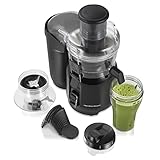
- 2-IN-1 JUICER AND BLENDER. Juice and blend a variety of drinks with one space-saving juicer machine. Start by making juice, then...
- BLEND SMOOTHIES, SHAKES AND MORE. To save time, you can juice directly into the 20 oz. shatterproof jar of the personal blender...
- SAVE TIME — 3" BIG MOUTH CHUTE FITS WHOLE FOODS. Since the 3" chute fits a whole apple, peeled orange or handful of kale, you...

Best for: Space-saving juice-to-blend setups.
A 20 oz. shatterproof jar makes Hamilton Beach’s 2-in-1 setup useful for single-serve drinks without switching containers mid-recipe. Juice first, then blend the same jar with fruit, ice, or protein powder for smoothies, shakes, cocktails, or slushies. The compact black body keeps the workflow tight for kitchens where counter space matters.
The 3″ big mouth chute lets larger produce go in with less pre-cutting, which cuts down prep time on apples, celery, and similar ingredients. Its manual operation gives you direct control over juicing and blending without relying on preset programs. The 7.54″ x 14″ x 14.81″ footprint keeps the appliance manageable on a counter, while the metal and plastic construction balances structure with lighter handling. Because the juicer can feed directly into the 20 oz. blender jar, you avoid extra transfers and can finish with the included travel lid for drinks you want to take with you. For small-batch daily use, that workflow is the main advantage.
Pros
- 20 oz. shatterproof jar supports single-serve blending after juicing
- 3″ big mouth chute reduces pre-cutting for larger produce
- Direct-to-jar juicing avoids an extra transfer step
- Travel lid makes the blended drink easier to carry
Cons
- Manual operation means you control the process yourself instead of using preset blending or juicing programs
This model fits buyers who want one compact machine for fresh juice plus quick blended drinks. It is especially practical when you want fewer containers on the counter and fewer steps between juicing and drinking.
| Specification | Details |
|---|---|
| Brand | Hamilton Beach |
| Color | Black |
| Special Feature | Manual |
| Product Dimensions | 7.54″D x 14″W x 14.81″H |
| Material | Metal, Plastic |
| Jar Capacity | 20 oz. |
| Chute Size | 3″ |
| Use Type | Juicer and personal blender |
I’d point this to someone who wants fresh juice in the morning and a quick smoothie right after without juggling separate appliances. The 20 oz. jar and direct-to-jar setup make the routine efficient, and the travel lid is handy if you leave home soon after blending. It makes the most sense for small-batch users who value convenience over batch size.
2. 4 in 1 Juicer Blender Mixer Grinder 1000W – Stainless

- 4-IN-1 VERSATILITY WITH 5 ATTACHMENTS: Includes 1.0L glass blender jar, 800ml mincer cup, 250ml grinder cup, 800ml juicer...
- POWERFUL 1000W MOTOR WITH OVERHEAT PROTECTION: 18,000-22,000 RPM motor powers through frozen fruit, fibrous vegetables, whole...
- PREMIUM STAINLESS STEEL BODY AND CUTTING PLATE: Resists rust, staining, and odor absorption. Unlike plastic alternatives, this...
Best for: High-power all-in-one kitchen users.
A 1000W motor and five included attachments make this 4-in-1 appliance far more flexible than a basic juicer. It can blend, grind, mince, and juice with one silver unit, so one countertop machine handles fruit drinks, spice grinding, and small food prep. The stainless steel body also gives the appliance a cleaner, more kitchen-ready finish.
The set includes a 1.0L glass blender jar, an 800ml mincer cup, a 250ml grinder cup, an 800ml juicer container, and a 1500ml residue container, so each task has a matching vessel instead of forcing one jar to do everything. A 2-speed plus pulse control layout lets you adjust texture for softer fruit, tougher vegetables, or coarse grinding. The motor runs at 18,000-22,000 RPM, which is what helps it process frozen fruit, fibrous vegetables, whole spices, and raw meat. Anti-slip rubber feet keep the base steadier during use, and the built-in overheat protection adds practical safety for longer prep sessions. The compact 12.8″ x 11.4″ x 10″ footprint also helps it fit more easily on crowded counters.
Pros
- 1000W motor handles dense ingredients like frozen fruit and raw meat
- Five attachments separate blending, juicing, mincing, and grinding tasks
- 2-speed plus pulse control improves texture control for different recipes
- Anti-slip rubber feet help keep the unit steadier during operation
Cons
- The 250ml grinder cup is small, so spice or coffee-style grinding is limited to modest batches
This is the stronger pick for buyers who want one appliance to cover more than smoothies and juice. It suits people who cook often and need blending, juicing, grinding, and mincing in a single compact machine.
| Specification | Details |
|---|---|
| Brand | Generic |
| Color | Silver |
| Special Feature | 1000W Powerful Motor, 2-Speed + Pulse Control, Anti-Slip Rubber Feet, Overheat Protection, Stainless Steel Body |
| Capacity | 800 centiliters |
| Product Dimensions | 12.8″D x 11.4″W x 10″H |
| Motor Power | 1000W |
| Motor Speed | 18,000-22,000 RPM |
| Attachments Included | 5 |
| Blender Jar | 1.0L glass |
| Juicer Container | 800ml |
I’d recommend this to a buyer who wants one machine to cover more kitchen jobs than just juicing. The 1000W motor and multiple cups make it useful for smoothies, spice grinding, and small prep tasks, while the overheat protection is reassuring for longer sessions. It feels like the better fit for households that will actually use every attachment, not just the blender jar.
Quick Comparison Table of Best Juicer and Blender Options
| Product Name | Type | Power | Capacity | Best For | Check Price |
|---|---|---|---|---|---|
| Hamilton Beach Juice & Blend 2-in-1 | 2-in-1 | Manual | 20 oz | Juice and blends | Check Price |
| 4 in 1 Juicer Blender Mixer | 4-in-1 | 1000W | 800 cl | Multi-use prep | Check Price |
How to Choose the Best Juicer and Blender
Power and blending performance
Choose a juicer blender with enough power for the jobs you actually make most. For frozen fruit, ice, and fibrous greens, look for a motor in the 1000-watt range or higher, plus at least 3 speed settings and a pulse option so you control texture instead of overworking it. A strong blade stack with stainless steel blades and a wide base cuts faster and leaves fewer chunks; thin, short blade assemblies usually struggle with tough ingredients.
Pick a high-power, multi-speed model for dense smoothies and nut blends, and choose a mid-power, simple-control model for softer fruit drinks and quick salsa prep.
| Type | Best for |
|---|---|
| 1000W+ blender with pulse | Ice, leafy greens, nut blends, thick smoothies |
| 700-900W multi-speed blender | Fruit smoothies, salsa, everyday blending |
| Low-power single-speed unit | Soft produce and occasional light mixing |
Juicing efficiency and extraction
For juicing, choose the method that matches how much yield and prep time matter to you. Centrifugal juicers extract fast and suit apples, carrots, and citrus, while masticating models squeeze more juice from leafy greens, celery, and softer produce with drier pulp and less waste. A good juicer leaves pulp noticeably dry and separates juice cleanly; a poor one leaves wet pulp and cloudy output.
For whole fruit and vegetables, use a wider feed chute to cut chopping time, with 3-inch chutes handling many standard ingredients and larger openings reducing prep even further. Pick a centrifugal model for fast everyday juicing and a masticating model for maximum yield and greens.
| Type | Best for |
|---|---|
| Centrifugal juicer | Fast juicing, harder fruits, simple daily use |
| Masticating juicer | Leafy greens, celery, higher yield, drier pulp |
| Wide feed chute model | Less chopping and quicker prep |
Capacity and kitchen fit
Match capacity to the way you serve food and drinks every day. A single-serve jar or juice container around 20 to 32 ounces suits one or two people, while family batches need larger blending pitchers and juice pitchers in the 40-ounce-plus range. A compact footprint matters in small kitchens, so choose a slim base, cord storage, and stacking or nestable cups when counter space is tight.
Travel cups help commuters and gym users, and a large pitcher helps batch makers pour once instead of stopping repeatedly. Pick a compact, cup-friendly model for solo use and a larger pitcher set for families and meal prep.
| Type | Best for |
|---|---|
| 20-32 oz single-serve cup | One person, travel use, quick smoothies |
| 40 oz+ pitcher | Family batches, meal prep, shared servings |
| Compact slim-base set | Small kitchens and limited counter space |
Cleaning, safety, and durability
Clean-up and safety should be simple enough that you use the machine often. Look for dishwasher-safe removable parts, smooth surfaces, and few crevices that trap pulp or residue; easy-rinse strainers and wide openings save time after juicing. BPA-free containers, secure locking lids, and overload protection are the safety markers that matter, especially in homes with frequent use.
Stable rubber feet and a solid housing reduce wobble during high-speed blending, while heavier construction usually feels more secure and lasts longer. Choose a fully locking, dishwasher-safe model for busy households and a sturdier, heavier unit for daily, long-term use.
| Type | Best for |
|---|---|
| Dishwasher-safe, removable parts | Fast cleanup and frequent use |
| BPA-free with locking lid | Safer everyday blending and juicing |
| Heavier base with overload protection | Stability and long-term durability |
Which Should You Choose?
- If you want one space-saving appliance for fresh juice plus smoothies or cocktails, choose a 2-in-1 juicer with a built-in blender jar.
- If you need to juice first and then mix in other ingredients without switching machines, choose a juicer-blender combo with a single base and multiple blending modes.
- If you plan to make more than just juice, such as mincing, grinding, and blending, choose a 4-in-1 unit with separate jars and attachments.
- If you make larger batches and want less mess from pulp, choose a model with a large residue container and a sturdy glass blender jar.
Quick Best Juicer And Blender Buying Checklist
- Check motor strength. Choose enough power to handle frozen fruit, leafy greens, and tougher ingredients without stalling.
- Compare juicing style. Match centrifugal or masticating performance to your preferred juice texture, yield, and prep time.
- Review capacity. Make sure the pitcher, jar, or juice container fits your serving needs and daily routine.
- Look for easy cleaning. Favor dishwasher-safe parts, removable blades, and simple rinsing to save time after use.
- Confirm safety features. Seek secure locking lids, non-slip feet, and overload protection for more confident operation.
- Inspect material quality. Prioritize BPA-free, durable components that can withstand frequent blending and juicing.
How Juicers and Blenders Process Produce Differently
Juicers and blenders handle ingredients in very different ways, which explains why they create such different drinks. A juicer separates liquid from fiber, producing a smoother beverage with a lighter texture and less pulp. A blender keeps the whole ingredient in the cup, breaking it down into a thicker drink that retains fiber, body, and more of the original texture.
That means a juicer is better for extracting a clean, drinkable liquid from fruits and vegetables, while a blender is better for smoothies, sauces, and recipes that need thickness. Understanding this difference helps you match the machine to the result you want instead of expecting one appliance to do the same job as the other.
Cold Press, Centrifugal, and High-Powered Blender Differences
Different appliance types use different methods to prepare drinks, and those methods affect texture, speed, noise, and cleanup. Cold press juicers crush and press produce to extract juice with less foam and separation. Centrifugal juicers spin rapidly and work quickly, which can be useful for everyday use with firm produce.
Blenders use blades to chop and mix ingredients into a uniform drink, with high-powered models handling frozen fruit and tougher greens more easily. If you know the strengths of each type, it becomes easier to understand why some machines are better at pure juice, while others excel at thick blended drinks.
| Type | Best for | Main trade-off |
|---|---|---|
| Cold press juicer | Low-foam juice | Slower processing |
| Centrifugal juicer | Fast daily juicing | More foam and oxidation |
| Standard blender | Simple smoothies | Less power for hard ingredients |
| High-powered blender | Tough produce and ice | Can be noisier |
Cleaning and Maintenance That Extend Appliance Life
Regular cleaning is one of the easiest ways to keep a juicer or blender working well over time. Pulp, seeds, and sticky fruit residue can dry onto parts and make future cleanup harder, so rinsing immediately after use is important. Many detachable components can be washed with warm water and mild soap, but brushes help remove buildup from mesh filters, blades, and tight corners.
It is also smart to check seals, gaskets, and lids for wear, because small damaged parts can lead to leaks or poor performance. Dry all washable parts thoroughly before reassembling them to reduce odor, staining, and moisture trapped in the motor base area.
Common Mistakes That Reduce Performance
Many people assume that simply loading more produce will produce better results, but overfilling can strain the machine and produce uneven textures. Another common mistake is using ingredients that are too large or too hard without preparation. Whole apples, thick stems, and frozen chunks may need to be cut smaller first.
For juicers, mixing very soft produce with dense leafy greens can also create poor extraction if the feed process is rushed. For blenders, adding too little liquid often causes the blades to struggle and can leave chunks behind.
A steadier approach, with properly sized pieces and the right liquid balance, usually gives smoother results and helps the appliance work more efficiently.
- Cut produce into manageable pieces before loading.
- Alternate soft and firm ingredients for more even processing.
- Do not exceed the fill line or recommended capacity.
- Add enough liquid when blending thick mixtures.
- Clean filters and blades promptly after use.
Food Safety and Smart Operating Practices
Safe operation matters just as much as performance, especially when working with sharp blades and powerful motors. Always assemble the appliance correctly before turning it on, and make sure the lid is locked in place if the model includes a safety interlock. Use the tamper only as directed, and never push ingredients down with utensils or fingers.
When processing hot liquids, check whether the blender is rated for heat, because steam pressure can force the lid open. It is also a good habit to unplug the unit before cleaning or removing stuck food.
These small precautions protect the user, reduce spills, and help prevent unnecessary wear on the machine.
Frequently Asked Questions (FAQs)
What Should I Look For In The Best Juicer And Blender?
The best juicer and blender should combine strong motor power, efficient extraction, and simple cleanup in one machine. Look for multiple speed options, durable blades, and a capacity that matches how much you make at once, especially if you prepare smoothies and fresh juice regularly.
Is A Higher Wattage Always Better For A Juicer And Blender?
A higher wattage juicer and blender is not always better, but it usually helps with dense ingredients and tougher textures. The best balance is a motor strong enough for ice, frozen fruit, and leafy greens without being so large that it becomes bulky or noisy.
What Is The Difference Between Centrifugal And Masticating Juicers?
Centrifugal and masticating juicers differ mainly in speed, juice yield, and texture. Centrifugal models work faster and suit quick drinks, while masticating models squeeze produce more slowly for higher yield, less foam, and better results with leafy greens and soft fruits.
Can One Appliance Handle Both Blending And Juicing Well?
Yes, one appliance can handle both blending and juicing well if it is designed with separate functions and the right attachments. The best juicer and blender should switch between smooth purees and clean juice extraction without forcing you to compromise on performance or convenience.
How Important Is Cleanup When Choosing A Juicer And Blender?
Cleanup is very important when choosing a juicer and blender because frequent use quickly becomes tedious with complicated parts. Dishwasher-safe pieces, wide openings, and removable blades make daily cleanup easier, especially if you plan to use the machine for breakfast or meal prep.
What Capacity Is Best For A Family Juicer And Blender?
A family juicer and blender should have a larger pitcher or juice container so you can make multiple servings at once. A roomy design reduces batch-by-batch work and is especially helpful for households that prepare smoothies, soups, or fresh juice every day.
Are Safety Features Necessary In A Juicer And Blender?
Yes, safety features are necessary in a juicer and blender because powerful motors and sharp blades need secure handling. Look for locking lids, non-slip feet, and overload protection so the machine stays stable, operates safely, and shuts down before damage occurs.
Final Suggestions
Choosing the best juicer and blender can streamline your kitchen routine with faster prep, better texture control, and fresher homemade drinks. With the right balance of power, capacity, and easy cleaning, this category adds real versatility to daily cooking. Pick a model that fits your habits, and you’ll enjoy more nutritious results with less effort.