Top 10 Best Lab Grade Refrigerator Picks That Wow
The best lab grade refrigerator plays a critical role in preserving sensitive samples, reagents, and vaccines. In research and clinical environments, even small temperature swings can affect integrity, making advanced cooling systems, calibrated sensors, and uniform air circulation essential. A lab grade refrigerator differs from a standard unit through tighter temperature control, durable construction, and features designed for compliance and reliability.
When comparing a laboratory refrigerator, medical refrigerator, or pharmaceutical refrigerator, details like insulation, stainless steel interiors, alarms, and storage capacity become more than convenience—they influence consistency and safety. Understanding how these technologies work can make all the difference, especially when storage demands are strict and failure is not an option.
The most important distinctions often hide in plain sight, and that is where the real comparison begins.
In-depth Reviews of the Best Lab Grade Refrigerator
1. 105L Lab Refrigerator 2-8°C 3.7 Cu.Ft, 110V 20″ Pharmacy Fridge

- Accurate temperature control, 2-8℃ temperature range, direct temperature adjustment with precision of 0.1℃. Pre-set to 5°C
- Large space utilization, 105L/3.7 cubic feet large capacity, space-saving 20" width design, can store more medicine and samples at...
- Low energy consumption, 80W power compressor, ultra-low energy consumption, more energy-saving and power-saving.
Best for: Compact pharmacy storage on a 20-inch footprint.
A 105-liter interior in a 20-inch-wide cabinet gives this refrigerator room for medicines and samples without taking over a prep area. The 2 to 8°C operating range fits common lab and pharmacy storage, while the 0.1°C adjustment precision helps keep inventory in a narrow, reliable band.
The 20.67″D x 19.88″W x 35.43″H footprint makes it easier to place beside benches, in treatment rooms, or in tighter storage alcoves. With 105 liters, you get enough space for multiple shelves of vials, reagents, or specimens instead of forcing everything into one compartment. The 80W compressor keeps power use restrained for all-day operation, and the 110V setup matches standard facilities wiring. Adjustable shelves help you separate short bottles from taller containers, and the frost-free defrost system reduces manual maintenance. A smart safety alert adds another layer of oversight if the unit does not reach target temperature after startup.
Pros
- 105-liter capacity stores multiple batches of medicine and samples
- 2 to 8°C range suits common pharmacy and lab storage needs
- 0.1°C adjustment precision supports tighter temperature control
- Adjustable shelves and frost-free defrost make daily use simpler
Cons
- Single-door 20-inch design limits access to one main compartment, so larger segregated inventories may feel crowded.
For clinics, small labs, or pharmacies that need a compact cold-storage cabinet, this model offers practical capacity and precise control. It makes the most sense when floor space is limited but temperature discipline still matters.
| Specification | Details |
|---|---|
| Capacity | 105 liters |
| Product Dimensions | 20.67″D x 19.88″W x 35.43″H |
| Temperature Range | 2-8°C |
| Temperature Precision | 0.1°C |
| Power | 80W |
| Voltage | 110 volts |
| Installation Type | Freestanding |
| Defrost System | Frost Free |
| Number of Doors | 1 |
| Special Feature | Adjustable Shelves, Digital Temperature Control, Energy Efficient, Freezer Light, Low Noise |
I would place this with smaller practices that need dependable refrigerated storage without a large cabinet. The temperature range and compact size make it especially sensible for medication, vaccines, and limited sample storage where steady control matters more than sheer volume. The footprint is a real advantage if your workspace is tight.
2. KoolMore 4.5 cu ft Countertop Medical Pharmacy Refrigerator with Emergency

- Top cooling feature – Ensures precise temperature control and optimal storage conditions, air is blown downwards from the top of...
- Insulated Anti-Condensation Door – This insulated refrigerator is the ideal medical grade fridge because it’s fitted with a...
- Precision Temperature Control – The temperature and humidity display, along with the push-button temperature settings, means you...
Best for: Countertop monitoring with door-opening protection.
A 4.5 cubic foot countertop format keeps this medical refrigerator within arm’s reach while still leaving room for controlled cold storage. Its top-cooling airflow creates a barrier at the door opening, which helps keep temperatures more stable when staff open it repeatedly during busy rounds.
The 23.6″D x 24″W x 32.1″H size works well on counters or low work surfaces where quick access matters. Inside, the 4.5 cubic feet capacity is enough for small medication loads, lab reagents, or daily-use vaccine stock without spreading inventory across multiple locations. Temperature uniformity is rated to within +/- one degree Celsius, which is valuable when you need predictable storage from one shelf to the next. The insulated anti-condensation door helps reduce moisture build-up, and the built-in alarms add an alert layer for out-of-range conditions. Automatic defrost and 115V power make it easier to keep running with routine setup rather than constant intervention.
Pros
- 4.5 cubic feet fits compact daily-use stock
- Top cooling airflow helps reduce warm-air intrusion at the door
- Temperature uniformity within +/- one degree Celsius supports consistency
- Alarms and automatic defrost reduce day-to-day monitoring burden
Cons
- Countertop installation and one-door access limit storage volume, so it is not ideal for larger pharmacy inventories.
This one suits small clinics and lab stations that need fast access and steadier temperatures around frequent door opening. It is a practical fit when you want medical-grade storage in a compact countertop format.
| Specification | Details |
|---|---|
| Capacity | 4.5 cubic feet |
| Product Dimensions | 23.6″D x 24″W x 32.1″H |
| Installation Type | Countertop |
| Number of Doors | 1 |
| Defrost System | Automatic |
| Voltage | 115 volts |
| Special Feature | Alarms, Anti-Condensation Door, Data Logging, Lockable |
| Color | White |
I’d choose this for a workstation that sees constant access and needs tighter temperature control near the door. The countertop footprint and 4.5 cubic feet capacity make it easier to keep frequently used items close without overcommitting space. If your priority is steady storage in a small footprint, this is a sensible pick.
3. KoolMore 11 cu. ft. Medical Pharmacy Refrigerator with Emergency Backup

- Top cooling feature – Ensures precise temperature control and optimal storage conditions, air is blown downwards from the top of...
- Insulated Anti-Condensation Door – This insulated refrigerator is the ideal medical grade fridge because it’s fitted with a...
- Precision Temperature Control – The dual temperature and humidity display, along with the push-button temperature settings...
Best for: Tall storage for larger pharmacy inventory.
An 11 cubic foot cabinet in a 75.6-inch tall form factor gives this unit the vertical room many medical spaces need for organized stock. The top-down cooling design is especially useful when the door is opened often, because it helps keep warm air from rushing straight into the storage zone.
The 23.4″D x 23.8″W x 75.6″H dimensions make this refrigerator a strong fit for a narrow floor plan that can still handle height. With 11 cubic feet inside, it can hold a more active inventory than a countertop model while keeping the footprint manageable. Dual display readouts for temperature and humidity give staff a clearer view of storage conditions at a glance, and the data logging function supports routine oversight. The anti-condensation door helps maintain visibility and reduce moisture on the surface, while the lockable single-door layout adds control over access. Automatic defrost and 115V operation round out a setup that is practical for daily medical use.
Pros
- 11 cubic feet offers room for larger inventory than compact units
- Tall 75.6-inch height uses vertical space efficiently
- Dual temperature and humidity display improves monitoring
- Lockable door and data logging support controlled storage
Cons
- The single-door upright layout gives you one large compartment, so separate cold zones are not available.
This model fits practices that need more storage depth without moving up to a wide cabinet. It is a good middle ground for labs or pharmacies that want clear monitoring and extra capacity in one upright unit.
| Specification | Details |
|---|---|
| Capacity | 11 cubic feet |
| Product Dimensions | 23.4″D x 23.8″W x 75.6″H |
| Installation Type | Freestanding |
| Number of Doors | 1 |
| Defrost System | Automatic |
| Voltage | 115 volts |
| Special Feature | Anti-Condensation Door, Data Logging, Dual Display (Temp & Humidity), Lockable |
| Configuration | One Door |
| Color | White |
I see this working well for users who need more capacity than a countertop fridge but still want a narrow footprint. The humidity display and logging are especially helpful if you keep temperature-sensitive inventory under regular checks. It feels like the right size for a busy pharmacy corner or a moderate lab stockroom.
4. Accucold 15.0 cu.ft. Upright Medical Refrigerator, Glass Door – ARG15PV

- Medical & Pharmacy Design: Purpose-built upright all-refrigerator supporting CDC, VFC, and VFA compliance for safe vaccine...
- Microprocessor Digital Controls: External display provides continuous readouts of current, minimum, and maximum temperatures to...
- Advanced Monitoring System: A buffered probe encased in a glycol-filled bottle simulates the actual temperature of stored...
Best for: High-capacity upright for regulated vaccine storage.
A 15.0 cubic foot upright cabinet with a glass door gives this refrigerator the visibility and volume that larger vaccine programs often need. Its digital controls keep the interior in the +2ºC to +8ºC range, which aligns with the tighter storage window many medical inventories require.
The 24.38″D x 23.38″W x 72″H body packs a large amount of storage into a tall upright footprint, so it suits rooms that can use height more efficiently than width. Adjustable shelves help you organize boxes, trays, and cartons by batch or product type, while the door lock adds access control. The external display shows current, minimum, and maximum temperatures, which gives staff more than a simple snapshot when checking compliance. The buffered probe in a glycol-filled bottle is valuable because it tracks product-like temperature behavior rather than just air temperature. Automatic defrost and 115V power make it straightforward to place in a commercial medical setting.
Pros
- 15 cubic feet supports larger vaccine or medication inventories
- External display shows current, minimum, and maximum temperatures
- Adjustable thermostat maintains a +2ºC to +8ºC range
- Door lock and adjustable shelves improve control and organization
Cons
- The glass door makes contents visible, which can be less suitable if you want inventory hidden from view.
This is the one to consider when storage volume and temperature oversight matter together. It fits busy medical environments that need a tall, regulated refrigerator with better monitoring than a basic unit provides.
| Specification | Details |
|---|---|
| Capacity | 15 cubic feet |
| Product Dimensions | 24.38″D x 23.38″W x 72″H |
| Temperature Range | +2ºC to +8ºC |
| Configuration | Upright Refrigerator |
| Number of Doors | 1 |
| Defrost System | Automatic |
| Voltage | 115 volts of alternating current |
| Special Feature | Adjustable Shelves, Door Lock |
| Color | White |
I’d recommend this for clinics that need a larger regulated cold-storage cabinet with clear temperature visibility. The display and buffered probe make it easier to watch conditions over time, which is reassuring for vaccine handling. If your inventory is growing and you want an upright format, this is a strong fit.
5. Everest EMGR24C 28-3/8″ Reach-In Glass Chromatography Refrigerator for Hospital Pharmaceutical

- HEAVY-DUTY LABORATORY CABINET: White coated steel interior and exterior with open, wall-free layout for flexible storage...
- BRIGHT LED LIGHTING: Shielded LED bar lighting with on/off switch for bright, high-color visibility and low heat output.
- LOW-E SELF-CLOSING GLASS DOOR: Low-emissivity double-pane glass reflects UV rays for efficient cooling and clear visibility of...

Best for: Large chromatography cabinet with easy cleaning.
A 25 cubic foot freezerless cabinet with stainless-steel floor construction gives this refrigerator a more specialized storage profile for hospital and pharmaceutical use. The open interior and rounded corners make it easier to arrange equipment or media while keeping cleanup less labor-intensive.
At 28.38″D x 32″W x 80.13″H, this unit uses a broad, tall cabinet shape that favors organized reach-in access. The heavy-duty white coated steel interior and exterior add a clean clinical look, while the stainless-steel floor with rounded corners and a detachable drain plug help when spills need to be cleared quickly. Two and a half inches of high-density polyurethane insulation support steadier internal conditions, and four height-adjustable screw legs help level the cabinet on uneven floors. The shielded LED bar lighting improves visibility without adding much heat. Low-emissivity double glass doors also help reflect UV rays, which is useful for sensitive stored materials.
Pros
- 25 cubic feet offers wide reach-in storage for larger inventories
- Open interior with no walls between compartments simplifies layout
- Rounded corners and detachable drain plug make cleaning easier
- Shielded LED lighting improves visibility with lower heat output
Cons
- Freezerless configuration means it is not suited to products that require frozen storage.
This model makes sense for users who want a large, easy-to-clean reach-in cabinet for controlled chilled storage. It is especially practical where visibility, access, and maintenance matter more than frozen capability.
| Specification | Details |
|---|---|
| Capacity | 25 cubic feet |
| Product Dimensions | 28.38″D x 32″W x 80.13″H |
| Configuration | Freezerless |
| Number of Doors | 1 |
| Installation Type | Screw In |
| Defrost System | Automatic |
| Voltage | 115 volts |
| Color | White |
| Special Feature | Compact |
I’d put this on the list for labs or hospital storage rooms that value reach-in access and easier cleaning over a split-compartment layout. The drainage and rounded corners are real advantages if you expect frequent wipe-downs. It feels most useful for larger chilled inventories that need room and visibility.
6. ACCUCOLD 23 cu.ft. Medical Refrigerator, Stainless Steel- ARS23ML

- Built specifically for Medical use: Designed and purpose-built for pharmacy, medication, and vaccine applications to meet CDC...
- The size and space for your needs: This stainless steel unit is an upright refrigerator with a capacity of 23 cu.ft. (651 L...
- Great design inside and out: Includes self-closing door, commercial-grade casters and digital controls with a large LED readout in...
Best for: High-capacity stainless unit for medication storage.
A 23 cubic foot stainless steel cabinet gives this refrigerator the space and surface quality many medical users want for daily medication and vaccine storage. The programmable 2ºC to 10ºC range makes it flexible for different cold-storage protocols while keeping the interior in a controlled band.
The stainless steel finish on both the cabinet and the door helps it fit cleanly into clinical spaces where wipe-downs are routine. With 23 cubic feet of capacity, there is room for organized shelving rather than packed shelves that slow retrieval. Magnetic door gaskets help maintain a tight seal, which supports performance and energy use over long hours of operation. It is compatible with Pyxis, Omnicell, and AcuDose RX systems, making it easier to match hospital workflows. Adjustable shelves let you reconfigure storage for boxes or bottles, and automatic defrost reduces routine upkeep. The 115V power setup and upright format keep installation straightforward for commercial medical environments.
Pros
- 23 cubic feet supports substantial medical inventory
- Programmable 2ºC to 10ºC range accommodates varied storage needs
- Stainless steel door and finish suit clinical cleaning routines
- Pyxis, Omnicell, and AcuDose RX compatibility fits hospital workflows
Cons
- Single-door upright design provides one large zone, so separate temperature compartments are not available.
This refrigerator fits hospitals, pharmacies, and clinics that need a larger stainless unit with system compatibility. It is a practical choice when you want organized chilled storage and straightforward integration into medication workflows.
| Specification | Details |
|---|---|
| Capacity | 23 cubic feet |
| Temperature Range | 2ºC to 10ºC |
| Finish Type | Stainless Steel |
| Door Material Type | Stainless Steel |
| Shelf Type | Wire |
| Number of Doors | 1 |
| Voltage | 115 volts |
| Special Feature | Adjustable Shelves, Automatic Defrost |
| Configuration | Internal Freezer |
I like this for teams that need a larger, cleanable cabinet and already work with medication dispensing systems. The compatibility is a real workflow advantage, not just a spec on paper. If you want a stainless unit that can handle routine pharmacy use without feeling cramped, this one makes sense.
7. EMGR33C Reach-in Chromatography Refrigerator 2 Glass Doors, 115v, NSF –
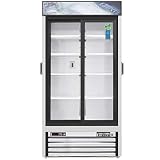
- HEAVY-DUTY LABORATORY CABINET: White coated steel interior and exterior with open, wall-free layout. Stainless steel floor with...
- BRIGHT LED LIGHTING: Shielded LED bar lighting with on/off switch for bright, high-color visibility and low heat output.
- LOW-E SLIDING GLASS DOORS: Low-emissivity double-pane glass reflects UV rays for efficient cooling and clear visibility of stored...
Best for: Two-door reach-in for organized chromatography storage.
A 33 cubic foot reach-in cabinet with two glass doors gives this refrigerator a broad storage format for larger chromatography or pharmaceutical setups. The freezer-on-bottom configuration separates use zones in a way that helps staff organize materials more efficiently across a tall commercial footprint.
The 39.38″D x 30.75″W x 80.13″H dimensions point to a full-size unit that is meant for dedicated lab or hospital placement rather than tight corners. With 33 cubic feet inside, it offers significantly more storage than compact medical fridges, so trays, containers, and supplies can be spread out more logically. The two glass doors reduce the need to open the entire cabinet at once, which is useful during frequent access. A stainless steel finish supports routine cleaning, while the automatic defrost system cuts down on maintenance. Its 115V operation and screw-in installation style fit commercial environments that plan for a fixed placement.
Pros
- 33 cubic feet provides substantial reach-in storage
- Two glass doors reduce full-cabinet opening during access
- Freezer-on-bottom configuration helps organize storage zones
- Automatic defrost lowers maintenance effort
Cons
- The large 80.13-inch height and two-door footprint require substantial floor space and ceiling clearance.
This is a strong fit for larger labs or pharmaceutical storage areas that need room and repeated access. It works best when you have space for a commercial cabinet and want better organization than a single-door design allows.
| Specification | Details |
|---|---|
| Capacity | 33 cubic feet |
| Product Dimensions | 39.38″D x 30.75″W x 80.13″H |
| Number of Doors | 2 |
| Configuration | Freezer-on-Bottom |
| Installation Type | Screw In |
| Defrost System | Automatic |
| Voltage | 115 volts |
| Finish Type | stainless steel |
| Color | White |
I’d steer buyers here if they need a serious amount of organized cold storage and have the space to support it. The two-door setup is helpful when multiple staff access the cabinet throughout the day. It feels appropriate for larger chromatography or hospital storage operations that want room and access control together.
8. PR051WWG/0 White Diamond Series Built-in Under Counter Refrigerator, Glass Door,

- Glass Door
- Right Hinged
- 115V
Best for: Built-in undercounter storage with alarm features.
A 4.5 cubic foot built-in cabinet with a glass door keeps temperature-sensitive contents close to the work area without taking over the room. The undercounter format pairs with a microprocessor controller and alarm system, which helps you watch conditions more closely in a smaller footprint.
At 4.5 cubic feet, this Nor-Lake Scientific unit fits a focused inventory rather than bulk storage, which is ideal for a lab bench, clinic counter, or recessed opening. The 1°C to 10°C operating range gives flexibility for common medical and scientific items, and the digital temperature display makes checking conditions simple. Audible and visual high and low temperature alarms add a practical warning layer, while remote alarm contacts support a broader monitoring setup if needed. The keyed door lock keeps contents restricted, and the probe access port helps with monitoring or routing sensors. Leveling legs make the built-in installation easier to fine-tune.
Pros
- 4.5 cubic feet suits compact regulated storage
- 1°C to 10°C operating range supports varied cold items
- Audible and visual alarms improve monitoring
- Keyed lock and probe access port add control and flexibility
Cons
- The 4.5 cubic foot capacity is limited for larger inventories, so it is better for focused storage than high-volume use.
This is a good choice for users who want undercounter medical storage with alarm support and a clear temperature display. It works best where space is fixed and the inventory is relatively small but needs close control.
| Specification | Details |
|---|---|
| Capacity | 4.5 cubic feet |
| Installation Type | Built-In |
| Number of Doors | 1 |
| Door Material Type | Glass |
| Color | White |
| Form Factor | Compact |
| Special Feature | Microprocessor temperature controller, audible and visual high and low temperature alarms, digital temperature display, remote alarm contacts, keyed door lock, probe access port |
I’d consider this for a lab or clinic that wants built-in storage with monitoring built in. The alarm and remote contact features are especially useful if the fridge sits away from the main desk. If your layout calls for undercounter placement and a modest inventory, this is a smart option.
9. 3.6 cu.ft. Medical Refrigerator, Countertop Lab/Vaccine Fridge

- Compact Space Saving Design – This medical refrigerator for lab and pharmacy measures 21"W x 24.4"D x 29.1"H with 3.6 cu.ft...
- Forced Air Cooling with Auto Defrost – This medical refrigerator uses forced air circulation to cool down quickly to 36-46°F...
- Precise Temperature Control – Real time interior temperature appears in °F on the LED screen. Up and down buttons let you...
Best for: Countertop vaccine fridge with secure small-batch storage.
A 3.6 cubic foot countertop cabinet with a keyed lock gives this medical refrigerator a secure place for small vaccine or reagent loads. Its forced air cooling and automatic defrost make it practical for daily use where staff need stable storage in a compact footprint.
The 24.4″D x 21.6″W x 29.1″H dimensions fit countertop, undercounter, or recessed installation, so it can work in more than one layout. Three adjustable shelves and a smooth interior wall help staff sort and wipe down contents quickly, which matters when you handle multiple small items. The bright LED light makes the interior easier to see without pulling items out for inspection. Leveling legs help the cabinet sit properly on uneven floors, and the auto-close door helps reduce cold-air loss during frequent use. With 115V power and a one-door layout, it stays simple to place and operate in a clinic or lab setting.
Pros
- 3.6 cubic feet fits small-batch vaccine or reagent storage
- Countertop, undercounter, or recessed fit adds placement flexibility
- Three adjustable shelves improve organization
- Keyed lock and auto-close door help secure contents
Cons
- The compact 3.6 cubic foot size leaves little room for larger inventory turns or bulky storage boxes.
This fridge suits clinics and labs that need secure small-batch storage in a compact cabinet. It offers the right mix of visibility, locking, and placement flexibility when space is limited.
| Specification | Details |
|---|---|
| Capacity | 3.6 cubic feet |
| Product Dimensions | 24.4″D x 21.6″W x 29.1″H |
| Installation Type | Countertop |
| Number of Doors | 1 |
| Defrost System | Automatic |
| Voltage | 115 volts |
| Special Feature | Door Lock, Alarms, Anti-Condensation Door, Data Logging |
| Configuration | One Door |
| Color | White |
I’d pick this when the inventory is modest and the cabinet needs to fit into a tight clinical workflow. The auto-close door and keyed lock are useful for staff areas with frequent access. It feels especially practical for vaccine rooms or lab counters where compact secure storage matters more than sheer volume.
10. Accucold ARG1PV456 Compact Vaccine Refrigerator; Designed for Pharmacy, Medication, and

- Certified to NSF/ANSI 456 Vaccine Storage Standard
- Factory-installed lock
- Designed and purpose-built for pharmacy, medication, and vaccine applications to support meeting CDC/VFC guidelines
Best for: Ultra-compact certified vaccine storage.
A 1 cubic foot cabinet with NSF/ANSI 456 certification makes this refrigerator a tightly focused option for vaccine storage. The factory-installed lock and compact 19.75″D x 17.5″W x 21.5″H size give it a secure, small-format role for pharmacy or clinical use.
The 1 cubic foot capacity is intentionally small, so this unit works best for limited, high-priority storage rather than broad inventory. Adjustable plastic-coated wire shelves help circulation around stored items, which is useful in a compact box where airflow can matter more. The hospital grade cord with a green dot plug supports medical-style setup, and automatic defrost reduces the maintenance burden. Since it is freestanding, placement is straightforward for a small room or specialty storage point. The matte finish and white color keep the cabinet visually clean and unobtrusive, while the interior light helps staff inspect contents without opening the door for long.
Pros
- NSF/ANSI 456 certification supports vaccine storage use
- 1 cubic foot format fits very small, dedicated inventories
- Factory-installed lock improves access control
- Adjustable wire shelves help maintain circulation around contents
Cons
- The 1 cubic foot capacity is too small for users who need to store multiple trays or a broader medication supply.
This refrigerator is for highly focused vaccine storage where certification and security are the top priorities. It makes sense when you only need a small, controlled cabinet and not a general-purpose refrigerator.
| Specification | Details |
|---|---|
| Capacity | 1 cubic feet |
| Product Dimensions | 19.75″D x 17.5″W x 21.5″H |
| Installation Type | Freestanding |
| Number of Doors | 1 |
| Defrost System | Automatic |
| Finish Type | Matte |
| Special Feature | Certified to NSF/ANSI 456 Vaccine Storage Standard |
| Color | White |
I’d recommend this only if you need a very small refrigerator with certification at the center of the decision. The compact size is a plus in cramped spaces, but it will not suit larger stock. For a specialty vaccine point or a tightly controlled room, it is a focused and sensible fit.
Quick Comparison Table of Top Lab Grade Refrigerators
| Product Name | Capacity | Installation | Temperature Range | Best For | Check Price |
|---|---|---|---|---|---|
| 105L Lab Refrigerator 2-8°C 3.7 Cu.Ft | 105L | Freestanding | 2-8°C | Small labs | Check Price |
| KoolMore 4.5 cu ft Countertop Medical | 4.5 cu ft | Countertop | ±1°C | Countertop storage | Check Price |
| KoolMore 11 cu. ft. Medical Pharmacy | 11 cu ft | Freestanding | ±1°C | Mid-size pharmacies | Check Price |
| Accucold 15.0 cu.ft. Upright Medical Refrigerator | 15 cu ft | Freestanding | Upright | Vaccine storage | Check Price |
| Everest EMGR24C 28-3/8″ Reach-In Glass Chromatography | 25 cu ft | Screw In | Chromatography | Hospital use | Check Price |
| ACCUCOLD 23 cu.ft. Medical Refrigerator, Stainless | 23 cu ft | Freestanding | 2-10°C | Pharmacy stock | Check Price |
| EMGR33C Reach-in Chromatography Refrigerator 2 Glass | 33 cu ft | Screw In | Glass doors | Large labs | Check Price |
| PR051WWG/0 White Diamond Series Built-in Under | 4.5 cu ft | Built-In | Under counter | Built-in setups | Check Price |
| 3.6 cu.ft. Medical Refrigerator, Countertop Lab/Vaccine | 3.6 cu ft | Countertop | 115V | Lab vaccines | Check Price |
| Accucold ARG1PV456 Compact Vaccine Refrigerator; Designed | 1 cu ft | Freestanding | NSF/ANSI 456 | Compact vaccine storage | Check Price |
How to Choose the Right best lab grade refrigerator
Temperature precision and stability
Choose a lab grade refrigerator that holds temperature within a tight band and recovers fast after repeated door openings, because sensitive reagents and specimens fail when the cabinet swings too far. Look for digital control with setpoint accuracy around 0.1 to 0.5°C, forced-air circulation, and even shelf-to-shelf temperatures with no warm top zone or cold bottom pockets. Good units include audible and visual alarms for drift; weak ones rely on a simple thermostat and uneven airflow.
Pick a precision-controlled, forced-air model with dual alarms for blood products, enzymes, and other temperature-critical samples.
| Type | Best for |
|---|---|
| Single-zone, forced-air | Most routine lab storage with stable setpoints |
| Dual-sensor, digital control | Samples that need tighter accuracy and faster recovery |
| Uniform-airflow cabinet | Loaded shelves with mixed containers |
Capacity and interior layout
Start with usable volume, not just the outer dimensions, because shelf geometry and door swing decide how much you can actually store. Choose adjustable shelving, wire or coated shelves that support heavy loads, and drawers or bins for small vials, reagent bottles, and specimen boxes. Wide openings help when you move trays in and out, while double doors or a right/left-hand swing work better in cramped rooms.
Poor layouts waste space with fixed shelves and dead corners. Pick the cabinet size that fits your container mix: narrow upright units for vials, medium uprights for mixed reagents, and large-capacity uprights for high-volume storage.
| Type | Best for |
|---|---|
| Narrow upright | Vials, small tubes, limited floor space |
| Standard upright | Mixed reagents and specimen containers |
| Wide upright or dual-door | High-volume storage and frequent access |
Construction quality and durability
Choose materials that resist moisture, disinfectants, and repeated wiping, because a lab refrigerator needs to survive constant cleaning without rust or peeling. Stainless steel or coated aluminum interiors, powder-coated or corrosion-resistant exteriors, and sealed seams signal stronger durability than bare painted metal. Inspect the hinges, door gasket, and shelf supports: solid metal hardware, reinforced shelves, and magnetic seals hold alignment under daily use.
Easy-clean surfaces matter as much as strength, since residue buildup creates hygiene problems. Pick a corrosion-resistant unit with reinforced hardware for busy labs, and choose lighter-duty finishes only for low-traffic storage.
| Type | Best for |
|---|---|
| Stainless steel interior | Heavy cleaning and strict hygiene routines |
| Coated steel interior | General lab use with moderate cleaning |
| Reinforced shelving and hinges | Frequent door openings and heavy loads |
Safety and monitoring features
Security and monitoring matter when the cabinet holds costly, irreplaceable, or regulated materials. Choose locking doors with a strong latch, readable high/low temperature alarms, and a display you can scan from across the room. Data logging helps when you need a record of excursions, so look for USB export, onboard memory, or network connectivity.
Backup power compatibility and fail-safe alerts protect contents during outages, and the best units keep alarm status visible even during a power cut. Pick a lockable, data-logging refrigerator for regulated samples, and choose a simpler alarm-only unit for low-risk inventory.
| Type | Best for |
|---|---|
| Lockable, alarmed cabinet | Valuable or controlled materials |
| Data-logging model | Compliance tracking and audit records |
| Backup-power compatible unit | Critical contents during outages |
Energy use and maintenance
Lower energy use and easy maintenance matter because a lab refrigerator runs continuously and must stay stable with minimal service interruptions. Choose an efficient compressor with low heat output, quiet operation, and steady cycling rather than aggressive on-off swings. Front-access condenser cleaning, replaceable gaskets, and removable filters make upkeep simple, and service panels should open without pulling the whole cabinet apart.
Check for available replacement parts and a clear maintenance schedule; poor serviceability creates downtime. Pick an efficient, service-friendly model for busy labs, and choose a simpler cabinet only when access and maintenance demands stay light.
Which Should You Choose?
- If you need a narrow fridge for a tight pharmacy or lab footprint, choose a compact 3.6–4.5 cu. ft. countertop or undercounter model.
- If you’re storing vaccines or medications that need tightly controlled temperatures, choose a purpose-built medical refrigerator with a 2–8°C range and microprocessor control.
- If your door is opened often and you want better temperature stability, choose a model with top cooling that forms an air barrier at the door.
- If you need room for larger inventories or compliance-focused storage, choose an upright 15–23 cu. ft. refrigerator with a glass door, lock, and emergency backup.
Quick Best Lab Grade Refrigerator Buying Checklist
- Verify temperature range. Make sure the unit holds the exact storage range your samples require, with minimal fluctuation.
- Measure available space. Confirm the refrigerator fits the lab footprint, doorway clearance, and ventilation needs.
- Check shelf flexibility. Look for adjustable shelves or bins that organize vials, media, and reagent bottles efficiently.
- Review alarm and monitoring tools. Choose a model with clear alerts for temperature changes, door openings, and system issues.
- Inspect build materials. Prioritize corrosion-resistant interiors, strong seals, and surfaces that clean quickly between uses.
- Confirm service support. Favor models with accessible maintenance, reliable parts availability, and strong warranty coverage.
How a Lab Grade Refrigerator Maintains Stable Temperatures
Lab grade refrigerators use tighter temperature control than household models because many samples are sensitive to even small swings. A compressor system, insulated cabinet, and precision thermostat work together to keep the interior within a narrow range. Many units also use forced-air circulation to distribute cold evenly from shelf to shelf, which helps reduce warm spots near the door or top compartment.
Digital controllers often display the current temperature and may include audible alarms if the cabinet drifts outside the set range. In practice, this steady control is what protects vaccines, reagents, media, and other materials that can lose stability when exposed to fluctuating conditions.
Types of Lab Refrigerators and Where Each One Fits
Different lab environments call for different refrigerator designs. Undercounter units save space in compact labs, while upright cabinets maximize storage capacity and make it easier to organize frequently accessed supplies. Glass-door models support quick visual inventory checks, but solid-door versions usually provide better temperature retention.
Pharmacy-style refrigerators are commonly used for medications and vaccines, while blood bank models focus on precise storage and backup monitoring features. Some units are purpose-built for flammable or specialty materials, though those are less common.
Matching the refrigerator type to the material being stored helps improve workflow, reduce door openings, and keep storage conditions more consistent.
| Type | Best for |
|---|---|
| Undercounter | Small labs and limited floor space |
| Upright | Higher-capacity general storage |
| Glass door | Fast visual access to contents |
| Solid door | Better temperature retention |
| Specialty medical | Pharmacy, vaccine, or blood storage |
Routine Maintenance That Protects Performance
Regular care helps a lab refrigerator stay accurate and reliable. Keep condenser coils free of dust so the compressor can run efficiently, and check door gaskets for cracks or looseness that could allow warm air to leak inside. Shelves, interior walls, and bins should be cleaned with nonabrasive products that will not damage the lining or leave strong residues.
It is also important to verify temperature readings with a calibrated external thermometer or data logger rather than relying only on the display. If frost appears in the wrong areas or the unit cycles more often than usual, that may signal airflow problems, damaged seals, or a failing component that needs attention before storage conditions are affected.
Installation Factors That Affect Cooling Accuracy
Where a lab refrigerator is placed can influence how well it performs. Units need enough clearance around the sides, rear, and top for heat to dissipate properly, especially when the compressor is working under load. They should sit on a level surface so doors seal evenly and shelves remain stable.
Avoid locations near ovens, direct sunlight, or heavy foot traffic, since heat and frequent opening can force the cabinet to work harder. Electrical supply is another key factor; many units should be connected to a dedicated outlet to reduce interruptions from overloaded circuits.
Once installed, allow the refrigerator to run and stabilize before loading temperature-sensitive materials inside.
Common Storage Errors to Avoid in the Lab
Even a good refrigerator can fail to protect samples if it is used incorrectly. One common mistake is overloading shelves, which blocks airflow and creates uneven temperatures. Another is storing items directly against the back wall, where some models may have colder zones that can freeze sensitive contents.
Labs should also avoid placing warm products inside all at once, because the sudden heat load can push the cabinet out of range. Frequent door openings, poor labeling, and mixing incompatible materials are other problems that reduce efficiency and increase risk.
Good organization, clear access rules, and routine checks help preserve both product integrity and refrigerator performance.
- Do not block air vents or fans.
- Do not store unlabeled containers.
- Do not overcrowd shelves or drawers.
- Do not place items directly on the floor of the cabinet.
- Do not ignore repeated temperature alarms.
Frequently Asked Questions (FAQs)
What Makes A Lab Grade Refrigerator Different From A Regular Refrigerator?
A lab grade refrigerator is different from a regular refrigerator because it delivers tighter temperature control and more uniform cooling for sensitive materials. It typically includes alarms, digital monitoring, and sturdier construction to protect reagents, specimens, and other lab items from unsafe fluctuations.
Why Is Temperature Stability So Important In A Lab Grade Refrigerator?
Temperature stability is vital in a lab grade refrigerator because even small swings can damage samples, alter reagents, or compromise test results. Look for consistent recovery after door openings, reliable airflow, and accurate controls that keep storage conditions within a narrow target range.
How Much Storage Capacity Should A Lab Grade Refrigerator Have?
A lab grade refrigerator should have enough capacity for your current inventory plus room for organized expansion. Consider usable shelf space, container height, and how often items are accessed so you avoid overcrowding, blocked airflow, and inefficient sample retrieval.
What Interior Features Matter Most In A Lab Grade Refrigerator?
The most important interior features in a lab grade refrigerator are adjustable shelving, corrosion-resistant surfaces, and layouts that fit common lab containers. These details improve organization, support easy cleaning, and help maintain airflow around stored materials for more even cooling.
Do Lab Grade Refrigerators Need Alarms And Monitoring?
Yes, lab grade refrigerators need alarms and monitoring because quick alerts help protect temperature-sensitive materials before a problem grows. High and low temperature alarms, door-open warnings, and readable digital displays make it easier to catch issues and respond immediately.
How Important Is Maintenance For A Lab Grade Refrigerator?
Maintenance is important for a lab grade refrigerator because clean coils, intact door gaskets, and unobstructed vents help preserve performance. A model with easy service access reduces downtime and supports stable cooling, which is especially valuable in busy laboratory settings.
What Should Buyers Look For In The Durability Of A Lab Grade Refrigerator?
Buyers should look for durability in a lab grade refrigerator by checking the cabinet finish, hinge strength, shelving support, and door seal quality. Strong materials and solid construction help the unit withstand frequent use, repeated openings, and long-term laboratory demands.
Final Suggestions
Choosing the best lab grade refrigerator means focusing on precise temperature control, dependable alarms, durable construction, and a layout that fits real laboratory workflows. These units protect sensitive materials while improving organization, access, and long-term reliability. With the right model in place, your lab can operate more confidently and efficiently moving forward.

