Top 8 Best Oil For Grill Grates That Wows
Best oil for grill grates plays a bigger role than many outdoor cooks realize. The right formula can influence seasoning stability, surface protection, and how evenly food releases from cast iron or steel grates. In a category shaped by heat resistance, smoke point, and protective coating technology, small differences can affect cleanup, corrosion control, and long-term grill performance.
That is why best oil for grill grates, grill grate oil, and grill seasoning oil are often compared alongside nonstick behavior, oxidation resistance, and material compatibility. From porcelain-coated surfaces to heavy-duty cast iron, each option brings a different balance of durability and cooking convenience.
Understanding those differences can change how a grill performs every time the lid closes, and the most important detail is not always the one buyers notice first.

Detailed Reviews of the Best Oil for Grill Grates
1. Weber Grill’n Spray, 6 oz

- Weber Grill Spray has a non-flammable formula that’s safe to spray directly onto a hot grill or open flame.
- Spray while you grill for unbeatable no-stick results.
- Because the flavor stays with the food, not stuck on the grill, cleaning up is easy.

Best for: Hot-grill spray users.
A 6 oz aerosol format lets Weber Grill’n Spray go straight onto a hot grill or open flame, so you can coat grates without waiting for the metal to cool. That makes it a practical pick when you want a fast no-stick layer before burgers, vegetables, or fish hit the grate.
The non-flammable formula is the key differentiator here, since it can be sprayed directly onto hot surfaces instead of applied after shutdown. Its 3.94 x 3.94 x 3.94-inch size keeps the can compact for grill-side storage, and the 9.52-ounce packaged weight makes it easy to handle with one hand. Because the spray is meant to stay on the grill surface rather than transfer to the food, cleanup becomes simpler after a cookout. It is made by B&G Foods, Inc, which also helps identify it as a straightforward utility spray rather than a multi-use kitchen oil. Use it when you want quick coverage and less scraping later.
Pros
- 6 oz spray can is easy to apply in short bursts
- Non-flammable formula can go on hot grates
- Compact 3.94-inch cube stores easily near the grill
- Aerosol application helps create an even no-stick coating
Cons
- Spray format gives less control than a brush-on oil when you want to target just one grate section.
It fits cooks who want a simple spray-and-grill routine on a hot grate. The payoff is easier release and less residue left behind after the meal.
| Specification | Details |
|---|---|
| Product Dimensions | 3.94 x 3.94 x 3.94 inches |
| Weight | 9.52 ounces |
| Manufacturer | B&G Foods, Inc |
| Format | Aerosol spray |
| Capacity | 6 oz |
I’d pick this when the main goal is fast grate prep on an already-hot grill. It makes the most sense for people who value convenience and want a straightforward spray that helps food release cleanly without a separate brush routine.
2. CARON & DOUCET – BBQ Grill Cleaner Oil | 100%

- CLEANS BBQ GRILLS & GRATES | Removes accumulated grease & residue to preventing food from sticking & improve food flavour. Leaves...
- 100% NATURAL & PLANT-BASED | Made with a solvent-less, refined coconut oil that will not go rancid. A safer alternative to harsh...
- ELIMINATES ODORS | Lightly scented with our proprietary blend of natural citrus essential oils that are reputed as an effective...
Best for: Natural seasoning builders.
A 100% natural, plant-based liquid makes CARON & DOUCET a different kind of grill-grate oil, because it cleans grease while also helping build seasoning. That matters if you want one product that can leave the grate cleaner now and better conditioned for the next cook.
The refined coconut oil base is solvent-less and specifically described as non-rancid, which is useful for anyone leaving oil near the grill between uses. Its citrus scent comes from a proprietary blend of natural essential oils, so the bottle is aimed at odor control as well as residue removal. The liquid form gives you more control than a spray when you want to work product into bars, corners, and edges. It is labeled for grills and plastic, which broadens where you can safely use it around the barbecue area. The vegan material feature also fits buyers looking for a plant-based maintenance routine rather than a petroleum-heavy option.
Pros
- 100% natural, plant-based formula suits routine grill maintenance
- Refined coconut oil base is described as non-rancid
- Liquid form helps target grease on grates and corners
- Citrus scent helps reduce lingering grill odors
Cons
- Liquid application is slower than spray coverage when you need to treat a full grate quickly.
This is a good fit for buyers who want grate cleaning and seasoning support in one bottle. It works especially well for someone maintaining a grill between regular uses.
| Specification | Details |
|---|---|
| Brand | CARON & DOUCET |
| Item Form | Liquid |
| Scent | Citrus |
| Specific Uses For Product | For Grills and Plastic |
| Material Feature | 100% Natural & Plant Based, Vegan |
I’d recommend this to anyone who wants a more maintenance-focused oil rather than a simple spray-on release aid. It feels especially useful if you care about keeping grates clean, lightly seasoned, and less odor-prone after repeated use.
3. Weber Grill’N Spray 6 Oz. – Pack of 3
Best for: Bulk spray for frequent grilling.
Three 6 oz cans give Weber Grill’N Spray a clear advantage for frequent grillers who burn through spray quickly. With 18 ounces total, you can keep one can by the grill, one in storage, and still have backup for repeated weekend cooking.
The pack-of-3 format is the main reason to choose this version, since it reduces how often you need to reorder your grate spray. Each can is still sized at 6 oz, so the handling and application stay familiar from can to can. The listed product dimensions of 11 x 8.5 x 8.5 inches show the carton takes more shelf space than a single can, which is worth factoring in if storage is tight. It is made by Weber, and the spray is described as safe for hot grills, so the value here is convenience across multiple grilling sessions. For households that use the grill often, extra cans mean less interruption during busy cookouts.
Pros
- Pack of 3 supplies multiple grilling sessions
- 18-ounce total keeps backup cans on hand
- 6 oz cans are easy to handle one at a time
- Safe for hot grills, so it suits live-fire use
Cons
- The three-can carton takes more storage space than a single-can spray.
Choose this if you grill often and want extra spray without stopping to restock. It is most useful for households that treat the grill as a regular weeknight tool.
| Specification | Details |
|---|---|
| Units | 18 Ounce |
| Product Dimensions | 11 x 8.5 x 8.5 inches |
| Weight | 6.08 ounces |
| Manufacturer | Weber |
| Pack Count | 3 Cans |
I see this as the practical pick for people who already know they like spray-on grate care and don’t want to run out mid-season. The extra cans make it easier to keep one near the grill and still have backups for repeat use.
4. Crisco Professional No-Stick Cooking Spray, Grill Master, 12 Ounce

- For Fat Free Cooking, so there’s more on your plate, and less in your pan
- Keep your favorite foods from sticking
- All of our cooking sprays are alcohol-free
Best for: Alcohol-free everyday spray.
A 12-ounce can and alcohol-free formula make Crisco Professional No-Stick Cooking Spray a straightforward option for greasing grill grates. The larger can size gives you more spray per container, which is helpful when you want a familiar no-stick coating for repeated grilling.
The Grill Master version keeps the focus on preventing sticking while letting the food’s own flavor come through. Its 2.51 x 2.51 x 8.28-inch size is slim enough to stand in a cabinet or beside the grill, and the 12-ounce fill means fewer can changes during a season of use. Because it is alcohol-free, the spray is positioned as a simpler no-stick aid rather than a strongly flavored finishing oil. B&G Foods, Inc. is the listed manufacturer, which keeps it in the same practical category as other pantry-style spray products. If your priority is easy release on hot cooking surfaces, the larger can is the main everyday advantage.
Pros
- 12-ounce can lasts through repeated grilling
- Alcohol-free formula keeps the application simple
- Slim 2.51-inch width stores easily in a cabinet
- No-stick spray helps food release from grates
Cons
- It is a cooking spray rather than a dedicated seasoning oil, so it is less specialized for building cast-iron-style patina.
This is a sensible choice for buyers who want an easy, familiar spray for grill grates. It fits best when you care more about release and less about long-term seasoning work.
| Specification | Details |
|---|---|
| Product Dimensions | 2.51 x 2.51 x 8.28 inches |
| Weight | 12 ounces |
| Manufacturer | B&G Foods, Inc |
| Units | 12 Ounce |
I’d point this to shoppers who want a simple, familiar spray they can keep with the grill and use often. It makes the most sense for basic no-stick needs when you want convenience without a specialty seasoning routine.
5. Verdana Cast Iron Seasoning Oil & Conditioner – Food Grade,

- Food Grade Cast Iron Seasoning Oil – Organic & Coconut Derived : Premium food-grade oil made from organic fractionated coconut...
- Seasons, Conditions & Helps Prevent Rust : Builds and maintains a smooth, protective seasoning layer that improves non-stick...
- Plant-Based, No Mineral Oil or Petroleum: A clean, coconut-derived alternative to traditional mineral oil. Odorless, tasteless and...
Best for: Cast-iron grate conditioners.
Eight fluid ounces of food-grade, coconut-derived oil make Verdana a focused conditioner for cast iron grates and other seasoned surfaces. That size is useful if you want a bottle that can cover grill grates, skillets, and griddles without being a bulky jug.
The organic fractionated coconut oil base is the main selling point, since it is framed as plant-based and free from mineral oil or petroleum. The 2.25 x 2.25 x 7-inch bottle is compact enough to stand in a kitchen drawer or next to grill tools, and the 8-ounce fill suits periodic maintenance rather than heavy commercial use. Verdana says it is intended for cast iron skillets, pans, grills, griddles, and Dutch ovens, so the same bottle can serve several cooking surfaces. It is also meant to help prevent rust, which matters if your grill grates are exposed to moisture between cooks. For buyers who want a cleaner conditioning routine, the food-grade oil is the key advantage.
Pros
- Food-grade coconut-derived formula suits cooking surfaces
- 8 fluid ounces is a practical maintenance size
- Compact 2.25-inch bottle footprint stores easily
- Targets grills, griddles, skillets, and Dutch ovens
Cons
- It is a conditioning oil, so it is less directly focused on heavy grease removal than a grill cleaner spray.
This fits cooks who treat grill grates like cast iron and want ongoing conditioning. It is especially helpful if rust prevention is part of your regular cleanup routine.
| Specification | Details |
|---|---|
| Product Dimensions | 2.25 x 2.25 x 7 inches |
| Weight | 8 ounces |
| Manufacturer | Deepthi Organics LLC |
| Units | 8 Fluid Ounces |
I’d favor this for anyone who wants a food-grade conditioning oil instead of a general cooking spray. It’s especially appealing if your grill grates are cast iron and you want a compact bottle for regular seasoning care.
6. Grill & Griddle Seasoning Oil Spray – USDA Organic Flaxseed
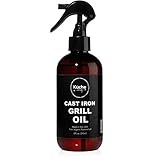
- USDA ORGANIC FLAXSEED OIL, GROWN AND PRESSED IN THE USA: The flax is grown and pressed in North Dakota, then bottled for grill...
- SPRAYS ON, WIPES BACK, SETS HARD: The trigger bottle puts a thin, even coat across grates and griddle tops without wasting oil in...
- THIN COATS ARE THE WHOLE TRICK: Two or three passes, wiped back with a cloth until the metal looks dry before the heat goes on...
Best for: Thin-coat seasoning fans.
USDA organic flaxseed oil in an 8-ounce spray bottle gives this Kuche Chef formula a seasoning-first approach for grill grates. Because flaxseed is a drying oil, it is meant to set hard under heat rather than stay oily on the surface.
The bottle is designed to spray on and wipe back, which helps you lay down a thin coat instead of pooling oil in grate gaps. That matters because the product description says thin coats are the whole trick, and the heat-driven polymerization is what creates the tough, glassy layer. Its 2.36 x 2.36 x 7-inch dimensions keep the bottle compact, while the 8-ounce size is enough for repeated seasoning passes without taking much space. The flax is grown and pressed in North Dakota, which is a concrete sourcing detail that may matter to ingredient-conscious buyers. For grill grates that need a seasoning layer rather than just a slick spray, this formula is highly targeted.
Pros
- USDA organic flaxseed oil suits seasoning-focused care
- 8-ounce spray bottle is easy to store near the grill
- Drying oil formula sets hard under heat
- Spray-and-wipe use helps avoid excess oil in grate gaps
Cons
- The thin-coat method takes wiping and repeat passes, so it is less convenient than a single quick spray.
This is a strong match for buyers who want to build a hard seasoning layer on grill grates. It works best when you are willing to use careful thin coats instead of a fast one-pass spray.
| Specification | Details |
|---|---|
| Product Dimensions | 2.36 x 2.36 x 7 inches |
| Weight | 8 ounces |
| Manufacturer | Kuche Chef |
| USDA Organic | Yes |
| Origin | Grown and pressed in North Dakota |
I’d choose this if seasoning quality matters more to you than speed. The spray-and-wipe routine is ideal for grill owners who want a hard, even layer and don’t mind taking an extra minute to do it right.
7. Cast Iron Oil Non-stick Conditioner for Seasoning Skillets,Griddles, BBQ Grill,
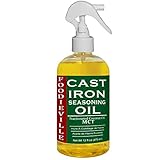
- Important information about the spray applicator: The optional spray top (the product may be applied without spraying) has an...
- Exceptional Value: Offering 25% more per bottle than leading brands, our cast iron oil delivers unmatched value. At Creation Farm...
- Regular use of this seasoning oil not only maintains the non-stick properties of your cast iron but also protects it from rust and...
Best for: Value-size conditioner spray.
A 12-ounce bottle gives this Creation Farm cast iron oil more product per container, which is useful when you season grill grates often. The spray option adds convenience, but the bottle can still be used without the sprayer if you prefer a manual application.
The product information calls out an optional spray top with an off/on button on the neck, so you get a little more control over how it dispenses. It also notes that the sprayer may need a few vigorous pumps to initialize, which is useful to know before the first use. With 12 fluid ounces in the bottle and dimensions of 6 x 4 x 3 inches, this format offers a broader supply than many smaller seasoning oils while still fitting in a storage bin. The listing also says it offers 25% more per bottle than leading brands, which is a concrete capacity advantage for frequent users. For grill grate conditioning, the larger fill and flexible applicator are the key takeaways.
Pros
- 12 fluid ounces supplies frequent grill maintenance
- Optional spray top gives application flexibility
- 6 x 4 x 3-inch bottle is easy to store
- Listed as 25% more per bottle than leading brands
Cons
- The spray top may require priming with vigorous pumping before it works smoothly.
This is a practical choice for regular grill owners who want more oil in one bottle. It suits people who value flexible application and don’t mind a little setup from the sprayer.
| Specification | Details |
|---|---|
| Product Dimensions | 6 x 4 x 3 inches |
| Weight | 12 ounces |
| Manufacturer | Creation Farm |
| Units | 12 Fluid Ounces |
I’d recommend this to anyone who wants a larger bottle and the option to spray or pour as needed. It’s a smart fit for grill grates that need regular conditioning and for users who prefer one bottle to cover multiple surfaces.
8. BLACKSTONE® Griddle Seasoning and Cast Iron Conditioner, 15.3oz
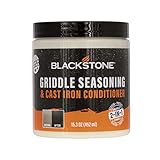
- TLC for your griddle cooktop: All you need to build a slick, easy-release surface that's protected from rust and easy to work with...
- 2 in 1 formula (conditions & protects): Our cast iron seasoning formula creates a nonstick seasoning layer that makes cooking and...
- Not just for griddles: Season or re-season your cast iron pans as well
Best for: Heavy-use griddle owners.
A 15.3-ounce conditioner from Blackstone brings the largest fill in this roundup, which is useful when grill grates and griddle tops need frequent seasoning. The 4 x 4 x 5.5-inch bottle is compact relative to its capacity, so it can sit near the cooktop without taking much room.
The 2-in-1 formula is meant to condition and protect, so the bottle is doing more than just adding a slick surface. Blackstone says it creates a nonstick seasoning layer while helping guard against rust, moisture, and other elements, which is a solid fit for outdoor grill grates exposed to weather. The product is also positioned for cast iron pans, so it has a clear role beyond one grill surface. At 15.2 ounces listed weight and 15.3 ounces of units, it is the highest-capacity bottle in the set, which means fewer refills for heavy users. If you want one conditioner for repeated maintenance, the combination of volume and protection is the main draw.
Pros
- 15.3-ounce size offers the biggest fill here
- 2-in-1 formula conditions and protects surfaces
- Helps guard against rust and moisture
- Compact 4 x 4-inch footprint stores neatly
Cons
- The larger bottle may be more than occasional grill users need for simple spot treatment.
This is the strongest pick for frequent grill and griddle maintenance. It fits best when you want one conditioner that can handle repeated use and outdoor exposure.
| Specification | Details |
|---|---|
| Product Dimensions | 4 x 4 x 5.5 inches |
| Weight | 15.2 ounces |
| Manufacturer | Blackstone |
| Units | 15.3 Ounce |
I’d choose this if your grill grates see frequent use and you want more conditioner in one bottle. The bigger fill and rust-protection focus make it especially appealing for outdoor setups that need regular upkeep.
Quick Comparison Table of Best Oil for Grill Grates
| Product Name | Type | Heat Safe | Size | Best For | Check Price |
|---|---|---|---|---|---|
| Weber Grill’n Spray, 6 oz | Spray | Hot grill | 6 oz | Direct grill use | Check Price |
| CARON & DOUCET – BBQ Grill | Liquid | Plant-based | Citrus | Grate cleaning | Check Price |
| Weber Grill’N Spray 6 Oz. | Spray | Hot grills | Pack of 3 | Bulk spray option | Check Price |
| Crisco Professional No-Stick Cooking Spray, Grill | Cooking spray | Alcohol-free | 12 oz | No-stick grilling | Check Price |
| Verdana Cast Iron Seasoning Oil | Oil conditioner | Food grade | 8 oz | Cast iron care | Check Price |
| Grill & Griddle Seasoning Oil Spray | Spray | USDA Organic | 8 oz | Flaxseed seasoning | Check Price |
| Cast Iron Oil Non-stick Conditioner for | Conditioner | BBQ grill | 12 oz | Seasoning grates | Check Price |
| BLACKSTONE® Griddle Seasoning and Cast Iron | Conditioner | Rust protection | 15.3 oz | Griddle conditioning | Check Price |
How to Choose the Best Oil for Grill Grates
Smoke point and heat stability
Choose a grill grate oil with a smoke point above 400°F for direct-heat grilling and above 450°F for hard searing, because that range holds up during preheating without breaking into bitter smoke or leaving dark residue. On hot grates, thin coverage matters more than richness: a good oil spreads fast, flashes cleanly, and leaves only a light sheen; a poor one smokes early and turns tacky. For most grill owners, a refined neutral oil with a high smoke point is the safest pick for steady heat and clean flavor.
| Type | Best for |
|---|---|
| Refined avocado or refined canola | High-heat grilling, frequent searing |
| Refined grapeseed or sunflower | Fast preheating and light coating |
| Unrefined oils | Low-heat use only, not hot grates |
Seasoning performance on metal surfaces
For seasoning, pick an oil that dries into a thin, even film instead of a thick, sticky layer, because the best seasoning on grill grates comes from repeated light coats, not heavy application. Cast iron grate owners need an oil that polymerizes cleanly and helps form a hard protective surface; stainless steel needs a film that reduces sticking without turning gummy; porcelain-coated grates need a very light wipe to avoid buildup in the finish. Good oil leaves a dry-feeling surface after heating, while poor oil stays glossy and tacky.
For regular maintenance seasoning, choose a refined, dry-finishing oil and apply it sparingly.
| Grate material | Oil trait to prioritize |
|---|---|
| Cast iron | Strong seasoning film and heat stability |
| Stainless steel | Nonsticky, easy-release coating |
| Porcelain-coated | Light application and low residue |
Flavor impact and food compatibility
Pick an oil with a neutral or very mild flavor when you cook a mix of meats, vegetables, and delicate foods, because the oil should support the food, not rewrite it. A neutral oil keeps marinades, spice rubs, and smoke profiles clear; a lightly flavored oil works best only when you want its character to show up in the finished food. Strong-tasting oils can clash with fish, chicken, mushrooms, or sweet vegetables, especially on a hot grate.
The right choice for most grillers is a neutral high-heat oil with no added seasoning, while flavor-focused cooks can choose a lightly flavored oil for specific recipes.
| Oil type | Best for |
|---|---|
| Neutral refined oil | Mixed menus and delicate foods |
| Lightly flavored oil | Recipes where oil flavor should show |
| Strongly flavored oil | Specific finishing use, not general grate prep |
Cleanup, residue, and maintenance
Choose an oil that wipes away cleanly and leaves little visible buildup, because easy cleanup starts with residue that stays thin after grilling. The best oils leave grates dry enough to brush off with a quick wipe, while poor oils leave varnish-like patches, sticky spots, and dark deposits that trap soot. This matters most for people who grill often and want fast between-use maintenance.
Look for oil that performs well at high heat, comes in a filtered, refined form, and has no sugar, butter, or added solids that can caramelize on the grate. For low-hassle maintenance, pick a clean-burning refined oil in a bottle you can apply lightly.
- Choose a refined oil with a clear label and no added solids.
- Favor a bottle that supports a thin, controlled coating.
- Avoid oils that leave a glossy, sticky film after heating.
Storage, shelf life, and practical use
Select an oil you will use often enough to finish before it turns stale, because shelf life matters more when the bottle sits near the grill for quick touchups. Refined oils keep longer and stay usable through regular grilling seasons, while less stable oils belong in small bottles and cooler storage. The right package has a tight cap, a narrow or controlled pour spout, and a size that matches your grilling frequency: smaller bottles suit occasional cooks, larger bottles suit frequent use.
Keep the bottle away from direct heat and sunlight so the oil stays fresh. For the most practical setup, choose a shelf-stable refined oil in a spill-resistant bottle with easy pour control.
| Bottle style | Best for |
|---|---|
| Small bottle with tight cap | Occasional grilling and fresher oil rotation |
| Medium bottle with pour spout | Regular prep and touchups |
| Wide-mouth container | Use elsewhere, not fast grill application |
Which Should You Choose?
- If you want to season cast iron grates and build a harder, long-lasting nonstick layer, choose a food-grade seasoning oil that sets hard after wiping on a thin coat.
- If you usually grill over a hot flame and need something you can apply while cooking, choose a non-flammable spray made for direct use on hot grates.
- If your grill grates are greasy, sticky, or covered in residue before seasoning, choose a cleaner-oil formula that removes buildup and helps restore the surface.
- If you want a simple all-purpose option for regular grill maintenance and food release, choose an alcohol-free no-stick cooking spray in a larger bottle or multipack.
Quick Best Oil For Grill Grates Buying Checklist
- Choose a high smoke point. Select an oil that stays stable on very hot grill grates without smoking excessively or breaking down.
- Prefer a neutral flavor. Pick an oil that protects the grates without changing the taste of meats, vegetables, or marinades.
- Check residue level. Look for an oil that leaves a thin, even coating instead of sticky buildup or gummy patches.
- Match it to your grate material. Make sure the oil works well with cast iron, stainless steel, or porcelain-coated grates.
- Look for easy application. Choose a bottle or dispenser that lets you spread a light layer evenly and safely.
- Consider storage stability. Favor oils that keep well and are easy to store near your grill without turning rancid quickly.
How Oil Creates a Better Grilling Surface
Oil helps form a thin protective film on grill grates that reduces sticking and supports more even browning. When heat hits the coated metal, the oil begins to polymerize, which means it bonds to the surface and can create a smoother, more seasoned layer over time. This is especially useful on cast iron and steel grates, where bare metal can grab food and make cleanup harder.
The goal is not to leave a greasy layer behind. A light coating is enough to improve release and help protect against moisture. Too much oil can drip, flare up, or leave sticky residue, so the best results usually come from applying a minimal amount to clean, warm grates before cooking.
Common Oil Types Used on Grill Grates
Different oils behave differently when exposed to high heat, and that affects how well they work on grill grates. Refined oils with higher smoke points are often preferred because they are less likely to burn quickly and leave harsh flavors. Neutral oils are especially popular for general grill maintenance because they do not compete with the taste of the food.
| Type | Best for |
|---|---|
| Canola oil | General grate coating and everyday grilling |
| Avocado oil | Very hot grills and higher-heat cooking |
| Grapeseed oil | Light seasoning with a neutral flavor |
| Peanut oil | Strong heat tolerance and fast preheating |
Unrefined oils and heavily flavored oils can work in some situations, but they are more likely to smoke or leave residue. Matching the oil to the grill temperature matters just as much as the brand name on the bottle.
How to Apply Oil Without Creating Flare-Ups
Proper application matters as much as the oil itself. The safest approach is to clean the grates first, then warm them slightly so the oil spreads evenly. A folded paper towel held with tongs, a silicone brush, or a dedicated cloth can help apply a thin, controlled layer without soaking the bars.
The surface should look lightly glossy, not wet.
Excess oil is the main cause of flare-ups because it can drip into the fire or onto hot burners. For that reason, it is better to use multiple light passes than one heavy application. If flames rise after oiling, the coating is too thick or the grill is hotter than needed for the task.
A little restraint goes a long way toward safer grilling and cleaner results.
Maintaining Oiled Grates Between Cookouts
Oiled grates stay in better condition when they are cleaned and dried after each use. Food residue, moisture, and ash can break down the protective layer and encourage rust, especially on cast iron and carbon steel. After grilling, use a brush or scraper while the grates are still warm, then let them cool before wiping them with a small amount of oil if needed.
If the grill will sit unused for a while, a light re-oiling can help protect the surface from humidity. Store the grill with the lid closed only when everything is fully cool and dry. A consistent routine is more effective than occasional heavy oiling, because it helps maintain a stable surface without building up sticky deposits.
Mistakes That Can Make Grill Grates Stickier
One of the most common mistakes is using too much oil. A heavy layer tends to collect debris, smoke excessively, and form tacky spots that make food stick even more. Another frequent problem is applying oil to dirty grates, which locks old residue in place instead of protecting the metal.
Using the wrong oil for the heat level can also create a burnt coating that is difficult to remove.
- Do not oil a dripping-wet surface.
- Do not use excessive heat immediately after coating.
- Do not skip cleaning before reapplying oil.
- Do not choose a low-smoke-point oil for high-heat grilling.
Small corrections usually solve the issue. Cleaner grates, lighter coats, and better timing often improve performance more than switching products.
Frequently Asked Questions (FAQs)
What Makes An Oil Good For Grill Grates?
A good oil for grill grates has a high smoke point, a neutral flavor, and the ability to form a thin protective layer. Best oil for grill grates should also resist sticky residue so the surface stays easier to clean after high-heat cooking.
Why Does Smoke Point Matter For Grill Grates?
Smoke point matters because grill grates reach very high temperatures that can break down lower-quality oils. Best oil for grill grates should stay stable under heat, reducing burnt flavors, harsh smoke, and the buildup that can cling to metal surfaces.
Should Grill Grate Oil Have Flavor?
A neutral oil is usually the best choice for grill grates because it protects the metal without affecting food taste. Best oil for grill grates should support searing and seasoning while letting marinades, rubs, and natural ingredients remain the focus.
Can One Oil Work For All Grill Grate Materials?
One oil can work for many grill grate materials, but the best choice depends on how the surface holds seasoning and residue. Best oil for grill grates should perform well on cast iron, stainless steel, or porcelain-coated grates with a light, even application.
How Much Oil Should You Use On Grill Grates?
Use only a thin coat on grill grates, because too much oil can turn sticky and leave residue. Best oil for grill grates works best when brushed or wiped on sparingly, creating a light film rather than pooling on the metal.
How Often Should You Oil Grill Grates?
You should oil grill grates before cooking and, when needed, after cleaning to help protect the surface. Best oil for grill grates supports regular upkeep by maintaining a slick finish without creating heavy buildup that makes later cleaning harder.
What Should You Avoid In Grill Grate Oil?
Avoid oils that smoke quickly, taste strongly, or leave a thick residue on hot metal. Best oil for grill grates should be clean-burning, easy to apply, and stable enough to protect the grate without turning into a sticky coating.
Final Suggestions
Choosing the best oil for grill grates helps create a cleaner cooking surface, better heat performance, and easier maintenance after every barbecue. The right oil can protect metal, support seasoning, and keep flavors pure while you cook with confidence. With a smart choice and light application, your grill can stay ready for consistently better results.