Top 3 Best Professional Coffee Maker Picks
The best professional coffee maker can transform daily brewing from routine into a precision-driven process. In busy offices, cafés, and serious home kitchens, consistency matters as much as flavor, and that is where advanced brew systems, thermal stability, and durable stainless steel construction make a difference. From commercial coffee maker performance to professional-grade coffee machine features, today’s models are engineered to balance extraction, temperature control, and batch size without sacrificing taste.
A high-end coffee brewer should also simplify workflow, reduce waste, and handle repeated use with confidence. As you compare the best professional coffee maker options, the real question becomes which design delivers the right mix of power, control, and long-term value.
In-depth Reviews of the Best Professional Coffee Maker
1. Breville BES870XL Barista Express Espresso Machine, Brushed Stainless Steel
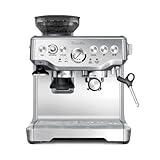
- MANUAL HAND-TEXTURED MICROFOAM: The powerful steam wand on this cappuccino maker and latte machine is designed to quickly turn...
- PRECISE DOSE GRINDING: Integrated precision conical burr grinder on bean-to-cup espresso machine grinds on demand to deliver...
- WATER PRESSURE: Low pressure pre-infusion gradually increases pressure at the start and draws out all the flavors evenly during...

Best for: Home espresso with grinder control.
A brushed stainless steel body and integrated conical burr grinder give the Breville BES870XL a true bean-to-cup workflow in one footprint. That means you grind fresh beans directly into the portafilter, then move straight into extraction and milk texturing without separate equipment. For a buyer who wants espresso, lattes, and cappuccinos from a single machine, the setup keeps the process compact and hands-on.
The 13.8″D x 12.5″W x 15.9″H footprint keeps it substantial enough for a serious coffee station while still fitting on many counters. Its 1-cup capacity matches a single-serve espresso routine, so each shot is focused and fresh. The manual control approach gives you direct say over dose, grind, and milk texture, which matters when dialing in different beans. Low pressure pre-infusion helps the coffee bed soak evenly before full pressure kicks in, supporting more balanced extraction. The brushed stainless steel finish also suits a high-use kitchen where wipe-down cleanup matters after daily brewing.
Pros
- Integrated precision conical burr grinder grinds beans on demand
- Brushed stainless steel exterior fits a professional-looking setup
- Manual steam wand creates smooth microfoam for milk drinks
- Low pressure pre-infusion supports more even espresso extraction
Cons
- 1-cup capacity means it is aimed at single-shot espresso service rather than batch brewing
For someone who wants hands-on espresso rather than a pod routine, this is the most practical fit in the group. It suits home baristas who value fresh grinding, milk texturing, and a compact all-in-one setup.
| Specification | Details |
|---|---|
| Brand | Breville |
| Capacity | 1 cups |
| Color | Brushed Stainless Steel |
| Product Dimensions | 13.8″D x 12.5″W x 15.9″H |
| Special Feature | Manual |
I would pick this if the goal is to make espresso drinks with more control than a standard drip machine can offer. The integrated grinder and manual steam wand make it attractive for someone who wants to learn the process and fine-tune flavor. It feels most useful for a daily espresso drinker who values fresh grounds and milk texture over sheer volume.
2. Cuisinart 14-Cup Coffee Maker, Programmable PerfecTemp Glass Carafe Coffee Machine

- Please refer to user guide or user manual or user guide (provided below in PDF) before first use
- State-of-the-art technology to ensure hotter Coffee without sacrificing flavor or quality
- Gold tone, commercial style Permanent filter
Best for: Large-family drip brewer.
A 14-cup glass carafe and a programmable control set make the Cuisinart 14-Cup Coffee Maker a strong fit for larger drip-coffee routines. The brewer can handle multiple mugs in one cycle, so it works well when several people drink at different times or when you want a full pot waiting. Its black and stainless finish keeps the machine looking straightforward in a busy kitchen.
The 7.75″D x 9″W x 14″H footprint is relatively compact for a brewer that serves up to 14 cups, so it brings big-batch capacity without taking over the counter. Brew strength control lets you choose regular or bold coffee, which is useful when one household prefers a lighter morning pot and another wants more intensity. The gold tone permanent filter reduces the need for disposable paper filters, and the auto clean function helps when a machine is used often. Auto shut-off adds a practical layer of convenience for busy mornings and office-style use.
Pros
- 14-cup capacity handles group brewing or repeated refills
- Programmable controls support scheduled coffee service
- Brew strength control offers regular or bold settings
- Gold tone permanent filter reduces filter swapping
Cons
- Uses a glass carafe, so it does not hold heat as long as a thermal model
This is the better fit for households, offices, or shared kitchens that need volume first and fuss second. It gives you scheduling, strength control, and enough capacity to cover a crowd without moving into commercial gear.
| Specification | Details |
|---|---|
| Brand | Cuisinart |
| Capacity | 14 cups |
| Color | Black/Stainless |
| Product Dimensions | 7.75″D x 9″W x 14″H |
| Special Feature | Auto Clean Function, Auto Shut-Off, Programmable |
I see this as the most practical choice when the main need is brewing a lot of coffee reliably. The programmable controls and large capacity make mornings easier for families or small offices, while brew strength control gives some flexibility on flavor. If you want a straightforward drip machine that can keep up with demand, this one makes sense.
3. Cuisinart 12-Cup Coffee Maker, Programmable PerfecTemp Thermal Carafe Coffee Machine

- CONFIDENCE IN EVERY POUR — Trust that your second cup tastes as good as your first. Double-wall thermal carafe holds coffee hot...
- HOT FOR HOURS WITH NO BURN — PerfecTemp brews at a higher temperature, and the double-wall insulated stainless thermal carafe...
- FLAVOR THAT LASTS — The thermal carafe locks in flavor without the bitter compounds a warming plate cooks off over time, so even...
Best for: Programmable thermal carafe option.
A 12-cup thermal carafe and 24-hour programmability give the Cuisinart 12-Cup Coffee Maker a strong blend of scheduling and heat retention. The thermal carafe is the key difference here, since it keeps brewed coffee insulated without relying on a warming plate. That makes it appealing for anyone who wants multiple cups to stay hot while taste remains steady.
The 7.75″D x 9″W x 14.25″H dimensions keep the unit compact enough for an office counter or a crowded home kitchen. Its 12-cup capacity supports larger pours without pushing into oversized machine territory, and the 1-4 cup setting makes smaller batches easier when only one or two people need coffee. Brew Strength Control lets you choose regular or bold output, and the Brew Pause convenience lets you pour before the full cycle finishes. The self-clean feature reduces maintenance effort for frequent use, while the optional ready alert tone adds useful feedback during busy mornings.
Pros
- Thermal carafe helps keep coffee hot without a warming plate
- 24-hour programmability supports set-it-and-forget-it brewing
- 1-4 cup setting improves smaller-batch flexibility
- Self-clean feature simplifies upkeep for regular use
Cons
- No glass carafe means you cannot visually check the coffee level at a glance
This model suits buyers who want hot coffee to stay insulated after brewing and who value timed starts. It fits especially well for small teams, busy households, or anyone who prefers a thermal carafe over a heated base.
| Specification | Details |
|---|---|
| Brand | Cuisinart |
| Capacity | 12 cups |
| Color | Stainless |
| Product Dimensions | 7.75″D x 9″W x 14.25″H |
| Special Feature | Programmable |
I would choose this over a standard glass-carafe brewer if keeping coffee hot over time matters more than watching the pot. The 1-4 cup setting makes it more versatile than many larger drip machines, and the thermal carafe is a real advantage for longer serving windows. It feels best for people who brew once and drink gradually.
Quick Comparison Table of Top Professional Coffee Makers
| Product Name | Capacity | Type | Special Feature | Best For | Check Price |
|---|---|---|---|---|---|
| Cuisinart 12-Cup Coffee Maker, Programmable PerfecTemp | 12 cups | Drip coffee maker | Programmable | Daily brewing | Check Price |
How to Choose the Best Professional Coffee Maker
Brew capacity and daily output
Match capacity to the number of drinks you serve in the busiest hour, not the quietest one. A small office needs a 10- to 12-cup carafe with fast refill cycles; a café counter or hospitality station needs 12 to 20 cups per batch, or more than one brewer working at once. Good output means a full pot in one run, plus the ability to brew back-to-back without long recovery time.
Poor output means constant refilling, weak pace during rushes, and a carafe that empties before the line clears. Choose a 10–12 cup machine for small teams, a 12–15 cup batch brewer for steady office traffic, and a high-volume multi-cup unit for peak service.
| Type | Best for |
|---|---|
| 10–12 cup single brewer | Small offices and low-traffic service points |
| 12–15 cup batch brewer | Mid-size teams with regular morning demand |
| 15–20+ cup high-output brewer | Cafés, break rooms, and hospitality stations |
| Fast-recovery dual setup | Peak hours and continuous serving |
Temperature control and brew quality
Choose a machine that holds extraction temperature steady from the first cup to the last, because uneven heat gives you thin or bitter coffee in the same batch. Look for stable brewing in the 195–205°F range, adjustable strength control, and preinfusion that wets the grounds evenly before full flow starts. Good models keep flavor balanced across repeated cycles and let you move from light to bold without guessing.
Poor models swing in temperature, finish early, or pull different results from one brew to the next. Pick a precision brewer for teams that value consistency, a strength-adjustable unit for mixed taste preferences, and a preinfusion model for users who want cleaner, fuller flavor.
| Feature | Best for |
|---|---|
| Stable brew temperature | Consistent flavor and even extraction |
| Strength settings | Households or offices with different taste preferences |
| Preinfusion/saturation control | Cleaner flavor and better grounds saturation |
| Repeatable cycle performance | Busy users brewing several pots a day |
Build quality and commercial durability
Prioritize stainless steel, thick housing, and parts that feel solid in hand, because professional use punishes flimsy plastic fast. A good coffee maker has a sturdy body, a carafe that seats securely, a basket that does not flex, and a warming plate that stays even under repeated use. Food-safe materials matter everywhere coffee touches the machine, especially in the tank, brew basket, and carafe lid.
Weak construction shows up as wobble, warped lids, cloudy parts, and seals that loosen over time. Choose stainless-forward models for daily heavy use, reinforced plastic only where heat exposure is low, and one-piece, heavy-duty components for service areas that run all day.
| Material or part | What to look for |
|---|---|
| Housing | Stainless steel or reinforced shell with minimal flex |
| Carafe | Thick glass or insulated steel with a secure lid |
| Brew basket | Rigid, food-safe, and easy to seat correctly |
| Warming plate | Even heat and a flat, durable surface |
Ease of cleaning and maintenance
Choose a machine you can clean in minutes, not one that turns maintenance into a chore. Removable brew baskets, dishwasher-safe carafes, and washable drip trays keep hygiene simple during busy shifts. Descaling alerts are a strong sign of a machine that expects regular care, and they help you stay ahead of mineral buildup before it affects taste or flow.
A good filter basket opens wide, rinses clean, and does not trap grounds in corners; a poor one has tight seams, awkward access, and residue that collects fast. Pick a removable-part design for shared spaces, a clear descaling reminder system for hard-water areas, and an open-access basket layout for the fastest daily cleanup.
Controls, convenience, and safety
Select controls that remove guesswork and keep operation safe during rush periods. Programmable timers help staff wake the machine before service starts, while one-touch brewing suits fast, repeat use. Auto shutoff and overheating protection are nonnegotiable for unattended operation, and a clear display with simple buttons keeps training easy.
Check handle shape, spout control, and counter footprint too, because a bulky unit or awkward pour path slows service and increases spills. Choose a programmable model for planned service, a one-touch machine for high-turnover counters, and a compact, safety-focused brewer for offices and shared spaces where simplicity matters most.
Which Should You Choose?
- If you want to grind beans, tamp, and steam milk for café-style drinks at home, choose a semi-automatic espresso machine with a built-in grinder and a strong steam wand.
- If you brew large pots for a busy office or household and want hotter coffee in a glass server, choose a 12- to 14-cup programmable drip machine with a glass carafe.
- If you prefer coffee that stays hot longer without a warming plate, choose a programmable drip machine with a thermal carafe.
- If you need fast weekday brewing with easy scheduling and simple cleanup, choose a fully automatic coffee maker with 24-hour programming and self-cleaning features.
Quick Best Professional Coffee Maker Buying Checklist
- Confirm capacity needs. Make sure the coffee maker can handle your daily cup volume without constant refilling.
- Check brew temperature stability. Consistent heat helps extract fuller flavor and improves repeatable results.
- Inspect build materials. Durable metal, reinforced parts, and food-safe components usually last longer under frequent use.
- Review cleaning access. Removable baskets, tanks, and drip trays make upkeep faster and reduce buildup.
- Look for useful controls. Programmable settings, strength options, and clear buttons simplify busy mornings.
- Verify safety features. Auto shutoff and overheating protection add peace of mind in shared or commercial spaces.
How Professional Coffee Makers Brew at Scale
Professional coffee makers are designed to maintain consistency when brewing multiple pots or back-to-back servings. Most use larger heating elements, more stable water temperatures, and commercial-grade spray heads to distribute water evenly over the grounds. This helps improve extraction, which affects body, aroma, and flavor balance.
Many models also support direct water line connections, allowing continuous operation in cafes, offices, and catering setups. Unlike small home brewers, professional units are built to recover heat quickly after each cycle, so the next batch starts under similar conditions.
That repeatability is a major reason they perform well in busy environments where speed and uniform taste matter.
Commercial Drip, Espresso, and Bean-to-Cup Models Compared
Not every professional coffee maker serves the same purpose. Drip systems are ideal for high-volume brewed coffee, espresso machines focus on pressure-based extraction, and bean-to-cup units automate grinding, tamping, and brewing in one process. The best choice depends on menu needs, staff training, and expected traffic.
Drip brewers are simplest to operate, espresso machines deliver more specialty drink options, and bean-to-cup systems reduce manual steps while keeping flavor fresh. Some businesses also use hybrid setups, pairing a drip brewer with an espresso station.
Understanding these categories helps match equipment to service style instead of overbuying features that will not be used.
| Type | Best for | Key trade-off |
|---|---|---|
| Commercial drip | High-volume brewed coffee | Limited drink variety |
| Espresso machine | Cafes and specialty drinks | Requires more skill |
| Bean-to-cup | Self-service and offices | More cleaning of internal parts |
| Hybrid setup | Broad drink menus | Needs more space and upkeep |
Routine Cleaning and Descaling for Reliable Performance
Regular cleaning is essential because mineral buildup, old coffee oils, and residue can quickly affect taste and machine function. Daily tasks usually include washing brew baskets, drip trays, carafes, and any removable parts that touch coffee. Weekly attention should cover spray heads, water reservoirs, and gaskets, especially in high-use environments.
Descaling is equally important when the local water supply is hard, since limescale can slow heating and reduce flow. Skipping maintenance may cause bitter flavors, uneven brewing, or premature pump and valve wear.
A simple log for cleaning cycles can help staff stay consistent and prevent small issues from turning into expensive downtime.
Installation Needs for Water, Space, and Power
Before placing a professional coffee maker, confirm that the site can support its utility requirements. Some machines only need a standard outlet and water refill, while others require a dedicated circuit and direct plumbing. Counter depth matters because lids, hoppers, and access panels need room to open safely.
Ventilation is also important near hot surfaces and steam, especially in enclosed prep areas. For plumbed units, filtration should be part of the installation plan to reduce scale and improve flavor stability.
A level surface helps brewing consistency and prevents spills. Measuring the full footprint, including clearance for maintenance, avoids cramped setups that make daily use difficult.
Mistakes That Can Reduce Coffee Quality
Even a strong machine can produce poor results if it is used incorrectly. One common mistake is using the wrong grind size, which can lead to weak coffee or overextraction depending on the brewer type. Another issue is inconsistent dosing, especially when staff eyeball the grounds instead of measuring them.
Water quality is also easy to overlook; high mineral content can alter flavor and shorten machine life. Overloading the brew basket can cause channeling or overflow, while underfilling can produce thin coffee.
Finally, ignoring warm-up time may lead to unstable temperatures at the start of service. Clear brewing procedures help keep results consistent across shifts and operators.
Frequently Asked Questions (FAQs)
What Makes A Coffee Maker Truly Professional?
A professional coffee maker is built for consistent output, dependable heat, and frequent use in busy settings. It typically offers larger capacity, sturdier construction, and more precise brewing controls than standard home machines, which helps maintain flavor and speed during repeated cycles.
How Important Is Brew Temperature In A Professional Coffee Maker?
Brew temperature is critical in a professional coffee maker because it directly affects extraction and flavor balance. Stable heating around the brewing range produces a fuller cup, while weak temperature control can leave coffee sour, thin, or uneven across batches.
What Capacity Should I Choose For A Professional Coffee Maker?
Choose a professional coffee maker capacity based on how many cups you serve during peak periods. A larger carafe or multi-batch system is better for offices, cafés, and event spaces, while smaller setups work well when demand is steady but modest.
Are Programmable Settings Worth It In A Professional Coffee Maker?
Yes, programmable settings are worth it in a professional coffee maker because they save time and improve consistency. Timers, auto-start functions, and strength controls let you prepare coffee on schedule and reduce manual steps during busy service windows.
What Materials Should I Look For In A Durable Coffee Maker?
Look for a durable coffee maker with stainless steel components, reinforced housing, and food-safe parts that can handle daily use. Strong materials resist wear, help retain heat, and are less likely to crack or warp under repeated brewing cycles.
How Do I Keep A Professional Coffee Maker Easy To Maintain?
Keep a professional coffee maker easy to maintain by choosing models with removable baskets, accessible tanks, and simple descaling routines. These features make daily cleaning faster, reduce mineral buildup, and help preserve brew quality over time.
Which Safety Features Matter Most In A Professional Coffee Maker?
The most important safety features in a professional coffee maker are auto shutoff, overheating protection, and stable placement on the counter. These features reduce risk during long operating hours and make the machine safer in shared or fast-paced environments.
Final Suggestions
Choosing the best professional coffee maker comes down to capacity, brewing precision, durability, and easy maintenance. With the right combination of performance and convenience, it can support busy routines while delivering reliable coffee day after day. Use these buying factors to narrow your options confidently and pick a machine that keeps every cup consistent and satisfying.