Top 6 Best Robotic Pool Suction Vacuum Head Picks
best robotic pool suction vacuum head technology is reshaping how pool owners handle debris, circulation, and surface cleaning. Unlike basic pool vacuum heads, these specialized designs combine suction efficiency, brush geometry, and material durability to help manage fine sediment, leaves, and stubborn algae buildup. The best robotic pool suction vacuum head models are engineered to improve contact with pool surfaces while reducing strain on filtration systems and manual upkeep.
As robotic pool vacuums and suction vacuum heads continue to evolve, features like sealed wheels, flexible skirts, and optimized flow channels matter more than ever. In this guide, we break down what separates an average model from a truly effective one, so you can see why the right design changes everything before you choose.
Detailed Overview of the Best Robotic Pool Suction Vacuum Head
1. TidyMister Weighted Triangular Pool Vacuum Brush Head, Direction-Control

- SINGLE-HANDED CONTROL: The universal handle and weighted design give you single-handed control, cutting effort by 50% while...
- CORNER-FRIENDLY SHAPE: The triangular head easily navigates along walls and into corners, so you pick up leaves, twigs, and other...
- COMPLETE CLEANING TECHNOLOGY: Eight strategically placed bottom and corner brushes work together to deliver a comprehensive clean...
Best for: Corners and walls on a budget of effort.
A triangular plastic head with eight bottom and corner brushes gives this TidyMister model a clear edge for scraping debris from pool edges, steps, and tight corners. The weighted design keeps it planted while the universal handle supports single-handed control, so one pass can stay steady without constant repositioning. That matters when you want a manual suction head that tracks cleanly along walls instead of skating over missed spots.
The triangle shape is the main advantage here because it reaches into angles that rectangular heads often leave behind. Eight strategically placed brushes work across the bottom and corners, helping loosen leaves, twigs, and stuck-on grit before the suction line carries them away. The universal handle adds easier direction changes, while the weighted body helps the head stay grounded instead of floating up between strokes. As a manual tool with a plastic build and a directional-control layout, it suits buyers who want simple operation and more complete coverage without switching attachments mid-clean. It is especially practical for pools with lots of corners or ledges.
Pros
- Triangular head reaches corners and wall edges more completely
- Eight bottom and corner brushes help loosen debris across contact points
- Weighted design keeps the head grounded for steadier suction cleaning
- Universal handle supports single-handed directional control
Cons
- Plastic construction gives you a light manual head, but not the extra glide features of wheel-based designs
For pools with corners, steps, and edge buildup, this head makes manual vacuuming more efficient. It suits buyers who value precise contact over extra bells and whistles.
| Specification | Details |
|---|---|
| Brand | TidyMister |
| Model Name | 2025 Enhanced TidyMister Pool Vacuum Head |
| Material | Plastic |
| Color | Triangle |
| Power Source | Manual |
I’d pick this if my main problem was debris hiding in corners and along wall lines. The triangular footprint and brush layout make it feel purpose-built for detail cleaning, while the weighted body keeps the head from wandering. It makes the most sense for someone who wants a simple manual suction head and values controlled coverage over speed.
2. Hayward SP1068 Pool Vacuum Cleaner Head
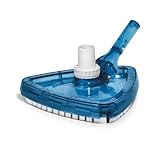
- "See-thru" design for fast and easy cleaning
- Long-wearing brushes quickly loosen tough algae spots
- Contoured shape provides for easy corner and step cleaning
Best for: Big pools needing easy hose handling.
A contoured blue plastic body with a see-thru design gives the Hayward SP1068 a practical advantage when you want to watch debris collect as you clean. Its 23.6-inch length and 12.4-inch width create a broad working face, while the 360-degree swivel connector helps reduce hose twist during longer passes. That combination is useful for buyers who want a familiar triangular head with less line fuss.
Three brushes on the head help loosen algae and settled grime as you move across the floor, so suction can lift debris without repeated scrubbing. The contoured shape is meant to reach corners and steps more easily, which helps when your pool has transitions instead of one flat surface. The included 1-1/4-inch and 1-1/2-inch swivel hose connections give it broad compatibility with common setups, so you can match existing equipment more easily. Its plastic build keeps the head straightforward to handle, and the swivel connector matters in long cleaning sessions because hose tangling can slow down a full sweep. Buyers who want visibility plus hose flexibility will appreciate the setup.
Pros
- See-thru design lets you monitor debris collection while cleaning
- Three brushes help loosen algae and stuck-on buildup
- 360-degree swivel connector reduces hose tangling
- 1-1/4-inch and 1-1/2-inch swivel hose connections support common setups
Cons
- Optional weight package is not included, so extra vacuuming stability would require a separate add-on
This is a strong fit for people who want a wider triangular head with hose-friendly motion. It works well for inground pools where corners, steps, and long runs all matter.
| Specification | Details |
|---|---|
| Brand | Hayward |
| Model Name | SP1068FA/SPX1068FA |
| Material | Plastic |
| Color | Blue |
| Product Dimensions | 23.6″L x 12.4″W x 18.5″H |
My take is that this is the more practical choice for someone who hates hose twist and wants a head they can actually watch while it works. The swivel connection and contoured shape make it feel easy to manage in real use. If your pool needs routine cleaning rather than aggressive scrubbing, this is a sensible pick.
3. TidyMister Rectangular Weighted Pool Vacuum Head with Base Angle Limiter

- ONE-HAND DIRECTIONAL CONTROL: Change direction with one hand instead of repeatedly dragging the vacuum head back to reposition it...
- RECTANGULAR FLOOR & CORNER SCRUBBING: Dense bottom bristles scrub across open pool floors while integrated side brushes clean...
- ANTI-LIFT BASE ANGLE LIMITER: Tired of the vacuum head suddenly flipping up when you push forward? The Base Angle Limiter provides...

Best for: Mixed pool types and easy steering.
A rectangular plastic-and-resin head with a directional-control handle gives this TidyMister model a different kind of precision than triangular cleaners. The stable weighted design keeps it planted while the base-angle limiter and rotatable adapter help you change direction without dragging back. That makes it appealing for buyers who want a manual suction head that handles round, freeform, inground, above-ground, and vinyl liner pools with less fuss.
The rectangular footprint spreads contact more evenly across the floor, which helps when you want broad coverage on repeated passes. Bottom and corner brushes add scraping power where dirt collects, while the non-marking wheel helps the head move without leaving harsh contact marks on surfaces. The rotatable adapter is set up for 1-1/4-inch or 1-1/2-inch hoses, so it works with common hose sizes instead of requiring a special setup. The stable-maintain spring is there to prevent uncontrolled upturning, which matters when the head meets a change in depth or slope. For buyers cleaning different pool shapes, that mix of control and compatibility is the key value.
Pros
- Directional-control handle makes direction changes quick and direct
- Bottom and corner brushes improve edge and floor cleanup
- Rotatable adapter fits 1-1/4-inch or 1-1/2-inch hoses
- Non-marking wheel supports smoother movement on pool surfaces
Cons
- Power Source is listed as corded electric, which does not match a fully manual suction-head setup
This is a good fit if you want one head for several pool shapes and surface types. The control features matter most when you clean around curves, steps, and changes in slope.
| Specification | Details |
|---|---|
| Brand | TidyMister |
| Material | Plastic, Resin |
| Color | Rectangle |
| Power Source | Corded Electric |
| Special Feature | Bottom & Corner Brushes, Non-Marking Wheel, Rotatable Adapter for 1-1/4″ or 1-1/2″ Hoses, Single-Handed directional-Control Handle, Stable-Maintain Spring for No Uncontrolled Upturning |
I’d recommend this for someone who wants more steering control than a basic vacuum head usually offers. The mixed-material body and connector flexibility make it useful across different pool layouts. It feels especially sensible for households that need one attachment to cover more than one type of pool without constant swapping.
4. Vinyl Safe Weighted Pool Vacuum Brush Head with Air Relief

- VINYL-SAFE CLEANING DESIGN: Specifically engineered for sensitive Vinyl Liner Pools, our no-wheels design provides a gentle...
- SMART AIR RELIEF TECHNOLOGY:Our manual pool vacuum head features integrated Air Relief Valves that help balance pressure, reducing...
- MULTI-DIRECTIONAL POWER BRUSHES: Equipped with durable nylon brushes on the base and sides, this scrubber reaches deep into...
Best for: Vinyl liner pools that need gentle contact.
A 14.4-inch-long ABS vacuum head with a no-wheels design focuses on gentle contact for vinyl liner pools. The weighted body keeps it on the floor while the air relief valves help reduce sticking, so the head can move steadily instead of locking down. That gives vinyl owners a cleaner way to remove debris without worrying as much about scratches or snags.
The no-wheels layout is the most important feature here because wheels can sometimes be harsher on sensitive surfaces. The weighted body helps maintain steady contact, which improves pick-up on settled debris without forcing you to press the head down. Air relief valves balance pressure to reduce suction lock, a useful detail when cleaning flatter areas where heads can cling too hard. Its 14.4 x 10 x 4.4-inch size gives it a compact profile that is easier to guide around pool walls and transition zones. The durable ABS material adds a sturdy shell without making the head overly complicated. Buyers with liner pools will appreciate how focused this design is on surface care.
Pros
- No-wheels design is gentler on vinyl liner surfaces
- Air relief valves help reduce suction lock on the pool floor
- Weighted body keeps the head in steady contact for better debris pick-up
- Durable ABS material provides a sturdy lightweight housing
Cons
- The compact 14.4-inch body covers less area per pass than wider vacuum heads
For vinyl liner pools, this is the most cautious option in the group. It balances steady suction with a gentler contact style, which is exactly what sensitive surfaces need.
| Specification | Details |
|---|---|
| Brand | ProMotus |
| Model Name | Vinyl Pool Vacuum Head |
| Material | Durable ABS |
| Color | Navy Blue,white |
| Product Dimensions | 14.4″L x 10″W x 4.4″H |
I’d choose this for a vinyl-lined pool where surface protection matters as much as cleaning performance. The air relief valves are the feature I’d pay attention to because they help the head stay usable instead of pinning itself down. It feels tailored to owners who want a gentler vacuuming routine with fewer worries about liner wear.
5. DPM Flexible Weighted Pool Vacuum Head 14 Inch Heavy Duty

- Flexible Cleaning Body: Designed to conform to pool floors, walls, and contours, helping maintain consistent surface contact for...
- Weighted Design for Stability: Integrated weights keep the vacuum head submerged and stable, preventing floating and improving...
- Wide 14 Inch Cleaning Path: Covers more surface area with each pass, helping reduce overall cleaning time for inground pools
Best for: Wide coverage for larger pool floors.
A 14-inch wide cleaning path gives this DPM weighted head a clear productivity advantage on larger inground pool floors. Its flexible body is meant to follow contours, floors, and walls, while integrated weights keep it submerged and stable as you move. That combination helps you cover more area per pass without losing contact on uneven surfaces.
The flexible cleaning body is the defining feature because it adapts to curves and transitions instead of resisting them. With a 14-inch cleaning width, each sweep covers a broader strip of the floor, which can cut down on repeat passes over open areas. The weighted design keeps the head from floating up, so suction stays more consistent as you move across the pool. Standard hose and pole compatibility means it works with common 1-1/4-inch and 1-1/2-inch equipment, which is useful if you already own basic pool gear. The 17.3 x 15.4 x 10-inch dimensions show it is a substantial head meant for coverage, not tiny spot work. It suits buyers who want faster floor cleaning with fewer interruptions.
Pros
- 14-inch cleaning path covers more surface with each pass
- Flexible body follows floors, walls, and contours more closely
- Integrated weights keep the head submerged and stable
- Fits most 1-1/4-inch and 1-1/2-inch hoses and poles
Cons
- The larger 17.3-inch body is less compact for tight corner maneuvering
This is a strong option if you want fewer passes over a big pool floor. It favors coverage and stability, which is exactly what many inground pool owners need.
| Specification | Details |
|---|---|
| Model Name | Pool Robotic Cleaner |
| Color | Pink, White, Gray |
| Product Dimensions | 17.3″L x 15.4″W x 10″H |
I’d suggest this for someone with a larger floor area who wants broad, steady coverage from a suction head. The flexible body and weighted stability work well together, especially on pools with gentle curves or contour changes. It makes the most sense when speed across open space matters more than ultra-tight corner work.
6. Weighted Pool Vacuum Head with Multi-Directional Brushes,Air Relief Valves for

- WEIGHTED DESIGN FOR SMOOTH & EFFORTLESS GLIDE: Our weighted rectangle pool vacuum head is engineered to sink instantly and stay...
- AIR RELIEF VALVE -NO MORE SUCTION LOCKS – Our manual pool vacuum head features integrated Air Relief Valves that help balance...
- MULTI-DIRECTIONAL POWER BRUSHES: Equipped with durable nylon brushes on the base and sides, this scrubber reaches deep into...
Best for: Simple suction control with broad floor contact.
A weighted rectangular head with a 13-by-7-inch cleaning path gives this ProMotus model a practical mix of reach and control. The ABS body is paired with air relief valves, so it stays grounded while resisting suction lock on the pool bottom. For anyone comparing suction vacuum heads, that makes steady movement across different surfaces easier to manage.
The multi-directional brush layout is useful because it helps scrub as the head changes direction rather than only on one stroke. The 13-inch by 7-inch path covers a useful amount of floor with each pass, which helps reduce overlap on routine cleanings. Air relief valves are important here because they balance pressure and lower the chance of the head sticking, especially on flatter sections of the pool. The durable ABS material keeps the body straightforward and sturdy, and the rectangular shape supports predictable coverage along straight runs and edges. At 10.8 x 6.7 x 4.7 inches, it stays fairly compact while still giving you a broad sweep. It is a good fit for buyers who want dependable manual control without unnecessary complexity.
Pros
- 13-inch by 7-inch cleaning path covers a broad strip per pass
- Air relief valves reduce the chance of suction lock
- Multi-directional brushes help scrub as you steer
- Durable ABS body offers straightforward, sturdy construction
Cons
- The compact 10.8-inch length means it gives up some reach versus larger vacuum heads
This head is a good everyday cleaner for owners who want smooth control and reliable floor contact. It is especially appealing if suction lock has been a recurring annoyance.
| Specification | Details |
|---|---|
| Brand | ProMotus |
| Model Name | Weighted Liner-Safe Pool Vacuum |
| Material | Durable ABS |
| Color | Blue and White |
| Product Dimensions | 10.8″L x 6.7″W x 4.7″H |
My read is that this suits someone who wants a compact suction head that still feels efficient on the floor. The air relief valves are the standout practical feature because they help keep cleaning smoother. If you want a balanced, easy-to-steer option for routine maintenance, this is a sensible pick.
Quick Comparison Table of Top Robotic Pool Suction Vacuum Heads
| Product Name | Shape | Material | Key Feature | Best For | Check Price |
|---|---|---|---|---|---|
| TidyMister Weighted Triangular Pool Vacuum Brush | Triangle | Plastic | Weighted control | Corners and walls | Check Price |
| Hayward SP1068 Pool Vacuum Cleaner Head | Contoured | Plastic | 360 swivel | Easy corner cleaning | Check Price |
| TidyMister Rectangular Weighted Pool Vacuum Head | Rectangle | Plastic, Resin | Directional handle | Mixed pool types | Check Price |
| Vinyl Safe Weighted Pool Vacuum Brush | Rectangle | ABS | Air relief | Vinyl liner pools | Check Price |
| DPM Flexible Weighted Pool Vacuum Head | Flexible | Heavy duty | Weighted design | Contoured surfaces | Check Price |
| Weighted Pool Vacuum Head with Multi-Directional | Rectangle | Durable ABS | Air relief valves | Smooth glide cleaning | Check Price |
How to Choose the Right Best Robotic Pool Suction Vacuum Head
Suction strength and debris pickup
Choose suction strength by the debris you face most often. Fine dust and silt need a vacuum head with tight edge sealing, strong internal airflow, and a low-profile intake that keeps contact on the floor; larger leaves and grit need a wider throat, a debris path that does not clog easily, and firm brush contact at the front edge. Good heads keep pickup consistent along walls and into corners, while weak ones leave trails or bounce off surfaces.
Match the head to your pump’s flow range and select a model that works cleanly at your pool’s actual circulation level. For fine sediment and mixed debris, pick a medium-width suction head with sealed edges and wall-corner reach.
| Head type | Best for | Signal of quality |
|---|---|---|
| Narrow, low-profile | Fine dust, tight corners | Firm edge seal, smooth intake channel |
| Medium-width | Mixed sand and small leaves | Balanced airflow, stable wall contact |
| Wide-mouth | Large debris loads | Open throat, clog-resistant path |
Head material and build quality
Pick materials that hold shape, keep contact, and resist wear after repeated passes. Rigid ABS or reinforced polymer housings stay straight under suction, while flimsy plastic flexes, cracks, and loses cleaning pressure. Brush edges matter just as much: soft bristles suit delicate surfaces, while denser fins or combined brush strips give stronger scrub contact on rougher finishes.
A good head sits flat without tipping, tracks evenly, and keeps its weight centered so it does not skip or roll out of corners. For long service and steady cleaning, choose a reinforced housing with replaceable brush strips and a balanced body that stays planted during continuous operation.
| Material / feature | Best for | What to look for |
|---|---|---|
| Reinforced polymer | General durability | Thick walls, no flex at the intake |
| Soft bristles | Delicate finishes | Even contact without scuffing |
| Dual brush strips | Mixed surfaces | Full-width edge seal and scrub contact |
Compatibility with pool surface and shape
Match the vacuum head to your pool surface and shape so it tracks cleanly instead of fighting the layout. Vinyl pools need smooth edges and non-marring brushes; fiberglass benefits from a stable, lightweight head that stays flat; plaster and tile call for firmer contact and a sturdier frame. For shapes, choose a narrower head for tight turns, steps, and shallow ledges, and a wider one for open rectangles where coverage speed matters.
The right choice fits the pool geometry without snagging on corners or losing suction on slopes. For most awkward layouts, pick a medium-width, low-profile head with rounded edges and corner-friendly sides.
| Pool type | Best head style | Priority feature |
|---|---|---|
| Vinyl | Smooth, lightweight | Non-marring brushes |
| Fiberglass | Flat and balanced | Stable glide without excess weight |
| Plaster or tile | Sturdier frame | Firm edge contact and durability |
Maintenance, cleaning, and debris release
Choose a head that clears debris fast and stays easy to rinse after every session. The best options have open channels, smooth internal paths, and a front opening that releases leaves and grit without trapping them inside. Hair and stringy debris demand tangle-resistant brush layouts and side openings that do not snag long fibers.
Check how easily you can remove the cover, flush out the chamber, and inspect the moving parts; difficult access leads to hidden buildup and weaker cleaning over time. For less upkeep, pick a head with removable rinse-friendly parts, open debris routes, and simple access to brushes and joints.
- Inspect brushes for bending or uneven wear.
- Check seals for splits or hardening.
- Clear hair and stringy debris from channels after use.
- Test moving joints for smooth motion, not sticking.
Ease of use and longterm value
Choose the head that installs cleanly, moves smoothly, and has support behind it. Standard hose and connector sizes matter most, so confirm a secure fit with your current setup and avoid loose adapters that interrupt suction. Maneuverability comes from a stable profile and easy turning at walls, steps, and corners, which keeps coverage even across the pool floor.
Long-term value depends on serviceability: look for replacement brushes, seals, and connectors that are easy to source, plus clear warranty support. For most buyers, the best pick is a standard-fit, easy-tracking head from a line with available replacement parts and dependable support.
| Choice factor | Best for | Strong signal |
|---|---|---|
| Standard connector fit | Simple setup | Snug connection, no wobble |
| Easy-turn profile | Coverage in complex pools | Turns cleanly without lifting |
| Parts support | Long-term ownership | Replaceable brushes and seals |
Which Should You Choose?
- If you want one-handed steering and easy control around tight pool corners, choose a weighted triangular head with a directional handle.
- If your pool has lots of steps, corners, or a need to fight hose twist, choose a contoured head with a 360-degree swivel connector.
- If you own a vinyl liner pool and want extra protection from scratches, choose a vinyl-safe head with a no-wheels, gentle-contact design.
- If your pool floor is irregular, curved, or sloped and you want consistent contact, choose a flexible weighted head with a wide cleaning path and air relief valves.
Quick Best Robotic Pool Suction Vacuum Head Buying Checklist
- Check suction compatibility. Make sure the vacuum head matches your pool’s flow rate and circulation setup.
- Match the pool surface. Choose a head designed for vinyl, fiberglass, plaster, or tile to avoid poor contact or wear.
- Inspect the brush design. Look for brush strips or skirts that help lift dirt from corners and uneven spots.
- Review debris handling. Pick a model that manages fine grit, leaves, and hair without frequent clogs.
- Confirm easy maintenance. Favor quick-rinse parts, accessible seals, and simple brush replacement.
- Verify fit and support. Ensure hose connection size, maneuverability, and replacement parts are easy to obtain.
How a Suction Vacuum Head Pulls Debris Into the Filtration Path
A robotic pool suction vacuum head works by combining brushing action with directed water flow. As the unit moves, the head stays in contact with the pool surface and helps loosen dirt, sand, and algae from the floor or walls. The suction created by the pool’s circulation system then pulls loosened debris through the intake path and into the skimmer, pump basket, or filter system, depending on the setup.
This design is especially useful for fine particles that a simple leaf catcher may miss. Because the head must maintain steady contact, its shape, seal quality, and brush layout directly affect how efficiently it cleans uneven surfaces, corners, and grout lines.
Suction-Only, Hybrid, and Boosted Head Designs Compared
Not every robotic suction head uses the same cleaning approach. Some rely on a simple suction channel and brush set, while others add oscillating or rotating elements to improve agitation. Hybrid designs usually pair stronger debris pickup with wider coverage, making them more versatile on pools that collect both leaves and fine sediment.
Boosted heads often work best when the system has strong circulation and a clean filter path, since their performance depends on consistent water movement. The table below highlights the practical differences.
| Type | Best for | Typical trade-off |
|---|---|---|
| Suction-only | Light debris and routine maintenance | Less agitation on stubborn dirt |
| Hybrid | Mixed debris and varied pool surfaces | More parts to maintain |
| Boosted | Pools with strong pump flow | Can underperform with weak circulation |
Routine Care That Keeps the Head Working Efficiently
Regular maintenance makes a major difference in how well a suction vacuum head performs. Brush wear should be checked often, because flattened or cracked bristles reduce contact with the pool surface and leave debris behind. Debris can also accumulate around pivots, wheels, or intake openings, which lowers suction efficiency and can cause uneven movement.
Rinsing the head after use helps remove sand, hair, and chemical residue that can harden over time. It is also worth inspecting hoses or connectors for small leaks, since air intrusion weakens suction and may interrupt cleaning cycles.
A well-maintained head usually moves more smoothly, cleans more evenly, and places less strain on the rest of the pool circulation system.
Common Setup Errors That Reduce Cleaning Performance
Many performance complaints come from setup mistakes rather than the vacuum head itself. If the hose is too short, the cleaner may not reach all areas of the pool, while excess slack can encourage tangling and inconsistent movement. Poorly sealed connections can let in air and reduce suction, especially at startup.
Another common error is neglecting to clear the skimmer basket, pump basket, or filter before use; when those components are clogged, water flow drops and the head cannot pick up debris effectively. It also helps to prime the hose properly so the system does not pull air instead of water.
Small setup issues can noticeably affect cleaning quality, coverage, and energy efficiency.
Pool Surface Compatibility and Installation Checks Before Use
Before running a robotic suction vacuum head, it is important to confirm that the surface and fittings match the device’s design. Some heads glide best on smooth plaster, vinyl, or fiberglass, while others are built with broader contact points for textured finishes or pebble surfaces. Wall angles, drains, and steps can also influence how well the head tracks and whether it loses suction at transitions.
A quick compatibility check should include hose diameter, connector type, and whether the pool’s circulation system can maintain the flow rate the cleaner requires. The list below covers the main checks to make before first use.
- Match the head to the pool surface texture.
- Verify hose size and connector fit.
- Confirm the pump can sustain adequate suction.
- Check for obstacles such as loose ladders or toys.
- Test movement across slopes, corners, and steps.
Frequently Asked Questions (FAQs)
What Should I Look For In The Best Robotic Pool Suction Vacuum Head?
The best robotic pool suction vacuum head should match your pool surface, suction flow, and debris load. Look for strong edge contact, flexible brushes, and a design that keeps steady pickup on floors, corners, and sloped areas without losing seal or coverage.
How Does Suction Strength Affect A Robotic Pool Suction Vacuum Head?
Suction strength determines how well a robotic pool suction vacuum head lifts fine dirt, sand, and small leaves from the pool floor. If the flow is too weak, the head may skim over debris; if it is well matched, cleaning stays consistent and efficient.
Which Pool Surfaces Work Best With A Robotic Pool Suction Vacuum Head?
A robotic pool suction vacuum head works best when it is matched to the pool surface, such as vinyl, fiberglass, plaster, or tile. The right brush material and skirt design help the head maintain contact without scratching delicate finishes or slipping on smooth areas.
Why Does Brush Design Matter On A Robotic Pool Suction Vacuum Head?
Brush design matters because a robotic pool suction vacuum head needs to loosen debris before suction can remove it. Wider brush strips and flexible edges improve pickup along seams, steps, and corners, especially where dirt settles in low-flow areas.
Can A Robotic Pool Suction Vacuum Head Handle Leaves And Fine Dirt?
Yes, a robotic pool suction vacuum head can handle leaves and fine dirt when its intake path and brush layout are built for mixed debris. Models with wider mouths and clog-resistant channels perform better when pools collect both heavy leaf litter and small grit.
How Important Is Maintenance For A Robotic Pool Suction Vacuum Head?
Maintenance is very important for a robotic pool suction vacuum head because clogged brushes, worn seals, and trapped debris reduce cleaning performance. Regular rinsing, inspection of moving parts, and quick replacement of worn components keep suction strong and coverage consistent.
What Size Robotic Pool Suction Vacuum Head Should I Choose?
Choose a robotic pool suction vacuum head size that fits your pool layout and cleaning goals. A wider head can cover more ground in open areas, while a smaller profile may move better around steps, tight corners, and curved sections.
Final Suggestions
Choosing the best robotic pool suction vacuum head can make pool cleaning faster, more thorough, and far less demanding. With the right fit, durable materials, and dependable debris pickup, it helps keep water clearer and surfaces cleaner with less effort. Focus on compatibility and maintenance, and you’ll set yourself up for smoother cleaning every time.