Top 6 Best Single Knife: 6 Picks That Wow
The best single knife can transform everyday cutting from routine to remarkably precise. In a market shaped by advanced steels, refined blade geometry, and improved handle ergonomics, even small design differences can change how a knife performs under pressure. The best single knife is not just about sharpness; it is about edge retention, control, durability, and the feel of a well-balanced tool in hand.
Single knife picks and one-knife solutions continue to appeal to users who value simplicity without sacrificing performance. This guide explores the features, materials, and build quality that separate a basic blade from a truly capable option, and the details ahead may surprise you more than you expect.
Detailed Reviews of the Best Single Knife
1. imarku Santoku Knife 7 Inch, Ultra Sharp Japanese Chef Knife-Kitchen
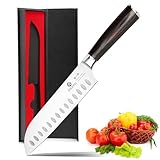
- Professional Chefs Knife: This imarku super sharp chef’s knife is made of Japanese high carbon stainless steel that resists...
- Ultra-Sharp Edge: Sharpness is key. The professional sharp knife blade polishing makes this japanese knife be more sharper than...
- Hollow Edge Design: The 7-inch chopping knife scalloped hollow edge adds gap between the knife blade and the material being cut...
Best for: Compact santoku for daily prep.
A 7-inch Japanese high carbon stainless steel blade gives the imarku Santoku a size that stays nimble on boards while still covering chopping, slicing, dicing, and mincing. The hollow edge helps the knife move through vegetables, fruit, meat, and bread with less drag, so one blade can handle most everyday prep without switching tools.
The pakkawood handle adds a warmer, more traditional grip than bare metal, which matters when you want control through longer prep sessions. Because the blade is high carbon stainless steel, it is made to resist rust, corrosion, and discoloration as kitchen use adds up. The 7-inch length is a practical middle ground for home kitchens, giving enough blade to portion larger ingredients without feeling oversized. Brown and silver styling also makes it easy to identify in a drawer or knife block. For buyers who want a single knife for broad use, the hollow edge and Santoku profile make this one especially useful for fast slicing and clean chopping.
Pros
- 7-inch blade covers most prep tasks without feeling oversized
- High carbon stainless steel resists rust, corrosion, and discoloration
- Hollow edge reduces drag for cleaner cuts through soft and dense foods
- Pakkawood handle adds controlled grip for repeated slicing and chopping
Cons
- Hollow-edge Santoku profile is less ideal than a plain-edged chef knife for some push-cutting tasks
For one knife that can handle the bulk of daily cutting jobs, this imarku model makes a strong case. It fits best in kitchens that want a nimble all-purpose blade with a Japanese profile and easy maneuverability.
| Specification | Details |
|---|---|
| Blade Material | High Carbon Stainless Steel |
| Handle Material | Pakkawood |
| Blade Edge | Hollow |
| Size | 7 Inch |
| Color | Brown and Silver |
| Brand | imarku |
I would point this knife toward someone who wants a single main prep blade with a lighter, more agile feel than a bulky Western chef knife. The 7-inch length, hollow edge, and Pakkawood handle make it a practical choice for everyday vegetables, fruit, and proteins. It suits home cooks who want versatility first and don’t need a heavy, full-sized workhorse.
2. Amazon Basics Classic 8-inch Full Tang High Carbon Stainless Steel
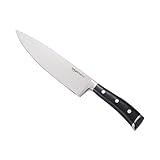
- This 8- inch chef’s knife is a versatile tool for cutting, chopping, dicing, mincing and more
- High carbon stainless steel blade with a satin finish that is stain, rust and pit resistant
- Forged stainless steel construction with a full tang, 8” blade and three rivets

Best for: Balanced all-purpose chef knife.
An 8-inch blade and full tang construction give the Amazon Basics Classic chef’s knife the kind of length and structure that suits broad kitchen use. The satin-finished high carbon stainless steel blade is stain, rust, and pit resistant, so it is set up for routine chopping, slicing, dicing, and mincing without fussy handling.
The full tang runs through the handle, and the three rivets lock that construction into a traditional, stable feel during use. A semi bolster adds weight and balance while keeping full blade access for chopping and sharpening, which is useful when you want the entire edge working at the board. The product dimensions are 13.28 x 1.85 x 0.87 inches, giving you a substantial 8-inch knife in a manageable footprint. The plain edge suits straight slicing and controlled prep work. Hand wash only care is another practical detail for buyers who want a straightforward knife rather than a complicated maintenance routine.
Pros
- 8-inch blade gives broad reach for chopping and slicing
- Full tang and three rivets support stable handling
- Semi bolster improves balance while preserving full blade access
- High carbon stainless steel resists stain, rust, and pit formation
Cons
- Hand wash only care adds an extra maintenance step compared with dishwasher-safe knives
This is the kind of single knife that fits easily into a basic kitchen setup and handles a wide range of prep tasks. It makes the most sense for buyers who want a familiar chef-knife shape with balanced construction and simple upkeep.
| Specification | Details |
|---|---|
| Blade Material | Stainless Steel |
| Handle Material | Metal, Stainless Steel |
| Blade Edge | Plain |
| Blade Length | 8-inch |
| Construction | Forged stainless steel with full tang |
| Rivets | Three rivets |
| Dimensions | 13.28 x 1.85 x 0.87 inches |
| Care Instructions | Hand wash only |
| Color | Silver |
| Brand | Amazon Basics |
I’d choose this for a buyer who wants a single dependable chef knife with classic proportions and no unusual learning curve. The full tang, semi bolster, and 8-inch blade make it easy to trust for everyday prep. It is especially appealing if you want one general-purpose knife that feels familiar right away and handles most cutting jobs without being specialized.
3. OLULU 8 inch Chef Knife, Razor Sharp Kitchen Knife with

- 1. Exceptional Quality & Versatility: Our 8-inch chef knife is meticulously crafted from premium stainless steel, ensuring...
- 2. Ergonomic Comfort & Safety: The ergonomic brown color PP handle of this chef’s knife is designed with your comfort in mind...
- 3. Precision Cutting at Its Best: When you choose our kitchen knife, you're selecting a tool that arrives razor-sharp and ready to...
Best for: Comfort-first knife for everyday cooks.
An 8-inch stainless steel blade gives the OLULU chef knife enough length for slicing, chopping, and mincing without forcing you into a tiny utility-knife format. The brown ergonomic PP handle is the key difference here, because it is shaped to support a secure grip during routine prep and helps keep the knife comfortable in hand.
The premium stainless steel blade is described as corrosion resistant and long-lasting in sharpness, so it is aimed at steady everyday use rather than occasional novelty. The 8-inch size gives you a versatile reach for onions, herbs, meat, and larger produce, while the plain edge keeps cuts straightforward and easy to control. The plastic handle material keeps weight and maintenance simple, which can matter in busy kitchens where a knife gets picked up often. Brown coloring makes the handle easy to spot, and the knife’s broad purpose covers precision slicing as well as faster chopping. For a single knife, that mix of comfort and length is the main appeal.
Pros
- 8-inch blade gives useful reach for larger prep jobs
- Stainless steel blade is described as corrosion resistant
- Ergonomic PP handle supports a secure, comfortable grip
- Plain edge is practical for controlled slicing and chopping
Cons
- Plastic handle offers less premium feel than wood or metal alternatives
This knife makes sense for cooks who care more about comfortable handling than about specialty knife features. It is a sensible one-knife choice for regular meal prep where an 8-inch blade and easy grip matter most.
| Specification | Details |
|---|---|
| Blade Material | Stainless Steel |
| Handle Material | Plastic |
| Blade Edge | Plain |
| Size | 8 inch |
| Color | Brown |
| Brand | OLULU |
My take is that this one suits home cooks who want a simple, comfortable all-rounder more than a heavy-duty pro knife. The ergonomic handle is the selling point if you spend time prepping vegetables, fruit, and proteins in one session. It feels like a practical everyday option for someone who values control and comfort over premium materials.
4. Home Hero Santoku Knife with Sheath – High Carbon Stainless

- Ultra Sharp Knife with Protective Sheath - Made from high-quality 3Cr13 stainless steel, our ultra-sharp Santoku knife is the...
- All-in-One Multi-Purpose Knife - The Home Hero Santoku Knife is not just a chef's knife but also a versatile utility knife that...
- Easy-To-Clean Non-Stick Blade - The non-stick coating on this knife ensures that food doesn't stick to the blade while cutting and...
Best for: Sheathed Santoku for safe storage.
High carbon stainless steel gives the Home Hero Santoku the corrosion-resistant, easy-to-use profile that suits a single knife for daily prep. The included protective sheath is the defining feature, letting you store the blade safely in a drawer or bag while keeping the edge covered between uses.
The 3Cr13 stainless steel construction is the named material detail here, and it tells you this knife is aimed at general kitchen work with an emphasis on convenience. The plain edge and Santoku shape suit slicing, chopping, and utility tasks without requiring a specialized knife set. A black plastic handle keeps the knife simple to maintain and easy to wipe clean after prep. Because the product is positioned as a multi-purpose knife, it fits buyers who want one blade for a broad spread of tasks rather than a large block of options. The sheath makes a real difference for small kitchens, shared drawers, or travel to another prep space, where edge protection matters as much as cutting performance.
Pros
- Protective sheath keeps the blade covered in storage
- 3Cr13 stainless steel supports everyday kitchen use
- Santoku shape handles slicing, chopping, and utility tasks
- Black plastic handle keeps maintenance simple
Cons
- Plain edge and Santoku profile are less specialized for heavy rocking cuts than a large chef knife
This is a practical pick if safe storage matters as much as cutting performance. It works best for buyers who want one versatile knife that can move from prep station to drawer without leaving the edge exposed.
| Specification | Details |
|---|---|
| Blade Material | High Carbon Stainless Steel |
| Handle Material | Plastic |
| Blade Edge | Plain |
| Color | Black |
| Brand | Home Hero |
| Special Feature | Protective Sheath |
| Construction Material | 3Cr13 stainless steel |
I’d recommend this to someone with limited storage who still wants a useful single knife for everyday prep. The sheath is the feature that makes it especially practical, because it solves safe storage in a simple way. If you want a versatile Santoku that can live in a drawer without worry, this is an easy one to consider.
5. Chef Knife 7 Inch, High-Carbon Stainless Steel Santoku, Dishwasher Safe

- 【Premium Japanese Stainless Steel Chef's Knife】: This chef's knife is made of professional Japanese stainless steel with a...
- 【Double-Edged Blade Design】: Double-Edged blade design so that it is suitable for both left-handed and right-handed people...
- 【Well Balanced Kitchen Knife】: The balance between blade and handle is very well balanced. The ergonomic handle made from...
Best for: Easy-care knife for left or right hand.
A 7-inch santoku blade with double-edged design gives the DDF iohEF knife a direct advantage for either left-handed or right-handed users. The blade uses Japanese stainless steel with 0.45% to 0.55% carbon content and 14% to 15% chromium content, which points to a knife meant for sharp everyday prep and corrosion resistance.
The hardness rating up to 58 adds another concrete reason this knife is positioned for frequent kitchen work, since harder blades tend to hold an edge longer in routine use. The 15-degree-per-side edge angle is relatively fine, which helps the blade feel keen when slicing vegetables, proteins, and herbs. The 7-inch Santoku size is compact enough for control but long enough to handle most prep jobs without feeling cramped. Stainless steel handle material is an uncommon choice and gives the knife a different feel from plastic or wood-handled options. Dishwasher-safe care is also a practical point for anyone who wants less hand-washing after meal prep. For one-knife buyers, the ambidextrous edge design is a strong differentiator.
Pros
- Double-edged design works for left-handed and right-handed users
- 7-inch Santoku size stays manageable for everyday prep
- 15-degree-per-side edge angle supports sharp slicing
- Dishwasher-safe care simplifies cleanup
Cons
- Stainless steel handle may feel less warm and forgiving than a wood or polymer grip
This knife fits best when you want one blade that works cleanly for either hand and does not demand special care. It is a sensible choice for cooks who value a sharp edge, simple cleanup, and a compact Santoku form.
| Specification | Details |
|---|---|
| Blade Material | Stainless Steel |
| Handle Material | Stainless Steel |
| Blade Edge | Plain |
| Size | 7 Inch |
| Carbon Content | 0.45% to 0.55% |
| Chromium Content | 14% to 15% |
| Hardness | up to 58 |
| Edge Angle | 15 degrees per side |
| Brand | DDF iohEF |
I think this is the most appealing choice for someone who wants one knife that does not favor a dominant hand. The double-edged blade and 7-inch length make it easy to use for a wide range of prep jobs, and the dishwasher-safe note lowers the maintenance burden. It is a practical pick if convenience and edge sharpness are your top priorities.
6. Farberware EdgeKeeper 5-Inch Santoku Knife with Sharpening Cover

- CUTLERY ESSENTIAL FOR EVERYDAY PREP: This 5 inch santoku knife handles precision slicing, dicing, chopping, and mincing with ease...
- SELF-SHARPENING EDGEKEEPER SHEATH: The EdgeKeeper protective blade cover features a built-in knife sharpener that hones the edge...
- HIGH-CARBON STAINLESS STEEL BLADE: Crafted from high-carbon stainless steel for lasting sharpness and durability; the blade is...
Best for: Small Santoku with self-sharpening cover.
A 5-inch santoku blade makes the Farberware EdgeKeeper the most compact knife here, which helps when you want precision slicing, dicing, chopping, and mincing in a smaller footprint. The EdgeKeeper sheath with built-in sharpener is the standout fact, because it keeps the edge maintained each time the knife goes in or out of the cover.
High carbon stainless steel gives the blade the corrosion-resistant backbone expected from a kitchen knife meant for frequent prep. Oval indentations along the blade help prevent food from sticking, so cut pieces release more cleanly during quick work with onions, garlic, herbs, and small vegetables. The plain edge keeps the blade focused on standard cutting tasks rather than specialty carving. The black and gray color scheme makes the knife easy to identify, and the handle combines stainless steel, steel, and stainless components for a firmer, more utility-focused feel. For buyers who want one knife to stay sharp without separate tools, the sharpening cover is the main practical advantage, especially in compact kitchens or for occasional cooks.
Pros
- 5-inch blade is compact for precise prep work
- Built-in sharpener in the sheath maintains the edge over time
- Oval indentations reduce food sticking during cuts
- High carbon stainless steel supports regular kitchen use
Cons
- 5-inch blade is shorter than a full-size chef knife, so large ingredients take more passes to cut
This is the best match for buyers who want a compact single knife and like the idea of maintenance built into the storage cover. It is especially useful in small kitchens where precision and easy upkeep matter more than blade length.
| Specification | Details |
|---|---|
| Blade Material | High Carbon Stainless Steel |
| Blade Edge | Plain |
| Size | 5-Inch |
| Color | Black/Gray |
| Brand | Farberware |
| Special Feature | Self-Sharpening EdgeKeeper Sheath |
| Handle Material | Stainless, Stainless Steel, Steel |
I’d choose this for a cook who wants a compact knife that stays sharp with minimal effort. The 5-inch size is best for smaller hands, tighter boards, or lighter prep routines, and the self-sharpening sheath is a real convenience. If you want one knife for quick daily chopping without extra maintenance tools, this is a smart fit.
Quick Comparison Table of Top Single Knives
| Product Name | Blade Material | Handle Material | Blade Size | Best For | Check Price |
|---|---|---|---|---|---|
| imarku Santoku Knife 7 Inch, Ultra | High carbon steel | Pakkawood | 7 inch | Daily prep | Check Price |
| Amazon Basics Classic 8-inch Full Tang | Stainless steel | Metal | 8 inch | All-purpose cutting | Check Price |
| OLULU 8 inch Chef Knife, Razor | Stainless steel | Plastic | 8 inch | Comfortable chopping | Check Price |
| Home Hero Santoku Knife with Sheath | High carbon steel | Plastic | Santoku | Safe storage | Check Price |
| Chef Knife 7 Inch, High-Carbon Stainless | Stainless steel | Stainless steel | 7 inch | Dishwasher use | Check Price |
| Farberware EdgeKeeper 5-Inch Santoku Knife with | High carbon steel | Stainless steel | 5 inch | Precision slicing | Check Price |
How to Choose the Best Single Knife
Blade steel and edge retention
Pick steel by how much sharpening you want to do. High-carbon steel keeps a keen edge longer and takes a razor finish fast, so it suits buyers who value slicing performance and do regular hand care. Stainless steel resists spots, stains, and corrosion better, so it fits cooks who want lower maintenance and a knife that stays dependable with less fuss.
Look for a hard, fine-grained blade that feels crisp on tomatoes and herbs, not a soft edge that rolls after a few uses. Choose high-carbon for maximum edge life and easy sharpening; choose stainless for easier upkeep and daily convenience.
| Steel type | Best for | What to look for |
|---|---|---|
| High-carbon | Frequent slicers and keen-edge users | Long edge life, fine sharpening response, regular drying |
| Stainless | Low-maintenance everyday use | Strong stain resistance, easy care, stable edge retention |
| High-carbon stainless | Balanced all-round use | Better rust resistance with solid sharpening and wear performance |
Blade shape and size
Choose blade length for the jobs you actually do most. A 6-inch knife gives tight control for fruit, herbs, and small prep; an 8-inch knife handles most kitchen tasks with the best mix of reach and maneuverability; a 10-inch knife suits large produce, bulk chopping, and longer slicing strokes. Point style matters too: a fine tip helps with trimming and detail work, while a more rounded or curved profile helps with rocking cuts and general prep.
Thin blades cut cleaner and feel more precise; thicker blades bring more power but less finesse. Pick 8 inches with a pointed tip for the best single knife in most kitchens.
| Length | Best for | Trade-off |
|---|---|---|
| 6 inches | Detail work and small hands | More control, less reach |
| 8 inches | All-purpose daily prep | Best balance of speed and control |
| 10 inches | Big ingredients and long cuts | More reach, less nimble feel |
Handle comfort and grip
Choose a handle that stays comfortable through repeated use, not one that only looks attractive. Wood feels warm and natural, polymer and synthetic handles grip well in damp conditions, and metal handles feel solid but need a secure texture to avoid slipping. Look for a handle that fills the palm without forcing your fingers wide, with a gentle curve and a clear bolster or finger stop for control.
Good balance sits near the heel, so the knife feels steady instead of blade-heavy. Pick a textured synthetic or well-finished wood handle with neutral balance for the most secure all-day grip.
| Handle material | Best for | What to check |
|---|---|---|
| Wood | Comfort and warm feel | Smooth finish, sealed surface, secure shape |
| Synthetic | Wet or heavy-use kitchens | Textured grip, easy cleaning, firm contour |
| Metal | Durable modern feel | Slip resistance, balanced weight, no sharp edges |
Construction and durability
Construction decides whether the knife stays tight and true over years of use. A full tang runs through the whole handle and gives the strongest feel for chopping, twisting, and repeated pressure; a partial tang suits lighter work but should still feel firmly anchored with no flex at the join. Check that rivets sit flush, the handle meets the blade cleanly, and there are no gaps, rattles, or rough seams.
Good steel resists bending and keeps the edge from chipping too easily, while poor fit shows up as loosening and wobble. Choose a full-tang knife with tight rivets and clean assembly for the most durable single knife.
| Build | Best for | Signal of quality |
|---|---|---|
| Full tang | Heavy daily use | Solid weight, even balance, no flex |
| Partial tang | Lighter prep and simpler handling | Secure join, snug handle fit, no movement |
| Forged construction | Maximum strength feel | Consistent profile, strong spine, clean finish |
Cleaning, care, and safety
Choose care features that match how you store and clean your knife every day. Handwash-only blades hold their edge and finish better, while dishwasher-safe claims matter less than the knife’s overall materials and handle stability. A blade guard or sheath protects the edge in a drawer, and a magnetic strip or block keeps the tip from getting dulled by contact.
Safety comes from finger clearance, a secure pinch grip, and a handle that keeps your knuckles away from the board. Pick a knife that handwashes easily, includes safe storage, and gives clear finger clearance for confident control.
Which Should You Choose?
- If you want one all-purpose knife for most chopping, slicing, and mincing jobs, choose an 8-inch chef’s knife with a full tang and high-carbon stainless steel.
- If you prefer a shorter blade for more control on smaller ingredients, choose a 7-inch santoku with a razor-sharp edge and rust-resistant steel.
- If you often prep sticky foods like potatoes, onions, or cucumbers, choose a santoku with granton-style indentations or a blade designed to reduce sticking.
- If you want a low-fuss option for busy kitchens and easy storage, choose a knife with a protective sheath or sharpening cover.
Quick Best Single Knife Buying Checklist
- Choose a blade steel that balances sharpness, edge retention, and easy sharpening.
- Pick a blade length that matches your most common cutting tasks and hand size.
- Test the handle grip for comfort, traction, and secure control.
- Look for full-tang construction for better strength and long-term durability.
- Check maintenance needs such as cleaning, sharpening, and storage protection.
- Verify safety details like finger clearance, balanced weight, and a stable spine.
How a Single Knife Performs Everyday Cutting Tasks
A single knife can handle far more than one category of work when it has the right blade shape, balance, and edge geometry. In the kitchen, a well-made all-purpose knife can slice produce, trim meat, mince herbs, and even separate crusty bread if the edge is maintained. Outdoors or in a workshop, the same idea applies: one versatile blade can cover light carving, cord cutting, and general prep without switching tools.
The key is control. A knife with a comfortable handle and predictable tip behavior lets you work accurately across different materials, reducing fatigue and improving consistency.
| Task | Helpful blade trait |
|---|---|
| Produce slicing | Thin edge and smooth glide |
| Meat trimming | Fine tip and good control |
| General utility cuts | Balanced blade length |
| Precision work | Narrow profile and stable grip |
Common Blade Styles Used for One-Knife Versatility
Not every blade style handles the same range of jobs equally well. Straight-edged knives tend to offer cleaner, more controlled cuts, while slightly curved profiles excel at rocking motions and repeated chopping. Clip-point and drop-point designs provide different balances between piercing ability and tip strength.
A single knife intended for broad use usually favors an edge that is easy to guide and simple to maintain, rather than a specialized profile built for one task. Understanding these trade-offs makes it easier to see why some blades feel naturally adaptable and others are better suited to a narrow purpose.
| Blade style | Main strength |
|---|---|
| Straight edge | Clean, controlled slicing |
| Curved edge | Efficient chopping motion |
| Drop point | Strong tip and broad utility |
| Clip point | Fine tip work and piercing |
Keeping a Single Knife Sharp and Reliable
Maintenance matters more for a single knife than for a larger set, because that one tool must stay ready for many different tasks. Regular honing helps realign the edge between sharpenings, while periodic sharpening removes wear and restores cutting efficiency. Cleaning and drying the blade promptly prevents staining and corrosion, especially on carbon steel and high-performance alloys.
It is also smart to inspect the handle, pivot if applicable, and edge for loosening or chips. A well-maintained knife feels safer because it requires less force, which improves control and reduces slipping during use.
- Hone lightly before heavy use.
- Wash and dry the blade after cutting acidic foods.
- Store it in a sheath, block, or protected drawer slot.
- Sharpen before the edge becomes noticeably dull.
Safety Habits That Matter When Using One Knife
When one knife does most of the work, safe handling becomes especially important because users often rely on it more frequently. Always cut away from your body and keep the free hand in a claw position to protect fingertips. A stable cutting surface prevents slips, and a dull blade should never be forced through tough material.
For folding or pocket knives, make sure the lock engages fully before use. Carrying and storing the knife securely also reduces accidental contact.
Good habits not only prevent injury, they also improve precision, because a controlled grip and steady stance make the blade easier to guide.
- Use a dry, non-slip grip.
- Keep fingers clear of the blade path.
- Work on a stable board or bench.
- Close or sheath the knife immediately after use.
When a Single Knife Is Better Than a Full Set
A single knife is often the better choice when portability, simplicity, or minimal upkeep matters more than having a dedicated tool for every job. It reduces clutter, speeds up setup, and helps users become more familiar with one blade’s balance and cutting feel. This can be useful for travel kits, small kitchens, camping gear, or people who prefer a streamlined workspace.
The trade-off is specialization: a single knife may not outperform a dedicated slicer, boning knife, or carving tool in highly specific tasks. Still, for many everyday needs, one well-designed knife offers enough versatility to make extra blades unnecessary.
| Scenario | Why one knife works well |
|---|---|
| Travel | Easy to pack and manage |
| Small kitchen | Reduces clutter and duplication |
| Camping | Handles multiple light tasks |
| Minimalist setup | Simplifies storage and cleaning |
Frequently Asked Questions (FAQs)
What Makes The Best Single Knife Versatile Enough For Daily Use?
The best single knife is versatile enough for daily use because it balances blade length, edge retention, and control in one tool. A medium-length blade with a comfortable handle can handle slicing, trimming, and light chopping without feeling clumsy or overly specialized.
Which Blade Material Is Best For A Single Knife?
The best single knife often uses stainless or high-carbon stainless steel because it combines corrosion resistance with dependable sharpness. These steels are practical for everyday kitchens, especially when the blade can be honed easily and sharpened without specialized tools.
How Important Is Handle Comfort In A Single Knife?
Handle comfort is essential in a single knife because it affects control, fatigue, and safety during repeated use. A contoured handle with a secure grip helps reduce slipping, especially when the knife is used for longer prep sessions or wet ingredients.
What Blade Size Should I Look For In A Single Knife?
The right blade size for a single knife depends on the tasks you do most often, but a mid-length blade usually offers the best balance. It is long enough for slicing larger foods while still nimble enough for detailed cutting and trimming.
How Can I Tell If A Single Knife Is Durable?
A durable single knife usually has a full-tang design, solid rivets, and a blade that resists chipping or bending. Strong construction keeps the knife stable in hand and helps it maintain performance after frequent use and sharpening.
Is Easy Maintenance Important When Choosing A Single Knife?
Yes, easy maintenance is important when choosing a single knife because regular cleaning and sharpening keep it performing well. A knife that resists staining, sharpens predictably, and stores safely will stay useful longer with less effort.
What Safety Features Should A Single Knife Have?
The best single knife should have safety features like a secure grip, balanced weight, and enough finger clearance for controlled cutting. A stable handle and well-finished spine improve confidence, while proper storage protection helps prevent accidental contact when not in use.
Final Suggestions
Choosing the best single knife comes down to finding the right balance of sharpness, comfort, durability, and easy care. A well-designed knife can handle a wide range of everyday cutting tasks while staying dependable and comfortable in hand. With the right choice, you get a tool that supports smoother prep and long-lasting kitchen confidence.