Top 6 Best Solar Water Heater Picks That Wow
The best solar water heater can reshape how a home manages hot water, turning sunlight into a practical energy source. As solar thermal systems become more efficient, buyers are paying closer attention to absorber plates, insulated storage tanks, circulation design, and corrosion-resistant materials that influence long-term performance. A well-built solar hot water system can reduce utility costs while supporting cleaner energy use, but the differences between models are often subtle and important.
In this guide, we compare key features, installation styles, and durability factors that separate a basic unit from a high-performing choice. Whether you’re evaluating a roof-mounted system or a compact thermal collector setup, the best solar water heater often comes down to the details that are easy to overlook—until the right one changes everything.
Detailed Overview of the Best Solar Water Heater
1. 300 Liter SUS304 Passive Duda Solar Water Heater Attached Pressurized

- Hailstone Resistance: up to φmm (1"), Max Operating Pressure: 100psi, TK-7Y Controller
- 304 Stainless Steel Outer Shell & Stand, Pressurize tank for domestic water supply, 14mm TU1 Copper Heat Pipes, Winter Resistant
- 58mm x 1800mm Three-Target Cu/SS-ALN(H)/SS-ALN(L)/ALN Vacuum Tubes, High Boron Silicon 3.3 Glass
Best for: Large-capacity roof-mounted homes.
A 300-liter tank gives this Duda Solar system enough stored hot water for a household that needs a serious reserve, while the pressurized design lets it feed domestic water supply without adding an extra storage step. The SUS304 stainless steel inner tank and 14mm TU1 copper heat pipes point to a system made for steady thermal transfer and everyday household use.
The 300-liter capacity is the main reason to choose it for higher-demand homes, since it can cover showers, washing, and routine sink use from one solar tank. Its 18.11-inch by 18.11-inch dimensions keep the footprint compact for a system of this size. The 460mm tank diameter gives the cylinder a substantial storage volume without changing the pressurized format. A max operating pressure of 100 psi matters if your plumbing expects a pressurized feed, and the TK-7Y controller adds system management in one place. The outer shell and stand use 304 stainless steel, while the inner tank uses SUS304-2B food-grade stainless steel, which suits potable water use. Vacuum tubes and a high boron silicon glass absorber round out the heat-collection side.
Pros
- 300-liter capacity supports whole-house hot water demand
- Pressurized tank works with domestic water supply
- SUS304-2B food-grade stainless steel inner tank
- 14mm TU1 copper heat pipes aid heat transfer
Cons
- At 18.11 inches by 18.11 inches, it still needs dedicated space for a large tank installation.
Choose this if you want a solar heater with serious storage and pressurized delivery in one package. It fits buyers who prioritize household volume and stainless-steel water-contact materials over a small footprint.
| Specification | Details |
|---|---|
| Brand | Duda Solar |
| Capacity | 300 liters |
| Power Source | Solar Powered |
| Product Dimensions | 18.11″W x 18.11″H |
| Tank Diameter | 460mm (18.1″) |
| Inner Tank Material | SUS304-2B Food Grade stainless steel |
| Outer Shell & Stand | 304 Stainless Steel |
| Heat Pipes | 14mm TU1 Copper |
| Special Feature | Hailstone Resistance, TK-7Y Controller |
I’d point this to households that want a true storage-style solar water heater rather than a small auxiliary collector. The combination of 300 liters, pressurized output, and stainless steel tank construction makes it appealing when hot-water demand is steady and the system needs to integrate with regular plumbing. If you want more stored volume and less compromise, this is the one to shortlist.
2. MISOL Solar Collector of Solar Hot Water Heater/with 10 Evacuated

- solar collector of solar hot water heater
- 10 Vacuum glass tubes(diameter 58mm, length 500mm)
- Manifold: Outer shell: Aluminum Alloy, Thickness:1.8mm;Insulating layer:rock wool overall
Best for: Compact collector for small systems.
Ten evacuated glass tubes make this MISOL collector a focused heat-gathering component rather than a full tank system, which is useful if you are assembling or expanding a smaller solar hot-water setup. The 58mm by 500mm tube size and aluminum-alloy manifold give it a collector-first profile for heating water before it moves into the rest of the system.
The 10 evacuated tubes are the key feature here, since they create multiple heat-collection points in a compact assembly. Each tube measures 58mm in diameter and 500mm in length, which makes the collector easier to place in small solar projects, training setups, or home systems with limited mounting space. The manifold uses a 1.8mm-thick aluminum alloy outer shell, which adds structure around the tubes. Rock wool insulation helps slow heat loss at the collector body, and the included 10 heat pipes match the tube count for direct integration. At 50.6 pounds, it is substantial enough to feel like real system hardware without being a full tank unit.
Pros
- 10 evacuated tubes provide multiple collection points
- 58mm by 500mm tube size suits compact setups
- 1.8mm aluminum-alloy manifold adds structure
- Rock wool insulation helps retain collected heat
Cons
- It is only a collector, so it does not provide storage or a complete hot-water system by itself.
Use this when you need the collector side of a solar water heater, not the full household package. It suits buyers building a smaller system, a demo unit, or a training project where the heat-collection hardware matters most.
| Specification | Details |
|---|---|
| Manufacturer | MISOL |
| Item Weight | 50.6 pounds |
| Vacuum Glass Tubes | 10 |
| Tube Diameter | 58mm |
| Tube Length | 500mm |
| Manifold Outer Shell | Aluminum Alloy |
| Manifold Thickness | 1.8mm |
| Insulating Layer | Rock wool |
| Heat Pipes Included | 10 units |
| Use Case | Solar hot water heating system, training project, demo collectors |
I see this as a practical collector module for someone building around existing components. The tube count, rock wool insulation, and included heat pipes make it easier to understand as a hardware piece rather than a mystery part. If you already know you need the collector stage and have the rest of the system planned, this is a sensible place to start.
3. 2 Panel Freeze Protected Hybrid Solar Water Heater Kit- Single

- Heats water for your home using the sun
- Connects to your existing electric or gas water heater with 3/4" drain port
- Hybrid System - Never be without hot water even on cloudy days
Best for: Freeze-safe hybrid backup system.
A stainless-steel heat exchanger and non-toxic antifreeze put this Heliatos hybrid kit in the category of solar water heaters that keep working when weather turns cold. The package includes two SW-38 panels, a pump, a glycol fill valve, and an expansion tank, so the buyer gets the core parts needed for a connected indoor system.
The hybrid design is the deciding feature because it ties solar collection into an existing electric or gas water heater instead of replacing it outright. Freeze protection to -30°F matters in climates where winter shutdown is not acceptable, and the stainless steel heat exchanger is the part that keeps the system moving heat safely. The kit includes 2 SW-38 panels, a 25W PV panel, a Heliatos HS-21 pump, a TopsFlo TD5 stainless pump, a glycol fill valve, a bottom feed connector, and an Extrol expansion tank. At 66 pounds and 28 by 12 by 28 inches, it is a substantial indoor installation package that suits users who want backup continuity as well as solar input.
Pros
- Freeze protection to -30°F supports cold-weather use
- Hybrid connection keeps backup hot water available
- Two SW-38 panels provide the solar collection core
- Included pump, valve, and expansion tank simplify system setup
Cons
- It is an indoor installation kit, so it is not a simple standalone tank replacement.
This is a strong choice for buyers who need solar contribution without giving up backup heat. It fits homes in colder regions or anyone who wants a hybrid setup that stays usable when the sun is inconsistent.
| Specification | Details |
|---|---|
| Manufacturer | Heliatos Solar |
| Part Number | 077.0073 |
| Item Weight | 66 pounds |
| Product Dimensions | 28 x 12 x 28 inches |
| Style | Indoor Installation |
| Material | Stainless Steel,Plastic |
| Item Package Quantity | 1 |
| Special Features | Hybrid System for Cloudy Day Use & Freeze Protection to -30°F |
| Included Components | 2 SW-38 Panels, 1 Grade A 25W PV panel, 1 Heliatos HS-21 Pump, 1 TopsFlo TD5 Stainless Pump, 1 Glycol Fill Valve, 1 Bottom Feed Connector, 1 Stainless Steel Heat Exchanger, 1 Extrol Expansion Tank, 1 Complete Set of Fittings and Adapters |
I would recommend this to someone who wants confidence through winter and cloudy stretches, not just sunny afternoons. The inclusion of the heat exchanger, pumps, and expansion tank means the kit is more complete than a bare collector purchase. If your priority is keeping hot water flowing through a hybrid system, this package makes sense.
4. SW-38 Solar Water Heater Panels
- Efficient Heating: Harnesses the power of the sun to heat water, reducing your energy bills and carbon footprint
- Compact Design: Fits seamlessly into your space with its 24 inches by 2 inches dimensions
- Durable Construction: Built to last with Monocrystalline Silicon and Aluminum materials
Best for: Slim single-panel solar collector.
At 24 inches by 2 inches by 24 inches, the SW-38 panel keeps a compact profile that works well when installation space is tight. Its aluminum construction and single-panel format make it a straightforward solar water-heating component for smaller setups or DIY installations that need a manageable collector size.
The 24-inch by 2-inch by 24-inch size is the standout practical detail because it makes the panel easier to place than bulkier tank-style equipment. Weighing 12 pounds, it is light enough to handle during mounting without feeling flimsy. The aluminum material matters for buyers who want a collector body that keeps weight down while still pairing with a solar-heating system. A single-unit count means this is one collector panel, not a bundled kit, which is useful if you are adding capacity one piece at a time. The product is presented as a high-efficiency solar water heater panel, so its role is to gather heat efficiently from the sun in a compact footprint.
Pros
- 24 x 2 x 24 inch size fits compact installations
- 12-pound weight makes handling easier
- Aluminum construction keeps the collector light
- Single-panel format suits add-on system planning
Cons
- It is only one panel, so it does not provide a complete solar water heater on its own.
Pick this if your goal is to add a compact collector panel without committing to a larger kit. It is a sensible fit for buyers who want a small, manageable solar-heating component and already have the rest of the system planned.
| Specification | Details |
|---|---|
| Brand | Heliatos |
| Material | Aluminum |
| Product Dimensions | 24″L x 2″W x 24″H |
| Item Weight | 12 pounds |
| Unit Count | 1 Count |
I think this works best for someone building a system in stages or replacing a single collector. The small footprint and light weight make the panel easy to place, while the aluminum body keeps the hardware straightforward. If you need a compact solar water heating piece rather than a full kit, this is the cleanest option in the group.
5. 4 Panel Standard SW-38 Hybrid Solar Water Heater Kit- Single
- Heats water for your house or cabin using the sun
- Connects to your existing electric or gas water heater
- Hybrid System - Never be without hot water even on cloudy days
Best for: Four-panel house or cabin kit.
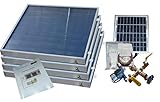
Four SW-38 panels give this Heliatos kit a larger solar-collection footprint than a two-panel setup, which is the key advantage when you want more sun exposure in one package. The stainless steel material and 10-watt maximum power rating make it a bundled system for users who want a threaded multi-panel installation for a house or cabin.
The four-panel layout is the main reason to consider this kit, because it gives you more collector surface than smaller versions in the same line. Each panel weighs slightly over 12 pounds, so the full setup remains manageable while still adding meaningful coverage. The new and improved SW-38 panels thread together directly, which removes the need for external connection pipes in multi-panel installations. The kit works with an existing electric or gas water heater, so it supports a hybrid hot-water plan rather than forcing a full replacement. The stainless steel material and 10-watt maximum power rating round out a package aimed at practical household solar water heating.
Pros
- Four SW-38 panels increase collection area
- Threaded panel-to-panel connection simplifies installation
- Works with existing electric or gas water heaters
- Stainless steel material suits system hardware use
Cons
- The system still depends on an existing electric or gas water heater for full household integration.
Choose this when you want a bigger collector package for a house or cabin and prefer a threaded layout. It fits buyers who want more solar input without moving to a more complex custom system.
| Specification | Details |
|---|---|
| Manufacturer | Heliatos Solar |
| Part Number | 077.0004 |
| Material | Stainless Steel |
| Maximum Power | 10 watts |
| Power Source | Charcoal,Wind Powered,Battery Powered |
I’d place this with buyers who want a straightforward way to scale up solar collection. The four-panel format and direct-thread connection are the meaningful advantages here, especially if you want to avoid extra connection piping. If you are matching a house or cabin to a hybrid setup, this kit gives you a practical starting point.
6. 2 Panel Standard SW-38 Hybrid Solar Water Heater Kit- Single

- Heats water for your house or cabin using the sun
- Connects to your existing electric or gas water heater
- Hybrid System - Never be without hot water even on cloudy days
Best for: Two-panel starter hybrid kit.
Two SW-38 panels keep this Heliatos kit compact while still giving you a complete hybrid starting point for a home or cabin. The 50-pound total weight and 26 by 26 by 8 inch dimensions make it the most manageable of the larger kits here, especially for buyers who want solar hot water without a bulky installation footprint.
The two-panel configuration is the central buying point because it gives you a manageable amount of solar collection without jumping to a larger four-panel package. At 50 pounds, the kit is easier to move and stage than heavier system bundles, and the 26 by 26 by 8 inch dimensions help keep the package compact for indoor installation. The SW-38 panels thread together, so the installation avoids external connection pipes for multi-panel assembly. It connects to an existing electric or gas water heater, which makes it a hybrid option for homes that want solar contribution plus backup. Stainless steel construction and 10 watts of maximum power keep the spec set aligned with system hardware rather than standalone appliances.
Pros
- Two SW-38 panels keep the kit compact
- 50-pound total weight is easier to handle
- Threaded panel connection reduces extra piping
- Hybrid hookup works with existing electric or gas heaters
Cons
- The package is limited to two panels, so it offers less collector coverage than the four-panel version.
This is the sensible pick for a smaller household or a first solar water-heating setup. It gives you the hybrid format and a compact installation path without the size of a bigger multi-panel kit.
| Specification | Details |
|---|---|
| Manufacturer | Heliatos Solar |
| Part Number | 077.0002 |
| Item Weight | 50 pounds |
| Product Dimensions | 26 x 26 x 8 inches |
| Style | Indoor Installation |
| Material | Stainless Steel |
| Maximum Power | 10 watts |
| Power Source | Charcoal,Wind Powered,Battery Powered |
I’d recommend this for someone who wants a simpler entry into hybrid solar water heating. The two-panel format, compact dimensions, and threaded assembly make it approachable without feeling underbuilt. If your goal is to add solar support to an existing heater and keep the installation modest, this is the easiest fit in the lineup.
Quick Comparison Table of Best Solar Water Heaters
| Product Name | Capacity | Material | Power Source | Best For | Check Price |
|---|---|---|---|---|---|
| 300 Liter SUS304 Passive Duda Solar | 300 liters | SUS304 steel | Solar powered | Large homes | Check Price |
| MISOL Solar Collector of Solar Hot | 10 tubes | Aluminum alloy | Solar collector | Training projects | Check Price |
| 2 Panel Freeze Protected Hybrid Solar | 2 panel | Stainless steel | Solar hybrid | Freeze-prone homes | Check Price |
| SW-38 Solar Water Heater Panels | 24 x 2 in | Aluminum | Solar panels | DIY installations | Check Price |
| 4 Panel Standard SW-38 Hybrid Solar | 4 panel | Stainless steel | Solar hybrid | House or cabin | Check Price |
| 2 Panel Standard SW-38 Hybrid Solar | 2 panel | Stainless steel | Solar hybrid | Small homes | Check Price |
How to Choose the Right best solar water heater
Capacity and household demand
Choose tank size from daily hot-water use, not guesswork. A 1–2 person home with one bathroom usually fits a smaller tank, while 3–4 occupants and two bathrooms need a larger unit that can cover morning showers without running cold. Check recovery rate as well: strong systems restore usable hot water fast enough for back-to-back use, while weak ones leave gaps.
Keep roof area in mind, because oversized tanks and collectors strain cramped layouts. Pick a 150–200 L system for compact households, 250–300 L for medium homes, and a larger tank for multi-bath families.
| Type | Best for |
|---|---|
| 150–200 L tank | 1–2 occupants, one bathroom, modest daily use |
| 250–300 L tank | 3–4 occupants, steady shower demand, two bathrooms |
| 300 L+ tank | Large families, frequent back-to-back hot-water use |
Collector type and heating performance
Pick the collector type by climate and exposure, not by label alone. Flat-plate collectors suit warm, sunny regions and homes that get long direct sun; they keep a steady output and handle simple daily use well. Evacuated-tube collectors win in colder, windier, or cloudier areas because they hold heat better and keep heating when temperatures drop.
Check how fast the system heats water: faster heat-up matters for high morning demand, while slower systems fit lighter use. Choose flat-plate for hot, bright roofs and evacuated-tube for cold climates or weaker sunlight.
| Type | Best for |
|---|---|
| Flat-plate collector | Hot climates, full sun, simpler daily demand |
| Evacuated-tube collector | Cold weather, winter use, limited sunlight |
| Higher collector area | Homes with heavy hot-water demand or partial shade |
Material quality and durability
Inspect the materials first, because durability decides how long the system stays efficient. A good tank uses corrosion-resistant lining, such as glass-lined or stainless steel construction, and the piping should be well insulated so heat does not leak before use. Glazing on the collector should be thick, clear, and sealed tightly, while the frame needs enough strength to stay stable outdoors in wind and rain.
Look for weatherproof seals and fittings that resist cracking. Choose stainless steel or quality glass-lined tanks with insulated piping and a rigid outdoor frame for long service life.
Safety, control, and installation
Safety and control features should make the system easy to manage every day. A pressure relief valve is nonnegotiable, and anti-scald protection matters in homes with children or older adults. Clear temperature controls or a visible gauge make it easy to keep water at a safe level without wasting heat.
Check whether the system fits your roof, wall, or ground mount before buying, because poor placement leads to weak performance and awkward plumbing. Choose a system with relief protection, simple temperature control, and mounting hardware that matches your site; for tricky roofs, pick the model that supports professional installation.
Efficiency, maintenance, and warranty
Efficiency comes from insulation, access, and support. Good systems use thick tank insulation and tight piping insulation, which cuts standby heat loss and keeps water hot longer after sunset. Cleaning access matters too: collectors should be easy to reach, and the tank should allow straightforward inspection so dust and scale do not drag performance down.
Review warranty coverage for the tank, collectors, and control parts separately, because strong coverage shows confidence in the core components. Choose a low-maintenance system with dense insulation, accessible collector surfaces, and clear multi-part warranty support for buyers who want fewer service calls.
| Type | Best for |
|---|---|
| High-insulation system | Homes that want lower heat loss and steadier hot water |
| Easy-access design | Owners who plan to clean collectors and inspect parts regularly |
| Long-component warranty | Buyers who want stronger protection on tank and collector parts |
Which Should You Choose?
- If you want a large all-in-one system for a family home with pressurized domestic hot water, choose a 300-liter stainless-steel storage tank with a pressurized design and winter-resistant heat pipes.
- If you already have an electric or gas water heater and want a simple backup that keeps hot water flowing on cloudy days, choose a hybrid kit that ties into your existing heater.
- If your priority is maximizing solar collection in a small roof area, choose evacuated-tube collector panels with 58mm glass tubes and heat pipes.
- If you need a compact, space-saving setup for a cabin or smaller household, choose a 2-panel or 4-panel hybrid system based on how much hot water you use daily.
Quick Best Solar Water Heater Buying Checklist
- Size the tank correctly based on how many people use hot water every day.
- Choose the right collector type for your climate and sunlight conditions.
- Inspect material quality to ensure the tank, tubing, and frame resist corrosion and weather damage.
- Verify safety features such as pressure relief and temperature control.
- Check installation fit for roof space, mounting style, and plumbing layout.
- Review maintenance needs and warranty coverage before buying.
How a Solar Water Heater Transfers Heat to Your Water
A solar water heater uses collectors to absorb sunlight and turn it into usable heat, then transfers that heat into water either directly or through a separate heat-transfer fluid. In active systems, a pump moves fluid between the collector and storage tank, while passive systems rely on natural circulation. Because the sun’s energy is variable, most systems include an insulated tank that stores hot water for later use.
The main performance drivers are collector area, insulation quality, local solar exposure, and how well the system minimizes heat loss at night and on cloudy days. Understanding this process helps explain why the best solar water heater is usually the one matched to your climate and household demand, not just the one with the largest tank.
Flat-Plate, Evacuated Tube, and Batch System Differences
Solar water heaters are commonly grouped by collector design, and each type behaves differently in real-world conditions. Flat-plate collectors are durable and widely used for consistent sunshine. Evacuated tube systems handle colder or windier climates better because the vacuum around each tube reduces heat loss.
Batch, or integral collector storage, systems combine collection and storage in one unit and are simpler, but they are less flexible in freezing weather. The right type depends on roof conditions, seasonal temperatures, and whether you need high output or simple maintenance.
Comparing the main designs side by side makes it easier to see where each one fits best.
| Type | Best for | Main trade-off |
|---|---|---|
| Flat-plate | Warm or moderate climates | Less efficient in colder, windy conditions |
| Evacuated tube | Cold climates and higher heat retention | More delicate components to protect |
| Batch system | Simple setups with mild winters | Limited freeze protection |
Routine Maintenance That Keeps Performance High
Solar water heaters need only basic maintenance, but regular checks can make a big difference in efficiency and lifespan. The collector surface should stay clean so dust, pollen, and debris do not block sunlight. Plumbing connections should be inspected for leaks, corrosion, or insulation damage, especially after severe weather.
If your system uses a pump, valve, or controller, those parts should be verified for normal operation and unusual noise. In freeze-prone areas, the heat-transfer fluid may need periodic testing or replacement to maintain proper protection.
It is also wise to confirm that the storage tank insulation remains intact and that the pressure relief valve is working correctly. Small issues caught early usually prevent larger repair problems later.
Installation Factors That Affect Output and Reliability
Installation quality strongly influences how well a solar water heater performs. Collectors should be placed where they receive the most direct sun with minimal shading from trees, chimneys, or nearby structures. Roof angle and orientation matter because they affect how much solar energy the system captures throughout the day.
Plumbing runs should be as short and well insulated as possible to reduce heat loss before the water reaches the tap. The roof or mounting surface must also support the system’s weight, especially when the storage tank is full.
Good installers account for local freeze risk, wind exposure, and service access, since these details help the system run efficiently and remain easier to maintain over time.
When a Solar Water Heater Needs a Backup Heat Source
Even the best solar water heater can benefit from a backup heat source because sunlight is not always available when hot water demand is high. Many homes pair solar with an electric element, gas burner, or existing water heater so hot water stays reliable during cloudy periods or heavy use. The backup should be sized to cover the household’s normal needs without forcing the solar system to do all the work.
In well-designed setups, the solar unit preheats incoming water, and the backup only raises it to the target temperature when necessary. This approach improves comfort, reduces strain on the primary heater, and helps maintain consistent hot water throughout the year.
Frequently Asked Questions (FAQs)
What Size Solar Water Heater Do I Need?
The right solar water heater size depends on how much hot water your household uses each day. A family with multiple bathrooms usually needs a larger storage tank and a stronger collector array so showers, laundry, and dishwashing stay consistent.
Which Collector Type Works Best For A Solar Water Heater?
The best collector type for a solar water heater depends on your climate and hot water demand. Flat-plate collectors suit moderate conditions, while evacuated-tube designs usually perform better in cooler or less sunny areas because they retain heat more efficiently.
How Important Is Tank Insulation In A Solar Water Heater?
Tank insulation is very important in a solar water heater because it reduces heat loss after water is warmed. A well-insulated tank keeps water hotter for longer, improves efficiency, and helps the system deliver more usable hot water throughout the day.
What Safety Features Should A Solar Water Heater Have?
A safe solar water heater should include pressure relief protection, temperature control, and scald prevention features. These details help prevent overheating, excess pressure buildup, and unsafe outlet temperatures, especially in systems that receive strong afternoon sun.
Can A Solar Water Heater Work In Cloudy Weather?
Yes, a solar water heater can still work in cloudy weather, but output is usually reduced. Systems with efficient collectors and good insulation can capture diffuse sunlight and store enough heat to provide usable hot water even when conditions are less ideal.
How Much Maintenance Does A Solar Water Heater Need?
A solar water heater usually needs low but regular maintenance to stay efficient. Owners should inspect collectors for dirt, check seals and piping for leaks, and make sure the tank and valves are functioning properly so performance does not gradually drop.
What Should I Compare Before Buying A Solar Water Heater?
Before buying a solar water heater, compare capacity, collector efficiency, durability, and warranty coverage. These factors determine how well the system matches your household demand, how long it lasts outdoors, and how reliably it can deliver hot water over time.
Final Suggestions
Choosing the best solar water heater can lower energy use while delivering dependable hot water for everyday routines. With the right capacity, collector design, and durable construction, these systems offer practical comfort and long-term efficiency. If you focus on fit, performance, and maintenance, you can choose a system that supports your home for years to come.