Top 10 Best Tub Grinder For Hay: Hot Picks
Best tub grinder for hay selection can shape how efficiently a farm handles bulky feedstock and rough forage. These machines do more than break down hay; they influence particle consistency, throughput, and the strain placed on drivetrains, hammers, and screens. As tub grinder technology evolves, buyers are weighing rotor design, material handling, horsepower, and wear resistance with far more precision than before.
The best tub grinder for hay is often the one that balances cutting performance with maintenance demands, whether the goal is baled hay reduction, livestock ration prep, or processing mixed biomass. Understanding how tub grinders, hay grinders, and forage processing systems differ reveals why small engineering details can affect output and operating costs.
The next section breaks down the models that stand out for power, durability, and real-world productivity.
In-depth Reviews of the Best Tub Grinder for Hay
1. Hay Chopper, 8HP Hay Cutter, 6 Blades Pulverizer for Farm

- Equipped with 8 HP output power, this machine starts working instantly anywhere.
- Processing capacity: approx. 1–2 Tons/H for grass cutting & kneading, 150–200 kg/H for shredding.
- It integrates three functions in one: grass cutting, kneading and shredding, switchable anytime via a control lever to meet...
Best for: Off-grid farm operations.
An 8 HP diesel engine gives this hay chopper immediate power anywhere without electricity. That matters when the worksite is a pasture, remote shed, or moving farm setup, because the machine can keep cutting, kneading, and shredding hay where grid power is unavailable.
Its three-in-one layout switches by control lever between grass cutting, kneading, and shredding, so one machine can handle different feed prep tasks as conditions change. The stated processing range is about 1–2 tons per hour for grass cutting and kneading, plus 150–200 kg per hour for shredding, giving you a clear throughput split for bulk forage versus finer material. Six manganese steel blades at the cutter head add wear-resistant cutting action for repeated farm use. At 510 pounds, it has the mass that usually suits stationary work in a dedicated feed area rather than frequent relocation.
Pros
- 8 HP output supports immediate work without electrical hookup
- Three functions on one machine reduce equipment swapping
- 1–2 tons per hour fits bulk grass cutting and kneading
- Six manganese steel blades add hard-wearing cutting action
Cons
- At 510 pounds, it is not a light machine for frequent moving between work areas.
This makes sense for a farm that needs one rugged feed-prep machine in a fixed location. It is especially useful when hay work has to continue away from electrical service.
| Specification | Details |
|---|---|
| Power Output | 8 HP |
| Processing Capacity | Approx. 1–2 Tons/H |
| Shredding Capacity | 150–200 kg/H |
| Functions | Grass cutting, kneading, shredding |
| Blade Material | Manganese steel |
| Number of Blades | 6 |
| Power Source | Water-cooled diesel engine |
| Item Weight | 510 pounds |
| Item Model Number | ZZKDM169 |
I’d point this toward a buyer who values independent operation more than portability. The diesel drive and three-mode layout make it practical for larger hay-handling routines, especially where electricity is unreliable or unavailable. If your main need is dependable feed prep in one place, it fits well.
2. Hay Chopper Forage Grass Crusher and Dicing Grinder with Double-Feed
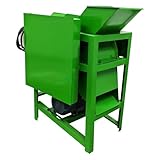
- [Multi-Purpose Versatility]:Efficiently handles a wide range of materials,including dry/wet straw,corn cobs,potato,sweet...
- [High-Efficiency Power]:Equipped with a powerful 2.2KW motor running at 2800 RPM and dual manganese steel blades,this grinder...
- [Easy Operation]:The large,widened feed port allows you to process whole potatoes,sweet potatoes,and other ingredients without...
Best for: Small farm multitaskers.
A 2.2 kW motor spinning at 2800 RPM gives this grinder the pace to process forage quickly while keeping the footprint manageable. The dual-feed setup also lets a buyer move material through with less staging, which is useful when hay, straw, or mixed crop scraps need fast turning into usable feed.
This unit handles dry and wet straw, corn cobs, potato, sweet potato, ginger, garlic, peanut shells, and grains, so it is not limited to hay alone. The output can be switched to pellets, strips, or powder through the adjustable discharge mechanism, which helps match the feed texture to different animals or storage needs. With a maximum capacity of 1100 lbs/h, it sits in a practical range for regular barn-side work. Dual manganese steel blades support cleaner cutting on fibrous material, and the 33.46 x 20.47 x 37.4 inch body gives a compact floor presence for a multi-use grinder.
Pros
- 2.2 kW motor delivers strong day-to-day grinding power
- 2800 RPM supports fast material flow through the chamber
- Adjustable discharge makes pellets, strips, or powder
- Dual manganese steel blades help cut fibrous feed cleanly
Cons
- The listed dual-feed design is versatile, but the product data does not specify a power-free or off-grid option.
This is a smart fit for mixed feed prep where hay is only one part of the job. It gives a small farm flexibility without forcing a single grind style.
| Specification | Details |
|---|---|
| Motor Power | 2.2KW |
| Speed | 2800 RPM |
| Maximum Capacity | 1100 lbs/h (500 kg/h) |
| Blade Material | Manganese steel |
| Product Dimensions | 33.46 x 20.47 x 37.4 inches |
| Item Weight | 145.5 pounds |
| Model Number | TETPY-021603 |
| Item Highlight | Hay chopper with double-feed |
| Manufacturer | EQCOTWEA |
I see this as a strong choice for someone who wants more than a basic hay cutter. The ability to change the output texture matters if you feed different animals or want varied chop sizes from one machine. It feels most useful on a working farm that processes several kinds of crop material each week.
3. Animal Feed Mill,2500w Grass Crusher Chopper & Hay Cutter Pulverize

- ♦【Efficient Processing, High Capacity】:Electric shredder can process 500 kg of material per hour—enough to meet the...
- ♦【8-Blade Manganese Steel Design, Versatile Application】:Equipped with 8 manganese steel blades, it ensures uniform...
- ♦【Handles Various Green Feed Materials】:Capable of processing fresh forage, silage, corn stalks, sweet potato vines, root...
Best for: Feed prep for larger batches.
A 2500W electric shredder with 8 manganese steel blades gives this feed mill the cutting hardware to handle serious volume. That combination matters when hay and straw need to be processed in batch quantities, because the machine is set up for uniform output instead of slow, hand-fed trimming.
The stated throughput is 500 kg per hour, which is enough to support the daily feeding needs of about 1,000 chickens or ducks according to the product data. That makes it more than a hobby tool and closer to a repeat-use farm feeder. Its output can be sliced, shredded, or finely chopped, so the same machine can support different ration styles. The start-and-stop switch adds straightforward control during loading and unloading. Listed as suitable for small to medium farms and agricultural pastures, it is aimed at routine feed-making rather than one-off cleanup work.
Pros
- 2500W power suits recurring feed-prep workloads
- 500 kg per hour supports batch processing
- 8 manganese steel blades promote uniform cutting
- Start-and-stop switch gives simple control during use
Cons
- The product data does not list a diesel or battery option, so it appears to depend on electric power.
For a buyer focused on regular feed production, this is a practical mid-sized grinder. It is especially appealing when hay has to become consistent feed in a predictable work cycle.
| Specification | Details |
|---|---|
| Power | 2500W |
| Processing Capacity | 500 kg per hour |
| Blade Count | 8 |
| Blade Material | Manganese steel |
| Output Types | Slices, shreds, finely chopped pieces |
| Suitable For | Small to medium-sized farms |
| Manufacturer | QuinteZhenTially |
| Model Number | d4vd-1218830 |
My read is that this fits the operator who wants a dependable electric feed mill without extra complexity. The 500 kg hourly figure is useful if your hay work is scheduled and repeatable. It feels best for people who want consistent chopped feed and don’t need a portable off-grid engine.
4. Electric Hay Crusher Dry-Wet Hay Straw Cutter 6-Blade Hay Cutter

- 【High Efficiency】:Thickened galvanized conveyor chain,automatic feeding,safe and efficient,wet and dry;integrated forming...
- 【Cyclone Dust Collector】:This machine is equipped with cyclone dust collector,which can make the crushed materials centralized...
- 【Adjustable Design】:The suction speed can be controlled by adjusting the size of the air outlet;the feeding speed and...
Best for: Cleaner discharge handling.
A thickened galvanized conveyor chain gives this hay crusher a feeding system that is meant to move wet and dry material through automatically. That matters for hay work because steady feed reduces hand pushing, while the integrated forming fan helps move crushed material with more airflow and a wider working diameter.
The machine is specified for wet and dry use, so it can handle hay that is not perfectly cured as well as drier storage material. Its grain self-absorption device adds automatic suction, which can save time during continuous feeding. The cyclone dust collector is a useful concrete feature because it centralizes discharging of crushed material instead of letting output spread loosely around the work area. One important note is that the unit does not come with a plug and must be connected to a circuit breaker for use. That makes installation more involved, but also more deliberate for a fixed setup.
Pros
- Galvanized conveyor chain supports automatic feeding
- Wet and dry capability broadens hay handling
- Cyclone dust collector centralizes discharge
- Grain self-absorption device reduces manual feeding effort
Cons
- It does not come with a plug, so setup requires connection to a circuit breaker.
This is a good match for a fixed feed area where discharge control and automatic feeding matter. It makes more sense for a planned installation than for quick plug-and-play use.
| Specification | Details |
|---|---|
| Feed System | Thickened galvanized conveyor chain |
| Feeding Mode | Automatic feeding |
| Material Compatibility | Wet and dry |
| Dust Collection | Cyclone dust collector |
| Special Feature | Grain self-absorption device |
| Blade Count | 6 |
| Manufacturer | HayWHNKN |
| Model Number | JHSFY-145036 |
| UPC | 840403748877 |
I’d recommend this to someone who wants a cleaner, more controlled hay-crushing station. The dust collector and automatic feed features are the real draw here. It is less about portability and more about making the work area and workflow easier to manage over time.
5. VEVOR Hay Chopper, 1719lbs/h Capacity Forage Corn Stalks Cutting Machine
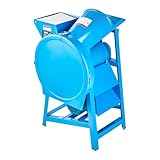
- Maximize Processing Efficiency: Equipped with a 2.2KW high-power pure copper motor, this hay chopper delivers up to 1719 lbs/h...
- Dual-Feed Ports: Our forage straw chopper is equipped with dual feed and discharge ports for simultaneous processing. The forage...
- One Machine, Multiple Uses: Suitable for potatoes, vegetables, fruits, fresh grass, corn stalks, straw and more feed, this corn...
Best for: High-output forage throughput.
A 2.2KW pure copper motor paired with dual feed ports gives this hay chopper the hardware for sustained material flow. That combination is useful for hay and corn stalk processing because it lets one port take incoming forage while the other supports discharge, cutting down on bottlenecks.
The machine is rated for up to 1719 lbs/h, or 780 kg/h, which places it in a strong productivity band for livestock feed preparation. The forage inlet itself is listed at up to 727 lbs/h, and the dual-feed port setup means the machine is arranged for simultaneous processing rather than a single slow path. Overload protection and rapid heat dissipation are meaningful practical details because they help the motor keep working through longer sessions. It runs on 220V, and the included unit is a multifunctional grass feed pulverizer meant for livestock, farm, and ranch use. That makes it a focused hay-processing tool rather than a general-purpose grinder.
Pros
- 2.2KW pure copper motor supports sustained work
- 1719 lbs/h capacity suits high-volume feed prep
- Dual feed ports reduce processing bottlenecks
- Overload protection helps during longer sessions
Cons
- It is specified for 220V operation, so it needs the right electrical setup.
This suits buyers who need volume and steady flow more than compact size. It is especially useful when hay and stalk processing are regular parts of livestock care.
| Specification | Details |
|---|---|
| Motor Power | 2.2KW |
| Motor Type | Pure copper motor |
| Capacity | 1719 lbs/h (780 kg/h) |
| Forage Inlet Capacity | 727 lbs/h |
| Voltage | 220V |
| Special Features | Overload protection, rapid heat dissipation |
| Included Components | 1 x Dual Feed Port Hay Chopper |
| Model Number | QD-0.5 |
| Manufacturer | VEVOR |
I’d steer this toward a user who regularly moves a lot of forage and wants the machine to keep pace. The dual-port setup is the detail that matters most in practice, because it helps prevent the feed area from backing up. It feels best for a busy livestock operation with a proper power source.
6. TECHTONGDA Dry-Wet Straw Hay Cutter Crusher Grain Grinder Mill Powder

- 【Application】The straw cutter and grains grinder is suitable for crushing all kinds of dry or wet grass, straw of corn, wheat...
- 【2 Blade Sets】The hay crusher and grains milling machine adopts 2 sets of blades. One set of straight blade which will across...
- 【2 Inlets and 2 Outlets】There are separate feed ports for straw cutting and grain mill. With 2 gears for adjusting cutting...
Best for: Farm feed and grain prep.
A straw cutter and grain grinder in one body lets this machine handle both forage and feed ingredients without changing equipment. That matters when hay, corn, wheat, peanuts, beans, and other dry or wet materials all need to become usable raw feed from the same processing station.
The product is specified for crushing dry or wet grass, straw from corn and wheat, peanuts, beans, and grains, so it covers a broad farm pantry of inputs. It uses 2 sets of blades, which gives the grinder a clear mechanical basis for repeated cutting and milling work. The output is intended for animal feed raw material, making it a practical choice for farms that want one machine for feed preparation rather than separate tools for each ingredient. The data also notes that TECHTONGDA offers feed-making machines in different sizes, suggesting this model sits within a broader feed-processing lineup. For hay-heavy routines, that range can help if your operation grows later.
Pros
- Handles dry and wet grass and straw
- 2 blade sets support cutting and milling
- Works with grains and feed ingredients beyond hay
- Produces raw material for animal feed
Cons
- The provided data does not list a throughput figure, so output speed is harder to compare directly.
This is a sensible fit if your hay work is part of a wider feed-ingredient routine. It gives one machine a broad role without narrowing the farm to a single material type.
| Specification | Details |
|---|---|
| Application | Dry or wet grass, straw, peanuts, beans, grains |
| Blade Sets | 2 |
| Use | Animal feed raw material |
| Brand Name | TECHTONGDA |
| Manufacturer | TECHTONGDA |
| UPC | 840403724307 |
| Manufacturer Part Number | L145037 |
| ASIN | B0CVDMZDB1 |
I think this makes the most sense for buyers who process more than just hay. The broader ingredient list is the main reason to choose it, especially if your feed mix changes with season or stock type. It feels like a practical middle-ground machine for farms that want flexibility over raw throughput numbers.
7. TECHTONGDA Electric Corn Cob Grinder Feed Crushing Machine Adjustable Grinding

- [Powerful and Efficient Power] This multi-functional feed crusher is used to crush corn, corn cobs, various feeds, hay, crop...
- [Adjustable Crushing Fineness] The corn cob grinder is fitted with three types of screens: smooth plate, 3mm(0.11inch) mesh, and...
- [Dual Feed Port Design] The square feed opening of the electric straw crushing machine is suitable for large materials such as...
Best for: Large-scale hay crushing.
A 4000W pure copper motor gives this feed crusher the power level needed for heavy hay, corn cob, and straw loads. That high wattage matters when the job is large-scale, because the machine is rated to process 1322 to 1763 pounds of material per hour with fewer slowdowns.
Three screen types are listed: smooth plate, 3mm mesh, and 5mm mesh. That gives the buyer a concrete way to control fineness instead of accepting one fixed cut size. The machine is multi-functional and can crush corn, corn cobs, various feeds, hay, crop straw, and grains, which widens its use beyond forage alone. The pure copper motor is paired with a stable operating description, suggesting the machine is set up for sustained farm work rather than occasional use. For buyers comparing hay grinders, the combination of 4000W power and adjustable screening is the main reason to consider it for a larger operation.
Pros
- 4000W motor supports heavy feed processing
- 1322 to 1763 pounds per hour fits larger jobs
- Three screen options control grind fineness
- Covers hay, corn cobs, straw, and grains
Cons
- The listed screen sizes include 3mm and 5mm, but the product data does not show a wider range of output textures.
This is a strong option for a farm that wants more power and more control over grind size. It makes the most sense when hay processing is frequent and volume matters.
| Specification | Details |
|---|---|
| Motor Power | 4000W |
| Motor Type | Pure copper motor |
| Processing Capacity | 1322-1763 pounds per hour |
| Screen Types | Smooth plate, 3mm mesh, 5mm mesh |
| Materials | Corn, corn cobs, feed, hay, crop straw, grains |
| Brand Name | TECHTONGDA |
| Model Number | L238064 |
| Included Components | Grinder |
| Manufacturer Part Number | L238064 |
My advice is to look at this if you need a stronger machine and want more control over the final grind. The screen options are especially helpful if hay is going to different animals or storage uses. It seems best for a higher-demand feeding setup rather than a small casual barn.
8. TXMACHINE® Grass Hay Cutter Dry-Wet Hay Straw Cutter Forage Crop

- [Package includes]:Come with hay cutter machine, motor,Miniature circuit breaker and other accessories,customer do not need to...
- [Thickened and hardened manganese steel knife]: High quality manganese steel knife, good wear resistance and long service life
- [Specification]: Product name:Hay cutter Color:red,green Cavity width: 8.66inch/22cm Voltage:110V/60Hz,220V/50Hz,380V/50Hz or...
Best for: Compact wired installation.
A 22 cm cavity width gives this hay cutter a clear working opening, and the included motor and miniature circuit breaker mean the package arrives with key setup parts already bundled. That is useful when the buyer wants an organized install for dry or wet hay without sourcing every accessory separately.
The specification list names 2.2KW power and a spindle speed of 2800r/min, which gives the machine the speed profile expected from a serious feed chopper. Voltage options include 110V/60Hz, 220V/50Hz, 380V/50Hz, or custom voltage, so the unit can fit several electrical setups. The package also includes the machine, motor, miniature circuit breaker, gloves, conveyor belt, and blades, which reduces missing-part frustration at installation time. The hardened manganese steel knife is highlighted for wear resistance and long service life. For a hay buyer, the real value is a ready-to-wire machine with a defined feed opening and a full accessory kit.
Pros
- 22 cm cavity width gives a defined feed opening
- 2.2KW power supports regular chopping work
- 2800r/min spindle speed aids cutting consistency
- Accessory bundle includes motor, breaker, gloves, and belt
Cons
- The machine requires wired setup with a breaker, so it is not a simple plug-in unit.
This is a good choice for buyers who want a configured hay cutter with the key parts included. It fits best in a workshop or farm station where installation is planned in advance.
| Specification | Details |
|---|---|
| Cavity Width | 8.66 inch / 22 cm |
| Power | 2.2KW |
| Spindle Speed | 2800r/min |
| Voltage | 110V/60Hz, 220V/50Hz, 380V/50Hz or custom voltage |
| Knife Material | Manganese steel |
| Package Includes | Hay cutter machine, motor, miniature circuit breaker, gloves, conveyor belt, blades |
| Color | Red, green |
| Model | zt-02 |
| Brand Name | TXMACHINE |
I’d choose this if I wanted the machine and the major setup parts in one bundle. The included breaker and conveyor belt make it easier to plan an installation, which is helpful for a dedicated hay-prep spot. It suits someone comfortable with wired equipment and looking for a defined feed opening.
9. TECHTONGDA Dry-Wet Straw Hay Cutter Crusher Grain Grinder Mill Powder

- 【Application】The straw cutter and grains grinder is suitable for crushing all kinds of dry or wet grass, straw of corn, wheat...
- 【2 Blade Sets】The hay crusher and grains milling machine adopts 2 sets of blades. One set of straight blade which will across...
- 【3 Inlets and 2 Outlets】There are separate feed ports for straw cutting and grain mill. 2 Inlets for Grain Mill – hopper...
Best for: General feed ingredient processing.
Two sets of blades give this straw and grain grinder a straightforward cutting system for dry or wet plant material. That matters for hay buyers because the machine is aimed at turning grass, straw, corn, wheat, peanuts, beans, and grains into feed-ready material in one processing path.
The product description places it in farms and small to medium feed processing plants, so it is intended for recurring feed work rather than occasional chopping. Its broad material list is the main selling point: dry or wet grass, straw of corn and wheat, peanuts, beans, and grains can all go through the same unit. The machine is specifically described as suitable for animal feed raw material, which is the end use that makes it relevant to hay buyers. Because the data repeats the blade-set design and feed-processing purpose, this model looks centered on multi-ingredient milling more than on one specialized hay texture. That makes it useful when hay is only one part of the ration workflow.
Pros
- Handles dry and wet grass and straw
- 2 blade sets support feed grinding work
- Works with a wide range of farm ingredients
- Suitable for small and medium feed processing
Cons
- The data does not list dimensions or capacity, so it is harder to size for a specific barn layout.
This fits buyers who want a broad feed grinder instead of a hay-only cutter. It is most useful when one machine needs to cover several ingredients throughout the week.
| Specification | Details |
|---|---|
| Application | Dry or wet grass, straw, peanuts, beans, grains |
| Blade Sets | 2 |
| Use | Animal feed raw material |
| Target Users | Farmers, small and medium feed processing plants, farms |
| Brand Name | TECHTONGDA |
| Manufacturer | TECHTONGDA |
| UPC | 840403729142 |
| Manufacturer Part Number | L145036 |
| ASIN | B0D8GVXCRD |
My impression is that this is a practical general-purpose feed machine more than a specialized hay grinder. That makes it a good pick if your hay routine shares the workload with grain and crop leftovers. It will satisfy buyers who value one machine covering many raw materials.
10. Hay Cutter Straw Crusher Machine 6-Blade Farm Hay Chopper Shredder

- High-Performance: The straw crusher machine is equipped with a powerful 2.2KW motor, offering high work efficiency with a...
- Automatic Feeding: The grass chopper is equipped with a chain conveyor for automatic feeding. Operation is quick and convenient...
- Adjustable Length: The 220V grass chopper features two cutting length settings, allowing users to select the appropriate material...
Best for: Automatic-feed hay chopping.
A 2.2KW motor and 1100 to 2200 lbs/h production range give this hay cutter a clear place in busy feed rooms. The chain conveyor automatic feeding system is the defining feature, because it reduces manual handling while the widened, thickened feed opening supports faster loading.
Six sets of thickened, sharp blades are specified, and the double-sided blade design adds a wear-resistance benefit during repeated cutting. That means the machine is aimed at tougher, ongoing farm use rather than soft, occasional material. The product description also highlights automatic feeding through a chain conveyor, which is exactly the kind of detail that helps when hay volume starts to build up. With production listed between 1100 and 2200 lbs/h, it spans a wide working band for a hay grinder in this class. The machine is sold as a hay cutter and grinder, so it fits buyers who want both chopping and shredding ability in one unit.
Pros
- 2.2KW motor supports active feed processing
- 1100 to 2200 lbs/h gives broad output range
- Chain conveyor enables automatic feeding
- Six blade sets improve cutting capacity
Cons
- The product data does not state voltage, so electrical matching is less explicit than on some other models.
This is a strong pick for a buyer who wants automation in the feeding step as much as cutting power. It works best where hay is handled in steady batches and speed matters.
| Specification | Details |
|---|---|
| Motor Power | 2.2KW |
| Production Capacity | 1100-2200 lbs/h |
| Blade Count | 6 sets |
| Blade Design | Double-sided |
| Feeding System | Chain conveyor automatic feeding |
| Feed Opening | Widened and thickened |
| Set Name | Hay Cutter and Grinder |
| Brand Name | BEILOCKERY |
| Model Number | S239762 |
I’d favor this for someone who wants a more automated feed path and a wide working range. The conveyor feed system is the feature that will matter most in day-to-day use. It feels suited to a farm that wants to process hay efficiently without constant manual pushing.
Quick Comparison Table of Best Tub Grinders for Hay
| Product Name | Power | Capacity | Feed Type | Best For | Check Price |
|---|---|---|---|---|---|
| Hay Chopper, 8HP Hay Cutter, 6 | 8 HP | 1–2 Tons/H | Control lever | Farm processing | Check Price |
| Hay Chopper Forage Grass Crusher and | 2.2KW | 2800 RPM | Double-feed | Multi-material use | Check Price |
| Animal Feed Mill,2500w Grass Crusher Chopper | 2500W | 500 kg/h | 8-blade | Small farms | Check Price |
| Electric Hay Crusher Dry-Wet Hay Straw | Not listed | Wet & dry | Automatic feeding | Efficient cutting | Check Price |
| VEVOR Hay Chopper, 1719lbs/h Capacity Forage | 2.2KW | 1719 lbs/h | Dual-feed ports | High-output farms | Check Price |
| TECHTONGDA Dry-Wet Straw Hay Cutter Crusher | Not listed | Dry & wet | Grinder mill | Feed grinding | Check Price |
| TECHTONGDA Electric Corn Cob Grinder Feed | 4000W | 1322–1763 lbs/h | Adjustable grinding | Large-scale use | Check Price |
| TXMACHINE® Grass Hay Cutter Dry-Wet Hay | Not listed | Cavity size | Automatic feeding | Ready-to-use setup | Check Price |
| TECHTONGDA Dry-Wet Straw Hay Cutter Crusher | Not listed | Dry & wet | Grinder mill | Animal feed prep | Check Price |
| Hay Cutter Straw Crusher Machine 6-Blade | 2.2KW | 1100–2200 lbs/h | Automatic feeding | Heavy-duty chopping | Check Price |
How to Choose the Right best tub grinder for hay
Grinding capacity and feed volume
Match the tub size to the amount of hay you process in a normal session, not to the largest job you imagine. Small operations handling a few square or round bales a day get better control from a compact tub with a steady feed opening and a moderate batch size, because it keeps material moving evenly instead of packing and stalling. Larger hay users need a wide throat, a deeper tub, and a higher per-load capacity so fewer reloads interrupt the workflow.
Look for clear capacity ratings, consistent feed flow, and a tub shape that prevents bridging.
| Type | Best for |
|---|---|
| Compact tub, moderate batch volume | Small farms and lower daily hay counts |
| Mid-size tub with steady feed flow | Mixed daily use and balanced throughput |
| Large tub, high-capacity feed opening | Frequent heavy loads and bigger bale processing |
Choose the smallest tub that handles your full daily volume without forcing constant reloads; that gives the best mix of control and output.
Powertrain and grinding performance
Choose horsepower around the density of the hay you feed, not just the overall machine size. Dry, stemmy hay and dense mixed material need stronger output so the rotor keeps speed under load, while softer or pre-processed hay runs well on a more moderate powertrain. The best results come from a grinder with consistent torque, not just peak horsepower, plus a hammermill or knife setup matched to your desired cut length.
Finer, more uniform grinding comes from tighter hammer spacing or sharper knife geometry; coarse or uneven output signals a poor match.
| Drive setup | Best for |
|---|---|
| Moderate horsepower, standard hammer layout | Loose hay and lighter daily throughput |
| Higher horsepower, dense rotor load | Dry, fibrous, or mixed hay |
| Fine-cut hammer or knife configuration | Uniform particle size and tighter feed control |
Pick the strongest powertrain in your class with the cut pattern that matches your feed use: standard for general hay, aggressive for dense material, and fine-cut for consistent output.
Build quality and wear resistance
Inspect the tub, frame, and wear surfaces first, because hay work punishes every edge that contacts the crop. Heavy-gauge steel in the tub wall, reinforced frame rails, and replaceable wear plates are the clearest signs of a grinder that will stay true under repeated use. Thin metal, flex in the tub lip, and nonserviceable abrasion points mean faster distortion and more downtime.
Hardened liners, bolt-on wear strips, and protected corners extend life where the crop rubs hardest.
| Construction | Best for |
|---|---|
| Heavy-gauge tub with bolt-on wear plates | Frequent grinding and high-abrasion use |
| Reinforced frame with hardened contact parts | Regular farm duty and mixed hay loads |
| Thin shell, fixed wear surfaces | Light use only and short run times |
Choose the grinder with the thickest wear package and the most replaceable contact parts; that is the right pick for buyers who want long service life and less structural wear.
Safety systems and operator control
Put operator safety and control layout near the top of the checklist, because hay grinding demands quick reaction and clear sightlines. The best machines place emergency shutoff controls within easy reach, separate feed controls cleanly from moving parts, and keep guards tight around pinch points and drive components. Good visibility into the tub helps you watch feed movement and stop problems before they jam.
Strong discharge management also matters: a well-aimed outlet, smooth path, and clog-resistant design reduce kickback and buildup.
| Safety setup | Best for |
|---|---|
| Accessible emergency stop and clear panel layout | Solo operators and frequent starts and stops |
| Guarded feed area with good tub visibility | Hands-on feeding and careful material control |
| Directed discharge with smooth flow path | High-volume work and lower clog risk |
Pick the machine with the clearest controls, strongest guarding, and cleanest discharge path; that is the safest choice for daily hay grinding.
Maintenance access and serviceability
Choose maintenance access based on how often you want to open the machine, not just how well it runs on day one. The best tub grinder for hay gives you fast access to screens, hammers, belts, and inspection points without a long teardown, because routine cleaning and wear checks keep output steady. Look for hinged covers, wide service doors, simple fasteners, and parts that swap without special tools.
Good parts support matters just as much: screens, belts, hammers, and bearings should be easy to source and easy to match.
- Quick-access panels for daily inspection
- Tool-light removal for screens and hammers
- Belts and wear parts with straightforward replacement paths
- Clear service intervals and available consumables
Pick the grinder with the easiest service access and the strongest parts availability; that is the right choice for buyers who want less downtime and simpler upkeep.
Which Should You Choose?
- If you need a compact machine for a small farm and want it to start working anywhere, choose an 8 HP hay cutter with 1–2 tons/hour grass-cutting capacity.
- If you feed a mix of dry or wet straw, corn cobs, roots, shells, and grains, choose a multi-purpose double-feed grinder with adjustable discharge.
- If your priority is high daily output for poultry or livestock feed, choose a 2500W hay crusher that can handle around 500 kg per hour.
- If you want faster feeding with less manual handling on wet or dry hay, choose a self-feeding hay cutter with a conveyor chain and integrated fan.
Quick Best Tub Grinder For Hay Buying Checklist
- Tub capacity Choose a grinder that matches your expected hay volume without constant reloading.
- Grinding mechanism Make sure the hammer or knife setup produces the particle size you need.
- Power output Verify the engine or driveline can keep speed steady in dense hay.
- Wear parts Favor hardened components and replaceable liners for longer service life.
- Safety controls Look for accessible shutoffs, guarding, and clear operator visibility.
- Maintenance access Pick a model with easy service points for screens, belts, and hammers.
How a Tub Grinder Processes Hay Into Usable Feed
A tub grinder uses a large rotating tub and a hammermill to break down hay bales into a more uniform feed or bedding material. Operators load small square, round, or large round bales into the tub, where the rotation helps pull material toward the grinding chamber. As the hammers strike the hay, the material is reduced and screened before discharge.
The final particle size depends on screen choice, moisture level, bale density, and machine setup. For livestock operations, this consistency can improve mixing and reduce waste.
In hay handling, the machine is often valued for turning compacted bales into a loose, manageable product that feeds more evenly or spreads more smoothly.
Tub Grinder Styles Used in Hay Operations
Not every tub grinder is configured the same way, and the right style depends on the volume and form of hay being processed. Some units are built for stationary use near storage or feed lanes, while others are portable and can move between bale stacks or fields. Self-propelled machines offer maneuverability in tight spaces, while tow-behind models are often favored where tractors are already part of the workflow.
The tub size, hammer arrangement, and discharge system also affect how efficiently hay is handled. Matching the machine style to bale type and daily throughput matters because a grinder that is well suited to loose forage may not be ideal for dense, weathered, or oversized bales.
| Type | Best for |
|---|---|
| Stationary tub grinder | High-volume feed areas with fixed bale storage |
| Tow-behind model | Operations using existing tractor power and multiple work sites |
| Self-propelled grinder | Tight yards and frequent repositioning |
| Large-capacity tub | Big bales and steady daily feeding needs |
Routine Maintenance That Keeps Hay Grinding Consistent
Consistent hay processing depends heavily on maintenance, especially because fibrous material can wrap, pack, and wear components faster than many operators expect. Hammers, screens, belts, bearings, and drive components should be inspected regularly for wear or imbalance. Dull hammers can increase power demand and produce uneven output, while damaged screens can allow oversized chunks to pass through.
Hay residue should be cleared from the tub, feed area, and discharge path to prevent buildup and corrosion. Lubrication points should follow the manufacturer’s schedule, and fasteners should be checked for vibration-related loosening.
Keeping the machine clean and serviced helps preserve throughput, reduce downtime, and maintain a more predictable particle size from batch to batch.
Common Hay Grinding Problems and How They Affect Feed Quality
Several avoidable issues can reduce performance when grinding hay. Overloading the tub can cause bridging, where the bale sits too high and fails to move evenly into the grind zone. Hay that is too dry may become dusty and lose fine particles, while overly damp hay can clump and reduce flow through the chamber.
Incorrect screen sizing may leave long stems intact or create material that is finer than needed. Feeding mixed debris, such as twine, wire, or soil-contaminated bales, can damage components and affect livestock safety.
Operators also sometimes run the machine too fast, which can produce inconsistent output and increase wear. Monitoring bale condition and machine behavior helps catch these problems before they affect the entire feeding program.
- Watch for bale bridging in the tub
- Keep foreign material out of the feed stream
- Match screen size to the intended feed texture
- Avoid processing overly wet or molded bales
Safety Practices Around Heavy Hay-Processing Equipment
Tub grinders handle bulky bales and fast-moving internal parts, so safety procedures are essential on any hay operation. Only trained operators should load and run the machine, and everyone nearby should stay clear of the discharge area, tub rim, and service points while it is operating. Loose clothing, gloves that can snag, and unsecured long hair can create hazards around rotating components.
Before maintenance or clearing material, the grinder should be shut down, isolated, and allowed to come to a complete stop. Good visibility also matters, especially when handling round bales or operating in dusty conditions.
Clear communication, firm ground, and controlled loading reduce the risk of tipping, entanglement, and struck-by incidents during regular hay processing.
Frequently Asked Questions (FAQs)
What Size Tub Grinder Works Best For Hay Processing?
The best tub grinder for hay depends on how much material you process in each batch and how often you feed it. A larger tub handles more hay at once, while a smaller model can be easier to manage for tighter workloads and limited space.
Why Does Horsepower Matter In A Tub Grinder For Hay?
Horsepower matters in the best tub grinder for hay because it determines how steadily the machine can pull through dense, fibrous material. Higher power helps maintain consistent grinding speed, reduce bogging, and improve performance when processing dry bales or heavy loads.
What Grinding Components Should I Look For In Hay Processing?
The best tub grinder for hay should have durable hammers, knives, or screens suited to the final texture you want. Strong wear components improve cut consistency and help the machine handle tough stems without frequent downtime or premature part replacement.
How Important Is Safety When Choosing A Tub Grinder For Hay?
Safety is essential in the best tub grinder for hay because feed systems and rotating parts create significant operator risk. Look for emergency shutoffs, protective guarding, and controls that let the operator manage the machine without standing too close to moving components.
Should I Prioritize Maintenance Access When Buying A Tub Grinder?
Yes, maintenance access is a major factor in the best tub grinder for hay because routine service keeps grinding performance reliable. Easy access to screens, belts, and wear parts reduces downtime and makes inspections faster when the machine is used heavily.
Can One Tub Grinder Handle Different Types Of Hay?
Yes, the best tub grinder for hay can usually handle different bale types and loose hay if its power and grinding setup are matched well. Dense or stemmy hay may need more horsepower and stronger wear parts to keep output consistent.
What Features Improve Efficiency In Hay Grinding?
The best tub grinder for hay becomes more efficient when it combines strong feed capacity, stable power, and easy discharge handling. Smooth material flow, reduced clogging, and quick service access all help the machine process more hay with less interruption.
Final Suggestions
In summary, the best tub grinder for hay combines strong capacity, reliable grinding power, durable construction, and simple maintenance access. Those features help you process hay efficiently while keeping downtime and operator stress lower. With the right machine, you can improve daily workflow and get more value from every load, making your next purchase a smart step forward.