Top 10 Best Water Filter For Camper Picks
Best water filter for camper setups can make a major difference in water safety, taste, and convenience on the road. As RV and camping systems grow more advanced, filtration now relies on smarter media, finer micron ratings, and compact housings designed to handle sediment, chlorine, and other common contaminants. The right camper water filtration solution can also support healthier hydration, protect plumbing components, and improve confidence at remote hookups or campground taps.
Yet not every model balances flow rate, durability, and maintenance in the same way. In this guide, we break down the best water filter for camper options alongside other RV water filter and portable water filter choices so you can see what really separates reliable performance from empty marketing claims.
Detailed Overview of the Best Water Filter for Camper
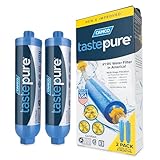
1. Camco Tastepure RV Water Filter 2-pk – GAC & KDF
- Advanced 6-Step Filtration Technology: Discover the impressive power of the Tastepure RV water filters’ Hex-Flow Technology and...
- Certified Lead-Free: These camping water filters are independently tested & listed to standards NSF/ANSI 42 & NSF/ANSI 53. They...
- Access to Pure, Great-Tasting Water: Enjoy clean water anywhere! These RV inline filters reduce bad tastes, odor, chlorine...

Best for: Most compact lead-free inline filter.
A 3.1-inch by 3.9-inch footprint and 7.6-inch height keep the Camco Tastepure filter easy to tuck into a camper storage bay or hook directly into a hose run. Its polypropylene body and 16-ounce weight make it straightforward to carry for frequent campground setups, while the inline form keeps the connection simple for everyday RV use.
NSF/ANSI 42, NSF/ANSI 53, and NSF/ANSI 372 testing give this filter a clear certification profile for camper water use. The 6-step Hex-Flow filtration setup is paired with GAC and KDF media, which targets bad taste, odor, chlorine, and sediment at the point of hookup. A single filter body keeps the setup uncluttered, and the lead-free content certification matters when you want drinking water for coffee, cooking, and refill bottles at the campsite. At 3.1 inches deep, it stays relatively low-profile beside hoses and fittings, which helps when storage space is limited.
Pros
- NSF/ANSI 42, 53, and 372 certifications support camper drinking-water use
- GAC and KDF media target chlorine, taste, odor, and sediment
- Compact 3.1″ x 3.9″ x 7.6″ size fits tight RV storage areas
- 16-ounce polypropylene build is easy to handle at hookups
Cons
- Single-filter pack means you do not get a spare in the box for longer trips.
A practical pick for campers who want a compact inline filter with clear certification backing. It suits RV travelers who prioritize simple hose hookup and better-tasting water over a bulkier system.
| Specification | Details |
|---|---|
| Material | Polypropylene (PP) |
| Product Dimensions | 3.1″D x 3.9″W x 7.6″H |
| Item Weight | 16 ounces |
| External Testing Certification | NSF/ANSI 42, NSF/ANSI 53, NSF/ANSI 372 |
| Product Benefits | Reduces bad taste, odor, chlorine and sediment; protects against bacteria |
I would point campers to this one if they want a straightforward inline filter that does the core job without taking much room. The certification set is reassuring, and the compact size makes it easier to store and connect than larger multi-stage systems. It is a strong match for weekend RVers who mainly want better-tasting water at the hose connection.
2. Camco Tastepure RV Water Filter – GAC & KDF Filtration

- Advanced 6-Step Filtration Technology: Discover the impressive power of the Tastepure RV water filter’s Hex-Flow Technology and...
- Certified Lead-Free: This camping water filter is independently tested & listed to standards NSF/ANSI 42 & NSF/ANSI 53. It’s CSA...
- Access to Pure, Great-Tasting Water: Enjoy clean water anywhere! This RV inline filter reduces bad tastes, odor, chlorine...
Best for: Simple all-around camper water filter.
A polypropylene housing in a 3.1-inch by 3.9-inch by 7.6-inch body makes the Camco Tastepure easy to position between a campground spigot and an RV hose. At 16 ounces, it stays light enough for frequent setup and teardown, and the inline format supports quick use at campsites where space and time both matter.
NSF/ANSI 42, NSF/ANSI 53, and NSF/ANSI 372 certifications make this a well-documented option for camper drinking water. The 6-step Hex-Flow process uses GAC and KDF filtration to reduce bad taste, odor, chlorine, and sediment at the point of entry. That combination is useful when you want water for cooking, coffee, and bottle refills without bringing a separate countertop device. The filter’s lead-free listing is especially relevant for RV use where water quality can vary from campground to campground. Because the housing is compact, it is easier to keep in a storage bin and reinstall when you move sites.
Pros
- 6-step Hex-Flow filtration adds multiple stages in one inline unit
- GAC and KDF media target chlorine, odor, taste, and sediment
- NSF/ANSI 42, 53, and 372 certifications support confidence in use
- 16-ounce weight makes it easy to pack for repeated trips
Cons
- Only one filter is included, so replacement planning is up to the buyer.
For campers who want a no-fuss inline filter with strong certification coverage, this is an easy fit. It is most appealing for travelers who value compact storage and dependable taste improvement at the hose connection.
| Specification | Details |
|---|---|
| Material | Polypropylene (PP) |
| Product Dimensions | 3.1″D x 3.9″W x 7.6″H |
| Item Weight | 16 ounces |
| External Testing Certification | NSF/ANSI 42, NSF/ANSI 53, NSF/ANSI 372 |
| Product Benefits | Reduces bad taste, odor, chlorine and sediment; protects against bacteria |
My take is that this is the safer choice for buyers who want an established inline filter with a compact profile. It does the main camper-water jobs well: reducing taste issues, handling sediment, and keeping the setup simple. If your RV trips are short to medium length and you want reliable hose-mounted filtration, this one is easy to live with.
3. GLACIER FRESH RV/Marine Water Filter with 1 Flexible Hose Protectors

- GLACIER FRESH RV Water Filter Statement: Tested & verified by independent laboratory testing, it can remove 97.9%* chlorine and...
- Premium Filter Material: Lead-free, BPA-free, uses selected GAC granular activated carbon and Kinetic Degradation Flux (KDF), It...
- Multiple uses: The hose filter can be attached to any standard water hose for safe drinking water. Great for RVs, boats, campers...
Best for: Good for hose hookups with extra length.
A 10.55-inch long body gives the GLACIER FRESH filter a stretched, hose-friendly shape that is easy to attach at an RV or marine water connection. The 2.48-inch width and height keep the cylinder slim, while the 1.8-pound weight still feels manageable for campground use and storage in a utility compartment.
The 20-micron rating gives this filter a defined level of particle filtration for camping water hookups. Its lead-free and BPA-free construction pairs GAC granular activated carbon with KDF media, which is aimed at reducing chlorine and improving taste and smell. Independent lab testing claims 97.9% chlorine removal, which is the key benefit if your main concern is the taste of stored or municipal campground water. Because it fits standard water hoses, it works as an add-on for RVs and boats without a special adapter. The longer housing also gives it a more substantial presence at the spigot, which can be convenient when you want a clearly visible inline setup.
Pros
- 20-micron filtration rating gives a defined particle barrier
- GAC and KDF media target chlorine, taste, and smell
- Lead-free and BPA-free materials suit potable-water use
- Standard hose compatibility supports RV and marine hookups
Cons
- The 10.55-inch length takes more hose-side space than shorter inline filters.
This is a sensible pick for campers who want a longer inline filter with a documented chlorine-reduction focus. It makes the most sense for buyers who connect to standard hose fittings and want clearer taste improvement at the source.
| Specification | Details |
|---|---|
| Material | Plastic |
| Product Dimensions | 10.55″D x 2.48″W x 2.48″H |
| Item Weight | 1.8 pounds |
| External Testing Certification | good water filter |
| Product Benefits | Reduces Chlorine |
I’d choose this if the campsite water usually tastes off and you want a hose-mounted filter with a very specific particle rating. The longer body is less discreet than compact units, but it helps signal a more substantial inline setup. It fits best for RV and marine users who want a straightforward attachment rather than a complex filtration system.
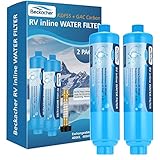
4. 2-Pack Advanced RV Inline Water Filter with Flexible Hose Protector
- Premium Filter Material:This camping water filter is Lead-free, BPA-free, uses selected GAC granular activated Carbon and...
- Larger Capacity Filtration: The inline water filter's long durability could last for 3 months, filtering 1350 gallons of water...
- Widely Usage of 2-pack RV Water Filter: The RV inline water filter fits any standard water hose for safe drinking water, great for...
Best for: High-capacity 2-pack for long trips.
Two inline filters in one pack give the Advanced RV Water Filter setup a clear advantage for campers who need a backup on longer routes. The carbon fiber housing, 6.99-inch depth, and 10.91-inch height create a larger inline body that supports more filtering material, which is useful when you want steady water access across repeated campground stops.
This 2-pack is built around GAC and KDF media in a carbon-fiber housing, with NSF certification listed for the filtration system. The stated 1,350-gallon capacity and three-month service life are the key practical numbers, since they tell you how long the set can stay on the job before replacement becomes a concern. The filter is aimed at reducing bad taste, odor, chlorine, sand, rust, debris, suspended solids, and heavy metals, which is helpful when campground water quality varies. Lead-free and BPA-free construction adds another layer of reassurance for drinking and cooking water. Having two filters in the box also makes it easier to keep one ready for use while the other serves as a spare.
Pros
- 2-pack format provides an immediate spare for extended camping
- 1,350-gallon capacity supports longer use before replacement
- Three-month durability estimate suits seasonal RV travel
- Carbon fiber housing with GAC and KDF targets multiple contaminants
Cons
- The 10.91-inch height makes it bulkier to stow than shorter inline filters.
This pack works well for campers who want longer service life and a spare in reserve. It is especially useful for frequent RV travelers who need a filter that can handle variable campground water over time.
| Specification | Details |
|---|---|
| Material | Carbon Fiber |
| Product Dimensions | 6.99″D x 2.64″W x 10.91″H |
| Item Weight | 16 ounces |
| External Testing Certification | NSF |
| Product Benefits | This water filter for rvs and campers reduces bad taste, odors, and chlorine, Reduces sand intercepts rust, debris, and visible substances suspended solids and large particles, heavy metals in drinking water |
| Manufacturer | Beckacher |
I like this option for buyers who travel often and want a little extra runway before replacing a filter. The 2-pack format matters here because it reduces the chance of being caught without a fresh unit mid-trip. If your campground water changes a lot from site to site, the broader contaminant focus is a practical advantage.
5. AQUA CREST RV Inline Water Filter, Garden Hose & Camper

- 𝗔𝘂𝘁𝗵𝗼𝗿𝗶𝘁𝗮𝘁𝗶𝘃𝗲 𝗡𝗦𝗙 𝗰𝗲𝗿𝘁𝗶𝗳𝗶𝗲𝗱: As thousands of...
- 𝗣𝗿𝗲𝗺𝗶𝘂𝗺 𝗛𝗼𝘀𝗲 𝗣𝗿𝗼𝘁𝗲𝗰𝘁𝗼𝗿: With the premium hose protector, AQUA CREST...
- 𝗧𝗿𝗶𝗽𝗹𝗲 𝗧𝗲𝘀𝘁𝗶𝗻𝗴, 𝗤𝘂𝗮𝗹𝗶𝘁𝘆 𝗔𝘀𝘀𝘂𝗿𝗮𝗻𝗰𝗲: AQUA...
Best for: Lightweight NSF-certified hose filter.
A 0.12-kilogram body makes the AQUA CREST filter one of the lighter choices in this group for RV hose hookups. The non-woven fabric shell and integrated hose protector keep the setup compact while still fitting a camper water line, which helps when you want filtered water without adding much bulk at the spigot.
NSF/ANSI 42 and NSF/ANSI 372 certification gives this filter a clear standards-based profile for camper use. Inside, KDF and advanced coconut GAC work together to reduce chlorine, bad taste, and odors, which is the main reason many RV buyers add a filter in the first place. The 360-degree rotating hose protector is a practical detail because it helps the connection sit more naturally when the hose is under strain. At 0.12 kilograms, it is easy to carry and store with other campsite gear. The product also notes that it does not reduce water spots caused by air-dried minerals, which is useful to know if your main concern is purely taste and smell rather than spotting.
Pros
- NSF/ANSI 42 and 372 certifications support potable-water use
- 0.12 kg weight keeps it easy to pack and move
- KDF and coconut GAC focus on chlorine, taste, and odor
- 360-degree hose protector helps manage hookup strain
Cons
- It does not reduce mineral water spots, so hard-water spotting remains unchanged.
This is a strong option for campers who want a light inline filter with a hose-protection feature. It fits best for RV users focused on better taste and odor rather than full hard-water treatment.
| Specification | Details |
|---|---|
| Material | Non-Woven Fabric; KDF(Kinetic Degradation Fluxion); Advanced Coconut GAC(Granular Activated Carbon) |
| Item Weight | 0.12 kg |
| External Testing Certification | NSF 42&372 |
| Product Benefits | Reduces Chlorine, Bad Taste and Odors |
| Brand | AQUA CREST |
I’d recommend this to campers who want something light, simple, and easy to rotate into position at the hose. The taste and odor filtering is the main draw, and the hose protector is a nice practical touch for frequent setup. It is especially appealing if you care more about convenience than a heavy-duty multi-stage system.
6. GLACIER FRESH GFRVWP03 3-Stage RV Water Filtration System

- Trusted Filtration: This 3-stage water filtration system includes High-Flow Carbon, Advanced Membrane and Taste-Polishing Carbon...
- Designed For RVs: The water filter replacement for RV owners love, with stainless steel Garden Hose Quick Connects that allow you...
- Mobile Water Filter: The GLACIER FRESH replacement for RV Water Filter System is the ideal water filter for RV campers, travel...
Best for: Multi-stage system for longer stays.
A 3-stage filtration layout gives the GLACIER FRESH GFRVWP03 more structure than a basic inline cartridge, which matters when you want a camping filter that can handle repeated use. Its 8.46-inch by 15.23-inch by 21.5-inch footprint is larger than a simple hose filter, but that size supports a more complete RV setup for campground water access.
The 0.2-micron high-flow filter is the headline number here, and it is paired with a charcoal or coconut-shell carbon stage plus a sediment filter. That combination helps clean up taste while also extending filter life, which is useful for RV owners who stay put for more than a quick overnight stop. Stainless steel garden hose quick connects make it easier to move between city water and well water hookups at a campground. NSF testing is listed, and the system is explicitly intended for RV use. Because it is a multi-stage setup rather than a small inline cylinder, it is better suited to travelers who have room for a larger filtration unit in the rig.
Pros
- 3-stage layout adds dedicated filtration layers for RV use
- 0.2-micron filter provides a fine filtration level
- Stainless steel quick connects simplify hookup changes
- Charcoal, coconut-shell carbon, and sediment stages support taste and filter life
Cons
- The large 21.5-inch height requires more storage and installation space than compact inline filters.
This is a better fit for campers who want a more complete filtration system and have space for it. It works well for longer stays where quick-connect convenience and multi-stage filtration are worth the larger footprint.
| Specification | Details |
|---|---|
| Material | Plastic |
| Product Dimensions | 8.46″D x 15.23″W x 21.5″H |
| External Testing Certification | NSF |
| Product Benefits | Removes impurities and contaminants for cleaner, better-tasting water; designed for RVs with compact, lightweight design for easy storage and use. |
| Brand | GLACIER FRESH |
My advice is to look at this if you want a more system-like solution rather than a small inline cylinder. The multi-stage setup and quick connects make it appealing for RV owners who spend real time at a campsite and want easier swapping between water sources. It is less compact, but it offers a more robust approach for buyers with the storage room.
7. Stokk RV Water Filter with Flexible Hose Protector 2 Pack,

- Authoritative NSF certified: Our rv water filter system is independently tested & listed to standards NSF/ANSI 42. Effectively...
- Premium Filtration Materials: Lead-free, BPA-free, food-grade camper water filter uses selected GAC granular activated carbon and...
- High Quality: Made from durable, food-grade plastic, this rv filter is built to resist bursting. The flexible hose reduces...
Best for: Leak-resistant dual-pack for RV hoses.
A 2-pack format with flexible hose protectors gives the Stokk filter a practical edge for campers who want a spare and a gentler connection point. The BPA-free fabric body and manual-operation setup keep the design straightforward, while the included hose protector helps reduce stress on the line during campground hookups.
NSF/ANSI 42 testing anchors this filter’s claims for camper water use, and the media package uses GAC and KDF to reduce chlorine, heavy metals, odors, sediments, and fluoride. The model supports a maximum water TDS level of 300 PPM, which is useful context if you are comparing it with filters meant for heavier-duty treatment. Its leak-proof and rust-resistant features matter at the hose connection, where campsite gear often sees repeated handling. At 0.77 kilograms, it is still portable enough for RV storage, and the counter-top installation type gives it a different placement profile than a purely inline unit. Having two filters in the package makes it easier to keep one in reserve for travel.
Pros
- NSF/ANSI 42 certification supports filtered drinking water use
- 2-pack format gives you a backup filter
- GAC and KDF media target chlorine, odors, sediment, and heavy metals
- Flexible hose protector helps reduce strain at connections
Cons
- The 300 PPM maximum TDS rating means it is not meant for very high-mineral water situations.
This is a useful choice for campers who want a spare filter and extra hose protection in the box. It suits RV users who value straightforward manual filtration and want a dependable setup for standard campground water.
| Specification | Details |
|---|---|
| Brand | Stokk |
| Special Feature | Leak Proof, Reduces Chlorine, Reduces Odors, Rust Resistant, Taste Enhancer |
| Material | BPA-Free Fabric; KDF(Kinetic Degradation Fluxion); Advanced Coconut GAC(Granular Activated Carbon) |
| Included Components | Filter, Flexible Hose Protector |
| Installation Type | Countertop |
| Purification Method | Activated Carbon |
| Power Source | Manual Operation |
| Item Weight | 0.77 kg |
| Model Name | RW036 |
| Supported Water TDS Level Maximum (PPM) | 300 |
I’d consider this a good fit for campers who want a practical two-pack with connection protection included. The 2-pack makes sense if you travel often or like keeping a spare on hand, and the NSF/ANSI 42 listing adds confidence for basic taste and odor improvement. It is a sensible, no-drama option for standard RV use.
8. Hourleey 2 Pack RV Inline Water Filter with 2 Flexible

- Essential Water Safety: Bid farewell to undesirable tastes, odors, chlorine, sediment, and more. The RV water filtration system...
- Superior Quality: The housing's strength, crafted from food-grade plastic, has been enhanced to prevent any potential rupture. By...
- Durable: The inline water filter's durability can last an entire camping season, up to three months, ensuring cleaner, safer, and...
Best for: Durable brass-bodied hose filter.
A brass housing gives the Hourleey filter a sturdier feel at the hose connection than many plastic-bodied inline options. Its 3-inch by 8-inch by 15-inch dimensions and 0.86-kilogram weight place it in the more substantial category, which suits campers who want a firmer connection point and two filters in the pack.
This 2-pack uses GAC and KDF filtration with a 20-micron rating, so the buyer gets a clear balance between particulate control and taste improvement. The filtration system targets bad taste, odors, chlorine, sediment, bacteria, and mold growth regulation when the filter is inactive, which is especially useful for seasonal RV storage between trips. NSF, CE, FCC, UL, and RoHS testing listings make the compliance picture broad for buyers who compare certifications carefully. The product also uses flexible hoses to ease strain on connections, which helps when campsite spigots sit at awkward angles. Because the housing is brass, it is aimed at users who want a more rugged-looking inline setup for regular campground use.
Pros
- Brass housing supports a more substantial hose connection
- 20-micron rating gives a clear filtration specification
- NSF, CE, FCC, UL, and RoHS listings broaden certification coverage
- Flexible hoses help reduce connection strain at the campsite
Cons
- The 15-inch height makes it bulkier than compact inline filters for small storage bays.
This is a good match for campers who want a heavier-duty hose filter with a sturdier body. It is especially appealing if you value a stronger connection feel and a two-pack for longer travel seasons.
| Specification | Details |
|---|---|
| Material | Brass |
| Product Dimensions | 3″D x 8″W x 15″H |
| Item Weight | 0.86 kg |
| External Testing Certification | NSF, CE, FCC, UL, RoHS |
| Product Benefits | Provides essential water safety by removing bad taste, odors, chlorine, sediment, and regulating bacteria and mold growth |
I’d point to this for campers who want a more substantial filter body and broader certification list. The brass construction and flexible hose setup make it feel more secure at the spigot, which is useful when you connect and disconnect often. If you have room to store a taller filter, it offers a practical mix of toughness and filtration coverage.
9. Kohree RV Water Filter, NSF Certified Inline Water Filter, BPA

- NSF Certified & BPA-Free: Certified by NSF makes us professional RV water filters and camping essentials for every RV camper. With...
- High Quality & Durable: Made from thicker, food-grade plastic that resists cracking, Kohree camper water filter has passed...
- Larger Capacity with High Flow: This inline water filter has a fast flow rate of 0.5 gpm. The wide body design also provides...
Best for: Two-pack for basic RV water improvement.
A 2-pack of Kohree inline filters gives campers a simple spare-ready setup, and the carbon fiber material sets it apart from lighter plastic units. That pairing is useful if you want a filtration option you can leave on the hose line while keeping an extra on hand for another trip or campsite.
NSF certification is the main compliance marker here, and the filter uses GAC plus KDF media to reduce chlorine, heavy metals, odors, and fluoride. The thicker, food-grade plastic construction is meant to resist cracking, which matters when an RV filter gets moved in and out of storage or handled in cold weather. The brand notes standard pressure-burst testing, another detail that points toward regular hose use rather than delicate countertop treatment. With two filters in the package, you can rotate use between trips or keep a spare packed with camping gear. It is a straightforward choice for buyers who want familiar inline filtration without a more complex multi-stage system.
Pros
- 2-pack format provides a spare for travel continuity
- NSF certification supports basic confidence in use
- GAC and KDF media target chlorine, odors, heavy metals, and fluoride
- Thicker food-grade plastic aims to resist cracking during handling
Cons
- The product data does not list a micron rating, so filtration fineness is less specific than on some competitors.
This is a practical buy for campers who want a simple 2-pack and a familiar inline filter design. It works best for buyers who care about basic water improvement and want a spare packed alongside their RV gear.
| Specification | Details |
|---|---|
| Material | Carbon Fiber |
| External Testing Certification | NSF |
| Product Benefits | Reduces Chlorine, Removes Impurities |
| Brand | Kohree |
| Number of Packs | 2 |
My view is that this is a solid pick for straightforward RV use when you want two filters without a lot of extra complexity. The NSF listing and crack-resistant housing are the main reasons to consider it. It suits campers who want a dependable backup and basic water cleanup more than a highly specialized filtration system.
10. FRIZZLIFE RV Water Filter-NSF/ANSI 53&42 Certified Inline Hose Filter for

- [Certified Trusted Water] Frizzlife MV99 Lead Free RV water filter system is certified by IAPMO R&T against NSF/ANSI 42&53. With...
- [Solid Brass Connections] The connection fittings of the RV water filtration system are made of high standard LEAD-Free brass...
- [Extra-Long Service Life & Fast Flow] Frizzlife MV99 inline RV filter is much bigger and more sturdy when compared to traditional...
Best for: Fine-filtration inline filter for RVs.
A 0.5-micron activated carbon block gives the FRIZZLIFE filter a finer filtration target than many basic hose filters. Its 5-inch by 5-inch by 15-inch body and brass-plus-plastic construction make it a more structured inline unit, which suits campers who want tighter control over water quality at the RV connection.
IAPMO R&T certification against NSF/ANSI 42 and 53 is the major trust signal here, and the filter is specifically lead-free. The activated carbon block is paired with 1.5-gallon capacity, which helps frame the system as a compact inline purifier rather than a large holding tank. It is listed to reduce chlorine, sediments, lead, heavy metals, bad taste, and odors while leaving essential minerals in place, a useful balance for drinking and cooking water at campsites. The freestanding installation type and included instruction manual make it easier to understand and place in an RV setup. For campers who want a more detailed filtration spec, the 0.5-micron rating is the defining feature.
Pros
- 0.5-micron carbon block offers fine filtration detail
- NSF/ANSI 42 and 53 certification adds trust for RV water
- 1.5-gallon capacity gives clear system context
- Lead-free brass and plastic construction suits inline use
Cons
- The 15-inch height makes it less compact than short inline hose filters.
This is a strong option for campers who want finer filtration and clear certification backing. It fits best for RV users who care about lead reduction and want a more structured inline purifier rather than a minimal hose attachment.
| Specification | Details |
|---|---|
| Brand | FRIZZLIFE |
| Special Feature | Chlorine Reduction, NSF certified |
| Product Dimensions | 5″L x 5″W x 15″H |
| Material | Brass, Plastic |
| Capacity | 1.5 gallons |
| Included Components | Instruction Manual |
| Package Information | Cartridge |
| Installation Type | Freestanding |
| Purification Method | Activated Carbon, Carbon Block |
| Model Name | MV99 |
I’d recommend this to RV buyers who want more specific filtration data and finer treatment than a basic hose filter usually provides. The 0.5-micron carbon block and certified claims make it appealing for people who are selective about water quality. It is a good match if you have room for a taller inline unit and want a more technical solution for camper drinking water.
Quick Comparison Table of Best Water Filters for Campers
| Product Name | Filtration Type | Certifications | Weight | Best For | Check Price |
|---|---|---|---|---|---|
| Camco Tastepure RV Water Filter 2-pk | GAC & KDF | NSF/ANSI 42 | 1.9 pounds | Basic RV use | Check Price |
| Camco Tastepure RV Water Filter | GAC & KDF | NSF/ANSI 42/53/372 | 16 ounces | Taste and odor control | Check Price |
| GLACIER FRESH RV/Marine Water Filter with | GAC & KDF | Independent lab | 1.8 pounds | Chlorine reduction | Check Price |
| 2-Pack Advanced RV Inline Water Filter | GAC & KDF | NSF | 16 ounces | Heavy metal reduction | Check Price |
| AQUA CREST RV Inline Water Filter | KDF & GAC | NSF 42/372 | 0.12 kg | Compact camping trips | Check Price |
| GLACIER FRESH GFRVWP03 3-Stage RV Water | 3-stage filter | NSF | Not listed | Full RV filtration | Check Price |
| Stokk RV Water Filter with Flexible | KDF & GAC | NSF/ANSI 42 | Not listed | Leak-resistant setup | Check Price |
| Hourleey 2 Pack RV Inline Water | GAC & KDF | NSF, CE, FCC, UL | 0.86 kg | Added water safety | Check Price |
| Kohree RV Water Filter, NSF Certified | GAC & KDF | NSF | Not listed | 2-pack camping use | Check Price |
| FRIZZLIFE RV Water Filter-NSF/ANSI 53&42 Certified | Carbon block | NSF/ANSI 42/53 | Not listed | Lead and chlorine reduction | Check Price |
How to Choose the Right best water filter for camper
Filtration type and contaminant removal
Choose filtration by the water source you face most often. For campground hookups and inland tap water, a carbon stage plus sediment screen handles chlorine, grit, and bad taste well. For uncertain sources, choose protection against bacteria and protozoa, with hollowfiber or other absolute-rated membranes, not vague microfiltration claims.
Multistage units give the widest coverage because they pair sediment capture with chemical reduction and pathogen defense. A good pick states what it removes and at what rating; a weak pick only promises fresh water. For most campers, choose a multistage filter with carbon and absolute pathogen protection for the broadest real-world safety.
| Type | Best for |
|---|---|
| Carbon + sediment | Taste, chlorine, and visible debris from clean hookups |
| Hollowfiber membrane | Bacteria and protozoa protection from questionable sources |
| Multistage system | Campers who want one filter for taste, sediment, and safety |
Flow rate and daily capacity
Match flow rate to how you actually camp. Solo travelers and weekend users can live with slower output, but families and frequent refillers need a faster flow so water does not become a chore. Look for gallons per minute on inline or pump systems, and look for per-day output on larger setups.
A weak choice feels like a trickle when filling bottles, a kettle, or a tank; a strong choice delivers steady water without long waits. For most campers, pick a mid-to-high flow filter that keeps refills quick without sacrificing protection.
| Flow / Capacity | Best for |
|---|---|
| Slow, small-capacity | Solo campers, minimal water use, compact kits |
| Moderate flow | Couples and short trips with ordinary refill needs |
| Fast flow / high daily output | Families, frequent cooking, and long stays |
Portability and setup
Pick the format that matches your storage and setup habits. Inline filters save space and stay out of the way, faucet and pitcher styles suit RVs or cabins with stable water access, and pump units fit travelers who need flexibility at different sources. Check packed size, weight, and the hose or connector count before buying, because bulky parts and odd fittings cause the most frustration.
A good camper filter tucks into one bin, uses standard hose threads, and installs in minutes. For most buyers, choose a compact inline or pump-style system with common hose compatibility for the cleanest setup.
| Type | Best for |
|---|---|
| Inline | RV hookups and space-saving installation |
| Faucet | Fixed sinks and simple kitchen use |
| Pitcher | Small groups and easy countertop storage |
| Pump-style | Flexible use from multiple water sources |
Maintenance and filter lifespan
Choose a filter you can maintain without guesswork. Replaceable cartridges with clear gallon ratings are easier to manage than vague service intervals, and twist-lock or tool-free swaps save time on the road. If the system needs backflushing, pick one with simple, documented steps and easy access to the cleaning port.
For long trips, carry one spare cartridge or element and check that the housing seals tightly after every change. Weak maintenance support turns a good filter into a hassle; a strong choice keeps upkeep simple and predictable.
For most campers, choose a model with a clear replacement schedule, easy cartridge swaps, and a spare-ready design.
- Clear gallon or month rating on the cartridge
- Tool-free replacement or simple twist-lock access
- Easy backflush or rinse procedure
- Replacement parts sold separately and easy to pack
Build quality and safety
Prioritize materials and safety details that hold up under travel use. Choose BPA-free, food-safe plastics or stainless-steel components where water touches the filter, and check that seals, gaskets, and housings feel thick and precise rather than flimsy. Leak resistance matters as much as filtration, especially on pressurized hookups, so look for reinforced threads and a pressure rating that matches camper use.
Certifications give extra confidence: NSF/ANSI standards for reduction claims and structural safety tell you the product has been tested, not just advertised. For most buyers, choose a certified, BPA-free filter with solid seals and a stated pressure rating for dependable use.
| Signal | What good looks like |
|---|---|
| Material | BPA-free or stainless contact surfaces |
| Leak control | Reinforced seals, precise threads, secure fittings |
| Certification | NSF/ANSI listing that matches the claimed contaminant reduction |
Which Should You Choose?
- If you want the easiest all-around upgrade for typical campground hookups, choose a standard inline RV filter with GAC and KDF media.
- If you’re most concerned about taste, odor, and chlorine in municipal water, choose a filter that specifically highlights strong chlorine reduction and taste improvement.
- If you want extra protection for hoses and longer-lasting filtration, choose a multi-stage system with a sediment layer and a higher-capacity cartridge.
- If you want the safest bet for frequent camping and verified performance, choose an NSF-certified inline filter with BPA-free construction and a hose protector.
Quick Best Water Filter For Camper Buying Checklist
- Check contaminant protection Make sure the filter targets the water issues you are most likely to face, such as sediment, chlorine, bacteria, and unpleasant taste.
- Match the flow rate to your routine Choose a model that fills bottles and tanks quickly enough for cooking, drinking, and cleanup without long waits.
- Confirm camper-friendly size Look for a compact design that stores easily and fits your available cabinet, counter, or hose space.
- Review installation steps Pick a filter that connects securely to your setup with simple parts, clear instructions, and minimal tools.
- Compare filter lifespan Consider how often cartridges need replacing and whether the system can handle extended trips without frequent maintenance.
- Verify safe materials Choose BPA-free, food-safe construction with leak-resistant connections and reliable performance in changing travel conditions.
How Camper Water Filters Actually Remove Contaminants
Campper water filters work by combining physical filtration and, in some models, chemical or adsorption media. Sediment stages trap sand, silt, and rust before they can clog plumbing or affect taste. Activated carbon helps reduce chlorine, odors, and some organic compounds, which is especially useful when filling from campground hookups or older municipal lines.
Finer membranes or hollow-fiber elements can also capture microorganisms such as protozoa, depending on the pore size and design. The best water filter for camper use is the one that matches the water source you encounter most often, because no single filter handles every contaminant equally well.
Understanding the removal method makes it easier to know what the system can and cannot do.
Portable, Inline, and Under-Sink Systems Compared
Camper water filters are usually grouped by where they sit in the water path. Portable pitcher-style or bottle filters are simple for drinking water only, while inline filters connect to the hose at the spigot and treat water before it enters the RV. Under-sink systems are more permanent and can deliver filtered water at a dedicated faucet.
Each setup balances convenience, flow rate, and installation effort. Inline models are popular for travel because they protect the whole system from sediment and odor.
Under-sink units often offer more thorough filtration, but they take up cabinet space and may need more plumbing knowledge. The right format depends on whether you want whole-camper protection or just cleaner water for cooking and drinking.
| Type | Best for |
|---|---|
| Portable | Drinking water on the go |
| Inline | Whole-system protection at the hookup |
| Under-sink | Dedicated tap and finer filtration |
Routine Maintenance That Keeps Water Flowing
Even a high-quality camper filter loses performance if it is not maintained. Sediment buildup can slow flow, and saturated carbon media may stop improving taste or odor. Most systems need periodic cartridge changes, but the exact interval depends on water quality and how often the camper is used.
It also helps to flush a new filter before drinking from it, since loose carbon dust or manufacturing residues can collect in the first few gallons. When storing the RV, drain the housing and follow the maker’s instructions for winterizing so trapped water does not damage seals or freeze inside the unit.
A quick inspection before each trip can catch cracks, worn O-rings, or leaks before they become bigger problems.
- Replace cartridges on schedule or sooner if flow drops.
- Flush new filters before first use.
- Check O-rings and fittings for wear.
- Drain and dry the unit before long storage.
Common Installation Errors That Reduce Performance
Many filter problems come from installation mistakes rather than the filter itself. One common issue is mounting the unit backward, which can restrict flow or bypass the media entirely. Another is using the wrong hose adapters, leading to leaks at the campground hookup.
Filters also work better when placed before the hose splits, so all incoming water is treated rather than only a single outlet. Kinks, tight bends, and unsupported hoses can reduce pressure and make the system seem weaker than it really is.
It is also important to seal connections firmly without overtightening, since damaged threads or flattened washers can create slow leaks. Taking a few minutes to confirm direction, seals, and water path usually improves both performance and reliability.
Compatibility With Campground and Off-Grid Water Sources
The best water filter for camper trips should match the kind of water you actually encounter. Campground hookups usually need help with chlorine, sediment, and taste, while well water may require stronger sediment control or treatment for minerals and microorganisms. When boondocking, source water can vary from refill stations to natural sources, so a simple taste filter may not be enough.
Check the filter’s connection size, pressure rating, and flow rate to make sure it works with your setup and does not strain the pump. If you rely on a fresh tank, filtering before the tank can protect plumbing and reduce sediment accumulation.
For travelers who move between different water sources, a multi-stage filter often offers the most flexible protection without changing equipment every trip.
Frequently Asked Questions (FAQs)
What Should I Look For In The Best Water Filter For Camper?
The best water filter for camper should remove the contaminants common in campground and tank water while still fitting your space and setup. Look for sediment and chlorine reduction, a practical flow rate, and a design that connects easily to your hose, faucet, or water line.
Which Filtration Type Works Best For Camper Use?
A multi-stage or hollow-fiber system often works best for camper use because it can improve taste while also reducing sediment and microorganisms. Carbon handles odor and chlorine well, while finer filtration adds extra protection for water collected from less predictable sources.
How Important Is Flow Rate In A Camper Water Filter?
Flow rate is very important in a camper water filter because slow output can make refilling bottles and cooking inconvenient. A balanced model should deliver clean water fast enough for daily use without sacrificing filtration quality or causing excessive pressure loss.
Do Camper Water Filters Need Special Installation?
Camper water filters usually need simple but secure installation, especially when connecting to a hose, faucet, or onboard line. The best setups use leak-resistant fittings and clear instructions so you can install them quickly and remove them easily when traveling.
How Often Should I Replace A Camper Water Filter?
A camper water filter should be replaced according to its usage level, water quality, and the manufacturer’s lifespan guidance. Heavy travel, cloudy water, or reduced flow usually means the cartridge is nearing the end of its service life and needs changing sooner.
Is A Compact Filter Better For Camper Travel?
Yes, a compact filter is often better for camper travel because storage space is limited and portability matters. Smaller designs are easier to pack, install, and maintain, especially when you want a system that stays out of the way during long trips.
Can A Camper Water Filter Improve Taste And Odor?
Yes, a camper water filter can improve taste and odor by reducing chlorine, sediment, and other impurities that affect water quality. Carbon-based filtration is especially helpful for making tap or tank water more pleasant for drinking, coffee, and cooking.
Final Suggestions
Choosing the best water filter for camper use can make every trip safer, easier, and more comfortable by improving water taste, reducing common contaminants, and simplifying daily refills. With the right balance of filtration power, flow, and portability, it becomes a practical upgrade for any travel setup. Take the time to compare features carefully, and you will enjoy cleaner water wherever the road leads.