Top 4 Best Water Softener And Filter Combo Deals
The best water softener and filter combo can transform household water by tackling hardness, sediment, and taste issues in one system. best water softener and filter combo products are built to combine ion exchange, carbon filtration, and multi-stage protection, making them a smart fit for modern homes with stubborn scale, chlorine, or cloudy water. As interest grows in all-in-one water softener filter systems and whole house softener filters, buyers are paying closer attention to resin quality, flow rate, maintenance needs, and installation design.
The difference often comes down to how well the unit balances contaminant removal with long-term efficiency and durability. In this guide, the details behind these systems matter more than ever, and the right comparison can reveal far more than a simple spec sheet.
In-depth Reviews of the Best Water Softener and Filter Combo
1. Kind Water Systems E-3000 Whole House Salt-Free Water Softener &
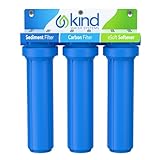
- Delivers cleaner, better-tasting water throughout your entire home, improving everyday use from showering and cooking to drinking...
- Combines sediment filtration, carbon block filtration, and salt-free softening in one compact whole house system designed...
- Targets up to 95% of sediment and over 155 chemical contaminants including chlorine, chloramine, VOCs, and pesticides while...
Best for: Compact whole-home city-water unit.
A 25-inch-long, 9-inch-wide, 29-inch-tall housing keeps Kind Water Systems’ E-3000 manageable for a whole-house setup while combining sediment filtration, carbon block filtration, and salt-free softening in one system. That compact footprint lets city-water households treat the water coming to showers, sinks, and appliances without adding separate equipment for filtration and conditioning.
The included 4.5″ x 20″ pleated 5-micron sediment filter adds a first barrier against grit and visible particles, which helps keep water clearer at the tap and reduces debris reaching the rest of the system. Carbon block purification targets chlorine, chloramine, VOCs, pesticides, and other chemical contaminants, so drinking and cooking water can taste cleaner without stripping out natural minerals. The system is rated to target up to 95% of sediment and over 155 chemical contaminants, giving it broad coverage for municipal water. A 15-gallon capacity and manual operation keep the package straightforward for whole-house use.
Pros
- 25″ x 9″ x 29″ footprint fits a compact whole-house installation
- 4.5″ x 20″ pleated 5-micron sediment filter captures fine particles
- Carbon block purification targets chlorine, chloramine, VOCs, and pesticides
- Salt-free softening retains natural minerals while helping reduce hard water
Cons
- Manual operation means there is no powered control valve for automatic cycling or digital adjustment.
This package makes sense for city-water homes that want filtration and salt-free conditioning in one compact system. It suits buyers who care about cleaner-tasting water and mineral retention as much as reducing scale.
| Specification | Details |
|---|---|
| Brand | Kind Water Systems |
| Product Dimensions | 25″L x 9″W x 29″H |
| Capacity | 15 gallons |
| Material | Coconut Shell |
| Included Components | 4.5″ x 20″ Pleated 5 Micron Sediment Filter |
| Purification Method | Carbon Block |
| Installation Type | Whole House Water Tank |
| Power Source | Manual Operation |
| Special Feature | Lightweight |
I’d point city-water shoppers to this one if they want one system that handles sediment, chemical filtration, and salt-free conditioning without spreading the job across separate units. The compact size and lightweight construction make it easier to work into a whole-house layout, and the mineral-retaining approach is appealing if you want softer-feeling water without a traditional salt softener. It feels most practical for smaller mechanical spaces.
2. NU Aqua 4-Stage Salt Free Water Softener Whole House Water
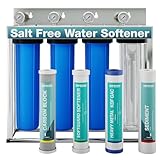
- SALT FREE SOFTENING TECHNOLOGY: The NU Aqua Whole House Water Filter System utilizes advanced scale prevention media to reduce...
- HEAVY METAL PARTICLE REDUCTION: The water softener system effectively filters out harmful metals like lead, mercury, and arsenic...
- WHOLE HOME WATER COVERAGE: Designed for point-of-entry installation, this home water filtration system delivers clean, filtered...

Best for: Heavy-metal reduction for whole homes.
Aluminum construction and a 31-inch by 7-inch by 31-inch cabinet give the NU Aqua 4-Stage a tall, narrow profile that works in tighter utility spaces while serving the entire house. Its salt-free design helps reduce hard-water buildup without adding salt, so a household can protect plumbing and appliances while keeping beneficial minerals in the water.
The four-stage format pairs activated carbon with carbon block purification, which gives the system more than one filtration pass for everyday tap water. NU Aqua lists heavy-metal particle reduction for contaminants like lead, mercury, and arsenic, a useful advantage for homes that want broader treatment than scale control alone. The unit is rated for a maximum supported water TDS level of 300 PPM, so it fits a defined water-quality range rather than a one-size-fits-all approach. At 53 pounds, the system has enough heft to feel substantial during installation, and the whole-house tank format sends treated water to every tap.
Pros
- 31″ x 7″ x 31″ size fits a narrow whole-house installation area
- 4-stage treatment pairs activated carbon and carbon block filtration
- Salt-free softening helps reduce buildup without adding salt
- Maximum supported TDS level of 300 PPM gives clear water-range guidance
Cons
- At 53 pounds, the unit is not as easy to move or position as lighter whole-house systems.
This is a strong pick for households that want broad whole-home treatment plus heavy-metal reduction in a slim cabinet. It fits buyers who need a salt-free setup and value a stated TDS ceiling for matching the system to their water.
| Specification | Details |
|---|---|
| Brand | NU Aqua |
| Model Name | NU Aqua 4 Stage |
| Product Dimensions | 31″L x 7″W x 31″H |
| Material | Aluminum |
| Item Weight | 53 pounds |
| Installation Type | Whole House Water Tank |
| Purification Method | Activated Carbon, Carbon Block |
| Supported Water TDS Level Maximum (PPM) | 300 |
| Special Feature | Clean Water From Every Tap |
I like this for homeowners who want a narrower system that still handles the whole house and adds heavy-metal reduction to the mix. The 4-stage setup and salt-free approach make it practical for families that want cleaner water at multiple fixtures without going to a traditional salt softener. It should appeal most to buyers with moderate water-quality needs and limited utility-room width.
3. Aquasure 64,000 Grains Whole House Water Filter Bundle with Automatic

- Perfect for homes with 4 to 5 bathrooms and up to 6 family members, who desires softened water and clean, pure drinking water for...
- Rated to treat 64,000 grains of hardness by removing skin damaging hard minerals like iron and magnesium that clog up the skin...
- Exceptional performance & high efficient Aquatrol control head and Aquasure reverse osmosis membrane help save water and reduce...
Best for: Large-family softening and drinking water.
A 13-inch by 13-inch by 64-inch cabinet gives the Aquasure bundle a tall, vertical footprint that suits homes needing both softening and purified drinking water in one whole-house package. With reverse osmosis in the system and a 75-gallon capacity, it is set up for households that want broader water treatment across multiple bathrooms and family routines.
Aquasure rates this bundle to treat 64,000 grains of hardness, which is the key number for homes dealing with heavy scale from mineral-rich water. The included Aquatrol control head helps manage the system, while the Aquasure reverse osmosis membrane adds a drinking-water layer for cleaner water at the point of use. The product is described for homes with 4 to 5 bathrooms and up to 6 family members, making the sizing guidance useful instead of vague. A manual water-pressure power source keeps the setup focused on water flow rather than electricity, and the included inlet hose, outlet hose, and instruction manual cover the core installation pieces.
Pros
- 64,000-grain treatment rating suits harder water in larger homes
- Reverse osmosis purification adds a drinking-water layer
- 13″ x 13″ x 64″ footprint uses vertical space efficiently
- Included inlet hose, outlet hose, and instruction manual simplify setup
Cons
- The 64-inch height can make the unit harder to place in rooms with low ceilings or overhead shelving.
This bundle fits families that need both whole-house softening and purified drinking water from a single purchase. It is especially practical for larger households that want a system matched to multiple bathrooms and consistent daily use.
| Specification | Details |
|---|---|
| Brand | Aquasure |
| Product Dimensions | 13″L x 13″W x 64″H |
| Capacity | 75 gallons |
| Included Components | RO System, Inlet Hose, Outlet Hose, Instruction Manual |
| Installation Type | Whole House |
| Purification Method | Reverse Osmosis |
| Power Source | Manual (Water Pressure) |
| Special Feature | Reverse Osmosis Technology |
| Material | Plastic, Polyvinyl Chloride, Polypropylene, Polyurethane, Copper, Styrene Acrylonitrile, Porcelain, Polycarbonate, Acrylonitrile Butadiene Styrene, Polyethylene, Brass, Polystyrene, Stainless Steel, Glass, Aluminum, Borosilicate Glass |
I’d choose this for a larger household that wants one system to cover whole-home softening and cleaner drinking water without splitting the job across separate products. The 64,000-grain rating and the reverse osmosis component make it a better fit for families with more demanding water use. The tall cabinet is worth noting, but it gives you a serious capacity-oriented setup.
4. Fleck 5600 SXT 48K Water Softener/Iron Filter, 3/4″ Bypass, Black
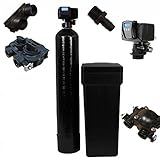
- Advanced Water Treatment Technology: Water softener with fine mesh resin specifically designed for effective iron removal and...
- Digital Metered Valve: Fleck 5600SXT digital metered valve ensures efficient water treatment and ease of use, backed by a five...
- Dual Function System: Combination water softener and iron filter eliminates both scale buildup from hard water and red staining...
Best for: Iron-focused softener with digital control.
Ion exchange resins and filtration media in a 25-inch by 15-inch by 62-inch cabinet make the Fleck 5600 SXT 48K a substantial whole-home unit for water that needs both softening and iron removal. The digital metered valve gives the buyer measured treatment control, which is useful when hard water and iron staining are both part of the problem.
The system’s 1.5-cubic-foot capacity gives it room for residential conditioning, and the fine mesh resin is specifically called out for effective iron removal. That matters for homes where orange staining and metallic taste show up alongside scale. A 3/4″ bypass is included, which helps with installation and service access on compatible plumbing runs. The unit is freestanding, uses ion exchange purification, and comes as a complete system, so the buyer gets the core treatment hardware in one package. The black finish and programmable control add a more utility-room-oriented presentation than a compact filter cabinet. Made in the U.S., it is positioned as a residential treatment solution.
Pros
- Fine mesh resin targets iron removal along with water conditioning
- Digital metered valve supports measured, efficient treatment cycles
- 1.5 cubic feet of media suits residential whole-home use
- 3/4″ bypass helps with installation and service access
Cons
- The 25″ x 15″ x 62″ freestanding cabinet requires more floor and vertical space than compact tank-style systems.
This is the right kind of unit for homes where iron staining is part of the water problem, not just hardness. It works best for buyers who want a programmable whole-house softener with a clear installation footprint and dedicated bypass hardware.
| Specification | Details |
|---|---|
| Brand | DuraWater |
| Product Dimensions | 25″L x 15″W x 62″H |
| Capacity | 1.5 cubic feet |
| Included Components | Complete system |
| Installation Type | Freestanding |
| Purification Method | Ion Exchange |
| Power Source | Corded Electric |
| Special Feature | Programmable |
| Material | Ion Exchange Resins, Filtration Media |
I’d steer buyers toward this if iron is the main issue and they want a more controlled, meter-based softening setup. The fine mesh resin and digital metered valve make it the most specifically targeted option here for staining and conditioning. It is less compact than some alternatives, but that tradeoff makes sense if you need a whole-house unit with iron-filtering emphasis and straightforward service access.
Quick Comparison Table of Top Water Softener and Filter Combos
| Product Name | System Type | Purification Method | Size | Best For | Check Price |
|---|---|---|---|---|---|
| Kind Water Systems E-3000 Whole House | Whole house | Carbon block | 25 x 9 x 29 | City water homes | Check Price |
| NU Aqua 4-Stage Salt Free Water | Whole house | Activated carbon | 31 x 7 x 31 | Salt-free softening | Check Price |
| Aquasure 64,000 Grains Whole House Water | Whole house bundle | Reverse osmosis | 13 x 13 x 64 | Large family homes | Check Price |
| Fleck 5600 SXT 48K Water Softener/Iron | Freestanding | Ion exchange | 25 x 15 x 62 | Iron removal | Check Price |
How to Choose the Right best water softener and filter combo
Capacity and flow rate needs
Match the softener grain capacity to hardness, household size, and daily water use, not just the number on the box. Smaller homes with moderate hardness run well with lower-capacity units, while larger homes or very hard water need higher grain ratings to avoid frequent regeneration. Check the flow rate in gallons per minute so showers, laundry, and dishwashing stay steady during peak use; weak flow numbers create pressure drops when several taps run at once.
Choose a unit with a grain rating that fits your hardness test and a flow rate that matches your busiest hour.
| Type | Best for |
|---|---|
| 32,000–40,000 grain | Small households with moderate hardness |
| 48,000–64,000 grain | Average families with steady daily use |
| 80,000+ grain | Large homes or very hard water |
Filtration stages and contaminant removal
Choose filtration around the water problem you actually have: chlorine taste and odor need carbon, sediment needs a prefilter, iron needs iron-specific media, and sulfur calls for media that targets odors and gases. Single-stage systems suit light treatment needs, but multistage layouts handle mixed issues better because they combine sediment capture, carbon polishing, and specialty media in one path. Look for filter cartridges with clearly stated micron ratings, durable housings, and accessible canisters that make swaps simple.
Good picks list contaminant targets and replacement intervals plainly; weak picks leave performance vague. Pick a single-stage combo for basic chlorine control, and choose a multistage combo with iron or sulfur media for well water or mixed contamination.
| Type | Best for |
|---|---|
| Single-stage carbon | City water with chlorine taste or odor |
| Two-stage sediment + carbon | Homes with visible particles and taste issues |
| Multistage with specialty media | Well water with iron, sulfur, or mixed concerns |
Installation fit and system design
Measure the installation space first and match the system layout to the room you actually have near the main line. An all-in-one cabinet fits tighter mechanical spaces and keeps components consolidated, while separate tanks work better when you have room for easier access and stronger serviceability. Confirm pipe size, inlet/outlet orientation, and bypass setup so the unit connects cleanly without extra plumbing work.
Look for a resin tank, brine tank, and filter housing arrangement that leaves clearance for lid removal and cartridge changes. Choose a cabinet combo for compact utility rooms and separate tanks for buyers who want simpler access and more flexible placement.
| Type | Best for |
|---|---|
| All-in-one cabinet | Small spaces and cleaner visual layout |
| Separate tank setup | Open utility areas and easier servicing |
| Compact wall-adjacent filter unit | Tight installs with limited clearance |
Maintenance demands and operating costs
Favor a combo that keeps upkeep simple, because long-term performance depends on regular salt filling, filter changes, and resin care. Low-hassle systems use straightforward regeneration controls, clear indicator lights, and filter access that does not require special tools. Backwashing or automatic cleaning reduces manual work, while leak alerts and usage monitoring help catch problems early and track consumption.
Check warranty length, parts coverage, and whether replacement cartridges and resin are widely available. Choose a low-maintenance combo with automatic regeneration and leak monitoring for busy households, and pick a service-friendly unit with easy access and clear replacement schedules for anyone who wants predictable upkeep.
| Type | Best for |
|---|---|
| Automatic regeneration with alerts | Busy homes that want minimal oversight |
| Manual or basic controls | Users who prefer simple operation |
| Service-access cabinet | Owners who handle maintenance themselves |
Which Should You Choose?
- If you want one system to cover drinking, showering, cooking, and cleaning for a typical family home, choose a whole-house salt-free combo with sediment and carbon block filtration.
- If your main goal is preventing scale without adding salt to the water, choose a salt-free system built around advanced scale-prevention media.
- If you have 4 to 5 bathrooms, up to 6 people, and want both soft water and cleaner drinking water, choose a high-capacity whole-house bundle rated around 64,000 grains.
- If your water has noticeable iron issues along with hardness, choose a metered softener with fine mesh resin and dedicated iron-removal capability.
Quick Best Water Softener And Filter Combo Buying Checklist
- Test your water first. Know hardness, iron, chlorine, and sediment levels before comparing models.
- Match capacity to household demand. Choose a system that handles peak water use without pressure loss.
- Verify contaminant coverage. Make sure the filter section targets the specific issues in your water supply.
- Measure installation space. Confirm the unit fits near the main line with room for maintenance access.
- Check maintenance needs. Review salt use, filter changes, and regeneration settings before buying.
- Look for warranty support. Strong coverage can help protect your investment and simplify repairs.
How a Water Softener and Filter Combo Treats Water in Sequence
A combo unit usually handles two problems in a fixed order: first it removes contaminants such as sediment, chlorine, or iron, then it softens the water by reducing hardness minerals like calcium and magnesium. Some systems place the filter media before the softening resin to protect the softener from fouling, while others use separate tanks that work in parallel with a shared control head. This sequence matters because cleaner water helps the resin regenerate more effectively and keeps flow more consistent throughout the home.
When the filtration stage is sized correctly, you get fewer scale deposits, better soap performance, and less odor or taste issues from the same system.
Whole-House vs Point-of-Entry Combo Systems
Water softener and filter combos can be configured as whole-house systems or as point-of-entry units that treat all water after it enters the building. Whole-house setups are the most common because they protect plumbing, water heaters, laundry, and fixtures from scale and sediment. In contrast, smaller point-of-entry systems are sometimes used where space is limited or water quality problems are mild.
The main difference is capacity and service reach: a larger system can support more bathrooms and higher peak demand without noticeable pressure loss.
| Type | Best for | Typical trade-off |
|---|---|---|
| Whole-house | Full-home protection | Needs more space |
| Compact point-of-entry | Smaller homes | Lower capacity |
| Dual-tank system | High usage | More components to service |
Maintenance Tasks That Keep Combo Systems Performing Well
Routine care helps a combo system maintain both filtration quality and softening performance. The most common task is checking salt levels if the softener uses ion exchange, since low salt can weaken regeneration and allow hard water to slip through. Filter media or cartridges may also need periodic replacement or backwashing, depending on the design.
If the system includes a carbon stage, monitoring chlorine breakthrough is important because exhausted carbon can no longer protect downstream parts. It is also smart to inspect drain lines, bypass valves, and fittings for leaks or slow clogs.
Consistent maintenance prevents pressure drops, extends media life, and keeps the system operating closer to its rated capacity.
Common Installation Mistakes That Reduce Performance
Even a strong system can underperform if installation is rushed or poorly planned. One common mistake is placing the unit too close to a water heater or in a cramped area where access for servicing is limited. Another is failing to account for peak flow, which can cause pressure loss when several fixtures run at once.
Improper drain routing is also a concern, especially for systems that need a reliable backwash cycle. If the incoming water supply contains heavy sediment, skipping a prefilter can shorten the life of the softener resin and clog valves.
Correctly sized plumbing connections, a proper bypass setup, and enough clearance for maintenance all make the system easier to live with and far more dependable.
Water Quality Issues a Combo System Cannot Fully Solve
A water softener and filter combo is excellent for hardness, sediment, and some chlorine-related concerns, but it is not a cure-all. It does not disinfect water, so bacteria, viruses, or other biological contamination still require separate treatment. Standard softening also does not remove many dissolved salts, nitrates, PFAS, or heavy metals unless a specific advanced media is included.
If water has a strong sulfur smell, the cause may be hydrogen sulfide, which often needs a dedicated oxidation or specialty filtration stage.
Knowing these limits helps set realistic expectations and avoids assuming one appliance can replace every type of treatment. In many homes, a combo system works best as part of a broader water treatment plan.
Frequently Asked Questions (FAQs)
What Does A Water Softener And Filter Combo Do?
A water softener and filter combo removes hardness minerals and improves overall water quality in one system. It typically reduces calcium and magnesium while also targeting sediment, chlorine, or other common contaminants, giving you softer water that is better for plumbing, fixtures, and daily use.
How Do I Know What Size Combo System I Need?
The right size water softener and filter combo depends on household water usage and hardness level. A larger family or very hard water usually needs higher grain capacity and stronger flow support, while smaller homes can choose a more compact unit that regenerates less often.
Which Contaminants Should The Filter Section Handle?
The filter section of a water softener and filter combo should match the problems shown in your water test. Common targets include sediment, chlorine, iron, sulfur, and unpleasant taste or odor, so the best choice is the one built for your specific water quality issues.
Is Installation Difficult For A Combo Unit?
Installation of a water softener and filter combo is usually straightforward for a plumber but still requires careful planning. You need enough space near the main water line, correct pipe sizing, and a drain or discharge path for regeneration and flushing cycles.
How Often Does A Combo System Need Maintenance?
A water softener and filter combo needs regular maintenance based on usage, water hardness, and filter type. Typical care includes adding salt, replacing filter cartridges, and checking the system for buildup or leaks, with some units offering easier controls and longer service intervals.
Can One Combo System Improve Taste And Appliance Protection?
Yes, a water softener and filter combo can improve taste while also protecting appliances and plumbing. The filter helps reduce unpleasant contaminants, and the softener cuts scale buildup, which can help water heaters, dishwashers, and fixtures run more efficiently over time.
What Features Matter Most When Comparing Models?
The most important features in a water softener and filter combo are capacity, contaminant coverage, flow rate, and maintenance convenience. It also helps to look for durable materials, clear controls, and a warranty that supports long-term performance and easier upkeep.
Final Suggestions
Choosing the best water softener and filter combo can make a noticeable difference in water quality, appliance protection, and everyday comfort. With the right balance of capacity, filtration, and maintenance ease, these systems offer practical value for many households. Focus on your water test results and usage needs, and you can select a system that keeps paying off for years to come.