How to Make Beet Juice Without Juicer
If you want fresh beet juice but don’t have a juicer, you’re not out of options. Making beet juice without a juicer is completely possible using common kitchen tools. By preparing the beets properly and applying straightforward techniques, you can still enjoy fresh juice at home.
Understanding the right steps for grating, squeezing, or blending will help you get the most out of your beets. Before you start, it’s important to know which tools and methods work best to ensure a smooth process and tasty results. With a little effort, you can make delicious beet juice without any special equipment.
Key Takeaways
- Wash, peel, and chop beets into small pieces to prepare them for manual juicing.
- Finely grate beets to increase surface area for easier juice extraction.
- Place grated beets in cheesecloth and squeeze firmly over a bowl to extract juice.
- Alternatively, blend beets with water, then strain through a fine mesh or cheesecloth.
- Add lemon juice or natural sweeteners to improve flavor and dilute thickness if desired.
Essential Tools for Juicing Beets Without a Juicer
What tools do you really need to juice beets without a juicer? For effective beet processing, you’ll want a sturdy grater or sharp knife to break down the beet roots into smaller pieces. This increases surface area, making juice extraction easier.
Next, use a fine mesh strainer or cheesecloth for manual pressing; these help separate juice from pulp efficiently. A large bowl to catch the juice and a heavy object or a manual press aid in exerting pressure to extract liquid.
These tools work together to maximize juice yield without fancy equipment. By relying on manual pressing techniques and basic kitchen tools, you can create fresh beet juice with minimal investment and effort, ensuring you get the nutritional benefits of beets even without a juicer.
How to Prepare Beets for Juicing by Hand
How should you get your beets ready to maximize juice extraction by hand? Start with thorough beet prep: wash the beets under cold running water to remove dirt and grit. Peel the skin using a vegetable peeler or paring knife to reduce bitterness and improve juice purity.
Chop the beets into small, uniform pieces, about 1-inch cubes, to increase surface area, which aids in releasing juice during hand juicing. Removing beet greens is essential unless you plan to juice them separately, as their texture differs profoundly.
Dry the pieces slightly with a clean towel to prevent excess water from diluting your juice. Proper beet prep not only simplifies the hand juicing process but also ensures you extract maximum flavor and nutrients efficiently.
How to Extract Beet Juice Without a Juicer
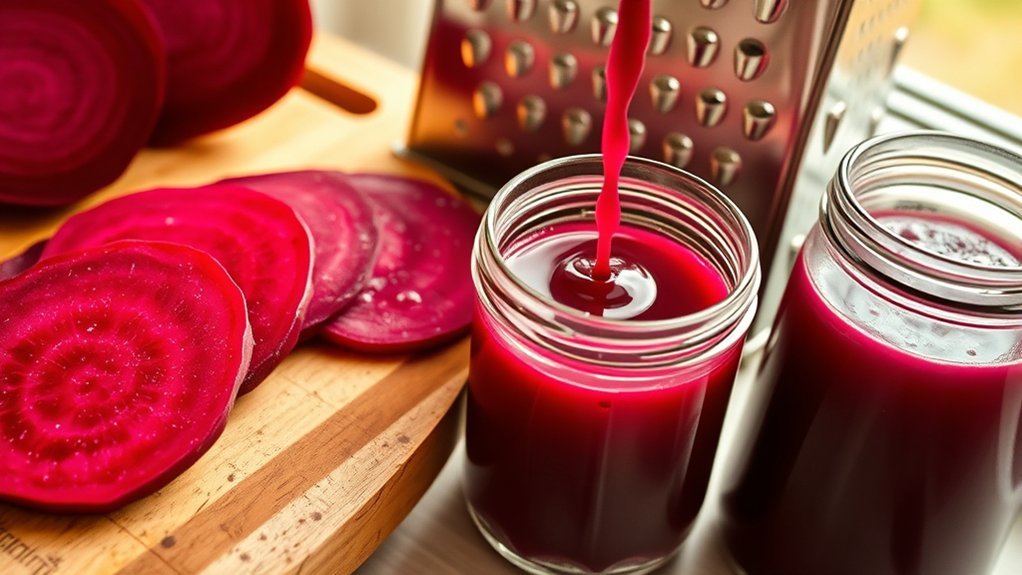
Wondering how to get fresh beet juice without a juicer? Start by finely grating your prepared beets to maximize surface area, which helps release the beet nutrient-rich liquid.
Next, place the grated beets in a clean cloth or cheesecloth. Squeeze firmly over a bowl to extract the juice, applying consistent pressure to guarantee you get as much liquid as possible.
This method respects juice ethics by avoiding waste and preserving the nutrients naturally present in beets. You can also use a blender with a little water, then strain the mixture through a fine mesh or cloth to separate the juice from the pulp.
Both techniques let you efficiently extract beet juice while maintaining nutritional value without specialized equipment.
How to Improve the Flavor and Texture of Homemade Beet Juice
Improving the flavor and texture of homemade beet juice often requires simple adjustments that balance its naturally earthy taste and thick consistency. To achieve an improved flavor, try adding citrus like lemon or orange juice, which brightens the beet’s earthiness.
For texture adjustments, diluting with water or straining through a fine cloth can reduce thickness without sacrificing nutrients. Sweeteners like honey or apple juice can also enhance palatability naturally. Avoid additives that are not relevant to beet juice’s core profile, ensuring the pure taste remains.
How to Store and Use Homemade Beet Juice Safely
Once you’ve enhanced the flavor and texture of your homemade beet juice, proper storage and usage become key to preserving its nutritional benefits and safety. For optimal beet storage, refrigerate your juice in an airtight container within two hours of preparation. This slows microbial growth and oxidation, maintaining freshness for up to 48 hours.
Always label the container with the preparation date to monitor freshness effectively. Practice safe handling by washing your hands and utensils thoroughly before and after juice preparation to avoid contamination. Avoid leaving beet juice at room temperature for extended periods, as this promotes bacterial growth.
When using the juice, consume it promptly after opening and discard any juice that smells sour or appears cloudy. Following these steps ensures your homemade beet juice remains safe and nutritious.
Frequently Asked Questions
Can Beet Juice Interact With Medications?
Yes, beet juice interactions can affect medication timing, especially blood pressure drugs. You should consult your doctor to avoid adverse effects and ensure you take your medications at the right time when consuming beet juice regularly.
What Are the Health Benefits of Beet Juice?
Beet juice’s vibrant beet color anda signals antioxidants that boost heart health and lower blood pressure. Despite its natural beet sugar content, it supports stamina and detoxifies your body, making it a powerful, practical health elixir you’ll want daily.
Are There Any Side Effects of Drinking Beet Juice?
You might experience beet juice safety concerns like red urine or low blood pressure. Also, be cautious about beet juice interactions with blood thinners.
Always consult your doctor if you have underlying health conditions or take medications.
How Often Should I Drink Beet Juice for Best Results?
You should drink beet juice about three to four times a week for best results. This frequency supports blood pressure and stamina benefits without overloading your body with nitrates or sugars found in beet juice.
Can Beet Juice Help Improve Athletic Performance?
Yes, beet juice can boost your athletic performance by improving blood flow and endurance.
However, watch for interacting medications like blood thinners, and consult your doctor before adding it regularly to your routine.
Conclusion
Now that you know how to make beet juice without a juicer, you’re practically a kitchen wizard! With just a grater, cloth, and a bit of elbow grease, you’ll extract every drop of vibrant, nutrient-packed juice. No fancy gadgets? No problem.
This simple, hands-on method guarantees you enjoy fresh beet juice anytime, boosting your health with ease. Give it a try—you’ll wonder why you ever thought juicing was complicated!
By mastering this technique, you’ll always have a way to make beet juice without a juicer whenever the craving strikes.