Top 10 Best Paramedic Knife Picks That Impress
The best paramedic knife is more than a cutting tool; it is a compact piece of emergency equipment designed for speed, control, and reliability under pressure. In trauma kits and first responder gear, details like blade geometry, locking mechanisms, handle grip, and corrosion-resistant materials can shape how a knife performs in urgent situations. A quality rescue knife must balance accessibility with safety, especially when every second counts and visibility or conditions are far from ideal.
This guide explores what separates an ordinary EMT knife from a truly dependable field tool, including innovations that improve one-handed use, durability, and practical versatility. As the differences between paramedic rescue knife designs become clearer, the most important features start to stand out in surprising ways.
Detailed Overview of the Best Paramedic Knife
1. LEO Challenge Coins EMT EMS Paramedic Knife 3-in-1 Military Tactical

- Steel Blade with Aluminum Handle and Pocket Clip weighs 5.2 oz.
- 3-in-1 functional tool: Built in Seatbelt Cutter, Stainless Steel Knife Blade, Glass Breaking Tip
- DIMENSIONS: 3 ½" Stainless 3mm Thick Steel Blade, 4.75" Closed Length, Fits in EMT Holster
Best for: Compact rescue carry for EMTs.
A 3 1/2-inch stainless blade paired with a 4.75-inch closed length keeps the LEO Challenge Coins EMT EMS Paramedic Knife compact enough for an EMT holster while still giving you a full rescue-ready edge. The 5.2-ounce weight and aluminum handle make it easy to keep clipped on without adding bulk during calls.
Three functions come in one foldable tool: a seatbelt cutter, a stainless steel blade, and a glass-breaking tip. The 3mm-thick blade adds stiffness for controlled cutting, while the built-in safety lock helps keep the blade secure during use. A pocket clip supports fast carry, and the black aluminum handle gives you a reliable grip when conditions are hectic. Because it fits in an EMT holster, it works well for uniform carry, vehicle storage, or a jump bag pocket. The modern style keeps it straightforward and practical for rescue work.
Pros
- 3 1/2-inch stainless blade for rescue cuts
- 3-in-1 layout adds seatbelt cutter and glass breaker
- 4.75-inch closed length fits EMT holsters
- 5.2-ounce weight stays manageable on a belt
Cons
- No serrated section, so rope and webbing cutting depends on the straight stainless edge and seatbelt cutter.
This is a compact, purpose-built option for responders who want one folding tool for cutting, breaking, and carry. It makes the most sense for EMTs and rescue-minded users who value a holster-friendly size.
| Specification | Details |
|---|---|
| Blade Length | 3 1/2 inches |
| Blade Thickness | 3mm |
| Closed Length | 4.75 inches |
| Weight | 5.2 oz |
| Blade Material | Stainless Steel |
| Handle Material | Aluminum |
| Color | Black |
| Included Components | Pocket Clip |
| Special Feature | Foldable |
I’d point this toward EMTs who want a small, clipped-on rescue knife that won’t feel oversized in a holster. The 3-in-1 layout covers the core emergency tasks without extra complexity, and the aluminum handle keeps the package light. If you want a straightforward carry knife for vehicle exits and quick response work, this fits that role well.
2. Tac-Force 8.25″ Tactical Folding Pocket Knife – 3.25″ Stainless Steel
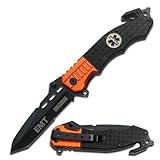
- Razor-Sharp Tanto Blade: Features a 3.25-inch, 3mm thick stainless steel blade with a sleek black finish. The Tanto point design...
- Built-In Emergency Tools: Prepared for the unexpected, this folding knife includes an integrated glass breaker and a seatbelt...
- Heavy-Duty Construction: Crafted with a durable 4.5-inch aluminum handle featuring an inset medallion for a premium look and...
Best for: Glove-box rescue knife with piercing tip.
A 3.25-inch stainless steel tanto blade with a 3mm thickness gives the Tac-Force TF-740EM a stronger piercing profile than a plain drop point, which matters when you need deliberate entry or cutting leverage. The black finish and folding format keep it compact for glove-box or kit storage while still supporting emergency use.
The half-serrated edge adds bite for rope, cord, and webbing, so you can handle mixed materials without switching tools. An integrated glass breaker and seatbelt cutter turn it into a vehicle-focused rescue folder, and the pocket clip helps keep it accessible. The 8.25-inch overall size gives enough handle room for control when deployed, while the stainless steel handle adds a tougher feel in hand. Because it is aimed at rescue operations and emergency response, it suits users who want one knife for everyday carry and roadside extraction tasks.
Pros
- 3.25-inch tanto blade for piercing strength
- 3mm blade thickness adds cutting stability
- Half-serrated edge handles rope and cord
- Glass breaker and seatbelt cutter support vehicle rescue
Cons
- The stainless steel handle can add weight compared with aluminum rescue folders, which may matter for pocket carry.
This knife works best for drivers, first responders, and anyone who wants a compact rescue tool in the vehicle. The tanto blade and emergency tools make it especially practical for extraction-focused carry.
| Specification | Details |
|---|---|
| Blade Length | 3.25 inches |
| Blade Thickness | 3mm |
| Overall Length | 8.25 inches |
| Blade Material | Stainless Steel |
| Handle Material | Stainless Steel |
| Color | Black & Orange |
| Included Components | Glass Breaker, Pocket Clip, Seat Belt Cutter |
| Model Name | TF-740EM |
| Special Feature | Foldable |
I like this one for users who want a tactical rescue folder with a more aggressive blade shape. The tanto point makes sense if puncture performance matters, and the half-serrated edge broadens what it can cut in real emergencies. It’s a sensible pick for a glove box, jump bag, or duty pocket when one tool needs to do several jobs.
3. Kershaw Barricade Pocket Knife

- BARRICADE POCKET KNIFE: A multi-use rescue tool, the Kershaw Barricade combines everyday portability with emergency-ready...
- DROP POINT BLADE: The 3.5" drop point blade is made from 8Cr13MoV steel that offers improved edge retention, strength and...
- MULTI-FEATURE HANDLE: Orange glass-filled nylon handle features a protected sharpened edge for cord or rope cutting, and a carbide...

Best for: Compact Kershaw for rescue carry.
A 3.5-inch drop point blade in 8Cr13MoV steel gives the Kershaw Barricade a balanced edge profile with solid hardness and edge retention for everyday rescue carry. The orange glass-filled nylon handle makes it easy to spot fast, whether it’s riding in a pocket, purse, or vehicle compartment.
The carbide glass breaker adds a dedicated escape function, and the cord cutter gives you a separate path for lines or seatbelt-like material. Black-oxide coating on the blade helps give it a subdued tactical look while the 3.5-inch blade length still leaves enough working edge for general tasks. Because the handle is glass reinforced nylon, the knife stays light and practical for pocket carry. The compact format is useful for users who want rescue features without moving to a larger, heavier folder, and the orange color makes it easier to find under stress or in low light.
Pros
- 8Cr13MoV blade for edge retention and hardness
- 3.5-inch drop point offers versatile cutting
- Carbide glass breaker adds emergency escape utility
- Orange glass-filled nylon handle is easy to locate
Cons
- It includes a cord cutter rather than a seatbelt cutter, so vehicle-extraction use is less direct than on rescue knives with that dedicated tool.
This is a strong choice for buyers who want a compact rescue knife with everyday portability. The bright handle and separate escape features make it easy to recommend for pocket, purse, or car carry.
| Specification | Details |
|---|---|
| Blade Length | 3.5 inches |
| Blade Material | 8Cr13MoV |
| Handle Material | Glass Reinforced Nylon |
| Color | Orange |
| Special Feature | Glass Breaker, Seat Belt Cutter |
| Model Name | Barricade |
| Brand | Kershaw |
| Recommended Uses For Product | Everyday, Rescue |
| Style | 8650 |
I’d choose this for someone who wants a rescue knife that still feels like an everyday pocket tool. The 8Cr13MoV steel, glass breaker, and compact carry size make it a practical middle ground between utility and emergency function. If you value visibility and a simple rescue layout, this is a very easy knife to live with.
4. Tac Force Tactical Assisted Opening Folding Knife – TF-723PC
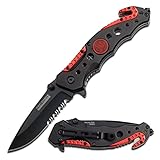
- Spring assist folding knife offers rapid one-handed deployment, locks securely into place with liner lock
- Black half-serrated stainless steel blade
- Aluminum handle with EMS medallion, seat belt cutter, and glass breaker on the end
Best for: Fast-opening EMS folder.
A spring-assist opening system on the Tac-Force TF-723PC gives you quick one-handed deployment, which is a major advantage when your other hand is occupied. The 3 1/4-inch half-serrated blade and aluminum handle keep the knife compact, while the EMS medallion and fire-dept color make its rescue focus obvious at a glance.
The liner lock keeps the blade secured after opening, and the integrated seat belt cutter plus glass breaker put the most common vehicle-extraction tools in one handle. A 4-12-inch closed length makes it pocketable, yet the 3mm blade thickness gives the cutting edge some rigidity for controlled work. Because it includes a pocket clip, the knife can ride securely in daily carry. The alloy steel blade material and everyday-carry style suit users who want a rescue folder for camping, hiking, or emergency response without carrying a larger fixed blade.
Pros
- Spring assist supports quick one-handed opening
- Half-serrated 3 1/4-inch blade cuts mixed materials
- Seat belt cutter and glass breaker aid extraction
- Pocket clip keeps it accessible for carry
Cons
- The closed-length figure is given as 4-12 inches in the data, so buyers who want a precisely stated compact size may find that listing unclear.
This knife fits responders and prepared users who want rapid access plus built-in emergency tools. Its assisted opening and rescue hardware make it a practical EDC option for varied field use.
| Specification | Details |
|---|---|
| Blade Length | 3 1/4 inches |
| Blade Thickness | 3mm |
| Closed Length | 4-12 inches |
| Blade Material | Alloy Steel |
| Handle Material | Aluminum |
| Special Feature | Spring Assist, Pocket Clip, Glass Punch |
| Color | Fire Dept |
| Model Name | TF-723FD |
| Style | Everyday Carry |
My take is that this one is aimed at users who prioritize speed and rescue tools over minimalist design. The spring assist makes opening easier under stress, and the glass breaker and seat belt cutter cover the common emergency basics. If you want a knife that feels ready for utility and extraction work, this is a solid fit.
5. Snake Eye Tactical Two Tone Rescue Style Assisted Open Folding

- Snake Eye Tactical Spring Assist Knife
- 3.25" 3MM THICK BLADE, STAINLESS STEEL
- BLACK HALF SERRATED BLADE
Best for: Simple rescue knife with bright finish.
A 3.25-inch, 3mm-thick stainless steel blade gives the Snake Eye Tactical rescue folder a straightforward cutting platform for emergency use. The 4.5-inch closed length keeps it pocket-friendly, and the EMS1 color helps it stand out in a bag, vehicle, or drawer.
The black half-serrated edge is useful when you need to saw through rope or webbing and still keep some straight-edge slicing ability. A pocket clip makes it easier to carry on a belt or in a pocket, while the included glass breaker and seat belt cutter cover the most common rescue tasks. The stainless steel handle gives the knife a more rugged feel and supports a no-frills emergency setup. Since the knife is spring assist, it opens faster than a manual folder, which helps when quick access matters. The modern style keeps the layout simple for field use.
Pros
- 3.25-inch blade size suits general rescue cutting
- 3mm thickness adds blade stability
- Black half-serrated edge helps with rope and webbing
- Glass breaker and seat belt cutter broaden emergency use
Cons
- The stainless steel handle is less lightweight than aluminum, so pocket carry may feel heavier than on some rescue folders.
This is a practical choice for buyers who want a compact assisted-open knife with the essential emergency tools. It makes sense for EMT-style carry, vehicle storage, and general rescue readiness.
| Specification | Details |
|---|---|
| Blade Length | 3.25 inches |
| Blade Thickness | 3mm |
| Closed Length | 4.5 inches |
| Blade Material | Stainless Steel |
| Handle Material | Stainless Steel |
| Color | EMS1 |
| Special Feature | Spring Assist, Pocket Clip, Glass Breaker, Seat Belt Cutter |
| Model Name | Assisted Knife |
| Style | Modern |
I’d recommend this to buyers who want the key rescue tools without a lot of extra complexity. The half-serrated blade and assisted opening make it useful in real-world cutting jobs, and the compact closed length keeps it easy to stash. It’s especially appealing if you like a simple, highly visible EMS-style folder.
6. SOG Escape Tactical Folding Knife- 3.4 Inch Serrated Edge Blade

- QUICK ACCESS POCKET EMERGENCY KNIFE: The SOG Escape is a quick open tactical knife that serves well as a rescue knife for SWAT...
- FIRST RESPONDER RESCUE KNIFE: Features a cord-cutting groove for cutting cords, lines and seatbelts; includes a glass breaker...
- ONE-HAND OPEN + LOCKBACK: Use the thumbstuds to access this assisted opening knife; lockback mechanism secures the blade while...
Best for: Emergency tool for rapid access.
A 4.8-inch closed length makes the SOG Escape compact enough for pocket carry while still packing a 3.4-inch serrated stainless blade for rescue work. The aluminum handle keeps the folder manageable in hand, and the black finish gives it a restrained, professional look for responder use.
The cord-cutting groove gives this knife a dedicated path for lines, cords, and seatbelts, while the glass breaker and wire stripper expand its emergency role. An extra line cutter blade sits under the handle, which adds another cutting option without making the knife larger. Thumbstud access and lockback construction support one-hand use and secure blade control during a task. Because the knife is framed for first responders, SWAT teams, paramedics, and firefighters, it suits users who want a compact rescue piece with several job-specific functions rather than a simple pocket blade.
Pros
- 3.4-inch serrated blade helps with tough materials
- Cord-cutting groove handles lines and seatbelts
- Wire stripper adds a specialized utility
- 4.8-inch closed length supports pocket carry
Cons
- The data lists the blade as serrated, so it is less ideal for users who prefer a smooth straight edge for precise slicing.
This knife is a strong pick for professionals who want a compact rescue tool with specialized cutting features. It is especially useful when wire, cord, and seatbelt tasks are part of the job.
| Specification | Details |
|---|---|
| Blade Length | 3.4 inches |
| Closed Length | 4.8 inches |
| Blade Material | Stainless Steel |
| Handle Material | Aluminum |
| Color | Black |
| Included Components | Folding Knife Pocket Knife |
| Special Feature | Manual |
| Model Name | 9000967 |
| Style | Escape – Hardcased Black |
I’d steer this toward responders who want more than a basic folder. The extra line cutter, cord groove, and wire stripper make it feel specialized for emergency tasks, and the compact closed size helps it disappear in pocket carry. If utility breadth matters more than a plain edge, this is a smart option.
7. Tac-Force- Folding Pocket Knife – Black/Satin Partially Serrated Blade, Pink

- HIGH QUALITY MATERIALS: Made from quality materials. 3CR13 stainless steel fine edge blade provides an excellent balance of...
- EVOLVED: Manufactured with the police and fire & rescue professionals need’s in mind.
- DEPENDABLE: A knife you can count on for camping, hiking, backpacking, hunting & fishing, the outdoors, DIY activities, survival...
Best for: Bright carry for rescue and utility.
A 3-inch partially serrated blade paired with a 4.75-inch handle gives the Tac-Force TF-498PEM a compact format that still leaves enough grip for controlled everyday carry. The 7.75-inch overall length and pink EMT color make it easy to identify quickly in a bag or pocket.
The 3CR13 stainless steel blade offers a balance of hardness and corrosion resistance, which is useful for utility work in varied conditions. Because the edge is partially serrated, you get extra bite on rope or tougher material without giving up a straight section for cleaner slicing. The aluminum handle keeps the knife lighter than steel-bodied rescue folders, and the pocket clip improves carry convenience. Since the design is aimed at police and fire rescue needs as well as camping and emergencies, it fits buyers who want a simple, visible knife with the basics in one place. The everyday-carry style keeps it straightforward.
Pros
- 3CR13 steel balances hardness and corrosion resistance
- 3-inch partially serrated blade adds versatility
- 4.75-inch handle supports controlled grip
- Pocket clip makes daily carry easier
Cons
- It does not include a seat belt cutter or glass breaker, so it is less specialized for vehicle rescue than other EMT folders.
This is a good fit for buyers who want a lightweight, visible carry knife with utility-first features. It is especially appealing if you need a straightforward folder for general rescue and outdoor tasks.
| Specification | Details |
|---|---|
| Blade Length | 3 inches |
| Handle Length | 4.75 inches |
| Overall Length | 7.75 inches |
| Blade Material | Stainless Steel |
| Handle Material | Aluminum |
| Color | Pink EMT |
| Special Feature | Pocket Clip |
| Model Name | TF-498PEM |
| Style | Everyday Carry |
I like this as a no-nonsense utility knife for someone who wants a visible EMS-style folder without extra bulk. The partially serrated edge gives it flexibility, and the aluminum handle helps keep carry easier. If your priority is a practical pocket knife rather than a fully loaded rescue tool, this one makes sense.
8. Tac-force Orange EMT LED Tactical Rescue Pocket Knife NEW
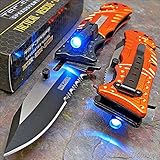
- RESCUE-STYLE FOLDING KNIFE – Tac-Force folding pocket knife features an 8-inch overall length when opened, combining a compact...
- HALF-SERRATED STAINLESS STEEL BLADE – Features a 3.25-inch stainless steel blade with a partially serrated edge for versatile...
- ALUMINUM HANDLE WITH LED LIGHT – The 4.75-inch aluminum handle features an integrated LED light, adding functionality to its...
Best for: LED-equipped rescue pocket knife.
An integrated LED light sets the Tac-Force EMT/EMS spring assisted rescue knife apart, giving you illumination right at the tool when visibility is poor. The tanto point blade and spring assist add fast access, while the stainless steel frame with aluminum scales keeps the carry format compact and recognizable in multicolor trim.
The LED light is the most practical difference here because it helps you see into a vehicle, dark pocket, or roadside area before cutting. The spring assist supports quick opening, and the tanto point gives the blade a more pointed profile for controlled entry work. A stainless steel blade pairs with the steel frame for a sturdier overall construction, while the aluminum scales reduce some of the feel of a fully steel body. Since the knife is listed for rescue and emergency use, it fits buyers who want a folder that combines cutting, illumination, and carry convenience in one piece rather than separating those tools.
Pros
- Integrated LED light helps in low visibility
- Spring assist enables faster opening
- Tanto point supports controlled piercing
- Stainless steel frame and aluminum scales add structure
Cons
- The listing does not include a seat belt cutter or glass breaker, so the emergency tool set is narrower than on some rescue knives.
This knife is a smart pick for users who value built-in lighting as much as cutting ability. It fits best in a rescue kit, glove box, or duty pocket where visibility can be as important as the blade itself.
| Specification | Details |
|---|---|
| Blade Material | Stainless Steel |
| Handle Material | Stainless Steel Frame with Aluminum Scales |
| Color | Multicolor |
| Special Feature | LED Light, Spring Assist, Tanto Point |
| Brand | Tac-Force |
| Age Range | Adult |
| Style | Modern |
I’d suggest this for buyers who like the idea of a rescue knife that also solves the lighting problem. The LED makes it more useful in dark spaces, and the spring assist keeps access quick. If your use case includes night calls, roadside checks, or vehicle storage, that added light is genuinely handy.
9. TAC-FORCE Spring Assisted Opening EMT EMS ORANGE Rescue Folding Pocket

Best for: Orange rescue folder with sheath.
The orange handle on the TAC-FORCE spring assisted EMS/EMT rescue knife makes it easy to spot quickly when seconds matter. Its stainless steel blade, foldable design, and included sheath give you a simple rescue carry package that is easy to store and retrieve.
The textured handle gives extra grip support during urgent use, and the pocket clip adds another carry option for a pocket or belt. Because the knife includes both a pocket clip and a sheath, it can be carried in more than one way depending on your setup. The spring-assisted opening helps the blade deploy faster than a basic manual folder, which is useful when one-handed access matters. The stainless steel blade suits rescue and EMS tasks, while the stainless steel and aluminum handle construction keeps the knife in the familiar rescue-folder category. For EMT and EMS buyers, this is a straightforward carry piece with visible coloring and practical storage options.
Pros
- Orange handle improves visibility
- Spring assist supports faster deployment
- Pocket clip and sheath offer flexible carry
- Textured handle helps with grip control
Cons
- No blade length is listed in the provided data, so shoppers cannot compare the cutting edge size before buying.
This is a practical rescue folder for users who want visibility, simple carry options, and assisted opening. It works especially well as a backup knife for EMS or EMT duty gear.
| Specification | Details |
|---|---|
| Blade Material | Stainless Steel |
| Handle Material | Stainless Steel and Aluminum |
| Color | Orange |
| Special Feature | Foldable |
| Included Components | Pocket Clip, Sheath |
| Model Name | Tac-Force EMS / EMT Spring Assisted Textured Rescue Knife |
| Brand | Tac-Force |
| Recommended Uses For Product | Rescue, EMS, EMT |
| Style | Modern |
I’d pick this for someone who wants a bright, easy-to-find rescue folder with basic carry flexibility. The orange handle and included sheath make it practical for organized gear setups, and the assisted opening adds convenience. If you prefer a rescue knife that keeps the feature set simple and visible, this is a good fit.
10. Tac-Force 8″ Assisted Opening Rescue Pocket Knife – 3.25″ Black
- Heavy-Duty Rescue Blade: Features a 3.25-inch, 3mm thick stainless steel blade with a black finish. The half-serrated edge is...
- Emergency Escape Tools: Built for first responders and daily preparedness, this knife includes an integrated seatbelt cutter and a...
- Durable EMT Handle: The 4.5-inch black and orange aluminum handle provides a high-visibility, lightweight, and ergonomic grip...
Best for: Full-size rescue knife for roadside use.
A 3.25-inch stainless steel blade with 3mm thickness gives the Tac-Force 8-inch rescue pocket knife enough rigidity for cutting rope, webbing, and general emergency material. The 8-inch assisted-opening format and black-orange handle make it a larger, more controllable rescue folder for vehicle and duty carry.
The half-serrated edge is the main working advantage, because it combines sawing power with a straight section for cleaner slices. An integrated seatbelt cutter and carbide glass breaker focus the knife on rapid vehicle extraction, which is the kind of task a best paramedic knife needs to cover. The 4.5-inch aluminum handle gives you a longer grip area than compact folders, and the included pocket clip makes carry easier. Since the blade is stainless steel with a black finish, it keeps a subdued look while staying practical for first responders and daily preparedness users who want a more substantial rescue knife.
Pros
- 3.25-inch blade offers practical rescue reach
- 3mm thickness adds cutting control
- Half-serrated edge handles rope and webbing
- Seatbelt cutter and glass breaker suit extraction tasks
Cons
- At 8 inches overall, it is larger than compact EMT folders, so pocket carry may feel less discreet.
This knife is well suited to users who want more handle room and a fuller rescue feature set. It makes the most sense for vehicle carry, duty use, and situations where extraction tools matter most.
| Specification | Details |
|---|---|
| Blade Length | 3.25 inches |
| Blade Thickness | 3mm |
| Handle Length | 4.5 inches |
| Blade Material | Stainless Steel |
| Handle Material | Aluminum |
| Color | Orange & Black |
| Included Components | Glass Breaker, Pocket Clip, Seat Belt Cutter |
| Model Name | TAC Force |
| Special Feature | Spring Assist |
| Style | Rescue Style |
I’d recommend this to buyers who want a bigger rescue folder with enough handle to work confidently. The assisted opening, seatbelt cutter, and glass breaker make it very relevant for roadside emergencies. If you want a knife that feels more substantial in hand and still stays foldable, this one fits well.
Quick Comparison Table of Top Paramedic Knives
| Product Name | Blade Type | Opening | Emergency Tools | Best For | Check Price |
|---|---|---|---|---|---|
| LEO Challenge Coins EMT EMS Paramedic | Stainless steel | Foldable | Seatbelt cutter | Basic rescue use | Check Price |
| Tac-Force 8.25″ Tactical Folding Pocket Knife | Tanto blade | Folding | Glass breaker | All-around rescue | Check Price |
| Kershaw Barricade Pocket Knife | Drop point | Manual | Seatbelt cutter | Everyday carry | Check Price |
| Tac Force Tactical Assisted Opening Folding | Half-serrated | Spring assist | Glass punch | Fast emergency access | Check Price |
| Snake Eye Tactical Two Tone Rescue | Half-serrated | Spring assist | Glass breaker | EMS rescue tasks | Check Price |
| SOG Escape Tactical Folding Knife- 3.4 | Serrated edge | Manual | Wire stripper | First responder use | Check Price |
| Tac-Force- Folding Pocket Knife – Black/Satin | Partially serrated | Folding | Pocket clip | Utility carry | Check Price |
| Tac-force Orange EMT LED Tactical Rescue | Tanto point | Spring assist | LED light | Low-light rescues | Check Price |
| TAC-FORCE Spring Assisted Opening EMT EMS | Stainless steel | Spring assisted | Pocket clip | EMS and EMT | Check Price |
| Tac-Force 8″ Assisted Opening Rescue Pocket | Half-serrated | Spring assist | Seatbelt cutter | Rescue readiness | Check Price |
How to Choose the Right best paramedic knife
Blade design and rescue function
For the best paramedic knife, choose a rescue-first blade with a 2.5 to 3.5 inch edge, a strong partial serration for webbing, clothing, and seatbelts, and a rounded or blunt tip for close-contact cuts near skin. One-handed opening matters because every second counts, and a large thumb stud or opening hole should let you deploy it with gloves on. Add a seatbelt cutter and glassbreaker only when your duties include vehicle extrication or crash response.
| Type | Best for |
|---|---|
| Part-serrated blunt-tip folder | General EMS work and safer close-range cutting |
| Fully serrated rescue blade | Heavy strap and textile cutting |
| Folder with cutter and glassbreaker | Vehicle rescue and roadside duty |
Pick the blunt-tip, part-serrated, one-hand opening rescue folder if you want the most versatile paramedic knife.
Handle grip and ergonomics
Choose a handle that stays steady when wet, bloody, or used with nitrile gloves: textured G-10, FRN, or rubberized scales grip better than slick metal or polished wood. The best shape fills the palm without hot spots, with a mild curve and a secure finger groove or choil that keeps the hand from sliding forward. Thumb studs should be large and easy to locate, and the lock should close with a crisp, solid feel instead of wobble.
A 4 to 5 inch handle usually gives the best control for repeated field use.
| Handle material | Grip feel |
|---|---|
| G-10 | Tough, grippy, stable in wet conditions |
| FRN or polymer | Light, practical, easy to carry |
| Rubberized scales | Strong traction with gloves |
Pick a textured, medium-length handle with a secure lock if you need confident control during long shifts.
Material quality and durability
For durability, look for stainless steel that resists sweat and moisture, with a heat-treated blade that holds an edge through repeated cutting. A sensible rescue knife uses a dependable steel balance rather than a flashy premium spec: 8Cr, 9Cr, 14C, or similar corrosion-resistant stainless grades perform well in emergency use, while thin, soft steel dulls fast and bends easier. The pivot, washers, screws, and lock should feel tight, and reinforced liner, frame, or backlock hardware adds trust under pressure.
| Material or part | What good looks like |
|---|---|
| Blade steel | Stainless, heat-treated, edge-holding |
| Pivot hardware | Steel or robust corrosion-resistant fasteners |
| Lock type | Stable liner, frame, or backlock with no play |
Pick stainless, heat-treated construction with reinforced hardware if you want a knife that stays dependable in daily EMS use.
Safety and carry features
Safety and carry depend on fast access without accidental opening in a pocket or bag. A strong lock is nonnegotiable: liner, frame, or backlock systems should engage cleanly and resist blade play, while weak or sticky locks belong in the reject pile. A deep-carry clip keeps the knife secure yet easy to reach, and tip-up carry gives the fastest draw for most users.
A sheath makes sense for belt carry, vehicle storage, or uniform rules that limit pocket clips, so choose the option that matches your shift setup and local policy.
| Carry style | Best for |
|---|---|
| Deep-carry pocket clip | Fast everyday access |
| Belt sheath | Uniform or duty carry |
| Ambidextrous clip | Shared use and left- or right-hand carry |
Pick a secure-lock knife with a deep-carry clip or approved sheath if workplace compliance matters.
Ease of cleaning and maintenance
Cleaning and maintenance are easier with a simple blade shape, open access around the pivot, and fewer small recesses that trap lint, blood, and grit. A straight or lightly curved rescue blade wipes clean faster than a heavily complex profile, and exposed hardware should be easy to reach for rinsing and inspection. The right knife also needs ordinary sharpening with a stone or sharpener and only light lubrication at the pivot.
After moisture or fluid exposure, wash, dry, and oil it promptly to slow corrosion and keep the action smooth. Pick a simple, corrosion-resistant folder with accessible hardware if you want the easiest knife to maintain between calls.
Which Should You Choose?
- If you want a compact rescue knife for everyday carry with seatbelt cutting and glass-breaking capability, choose a 3-in-1 folding rescue tool with a 3.25″–3.5″ stainless blade and pocket clip.
- If you expect to cut rope, webbing, or seat belts quickly in high-stress situations, choose a half-serrated 3.25″ stainless blade with assisted opening for fast one-handed use.
- If you need the most emergency-focused option for vehicle extractions and first-response calls, choose a rescue knife with a carbide glass breaker, cord cutter, and secure liner lock.
- If you prefer a lightweight, highly visible duty knife for easy location in a bag or gear pouch, choose an orange-handled rescue folding knife with EMT-style markings and a pocket clip.
Quick Best Paramedic Knife Buying Checklist
- Choose a blade that balances sharp cutting power with controlled, safe use. A paramedic knife should handle straps, fabric, and packaging without making close work risky.
- Look for a secure, non-slip grip. Textured handles and an ergonomic shape help maintain control when gloves are wet or hands are moving fast.
- Prioritize a reliable locking mechanism. A strong lock reduces the chance of accidental closure during urgent cutting tasks.
- Select corrosion-resistant materials. Stainless steel blades and durable handle materials stand up better to moisture and frequent cleaning.
- Check for rescue-focused features. A seatbelt cutter, glass breaker, or blunt tip can improve usefulness in emergency scenarios.
- Make sure it is easy to carry and maintain. A sturdy clip, compact profile, and simple cleaning routine make daily use more practical.
How a Paramedic Knife Supports Rapid Emergency Access
A paramedic knife is designed to help responders open material quickly and predictably when seconds matter. In practice, that often means cutting through seat belts, clothing, bandages, tape, and packaging without needing to fully open a blade in a crowded scene. Many models use a blunt tip or rescue hook to lower the chance of accidental punctures while still giving enough leverage for tough fibrous materials.
Some tools also include glass breakers, oxygen wrench cutouts, or a seat-belt cutter, making them useful in vehicle extrications and field care. The best designs emphasize one-handed access, secure locking, and clear blade control so the user can work efficiently under stress.
Blade Styles and Rescue Tool Differences
Paramedic knives are not all built the same, and the blade style affects how they perform in emergency use. Straight-edge blades are versatile for general cutting, while serrated sections can bite into webbing, rope, and heavy fabric. Rescue hooks are especially common because they can slice seat belts and clothing with less risk of reaching the patient beneath.
Folding rescue tools are compact and easier to carry, while fixed-blade versions are simpler to deploy and easier to clean. Multi-tool designs add features, but they can be bulkier and slower to access in a rush.
Understanding these trade-offs helps explain why some responders prefer a dedicated rescue cutter over a traditional pocket knife.
| Type | Best for | Main trade-off |
|---|---|---|
| Straight-edge folding knife | General cutting tasks | Less specialized for rescue materials |
| Serrated blade | Webbing and rope | Harder to sharpen evenly |
| Rescue hook | Seat belts and clothing | Limited use outside emergency cutting |
| Multi-tool rescue knife | Mixed field tasks | Bulkier and slower to deploy |
Safe Handling Practices in High-Stress Scenes
Safe handling matters just as much as cutting ability, because emergency scenes are unpredictable and cluttered. A paramedic knife should be carried in a position that allows quick access without accidental opening, and the locking mechanism should be checked regularly. When cutting near a patient, responders often pull material away from the body before making the cut, especially with clothing, straps, or dressings.
A blunt rescue tip or hook can further reduce puncture risk. Good grip texture also helps if gloves are wet, bloody, or dusty.
Training should include one-handed deployment, controlled cutting direction, and safe re-sheathing or closing habits so the tool remains dependable under pressure.
Cleaning and Maintenance for Reliable Performance
Regular care keeps a paramedic knife dependable and reduces the chance of contamination. After use, the blade or cutter should be cleaned according to the manufacturer’s guidance, especially if it has contacted blood, body fluids, or adhesive residue. Drying the tool fully helps prevent rust, and a light lubricant can keep pivot points moving smoothly on folding models.
Check screws, locks, and clips for looseness, since vibration and repeated opening can wear hardware over time. Serrated edges and rescue hooks should be inspected for buildup that could slow cutting.
If the blade becomes dull, sharpening should match the edge type rather than grinding away the intended geometry.
- Rinse and dry after exposure to moisture or debris
- Inspect the locking mechanism before storing
- Remove adhesive and fabric fibers from the edge
- Sharpen only with the correct method for the blade type
When a Paramedic Knife Is Not the Right Tool
Even the best paramedic knife is not always the safest or most efficient option. For seat belts, a dedicated belt cutter may be easier to use with less risk to the patient. For breaking tempered glass, a spring-loaded glass breaker is more appropriate than a knife blade.
In sterile settings, scissors or medical shears may be preferred because they cut clothing and bandages without exposing a sharp edge near the patient. Some agencies also restrict certain blade types for policy or transport reasons.
Using the right tool for the task can reduce injury risk, speed up care, and preserve the knife for the situations where it is truly needed most.
| Tool | Best for | Why it may be preferred |
|---|---|---|
| Seat-belt cutter | Restraints and straps | Controlled cutting near a patient |
| Glass breaker | Vehicle rescue | Targets tempered glass safely |
| Trauma shears | Clothing and dressings | Low-risk removal in medical care |
| Rescue knife | Mixed emergency tasks | Combines several field functions |
Frequently Asked Questions (FAQs)
What Makes The Best Paramedic Knife Different From A Regular Knife?
The best paramedic knife is designed for fast, controlled rescue use, not general cutting tasks. It usually adds safety-focused details like a blunt tip, seatbelt cutter, or one-handed opening so responders can work quickly in tight or unpredictable situations.
Should The Best Paramedic Knife Have A Serrated Blade?
Yes, the best paramedic knife often benefits from a serrated blade because it bites into tough materials like webbing, clothing, and rope. A partially serrated edge gives you both slicing control and aggressive cutting power without relying on a single blade style.
Why Is Grip So Important In A Best Paramedic Knife?
Grip is critical in the best paramedic knife because emergency work often happens with wet hands, gloves, or stressful movement. A textured handle with a secure contour helps prevent slipping, which improves control when cutting near a patient or inside a vehicle.
What Blade Material Works Best In A Paramedic Knife?
Stainless steel is a strong choice for the best paramedic knife because it resists corrosion and holds up well in wet or exposed conditions. A quality steel with good heat treatment also keeps its edge longer, which matters when the knife is used repeatedly in the field.
Is A Glass Breaker Useful On The Best Paramedic Knife?
Yes, a glass breaker can be useful on the best paramedic knife when rescue work may involve vehicles or trapped access points. It adds a dedicated impact tool so the blade can stay focused on cutting while the extra point handles emergency entry tasks.
How Important Is The Locking Mechanism On A Best Paramedic Knife?
The locking mechanism is essential on the best paramedic knife because it keeps the blade stable during hard use. A dependable lock reduces accidental closure and gives more confidence when cutting thick material, especially when the knife is opened with one hand.
How Do You Maintain The Best Paramedic Knife For Long-Term Use?
You maintain the best paramedic knife by cleaning it after exposure to moisture, debris, or bodily fluids, then drying and lightly lubricating the pivot. Regular sharpening and inspection of the lock, clip, and edge help preserve safe, dependable performance.
Final Suggestions
Choosing the best paramedic knife means balancing fast access, secure handling, and rescue-ready features that support real field demands. With the right blade shape, durable materials, and practical safety details, this tool can improve speed and confidence during urgent tasks. Pick carefully, and you’ll have a dependable companion for critical moments.