Top 10 Best Backpacking Fixed Blade Knife Picks
The best backpacking fixed blade knife can change how confidently a trail kit performs under pressure. In compact backcountry setups, blade geometry, full-tang strength, and corrosion-resistant steel often matter more than flashy design. That is why the best backpacking fixed blade knife category keeps evolving with tougher handles, improved edge retention, and better balance for camp tasks, food prep, and emergency use.
A quality backpacking fixed blade knife or fixed blade camping knife also needs to fit into a lightweight loadout without sacrificing durability. From sheath security to grip texture and heat-treated blades, the details separate dependable tools from risky choices.
The following roundup examines the features that make these knives stand out and reveals what really matters when the trail gets demanding.
In-depth Reviews of the Best Backpacking Fixed Blade Knife
1. Gerber Ultimate Fixed Blade Knife w/Sheath, Knife Sharpener, Ferro Rod

- DURABLE SURVIVAL GEAR: The Gerber Ultimate survival knife features a half-serrated, stainless steel drop point blade, a textured...
- INNOVATIVE DESIGN: Multifunctional rugged sheath houses a sharpening stone and a ferrocerium rod fire starter, enhancing your...
- OUTDOOR ESSENTIALS: Survival knife perfect for hunting, fishing, bushcraft, and everyday carry; An essential addition to your...

Best for: Survival kit all-in-one carry.
A half-serrated stainless steel drop point blade gives the Gerber Ultimate a mix of slicing control and toothy bite for cord, wood fiber, and game prep on the trail. The included sheath also carries a sharpener, ferro rod, and whistle, so one belt setup handles cutting, edge touch-ups, and fire starting without separate pouches.
Gerber packages this knife as a compact bushcraft tool with a textured rubber grip that stays controllable when your hands are wet or cold. The hammer pommel adds useful striking ability for campsite tasks, while the integrated whistle gives you a simple signaling option in the backcountry. The sheath’s built-in sharpening stone helps keep the edge serviceable during longer trips, and the ferrocerium rod stores alongside the blade for quick fire prep. With a single included knife and sheath system, it works well for hikers who want fewer loose accessories hanging from their pack or belt.
Pros
- Half-serrated stainless steel drop point blade handles mixed cutting tasks
- Integrated sharpener in the sheath supports trail-side edge maintenance
- Ferrocerium rod included for emergency fire starting
- Textured rubber grip improves control in outdoor conditions
Cons
- The sheath carries several accessories, so the carry setup is bulkier than a plain knife-and-sheath combo
For backpackers who want one tool with survival extras attached, this Gerber keeps the important pieces together. It suits campers who value fire-starting and maintenance tools as much as the blade itself.
| Specification | Details |
|---|---|
| Brand | Gerber |
| Model Name | Ultimate Survival Knife |
| Blade Material | Stainless Steel |
| Number of Items | 1 |
| Unit Count | 1 Count |
| Model Number | 31-003941 |
I’d point backpackers to this Gerber if they want a fixed blade that pulls double duty as a small survival kit. The whistle, sharpener, and fire starter make it especially practical for longer walks where you may not want extra tools scattered in your pack. It is the kind of choice that makes sense when preparedness matters more than minimal carry.
2. Kizer Beaver Fixed Blade Knife with Sheath, 2.75″ D2 Drop

- Drop Point D2 Blade: Kizer Beaver fixed blade knife with sheath is made from premium D2 steel, offering exceptional toughness...
- Curved Brown Micarta & Black G10 Handle: The Micarta outer layer of Kizer fixed blade hunting knife with sheath offers comfort...
- Easy to Carry: The accompanying kydex sheath ensures safe storage and easy carry of the small fixed blade edc knife while...
Best for: Compact D2 blade for wet trips.
A 2.75-inch D2 drop point blade makes the Kizer Beaver a compact option for hikers who want a small fixed blade that still holds an edge well. D2 steel brings toughness and corrosion resistance for damp trail use, while the drop point shape gives enough versatility for skinning, slicing, and lighter wood work without carrying a larger knife.
Kizer pairs that blade with a brown Micarta outer layer and black G10 handle construction, which gives the grip a more secure feel when the weather turns humid. The sheath comes included, so the knife is easier to stow on a belt or in a pack pocket rather than bouncing loose in gear. Model 1078M2 is clearly aimed at users who want a smaller carry footprint, and the single-item package keeps the system simple. For backpacking, the short blade length is useful when you want precise control for food prep, cord cutting, or campsite detail work without a bulky tool on your hip.
Pros
- D2 steel blade offers strong edge retention for repeated trail use
- 2.75-inch blade keeps the carry size compact
- Drop point profile supports both slicing and lighter chopping tasks
- Micarta and G10 handle materials improve grip security
Cons
- The 2.75-inch blade leaves less reach for heavier camp chores than a larger fixed blade
This Kizer fits backpackers who prioritize a small, capable blade over brute size. It is a strong match for precise camp chores and wet-weather carrying.
| Specification | Details |
|---|---|
| Brand | Kizer |
| Model Number | 1078M2 |
| Blade Material | D2 Steel |
| Blade Length | 2.75 in |
| Blade Shape | Drop Point |
| Handle Material | Micarta and G10 |
| Included Components | Sheath |
| Number of Items | 1 |
I like this one for people who want a compact fixed blade that still feels purposeful on the trail. The short blade and grippy handle materials make it easy to carry without overcommitting to a bigger knife. If your backpacking style favors light gear and controlled cutting, this is an easy pick.
3. Lightweight Fixed Blade Camping Knife

- ULTRA-LIGHTWEIGHT FOR BACKPACKING: Weighing only 92g (3.2 oz), this knife is designed for weight-conscious hikers and backpackers...
- INTEGRATED FIRE STARTER TOOL: Features a clever ferrocerium rod that twists and locks securely into the handle. This reliable fire...
- RAZOR-SHARP & EASY TO MAINTAIN: The 95mm (3.7"""") 5Cr15 stainless steel blade arrives razor-sharp right out of the box. It offers...
Best for: Ultralight pack-friendly choice.
At 92g, the HX OUTDOORS TD-21-01BLACK keeps the load down for backpackers who count every ounce. The integrated ferrocerium rod twists and locks into the handle, so you get a dedicated fire starter in the same compact package instead of adding another separate tool to your kit.
This knife is aimed at hikers who want a minimal carry without losing basic camp utility. The included sheath gives the blade a cleaner way to ride in a pack or on a belt, and the lanyard adds another retention option when you want quick access around camp. Its adult sizing and camping-focused design suit trail tasks like small carving, kindling prep, and emergency fire starting. The model number TD-21-01BLACK and single-item format keep it straightforward, while the 2025 manufacture year shows it is a current production piece. For backpacking, the low weight matters most when the knife is only one part of a larger loadout.
Pros
- 92g weight helps minimize pack burden
- Ferrocerium rod locks into the handle for emergency fire starting
- Included sheath improves carry protection
- Lanyard adds another secure-carry option
Cons
- The data does not list blade steel, so buyers cannot compare edge material from the product details alone
This is a smart pick for ounce-counting hikers who still want a fixed blade with fire-starting support. It makes the most sense for simple backpacking kits where light weight matters first.
| Specification | Details |
|---|---|
| Brand | HX OUTDOORS |
| Model Name | TD-21-01BLACK |
| Weight | 92g (3.2 oz) |
| Model Number | TD-21-01BLACK |
| Manufacture Year | 2025 |
| Number of Items | 1 |
| Unit Count | 1 Count |
I’d recommend this to backpackers who care more about carry weight than carrying a large blade. The integrated fire starter gives it more utility than a plain ultralight knife, and the sheath keeps it travel-friendly. It is a good fit for minimalist kits, weekend hikes, and emergency-minded users.
4. Kershaw Camp 10 Machete, Tan, 10 Inch Fixed Recurve Blade

- CAMP 10 MACHETE: A sleek, modern take on a classic machete, the Kershaw Camp 10 features a full-tang fixed recurve blade, perfect...
- RECURVE FIXED BLADE: Made from 65Mn carbon tool steel, the full-tang recurve blade offers toughness and wear resistance. A black...
- GLASS-FILLED NYLON HANDLE: Glass-filled nylon handle features a tan sure-grip overmold for a secure, comfortable hold. Lanyard...
Best for: Large camp chores and brush clearing.
A 10-inch fixed recurve blade gives the Kershaw Camp 10 the reach for brush, campsite clearing, and tougher outdoor cutting. Its 65Mn carbon tool steel construction adds toughness and wear resistance, while the full-tang build supports hard use when a backpacking trip turns into heavier camp work.
Kershaw finishes the blade with a black powdercoat that helps protect the steel and cuts glare, which is useful when the knife spends time around wet gear or dirty camp surfaces. The glass-filled nylon handle uses a tan sure-grip overmold, giving you a firmer hold when the blade is working through vegetation or wood. Model 1077TAN comes as a single knife in standard packaging, and the 18+ age listing signals it is a serious outdoor tool rather than a small utility blade. For backpackers who camp in dense brush or need a machete-style option, the longer blade length can cover tasks a smaller fixed blade simply cannot.
Pros
- 10-inch recurve blade covers larger cutting jobs
- 65Mn carbon tool steel adds toughness and wear resistance
- Full-tang construction supports heavy outdoor use
- Sure-grip overmold on the handle improves control
Cons
- The 10-inch blade and machete-style profile take more pack space than a compact backpacking knife
This Kershaw suits backpackers who need a bigger cutting tool for overgrown trails or more demanding camp tasks. It is less about featherweight carry and more about range and reach.
| Specification | Details |
|---|---|
| Brand | Kershaw |
| Model Name | CAMP 10 TAN |
| Blade Length | 10 Inch |
| Blade Material | 65Mn Carbon Tool Steel |
| Blade Style | Fixed Recurve Blade |
| Handle Material | Glass-Filled Nylon |
| Included Components | Knife |
| Age Range Description | 18+ yrs |
I would choose this for users who want a backpacking knife with real brush-clearing capability, not just a small camp slicer. The longer blade and grippy handle make it better suited to rough outdoor work than to ultralight carry. If your trips often include overgrown trails or tougher camp chores, this one earns its place.
5. Purple Dragon Full Tang Fixed Blade Tactical Knife with Sheath

- Exquisite Full-Tang Craftsmanship - The Purple Dragon knife is a premium fixed blade knife constructed from a single piece of...
- Adventure-Ready Gift Presentation - Whether you're splitting kindling, preparing camp meals, or tackling unexpected tasks, this...
- Razor-Sharp & Field-Friendly Edge - Experience superior cutting performance right out of the box. This hunting knife is...
Best for: Giftable full-tang outdoor knife.
A single-piece stainless steel build gives the Purple Dragon a full-tang foundation that carries through the entire handle for balance and strength. The titanium-coated finish adds another layer of protection, so the knife is set up for repeated camping use where the blade may see damp conditions and rough packing.
Purple Dragon keeps the package simple with one knife and a sheath, which makes it easy to add to a backpacking belt setup without extra accessories. The full-tang construction matters because it spreads stress through the whole tool when you split kindling or handle hard outdoor cuts. Since the model is listed for adults and outdoor camping use, it fits users who want a straightforward fixed blade rather than a multitool. The titanium-coated surface also helps the blade look cleaner after camp use, especially when it is stored alongside other gear. For hikers who value a traditional fixed blade format, this one is focused on durability and balance rather than gimmicks.
Pros
- Full-tang stainless steel construction improves strength and balance
- Titanium-coated finish adds surface protection
- Sheath included for safer carry
- Single-piece blade-to-handle build suits hard outdoor use
Cons
- The product data does not provide blade length, so size comparison is limited
This Purple Dragon is a straightforward pick for backpackers who want a balanced fixed blade and a sheath in a clean package. It works best for users who value simple construction and campsite versatility.
| Specification | Details |
|---|---|
| Brand | Purple Dragon |
| Model Name | Purple Dragon |
| Blade Material | Stainless Steel |
| Construction | Full Tang |
| Finish | Titanium-Coated |
| Included Components | Sheath |
| Number of Items | 1 |
I’d suggest this to backpackers who want a clean, no-fuss fixed blade that feels more substantial than a lightweight utility knife. The full-tang layout is the main reason to choose it, especially if you expect to use the knife for kindling or general camp chores. It should satisfy users who like simple gear with a more rugged build.
6. Fixed Blade Knife, 4.8″ Tactical Knife Survival Knife Outdoor Hunting
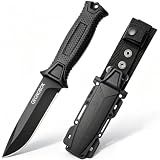
- Premium Durability And Quality: This super sharp outdoor knife is made of high-quality stainless steel, this fixed blade knife...
- Full Tang Construction: Engineered with a 5mm thick full-tang spine, this camping knife fixed blade provides outstanding stability...
- Ergonomic Anti-Slip Handle: The textured ABS handle ensures a secure, designed for long-term comfort and control, non-slip grip...
Best for: Sturdy camp knife for hard use.
A 5mm thick full-tang spine gives the QEGNOBOK survival knife a strong backbone for batoning, carving, and other forceful camp tasks. The stainless steel blade pairs with that thickness to give backpackers a knife that can take more abuse than a thinner trail blade.
QEGNOBOK focuses this knife on stability and impact resistance, which matters when you are splitting firewood or pushing through denser material. The package includes a sheath, so the knife has a safer storage option for pack carry and belt use. Its listed uses cover bushcrafting, camping, cutting rope, fishing, hiking, hunting, peeling, and skinning, which shows the blade is meant to do broad utility work rather than one narrow task. The adult sizing and single-item setup keep the purchase simple. For backpackers who want a fixed blade with a more substantial spine, the 5mm thickness is the main practical feature.
Pros
- 5mm thick full-tang spine supports hard camp use
- Stainless steel blade adds general outdoor utility
- Sheath included for secure carry
- Versatile use list covers rope, wood, and food prep tasks
Cons
- The data does not specify blade length, so carry size is harder to judge before buying
This knife makes sense for backpackers who expect real campsite work instead of light trimming only. The thick spine is the reason to consider it for more demanding bushcraft use.
| Specification | Details |
|---|---|
| Brand | QEGNOBOK |
| Model Name | Survival Knife |
| Blade Material | Stainless Steel |
| Spine Thickness | 5mm |
| Construction | Full Tang |
| Included Components | 1*Fixed Blade Knife, Sheath |
| Number of Items | 1 |
I’d lean toward this for users who want a tougher fixed blade that can handle more than food prep and cord cutting. The 5mm spine gives it a more work-focused identity, which is useful on trips where wood processing is part of the plan. If you want a sturdier trail knife, this one fits that brief well.
7. Hunting Full Tang Knife with Sheath, 4.4″ Fixed Blade, Rubber

- Hunting knife made of high-quality 440C stainless steel with a satin-finished full tang blade and durable rubber handle. Overall...
- Comes with a durable Cordura sheath for secure storage and easy carry. The sturdy belt sheath lets you keep the knife within...
- Versatile Bowie Fixed Blade Knife designed for hunting, camping, hiking, bushcraft, survival. Built with a strong, durable...
Best for: Balanced carry with strong steel.
A 4.45-inch 440C stainless steel blade gives the Grand Way bushcraft knife a practical middle ground between compact carry and usable reach. The satin-finished full-tang blade adds a dependable outdoor format, while the 7.05 oz weight keeps it in a range many backpackers can still carry comfortably.
Grand Way pairs the blade with a durable rubber handle, which helps keep the knife secure during camp work and wet-weather handling. The overall length of 8.86 inches gives enough handle and blade presence for general bushcraft without becoming a full-sized machete. A Cordura sheath comes included, and that matters for backpacking because it gives the knife a tougher carry sleeve for belt or pack storage. The model 148109 is sold as a single knife in an FFP package, and its listed outdoor uses cover camping, survival, military, and bushcraft. For hikers who want one fixed blade that still feels manageable in a pack, the size-to-function balance is the main selling point.
Pros
- 440C stainless steel blade offers strong outdoor utility
- 4.45-inch blade length balances reach and control
- 7.05 oz weight remains manageable for backpack carry
- Cordura sheath supports secure transport
Cons
- The rubber handle favors grip over refined pocketability, so it carries more like a working knife than a slim EDC blade
This Grand Way is a sensible all-around fixed blade for backpackers who want a workable size and a serious sheath. It is a good fit for camp tasks, survival use, and general trail chores.
| Specification | Details |
|---|---|
| Brand | Grand Way |
| Blade Material | 440C Stainless Steel |
| Blade Length | 4.45 in |
| Overall Length | 8.86 in |
| Weight | 7.05 oz |
| Handle Material | Rubber |
| Included Components | Sheath |
| Model Number | 148109 |
I think this is a strong middle-ground option for backpackers who want something larger than a pocket-sized utility blade but not oversized. The 440C steel and Cordura sheath make it feel well matched to field use. It should satisfy hikers who want one dependable knife for camp chores, food prep, and general outdoor work.
8. Kizer Cabox Fixed Blade Knife, 3.36″ D2 Steel Fixed Blade

- Ultra-Comfortable Handle: The fixed blade knife features a G10 handle that provides a comfortable and natural grip sensation. The...
- High-Quality Blade: The hunting knife is crafted with D2 steel, known for its exceptional strength, edge retention, and corrosion...
- Easy Portability: The fixed blade knife comes with a durable sheath that securely holds the knife in place, ensuring its proper...
Best for: Comfort grip for camp prep.
A 3.36-inch D2 steel blade gives the Kizer Cabox a compact working edge with strong corrosion resistance and edge retention. The G10 handle is the other key feature here, because it gives the knife a comfortable, natural grip that helps during peeling and cutting tasks around camp.
Kizer keeps the Cabox focused on useability rather than size, and that matters for backpackers who want a fixed blade that does detail work well. The sheath is included, so the knife can be carried securely without improvising a storage solution. Model 1048A3 is listed for camping use, and the adult sizing suggests it is meant for practical trail handling rather than novelty carry. D2 steel is a solid choice when you want the edge to stay useful over multiple meals and campsite chores, and the G10 handle helps the knife feel stable during repetitive prep work. For lightweight backpacking, the main appeal is a controlled, comfortable cut in a compact form.
Pros
- D2 steel blade offers strong edge retention
- 3.36-inch blade keeps the knife compact
- G10 handle improves comfort and grip control
- Sheath included for secure carry
Cons
- The product data does not list weight, so pack-burden comparison is limited
This Kizer is a good fit for backpackers who value control and comfort more than a larger blade. It works especially well for camp prep, small cutting jobs, and general trail utility.
| Specification | Details |
|---|---|
| Brand | Kizer |
| Model Name | Cabox |
| Blade Material | D2 Steel |
| Blade Length | 3.36 in |
| Handle Material | G10 |
| Included Components | Sheath |
| Model Number | 1048A3 |
I’d recommend this for hikers who want a compact fixed blade that feels pleasant in hand during repeated camp tasks. The G10 handle is the big advantage if you expect a lot of slicing and peeling. It is a practical pick for users who want comfort, control, and a smaller footprint in one knife.
9. SOG Survival Knife with Sheath – Field Knife Fixed Blade

- 4 INCH STAINLESS STEEL KNIFE BLADE: The Field Knife is a strong full-tang outdoor knife, camping knife, boot knife and combat...
- 3. 8 OUNCE WT. W/ TPR GRIP: Made with a grippy, hunting survival handle for hand tools, utility knives and military knives...
- FULL-TANG CLIP-POINT DESIGN: Great as an all-weather camp knife, fixed blade belt knife and lightweight field knife; these sharp...
Best for: Light field knife with simple carry.
A 4-inch stainless steel blade makes the SOG Field Knife compact enough for belt carry while still giving enough edge for camp and field use. At 3.8 ounces, it stays light on the body, and the TPR grip adds a low-maintenance handle that is easy to hold in wet or dirty conditions.
SOG pairs the full-tang clip-point design with an 8.5-inch overall length, which gives the knife a useful balance of reach and portability. The thermoplastic rubber grip is one of the most practical details here because it keeps maintenance simple while still adding traction for outdoor tasks. The knife includes a sheath and ships as a single fixed blade, so it is easy to add to a hiking kit without extra accessories. Its hunting-focused use category fits well with backpacking chores like utility cutting and general field work. For users who want a lighter knife that still feels like a proper fixed blade, the dimensions do most of the work here.
Pros
- 3.8-ounce weight helps keep carry light
- 4-inch stainless steel blade offers a usable cutting edge
- TPR grip provides easy maintenance and traction
- Full-tang clip-point design supports field use
Cons
- The knife is listed primarily for hunting use, so buyers wanting a broader bushcraft package may need to add separate survival tools
This SOG works well for backpackers who want a light fixed blade with simple handling and secure carry. It is a strong match for users who prefer a compact field knife over a heavier camp tool.
| Specification | Details |
|---|---|
| Brand | SOG |
| Model Name | Field Knife |
| Blade Length | 4 in |
| Overall Length | 8.5 in |
| Weight | 3.8 oz |
| Handle Material | TPR |
| Included Components | Fixed Blades |
| Model Number | FK1001-CP |
I’d recommend this to people who want a light, no-drama fixed blade for trail carry. The weight and overall length make it easy to live with on longer hikes, and the TPR grip is useful if conditions are wet. It is a practical choice when you want a compact field knife more than a heavy-duty camp chopper.
10. FLISSA Survival Hunting Knife with Sheath, 15-inch Tactical Bowie Knife
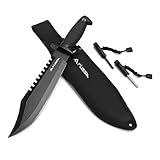
- 15" Fixed Blade Hunting Knife: Ultra-sharp combat knife, stronger than traditional hunting or bowie knives. Overall Length...
- Razor Sharp Clip Point Blade: Made of stainless steel for excellent hardness, improved edge retention, and rust resistance. The...
- Hunting Knife with Sheath & Rubber Handle: The classic soft rubber handle provides high friction and a comfortable, non-slip grip...
Best for: Heavy-duty survival and camp blade.
A 10-inch clip-point stainless steel blade gives the FLISSA survival knife the reach for larger camp tasks, from cutting brush to handling tougher outdoor work. The 5/32-inch thickness and 16.8-ounce weight show that this is a substantial knife, not a lightweight trail slicer.
FLISSA adds a saw back and black anodized finish to the blade, which gives the knife extra task options and a more protected surface. The overall length of 15 inches places it firmly in the large fixed-blade category, so it makes sense when you need a tool with more leverage and presence. The sheath is included, and the package also lists a lighter, which makes the kit more useful for survival-oriented camping. The adult sizing and camping, hiking, and hunting use profile point to a knife meant for demanding outdoor scenarios. For backpacking, the tradeoff is clear: it is bigger and heavier, but it offers more capability for users who do not mind carrying a serious blade.
Pros
- 10-inch blade provides substantial reach
- 5/32-inch thickness supports heavy-duty use
- Saw back adds extra utility for outdoor tasks
- Included sheath helps with safer storage
Cons
- At 16.8 oz and 15 inches overall length, it is bulky for minimalist backpacking
This FLISSA fits backpackers who want a large survival-style fixed blade and are willing to carry the extra size. It is better for demanding camp use than for ultralight hiking.
| Specification | Details |
|---|---|
| Brand | FLISSA |
| Model Name | Survival Hunting Knife |
| Blade Length | 10 in |
| Overall Length | 15 in |
| Thickness | 5/32 in |
| Weight | 16.8 oz |
| Blade Material | Stainless Steel |
| Included Components | Knife, Vagina, Blade, Lighter |
I would only steer someone to this if they want a bigger, more survival-oriented knife for camp and are comfortable with the size. The long blade and substantial weight make it less friendly for ultralight trips, but more useful for users who want leverage and extra cutting reach. It is a solid pick for heavier outdoor loads.
Quick Comparison Table of Best Backpacking Fixed Blade Knives
| Product Name | Blade | Size | Weight | Best For | Check Price |
|---|---|---|---|---|---|
| Gerber Ultimate Fixed Blade Knife w/Sheath | Drop point | Unstated | Unstated | Survival use | Check Price |
| Kizer Beaver Fixed Blade Knife with | D2 drop point | 2.75 in | Compact | Light tasks | Check Price |
| Lightweight Fixed Blade Camping Knife | Fixed blade | Ultra-light | 3.2 oz | Backpacking trips | Check Price |
| Kershaw Camp 10 Machete, Tan, 10 | Recurve blade | 10 in | Large | Camp clearing | Check Price |
| Purple Dragon Full Tang Fixed Blade | Full-tang | Unstated | Unstated | Tactical camping | Check Price |
| Fixed Blade Knife, 4.8″ Tactical Knife | Full tang | 4.8 in | Unstated | Bushcrafting | Check Price |
| Hunting Full Tang Knife with Sheath | Full tang | 4.45 in | 7.05 oz | Bushcraft carry | Check Price |
| Kizer Cabox Fixed Blade Knife, 3.36″ | D2 steel | 3.36 in | Unstated | Camping tasks | Check Price |
| SOG Survival Knife with Sheath | Stainless steel | 4 in | 3.8 oz | Field carry | Check Price |
| FLISSA Survival Hunting Knife with Sheath | Clip point | 10 in | 16.8 oz | Heavy-duty use | Check Price |
How to Choose the Right best backpacking fixed blade knife
Blade length and carry size
For backpacking, choose a fixed blade that stays compact without feeling cramped in camp. A blade around 3.0 to 4.0 inches gives enough reach for food prep, carving stakes, and general utility while still riding easily on a belt or pack strap. Smaller blades carry lighter and disappear on the trail, but very short blades reduce control for slicing and woodwork.
Look for a slim sheath that holds the knife close to the body and does not snag on brush or hip belts. Pick a 3.25- to 3.75-inch knife with a low-profile sheath for the best all-around backpacking carry.
| Type | Best for |
|---|---|
| 2.5-3.0 inch blade | Ultralight carry and light camp tasks |
| 3.0-4.0 inch blade | Balanced food prep, carving, and general use |
| 4.0+ inch blade | Heavier slicing and more demanding camp work |
Steel type and edge retention
Choose stainless steel when you want lower maintenance in wet weather, river crossings, and humid environments; it resists rust better and stays easier to care for on the trail. Choose carbon steel when you value fast sharpening and a very keen edge for repeated carving and slicing, then commit to wiping it dry and oiling it. Edge retention matters more than steel name alone: a good backpacking knife keeps working through meal prep, feather sticks, and camp chores without constant touch-ups.
Pick a stainless blade with strong corrosion resistance for low-fuss backpacking, or a carbon blade if you want easy field sharpening and do not mind routine care.
| Steel type | Best for |
|---|---|
| Stainless steel | Wet climates, low maintenance, all-weather carry |
| Carbon steel | Easy sharpening and sharpness-focused users |
| High wear-resistant steels | Long edge life for repeated cutting jobs |
Handle comfort and grip security
For comfort, choose a handle that fills the hand without forcing a tight grip. A slightly contoured profile with rounded edges prevents hot spots during extended carving, whittling, and food prep. Texture matters: fine checkering, sculpted G10, Micarta, or rubberized surfaces grip well in rain, cold, and sweat; slick polished scales slip too easily.
A guard or subtle finger choil adds control, but it should not crowd larger hands. Pick a medium-thickness, contoured handle with grippy texture for long trail use, and go slimmer only when you want the lightest possible carry.
| Handle type | Best for |
|---|---|
| Contoured G10 or Micarta | Secure grip and all-day comfort |
| Rubberized or textured polymer | Wet, cold, or gloved use |
| Slim flat scales | Minimal weight and compact carry |
Strength, full tang design, and durability
Choose full tang construction for backpacking use that includes batoning, hard slicing, or rough camp chores. A full tang runs steel through the entire handle, which gives better strength and better impact resistance than partial-tang builds. Look for a spine around 3/16 inch or thicker for tougher work; thinner spines slice food more easily but give up leverage in wood processing.
Good fit and finish matters too: scales should sit flush, pins should be cleanly seated, and there should be no wobble, gaps, or rough edges. Pick a full-tang knife with a medium-thick spine and tight handle fit when durability matters most.
| Construction | Best for |
|---|---|
| Full tang, 3/16 inch spine | Durable all-around backpacking and camp abuse |
| Full tang, thinner spine | Food prep and lighter slicing with solid strength |
| Partial tang | Light duty and reduced carry weight |
Sheath, safety, and trail carry
A safe trail knife starts with a sheath that locks the blade in place and stays secure during steep hikes and uneven footing. Choose a sheath with positive retention, a covered edge, and attachment points that match your pack, belt, or shoulder strap setup. Kydex offers fast draw and reliable retention, while leather gives classic carry and quiet handling; both work when fit is precise and the knife does not rattle.
One-handed deployment matters for quick access at camp, so check for smooth entry and a draw that is firm, not sticky. Pick a sheath with secure retention, lash points, and easy access for the carry style you actually use.
| Sheath type | Best for |
|---|---|
| Kydex | Secure retention and fast one-handed access |
| Leather | Quiet carry and traditional belt use |
| Lash-ready sheath | Pack strap mounting and multiple carry positions |
Which Should You Choose?
- If you want one knife to cover campsite chores and emergency prep, choose a 4 to 5 inch full-tang survival blade with a sheath, sharpener, and fire-starting tools.
- If you count every ounce in your pack and mostly need food prep and small camp tasks, choose an ultralight fixed blade under 4 inches and around 3 to 4 ounces.
- If you hike in wet, humid conditions and want long edge retention, choose a compact D2 steel drop point with corrosion resistance and a comfortable grip.
- If you need a knife for heavier brush clearing or rough camp cutting, choose a larger 10-inch-style machete blade with full-tang construction.
Quick Best Backpacking Fixed Blade Knife Buying Checklist
- Check blade length: Pick a size that handles camp prep without feeling bulky on the trail.
- Choose the right steel: Match corrosion resistance, edge retention, and sharpening ease to your trip style.
- Inspect the tang: Full tang construction adds strength and confidence for harder use.
- Test the grip: Make sure the handle stays comfortable and secure in wet or cold conditions.
- Review the sheath: Confirm it locks the knife in place and supports safe, convenient carry.
- Think about maintenance: Select a knife you can clean, dry, and sharpen easily in the field.
Fixed Blade Knife Sheath Carry Options for Backpacking
A good sheath matters as much as the knife itself because backpackers need secure, quiet carry and fast access without snagging gear. Fixed blade knives are commonly shipped with leather, Kydex, nylon, or molded polymer sheaths, and each affects retention, weight, and wet-weather performance. For backpacking, a sheath should keep the blade fully covered, ride close to the body, and stay stable when you bend, climb, or brush through brush.
Attachment style also matters: belt loops, dangler hangers, and pack-mounted clips all change how the knife moves while walking.
| Sheath Type | Best for |
|---|---|
| Kydex | Strong retention and easy one-hand re-sheathing |
| Leather | Classic carry and quiet movement |
| Nylon | Lightweight use and flexible mounting |
| Molded polymer | Wet conditions and rugged outdoor use |
Blade Shapes and Their Trail Uses
Blade shape changes how a backpacking fixed blade performs in camp chores, from food prep to feathering tinder and trimming cord. Drop-point blades are popular because the strong tip and curved belly handle many tasks with low risk of breakage. Clip-point blades offer finer tip control, while spear-point profiles are often balanced for general utility.
A straight-edged or slightly curved edge tends to slice food and rope cleanly, while heavier chopping tasks call for more blade mass than most backpackers want to carry. The best shape depends on whether you prioritize detail work, durability, or a mix of both.
| Blade Shape | Best for |
|---|---|
| Drop point | All-around camping and slicing |
| Clip point | Precision work and controlled tip use |
| Spear point | General utility with balanced geometry |
| Straight edge | Food prep and clean cutting |
Cleaning and Field Maintenance After Wet Trips
Backpacking knives face rain, mud, sap, and food residue, so routine cleaning helps preserve the edge and prevent corrosion. After use, wipe the blade dry before returning it to the sheath, especially if the sheath traps moisture. If the knife was exposed to saltwater, grime, or acidic foods, wash it with mild soap and dry it completely.
A light coat of protective oil can help carbon steel resist rust, while stainless steel still benefits from drying and occasional inspection. Check the handle scales, fasteners, and sheath screws for loosening after long trips, since vibration can work hardware free over time.
- Dry the blade before storage.
- Inspect the edge for nicks after hard use.
- Remove sap or resin promptly.
- Store the knife outside the sheath if long-term moisture is present.
Common Trail Mistakes That Shorten Knife Life
Many knife problems on the trail come from misuse rather than poor construction. One common mistake is using a fixed blade as a pry bar, which can bend or chip the edge and stress the tang. Another is striking hard objects like knots, frozen wood, or rocks when batonning, which can damage the spine or tip.
Leaving a knife wet in its sheath is also risky because trapped moisture can lead to rust or mildew. Backpackers sometimes over-attach accessories to the handle or sheath, which can interfere with a secure grip or safe draw.
Good technique protects both the knife and your hands.
- Do not twist the blade in cuts.
- Avoid side loading the tip.
- Keep the spine clear of impact hazards.
- Maintain a clean, dry sheath interior.
Legal and Ethical Considerations on the Trail
Backpacking knife use is shaped by local rules, land-manager policies, and basic courtesy around other campers. Some parks, trail systems, and campsites restrict blade length, carry style, or public display, so it is wise to check regulations before a trip. Even where carry is allowed, a fixed blade should be stored and handled discreetly in shared spaces.
Ethical use matters too: keep cutting tasks limited to camp needs, avoid carving living trees, and leave no trace by minimizing damage to bark, roots, and campsite surfaces. A responsible backpacker treats the knife as a tool, not a showpiece.
| Topic | Why It Matters |
|---|---|
| Local regulations | Rules can affect carry and transport |
| Land policies | National, state, and private lands may differ |
| Discreet use | Reduces unnecessary concern around others |
| Leave No Trace | Protects plants, soil, and campsite quality |
Frequently Asked Questions (FAQs)
What Blade Length Works Best For Backpacking Fixed Blade Knives?
A compact blade around 3 to 4 inches often works best for backpacking fixed blade knives because it balances control, portability, and versatility. This size is useful for food prep, carving, and light camp chores without adding unnecessary bulk to your pack.
Why Is Full Tang Important In A Backpacking Fixed Blade Knife?
Full tang construction is important in a backpacking fixed blade knife because the steel runs through the entire handle, improving strength and durability. That structure helps the knife handle repeated use, whether you are slicing cord, batoning small wood, or doing general camp work.
Which Steel Is Better For A Backpacking Fixed Blade Knife?
The best steel for a backpacking fixed blade knife depends on your priorities, but stainless steel is easier to manage in wet conditions while carbon steel can sharpen more quickly. A good trail knife should hold an edge well and still be practical to maintain away from home.
How Should The Handle Feel On A Backpacking Fixed Blade Knife?
The handle on a backpacking fixed blade knife should feel secure, comfortable, and easy to control with wet or cold hands. A textured grip and ergonomic shape reduce fatigue during repeated cuts and help prevent slips during detailed camp tasks.
Is Sheath Quality Important For Backpacking Fixed Blade Knives?
Yes, sheath quality is critical for backpacking fixed blade knives because it protects both the blade and the user during transport. A secure sheath should hold the knife firmly, allow quick access, and offer carry options that fit your pack or belt setup.
What Makes A Fixed Blade Knife Versatile For Backpacking?
A versatile fixed blade knife for backpacking combines moderate blade length, durable steel, and a comfortable handle that performs well across many tasks. It should handle food prep, cord cutting, and light woodwork while remaining easy to carry and maintain on the trail.
How Do I Choose A Low-Maintenance Backpacking Fixed Blade Knife?
Choose a low-maintenance backpacking fixed blade knife with corrosion-resistant steel, a simple handle design, and an easy-to-clean sheath. Those features make it easier to rinse off dirt, dry after use, and keep the edge ready without carrying extra gear.
Final Suggestions
Choosing the best backpacking fixed blade knife comes down to balancing size, strength, comfort, and easy carry. The right knife can streamline camp chores, handle trail tasks reliably, and stay dependable in changing conditions. With a smart selection, you get a tool that feels ready for every mile and every stop along the way.
