Top 6 Best Heat Pump Water Heaters That Wow
Best heat pump water heaters are redefining how homes produce hot water with advanced efficiency and lower operating costs. By moving heat instead of generating it directly, these systems use inverter technology, smart controls, and insulated tanks to deliver steady performance with less energy waste. That makes them a compelling option for households balancing comfort, sustainability, and long-term savings.
In this guide to the best heat pump water heaters, we break down the features that matter most, from recovery rate and noise levels to installation space and durability. We also compare heat pump water heater designs, high-efficiency water heating options, and key materials that influence reliability.
The real differences are more technical than they first appear, and the details may change everything you think you know.
In-depth Reviews of the Best Heat Pump Water Heaters
1. Senville Hybrid Heat Pump Electric Water Heater, Energy Star, 50

- Energy-Saving Hybrid Water Heater – Advanced heat pump water heater technology extracts heat from the air to warm water...
- High Efficiency Performance – With a 3.75 UEF rating and a 69-gallon First Hour Rating (FHR), this hybrid water heater delivers...
- 50 Gallon Electric Water Heater Capacity – Perfect for medium to large households, providing consistent hot water for showers...
Best for: Large households needing strong first-hour output.
A 50-gallon tank and a 69-gallon First Hour Rating give the Senville hybrid water heater room to cover medium to large households without forcing long waits between showers. Its heat pump system pulls warmth from the air instead of leaning on standard electric resistance alone, so it fits buyers who want a more efficient hot-water setup with everyday capacity.
The 3.75 UEF rating is the key efficiency figure here, showing that this unit is set up to make more hot water from the energy it uses. At 21.4 inches wide and 66.5 inches tall, it has a tall, narrow footprint that can fit utility rooms where floor space matters more than height. The dc power source and 50-gallon capacity make it a practical match for families that need steady hot water without upsizing into a much larger tank. Because it uses a heat pump system, it is aimed at reducing electricity use while still giving dependable storage for showers, laundry, and dishes.
Pros
- 3.75 UEF supports efficient hot-water production
- 69-gallon First Hour Rating helps with back-to-back use
- 21.4-inch width suits tighter utility spaces
- 50-gallon capacity fits medium to large households
Cons
- No demand-response or smart utility controls are listed, so it focuses on efficient heating rather than grid-managed operation.
This Senville model makes sense if you want a straightforward hybrid tank with enough first-hour output for a busy home. It is a strong pick for buyers who care more about efficient capacity than extra control features.
| Specification | Details |
|---|---|
| Brand | Senville |
| Capacity | 50 gallons |
| Power Source | dc |
| Product Dimensions | 21.4″W x 66.5″H |
| Special Feature | Heat Pump System |
| Uniform Energy Factor | 3.75 UEF |
I’d point this to buyers who want a medium-to-large tank with efficient operation and a compact width for its class. The 3.75 UEF and 69-gallon first-hour rating give it a balanced profile for daily household use, while the 50-gallon capacity keeps it practical for families that need reliable hot water without overcomplicating the setup.
2. Rinnai REHP50 Electric Heat Pump Water Heater 50 Gallon Energy

- Energy-efficient performance: Energy Star Certified. Extracts heat from ambient air to deliver consistent hot water with zero...
- High first-hour delivery: Provides up to 73 gallons of hot water in the first hour—ideal for households of 3–4 people...
- Demand-Response Enabled: Saves you money by communicating with local utilities to reduce energy usage during peak hours
Best for: Families wanting utility-aware hot water.
Rinnai’s 50-gallon heat pump water heater pairs a 22-inch-wide cabinet with a 66.81-inch height, giving it a footprint that suits many utility areas while still holding a full family-sized tank. Its corded electric power and heat pump technology make it a strong fit for buyers who want efficient hot water with a standard residential installation style.
The 3.75 UEF rating shows efficient performance, and the up-to-73-gallon first-hour delivery is what helps this model handle morning showers and other clustered demand. Energy Star certification adds a clear efficiency signal for households that want a lower-energy option. Demand-response enabled operation matters if your utility offers peak-time programs, since the heater can communicate with local utilities to help reduce usage during high-demand windows. At 22 inches wide and 66.81 inches tall, it keeps a fairly slim profile for a 50-gallon unit while still serving 3 to 4 people well.
Pros
- 3.75 UEF supports efficient operation
- Up to 73 gallons first-hour delivery suits busy mornings
- Demand-response enabled for utility participation
- 22-inch width keeps the cabinet relatively slim
Cons
- The 50-gallon capacity is sized for 3–4 people, so larger households may want more first-hour reserve.
This Rinnai is a practical choice when you want efficient heating and utility-program compatibility in a familiar 50-gallon format. It fits best in homes that need dependable daily output without moving up to a larger tank.
| Specification | Details |
|---|---|
| Brand | Rinnai |
| Capacity | 50 gallons |
| Power Source | Corded Electric |
| Product Dimensions | 22″W x 66.81″H |
| Special Feature | Heat Pump Technology |
| Special Feature | Energy Efficiency |
| Uniform Energy Factor | 3.75 UEF |
| First Hour Delivery | Up to 73 gallons |
I’d recommend this for households of three to four people that want efficient hot water and the possibility of demand-response benefits. The first-hour delivery is the standout practical detail, because it helps during clustered morning use. If your home needs a familiar 50-gallon setup with a slim footprint, this one is easy to justify.
3. Rinnai REHP80 Electric Heat Pump Water Heater 80 Gallon Energy

- Energy-efficient performance: Energy Star Certified. Extracts heat from ambient air to deliver consistent hot water with zero...
- High first-hour delivery: Provides up to 91 gallons of hot water in the first hour‚ ideal for households of 5+ people with high...
- Demand-Response Enabled: Saves you money by communicating with local utilities to reduce energy usage during peak hours
Best for: High-demand homes with extra reserve.
An 80-gallon tank and a 91-gallon first-hour delivery make the Rinnai REHP80 the biggest-capacity option in this group for households that run through hot water fast. Its 25.69-inch width and 74.56-inch height signal a larger cabinet, so buyers should see it as a fit for homes with the space and demand to use it well.
The 3.90 UEF rating is the strongest efficiency figure among these Rinnai models, and that matters when a large tank needs to stay economical over daily use. Energy Star certification adds another useful marker for energy-conscious buyers. Demand-response enabled operation can help reduce usage during peak periods if your utility supports that feature. The ac_dc power source broadens installation flexibility compared with simpler electric-only setups, while the 80-gallon capacity gives 5+ person households a real buffer for showers, laundry, and guests. At 25.69 inches wide, it is not compact, but that size is what supports the bigger reserve.
Pros
- 80-gallon capacity suits large households
- 91-gallon first-hour delivery handles heavy demand
- 3.90 UEF is the highest efficiency figure in this group
- ac_dc power source adds installation flexibility
Cons
- Its 25.69-inch width makes it the least space-saving option here, so it needs more installation room.
This model is the clear fit when hot-water demand is high and reserve matters more than cabinet size. It makes the most sense for larger households that need sustained output and efficient operation in one unit.
| Specification | Details |
|---|---|
| Brand | Rinnai |
| Capacity | 80 gallons |
| Power Source | ac_dc |
| Product Dimensions | 25.69″W x 74.56″H |
| Special Feature | Heat Pump Technology |
| Special Feature | Demand-Response Enabled |
| Uniform Energy Factor | 3.90 UEF |
| First Hour Delivery | Up to 91 gallons |
I’d steer big households toward this one if they need the largest reserve in the lineup. The 91-gallon first-hour delivery is especially useful when several people shower close together, and the 3.90 UEF keeps the efficiency story strong for such a large tank. It is best for buyers who have the room and want fewer hot-water compromises.
4. Rinnai REHP65 Electric Heat Pump Water Heater 65 Gallon Energy

- Energy-efficient performance: Energy Star Certified. Extracts heat from ambient air to deliver consistent hot water with zero...
- High first-hour delivery: Provides up to 80 gallons of hot water in the first hour‚ ideal for households of 4-5 people with high...
- Demand-Response Enabled: Saves you money by communicating with local utilities to reduce energy usage during peak hours
Best for: Mid-large homes seeking top efficiency.
A 65-gallon tank with a 4.00 UEF puts the Rinnai REHP65 at the efficient end of this roundup while still giving enough storage for 4 to 5 people. Its 22.69-inch width and 65-inch height make it the most balanced middle-size option here for homes that need capacity without jumping to the largest cabinet.
The 4.00 UEF is the best efficiency number in this set, so this unit stands out for buyers who want a heat pump water heater that wastes less energy in day-to-day use. Up to 80 gallons of hot water in the first hour helps when several fixtures draw at once, and that is a real advantage for families with overlapping routines. Demand-response enabled operation gives utility-minded homes another layer of control during peak periods. The ac_dc power source and 65-gallon capacity place it between the smaller 50-gallon units and the 80-gallon model, making it a natural fit for families that need a little more headroom without going oversized.
Pros
- 4.00 UEF is the most efficient rating in this roundup
- Up to 80 gallons first-hour delivery supports busy homes
- 65-gallon capacity suits 4–5 people
- Demand-response enabled for utility coordination
Cons
- It does not list Energy Star certification in the technical data, so buyers focused on that label may want to confirm before choosing.
This is the model to watch if you want the strongest efficiency rating with enough reserve for a medium-to-large household. It lands in the sweet spot for families that need capacity, but not the bulk of the 80-gallon unit.
| Specification | Details |
|---|---|
| Brand | Rinnai |
| Capacity | 65 gallons |
| Power Source | ac_dc |
| Product Dimensions | 22.69″W x 65″H |
| Special Feature | Heat Pump Technology |
| Special Feature | Demand-Response Enabled |
| Uniform Energy Factor | 4.00 UEF |
| First Hour Delivery | Up to 80 gallons |
I think this is the best fit for buyers who want a strong efficiency figure without moving into the largest tank size. The 4.00 UEF is the headline, but the 80-gallon first-hour delivery is what makes it feel practical for family routines. If your home needs a middle-ground capacity with real performance headroom, this is an easy contender.
5. ACiQ 50 Gallon Electric Residential Hybrid Heat Pump Water Heater

- CERTIFIED ACiQ SELLERS: Everything you need for reliable HVAC solutions!
- INDOOR INSTALLATION: It performs best in stable indoor temperatures and should not be installed in unheated spaces below 37°F.
- PERFECT LOCATION: Ideal for basements or garages, this 50 gallon hot water heater electric unit requires 700–1,000 cubic feet of...
Best for: Basements and garages with indoor space.
The ACiQ 50-gallon hybrid water heater uses a silver finish and LED display, giving buyers a straightforward indoor unit that is easier to place in a basement or garage. Its 149 °F maximum temperature and energy-star hybrid setup point to a unit aimed at practical residential hot-water use with clear operating feedback.
This model is made for stable indoor conditions, and the requirement for 700 to 1,000 cubic feet of air circulation means placement matters more than with a simple tank swap. The 50-gallon capacity keeps it in the standard family range, while the 3.75 UEF helps explain why it is positioned as an efficient hybrid. The maximum temperature of 149 °F gives it a wide usable range for household hot water needs, and the LED display helps you monitor operation at a glance. The note that it should not be installed in unheated spaces below 37 °F is important for buyers planning around seasonal garages or utility rooms.
Pros
- 50-gallon capacity suits standard household demand
- 3.75 UEF supports efficient hybrid operation
- LED display gives clear at-a-glance status
- 149 °F maximum temperature offers a broad heating range
Cons
- It should not be installed in unheated spaces below 37 °F, so it is not a fit for cold outbuildings.
This ACiQ is a sensible indoor pick for buyers with a basement or garage that stays within the recommended temperature range. It works best when you can give it the airflow and drainage it asks for.
| Specification | Details |
|---|---|
| Brand | ACiQ |
| Capacity | 50 gallons |
| Color | Silver |
| Special Feature | LED Display |
| Maximum Temperature | 149 °F |
| Uniform Energy Factor | 3.75 UEF |
I’d choose this for shoppers who have a proper indoor installation spot and want a clear, no-nonsense hybrid water heater. The airflow requirement and low-temperature limit matter, but they also tell you exactly where this unit works best. If your basement or garage meets those conditions, it should serve well as an efficient 50-gallon option.
6. Stiebel Eltron 233058 Accelera 220 E Heat Pump Water Heater;
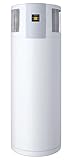
- 240V
- 58-gallon capacity
- 15A circuit breaker
Best for: Quiet compact home installation.
A 58-gallon capacity with a 324 CFM airflow figure puts the Stiebel Eltron Accelera 220 E in a useful middle zone for homes that need more storage without jumping to the largest cabinet. Its 240V corded electric setup and 27.12-inch width show a serious residential heater aimed at buyers who want a controlled indoor installation.
The digital display makes temperature and operation easier to monitor, and the adjustable range from 42 to 108 degrees Fahrenheit gives you a clear view of how this unit can be set for household use. The 15A circuit breaker requirement is a concrete installation detail that matters when planning the electrical setup. A glass-lined tank is listed for long life, while the heavy-duty quiet fan and redesigned airflow are useful for buyers who care about noise and consistent operation in a laundry room or utility area. The wrap-around aluminum condenser does not contact potable water directly, which is a meaningful design detail for those comparing internal construction.
Pros
- 58-gallon capacity offers a useful mid-size reserve
- Digital display makes settings easy to check
- Heavy-duty quiet fan supports quieter indoor use
- Glass-lined tank and aluminum condenser are clear construction features
Cons
- The 42 to 108 °F operating range is narrower than a standard tank’s water-heating expectations, so it suits controlled indoor use rather than broad-temperature flexibility.
This Stiebel Eltron model suits buyers who want a mid-size heat pump water heater with clear controls and thoughtful internal construction. It is strongest in homes where the installation space is stable, indoor, and planned around its electrical and airflow needs.
| Specification | Details |
|---|---|
| Brand | Stiebel Eltron |
| Capacity | 58 gallons |
| Power Source | Corded Electric |
| Product Dimensions | 27.12″W x 60.87″H |
| Special Feature | Redesigned airflow |
| Special Feature | Heavy-duty quiet fan |
| Special Feature | Rolling piston compressor motor |
| Special Feature | Glass-lined tank for long life |
| Special Feature | Superior insulation |
| Voltage | 240V |
| Airflow | 324 CFM |
| Temperature Range | 42 to 108 Degrees Fahrenheit |
| Circuit Breaker | 15A |
I’d recommend this to buyers who value a controlled indoor installation and want more than a basic tank. The quiet fan, digital display, and glass-lined tank are the details that make it appealing for utility areas where comfort and maintenance matter. If your home can support the airflow and electrical setup, it offers a well-rounded 58-gallon package.
Quick Comparison Table of Top Heat Pump Water Heaters
| Product Name | Capacity | Power Source | Special Feature | Best For | Check Price |
|---|---|---|---|---|---|
| Senville Hybrid Heat Pump Electric Water | 50 gallons | dc | Heat Pump System | Energy saving homes | Check Price |
| Rinnai REHP50 Electric Heat Pump Water | 50 gallons | Corded Electric | Heat Pump Technology | Mid-size households | Check Price |
| Rinnai REHP80 Electric Heat Pump Water | 80 gallons | ac_dc | Demand-Response Enabled | Large families | Check Price |
| Rinnai REHP65 Electric Heat Pump Water | 65 gallons | ac_dc | Demand-Response Enabled | Busy households | Check Price |
| ACiQ 50 Gallon Electric Residential Hybrid | 50 gallons | Electric | LED Display | Indoor installations | Check Price |
| Stiebel Eltron 233058 Accelera 220 E | 58 gallons | Corded Electric | Quiet fan | Quiet operation | Check Price |
How to Choose the Right Best Heat Pump Water Heaters
Capacity and household demand
Match tank size to the household’s real hot-water pattern, not just the number of people. A 30- to 40-gallon unit fits 1 to 2 light users, 50 to 65 gallons suits most families of 3 to 4, and 66+ gallons serves homes with back-to-back showers, laundry, and dishwashing. Check the first-hour rating first: a stronger number handles morning peaks better, and a faster recovery rate keeps the tank from running cold after heavy use.
Pick the largest tank you can fit for a busy household, and a smaller high-recovery model for lighter demand.
| Tank size | Best for |
|---|---|
| 30-40 gal | 1-2 people with modest hot-water use |
| 50-65 gal | Typical family homes with steady daily demand |
| 66+ gal | Large households or frequent high-volume use |
Energy efficiency and operating cost
Choose the most efficient unit you can verify on paper, not the one with vague marketing claims. Look for a high energy factor or UEF, low standby loss, and operating modes that reduce compressor run time during mild weather or low demand. In practical terms, better units use less electricity to hold temperature and recover after use, which matters most in warm spaces and in homes with regular daily draw.
Review estimated annual electricity use for your climate zone and pick a model with strong efficiency plus an adaptive control mode. For most buyers, the best choice is a high-UEF unit with smart scheduling and low standby loss.
| Efficiency profile | Best for |
|---|---|
| High UEF, low standby loss | Homes with steady daily hot-water use |
| Adaptive operating modes | Variable schedules and mixed seasonal demand |
| Basic efficiency only | Smaller households with simpler usage patterns |
Installation space and venting needs
Measure the full installation zone before you buy: ceiling height, footprint, door clearance, and service space around the unit. Heat pump water heaters need room for airflow, so check the minimum ambient temperature range and the required cubic feet of open space in the manual; cramped closets and sealed rooms cause poor performance. Also plan for a condensate drain, a pan where required, and clear access for filter cleaning and future repairs.
Choose a compact unit for tight utility rooms, and a standard full-size model for open mechanical spaces with easy drainage and access.
| Space setup | Best for |
|---|---|
| Compact footprint | Closets and narrow utility rooms |
| Standard open installation | Basements, garages, and larger mechanical rooms |
| High airflow allowance | Places with plenty of ventilation and service clearance |
Noise, controls, and smart features
For indoor placement, noise matters as much as heating performance, so check compressor sound ratings and user reports for steady operation rather than brief bursts. A quieter unit suits laundry rooms, hallways, and homes with sleeping areas nearby. Favor clear digital controls with temperature readout, error indicators, and simple scheduling, because those features make daily use easier and reduce wasted heating.
App connectivity, vacation mode, and onboard diagnostics add real value for households that want remote control and fast troubleshooting. Choose a quiet, app-connected model for occupied living spaces, and a simpler control panel for users who want straightforward operation.
| Feature set | Best for |
|---|---|
| Low-noise compressor | Indoor spaces near bedrooms or common areas |
| Digital scheduling | Households with predictable routines |
| App and diagnostics | Users who want remote monitoring and easier service checks |
Warranty, durability, and maintenance
Compare warranty terms line by line, not just the headline length. Strong coverage includes both the tank and key components, and the best units back the compressor, heat pump parts, and tank separately. Corrosion resistance matters too: stainless or glass-lined tanks, quality anode protection, and durable fittings all signal longer service life.
Maintenance should stay simple, with an easily removable filter, clear descaling guidance, and reasonable service intervals. Pick a unit with the longest component protection and easy cleaning for busy households, and choose a straightforward maintenance setup for anyone who wants less upkeep.
| Durability focus | Best for |
|---|---|
| Long tank and parts coverage | Buyers who want broad protection |
| Corrosion-resistant tank and anode | Areas with hard water or heavy use |
| Easy filter and descaling access | Homeowners who want simpler maintenance |
Which Should You Choose?
- If you want the biggest buffer for a large household or frequent back-to-back showers, choose an 80-gallon heat pump water heater with a high UEF.
- If you need a balanced fit for an average family and standard replacement size, choose a 50-gallon hybrid heat pump model with Energy Star certification.
- If your home has steady indoor temperatures and you want strong efficiency in a conditioned space, choose a hybrid unit designed for indoor installation only.
- If you want the best efficiency and quieter operation in a mid-sized home, choose a 65- to 58-gallon heat pump water heater with a digital temperature control and quiet fan design.
Quick Best Heat Pump Water Heaters Buying Checklist
- Size the tank correctly based on household hot water demand and peak usage.
- Check efficiency ratings to find models that reduce operating costs without sacrificing performance.
- Measure your installation space so the unit fits with enough clearance for airflow and service.
- Review noise levels if the water heater will sit near living areas or bedrooms.
- Look for easy controls such as temperature settings, vacation mode, and diagnostic alerts.
- Compare warranty coverage and maintenance requirements to gauge long-term value.
How Heat Pump Water Heaters Use Refrigeration to Make Hot Water
Heat pump water heaters move heat instead of generating it directly, which is why they can use far less electricity than standard resistance models. A fan pulls surrounding air across an evaporator coil filled with refrigerant. That refrigerant absorbs heat, is compressed to raise its temperature, and then transfers that heat to the water in the tank through a condenser.
Because the system depends on ambient air, performance is strongest in spaces with moderate to warm temperatures and enough airflow. Most units also include a backup electric element for times of high demand or colder conditions, so hot water stays available even when the heat pump alone is not enough.
Heat Pump Water Heater Tank Styles and Layouts
Most residential heat pump water heaters use an integrated storage tank, but the way the unit is arranged can affect installation and performance. All-in-one models combine the compressor, fan, and tank in a single cabinet, which simplifies setup in garages or utility rooms. Split systems separate the heat pump section from the tank, allowing more placement flexibility and quieter operation near living spaces.
Some units are designed for taller ceilings, while others have a lower profile that fits under attic ducts or shelf obstructions. The best layout depends on available floor space, access for service, and whether the room can support the air movement the unit needs to operate efficiently.
| Type | Best for |
|---|---|
| All-in-one | Simpler installation and compact utility spaces |
| Split system | Flexible placement and quieter indoor operation |
| Tall cabinet | Homes with vertical clearance and standard floor space |
| Low-profile cabinet | Areas with low ceilings or overhead obstacles |
Maintenance Tasks That Keep Efficiency High
Routine care helps a heat pump water heater keep its efficiency and extend its service life. The air filter should be checked regularly and cleaned or replaced if dust builds up, since restricted airflow reduces performance. The condensate drain also needs attention because moisture collected during operation must drain away freely to prevent leaks or odors.
Flushing sediment from the tank helps protect the heating surfaces and can reduce noise caused by scale accumulation. Homeowners should also listen for unusual compressor sounds and inspect the area around the unit for rust, standing water, or blocked vents.
A quick visual check each season is often enough to catch small issues before they become expensive repairs.
Common Installation Errors That Reduce Performance
Even a strong unit can underperform if it is installed in the wrong location or connected incorrectly. One frequent mistake is placing the heater in a cramped closet or tiny room, where it cannot pull enough air to operate efficiently. Another is ignoring condensate drainage, which can lead to water damage or shutdowns.
Installers also need to confirm that the electrical circuit matches the manufacturer’s requirements and that the discharge air has room to circulate. Ducting mistakes can be just as costly, especially when exhaust and intake paths are too long or too restrictive.
Proper clearances, a level base, and easy access for service all matter because they keep the system stable and maintainable over time.
Household Conditions That Affect Compatibility
Heat pump water heaters are not equally well matched to every home, so compatibility matters as much as capacity. They work best in spaces with steady ambient temperatures and enough open air volume, such as garages, basements, or utility rooms. Very cold rooms can force the backup element to run more often, which lowers efficiency.
Homes with high hot-water demand may need a larger tank or a model with strong recovery performance to avoid long waits between showers and laundry cycles. It also helps to consider noise, since the fan and compressor produce sound that may matter near bedrooms or quiet living spaces.
Finally, check that the home can support the required electrical supply and drainage before installation begins.
Frequently Asked Questions (FAQs)
What Makes Heat Pump Water Heaters Efficient?
Heat pump water heaters are efficient because they move heat from the surrounding air into the tank instead of generating all heat directly. That design can deliver hot water with less electricity, especially in spaces with steady indoor temperatures and enough airflow.
How Do I Choose The Right Size Heat Pump Water Heater?
Choose the right heat pump water heater size by matching tank capacity to the number of people, bathrooms, and peak usage patterns in your home. A household with back-to-back showers and laundry needs a larger first-hour rating than a smaller, lower-demand home.
Where Should A Heat Pump Water Heater Be Installed?
A heat pump water heater should be installed in a space with adequate air circulation, enough ceiling height, and room for maintenance access. It also needs a suitable drain for condensate and enough ambient warmth to run efficiently.
Are Heat Pump Water Heaters Noisy?
Heat pump water heaters produce some compressor and fan noise, so they are usually quieter than many people expect but not silent. Placement matters, and a utility room, garage, or basement can help keep sound away from living spaces.
What Maintenance Do Heat Pump Water Heaters Need?
Heat pump water heaters need regular maintenance such as cleaning the air filter, checking the condensate drain, and inspecting the anode rod or tank for wear. Simple upkeep helps preserve efficiency, extend lifespan, and prevent reduced heating performance.
Do Heat Pump Water Heaters Work In Cold Spaces?
Heat pump water heaters can work in cooler spaces, but their efficiency drops when the surrounding air is too cold. They perform best in areas with stable indoor temperatures, so a garage or basement should be checked for the model’s minimum operating range.
What Features Should I Look For In The Best Heat Pump Water Heaters?
The best heat pump water heaters should offer strong efficiency ratings, the right tank size, clear controls, and dependable warranty coverage. Useful extras like vacation mode, smart diagnostics, and corrosion-resistant components can improve convenience and long-term value.
Final Suggestions
In summary, the best heat pump water heaters combine efficient operation, reliable hot water supply, and practical features that support everyday use. They can lower energy use while fitting a range of household needs, from compact spaces to busy families. With the right size and features, you can choose confidently and enjoy dependable performance for years to come.

