Top 10 Best Tankless Hot Water Heater Natural Gas
Best tankless hot water heater natural gas systems are changing how homes manage hot water with compact, high-efficiency designs and on-demand heating. Unlike storage tanks that cycle energy around the clock, these units use advanced burners, heat exchangers, and smart ignition systems to deliver steady performance with less wasted space. The best tankless hot water heater natural gas models also appeal to households balancing comfort, fuel efficiency, and reliable supply during peak demand.
As interest grows in natural gas tankless water heater options and gas tankless water heater technology, the details matter more than ever—especially flow rate, venting, and durability. Material quality, temperature control, and corrosion resistance can all shape long-term value, but the differences are not always obvious.
That is where the real comparison begins, and the most important distinctions may surprise you.
In-depth Reviews of the Best Tankless Hot Water Heater Natural Gas
1. Rheem RTG Series 7.0 GPM Natural Gas Tankless Water Heater

- High Performance Natural Gas Tankless Water Heater delivers endless instant hot water on demand for whole house residential use...
- Energy Efficient Non-Condensing Gas Tankless Water Heater with 0.82 Uniform Energy Factor (UEF) saves up to 34% on energy costs...
- Ideal Whole House Tankless Gas Water Heater for large families and multi-bathroom homes with 2-3 water points running...

Best for: Whole-home output for bigger households.
A 7.0 GPM flow rate paired with 160,000 BTU/hr gives this Rheem unit the output needed for multiple bathrooms at once. That kind of capacity lets a natural gas buyer run two to three showers without the usual temperature drop, while the compact 13.5-inch width keeps the cabinet footprint manageable for indoor utility spaces.
The 0.82 Uniform Energy Factor points to efficient operation, which matters if the goal is strong hot-water delivery without wasting fuel. Its indoor direct-vent setup supports cleaner installation planning, and the 1/2 gas line compatibility helps it fit common residential gas connections. The integrated digital display and hot-start programming make temperature control more straightforward at the tap. At 24.2 inches tall, it stays relatively compact for a whole-house model, so it works well where floor space is limited but hot-water demand is not. Universal venting compatibility also gives installers more placement flexibility in a natural gas home.
Pros
- 7.0 GPM supports 2-3 simultaneous showers
- 160,000 BTU/hr suits whole-house demand
- 0.82 UEF helps reduce energy use
- 1/2 gas line compatibility eases installation planning
Cons
- Indoor direct-vent installation requires vent routing, so it is not a simple no-vent setup
This Rheem fits households that want strong flow and efficient natural gas operation in one compact cabinet. It makes the most sense for homes with several hot-water fixtures in regular use.
| Specification | Details |
|---|---|
| Brand | Rheem |
| Capacity | 7 gallons |
| Power Source | Natural Gas |
| Product Dimensions | 13.5″W x 24.2″H |
| Output | 160,000 BTU/hr |
| Flow Rate | 7.0 GPM |
| Energy Factor | 0.82 UEF |
| Special Feature | Universal Venting Compatibility |
I would pick this for a larger family that needs dependable hot water at more than one fixture at a time. The combination of 7.0 GPM, 160,000 BTU/hr, and compact indoor sizing makes it practical for a busy home without giving up efficiency. It suits buyers who want a straightforward natural gas tankless setup with clear performance targets.
2. ThermoMate CZ422NG, Natural Gas Tankless Water Heater Indoor, Up to

- [Max 5 GPM & 102,000 BTU] – The ThermoMate instant water heater delivers hot water on-demand for two showers at the same time...
- [Safety & Reliable] - Certified by CSA, this residential gas water heater features boil-dry, freeze, flame-out, overheat, over...
- [Energy Efficient & Save Money] – Built with an oxygen-free copper heat exchanger for efficient heat transfer and corrosion...
Best for: Compact pick for two-bath homes.
A 5 GPM rating with 113,000 BTU puts this ThermoMate in the practical range for homes that need two showers running together. The 13.77-inch width keeps it easier to place in tighter mechanical spaces, and the stable 105°F delivery claim shows the unit is focused on consistent everyday hot water rather than oversized capacity.
The smart flow sensor and control chip adjust heating 20,000 times per second, which supports the ±1°F temperature consistency called out in the product data. That matters when someone wants a shower that stays steady instead of swinging hot and cold. CSA certification adds a clear compliance marker, while the integrated error code indicator makes troubleshooting simpler if something interrupts service. Anti-freezing protection, dry combustion protection, flame failure protection, and high water pressure protection all point to a unit meant for cautious residential use. At 21.65 inches high, it also stays compact enough for smaller utility areas.
Pros
- 5 GPM supports two showers at once
- 113,000 BTU fits moderate household demand
- ±1°F temperature consistency improves comfort
- CSA certification supports residential use
Cons
- 5 GPM is better for moderate use than for larger homes with several simultaneous fixtures
This model makes sense for a smaller household that values steady temperature and safety protections over maximum flow. It gives natural gas buyers a compact option that is easier to fit into modest installation spaces.
| Specification | Details |
|---|---|
| Brand | thermomate |
| Capacity | 5 gallons |
| Power Source | Natural Gas |
| Product Dimensions | 13.77″W x 21.65″H |
| Output | 113,000 BTU |
| Flow Rate | 5 GPM |
| Special Feature | Anti-Freezing Protection |
| Special Feature | Dry Combustion Protection |
| Special Feature | Flame Failure Protection |
I see this as a good fit for a couple or smaller family that wants dependable hot water without overbuying capacity. The steady temperature control and layered safety features are the real selling points here. If the home needs two showers at once and not much more, this is a sensible natural gas choice.
3. Rheem RTG Series 7.0 GPM Natural Gas Tankless Water Heater

- High Performance Natural Gas Tankless Water Heater delivers endless instant hot water on demand for whole house residential use...
- Energy Efficient Non-Condensing Gas Tankless Water Heater with 0.82 Uniform Energy Factor (UEF) saves up to 34% on energy costs...
- Ideal Whole House Tankless Gas Water Heater for large families and multi-bathroom homes designed for outdoor installation, this...
Best for: Outdoor install for tighter utility spaces.
Outdoor installation removes the need for indoor vent routing, which is the main practical advantage of this Rheem version. The 13.5-inch width and 20.75-inch height keep the unit relatively compact, and the natural gas setup with direct outdoor placement lets the buyer free up interior wall space for storage or other equipment.
A 7.0 GPM flow rate still gives this model whole-house potential, while the 160,000 BTU/hr output is strong enough for several hot-water draws at once. The self diagnostic program helps with service checks, and the freeze protection matters for exterior placement where temperatures can drop. Hot-start programming helps reduce the cold-water wait at the tap, and the low activation flow rate makes it easier to trigger operation with lighter use. The digital display adds straightforward status visibility, and the EZ-link cable supports system integration where needed. For a natural gas buyer who wants the heater outside, that combination is highly practical.
Pros
- Outdoor installation removes indoor venting needs
- 7.0 GPM supports whole-house demand
- Freeze protection suits exterior placement
- Low activation flow rate helps with small draws
Cons
- Outdoor placement means the unit depends on exterior mounting conditions rather than a protected indoor utility area
This Rheem is a strong fit for homes that want full-flow tankless performance without giving up indoor wall space. It works best when outdoor mounting is part of the plan from the start.
| Specification | Details |
|---|---|
| Brand | Rheem |
| Capacity | 7 gallons |
| Power Source | ac_dc |
| Product Dimensions | 13.5″W x 20.75″H |
| Flow Rate | 7.0 GPM |
| Output | 160,000 BTU/hr |
| Special Feature | Self diagnostic program |
| Special Feature | Freeze protection |
| Special Feature | Low activation flow rate |
| Special Feature | Digital display |
I’d point buyers to this if they want Rheem flow capacity but prefer an outdoor location. The freeze protection and self diagnostics make it easier to live with outside, while the 7.0 GPM rating keeps it relevant for a busy home. It is a good match for someone planning the install around outdoor placement first.
4. Rinnai RX199iN Condensing Smart Sense Tankless Water Heater

- One Model, Anywhere: This Rinnai tankless water heater is installable indoors or outdoors thanks to our new Versa Vent and powered...
- Never Run Out of Hot Water with this Compact Tankless Gas Water Heater: This condensing propane and natural gas tankless water...
- Smart, Efficient Design: This water heater's modern design includes an easy-to-use interface, Quick Flush feature for simplified...
Best for: High-output flexible placement option.
Up to 11.1 GPM gives this Rinnai the highest household flow in this group, and that is the key fact for buyers with heavy demand. The compact, suitcase-like footprint and Versa Vent compatibility mean it can serve large homes while still offering indoor or outdoor placement depending on the layout.
Smart Sense gas control lets it run on either propane or natural gas, which gives the buyer flexibility if fuel plans change. The condensing design is paired with the high flow rating, so it is aimed at delivering lots of hot water for multiple fixtures at once. At 18.5 inches wide and 30.11 inches tall, it remains relatively compact for the amount of output it provides. The RX-OVC vent cap requirement for outdoor installation is a concrete planning point for buyers who want exterior placement. For larger homes, the 7- fixture claim shows why this unit is positioned for demanding use rather than basic point-of-use service.
Pros
- 11.1 GPM supports up to 7 fixtures at once
- Indoor or outdoor install increases placement flexibility
- Natural gas or propane compatibility broadens fuel options
- Compact footprint helps for high-output whole-home use
Cons
- Outdoor installation requires the RX-OVC vent cap, so extra accessory planning is necessary
This Rinnai makes sense for households that need the most capacity and the most installation flexibility. It is especially useful for larger homes where several fixtures can draw hot water at the same time.
| Specification | Details |
|---|---|
| Brand | Rinnai |
| Capacity | 11.1 gallons |
| Power Source | Gas Powered |
| Product Dimensions | 18.5″W x 30.11″H |
| Flow Rate | 11.1 GPM |
| Special Feature | Smart Sense gas control system |
| Special Feature | Versa Vent |
| Installation | Indoor or Outdoor |
I’d recommend this to buyers who need serious hot-water capacity and want a flexible install path. The 11.1 GPM rating is the headline, but the indoor-outdoor versatility is what broadens its appeal. If the home has multiple bathrooms and higher concurrent demand, this unit is a strong natural gas candidate.
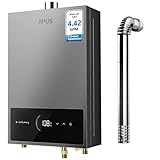
5. APUS Natural Gas Tankless Water Heater, 95,000 BTU, 4.42 GPM
- 𝐏𝐨𝐰𝐞𝐫𝐟𝐮𝐥 & 𝐇𝐢𝐠𝐡-𝐂𝐚𝐩𝐚𝐜𝐢𝐭𝐲: This high-performance tankless water heater...
- 𝐏𝐫𝐞𝐜𝐢𝐬𝐞 & 𝐒𝐭𝐞𝐚𝐝𝐲: With high-precision sensors and smart CPU technology, this tankless water...
- 𝐄𝐟𝐟𝐢𝐜𝐢𝐞𝐧𝐭 & 𝐃𝐮𝐫𝐚𝐛𝐥𝐞: Featuring oxygen-free copper heat exchangers and innovative...
Best for: Slim profile for smaller installs.
A 5.9-inch width makes this APUS unit one of the narrowest options here, which helps when wall space is tight. The 95,000 BTU rating and 4.42 GPM output keep it focused on smaller natural gas households, while the 0.66 GPM low-flow start lets it respond even when only a little water is being used.
The product data says it can handle 2 showers plus 1 sink at the same time, which gives a clear use case for apartments, smaller homes, or lighter whole-house demand. The smart CPU and high-precision sensors are there to keep temperatures steady during changing flow conditions. Anti-freezing protection, low water flow protection, and overheat protection add practical safeguards for daily use. Its 20.55-inch height makes it easy to fit into a vertical utility alcove, and the easy installation note suggests a simpler setup path than bulkier systems. For buyers who want natural gas performance without a large cabinet, the narrow format stands out in a useful way.
Pros
- 5.9-inch width fits narrow wall spaces
- 4.42 GPM supports 2 showers plus 1 sink
- 0.66 GPM low-flow start helps with light draws
- Anti-freezing and overheat protection add safety coverage
Cons
- 4.42 GPM is better for smaller households than for homes with several simultaneous fixtures
This APUS model works well when space is limited and water demand is modest. It is a good match for buyers who want a narrow natural gas heater that still handles everyday multi-fixture use.
| Specification | Details |
|---|---|
| Brand | APUS |
| Capacity | 4.42 gallons |
| Power Source | Natural Gas |
| Product Dimensions | 5.9″W x 20.55″H |
| Output | 95,000 BTU |
| Flow Rate | 4.42 GPM |
| Special Feature | Anti-Freezing Protection |
| Special Feature | Low Water Flow Protection |
| Special Feature | Overheat Protection |
| Special Feature | Easy Installation |
I would point smaller households to this one because the narrow body is easy to place and the output matches more modest demand. It is especially appealing if you need a heater that can cover a couple of showers and a sink without taking much wall space. That mix makes it practical rather than oversized.
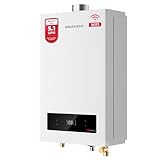
6. MIZUDO 120,000 BTU Natural Gas Tankless Water Heater,Max 5.1 GPM,WiFi&APP
- [Flexible Indoor&Outdoor Installation Solution]: Mizudo innovative natural gas tankless water heater indoor offers versatile...
- [Smart WiFi and App Control]: Manage your tankless water heater gas remotely through the dedicated mobile application. Adjust...
- [Advanced Temp Control]: The tankless gas water heater combines sophisticated water flow monitoring and gas modulation to maintain...
Best for: Smart control for multi-point homes.
WiFi and app control make this MIZUDO different from the simpler units in the roundup, and that gives the buyer remote adjustment access. The 120,000 BTU rating with 5.1 GPM flow supports 2 to 4 usage points, which is a useful middle ground for homes that want more than a basic two-fixture setup.
The indoor-and-outdoor convertible installation is a major practical feature because it lets the buyer adapt the heater to different layouts with accessory kits. At 14.56 inches wide and 22.83 inches high, the unit stays compact enough for many utility areas while still delivering respectable capacity. CSA certification adds an important safety and compliance marker, and anti-freezing protection gives more confidence if the heater ends up in a colder location. The support for 2 to 4 usage points is the clearest everyday-use signal in the data, since it tells the buyer how many fixtures the unit is meant to serve. For someone who wants app control alongside natural gas performance, the package is well balanced.
Pros
- WiFi and app control allow remote temperature management
- 5.1 GPM supports 2 to 4 usage points
- Indoor or outdoor convertible installation adds flexibility
- CSA certification supports residential confidence
Cons
- Outdoor conversion requires accessory kits, so the installation may need extra planning
This MIZUDO fits buyers who want a smarter tankless setup without jumping to the largest flow class. It is especially appealing for homes that want flexible installation and app-based control in a natural gas unit.
| Specification | Details |
|---|---|
| Brand | MIZUDO |
| Capacity | 5.1 gallons |
| Power Source | Natural Gas |
| Product Dimensions | 14.56″W x 22.83″H |
| Output | 120,000 BTU |
| Flow Rate | 5.1 GPM |
| Special Feature | WiFi&APP Control |
| Special Feature | Indoor&Outdoor Convertible Installation |
| Special Feature | CSA Certified |
| Special Feature | Supporting 2 to 4 usage points |
I like this for buyers who want a modern control experience as much as hot-water output. The app access and flexible install options make it easier to fit into different homes, while 5.1 GPM keeps it useful for several fixtures. It is a thoughtful choice for someone who wants convenience plus natural gas efficiency.
7. APUS Natural Gas Tankless Water Heater, 140,000 BTU, Up to
- ...
- ...
- 𝐁𝐮𝐢𝐥𝐭-𝐢𝐧 𝐒𝐦𝐚𝐫𝐭 𝐁𝐨𝐨𝐬𝐭𝐞𝐫 𝐏𝐮𝐦𝐩: Increases water flow by up to...
Best for: High flow for busy family homes.
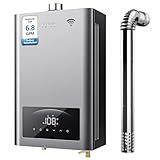
A 6.8 GPM rate with 140,000 BTU puts this APUS model squarely in the category for homes with multiple active water points. The oxygen-free copper heat exchanger is the material detail that matters most here, because it supports efficient heat transfer for steady hot water when four to five fixtures are in use.
Zero-Cold-Water Technology is the standout functional feature in the data because it directly targets the wait between turns at the tap. The UEF of 0.81 gives a clear efficiency signal, while the water flow boosted up to 130% note suggests stronger response under changing demand. WiFi remote control through the Tuya app adds convenience for temperature adjustments from another room. At just 7.09 inches wide, the unit is very slim for its output class, which helps on crowded utility walls. The 24/7 customer service mention is not a performance spec, but the core appeal remains the combination of high flow, smart control, and compact width for a natural gas home.
Pros
- 6.8 GPM supports 4-5 water points
- Oxygen-free copper heat exchanger supports efficient heat transfer
- Zero-Cold-Water Technology reduces wait at the tap
- 7.09-inch width fits tight wall spaces
Cons
- The compact 7.09-inch width is useful, but the unit still needs enough wall height for a vertical install
This APUS unit is a strong fit for busy homes that want both output and convenience features. The flow rate, slim body, and remote control make it a practical natural gas option for multi-fixture use.
| Specification | Details |
|---|---|
| Brand | APUS |
| Capacity | 6.8 gallons |
| Power Source | Natural Gas |
| Product Dimensions | 7.09″W x 21.26″H |
| Output | 140,000 BTU |
| Flow Rate | 6.8 GPM |
| Special Feature | Zero-Cold-Water Technology |
| Special Feature | WiFi Remote Control |
| Special Feature | Water Flow Boosted Up to 130% |
| Special Feature | Oxygen-free copper heat exchanger |
I’d recommend this to families that want a higher-flow natural gas unit without moving to a bulky cabinet. The zero-cold-water feature and remote control are especially handy in a house with several routine hot-water uses. It feels like a good balance of efficiency, compactness, and everyday convenience.
8. Rinnai RUS75eN Tankless Hot Water Heater, Natural Gas
- Endless Hot Water: Our tankless hot water heaters let you enjoy unlimited hot water flow throughout the house with a compact and...
- Energy and Space Efficient Tankless Gas Water Heater: This small hot water heater conserves energy, only heating when necessary...
- Optimal Water Pressure: This tankless water heater offers a high-performance hot water flow rate up to 7.5 GPM for a powerful...
Best for: Simple full-home natural gas option.
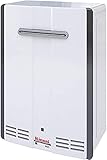
A 7.5-gallon capacity and natural gas power make this Rinnai a straightforward whole-home candidate. The larger 33-inch width and 37-inch height show that it is a substantial unit, which matters because the buyer gets a heater focused on whole-house hot water rather than a tiny point-of-use footprint.
Multiple venting options give this model useful placement flexibility, and the mention of PVC or CPVC with the Ubbink Concentric to Twin Pipe adaptor is a concrete planning detail for installation. The high-performance water pressure claim matters because tankless buyers often care as much about shower feel as raw flow. Flame failure protection adds a clear safety feature to the package. As a gas-powered tankless heater, it is positioned for continuous hot water throughout the house while still conserving energy by heating only when necessary. For buyers who want a natural gas unit with a simple, proven structure and flexible venting, it fits the brief well.
Pros
- 7.5-gallon capacity supports whole-home use
- Multiple venting options increase placement flexibility
- Flame failure protection adds safety coverage
- Energy-saving tankless operation heats only when needed
Cons
- The 33-inch by 37-inch footprint is larger than compact wall-mounted models
This Rinnai is a practical choice for buyers who want a straightforward natural gas tankless unit with flexible venting. It is most useful in homes that have room for a larger wall-mounted appliance and want consistent hot water across the house.
| Specification | Details |
|---|---|
| Brand | Rinnai |
| Capacity | 7.5 gallons |
| Power Source | Gas Powered |
| Product Dimensions | 33″W x 37″H |
| Special Feature | Flame Failure Protection |
| Venting | Multiple venting options |
I’d choose this for a home that wants solid whole-house service and has room for a larger appliance. The venting flexibility is the main convenience factor, and the flame failure protection adds reassurance. It is a sensible natural gas pick for buyers who want function first.
9. GASLAND Gasmart E 199,000 BTU Tankless Water Heater, Up to
- Unlimited Hot Water On Demand -- Unlike traditional tank water heaters, our tankless gas water heater provides unlimited hot water...
- Energy Efficient & Eco-Friendly -- With an industry-leading UEF of 0.8, our tankless water heater is 34% more energy-efficient...
- Space-Saving Design & Easy Installation -- Say goodbye to bulky water tanks! Our compact, suitcase-sized design fits easily into...
Best for: Safety-focused mid-size unit.
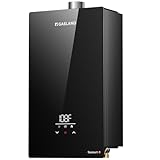
An 8.0 UEF and 199,000 BTU output put this GASLAND model in the high-efficiency, high-power range for natural gas homes. The 26-liter capacity and 14.25-inch width show a mid-size format that can still support continuous hot water for showers, laundry, and dishwashing without taking over the wall.
CSA certification is an important confidence marker, and the safety stack includes anti-freezing protection, dry combustion protection, flame failure protection, and high water pressure protection. That combination makes the unit attractive to buyers who value guarded operation as much as output. The integrated error code indicator also helps with basic troubleshooting if the unit reports a fault. With a 24.69-inch height, it stays fairly manageable for a heater in this performance class. For a natural gas buyer who wants efficient operation and a strong safety profile, the numbers here line up well with regular family use.
Pros
- 199,000 BTU supports strong whole-home demand
- UEF 0.8 points to efficient operation
- CSA certification supports safety confidence
- Integrated error code indicator simplifies troubleshooting
Cons
- The 26-liter capacity and mid-size footprint may be more than needed for a small household
This GASLAND model is a strong fit for buyers who want high output and layered safety features in one unit. It works best in homes that will actually use the higher capacity across multiple daily hot-water tasks.
| Specification | Details |
|---|---|
| Brand | GASLAND |
| Capacity | 26 liters |
| Power Source | Natural Gas |
| Product Dimensions | 14.25″W x 24.69″H |
| Output | 199,000 BTU |
| Energy Factor | 0.8 UEF |
| Special Feature | Anti-Freezing Protection |
| Special Feature | Dry Combustion Protection |
| Special Feature | Flame Failure Protection |
| Special Feature | High Water Pressure Protection |
I’d recommend this to a buyer who wants a safer-feeling high-output tankless system. The UEF, BTU rating, and safety protections all point to a unit that can handle regular family demand without feeling underspecified. It is a good natural gas choice when safety and performance both matter.
10. Westinghouse Gas Tankless Water Heater Outdoor, 8.1 GPM, 180,000 BTU

- 【Endless Hot Water for the Whole Home】Designed for outdoor installation, this natural gas tankless water heater delivers up to...
- 【Precise ±1°F Temperature Stability】Advanced self-modulating technology automatically adjusts gas and water flow to maintain...
- 【Energy Efficient On-Demand Heating】Unlike traditional tank water heaters, this outdoor tankless water heater heats water only...
Best for: Outdoor high-flow home heater.
Outdoor installation and 8.1 GPM flow make this Westinghouse a strong fit for buyers who want high performance without an indoor utility footprint. The 180,000 BTU rating and support for 3 to 5 fixtures show clear whole-home intent, while the 17.1-inch width keeps the exterior-mounted profile manageable.
Precise ±1°F temperature stability is the most useful everyday detail in the product data because it points to consistent shower and sink temperatures. Self-modulating technology automatically adjusts gas and water flow, which helps match demand instead of overworking the system. Anti-freezing protection matters for outdoor use, and CSA certification adds a recognized safety credential. The 26-liter capacity is another sign that this unit is aimed at serious household service rather than point-of-use duty. For a natural gas buyer who wants to mount the heater outside and still cover several fixtures at once, the output and control features line up well.
Pros
- 8.1 GPM supports 3-5 fixtures simultaneously
- 180,000 BTU provides strong on-demand output
- ±1°F stability helps maintain comfortable water temperature
- Outdoor installation frees indoor wall space
Cons
- Outdoor-only installation means it is not the right choice for buyers who need an indoor unit
This Westinghouse is a strong option for households that want outdoor installation and dependable multi-fixture output. It suits buyers who value temperature stability and high flow in a natural gas heater.
| Specification | Details |
|---|---|
| Brand | Westinghouse |
| Capacity | 26 liters |
| Power Source | gas_powered |
| Product Dimensions | 17.1″W x 26.8″H |
| Output | 180,000 BTU |
| Flow Rate | 8.1 GPM |
| Special Feature | Anti-Freezing Protection |
| Special Feature | CSA Certified |
I’d point outdoor-install buyers here first because the flow rate and BTU output are well matched to a larger household. The temperature stability is the feature I trust most for daily use, since it matters at every faucet and shower. It is a practical natural gas pick when exterior placement is the goal.
Quick Comparison Table of Top Natural Gas Tankless Water Heaters
| Product Name | GPM | BTU | Install | Best For | Check Price |
|---|---|---|---|---|---|
| Rheem RTG Series 7.0 GPM Natural | 7.0 | 160,000 | Indoor | Whole-home use | Check Price |
| ThermoMate CZ422NG, Natural Gas Tankless Water | 5.0 | 113,000 | Indoor | Two showers | Check Price |
| Rheem RTG Series 7.0 GPM Natural | 7.0 | 160,000 | Indoor | Whole-home use | Check Price |
| Rinnai RX199iN Condensing Smart Sense Tankless | Gas powered | Condensing | Indoor/outdoor | Flexible installs | Check Price |
| APUS Natural Gas Tankless Water Heater | 4.42 | 95,000 | Indoor | Small homes | Check Price |
| MIZUDO 120,000 BTU Natural Gas Tankless | 5.1 | 120,000 | Indoor/outdoor | Smart control | Check Price |
| APUS Natural Gas Tankless Water Heater | 6.8 | 140,000 | Indoor | 4-5 water points | Check Price |
| Rinnai RUS75eN Tankless Hot Water Heater | 7.5 | Not listed | Multiple venting | Compact homes | Check Price |
| GASLAND Gasmart E 199,000 BTU Tankless | Up to | 199,000 | Indoor | High-demand use | Check Price |
| Westinghouse Gas Tankless Water Heater Outdoor | 8.1 | 180,000 | Outdoor | Whole-home outdoor | Check Price |
How to Choose the Right best tankless hot water heater natural gas
Flow rate and demand match
Start with your busiest hour, not your whole day. Add the showers, bathroom sinks, dishwasher, and laundry use that overlap, then choose a unit whose rated gallons per minute at a 70°F rise covers that total with a little margin. A small apartment needs a compact single-point heater; a family home with two showers running needs a whole-home unit with stronger output.
Low GPM ratings that only hold at a mild temperature rise are weak for cold climates. Pick a tankless natural gas heater sized for your peak simultaneous use, and choose the larger whole-home model when more than one fixture runs at once.
| Household need | What to look for |
|---|---|
| 1 fixture at a time | About 2-4 GPM at your local temperature rise |
| 1 shower + sink | About 5-6 GPM with stable output |
| 2 showers or shower + laundry | About 7-9+ GPM and whole-home capacity |
| Cold-climate home | Higher GPM at a 70°F rise, not just the maximum rating |
Energy efficiency and gas use
Efficiency starts with a strong UEF rating and a burner that modulates over a wide range, because that keeps flame output matched to real demand instead of cycling hard. Choose a model with electronic ignition, not a standing pilot, and check that it maintains consistent outlet temperature during low-flow use. Good units show smooth modulation, low standby loss, and reliable recovery across repeated draws.
Venting matters too: shorter, straighter vent runs reduce resistance and support efficient combustion. Pick a condensing natural gas model with wide modulation and high UEF for frequent daily use; choose a simpler non-condensing unit only for lighter, less variable hot-water demand.
| Efficiency trait | What good looks like |
|---|---|
| UEF | High rating for lower gas use |
| Burner modulation | Wide turndown range, steady temperatures |
| Ignition | Electronic ignition with no pilot flame |
| Venting | Short, direct routing with compatible materials |
Installation requirements and venting
Installation success depends on gas supply, venting, and drainage, so verify those details before you choose a unit. The gas line must provide enough volume and pressure for the heater’s BTU input; undersized piping causes weak performance. Check whether the model uses concentric, direct-vent, or power-vent routing, then confirm the maximum vent length and elbow count your space allows.
Indoor units need safe wall routing, while outdoor-rated units fit exposed locations with weather protection. Condensing models need a drain for acidic condensate.
Choose a venting style that matches your route and an indoor or outdoor model that matches the installation site, not the other way around.
| Install factor | Best fit |
|---|---|
| Long vent run | Model with generous length limits and simple routing |
| Limited gas line capacity | Lower-input unit or upgraded piping plan |
| Indoor wall space | Direct-vent or power-vent indoor model |
| Condensing heater | Built-in condensate drain path |
Temperature control and comfort features
Comfort comes from precise temperature control, stable output, and quick hot water at the tap. Choose a digital controller with single-degree settings and a clear display, because coarse controls create annoying swings during showers. Anti-scald protection and freeze protection matter in homes with children or cold weather exposure.
Recirculation support helps reduce wait time at distant fixtures, especially in larger homes. Diagnostics on the display save time during routine checks and service calls.
Pick a model with precise digital control and recirculation compatibility for large or busy homes; choose a simpler control package for smaller spaces where immediate access is less important.
Maintenance, reliability, and warranty
Reliability starts with easy maintenance access and a heat exchanger that resists scale and corrosion. Look for front-access filters, straightforward flushing ports, and clear descaling instructions, because those features shorten annual service and protect output. Brass, stainless, and well-coated copper components signal stronger longevity than thin mixed-metal internals with poor access.
Error codes and service-friendly diagnostics help you resolve ignition, venting, and sensor issues quickly. Warranty terms matter most when they cover the heat exchanger and parts for a meaningful period, with service support that is easy to reach.
Pick a model with accessible maintenance points and robust heat-exchanger materials for hard-water homes and frequent use; choose a simpler service package only for light-duty installations.
Which Should You Choose?
- If you need to run 2-3 showers at once and want strong whole-home output, choose a high-capacity unit around 7.0 GPM with about 160,000 BTU.
- If you have a smaller household and mainly want reliable hot water for two showers, choose a mid-range model around 5.0 GPM with roughly 113,000 BTU.
- If you want flexible installation and may need indoor or outdoor placement, choose a convertible unit with venting options and smart gas control.
- If you have multiple fixtures running at the same time and want fewer cold-water dips, choose a higher-output model around 6.8 GPM to 8.1 GPM with 140,000 to 180,000 BTU.
Quick Best Tankless Hot Water Heater Natural Gas Buying Checklist
- Match flow rate to peak demand so the unit can handle multiple fixtures without temperature drops.
- Confirm gas line and venting requirements before buying to avoid costly installation surprises.
- Choose precise temperature controls for steady comfort and safer water delivery.
- Check efficiency and modulation features to help reduce fuel waste during everyday use.
- Review maintenance access for descaling, filter cleaning, and long-term reliability.
- Verify warranty and support coverage so service is available if problems come up later.
How Natural Gas Tankless Heaters Produce Hot Water On Demand
Natural gas tankless water heaters do not store a large volume of heated water. Instead, when a hot water tap opens, cold water flows through a heat exchanger and a gas burner ignites to raise the temperature quickly. This on-demand design helps reduce standby energy loss because the unit is not constantly reheating a tank.
Most models use sensors to detect flow and modulate the burner output as demand changes, which helps keep outlet temperature steadier during showers or laundry. The system also shuts off automatically when the tap closes.
Because the heating process is immediate, performance depends on both the burner capacity and the incoming water temperature.
Venting And Gas Supply Requirements For Safe Operation
Proper venting is essential for any natural gas tankless unit because combustion gases must be directed safely outdoors. Depending on the model, venting may require stainless steel, PVC, CPVC, or concentric vent materials that match the heater’s exhaust temperature and installation layout. Gas supply is equally important: the line must deliver enough volume and pressure to support the burner at full output, especially when multiple fixtures run at once.
Undersized gas piping can lead to weak performance, shutdowns, or inconsistent water temperatures. Clearances from windows, doors, and air intakes also matter to prevent exhaust recirculation.
A licensed installer typically verifies both vent path and supply sizing before commissioning the heater.
| Venting Type | Best For |
|---|---|
| Direct vent | Sealed installations that draw combustion air from outdoors |
| Power vent | Homes needing assisted exhaust routing through longer runs |
| Concentric vent | Compact installations with a shared intake and exhaust path |
Understanding Flow Rate, Temperature Rise, And Simultaneous Use
Flow rate is one of the most important performance metrics for a tankless heater because it determines how many fixtures can receive hot water at the same time. The key relationship is between gallons per minute and temperature rise: colder incoming water requires more heating capacity to reach the desired outlet temperature. A unit that performs well in a warm climate may feel undersized in a colder region during winter.
Simultaneous use also matters inside the home; a shower, dishwasher, and laundry tap all draw from the same burner capacity. For that reason, a realistic demand assessment should consider peak usage rather than average daily consumption.
This helps match the heater to actual household habits.
| Factor | Why It Matters |
|---|---|
| Flow rate | Shows how much hot water the unit can supply at once |
| Temperature rise | Measures how hard the heater must work to warm incoming water |
| Peak demand | Determines whether multiple fixtures can run together |
Routine Care That Keeps Performance Consistent
Tankless heaters last longer and work more efficiently when they are maintained regularly. Mineral scale is the main issue in many homes, especially where water is hard, because deposits can build inside the heat exchanger and reduce heat transfer. Flushing the system with a descaling solution on a routine schedule helps keep water paths clear.
Air intake filters should also be checked and cleaned so the burner receives enough combustion air. In addition, it is wise to inspect the condensate drain on condensing models and confirm that error codes are addressed promptly.
Small maintenance tasks can prevent temperature swings, premature wear, and unnecessary service calls. Consistent upkeep is especially valuable for households that rely on the unit every day.
- Flush the heat exchanger to remove mineral buildup.
- Clean or replace air intake filters as needed.
- Check venting and drain lines for blockage.
- Watch for error codes, leaks, or unusual noises.
Common Installation Mistakes That Hurt Tankless Heater Performance
Several installation errors can make even a strong natural gas tankless heater underperform. One frequent mistake is placing the unit too far from the main fixtures, which increases wait time for hot water and wastes water while the line clears. Another is ignoring local plumbing and fuel requirements, especially when gas piping is too small for the burner’s demand.
Some installations also fail because the condensate or pressure relief discharge is routed incorrectly. Improper vent slope or excessive vent length can create startup problems and nuisance shutdowns.
Finally, many issues trace back to missing water treatment in hard-water areas, which allows scale to form quickly. Careful planning during installation usually prevents these avoidable problems.
Frequently Asked Questions (FAQs)
What Size Tankless Hot Water Heater Natural Gas Do I Need?
The right size tankless hot water heater natural gas depends on peak hot water demand, not just household size. Add the gallons per minute needed for showers, sinks, and appliances, then choose a model that can meet that combined load at your local inlet-water temperature.
How Do I Know If My Gas Line Is Adequate?
A tankless hot water heater natural gas needs a properly sized gas line with enough pressure for the burner to run at full output. Check the manufacturer’s gas input requirements and have a qualified installer confirm pipe diameter, meter capacity, and pressure before purchase.
Why Is Venting Important For A Natural Gas Tankless Unit?
Venting is critical because a tankless hot water heater natural gas must safely exhaust combustion gases. The vent type, length, and routing affect installation options, and some models need stainless or polypropylene venting depending on whether they are condensing or non-condensing.
What Temperature Control Features Matter Most?
Precise digital controls matter most in a tankless hot water heater natural gas because they keep water delivery stable and reduce scalding risk. Look for adjustable setpoints, anti-scald protection, and clear digital readouts that make small temperature changes easy to manage.
Is A Recirculation Feature Worth Having?
A recirculation feature can be valuable in a tankless hot water heater natural gas because it reduces the wait for hot water at distant fixtures. It is especially useful in larger homes, but it should be paired with insulation and proper plumbing layout for best results.
How Often Does A Tankless Natural Gas Heater Need Maintenance?
A tankless hot water heater natural gas should be maintained regularly to protect flow rate and heat exchanger performance. Most owners flush mineral buildup, clean inlet filters, and inspect venting on a routine schedule, especially in areas with hard water.
What Should I Look For In Warranty And Reliability?
A reliable tankless hot water heater natural gas should have a strong heat exchanger, accessible service parts, and clear fault codes for troubleshooting. Good warranty coverage is important because it can help with long-term confidence, especially when the unit is used for whole-home hot water.
Final Suggestions
Choosing the best tankless hot water heater natural gas comes down to matching flow rate, installation needs, efficiency, and temperature control to your home’s daily demand. When those factors align, you get reliable hot water, better energy use, and a more comfortable routine. With the right model, you can upgrade your home with confidence and enjoy steady performance for years to come.