Top 10 Best Gas Tankless Water Heater Picks
best gas tankless water heater models are reshaping how homes manage hot water with compact designs, advanced heat exchangers, and on-demand efficiency. Unlike traditional storage tanks, a gas tankless system delivers heated water only when it is needed, helping reduce standby energy loss while supporting steady flow for showers, laundry, and busy households. Choosing the best gas tankless water heater often means comparing BTU output, venting requirements, flow rate, and durability, especially when stainless steel components and ignition technology affect long-term performance.
From compact residential units to high-capacity whole-home systems, the category includes gas water heaters and tankless hot water heaters built for different demands. The challenge is knowing which features truly matter—and that is where the details become important.
Detailed Overview of the Best Gas Tankless Water Heater
1. Rheem RTG Series 7.0 GPM Natural Gas Tankless Water Heater

- High Performance Natural Gas Tankless Water Heater delivers endless instant hot water on demand for whole house residential use...
- Energy Efficient Non-Condensing Gas Tankless Water Heater with 0.82 Uniform Energy Factor (UEF) saves up to 34% on energy costs...
- Ideal Whole House Tankless Gas Water Heater for large families and multi-bathroom homes with 2-3 water points running...

Best for: Whole-home capacity for larger households.
A 7.0 GPM flow rate and 160,000 BTU/hr output give the Rheem RTG Series enough muscle for whole-house hot water use. That means two to three showers can run at once without the recovery delays of a storage tank, while the compact 13.5-inch by 24.2-inch cabinet fits neatly into indoor utility spaces.
The 0.82 Uniform Energy Factor gives this unit an efficiency edge that matters when you want nonstop hot water without wasting fuel between uses. Its natural gas setup and direct vent system suit indoor installation, and the 1/2 gas line compatibility can simplify hookups in homes that already have the right supply. The integrated digital display makes status checks straightforward, while hot-start programming helps reduce the cold-water burst common with tankless systems. Universal venting compatibility also gives installers more placement flexibility in tighter mechanical rooms. For buyers comparing gas tankless models, this one is aimed at homes that need strong output and a compact footprint at the same time.
Pros
- 7.0 GPM supports multiple showers at once
- 160,000 BTU/hr handles whole-house demand
- 0.82 UEF improves operating efficiency
- Compact 13.5″W x 24.2″H size saves wall space
Cons
- Indoor-only direct vent installation limits placement compared with outdoor-rated models.
Rheem’s RTG Series fits buyers who want a high-output natural gas heater for a busy household. It balances flow, efficiency, and a compact cabinet in a way that makes practical sense for everyday family use.
| Specification | Details |
|---|---|
| Brand | Rheem |
| Capacity | 7 gallons |
| Power Source | Natural Gas |
| Product Dimensions | 13.5″W x 24.2″H |
| Fuel Output | 160,000 BTU/hr |
| Flow Rate | 7.0 GPM |
| Uniform Energy Factor | 0.82 UEF |
| Special Feature | Universal Venting Compatibility |
I’d point this to families that want a dependable natural gas tankless unit with real whole-home capacity. The combination of 7.0 GPM, indoor venting support, and an efficient non-condensing design makes it a strong fit for homes with several hot-water demands happening at the same time.
2. ThermoMate CZ422NG, Natural Gas Tankless Water Heater Indoor, Up to

- [Max 5 GPM & 102,000 BTU] – The ThermoMate instant water heater delivers hot water on-demand for two showers at the same time...
- [Safety & Reliable] - Certified by CSA, this residential gas water heater features boil-dry, freeze, flame-out, overheat, over...
- [Energy Efficient & Save Money] – Built with an oxygen-free copper heat exchanger for efficient heat transfer and corrosion...
Best for: Compact pick for two-shower homes.
A 5 GPM capacity and 113,000 BTU output put the ThermoMate CZ422NG in the range of practical whole-home use for smaller households. That gives it enough headroom for two showers at once while the 13.77-inch by 21.65-inch body stays compact enough for tighter indoor utility areas.
The smart flow sensor and control chip adjust heating 20,000 times per second, which is what helps keep water temperature steady instead of swinging between hot and lukewarm. ThermoMate also lists ±1°F temperature consistency, a useful detail if multiple fixtures open and close throughout the day. The unit’s CSA certification and integrated safety protections add confidence for residential use, including boil-dry, freeze, flame-out, and overheat safeguards. An integrated error code indicator makes troubleshooting easier when maintenance is needed. For buyers who want a smaller gas tankless heater with controlled temperature delivery, the feature set is focused and practical.
Pros
- 5 GPM supports two showers at the same time
- 113,000 BTU output fits moderate household demand
- ±1°F consistency helps keep shower temperature stable
- Integrated safety protections improve everyday peace of mind
Cons
- Its 5 GPM rating is better for smaller homes than for households that need three or more simultaneous fixtures.
ThermoMate works well when you need reliable hot water for a modest household without moving up to a larger high-output unit. The compact size and temperature control features make it especially appealing for straightforward residential installs.
| Specification | Details |
|---|---|
| Brand | thermomate |
| Capacity | 5 gallons |
| Power Source | Natural Gas |
| Product Dimensions | 13.77″W x 21.65″H |
| Flow Rate | 5 GPM |
| Fuel Output | 113,000 BTU |
| Temperature Stability | ±1°F |
| Special Feature | Anti-Freezing Protection |
| Special Feature | Dry Combustion Protection |
I think this is a smart choice for smaller households that want a gas tankless unit with careful temperature control. It feels especially well matched to buyers who value safety protections and a simpler footprint more than maximum flow capacity.
3. GASLAND Gasmart E 199,000 BTU Tankless Water Heater, Up to
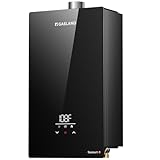
- Unlimited Hot Water On Demand -- Unlike traditional tank water heaters, our tankless gas water heater provides unlimited hot water...
- Energy Efficient & Eco-Friendly -- With an industry-leading UEF of 0.8, our tankless water heater is 34% more energy-efficient...
- Space-Saving Design & Easy Installation -- Say goodbye to bulky water tanks! Our compact, suitcase-sized design fits easily into...
Best for: High-output option for busy homes.
A 199,000 BTU rating and 26-liter capacity give the GASLAND Gasmart E the kind of output that supports continuous hot water for demanding daily routines. That level of output makes it suitable for showers, laundry, and dishwashing without the stop-and-go cycles that come with a storage tank.
The 0.8 UEF matters because it shows the unit is tuned for efficient gas use even at high output. With a 14.25-inch by 24.69-inch profile, it still fits in a reasonably compact wall-mounted space for a unit this powerful. The natural gas setup and CSA certification point to a residential heater meant for dependable use, and the listed safety functions cover freeze, dry combustion, flame failure, and high water pressure conditions. The integrated error code indicator is helpful when you want quick diagnostics instead of guessing at service issues. Buyers seeking a strong gas tankless model for repeated family use will appreciate the power reserve here.
Pros
- 199,000 BTU supports demanding hot-water use
- 26-liter capacity suits larger household needs
- 0.8 UEF improves fuel efficiency
- Integrated error code indicator simplifies troubleshooting
Cons
- The higher-output design is overkill for homes that only need one or two fixtures at a time.
GASLAND’s Gasmart E fits buyers who want strong, steady hot water for a household with frequent demand. It combines substantial output with efficiency-focused operation, which makes it appealing for active homes.
| Specification | Details |
|---|---|
| Brand | GASLAND |
| Capacity | 26 liters |
| Power Source | Natural Gas |
| Product Dimensions | 14.25″W x 24.69″H |
| Fuel Output | 199,000 BTU |
| Uniform Energy Factor | 0.8 UEF |
| Special Feature | Anti-Freezing Protection |
| Special Feature | Dry Combustion Protection |
| Special Feature | Flame Failure Protection |
My take is that this model makes the most sense for homes with steady hot-water demand and not much tolerance for interruptions. If you want a natural gas unit with stronger output and clear diagnostic support, it looks like a practical fit.
4. Westinghouse Gas Tankless Water Heater Outdoor, 8.1 GPM, 180,000 BTU

- 【Endless Hot Water for the Whole Home】Designed for outdoor installation, this natural gas tankless water heater delivers up to...
- 【Precise ±1°F Temperature Stability】Advanced self-modulating technology automatically adjusts gas and water flow to maintain...
- 【Energy Efficient On-Demand Heating】Unlike traditional tank water heaters, this outdoor tankless water heater heats water only...
Best for: Outdoor whole-home performance.
An 8.1 GPM flow rate and 180,000 BTU output make the Westinghouse outdoor unit a strong match for whole-home hot water outside the house. That capacity supports three to five fixtures at once, so showers, sinks, laundry, and dishwashing can all pull hot water without forcing a wait.
Because it is rated for outdoor installation, this model removes the need to plan around indoor venting space, which can simplify the install in some homes. The 26-liter capacity backs up the high flow rate, while the 17.1-inch by 26.8-inch footprint keeps it within a manageable wall-mounted size for an outdoor appliance. CSA certification adds confidence for residential use, and anti-freezing protection matters when the unit lives outside. The listed ±1°F temperature stability helps keep water comfortable as fixtures open and close. Buyers who want a powerful gas tankless heater outdoors will see a clear benefit in the installation flexibility and flow capacity here.
Pros
- 8.1 GPM supports three to five fixtures
- 180,000 BTU provides strong on-demand output
- Outdoor installation eliminates indoor venting needs
- Anti-freezing protection helps in exposed locations
Cons
- Outdoor installation means it is not the right pick for buyers who need an indoor-mounted unit.
This Westinghouse model is a good fit when the best location for the heater is outside. Its high flow capacity and outdoor rating make it especially useful for homes that want to free up indoor utility space.
| Specification | Details |
|---|---|
| Brand | Westinghouse |
| Capacity | 26 liters |
| Power Source | gas_powered |
| Product Dimensions | 17.1″W x 26.8″H |
| Flow Rate | 8.1 GPM |
| Fuel Output | 180,000 BTU |
| Installation | Outdoor |
| Special Feature | Anti-Freezing Protection |
| Special Feature | CSA Certified |
I’d choose this for buyers who have outdoor installation space and want a heater that can serve multiple fixtures at once. It looks especially sensible if you want strong flow without giving up indoor wall space to the unit.
5. Rinnai RX199iN Condensing Smart Sense Tankless Water Heater

- One Model, Anywhere: This Rinnai tankless water heater is installable indoors or outdoors thanks to our new Versa Vent and powered...
- Never Run Out of Hot Water with this Compact Tankless Gas Water Heater: This condensing propane and natural gas tankless water...
- Smart, Efficient Design: This water heater's modern design includes an easy-to-use interface, Quick Flush feature for simplified...
Best for: Flexible install for premium households.
An 11.1 GPM output makes the Rinnai RX199iN one of the strongest flow-rate options in this group, and that gives it room to support up to seven fixtures at once. Its compact size, described as roughly the size of a small suitcase, makes that high capacity easier to fit into a home mechanical layout.
The key advantage here is installation flexibility: it can be installed indoors or outdoors with the Versa Vent system, and it can run on either propane or natural gas with the Smart Sense gas control system. That flexibility is valuable when a home’s utility setup is not fixed or when future changes matter. The 18.5-inch by 30.11-inch dimensions show it is compact for the output level, even though it sits taller than some competing units. The condensing design also fits buyers who want an efficiency-focused tankless heater. If you want one model that can adapt to different installation conditions, this Rinnai is unusually versatile.
Pros
- 11.1 GPM supports up to seven fixtures
- Indoor or outdoor installation expands placement options
- Works with propane or natural gas
- Compact footprint suits tighter mechanical spaces
Cons
- The venting flexibility depends on the Versa Vent system, so installation planning is more involved than with fixed-location models.
Rinnai’s RX199iN is for buyers who want a high-capacity heater with unusual install flexibility. It makes sense when you want premium output and the freedom to place the unit where the home setup works best.
| Specification | Details |
|---|---|
| Brand | Rinnai |
| Capacity | 11.1 gallons |
| Power Source | Gas Powered |
| Product Dimensions | 18.5″W x 30.11″H |
| Flow Rate | 11.1 GPM |
| Special Feature | Smart Sense gas control system |
| Special Feature | Versa Vent |
| Installation | Indoor or Outdoor |
I’d recommend this to shoppers who want flexibility as much as raw output. It fits best in homes where gas type or install location may change, and where you want enough flow for heavy simultaneous use.
6. Rinnai RE199iN Non-Condensing Natural Gas Tankless Water Heater

- Energy Efficient On-Demand Performance. Non-condensing natural gas tankless water heater heats water only when needed, reducing...
- Endless Hot Water – Up to 9.8 GPM, 199,000 BTU. High-performance 199,000 BTU gas tankless water heater delivers up to...
- Durable Construction with Industry-Leading Warranty. Built for residential performance, this indoor natural gas tankless hot water...
Best for: Efficient high-flow wall mount.
A 9.8 GPM capacity paired with 199,000 BTU gives the Rinnai RE199iN enough output for larger households that want hot water on demand. Its wall-mounted, space-saving form keeps the footprint manageable while still supporting several fixtures at once.
The non-condensing design focuses on on-demand heating, which reduces standby energy loss compared with a tank-style heater. The LED display with diagnostic codes and service reminders is a practical touch for buyers who want simpler maintenance checks over time. At 14.05 inches wide and 27.28 inches high, it occupies a relatively narrow slice of wall space for a high-output unit. The natural gas power source and gas-powered setup make it suitable for homes already equipped for that fuel type. Because it delivers up to 9.8 GPM, it’s a strong match for homes where multiple bathrooms or mixed-use chores can overlap.
Pros
- 9.8 GPM supports multiple simultaneous uses
- 199,000 BTU delivers high-output performance
- LED display helps with diagnostics and reminders
- Wall-mounted design saves floor space
Cons
- As a non-condensing unit, it lacks the condensing design efficiency some buyers may prefer.
This Rinnai is a practical fit for buyers who want strong flow and a compact wall-mounted format. It works well for homes that need reliable hot water across several fixtures without giving up space.
| Specification | Details |
|---|---|
| Brand | Rinnai |
| Capacity | 9.8 gallons |
| Power Source | Gas Powered |
| Product Dimensions | 14.05″W x 27.28″H |
| Flow Rate | 9.8 GPM |
| Fuel Output | 199,000 BTU |
| Special Feature | LED Display |
I see this as a strong middle ground for buyers who want a high-flow natural gas unit without stepping up to the biggest footprint. It should satisfy households that value efficient use of wall space and steady hot water for multiple routines.
7. Ranein Natural Gas Tankless Water Heater, 8.5 GPM, 190,000 BTU,

- Fans Placed Underneath: It will be more secure in terms of safety, and no smoke backflow will occur. The blower has large power...
- No Waiting Required: Unlike traditional tank water heaters, tankless water heaters eliminate the need for a 30-minute preheating...
- Easy to Assemble and Use: Uses standard 3/4" G water inlet fittings and air inlets for quick installation. Its compact size of...
Best for: Safer combustion-focused choice.
An 8.5 GPM rating and 190,000 BTU output put the Ranein natural gas unit in the high-capacity range for a busy home. The underside fan layout is the notable difference here, because it helps reduce smoke backflow while supporting combustion with adjustable airflow.
The fan can automatically change rotating speed based on external wind pressure and water temperature, which is useful for keeping combustion supplied with enough oxygen. That matters in everyday use because stable combustion supports reliable heating and safer operation. The 15.08-inch by 24.25-inch dimensions keep it relatively compact for a unit in this output class, and the gray finish makes it easy to place in utility spaces without looking overly industrial. The LED display adds a straightforward control interface for status checks. Buyers who care about combustion management and a strong flow rate will find this design choice meaningful rather than cosmetic.
Pros
- 8.5 GPM handles several hot-water uses at once
- 190,000 BTU supports higher-demand households
- Underneath fan helps reduce smoke backflow
- LED display improves everyday monitoring
Cons
- The product data does not list the same certification or freeze-protection details shown on some competing models.
Ranein stands out for buyers who want combustion-focused engineering alongside high hot-water output. It makes the most sense in homes that value airflow management and a strong supply rate.
| Specification | Details |
|---|---|
| Brand | Ranein |
| Power Source | Natural Gas |
| Product Dimensions | 15.08″W x 24.25″H |
| Flow Rate | 8.5 GPM |
| Fuel Output | 190,000 BTU |
| Special Feature | LED Display |
| Color | Gray-NG |
I’d lean toward this for buyers who want a gas tankless heater with an emphasis on airflow and combustion management. It seems especially appropriate for homes where safe, steady operation matters as much as high flow.
8. Westinghouse Tankless Water Heater Gas Indoor, 7.9 GPM, 180,000 BTU

- Endless Hot Water for Whole Home: Delivering up to 7.9 GPM and 180,000 BTU, the Westinghouse whole house tankless water heater gas...
- Smart WiFi App & Voice Control: Control your indoor tankless water heater gas anytime, anywhere by app or voice. With built-in...
- Precise ±1°F Temperature Stability: Advanced self-modulating technology automatically adjusts gas and water flow to maintain a...
Best for: Smart indoor hot-water control.
A 7.9 GPM output and 180,000 BTU rating make the Westinghouse indoor model a capable whole-home heater for everyday family use. That capacity is enough to serve about three showers at once, while the indoor setup keeps the unit inside the home rather than on an exterior wall.
The built-in WiFi and app control set this model apart, letting you adjust temperature and monitor operating status remotely. Voice control adds another layer of convenience for homeowners who want quick changes without walking to the heater. The ±1°F temperature control is especially useful when the house has multiple fixtures opening and closing, because it helps keep the water consistent. With a 26-liter capacity and 17.1-inch by 26.2-inch dimensions, it balances strong output with a manageable wall-mounted size. Overheat protection and an LED display round out a feature set that feels practical for day-to-day use.
Pros
- 7.9 GPM supports about three showers
- 180,000 BTU provides strong whole-home output
- WiFi and app control add remote convenience
- ±1°F temp control helps maintain consistency
Cons
- Indoor installation means you still need suitable venting and interior wall space.
This Westinghouse model is a good fit for buyers who want smart controls with serious hot-water capacity. It works best in homes where indoor installation is preferred and remote management will actually get used.
| Specification | Details |
|---|---|
| Brand | Westinghouse |
| Capacity | 26 liters |
| Power Source | gas_powered |
| Product Dimensions | 17.1″W x 26.2″H |
| Flow Rate | 7.9 GPM |
| Fuel Output | 180,000 BTU |
| Special Feature | LED Display |
| Special Feature | Overheat Protection |
| Special Feature | WiFi&APP Control |
| Temperature Control | ±1℉ Temp Control |
I’d suggest this to buyers who want a modern control experience without giving up strong whole-home output. The app and voice features are most valuable for households that like being able to check or adjust hot water settings from anywhere.
9. Rheem RTG Series 8.4 GPM Natural Gas Tankless Water Heater

- High Performance Natural Gas Tankless Water Heater delivers endless instant hot water on demand for whole house residential use...
- Energy Efficient Non-Condensing Gas Tankless Water Heater with 0.82 Uniform Energy Factor (UEF) saves up to 34% on energy costs...
- Ideal Whole House Tankless Gas Water Heater for large families and multi-bathroom homes designed for outdoor installation, this...
Best for: Outdoor choice for three to four showers.
An 8.4 GPM flow rate and 180,000 BTU output make the Rheem RTG Series a strong outdoor option for family-sized hot-water demand. That means it can support three to four simultaneous showers, and the outdoor installation eliminates the need for venting inside the house.
The 0.82 UEF shows this model is aimed at efficient on-demand heating rather than tank-style standby loss. At 13.5 inches wide and 20.75 inches high, it has one of the more compact profiles in the group, which helps when exterior wall space is limited. Hot Start Programming is useful because it helps keep hot water available faster at the tap, and overheat protection adds another practical safety layer. The natural gas fuel source fits homes with an existing gas line, while the outdoor setup can simplify installation planning. Buyers who want strong flow without indoor venting complications will find this Rheem especially relevant.
Pros
- 8.4 GPM supports three to four showers
- 180,000 BTU provides high whole-home output
- Outdoor installation removes venting needs
- 0.82 UEF supports efficient operation
Cons
- Because it is outdoor-only, it is not suitable for buyers who need an indoor-mounted heater.
This Rheem is ideal for homes that want strong hot water delivery outside the living space. It is especially appealing if you need a compact outdoor heater that can handle several simultaneous uses.
| Specification | Details |
|---|---|
| Brand | Rheem |
| Capacity | 8.4 gallons |
| Power Source | Natural Gas |
| Product Dimensions | 13.5″W x 20.75″H |
| Flow Rate | 8.4 GPM |
| Fuel Output | 180,000 BTU |
| Uniform Energy Factor | 0.82 UEF |
| Special Feature | Overheat Protection |
I’d pick this for buyers who want strong output and prefer an outdoor install. It is a sensible option if you want a natural gas heater that can manage multiple showers while keeping the venting burden outside.
10. MIZUDO 120,000 BTU Natural Gas Tankless Water Heater,Max 5.1 GPM,WiFi&APP
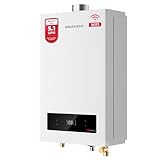
- [Flexible Indoor&Outdoor Installation Solution]: Mizudo innovative natural gas tankless water heater indoor offers versatile...
- [Smart WiFi and App Control]: Manage your tankless water heater gas remotely through the dedicated mobile application. Adjust...
- [Advanced Temp Control]: The tankless gas water heater combines sophisticated water flow monitoring and gas modulation to maintain...
Best for: Smart control for smaller households.
A 5.1 GPM rating and 120,000 BTU output place the MIZUDO in the compact gas tankless category for homes with moderate hot-water demand. That output is enough for two to four usage points, while the indoor-and-outdoor convertible setup gives you more placement options than a fixed-location model.
The WiFi and app control let you adjust temperature and monitor usage remotely, which is useful if the heater sits in a garage, utility room, or outdoor location. Anti-freezing protection adds practical value for colder climates, and CSA certification gives the installation a formal safety benchmark. With dimensions of 14.56 inches wide and 22.83 inches high, it stays relatively compact for a unit that can be converted between indoor and outdoor use with accessory kits. The support for two to four usage points makes it a better match for apartments, smaller homes, or lighter family demand than for larger multi-bath properties. Buyers wanting flexible placement and remote control will find this feature mix appealing.
Pros
- 5.1 GPM fits two to four usage points
- Indoor and outdoor convertible installation increases flexibility
- WiFi and app control simplify adjustments
- Anti-freezing protection helps in cold weather
Cons
- The 5.1 GPM output is limited for homes that need several showers running at the same time.
MIZUDO suits buyers who want flexible installation and smart control in a smaller-capacity gas tankless heater. It works best when hot-water demand is moderate and placement options matter a lot.
| Specification | Details |
|---|---|
| Brand | MIZUDO |
| Capacity | 5.1 gallons |
| Power Source | Natural Gas |
| Product Dimensions | 14.56″W x 22.83″H |
| Fuel Output | 120,000 BTU |
| Flow Rate | 5.1 GPM |
| Special Feature | Anti-Freezing Protection |
| Special Feature | CSA Certified |
| Special Feature | Indoor&Outdoor Convertible Installation |
| Special Feature | WiFi&APP Control |
I’d recommend this for smaller households that want a flexible natural gas heater with app-based control. It makes the most sense when you need a compact unit and don’t require the highest flow rates on the market.
Quick Comparison Table of Top Gas Tankless Water Heaters
| Product Name | Flow Rate | BTU Output | Power Source | Best For | Check Price |
|---|---|---|---|---|---|
| Rheem RTG Series 7.0 GPM Natural | 7.0 GPM | 160,000 BTU | Natural Gas | Whole-house use | Check Price |
| ThermoMate CZ422NG, Natural Gas Tankless Water | 5 GPM | 113,000 BTU | Natural Gas | Two showers | Check Price |
| GASLAND Gasmart E 199,000 BTU Tankless | Up to 5 GPM | 199,000 BTU | Natural Gas | High-demand homes | Check Price |
| Westinghouse Gas Tankless Water Heater Outdoor | 8.1 GPM | 180,000 BTU | Gas powered | Outdoor whole home | Check Price |
| Rinnai RX199iN Condensing Smart Sense Tankless | Not listed | Not listed | Gas powered | Indoor or outdoor | Check Price |
| Rinnai RE199iN Non-Condensing Natural Gas Tankless | Not listed | Not listed | Gas powered | Space-saving installs | Check Price |
| Ranein Natural Gas Tankless Water Heater | 8.5 GPM | 190,000 BTU | Natural Gas | High-flow households | Check Price |
| Westinghouse Tankless Water Heater Gas Indoor | 7.9 GPM | 180,000 BTU | Gas powered | Smart indoor control | Check Price |
| Rheem RTG Series 8.4 GPM Natural | 8.4 GPM | 180,000 BTU | Natural Gas | 3 to 4 showers | Check Price |
| MIZUDO 120,000 BTU Natural Gas Tankless | 5.1 GPM | 120,000 BTU | Natural Gas | Flexible installation | Check Price |
How to Choose the Best Gas Tankless Water Heater
Hot water demand and flow rate
Choose the unit by peak hot-water demand, not by the number printed on the box alone. Count every fixture that runs at the same time during your busiest morning: two showers and a kitchen tap need far more flow than a single bathroom sink. In colder regions, the same heater delivers less usable flow because the incoming water starts colder, so check the GPM rating at a 35°F, 45°F, or 77°F temperature rise, not just the maximum headline number.
For a small household, 5–7 GPM covers one or two fixtures; medium homes need 7–9 GPM; larger homes need 9+ GPM.
| Flow rating | Best for |
|---|---|
| 5–7 GPM | Single shower or light two-fixture use |
| 7–9 GPM | Two showers or a shower plus sink |
| 9+ GPM | Multiple bathrooms and higher simultaneous demand |
Fuel type, venting, and installation needs
Pick the fuel and venting setup that matches your house first, then the heater. Natural-gas units suit homes with an existing gas line and strong supply; propane units fit off-grid or rural setups with tanks. Check the vent type before you buy: direct vent and power vent models need proper pipe routing, termination clearances, and a path to the outdoors.
Poor choices show up as long vent runs, undersized gas piping, or awkward installation spaces. Measure your available wall area, note intake and exhaust clearances, and confirm the input rating against your gas line capacity.
| Setup | Best for |
|---|---|
| Natural gas, direct vent | Most homes with existing gas service |
| Propane, direct vent | Rural homes and tank-fed systems |
| Power vent | Installations needing flexible exhaust routing |
Energy efficiency and temperature control
Choose efficiency and control by how precisely you want the water temperature held across changing demand. High-efficiency gas tankless units with strong uniform ratings waste less fuel, and models with low standby loss avoid unnecessary heat escape during idle periods. Look for digital controls, clear temperature readouts, and setpoints that adjust in small increments instead of broad jumps.
Remote thermostats help place the control where you use it most, and recirculation features shorten wait time at distant fixtures. For the most consistent experience, choose a unit with digital temperature control, a remote panel, and recirculation compatibility; for simpler use, choose a straightforward electronic controller with accurate setpoint control.
| Control type | Best for |
|---|---|
| Basic electronic control | Simple households with one main temperature setting |
| Digital control with remote panel | Homes that need easier adjustment and monitoring |
| Digital control plus recirculation | Large homes and fixtures far from the heater |
Safety features and longterm reliability
Check safety and reliability by reading the protection list and the materials list together. Good units include freeze protection, overheat shutoff, flame monitoring, and ignition fault alerts; weak ones leave out one or more of those safeguards. For durability, look for a copper or stainless heat exchanger, corrosion-resistant connectors, and sealed electronics that handle moisture better.
A strong warranty matters only when service access is practical, so confirm that replacement parts and qualified technicians are available in your area. For cold climates and heavy use, choose a model with freeze protection, flame monitoring, and a stainless or copper heat exchanger; for milder homes, choose the same protections with easier service access.
| Feature | What good looks like |
|---|---|
| Freeze protection | Active protection for cold-weather shutdowns |
| Flame monitoring | Fast fault detection and ignition control |
| Heat exchanger | Copper or stainless construction |
Maintenance, scale protection, and value
Judge maintenance and value by how easily the heater handles scale, sediment, and routine service. A strong pick includes a service-friendly layout, accessible valves, and either self-cleaning features or a clear descaling path with flush ports. In hard-water homes, a sediment filter and built-in scale protection matter more than extra bells and whistles, because mineral buildup cuts performance and shortens service life.
Balance the upfront features with how often the unit needs flushing and whether replacement parts are easy to source. For hard water and long-term ownership, choose a model with flush ports, scale protection, and a sediment filter; for softer water and simpler upkeep, choose a straightforward unit with easy-access maintenance points.
| Maintenance feature | Best for |
|---|---|
| Self-cleaning or scale protection | Hard-water homes |
| Flush ports and easy service access | Owners who plan regular maintenance |
| Sediment filter | Homes with mineral or debris issues |
Which Should You Choose?
- If you need to run 3–5 fixtures at once in a larger home, choose a high-output whole-home unit around 8.0 GPM and 180,000 BTU.
- If your household usually needs hot water for two showers at the same time, choose a mid-size unit around 5.0–5.5 GPM and about 113,000–120,000 BTU.
- If you want the strongest performance for frequent back-to-back hot water use, choose a high-BTU model around 190,000–199,000 BTU with rapid recovery.
- If your install location is flexible or you want indoor-outdoor placement options, choose a versatile unit designed for both indoor and outdoor installation.
Quick Best Gas Tankless Water Heater Buying Checklist
- Size the flow rate correctly based on how many fixtures may run at once.
- Confirm fuel and venting compatibility with your home’s gas supply and exhaust layout.
- Check temperature stability so showers and sinks stay consistent during heavy use.
- Look for strong safety protections such as freeze, overheat, and flame-failure safeguards.
- Review maintenance needs including descaling, filter access, and hard-water protection.
- Compare warranty and service support to protect long-term performance and value.
How a Gas Tankless Water Heater Heats Water on Demand
A gas tankless water heater warms water only when a fixture calls for it, which is why it avoids the standby losses of a storage tank. When a hot tap opens, a flow sensor activates the burner and the unit begins heating water as it passes through a compact heat exchanger. The result is a continuous supply until the faucet closes or the demand exceeds the unit’s capacity.
Because output depends on both flow rate and temperature rise, performance can vary in colder climates or during simultaneous use. Understanding this process helps explain why sizing, gas supply, and venting all matter so much for reliable real-world performance.
Condensing vs. Non-Condensing Gas Tankless Models
Gas tankless heaters are usually grouped into condensing and non-condensing designs, and the main difference is how they handle exhaust heat. Condensing units extract additional heat from flue gases before venting, which improves efficiency and can lower exhaust temperatures. Non-condensing models are simpler internally and often use hotter venting, which affects installation materials and placement.
Condensing systems may include a drain for collected condensate, while non-condensing systems generally do not. Both can deliver strong hot-water performance, but they fit different priorities depending on venting constraints, maintenance preferences, and the layout of the home.
| Type | Best for | Key consideration |
|---|---|---|
| Condensing | Higher efficiency and cooler venting | May need condensate drainage |
| Non-condensing | Simpler installs and straightforward service | Uses hotter exhaust venting |
| Indoor unit | Homes with protected utility space | Requires proper vent routing |
| Outdoor unit | Mild climates and space-saving layouts | Must tolerate weather exposure |
Maintenance Tasks That Keep Performance Steady
Routine care plays a big role in how long a gas tankless water heater continues to perform well. Mineral buildup can restrict flow and reduce heat transfer, especially in areas with hard water, so periodic descaling is important. The air filter, inlet screen, and condensate trap should also be checked and cleaned according to the manufacturer’s guidance.
It is smart to look for error codes, uneven temperature delivery, or longer ignition times, since those can signal a problem before a full shutdown occurs. A yearly inspection of venting, gas connections, and burner condition helps catch small issues early and supports safe, efficient operation.
- Flush or descale the heat exchanger as needed
- Inspect the inlet water filter and clean debris
- Check vent pipes and exhaust terminations
- Confirm gas lines and seals remain secure
- Test temperature stability at several faucets
Installation Factors That Affect Real-World Results
Even a strong unit can underperform if installation is not matched to the home. Gas line sizing matters because tankless heaters can require a higher fuel flow than many older appliances. Venting must also follow the unit’s design, with the correct pipe material, length, and termination clearances.
Water pressure, service valves, and isolation fittings influence how easy it is to flush the system later. In colder regions, pipe insulation and freeze protection are worth attention, especially for outdoor models.
A proper install does more than meet code; it helps the heater reach its rated output, start reliably, and operate with fewer interruptions during high-demand periods.
Safety and Water Quality Considerations for Gas Tankless Use
Safe operation depends on both combustion safety and water quality. Gas tankless units need adequate fresh air or sealed combustion as designed, plus correct venting to move exhaust outdoors. Carbon monoxide alarms are a sensible backup in any home using fuel-burning appliances.
On the water side, scale and sediment can damage internal components if the supply is hard or dirty, so filtration or softening may be useful in some locations. It is also important to maintain stable outlet temperature settings to reduce scalding risk, especially in homes with children or older adults.
When these basics are handled well, the heater can deliver efficient hot water with fewer hazards and fewer service interruptions.
Frequently Asked Questions (FAQs)
How Do I Choose The Right Size For A Gas Tankless Water Heater?
Choose a gas tankless water heater by matching its gallons-per-minute output to your busiest hot-water moments. Add up the fixtures you may use at once, then make sure the unit can deliver that flow at your local incoming water temperature.
What Flow Rate Do I Need For A Gas Tankless Water Heater?
The right flow rate for a gas tankless water heater depends on how many showers, sinks, or appliances run together. A higher flow rating helps prevent temperature drops, especially in homes with multiple bathrooms or long plumbing runs.
Do Gas Tankless Water Heaters Need Special Venting?
Yes, gas tankless water heaters need proper venting because combustion gases must be safely exhausted outdoors. Many models require specific stainless steel or PVC venting, along with clearances and routing that fit the home’s layout.
How Important Is Energy Efficiency In A Gas Tankless Water Heater?
Energy efficiency is very important in a gas tankless water heater because it affects fuel use and operating cost. Efficient units heat water only when needed and often include modulating burners that adjust output instead of running at full power constantly.
What Safety Features Should I Look For In A Gas Tankless Water Heater?
Look for freeze protection, overheat shutoff, flame monitoring, and leak or scale alerts in a gas tankless water heater. These protections help the unit operate more safely, especially in colder spaces, hard-water homes, or high-demand households.
How Much Maintenance Does A Gas Tankless Water Heater Require?
A gas tankless water heater usually needs periodic descaling, inlet filter cleaning, and visual inspection of venting and connections. Homes with hard water may need more frequent maintenance to prevent mineral buildup that can reduce flow and heating efficiency.
Can A Gas Tankless Water Heater Work In A Large Household?
Yes, a gas tankless water heater can work well in a large household when the flow rate and temperature rise are sized correctly. Larger homes often benefit from higher-capacity models or recirculation features that reduce wait time at distant fixtures.
Final Suggestions
The best gas tankless water heater can deliver steady hot water, improve energy efficiency, and free up space by replacing bulky storage tanks. With the right flow rate, venting setup, and safety features, it can support daily routines with impressive convenience. Choose carefully, and you can enjoy reliable comfort and long-term value every day.