Top 6 Best Reverse Osmosis System For Refrigerator
The best reverse osmosis system for refrigerator setups can transform ordinary tap water into cleaner, better-tasting water with advanced filtration. In modern kitchens, reverse osmosis technology matters because it helps reduce dissolved solids, sediment, and unwanted contaminants before water reaches ice makers and dispensers. Choosing the best reverse osmosis system for refrigerator use is not just about purity; it also affects flow rate, storage capacity, filter life, and installation compatibility.
These systems often rely on multi-stage filtration, membrane technology, and pressure balance to keep performance steady while supporting everyday convenience. As more households compare refrigerator water filter systems and under-sink filtration options, the differences can be surprisingly important.
The details behind these systems may change everything, and the comparison ahead reveals why.
Detailed Overview of the Best Reverse Osmosis System for Refrigerator
1. Waterdrop G5P500A Reverse Osmosis System, 8-Stage RO Filtration, Alkaline

- [8-Stage precise filtration] The reverse osmosis system features an advanced 8-stage filtration process that reduces harmful...
- [0.0001 μm RO +added minerals] The Waterdrop G5P500A combines a precision 0.0001μm RO membrane with Alkaline mineralization...
- [Compact tankless design] Say goodbye to large tank systems. The tankless RO system’s modern tankless design frees up to 70% of...
Best for: High-capacity choice for fridge connections.
A 500-gallon capacity and 2:1 pure-to-drain ratio make the Waterdrop G5P500A a practical fit for homes that want a steady supply of filtered water without wasting much during production. Its under-sink format keeps the system out of sight while still feeding a refrigerator line, which helps keep chilled drinking water and ice on hand.
The 8-stage filtration setup targets PFOA, PFOS, chlorine, lead, fluoride, heavy metals, and other impurities, so the water going to a refrigerator dispenser has more than just a cleaner taste. A 0.0001 μm reverse osmosis membrane handles very fine particle reduction, while alkaline mineralization adds back minerals after filtration. The unit measures 16.69″L x 5.69″W x 13.9″H, which matters if the cabinet space beside plumbing is tight. It comes with 2 pre-installed filters, a mechanical faucet, and corded-electric operation, so setup is more streamlined than a fully pieced-together install.
Pros
- 500-gallon capacity supports regular fridge and sink use
- 0.0001 μm RO membrane filters very fine particles
- 2:1 pure-to-drain ratio reduces waste during operation
- Includes 2 pre-installed filters for faster setup
Cons
- No smart faucet is included, so fridge-focused users get a mechanical faucet instead of a digital status readout.
For buyers who want filtered water feeding a refrigerator line from a compact under-sink system, this model covers the essentials well. It makes the most sense for households that value mineralized RO water and high output in one cabinet-friendly package.
| Specification | Details |
|---|---|
| Brand | Waterdrop |
| Special Feature | 8-stage Filtration, Alkaline Mineral, 500GPD High Capacity, 2:1 Pure to Drain |
| Product Dimensions | 16.69″L x 5.69″W x 13.9″H |
| Material | BPA-Free |
| Capacity | 500 gallons |
| Included Components | G5P500A RO System (with 2 Pre-installed Filters), Mechanical Faucet, User Manual |
| Package Information | Dispenser |
| Installation Type | Under Sink |
| Purification Method | Reverse Osmosis |
| Power Source | Corded Electric |
I’d point to this Waterdrop model for anyone who wants a refrigerator-ready RO system without adding a bulky tank-focused setup. The compact footprint, pre-installed filters, and alkaline stage make it especially appealing if you care about both convenience and taste. It feels like the right pick for a busy kitchen that needs dependable filtered water for ice and drinking.
2. PureDrop RTW5 5-Stage Reverse Osmosis Water Filter System

- Cleaner, Better-Tasting Water: 5-stage RO filtration helps reduce up to 99% of PFAS, lead, arsenic, chlorine, heavy metals, and...
- Easy Top-Mount Faucet: Patented oval-nut design allows full installation from above the countertop, so there’s no awkward...
- Quiet Tank Refills for Everyday Use: Engineered with acoustic dampening housing for stable, low-noise tank refilling without...

Best for: Apartment-friendly countertop setup.
A 2.2-gallon tank and countertop installation give the PureDrop RTW5 a clear advantage when cabinet space is limited or plumbing access is awkward. Its top-mount faucet design lets the system go in from above the counter, which makes it easier to pair with a refrigerator feed in rentals, apartments, or RV-style layouts.
The 5-stage reverse osmosis process is set up to reduce up to 99% of PFAS, lead, arsenic, chlorine, heavy metals, and TDS, giving fridge water and ice a cleaner base. The system is SGS-tested against NSF/ANSI 58 standards, which adds confidence in how it performs under real water conditions. A pre-filter replacement set with 3 cartridges is included, so the maintenance side starts with extra support. At 16″L x 22″W x 17″H, it occupies more visual space than an under-sink unit, but the countertop format can be the easier tradeoff when under-cabinet access is the problem.
Pros
- Countertop installation suits tight or rented spaces
- 2.2-gallon tank stores water for fridge use
- 5-stage filtration reduces PFAS, lead, arsenic, and TDS
- Includes 3 extra pre-filter cartridges for replacement support
Cons
- Its 16″ x 22″ x 17″ footprint takes up visible countertop space, so it is less discreet than under-sink systems.
This is a strong pick when the cabinet under the sink is a poor fit but you still want RO water for a refrigerator and daily drinking. It favors convenience of installation over hidden placement, which is useful in compact kitchens and temporary setups.
| Specification | Details |
|---|---|
| Brand | PureDrop |
| Special Feature | Extra value included: a pre-filter replacement set (3 cartridges), RO Water Filtration System, Reduce TDS |
| Product Dimensions | 16″L x 22″W x 17″H |
| Material | Polypropylene |
| Capacity | 2.2 gallons |
| Included Components | Tank Valve、Deluxe Chrome RO Faucet、All filters、Water Storage Tank |
| Package Information | Tank |
| Installation Type | Countertop |
| Purification Method | Reverse Osmosis |
| Power Source | Water Pressure |
I’d consider this one if installation flexibility matters more than hiding everything under the sink. The top-mount faucet and countertop format make it practical for apartments and smaller kitchens, while the included tank helps keep water on hand for the fridge. It’s especially appealing if you want a straightforward system that avoids complicated access work.
3. Waterdrop G5P700A Alkaline Mineral Reverse Osmosis Water Filter, 700 GPD

- [8-Stage precise filtration] Tested by SGS, the reverse osmosis system features an advanced 8-stage filtration process that...
- [0.0001 μm RO +added minerals] The Waterdrop G5P700A combines a precise 0.0001μm RO membrane with alkaline mineralization...
- [Compact tankless design] Say goodbye to large tank systems. The tankless RO system’s modern tankless design frees up to 70% of...
Best for: Highest-output Waterdrop option.
A 700-gallon capacity and 700 GPD output give the Waterdrop G5P700A a strong edge for households that pull a lot of filtered water through a refrigerator line. The under-sink profile stays compact while the smart faucet adds a more convenient way to monitor everyday use, which is helpful when the system serves both the fridge and the main sink.
The 8-stage filtration setup is tested by SGS and reduces PFOA, PFOS, chlorine, bad taste and odor, lead, fluoride, heavy metals, and other impurities. A 0.0001 μm RO membrane works with alkaline mineralization technology, so the water is filtered tightly before minerals are added back. The system measures 16.69″L x 5.69″W x 13.9″H, which keeps it cabinet-friendly despite the higher output. It ships with 2 pre-installed filters and a smart faucet, and the corded-electric power source supports the system’s high-capacity operation without manual pumping.
Pros
- 700 GPD output handles high-demand refrigerator use
- 0.0001 μm membrane supports very fine filtration
- Smart faucet adds easier day-to-day monitoring
- 2 pre-installed filters simplify initial setup
Cons
- The 2:1 pure-to-drain ratio still sends some water to waste, so it is not the most conservation-focused option.
For families that go through a lot of filtered water, this model offers more output headroom than smaller under-sink units. It is a sensible choice when the fridge dispenser, ice maker, and kitchen tap all draw from the same RO system.
| Specification | Details |
|---|---|
| Brand | Waterdrop |
| Special Feature | 8-stage Filtration, Alkaline Mineral, 700GPD High Capacity, 2:1 Pure to Drain |
| Product Dimensions | 16.69″L x 5.69″W x 13.9″H |
| Material | BPA-Free |
| Capacity | 700 gallons |
| Included Components | G5P700A RO System (with 2 Pre-installed Filters), Smart Faucet, User Manual |
| Package Information | Dispenser |
| Installation Type | Under Sink |
| Purification Method | Reverse Osmosis |
| Power Source | Corded Electric |
This is the version I’d lean toward if the refrigerator is only one part of a heavier household water load. The higher output makes it better suited to busy kitchens, and the smart faucet is a nice touch for everyday use. It feels most useful where convenience and capacity matter more than keeping the system minimal.
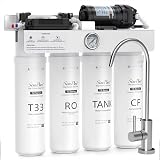
4. SimPure T2-600T UV Reverse Osmosis Water Filter 600 GPD Built-in
- NEAR 0 TDS – ULTRA-CLEAR DRINKING WATER: The SimPure T2-600T utilizes exclusive technology deliver near 0 TDS water—reducing...
- BUILT-IN PRESSURE TANK FOR STABLE WATER FLOW: Unlike traditional RO systems, our compact all-in-one design includes a built-in...
- TESTED BY SGS & RIGOROUSLY EVALUATED: Rigorously tested to NSF/ANSI 58 standards, this system eliminates 1000+ impurities, removes...
Best for: Stable-flow UV filtration pick.
A built-in pressure tank and 600-gallon capacity give the SimPure T2-600T a steadier water supply than many compact under-sink systems. Its reverse osmosis plus ultraviolet purification is a useful combination for buyers who want an extra treatment layer before water reaches the refrigerator dispenser or ice maker.
The system is rated for near 0 TDS water and reduces high-TDS tap water from 200-500 ppm to below 25 ppm, which is a meaningful change for taste and appliance use. Its 99.99% removal rate for dissolved solids signals strong filtration performance, while the maximum 0.42 gpm flow rate helps keep water moving without feeling sluggish. The model measures 15.5″L x 5.3″W x 16.3″H and is made from glass and plastic, so it balances compact size with a built-in tank design. It also supports water with up to 500 ppm TDS, which suits many municipal supplies.
Pros
- Built-in pressure tank supports steadier water flow
- UV plus reverse osmosis adds a second purification stage
- 0.42 gpm maximum flow rate helps reduce wait time
- Works with up to 500 ppm TDS water
Cons
- Package information is listed as none, so setup accessories are less clearly documented than on systems that spell out included parts.
This is a strong fit for buyers who want very low-TDS water feeding a refrigerator and prefer a system with ultraviolet treatment. It is especially appealing where flow steadiness and dense filtration matter more than having the simplest parts list.
| Specification | Details |
|---|---|
| Brand | SimPure |
| Product Dimensions | 15.5″L x 5.3″W x 16.3″H |
| Material | Glass, Plastic |
| Capacity | 600 gallons |
| Installation Type | Under Sink |
| Purification Method | Reverse Osmosis, Ultraviolet |
| Model Name | T2-600T |
| Maximum Flow Rate | 0.42 gpm |
| Supported Water TDS Level Maximum (PPM) | 500 |
I’d recommend this to someone who wants a more advanced purification setup without moving to a larger whole-house solution. The UV stage and low-TDS output make it appealing for refrigerator ice and drinking water, especially if your tap water starts out fairly mineral-heavy. It suits users who value consistent flow and extra treatment in one compact cabinet unit.
5. Pentair OMNIFilter RO2050 4-Stage Reverse Osmosis System, NSF Certified
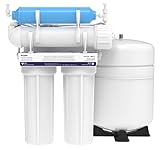
- BETTER TASTING DRINKING WATER FROM YOUR TAP - This four-stage reverse osmosis system reduces dissolved contaminants for cleaner...
- READY FOR YOUR REFRIGERATOR AND ICE MAKER - Installs under the kitchen sink with the included lead-free chrome drinking water...
- FOUR-STAGE FILTRATION INCLUDED - Includes RS14 polyspun sediment pre-filter, CB1 carbon block cartridge, OM1 reverse osmosis...
Best for: Tank-fed fridge water solution.
A 2.8-gallon tank and included fridge-ready hardware make the OMNIFilter RO2050 a direct match for households wanting clean water available for both the refrigerator and the sink. Its under-sink installation keeps the tank hidden while still storing filtered water close to the point of use, which is practical for ice makers and drinking dispensers.
The 4-stage reverse osmosis process reduces dissolved contaminants for cleaner water, and the chlorine-reduction focus is useful when taste is the main complaint. The included lead-free chrome drinking water faucet and color-coded tubing simplify the connection path, which matters when the system also needs to feed a refrigerator line. It produces up to 15 gallons per day, giving a clear expectation of daily output rather than open-ended capacity language. At 20 pounds, it is substantial enough to feel like a full tanked system, and the NSF certification adds a recognizable benchmark for buyers comparing RO units.
Pros
- 2.8-gallon tank keeps water ready for fridge use
- 4-stage RO filtration reduces dissolved contaminants
- Lead-free chrome faucet and color-coded tubing aid setup
- 15-gallon-per-day output fits steady household use
Cons
- Its 15-gallon-per-day rating is lower than high-output RO systems, so very heavy fridge and sink use may outpace it.
This model makes sense for buyers who want a classic tank-based RO setup feeding a refrigerator and ice maker. It is a straightforward choice when you want stored filtered water and a familiar under-sink installation path.
| Specification | Details |
|---|---|
| Brand | OMNIFilter |
| Special Feature | Chlorine Reduction, NSF certified |
| Material | Lead |
| Capacity | 15 gallons_per_day |
| Included Components | RO System, Filter, Faucet |
| Package Information | Bottle |
| Installation Type | Under Sink |
| Purification Method | Granular Activated Carbon, Reverse Osmosis |
| Power Source | Manual Winding |
| Item Weight | 20 pounds |
I’d choose this when the priority is a familiar tank-and-faucet layout rather than a high-output, tankless design. It works well for homes that want refrigerator water and ice with a storage reservoir waiting underneath the sink. If you prefer a more traditional setup and don’t mind the larger under-sink footprint, it’s a dependable fit.
6. Home Master TMHP-L HydroPerfection RO System, 9-stages, 99% rejection DOW

- A better RO system | Home Master HydroPerfection’s innovative design solves most common problems associated with canister and...
- Increased Luxury & Performance | Loaded model includes brushed nickel Lux RO Faucet, Fridge Connection Kit, Dow Filmtec High...
- EPA Registered | Home Master LED UV Sterilizer is registered under EPA #97952-AZ-1 and has been approved to kill, inactivate or...
Best for: Premium fridge-line integration.
A 9-stage system with a 0.0001-micron DOW membrane gives the Home Master TMHP-L a more elaborate treatment path than basic RO units. The included fridge connection kit makes it especially relevant for buyers who want filtered water routed straight to a refrigerator, while the stainless steel and plastic construction keeps the under-sink system practical for everyday use.
The system pairs reverse osmosis with ultraviolet purification, and the LED UV sterilizer is registered under EPA #97952-AZ-1, which adds a notable treatment layer for users who want extra assurance. A patented 2-pass remineralization system helps restore water after filtration, so the end result is not just stripped-down RO water. The unit includes a Lux faucet, disposal drain adapter, tank, and fridge kit, giving buyers the parts needed for a more complete installation. At 15″L x 5″W x 16″H and 2000-gallon capacity, it is a sizeable but high-capacity option for serious household use.
Pros
- 9-stage filtration adds multiple treatment steps
- Fridge connection kit supports direct refrigerator hookup
- 2-pass remineralization helps improve post-RO water balance
- 2000-gallon capacity suits long-term household use
Cons
- The system uses a tank-and-accessory-heavy setup, so it occupies more under-sink organization than a simpler minimalist unit.
This is the most feature-rich option here for buyers who want refrigerator integration plus extra purification steps. It fits best in homes that will use the system heavily and want a more complete package from the start.
| Specification | Details |
|---|---|
| Brand | Home Master |
| Special Feature | 4.5 second fill rate, KDF85 Iron pre-filter, LED UV Sterlizer, Patented 2-pass remineralization system |
| Product Dimensions | 15″L x 5″W x 16″H |
| Material | Plastic, Stainless Steel |
| Capacity | 2000 gallons |
| Included Components | Assembled System w/filters, Lux Faucet, disposal drain adapter, tank, fridge kit |
| Package Information | Canister |
| Installation Type | Under Sink |
| Purification Method | Reverse Osmosis, Ultraviolet |
| Power Source | Corded Electric |
I’d recommend this to buyers who want a serious under-sink system feeding a refrigerator and value a fuller accessory bundle. The fridge kit and remineralization stage make it feel well thought out for whole-kitchen use, not just drinking water. It is a strong pick if you want one system to do a lot and you have the cabinet space to host it.
Quick Comparison Table of Reverse Osmosis Systems for Refrigerator Use
| Product Name | Capacity | Installation | Filtration | Best For | Check Price |
|---|---|---|---|---|---|
| Waterdrop G5P500A Reverse Osmosis System, 8-Stage | 500 GPD | Under sink | 8-stage RO | Alkaline water | Check Price |
| PureDrop RTW5 5-Stage Reverse Osmosis Water | 2.2 gal | Top-mount | 5-stage RO | Easy install | Check Price |
| Waterdrop G5P700A Alkaline Mineral Reverse Osmosis | 700 GPD | Under sink | 8-stage RO | High output | Check Price |
| SimPure T2-600T UV Reverse Osmosis Water | 600 GPD | Under sink | UV RO | Near-zero TDS | Check Price |
| Pentair OMNIFilter RO2050 4-Stage Reverse Osmosis | 15 GPD | Under sink | 4-stage RO | Fridge and ice | Check Price |
| Home Master TMHP-L HydroPerfection RO System | 2000 gallons | Under sink | 9-stage RO | Whole-home support | Check Price |
How to Choose the Right best reverse osmosis system for refrigerator
Filtration stages and water purity
Choose the filter train by what your refrigerator water needs most: sediment protection, chlorine removal, and dissolved-solids reduction. A solid pick starts with at least a sediment prefilter plus carbon stages, and the strongest options add a membrane and a polishing postfilter for cleaner taste and odor. Thin sediment cartridges trap rust and grit; carbon blocks reduce chlorine and chemical taste; the membrane cuts dissolved solids; the final stage sharpens flavor.
Good systems list each stage clearly and name the contaminants reduced. For the best reverse osmosis system for a refrigerator, pick a 5- or 6-stage unit with carbon block and a final taste-polishing stage for crisp water and ice.
| Type | Best for | Signal of quality |
|---|---|---|
| 3-stage | Light refrigerator use | Sediment + carbon + postcarbon |
| 5-stage | Most homes | Adds RO membrane and better contaminant reduction |
| 6-stage | Best taste and ice clarity | Includes polishing stage and detailed reduction claims |
Flow rate and refrigerator demand
Match output to the refrigerator’s demand, not just the household total. A dispenser and ice maker need steady refill speed, so look for a system rated high enough to keep up with frequent draws, plus a tank that refills quickly after use. Weak choices show up as slow pours, thin ice production, and long recovery times.
Strong picks pair a higher gallons-per-day rating with adequate pressure support so the tank stays responsive. For most refrigerator setups, choose a mid- to high-capacity unit with stable flow for daily dispensing and a booster pump when home pressure is low.
| Type | Best for | What to look for |
|---|---|---|
| Lower output | Occasional fridge use | Basic dispenser use, small ice demand |
| Mid output | Average family refrigerator | Quick refill and steady drinking water |
| High output | Heavy dispenser and ice use | Fast recovery, booster pump, strong pressure support |
Tank size and installation fit
Measure the cabinet before you buy, because the tank and housings decide whether the system fits cleanly under the sink. A good setup leaves room for the storage tank, filter head, shutoff valve, and the bend radius of the tubing without pinching doors or crushing lines. Compact tanks suit narrow cabinets, while larger tanks serve households that draw water often.
Look for slim housings, clear dimension charts, and tubing long enough to reach the refrigerator line with a neat route. For the best reverse osmosis system for a refrigerator, choose a compact under-sink model with a slim tank and enough tubing for a direct, protected run.
| Type | Best for | Space cue |
|---|---|---|
| Compact tank | Tight cabinets | Low height and narrow diameter |
| Standard tank | Typical under-sink space | Balanced storage and fit |
| Tankless or slim housing | Very limited cabinet room | Minimal footprint, more open space |
Maintenance, filter life, and ease of service
Choose maintenance by how often you want to service the system and how easy you want the swap to be. The best units use clearly labeled cartridges, common replacement sizes, and quickconnect or twistlock fittings that keep changes clean and fast. Long filter life helps reduce attention, but only when replacement cartridges are easy to find.
Good systems include shutoff valves, leak checks, and simple sanitizing steps in the manual. Poor ones hide parts or require awkward tools.
For the best reverse osmosis system for a refrigerator, pick a model with annual or semiannual cartridge changes, quick-release connections, and widely available replacements.
Certifications, waste ratio, and longterm value
Trust third-party certification, then check efficiency and long-term upkeep. NSF or similar testing confirms real contaminant reduction, so look for listed claims tied to chlorine, sediment, lead, and total dissolved solids where relevant. For efficiency, a lower waste ratio means less drain water per gallon produced, which matters in daily refrigerator use.
A strong warranty shows the maker stands behind valves, housings, and the membrane. The best value comes from a certified system with efficient water use and affordable replacement cartridges, not the one with the longest feature list.
For most buyers, choose a certified 5- or 6-stage unit with a strong warranty and a low waste ratio.
Which Should You Choose?
- If you want strong contaminant reduction in a compact under-sink setup, choose an 8-stage RO system with alkaline remineralization.
- If your tap water has very high TDS and you want the cleanest possible ice and drinking water, choose a high-flow system rated around 600 GPD with near-0 TDS output.
- If you’re mainly looking for dependable everyday filtration and third-party tested performance, choose a 5-stage RO system certified to NSF/ANSI 58 standards.
- If you want a simpler, low-complexity option for better-tasting water, choose a basic 4-stage RO system with NSF certification.
Quick Best Reverse Osmosis System For Refrigerator Buying Checklist
- Check filtration stages Make sure the system targets sediment, chlorine, and dissolved solids before water reaches the refrigerator.
- Match flow rate to usage Choose a unit that can keep up with the fridge dispenser and ice maker without slow refills.
- Measure installation space Confirm under-sink clearance for the tank, filters, and tubing before buying.
- Review maintenance needs Look for easy filter changes and clear replacement schedules to keep the system performing well.
- Verify certifications Prioritize tested systems with documented contaminant reduction and reliable performance claims.
- Compare waste and value Balance water efficiency, filter lifespan, and warranty support for the best long-term choice.
How a Reverse Osmosis Filter Delivers Water to a Refrigerator Ice Maker
A reverse osmosis system removes dissolved solids by forcing water through a semipermeable membrane, then stores the treated water in a pressurized tank. When the refrigerator calls for water, the system sends filtered water through a dedicated line to the dispenser and ice maker. This setup is especially helpful if your household water has a strong mineral taste or visible sediment, because the ice cubes and chilled water reflect the quality of the source water.
For consistent flow, the storage tank and tubing must be sized to meet the refrigerator’s demand. If the line is too small or the tank pressure is off, the dispenser may fill slowly. In practice, the best reverse osmosis system for refrigerator use balances purification with enough pressure to keep daily use convenient.
Compatible System Types for Refrigerator Water Lines
Not every reverse osmosis setup connects to a refrigerator in the same way. Under-sink systems with a storage tank are the most common because they can feed both a faucet and a fridge line. Tankless systems can also work, but they usually depend on stronger incoming pressure and a reliable booster pump to keep up with ice production and dispensing cycles.
Some homes benefit from a dedicated refrigerator filtration branch, while others use a single point-of-use system for the whole kitchen. The main trade-off is between compact design, water delivery speed, and installation complexity.
| Type | Best for |
|---|---|
| Under-sink with tank | Most refrigerator connections and steady daily use |
| Tankless reverse osmosis | Space-saving installs with adequate water pressure |
| Dedicated fridge line | Homes wanting water mainly at the dispenser and ice maker |
Maintenance Tasks That Keep Water Quality Consistent
Reverse osmosis performance depends on regular care, because clogged prefilters and worn membranes can reduce flow and water quality. Sediment and carbon filters usually need periodic replacement to protect the membrane from chlorine, rust, and fine particles. The membrane itself lasts longer when the incoming water is well pretreated, but it still needs monitoring if taste or production changes noticeably.
It also helps to sanitize the storage tank, tubing, and fittings during routine servicing. If the refrigerator ice tastes stale or the dispenser slows down, the issue may be in the RO system, the fridge line, or both. Keeping a simple replacement schedule prevents surprises and helps preserve consistent clarity, taste, and ice quality.
Common Installation Mistakes That Affect Refrigerator Performance
One of the most frequent mistakes is using tubing or fittings that restrict water flow. Refrigerators need a stable line, and sharp bends, undersized tubing, or cheap connectors can slow production and create noisy operation. Another issue is placing the RO tank too far from the fridge or failing to check pressure after installation, which can make the dispenser feel weak.
It is also important to flush new filters and membrane components before connecting them to the appliance. Skipping this step can send air, carbon fines, or leftover manufacturing residue into the line. Finally, never ignore local plumbing requirements, since a proper drain connection and shutoff access make troubleshooting much easier later.
When a Refrigerator May Need More Than Reverse Osmosis Alone
Reverse osmosis is excellent for reducing dissolved contaminants, but it does not solve every water problem by itself. If your water has heavy chlorine odors, a poor source line, or unusual taste from plumbing materials, you may need additional pretreatment or post-treatment to improve the final result. In some cases, a carbon stage is used before or after the membrane to polish taste and protect the fridge line.
Homes with very hard water may also benefit from softening ahead of the RO unit, which can reduce membrane scaling and keep the system working efficiently. For the cleanest refrigerator water, the best results often come from treating the whole water path, not just the last filter in the chain.
Frequently Asked Questions (FAQs)
What Makes The Best Reverse Osmosis System For Refrigerator Water?
The best reverse osmosis system for refrigerator water combines strong contaminant removal with steady flow to the fridge line. It should provide enough pressure for the dispenser and ice maker while fitting neatly under the sink or in a nearby cabinet.
How Many Filtration Stages Should A Refrigerator Ro System Have?
A refrigerator RO system should have multiple filtration stages to remove sediment, chlorine, and dissolved solids effectively. More stages usually improve taste and odor, and a post-carbon filter helps polish water before it reaches the refrigerator.
Will A Reverse Osmosis System Reduce Ice Maker Performance?
A reverse osmosis system can reduce ice maker performance if the flow rate is too low or the tank is undersized. Choosing a unit with adequate pressure and storage helps maintain fast ice production and consistent dispenser output.
Do I Need A Storage Tank For A Refrigerator Reverse Osmosis Setup?
Yes, a storage tank is important in most refrigerator reverse osmosis setups because it keeps treated water ready on demand. The tank buffers flow so the fridge can dispense water and make ice without waiting for filtration.
How Often Do The Filters Need To Be Changed?
The filters in a refrigerator reverse osmosis system usually need regular replacement based on water quality and household use. Sediment and carbon filters often change sooner than the membrane, and staying on schedule protects taste, flow, and contaminant reduction.
Is Nsf Certification Important For A Refrigerator Ro System?
NSF certification is important for a refrigerator RO system because it shows the unit has been independently tested for contaminant reduction. That extra verification helps buyers compare systems more confidently when water quality and reliability matter.
Can A Reverse Osmosis System Improve Refrigerator Water Taste?
Yes, a reverse osmosis system can improve refrigerator water taste by removing chlorine, sediment, and dissolved impurities. Cleaner water usually means better-tasting drinks and clearer ice, especially when the system includes a final polishing filter.
Final Suggestions
In summary, the best reverse osmosis system for refrigerator use delivers cleaner taste, better ice quality, and dependable water flow for daily convenience. With the right balance of filtration strength, capacity, and easy maintenance, it can improve both performance and peace of mind. Choose a system that fits your space and needs, and enjoy fresher water with confidence.