Top 10 Best Knockdown Knife Picks That Wow
The best knockdown knife can make texture work cleaner, faster, and far more consistent. In drywall finishing, small changes in blade flex, edge profile, and handle balance can affect how texture spreads and how smooth the final pattern looks. That is why choosing the right knockdown knife matters for both professionals and dedicated DIYers.
From stainless steel blades to ergonomic grips and corrosion-resistant builds, modern designs focus on control, comfort, and repeatable results. This guide explores what separates a reliable knockdown texture knife from a basic finishing tool, including key features, material quality, and practical performance on real surfaces.
Before comparing the top picks, it helps to understand why the right blade design can change the outcome so dramatically—and that is where the details get interesting.
In-depth Reviews of the Best Knockdown Knife
1. HYDE 09997 Acrylic Knockdown Knife, 18-inch

- Quality & Craftsmanship you can count on: 18-Inch Clear acrylic knockdown knife. Professional grade tempered aluminum bridge keeps...
- Best Finishes, Start with Hyde: Acrylic knockdown knife has the perfect blade-flex which reduces scoring the texture surface...
- Value and Dependability first time, everytime: Tempered aluminum bridge keeps blade straight. Comfort grip handle compatible with...

Best for: Large-wall finishing with flexible acrylic.
An 18-inch clear acrylic blade gives the HYDE 09997 broad coverage for drywall texturing and repair, so you can move across larger wall sections with fewer passes. The tempered aluminum bridge keeps the blade straight while the soft-grip handle end adds control during long finishing runs.
The 18-inch blade size matters when you are knocking down texture on wide walls or ceilings, because each pass can cover more area than a smaller knife. Clear acrylic lets you see the surface as you work, which helps when matching an existing texture or cleaning up repairs. The tempered aluminum bridge supports the blade so it stays aligned through repeated strokes, and the threaded handle end accepts Acme-threaded extension poles for higher spots. At 12.8 ounces, it stays light enough for controlled hand use without feeling bulky on longer jobs. It is aimed specifically at drywall texturing and repair, so the shape and flex are tuned for that work.
Pros
- 18-inch blade covers more wall area per pass
- Clear acrylic helps monitor texture as you work
- Tempered aluminum bridge keeps the blade aligned
- Threaded handle fits Acme extension poles
Cons
- Single 18-inch size, so it is less versatile for tight corners than a smaller knife.
For broad drywall texture work, this HYDE knife gives you the size and control to stay efficient. It makes the most sense when you want a lightweight, straight knife for large surfaces and repair blending.
| Specification | Details |
|---|---|
| Blade Material | Clear acrylic |
| Blade Size | 18 inches |
| Bridge Material | Tempered aluminum |
| Handle | Soft-grip end |
| Extension Pole Compatibility | Acme-threaded extension poles |
| Recommended Use | Drywall texturing and repair |
| Item Weight | 12.8 ounces |
| Model Number | 09997 |
| Included Components | Knockdown Knife |
I would point buyers to this one if they want a simple, full-size knife for drywall texture work and patch blending. The clear acrylic blade is useful when you care about seeing the surface, and the aluminum bridge adds confidence that the blade will stay true through repeated passes. It feels most appropriate for homeowners or pros who want a straightforward 18-inch tool rather than a multi-piece kit.
2. ROLLINGDOG 12 Inch Knockdown Knife

- 12" KNOCKDOWN KNIFE: Flexible acrylic plastic blade extends 11.4 inches from handle to a width of 12 inches
- RUBBER GRIPPED HANDLE: Textured rubber grip on plastic handle offers comfortable control
- DURABLE CONSTRUCTION: Aluminum bridge inside housing connects blade to handle
Best for: Compact ceiling and wall texture work.
A 12-inch flexible acrylic blade makes the ROLLINGDOG 12 Inch Knockdown Knife a practical pick for medium-sized wall and ceiling texture runs. The blade extends 11.4 inches from the handle, giving you enough reach to flatten points cleanly while keeping the tool manageable in tighter work areas.
The 12-inch width is a good middle ground when you want faster coverage than a small knife but less bulk than an 18-inch model. Its flexible acrylic plastic blade is paired with an aluminum bridge inside the housing, which supports the blade as you press down texture points. The textured rubber grip improves control when you are working overhead or across long stretches of drywall. The handle also connects to a threaded extension pole, which helps on ceilings and high wall sections. Because the blade is stated to extend 11.4 inches from the handle, you get a clear working span without guessing at the reach.
Pros
- 12-inch width speeds up medium-area texture work
- Flexible acrylic blade helps flatten knockdown points
- Rubber grip improves control on walls and ceilings
- Threaded handle connects to an extension pole
Cons
- The 12-inch blade gives less coverage than larger finishing knives for broad open walls.
This is a sensible all-around choice if you want a size that stays easy to handle while still moving quickly. It fits well for ceiling texture touch-ups and mid-size wall projects where control matters more than maximum span.
| Specification | Details |
|---|---|
| Blade Width | 12 inches |
| Blade Length from Handle | 11.4 inches |
| Blade Material | Flexible acrylic plastic |
| Handle Material | Plastic with rubber grip |
| Bridge Material | Aluminum |
| Extension Pole Compatibility | Threaded |
| Recommended Use | Creating knockdown texture on walls and ceilings |
| Model Number | AMZ50515 |
I like this size for people who do a mix of walls and ceilings and want a tool that is not overly large. The rubber grip and extension-pole connection make it easier to handle overhead work, and the aluminum bridge gives the blade a more controlled feel. If you want one knife for general knockdown texture jobs, this is an easy pick.
3. Advance Equipment 12-Inch K12 Knock Down Knife | Professional Drywall

- Ideal for drywall, eifs, acoustical work and a wide variety of textures
- 12 inch x 12 inch clear polycarbonate blade that is flexible and durable
- 1/2 inch radius corners for seamless application
Best for: Seamless edges and flexible polycarbonate.
A 12 inch by 12 inch clear polycarbonate blade gives the Advance Equipment K12 a precise surface for drywall, EIFS, acoustical work, and other texture applications. The 1/2 inch radius corners help the blade glide into transitions cleanly, while the 6 inch broom-threaded handle adds reach with an extension pole.
The square 12 inch by 12 inch blade shape is useful when you want an even footprint across texture passes instead of a narrow strip. Clear polycarbonate provides both flexibility and durability, which matters when you are matching existing finishes or working through repeated knockdown passes. The 1/2 inch radius corners reduce harsh marks at the edges, so the finish blends more naturally. A 6 inch plastic handle keeps the tool compact in hand, and the broom-threaded end lets you add a pole for ceiling work. Because it is made in the USA, it suits buyers who prefer that manufacturing detail in a texture knife.
Pros
- 12 by 12 blade gives an even texture footprint
- Clear polycarbonate adds flexibility and durability
- 1/2 inch radius corners help blend edges smoothly
- Broom-threaded handle accepts an extension pole
Cons
- The square blade format is less convenient for very narrow repair strips than a smaller knife.
This knife makes sense for buyers who want a controlled, square blade with clean corner behavior. It is especially useful when the job includes drywall, EIFS, or acoustical texture work and you want predictable passes.
| Specification | Details |
|---|---|
| Blade Size | 12 inch x 12 inch |
| Blade Material | Clear polycarbonate |
| Corner Radius | 1/2 inch |
| Handle Length | 6 inches |
| Handle Type | Plastic handle with broom-threaded end |
| Recommended Use | Drywall and texturing work |
| Made In | USA |
| Item Length | 12 inches |
| Model Number | 12 Inch |
I would choose this for someone who values neat edge behavior and a more technical feel in a texture knife. The radius corners are the detail that stands out, because they can make transitions look cleaner during application. It is a strong fit for contractors or handy owners working on drywall and similar textured finishes.
4. ToolPro 12 in. Drywall Knockdown Knife – Flexible Blade Texture

- Wide blade for creating "knockdown" look larger walls and ceilings.
- Plastic blade outlasts acrylic and other plastic blades, virtually unbreakable.
- Designed for consistent patterns with ideal flexibility.
Best for: Tight-area texture control.
An acute corner angle gives the ToolPro 12 in. Drywall Knockdown Knife an edge in tight areas where larger blades can leave awkward marks. Its wide blade is aimed at larger walls and ceilings, so you can flatten texture patterns with fewer strokes across open spans.
The 12-inch blade width offers enough coverage for wall and ceiling texture work without moving into oversized territory. ToolPro says the plastic blade outlasts acrylic and other plastic blades, which matters if you want a texture knife that can handle repeated passes. The ideal flexibility is tuned for consistent patterns, so you get a more even knocked-down look rather than a patchy finish. The threaded handle works with or without an extension pole, giving flexibility for hand work or overhead runs. The acute corner angle is especially helpful when you are working near corners or in tighter sections that need more precise control.
Pros
- 12-inch blade covers larger walls and ceilings efficiently
- Plastic blade is stated to outlast acrylic blades
- Ideal flexibility supports consistent texture patterns
- Threaded handle works with or without an extension pole
Cons
- The product does not list a grip material, so hand comfort details are limited.
For buyers who want a practical all-purpose knockdown knife with corner control, this ToolPro model is appealing. It is a good fit for bigger surfaces and for anyone who needs one tool that can also handle tighter areas.
| Specification | Details |
|---|---|
| Blade Width | 12 inches |
| Handle Type | Threaded |
| Recommended Use | Flattening wall and ceiling texture patterns |
| Included Components | Knockdown Knife |
| Blade Material | Plastic |
| Model Number | TP04312 |
My take is that this is the one to consider if you often work around corners but still need coverage on broad surfaces. The acute angle is the useful feature here, and it gives the knife a bit more precision than a plain wide blade. It suits users who want a straightforward texture tool that can move between open areas and tighter spaces.
5. ToolPro Magic Trowel Knockdown Texture Trowel (18 in.)

- Skimcoat: Roll on compound to surface. Wipe smooth with the Magic Blade! Bring old walls back to life! Lightly wet the blade for...
- Knockdown: Lightly touch the trowel to wipe top of the texture off, creating a knockdown effect. Easily create textures with...
- Repair/Finish: After applying tape to the desired surface, roll on compund and wipe smooth with Magic Blade.
Best for: Skimcoat and knockdown in one tool.
An 18-inch Magic Blade gives the ToolPro Magic Trowel a wide working face for skimcoating, knockdown texture, and repair finishing on drywall or concrete surfaces. Lightly wetting the blade is part of the process here, which helps the tool wipe smooth compound cleanly across larger areas.
The 18-inch size makes this trowel practical when you are covering broad surfaces and want fewer passes over wet compound. ToolPro lists multiple uses: drywall finishing, concrete surfaces, skimcoating, knockdown textures, and repair/finish, so it serves more than one stage of surface prep. The instruction to lightly wet the blade is important because it helps the Magic Blade release compound more cleanly and produce a smoother result. Since the tool is also meant to bring old walls back to life, it is well suited to resurfacing jobs where you want a fresh finish without switching tools constantly. The design is centered on wiping smooth rather than scraping aggressively.
Pros
- 18-inch blade covers large surfaces efficiently
- Works for drywall, concrete, skimcoat, and repair use
- Wet blade guidance helps smooth compound cleanly
- Magic Blade format supports knockdown texture and finishing
Cons
- The product data does not list a handle type, so grip details are limited.
This is a strong pick if you want a wider finishing tool that can handle more than one surface type. It suits users who do skimcoat work, repair finishing, and knockdown texture on the same project.
| Specification | Details |
|---|---|
| Blade Size | 18 inches |
| Recommended Uses | Drywall finishing, concrete surfaces, skimcoating, knockdown textures, repair/finish |
| Item Type | Trowel |
| Model Number | TP08827 |
| Brand | ToolPro |
I would steer someone toward this if they want a broader finishing tool rather than a standard narrow knockdown knife. The 18-inch face is useful on larger areas, and the fact that it handles skimcoat and repair work makes it more versatile. It is especially appealing for users who want one trowel for resurfacing and texture knockdown.
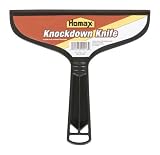
6. Texture Knockdown Knife (Pkg of 3)
Best for: Three-piece texture setup.
Three separate knockdown knives in one set give the HOM Texture Knockdown Knife package a simple way to cover multiple texturing tasks without relying on a single blade size. That makes it useful when you want a spare in hand or a small family of knives for different stages of the job.
This set includes three knives, which is helpful when you want more than one tool available during a project. HOM lists the set specifically for texturing and knockdown work, so the focus is on texture application rather than general putty-knife use. The included component count matters because it gives you a backup if one knife is being cleaned or if you want a second person to help. The part number 2213-06 ties the set to a specific product configuration, and the adult age range description confirms it is aimed at standard household or jobsite use. With three knives in the package, it works well for repeat jobs or shared use.
Pros
- Three knives give you a useful backup during projects
- Set format suits repeated texturing tasks
- Dedicated to knockdown and texturing work
- Multiple knives can support shared or staged use
Cons
- No blade dimensions are listed, so size-specific selection is not possible from the data.
This set is practical for buyers who want a basic multi-knife solution instead of a single premium tool. It fits best when you need spares or plan to handle several texture jobs over time.
| Specification | Details |
|---|---|
| Number of Items | 3 |
| Included Components | Knife |
| Recommended Use | Texturing and Knockdown Work |
| Age Range Description | Adult |
| Part Number | 2213-06 |
I see this as a simple utility buy for someone who wants multiple knives available rather than one specialized blade. The value is in the set format, which makes sense for small crews or homeowners who want a spare on hand. It is less about features and more about having enough tools to keep a texture job moving.
7. Homax Knockdown Knife (Pack of 6)

- Homax Knockdown Knife (Pack of 6)
Best for: Six-pack for shared use.
A pack of 6 gives the Homax Knockdown Knife set enough quantity for group projects, multiple rooms, or keeping extras in the toolbox. At 1.6 ounces, the package is also lightweight, which makes it easy to store alongside other drywall finishing tools.
The six-piece count is the main advantage here, especially if you want to keep several knives available for different workers or several stages of a texture job. Homax lists the use as applying knockdown textures on walls, so the set is geared directly to that task. The 1.6-ounce item weight suggests a very light package, which is convenient for storage and transport, though it does not tell you the blade size. Because the product is sold as a pack of six, it is a better fit for users who care more about quantity and convenience than a single highly specified blade profile. The model number 2213 and part number 2213-06 identify the set clearly.
Pros
- Six knives support multi-room or shared projects
- Light package is easy to store and carry
- Focused on applying knockdown textures on walls
- Pack format helps keep spare knives available
Cons
- Blade size and material are not listed, so the knife profile is unclear from the data.
This is the kind of purchase that makes sense when quantity matters more than detailed blade specs. It works well for users who want a simple supply of knockdown knives for wall texture application.
| Specification | Details |
|---|---|
| Number of Pieces | 6 |
| Item Weight | 1.6 ounces |
| Recommended Use | Applying knockdown textures on walls |
| Model Number | 2213 |
| Manufacturer Part Number | 2213-06 |
I would recommend this mainly to buyers who want extra knives on hand for wall texture work. The six-pack format is the selling point, especially if you are coordinating several rooms or want to avoid stopping for cleanup. It is a straightforward choice for practicality rather than feature depth.
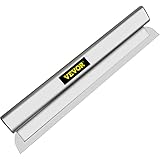
8. VEVOR Skimming Blade,40 inch Smoothing Knife, European Stainless Steel Construction
- Stainless Steel Blade: This 40 in blade adopts a high-quality aluminum housing, black back, and 0.5 mm stainless steel material...
- Labor-Saving Design: VEVOR's drywall skimming blade features a comfortable, non-slip ergonomic handle, which is lightweight and...
- Interchangeable Blades: Switch out blades when damaged or worn. High impact, glass-filled composite end caps can be removed for...
Best for: Extra-wide stainless smoothing blade.
A 40-inch blade made from 0.5 mm stainless steel gives the VEVOR skimming blade serious coverage for large drywall and wall-board surfaces. The aluminum housing and non-slip ergonomic handle help keep the wide blade manageable while moving mud or plaster smoothly across broad areas.
The 40-inch length is the standout specification because it lets you cover large spans with fewer passes than smaller knives. VEVOR pairs that blade with 0.5 mm stainless steel, which is thin enough for sensitive control while still giving a firm smoothing face. The high-quality aluminum housing supports the blade structure, and the included cap adds to the product package. The non-slip ergonomic handle is important on a blade this wide because it helps you control plaster amount and keep the motion steady. At 4.2 pounds, it has enough heft to feel substantial during smoothing work, especially on Gyprock, Sheetrock, and wall-board tasks.
Pros
- 40-inch blade covers large surfaces efficiently
- 0.5 mm stainless steel gives sensitive smoothing control
- Aluminum housing supports the wide blade structure
- Non-slip ergonomic handle helps manage plaster amount
Cons
- At 4.2 pounds, it is heavier than smaller texture knives and better suited to two-handed smoothing work.
This blade is ideal when your priority is wide-area smoothing rather than compact touch-up work. It makes the most sense for finishers handling large drywall or wall-board sections who want fewer passes and more even coverage.
| Specification | Details |
|---|---|
| Blade Length | 40 inches |
| Blade Material | 0.5 mm stainless steel |
| Housing Material | Aluminum |
| Handle | Non-slip ergonomic handle |
| Item Weight | 4.2 pounds |
| Recommended Uses | Gyprock, Sheetrock |
| Included Components | Skimming Blade, Cap |
| Model Number | 40in Drywall Skimming Blade |
I would point experienced finishers to this one because the 40-inch blade is the main reason to buy it. It is much better suited to large smoothing jobs than a standard knockdown knife, and the handle design helps keep that size under control. If you work on broad drywall or wall-board areas and want efficient coverage, this is a sensible pick.
9. Knockdown Knife 3-Pack | K5 (5″), K12 (12″), K18 (18″)

- Pack of 3 Knockdown Knives – Includes K5 (5"), K12 (12"), and K18 (18") knives, 6 of each for consistent coverage on multiple...
- Durable, Flexible Blades – Clear polycarbonate blades provide optimal flex for smooth, professional knockdown textures.
- ½” Radius Corners & Acute Angles – Allows seamless application in tight corners and along edges.
Best for: Three sizes for multiple project areas.
A pack with K5, K12, and K18 blades gives the Advance Equipment 3-pack three distinct sizes in one set, covering small, medium, and larger knockdown jobs. The clear polycarbonate blades are flexible, so you can choose the knife that matches the surface area without changing product families.
The set includes K5, K12, and K18 sizes, which gives you flexibility for different parts of a project. That range matters when you need a smaller knife for tight areas, a mid-size blade for general wall work, and a larger blade for broader surfaces. Advance Equipment uses clear polycarbonate blades for optimal flex, helping create smooth knockdown textures. The 1/2 inch radius corners and acute angles support cleaner application along edges and in corners, which is useful when a room has lots of transitions. A 6 inch plastic handle with a broom-threaded end adds extension-pole compatibility, and the set is made in the USA.
Pros
- Three blade sizes cover different project areas
- Clear polycarbonate blades offer flexible texture control
- 1/2 inch radius corners help finish edges cleanly
- Broom-threaded handle accepts an extension pole
Cons
- The package count is listed as six of each in the description, but the technical data only confirms the three-size set, so exact per-size quantity is unclear.
This set works well if you want one purchase that covers more than one texture scale. It is especially useful for buyers who move between corners, mid-size walls, and broader ceiling sections.
| Specification | Details |
|---|---|
| Sizes Included | K5 (5″), K12 (12″), K18 (18″) |
| Blade Material | Clear polycarbonate |
| Corner Radius | 1/2 inch |
| Handle Length | 6 inches |
| Handle Type | Plastic with broom-threaded end |
| Recommended Use | Applying knockdown texture on walls and ceilings |
| Made In | USA |
| Item Weight | 3.2 pounds |
| Model Number | 35647 |
My advice is to choose this if you want flexibility without buying separate tools one at a time. The size spread is the big advantage, because it lets you match the knife to the area instead of forcing one blade to do everything. It is a smart fit for homeowners and pros who handle varied texture work.
10. 2-Pc 18-Inch Magic Squeegee Trowel, Knockdown Texture Tool

- Bring New Life to Your Walls with Ease: looking to freshen up your walls or ceilings with minimal effort? Our 18-inch knockdown...
- Perfect Dimensions for Maximum Efficiency: with an 18-inch blade, our magic squeegee trowel is ideal for large-area projects...
- Made with Rubber for a Perfect Finish: our quality rubber blade offers the perfect balance of flexibility and durability; It molds...
Best for: Two-pack for small team jobs.
Two 18-inch magic squeegee trowels in one package give the Lanties set immediate backup for wall or ceiling texture work. The 18-inch blade size is useful on larger surfaces, so the pack is a good fit when you want one knife in use and one ready to hand off.
The 2-pack format is the clearest advantage here, because it gives you two identical tools for the same project or for sharing between workers. Each trowel uses an 18-inch blade, which is helpful for larger wall and ceiling areas where you want to move efficiently. Lanties calls out the tool as a magic squeegee trowel, which suggests it is aimed at smoother texture finishing rather than rough scraping. The package size is listed as a 2-pack, the unit count is 2, and the included components confirm two tools in the box. That makes it useful for teams, backups, or paired use on a single room.
Pros
- Two trowels give you a backup during projects
- 18-inch blade size suits larger surfaces
- Pack format works well for shared use
- Unit count of 2 is clear and practical
Cons
- No blade material is listed, so the surface type and stiffness are not specified in the data.
This set is a sensible buy when you want two matching texture tools instead of one. It is best for larger rooms, paired work, or keeping a spare ready for the next phase of the job.
| Specification | Details |
|---|---|
| Number of Packs | 2 |
| Unit Count | 2 Count |
| Package Size Name | 2-Pack |
| Number of Items | 2 |
| Included Components | Magic squeegee trowel |
| Blade Size | 18 inches |
| Model Number | FL-Lanties-3736 |
I would consider this set if you want to have one tool working and another on standby. The matching 18-inch size makes it useful for larger areas, and the two-pack format is straightforward for anyone tackling texture work with a helper. It is a practical, no-frills choice for shared jobs.
Quick Comparison Table of Top Knockdown Knives
| Product Name | Material | Size | Handle | Best For | Check Price |
|---|---|---|---|---|---|
| HYDE 09997 Acrylic Knockdown Knife, 18-inch | Acrylic | 18-inch | Soft-grip | Drywall texturing | Check Price |
| ROLLINGDOG 12 Inch Knockdown Knife | Acrylic plastic | 12-inch | Rubber grip | Wall and ceiling texture | Check Price |
| Advance Equipment 12-Inch K12 Knock Down | Polycarbonate | 12-inch | Plastic handle | EIFS and drywall work | Check Price |
| ToolPro 12 in. Drywall Knockdown Knife | Plastic | 12 in. | Threaded handle | Large wall patterns | Check Price |
| ToolPro Magic Trowel Knockdown Texture Trowel | Stainless steel | 18 in. | Trowel handle | Skimcoat finishing | Check Price |
| Texture Knockdown Knife (Pkg of 3) | Knives | Set of 3 | Not listed | Texturing projects | Check Price |
| Homax Knockdown Knife (Pack of 6) | Knockdown knives | Pack of 6 | Not listed | Wall texture applying | Check Price |
| VEVOR Skimming Blade,40 inch Smoothing Knife | Stainless steel | 40 inch | Comfort handle | Large drywall smoothing | Check Price |
| Knockdown Knife 3-Pack | K5 (5″) | Polycarbonate | 5, 12, 18 in. | Not listed | Multi-size projects | Check Price |
| 2-Pc 18-Inch Magic Squeegee Trowel, Knockdown | Not listed | 18-inch | Not listed | Wall and ceiling texturing | Check Price |
How to Choose the Right Best Knockdown Knife
Blade geometry and coverage
Choose blade coverage by the size of the surface you finish most often. A 6-inch knife fits patching, taping, and tight drywall work, while 10- to 14-inch blades cover broader seams and large wall areas in fewer passes. For feathering compound, a moderate flex gives smoother transitions; very soft blades feel loose on long strokes, and very stiff blades leave more ridges.
Strong straightedge control comes from a flat, uniform blade that does not warp at the tips. Pick a 10- or 12-inch knife with medium flex for most wall finishing, and choose a 14-inch blade only for large, open surfaces and long, continuous passes.
| Type | Best for |
|---|---|
| 6-inch blade | Patching, corner work, tight areas |
| 10- to 12-inch blade | General seam finishing and smooth wall passes |
| 14-inch blade | Wide seams and large surface smoothing |
| Medium flex | Feathering joint compound cleanly |
Handle comfort and grip
Pick a handle that matches the length of your finishing sessions and the amount of hand pressure you use. An ergonomic shape with a fuller palm swell reduces hot spots, while a slim handle forces a tighter grip and tires the hand faster. For wet compound, choose a nonslip surface with textured rubber or molded grooves, not a glossy plastic handle that twists when your hands are damp.
Balanced knives feel neutral in the hand, with the weight spread between handle and blade instead of blade-heavy at the front. For long jobs, choose a midweight knife with a contoured nonslip grip; for quick repairs, a lighter straight-handle knife works cleanly.
| Type | Best for |
|---|---|
| Contoured ergonomic handle | Long finishing sessions |
| Textured nonslip grip | Wet compound and steady control |
| Balanced midweight knife | Reduced fatigue on repeated strokes |
| Slim light handle | Fast touch-ups and short repairs |
Blade material and durability
Choose blade material by the environment you work in and how much wear the knife sees. Stainless steel resists rust, cleans faster, and handles damp storage better, so it suits crews and frequent users. Carbon steel offers a firmer feel and excellent edge consistency, but it needs drying and care after every job.
For durability, look for a blade that stays flat under pressure, with no ripple at the tip or flex at the center when you draw it across compound. A good knife keeps its shape and releases smooth passes; a poor one bends unevenly and leaves tracks.
Pick stainless steel for low-maintenance reliability and carbon steel for users who want a stiffer, more traditional finishing feel.
| Type | Best for |
|---|---|
| Stainless steel | Rust resistance and easy upkeep |
| Carbon steel | Stiffer feel and careful users |
| Flat, rigid blade | Even pressure and smooth finishing |
| Warp-resistant blade | Repeated use without distortion |
Ease of cleaning and maintenance
Cleaning matters because dried compound shortens tool life and slows the next job. Choose a knife with a smooth, quick-rinse surface that sheds mud in one wipe, not one with rough seams or open corners that trap buildup. Seamless construction around the handle and ferrule keeps residue from packing into edges, which is the main sign of a knife that stays easy to maintain.
Storage features such as a hanging hole, sheath, or protective cover keep the blade clean and safe between jobs. Pick a seamless, rinsable knife with a storage cover for frequent use, and choose a simpler open-handle tool only for occasional touch-up work.
| Type | Best for |
|---|---|
| Quick-rinse smooth blade | Fast cleanup after every coat |
| Seamless handle and ferrule | Less buildup in hard-to-reach spots |
| Hanging hole or sheath | Protected storage between jobs |
| Open, simple construction | Light occasional use |
Safety and jobsite practicality
Safety and practicality matter most when you carry the knife around a jobsite or work in cramped areas. Rounded edges and a smooth tip reduce accidental gouges and make transport safer in a tool bag. A compact profile fits narrow corners, ladders, and crowded pouches without snagging.
For everyday finishing, choose a knife that handles common compounds, skim coats, and patching work without needing special technique or accessories. Check that the blade edge is smooth, the handle does not protrude sharply, and the tool slips into a bag without catching.
Pick a compact, rounded-edge knife for mobile trade work, and choose a full-length finishing knife only when you need broad coverage on large walls.
Which Should You Choose?
- If you’re doing large walls or ceilings and want faster coverage, choose an 18-inch knockdown knife with a rigid bridge and straight blade support.
- If you need a comfortable all-day grip for smaller to medium texture jobs, choose a 12-inch knife with a rubberized handle and flexible acrylic or polycarbonate blade.
- If you’re working on drywall, EIFS, or detailed texture matching, choose a 12-inch professional-grade knife with a durable polycarbonate blade and rounded corners.
- If you want one set for multiple room sizes and finishes, choose a multi-size pack that includes 5-inch, 12-inch, and 18-inch blades.
Quick Best Knockdown Knife Buying Checklist
- Choose the right blade width. Match the knife size to the wall area and finishing task for smoother coverage.
- Check handle comfort. Pick a grip that feels secure and reduces hand strain during repeated passes.
- Look for durable blade material. Stainless or reinforced steel helps resist wear, bending, and rust.
- Prioritize easy cleanup. A smooth blade surface should release compound quickly and wash off without fuss.
- Verify balance and control. A well-balanced knife gives steadier pressure and cleaner feathering.
- Consider storage and transport. A compact profile and protective edge design make the tool easier to carry safely.
How a Knockdown Knife Spreads Joint Compound Evenly
A knockdown knife is designed to flatten ridges in joint compound after texture has been applied, creating a softer, more controlled finish than a standard taping knife. The broad blade helps distribute pressure over a larger area, so you can press down raised peaks without scraping material off the wall. That makes it useful for knockdown textures on ceilings and walls where consistency matters.
Most users pull the knife across the surface at a shallow angle, allowing the blade edge to smooth the tops of the compound pattern while leaving the lower areas intact. The result is a flattened, mottled look that still shows subtle texture and hides minor surface flaws.
| Blade Width | Best For |
|---|---|
| 6 to 8 inches | Small patches and tight areas |
| 10 to 12 inches | General wall and ceiling work |
| 14 inches and wider | Large open surfaces and faster passes |
Common Materials Used in Knockdown Knife Blades and Handles
Knockdown knives are built with different blade and handle materials that affect stiffness, comfort, and cleanup. Stainless steel blades resist corrosion and are easy to wipe clean, which matters when compound dries quickly on the surface. Carbon steel can feel very rigid, but it needs more care to prevent rust.
Plastic and composite handles are lightweight and often shaped for a secure grip, while rubberized handles reduce slipping during long passes. Some models use a fixed handle, while others accept extension poles for ceilings and high walls.
Matching the material to the job helps you work longer with less fatigue and better control over the finish.
| Material | Benefit |
|---|---|
| Stainless steel | Rust resistance and easy cleaning |
| Carbon steel | High rigidity for firm pressure |
| Rubberized grip | Better comfort and slip resistance |
| Composite handle | Lightweight handling for repeated use |
Proper Cleaning and Storage After Use
Cleaning a knockdown knife right after use is one of the easiest ways to extend its life and preserve a smooth blade edge. Dried compound can leave scratches or small hardened spots that interfere with the next pass. Rinse the blade promptly, wipe it dry, and check for any buildup near the handle connection or blade corners.
If compound has started to set, use warm water and a nonabrasive pad rather than metal tools that could nick the blade. Store the knife flat or hanging in a dry area so the edge does not bend.
Keeping it separate from heavier tools also reduces the chance of dents and warping.
- Rinse immediately after each session
- Dry the blade completely before storage
- Remove residue from corners and joints
- Avoid stacking it under heavy tools
- Inspect for bends or rough edges regularly
Safety Tips for Using a Knockdown Knife on Walls and Ceilings
Because knockdown work often involves overhead surfaces and wet compound, safety is a practical part of the process. A stable ladder or scaffold helps you maintain balance and prevents overreaching, which can lead to uneven pressure on the blade. Gloves improve grip and reduce skin irritation from joint compound, while eye protection helps guard against drips and small flakes.
Keep the work area clear of cords, buckets, and drop cloth edges so you can move without tripping. When working near lights or vents, be careful not to bump fixtures with the knife edge.
Controlled motions matter more than force, especially on ceilings where a slip can damage the finish.
- Use stable access equipment for overhead work
- Wear gloves and eye protection
- Keep floors clear of tools and debris
- Maintain two-handed control when possible
- Work slowly around fixtures and corners
Knockdown Knife Alternatives and When to Use Them
Although a knockdown knife is the main tool for flattening texture, other tools may be better for different finishes or spaces. A drywall taping knife can handle small repairs, but its narrower blade leaves less control over broad knockdown patterns. A hopper gun or texture sprayer is used for applying texture, not flattening it, so it often works in combination with a knockdown knife rather than replacing it.
For very small areas, a putty knife may be enough to touch up edges or blend patches. The best alternative depends on whether you are applying texture, modifying it, or repairing a damaged section.
Using the right tool for each stage helps keep the finish uniform.
| Tool | Best For |
|---|---|
| Knockdown knife | Flattening textured compound |
| Taping knife | Small patch work and smoothing seams |
| Putty knife | Minor touch-ups and narrow repairs |
| Texture sprayer | Applying texture before knockdown |
Frequently Asked Questions (FAQs)
What Is A Knockdown Knife Used For?
A knockdown knife is used to smooth and flatten textured wall compound during finishing work. It helps create an even, controlled surface by spreading material across seams, patches, or decorative texture, then leveling high spots with broad, steady strokes.
What Blade Size Works Best For A Knockdown Knife?
The best knockdown knife size depends on the surface area and the level of control you want. Wider blades cover more area faster, while shorter blades feel easier to maneuver on smaller repairs, corners, or detail work where precision matters.
Why Does Blade Flexibility Matter In A Knockdown Knife?
Blade flexibility matters in a knockdown knife because it affects how smoothly the tool feathers compound and follows the wall surface. A slightly flexible blade can help reduce ridges, while a stiffer blade gives firmer control on denser material and larger passes.
What Materials Are Best For A Knockdown Knife Blade?
Stainless steel is a strong choice for a knockdown knife blade because it resists rust and cleans easily after compound use. High-quality steel with a smooth finish also helps the blade glide better and maintain consistent performance over repeated jobs.
How Important Is The Handle On A Knockdown Knife?
The handle is very important on a knockdown knife because it affects grip, comfort, and control during long finishing sessions. A shaped, non-slip handle reduces fatigue and helps keep pressure even, which supports cleaner texture knockdown results.
How Do You Clean A Knockdown Knife Properly?
You clean a knockdown knife by rinsing off joint compound promptly and wiping the blade smooth before storage. Removing residue quickly prevents buildup along the edge, protects the finish, and keeps the knife ready for the next use without dragging material.
What Should Buyers Compare Before Choosing A Knockdown Knife?
Buyers should compare blade size, material quality, handle comfort, and ease of cleaning before choosing a knockdown knife. Those four factors determine how smoothly the tool spreads compound, how long it lasts, and how comfortable it feels during repeated finishing work.
Final Suggestions
Choosing the best knockdown knife can make finishing work smoother, faster, and more consistent. The right balance of blade size, durability, comfort, and easy cleanup helps you create cleaner surfaces with less effort. With a tool that fits your workflow, every pass becomes more controlled, and every project feels more professional.