Top 3 Best Chinese Coffee Grinder: Hidden Gems
The best chinese coffee grinder can change how every cup tastes by shaping grind consistency, extraction, and aroma. In a market crowded with electric grinder designs and manual burr mill options, Chinese manufacturers are combining stainless steel burrs, compact motors, and practical build quality to create surprisingly capable tools. That matters for anyone comparing a coffee bean grinder, an espresso grinder, or a small kitchen grinder, because particle control can make or break flavor.
Materials, heat management, and adjustment precision all influence whether grounds turn out balanced or uneven. The best chinese coffee grinder also reflects how fast this category is evolving, with smarter engineering and better value across home brewing setups.
The details behind these machines reveal why some models stand out long before the first pour.
In-depth Reviews of the Best Chinese Coffee Grinder
1. Traditional Hand-Crank Stone Mill Grinder Roller – 25cm Large Manual
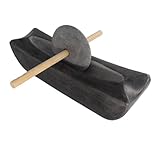
- Traditional Song Dynasty Craftsmanship:Hand-carved from solid natural bluestone, this grinder revives the traditional tea-grinding...
- Wax-Free Surface:Made with pure natural stone and no wax coating — ideal for safely grinding tea leaves, herbs, or spices...
- Large Size, Deep Groove for Efficient Grinding:The 25 cm roller and deep-grooved mortar design allow you to grind more tea or...
Best for: Large manual stone mill for tea and spices.
A 25 cm stone body gives this TACHUNE grinder a wider grinding surface than smaller tabletop mills, making it practical for tea leaves, herbs, or spices in steadier batches. The hand-crank format keeps the process manual, while the deep-groove build helps move ingredients across the stone instead of scattering them.
Hand-carved from solid natural bluestone, this grinder uses a wax-free surface, so you are working with bare stone rather than a coated finish. The 25 cm size is the main advantage here: it provides more room for dry ingredients and helps reduce the stop-start rhythm of a smaller mill. At 3 pounds, it has enough heft to stay planted during use without becoming difficult to move around the counter. The Bluestone Gray color and traditional Song Dynasty styling also make it feel like a functional tool rather than a decorative prop, which matters if you plan to keep it in regular rotation for tea or spice prep.
Pros
- 25 cm grinder size gives more working surface for small-batch grinding
- Solid natural bluestone supports dry grinding without a coated finish
- Wax-free stone surface suits tea leaves, herbs, and spices
- 3-pound weight helps keep the mill steady on the counter
Cons
- No wood components or included accessories are listed, so all-granite style handling and setup may not suit buyers wanting a mixed-material mill.
This is the pick for buyers who want a larger manual stone grinder with a simple, traditional build. It makes the most sense for tea-focused use and light spice grinding where surface area and a natural stone finish matter.
| Specification | Details |
|---|---|
| Brand | TACHUNE |
| Material | Stone |
| Color | Bluestone Gray |
| Item Weight | 3 pounds |
| Recommended Uses For Product | Grinding |
| Size | 25 cm |
| Surface | Wax-free |
I’d choose this if I wanted a bigger hand-crank stone mill for tea leaves, herbs, and spices without any coated surface in the mix. The 25 cm format is the main selling point because it gives you more room to work than compact countertop mills. It feels most appropriate for buyers who value traditional stone grinding and want a simple, manual tool for occasional home use.
2. ABOOFAN 1 Set Traditional Chinese Stone Mill Manual Grinder with
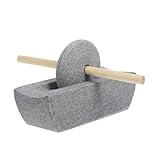
- Traditional craftsmanship: made using traditional techniques, this stone grinder embodies the essence of ancient chinese...
- Ergonomic and userfriendly: the hand crank design promotes easy operation, making it suitable for users of all skill...
- Multifunctional tool: from grinding grains to crushing spices, this versatile tool meets a variety of kitchen needs with...
Best for: Hands-on grinder for everyday spice prep.
Stone and wood construction gives the ABOOFAN grinder a traditional manual feel that suits dry ingredients like grains and spices. The hand-crank design keeps operation straightforward, so you can grind at your own pace without needing power, and the 3-pound weight adds enough stability for countertop use.
This set is framed around manual grinding, which is the key advantage for buyers who want a low-tech tool for kitchen prep. The material mix of stone and wood gives it a more classic construction than all-stone models, and that usually matters to shoppers looking for a traditional look as well as functional use. Its hand-crank mechanism is intended for easy operation, which helps if different people in the household will use it. At 3 pounds, it is substantial enough to stay grounded during grinding sessions. The assorted color finish also makes it visually distinct on the counter, especially if you want a grinder that feels handmade rather than purely utilitarian.
Pros
- Stone and wood construction gives a traditional manual grinder feel
- Hand-crank design makes grinding straightforward without electricity
- 3-pound weight helps the mill stay stable during use
- Manual power source keeps it useful anywhere on the counter or table
Cons
- No dimensions are listed, so buyers who need to fit the grinder into a specific storage space have less sizing information to work with.
This grinder makes sense for someone who wants a classic manual mill for basic grain and spice work. It is especially appealing if you prefer simple operation and a traditional material mix over a more specialized countertop tool.
| Specification | Details |
|---|---|
| Brand | ABOOFAN |
| Material | Stone, Wood |
| Color | Assorted Color |
| Item Weight | 3 pounds |
| Power Source | manual |
I’d point to this model for buyers who want a straightforward hand-crank grinder with a traditional material mix. The stone-and-wood build gives it a classic kitchen presence, and the manual power source means you are not tied to outlets or motors. It should suit someone who wants an approachable grinder for spices or small batches of dry ingredients.
3. Ciieeo Traditional Chinese Stone Mill Manual Tea Spice Grinder Hand
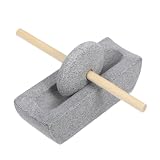
- Traditional Grinding Experience: Enjoy a hands-on way to prepare ingredients with this traditional Chinese manual grinder...
- Classic Stone Grinding Design: Inspired by traditional craftsmanship, this stone grinder mill combines a timeless appearance with...
- Compact Kitchen Friendly Size: Measuring approximately 6.29 x 2.36 x 1.96 inches, this manual stone grinder fits easily on...
Best for: Compact manual mill for small kitchens.
An 8.07 x 6.3 x 3.54 inch footprint makes the Ciieeo grinder easier to place on a crowded counter than larger stone mills. The stone-and-wood build supports manual grinding for tea leaves, spices, and beans, while the 3-pound weight gives it enough mass to stay useful for small-batch prep.
The listed dimensions are the clearest reason to consider this model if space is tight: at 8.07 x 6.3 x 3.54 inches, it is compact enough to store more easily than larger traditional mills. The stone and wood construction supports a manual, hand-crank grinding style, which is practical when you want to process tea, spices, or beans without electricity. Its 3-pound weight suggests enough stability for countertop use without making it cumbersome to move. The assorted color finish adds a traditional look, and the condiment-mill format makes it especially useful for seasoning prep rather than only one ingredient type.
Pros
- 8.07 x 6.3 x 3.54 inch size fits smaller kitchen spaces
- Stone and wood materials suit traditional manual grinding
- 3-pound weight adds stability during countertop use
- Handles tea leaves, spices, and beans for mixed dry-ingredient prep
Cons
- The product data does not list a grinding capacity, so it is harder to judge how much material it can handle per batch.
This is the compact choice for buyers who want a traditional manual grinder without giving up too much counter space. It works best for light home prep where the dimensions and hand-crank format matter more than a large batch capacity.
| Specification | Details |
|---|---|
| Brand | Ciieeo |
| Material | Stone, Wood |
| Color | Assorted Color |
| Item Weight | 3 pounds |
| Item dimensions L x W x H | 8.07 x 6.3 x 3.54 inches |
I would recommend this to someone who wants a smaller traditional grinder for tea, spices, or beans and does not need a bulky mill. The compact footprint is its biggest advantage because it is easier to live with on an everyday kitchen counter. If you value manual prep and a classic stone-and-wood look, this one fits that brief well.
Quick Comparison Table of Top Chinese Coffee Grinders
| Product Name | Material | Style | Weight | Best For | Check Price |
|---|---|---|---|---|---|
| Traditional Hand-Crank Stone Mill Grinder Roller | Stone | Hand-crank | 3 pounds | Traditional grinding | Check Price |
| ABOOFAN 1 Set Traditional Chinese Stone | Stone, Wood | Manual | 3 pounds | Easy hand use | Check Price |
| Ciieeo Traditional Chinese Stone Mill Manual | Stone, Wood | Manual | 3 pounds | Tea and spices | Check Price |
How to Choose the Right best chinese coffee grinder
Grind consistency and burr quality
Choose burr quality first, because it determines whether the grinder gives you even extraction or a muddy mix of fines and boulders. Flat burrs usually deliver a cleaner, more uniform grind for espresso-focused buyers, while quality conical burrs suit people who want dependable all-purpose results with less fuss. Look for burrs in hardened steel or ceramic with a full range that reaches fine espresso, medium drip, and coarse French press settings.
Stepless adjustment suits shot dial-in; stepped adjustment suits users who want repeatable clicks. Low-retention chambers and anti-clump outlets matter for fresh dosing.
Pick a stepless, low-retention burr grinder for espresso drinkers, and a quality conical stepped grinder for mixed brew methods.
| Type | Best for |
|---|---|
| Flat burr, stepless | Espresso users who need precise shot control |
| Conical burr, stepped | Daily drip, pour-over, and French press brewing |
| Ceramic burr set | Low-heat grinding and simple home use |
| Hardened steel burr set | Sharper, more consistent output for frequent grinding |
Motor strength and grinding speed
Motor strength matters because it decides how smoothly the grinder moves through dense beans without slowing down or heating the coffee. A strong motor keeps grind speed steady, which protects flavor and reduces strain when you use medium-dark or harder roasted beans. For home use, choose a grinder that sounds controlled rather than harsh, with enough torque to avoid stalling under load.
Faster is not always better; moderate speed with stable output beats a noisy, hot motor that burns aroma. Pick a balanced, mid-speed grinder for daily brewing, a higher-torque model for harder beans, and a quieter unit for early-morning kitchens.
| Motor profile | Best for |
|---|---|
| Lower-speed, higher torque | Heat control and harder beans |
| Mid-speed balanced motor | General daily brewing |
| Fast motor with good insulation | Quick grinding with managed noise |
| Weak motor | Light use only, not dense or frequent grinding |
Build materials and durability
Materials decide how long the grinder stays stable and accurate after repeated use. Metal housings, metal burr carriers, and reinforced shafts hold alignment better than thin plastic frames, so the grind stays more even over time. Glass parts look clean and let you see the grounds, but they belong in lower-stress areas rather than as the main structural support.
Check for a weighted base, tight seams, and minimal wobble during operation; those details signal better durability than a light shell that flexes. Burrs should resist dulling, and internal gears should feel solid.
Choose an all-metal or metal-reinforced grinder for frequent use, and a mixed-material unit only when the base stays rigid and the burr assembly is robust.
| Material setup | Best for |
|---|---|
| All-metal housing | Frequent grinding and long-term stability |
| Metal burrs with reinforced body | Balanced durability for most homes |
| Plastic housing | Light use and easier handling |
| Glass collection parts | Clean visibility, not structural strength |
Ease of use and cleaning
Ease of use starts with the hopper size and how quickly you can move from beans to grounds without extra steps. A medium hopper suits everyday home brewing because it holds enough beans for several rounds without taking over counter space, while a smaller chamber fits single-cup users and compact kitchens. Removable burrs, lift-out chambers, and brush-accessible parts make cleaning faster and keep old grounds from affecting taste.
Antistatic treatment reduces cling and mess, and simple one-touch or clearly labeled controls help beginners and busy users stay consistent. Pick a straightforward grinder with removable parts and antistatic control for daily convenience, and a larger hopper only when you grind for multiple cups at once.
Safety and convenience features
Safety and convenience features matter most in small kitchens and busy routines, where stability and quick handling prevent accidents and spills. Overload protection keeps the motor from overworking, while a secure lid and lock-on chamber stop beans from jumping out during grinding. Nonslip feet are essential because they keep the machine planted on smooth counters, and a compact footprint makes storage easier beside other appliances.
Cord storage helps the grinder stay tidy, and a lightweight body improves portability for flexible placement. Choose a compact model with overload protection and a locking lid for small spaces, and a heavier, nonslip unit for frequent countertop use.
Which Should You Choose?
- If you want a traditional, display-worthy grinder for authentic tea or coffee preparation, choose a large hand-carved bluestone stone mill with a hand-crank design.
- If you need a durable all-purpose manual grinder for grain, spices, and coffee beans, choose a traditional Chinese stone mill built from solid natural stone.
- If you prefer a simple hands-on grinder for small batches and everyday use, choose a compact manual tea-and-spice grinder with an easy-turn crank.
Quick Best Chinese Coffee Grinder Buying Checklist
- Check grind uniformity. Look for a grinder that produces even particles for better extraction and a cleaner cup.
- Choose the right burr type. Burr grinders usually offer more control than blade designs and are better for dialing in coffee recipes.
- Match capacity to your routine. Pick a hopper size that fits your daily brewing volume without wasting beans or counter space.
- Review cleaning access. Removable burrs, simple lids, and easy-to-wipe surfaces make maintenance much less time-consuming.
- Look for stable construction. A sturdy base and solid housing help reduce vibration, noise, and mess during grinding.
- Confirm safety features. Overload protection, secure locking parts, and non-slip feet add confidence during regular use.
How a Chinese Coffee Grinder Produces a Consistent Grind
Most Chinese coffee grinders use one of two mechanisms: burrs or blades. Burr grinders crush beans between two surfaces, which gives more control over particle size and a more even extraction. Blade grinders chop beans with a spinning blade, creating a wider spread of grind sizes and more heat.
In everyday use, the grind quality depends on motor speed, burr alignment, and how long the beans stay in the grinding chamber. A steadier feed and a well-fitted lid also help prevent clumping and uneven results.
For people brewing pour-over, drip, or espresso, the grinder’s internal geometry matters as much as the advertised power because it directly affects flavor clarity and brewing repeatability.
Types of Chinese Coffee Grinders and What They Are Best Suited For
Chinese coffee grinders are commonly sold as manual hand grinders, compact electric burr grinders, and multifunction grinders that can also handle spices or nuts. Manual models are usually favored for portability and quieter operation, while electric models are better for everyday routines and larger batches. Multifunction units often appeal to households that want one appliance for several tasks, but they may sacrifice grind precision for flexibility.
Burr style also matters: conical burrs are often easier to clean and can work well in smaller machines, while flat burr designs may deliver very even grounds in more specialized setups. The right type depends on brew method, counter space, and how much control you want over texture.
| Type | Best for |
|---|---|
| Manual hand grinder | Travel, small batches, quiet use |
| Electric burr grinder | Daily home brewing and consistent particle size |
| Blade grinder | Occasional use and simple grinding needs |
| Multifunction grinder | Users who need one appliance for several ingredients |
Materials and Build Details That Affect Longevity
The materials used in a grinder influence both performance and durability. Stainless steel burrs resist wear well and are easy to maintain, while ceramic burrs stay sharp for a long time and generate less heat during grinding. Plastic housings can keep a grinder lightweight, but metal bodies typically feel more stable and handle heavy use better.
Inside the machine, tight assembly and solid bearings reduce wobble, which helps preserve grind consistency. Clear bean hoppers and removable chambers can make inspection simpler, especially when grounds build up near the exit chute.
If you grind daily, look for a model with a strong base and smooth mechanical fit, because those details usually matter more over time than decorative exterior features.
Cleaning and Maintenance for Better Flavor
Regular care keeps a grinder working smoothly and prevents stale oils from affecting taste. Empty leftover grounds after each use, and brush out the burrs or blade area so fine particles do not pack into hidden corners. If the grinder has removable parts, wash only the components approved by the manufacturer and dry them completely before reassembly.
Avoid soaking the motor housing or exposing electrical parts to moisture. Periodic deep cleaning is useful when the grinder starts producing uneven output or when coffee smells dull.
It also helps to check screws, seals, and alignment points so vibration does not slowly loosen the machine. A clean grinder is not just tidier; it usually delivers a sweeter, more accurate cup.
Common Grinding Mistakes That Reduce Coffee Quality
One frequent mistake is grinding all beans to the same setting for every brew method. Espresso, drip, and French press need different particle sizes, and a mismatch can cause bitter, weak, or muddy results. Another problem is overfilling the hopper, which can strain smaller motors and create inconsistent feeding.
Many users also grind too far in advance, letting aromatic compounds escape before brewing. If the grinder is blade-based, pulsing briefly and shaking the unit can help, but it still will not match the uniformity of a burr grinder.
Using very oily beans can also leave residue that affects future batches. Small adjustments in dose, timing, and cleaning often improve the cup more than changing beans alone.
Frequently Asked Questions (FAQs)
What Makes A Best Chinese Coffee Grinder Worth Buying?
A best chinese coffee grinder is worth buying when it delivers consistent grind size, solid construction, and easy everyday operation. Those qualities improve extraction, reduce bitterness, and make it easier to brew reliable coffee across different methods.
Should I Choose Burrs Or Blades In A Best Chinese Coffee Grinder?
A best chinese coffee grinder with burrs is usually the better choice because burrs create more uniform grounds. That consistency matters for espresso, pour-over, and drip coffee, while blade grinders tend to produce uneven pieces and more sediment.
How Important Is Grind Adjustment In A Best Chinese Coffee Grinder?
Grind adjustment is very important in a best chinese coffee grinder because different brew methods need different particle sizes. A wide adjustment range helps you move from coarse French press grounds to fine espresso settings without losing control.
What Materials Are Best In A Best Chinese Coffee Grinder?
Durable metal burrs and a sturdy housing are best in a best chinese coffee grinder because they hold alignment and resist wear. Food-safe plastic or glass parts can also work well if they feel secure, easy to clean, and built for repeated use.
How Do I Clean A Best Chinese Coffee Grinder Effectively?
You clean a best chinese coffee grinder by removing leftover grounds, brushing the burr chamber, and wiping accessible surfaces after use. Models with removable parts and fewer tight corners are easier to maintain and help prevent stale coffee oils from building up.
Is Motor Power A Key Factor In A Best Chinese Coffee Grinder?
Motor power is a key factor in a best chinese coffee grinder because it affects grinding speed, consistency, and how well the unit handles denser beans. A stronger motor can reduce stalling, but good heat management is also important to protect flavor.
What Safety Features Should I Expect In A Best Chinese Coffee Grinder?
A best chinese coffee grinder should include safety features such as secure locking parts, overload protection, and non-slip feet. These details help prevent accidents, keep the unit stable on the counter, and support safer daily grinding.
Final Suggestions
Choosing the best chinese coffee grinder can improve grind consistency, simplify your routine, and help you get more flavor from every bean. With the right balance of durability, control, and easy maintenance, it becomes a practical tool for everyday brewing. Focus on the features that match your coffee habits, and you’ll enjoy better results with every cup.