Top 10 Best Automotive Vacuum Gauge Picks
The best automotive vacuum gauge is more than a simple dial; it is a diagnostic tool that reveals how an engine breathes under load and idle. In performance tuning and routine maintenance, small changes in vacuum can point to leaks, worn components, and efficiency problems before they become expensive repairs. Modern gauges blend precision movement, durable housings, and clear calibration to help enthusiasts and technicians interpret pressure behavior with confidence.
Whether you need an automotive vacuum gauge for troubleshooting, a car vacuum gauge for tuning, or a manifold vacuum gauge for deeper engine insight, the details matter. Build quality, scale readability, hose fit, and response speed all influence real-world usefulness.
Understanding those differences can make all the difference, and the next sections show why the top choices stand apart.
In-depth Reviews of the Best Automotive Vacuum Gauge
1. Hromee Fuel Pump and Vacuum Tester Gauge, Carburetor Pressure Diagnostics

- FUEL PUMP - This pressure gauge set can be used to test fuel pump pressure, emission control devices, leaky, stuck open or burnt...
- CAR VACUUM TESTER - Also can be used for testing engine vacuum lines, brake assist system, carburetor and intake manifold for...
- PRESSURE GAUGE - The gauge has 4 inches diameter large scale, color-coded measurement, rubber surrounded protective and a hook on...

Best for: All-around engine diagnosis.
A 14.4-ounce body and 11 x 6.4 x 2.5-inch footprint make the Hromee tester easy to keep in a toolbox while still covering fuel pressure and vacuum checks. That size gives a home mechanic one kit for tracing carburetor issues, vacuum leaks, and pressure loss across the engine bay without needing separate diagnostic tools.
Hromee packages this tester as a fuel pump and vacuum set that reaches beyond one job, since it checks fuel pump pressure, emission control devices, and engine vacuum lines. The included adapters expand what you can connect to, which matters when you need to move from a carburetor test to a brake assist or intake manifold check without changing tools. At 14.4 ounces, it is light enough for mobile work, and the 11 x 6.4 x 2.5-inch dimensions keep the kit compact in storage. The brand also calls out use on clogged mufflers, turbo or exhaust systems, so it is aimed at broader drivability diagnosis.
Pros
- Fuel pump pressure testing helps identify delivery problems
- Vacuum-line testing supports leak diagnosis in intake systems
- Adapter variety extends compatibility across multiple connections
- Compact 11 x 6.4 x 2.5-inch size stores easily
- Light 14.4-ounce weight is easy to carry between jobs
Cons
- No gauge range is listed in the product data, so precision expectations are harder to compare up front
Hromee makes sense when you want one compact kit for both pressure and vacuum diagnosis. It fits the needs of someone tracking down mixed engine faults rather than checking a single system.
| Specification | Details |
|---|---|
| Brand | Hromee |
| Manufacturer | Hromee |
| Item Weight | 14.4 ounces |
| Product Dimensions | 11 x 6.4 x 2.5 inches |
| Manufacturer Part Number | HR4054 |
I would point a DIY owner toward this one if the goal is broad troubleshooting rather than just one type of test. The compact size and included adapters make it practical for garage use, and the listed applications cover many common drivability faults. It feels like a sensible choice for someone who wants a single diagnostic kit that can move from fuel system checks to vacuum leak hunting.
2. NYXOVA Vacuum and Fuel Pump Tester Gauge Kit

- Professional Fuel Pump Pressure & Vacuum Tester Kit: This comprehensive kit is designed for testing fuel delivery pressure to the...
- User-Friendly Design: Our fuel pump pressure & vacuum tester gauge kit is designed with user convenience in mind. It includes an...
- Versatile Applications: This vacuum and fuel pump tester gauge kit is incredibly versatile and capable of performing four...
Best for: Instruction-friendly garage kit.
A 1.67-pound kit with a 10.79 x 7.76 x 2.09-inch package gives NYXOVA enough room for a fuller tester set while staying manageable on a workbench. That extra package space supports a more organized layout, which helps a buyer who wants one kit for fuel delivery checks, valve diagnosis, and manifold leak hunting.
NYXOVA positions this as a professional fuel pump pressure and vacuum tester kit, and the description ties it to worn or defective parts in the fuel delivery system. It also names leaking valves, incorrect timing, leaky intake manifolds, and clogged mufflers, so the tool is aimed at common engine complaints that show up as poor running or hard starting. The included instruction manual adds value for someone who does not want to guess through the setup. With a 1.67-pound weight and package dimensions of 10.79 x 7.76 x 2.09 inches, it is still portable enough for a garage shelf or trunk carry.
Pros
- Instruction manual supports first-time setup
- Fuel delivery testing helps spot worn or defective parts
- Listed diagnosis for valves, timing, and manifolds broadens use
- 1.67-pound kit remains portable for shop or home use
Cons
- The data does not list a gauge diameter or pressure range, so measurement scale is not easy to judge before purchase
NYXOVA is a practical pick for someone who wants clear guidance along with a multi-purpose diagnostic kit. It fits best in a home garage where organized setup matters as much as the tests themselves.
| Specification | Details |
|---|---|
| Brand | NYXOVA |
| Manufacturer | NYXOVA |
| Item Weight | 1.67 pounds |
| Package Dimensions | 10.79 x 7.76 x 2.09 inches |
| Manufacturer Part Number | G09071530 |
I see this as a good fit for the buyer who wants a guided diagnostic kit rather than a bare gauge. The listed engine fault coverage is broad, and the manual should help reduce setup mistakes. If you are handling occasional troubleshooting and want a reasonably organized package, this one should feel straightforward to use.
3. OTC 5613 Vacuum/Pressure Gauge Kit with Storage Case
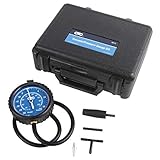
- Ideal kit for testing vacuum lines and components
- Accurately tests low-pressure fuel systems
- Quickly diagnose internal engine problems such as bad rings valves and leaking head gaskets
Best for: Storage-case choice.
Chrome construction and a sturdy blow-molded hard case make OTC’s 5613 kit feel organized from the start, especially for a tool that gets used across many engine checks. That case helps keep adapters and gauge components protected, which matters when you want a vacuum gauge kit that stays complete between jobs.
OTC says this kit is ideal for testing vacuum lines and components, and it also accurately tests low-pressure fuel systems. The application list goes deeper than a basic gauge, since it is meant to help diagnose bad rings, valves, leaking head gaskets, and cracked lines. The kit comes complete with adapters for most applications, so a user can move through different connections without building a separate adapter collection. Its 10.25 x 9.1 x 4-inch dimensions and chrome material point to a compact, workshop-friendly package, while the removable-lid hard case keeps pieces secured when not in use. That is useful for anyone who stores tools in a crowded garage or service truck.
Pros
- Chrome material suits a workshop tool set
- Blow-molded hard case keeps parts protected
- Adapters for most applications widen compatibility
- Low-pressure fuel system testing adds diagnostic range
Cons
- The product data does not list a gauge diameter, so display size is unclear
OTC is the pick for someone who values storage and organized parts as much as the tests themselves. It works well for broader engine diagnosis where the case and adapter coverage matter every time the kit comes out.
| Specification | Details |
|---|---|
| Brand | OTC |
| Material | Chrome |
| Item Dimensions | 10.25 x 9.1 x 4 inches |
| Item Weight | 1.07 g |
| Storage | Sturdy blow molded hard case with removable lid |
My read is that this one suits the user who wants a neatly stored, multipurpose tester rather than a stripped-down gauge. The case is a real selling point if you move tools often or want the adapters to stay together. It feels especially sensible for diagnosing leaks and low-pressure fuel issues in a home or light-shop setting.
4. HFS(R) Fuel Pump Pressure & Vacuum Tester Kit, 10 PSI

- [PRESSURE GAUGE]: Test fuel pump output pressure to 10PSI. Read engine vacuum to 28" HG.
- [KIT INCLUDES]: Comes with large 3-1/2" diameter gauge and 24" long vacuum hose.
- [ADAPTERS]: Adapters suits for most vehicles.
Best for: Large-gauge visibility.
A 3-1/2-inch gauge and 24-inch vacuum hose give the HFS kit a very practical layout for reading measurements while reaching awkward engine locations. That larger dial helps the user see vacuum changes more easily, and the longer hose adds working room when testing carburetor settings or valve adjustments in tighter bays.
HFS lists fuel pump output pressure testing to 10 PSI and engine vacuum readings to 28 inches of mercury, which gives the kit coverage for common low-pressure engine checks. The brass material is a useful cue for buyers who want a more substantial fitting set, and the included adapters are stated to suit most vehicles. The 24-inch hose gives enough length to keep the gauge visible while reaching around intake components, and the 3-1/2-inch diameter dial is easier to read at a glance. The 11.5 x 2 x 7.5-inch size and 1.5-pound weight keep it relatively portable, and the blow-molded case helps with storage and transport.
Pros
- 3-1/2-inch gauge improves readability
- 24-inch hose adds reach around the engine bay
- 10 PSI pressure and 28 in-Hg vacuum coverage fit common diagnostics
- Brass material and blow-molded case support workshop use
Cons
- The pressure ceiling is limited to 10 PSI, so it is not for higher-pressure fuel system testing
HFS is a strong match for someone who wants a bigger dial and practical hose length in one kit. It is especially useful for carburetor work and vacuum checks where visibility and reach make the job easier.
| Specification | Details |
|---|---|
| Brand | HFS |
| Material | Brass |
| Item Dimensions | 11.5 x 2 x 7.5 inches |
| Item Weight | 1.5 pounds |
| Gauge Diameter | 3-1/2 inches |
| Vacuum Hose Length | 24 inches |
| Pressure Range | 10 PSI |
| Vacuum Range | 28″ HG |
I would favor this for someone who wants the dial easy to read without leaning over the fender. The longer hose makes a noticeable difference when the gauge needs to sit where you can see it. If your work centers on carburetor settings, valve checks, and routine vacuum diagnosis, this one feels practical and efficient.
5. Vacuum and Fuel Pump Tester Gauge Kit

- Professional Vacuum and Fuel Pump Tester Kit: Fuel Pump Pressure & Vacuum Tester Gauge Kit, Carburetor Test enables testing of the...
- Easy to Use: Instruction manual included; The fuel pump pressure & vacuum tester gauge kit includes a variety of adapters ideal...
- Wide Application: This vacuum and fuel pump tester gauge kit will test fuel pump pressure and all vacuum operated devices, 4 tests...
Best for: Low-pressure engine checks.
A 10 x 2 x 2.7-inch package keeps Acymner’s tester compact, while the model’s 0-28 IN-Hg vacuum and 0-10 PSI pressure ranges cover the kind of readings most buyers need for engine diagnosis. That combination lets a mechanic check fuel delivery and vacuum loss with one gauge set instead of swapping tools mid-test.
Acymner identifies this as a fuel pump pressure and vacuum tester kit for carburetor testing, and it specifically mentions worn or defective parts as the target. The kit handles fuel pump operating pressures up to 10 PSI, while the gauge also reads 0-28 IN-Hg and 0-70 cm-HG vacuum, plus 0-10 PSI and 0-0.7 kg/cm² pressure. Those ranges matter because they let the user compare both vacuum and pressure results without guessing at the instrument’s limits. The 1.61-pound weight keeps it portable, and the included instruction manual is helpful for anyone who wants quicker setup. The compact footprint is also easy to store in a tool drawer or trunk organizer.
Pros
- 0-28 IN-Hg vacuum range covers common engine checks
- 0-10 PSI pressure range suits fuel pump testing
- Instruction manual supports easier setup
- Compact 10 x 2 x 2.7-inch size stores neatly
Cons
- The listing does not specify adapter count, so connection flexibility is hard to judge from the data
Acymner is a sensible buy for the person who wants clear measurement ranges in a compact package. It fits routine diagnostic work where vacuum and low-pressure fuel readings are the main goal.
| Specification | Details |
|---|---|
| Manufacturer | Acymner |
| Brand | Acymner |
| Model | ZH108-3 |
| Item Weight | 1.61 pounds |
| Product Dimensions | 10 x 2 x 2.7 inches |
| Manufacturer Part Number | ZH108-3 |
I like this for the buyer who cares most about the measurement ranges and wants a compact kit. The listed vacuum and pressure spans line up well with common carburetor and fuel delivery checks. If you do your own troubleshooting and want a straightforward gauge set that does not take much space, this one makes sense.
6. Vacuum and Fuel Pump Tester Gauge Kit

- Professional Vacuum and Fuel Pump Tester Kit: Fuel Pump Pressure & Vacuum Tester Gauge Kit, Carburetor Test enables testing of the...
- Easy to Use: Instruction manual included; The fuel pump pressure & vacuum tester gauge kit includes a variety of adapters ideal...
- Wide Application: This vacuum and fuel pump tester gauge kit will test fuel pump pressure and all vacuum operated devices, 4 tests...
Best for: Compact dual-range kit.
At 1.65 pounds and 10 x 2 x 2.7 inches, Acymner’s second listing keeps the same compact format while staying easy to carry into a garage or driveway job. Those dimensions suit a buyer who wants a vacuum gauge kit that can live in a small tool bag yet still cover low-pressure fuel and vacuum testing.
This Acymner ZH108-3 kit is again presented as a professional vacuum and fuel pump tester for carburetor diagnosis and fuel delivery checks. It explicitly calls out leaking valves, incorrect timing, leaky intake manifolds, and clogged mufflers, so the tool is aimed at common causes of rough running. The gauge ranges remain useful for everyday repair work, with up to 10 PSI fuel pump operating pressure and 0-28 IN-Hg vacuum capability. The 0-70 cm-HG and 0-0.7 kg/cm² equivalents help users who think in different measurement units. An instruction manual is included, which is useful when the buyer wants faster setup and less trial-and-error during diagnosis.
Pros
- 0-28 IN-Hg vacuum range handles routine diagnosis
- 0-10 PSI fuel pump range suits low-pressure systems
- Instruction manual helps simplify first-time use
- 1.65-pound weight keeps the kit portable
Cons
- The product data does not mention a storage case, so parts protection is less explicit than on case-based kits
This Acymner kit is a practical option for everyday engine checks where space and range both matter. It is a fit for the user who wants a compact tester with enough coverage for common fuel and vacuum faults.
| Specification | Details |
|---|---|
| Manufacturer | Acymner |
| Brand | Acymner |
| Model | ZH108-3 |
| Item Weight | 1.65 pounds |
| Product Dimensions | 10 x 2 x 2.7 inches |
| Manufacturer Part Number | ZH108-3 |
My advice is that this suits the DIY mechanic who wants a compact diagnostic kit without extra bulk. The listed ranges are useful enough for typical fuel pump and vacuum checks, and the manual lowers the learning curve. If you store tools in a tight space and still want real diagnostic coverage, this is an easy one to consider.
7. 8MILELAKE Fuel Pump and Vacuum Tester Gauge Leak Carburetor Pressure

- Test fuel pump output pressure to 10PSI
- Read engine vacuum to 28
- Comes with large 3-1/2 inches
Best for: Lightweight storage case.
A 3-1/2-inch gauge paired with a blow mold case gives the 8MILELAKE tester a straightforward setup for reading fuel and vacuum results while keeping the kit together. The 1.59-pound weight helps when you want a portable tester that still has a larger dial for quick engine-bay checks.
8MILELAKE says this tester reads fuel pump output pressure to 10 PSI and engine vacuum to 28, which gives it the core coverage needed for carburetor and vacuum diagnostics. The large 3-1/2-inch gauge is the feature most buyers will notice in use, since a bigger dial is easier to scan while working around the engine. Adapters are listed as suitable for most vehicles, so the kit is meant to cover common automotive connections rather than a narrow application. The blow mold case adds practical storage, and the product’s 11.42 x 1.57 x 7.48-inch dimensions keep the kit fairly slim on the shelf. The listed 12-volt voltage spec is another concrete detail from the product data.
Pros
- 3-1/2-inch gauge is easier to read
- 10 PSI and 28 vacuum coverage suits common tests
- Adapters for most vehicles broaden fitment
- Blow mold case supports storage and transport
Cons
- The listing does not specify the adapter count, so the exact connection variety is not clear
8MILELAKE is a good fit for someone who wants a readable gauge and a simple case-based kit. It works well for basic engine diagnosis where portability and quick setup are the main priorities.
| Specification | Details |
|---|---|
| Manufacturer | freebirdtrading |
| Brand | 8MILELAKE |
| Item Weight | 1.59 pounds |
| Product Dimensions | 11.42 x 1.57 x 7.48 inches |
| Manufacturer Part Number | TESTER |
| Voltage | 12 volts |
I’d recommend this to a buyer who wants a simple, readable kit for regular garage use. The bigger gauge and case are the main advantages, especially if you want something easy to store and grab quickly. It seems especially appropriate for common fuel pump and vacuum checks on a variety of vehicles.
8. DASBET Vacuum and Fuel Pump Tester Gauge Kit

- Function: The fuel pump pressure & vacuum tester kit enables testing of the fuel delivery pressure to the engine to check for worn...
- Professional Tester Kit: Fuel pump pressure & vacuumtester gauge kit, carburetor test enables testing of the fuel delivery...
- Easy to Use: Includes a variety of adapters, the vacuum and fuel pump tester gauge kit is ideal for most vehicles: 4-inch (10.2cm...
Best for: Plastic-rubber kit.
DASBET’s use of plastic and rubber materials keeps the kit light in hand while still giving the tester a practical layout for fuel pump and vacuum diagnostics. That material mix makes sense for a buyer who wants a straightforward one-piece kit for checking engine issues without adding unnecessary bulk.
DASBET describes this as a fuel pump pressure and vacuum tester kit for diagnosing worn or defective fuel pumps and vacuum systems. The listed functions include checking leaking valves, incorrect timing, leaky intake manifolds, and clogged mufflers, so it covers the faults that often show up during routine engine troubleshooting. Fuel pump operating pressures are stated up to 10 PSI, which keeps the kit focused on low-pressure applications. The product is shown as one item, so the buyer knows it is a single-kit purchase rather than a multi-pack. Its 12 x 7 x 2-inch dimensions are relatively easy to store, and the plastic-rubber construction suggests a lighter tool than all-metal alternatives.
Pros
- Plastic and rubber construction keeps the kit lightweight
- One-item package is simple to inventory
- 10 PSI fuel pump limit suits common low-pressure testing
- 12 x 7 x 2-inch size stores neatly
Cons
- The listing does not provide a vacuum range, so the reading span is not fully specified
DASBET is a practical choice for someone who wants a simple, light tester for basic engine diagnosis. It fits best when you need the essentials for fuel pump and vacuum-system checks without extra complexity.
| Specification | Details |
|---|---|
| Brand | DASBET |
| Material | Plastic, Rubber |
| Item Dimensions | 12 x 7 x 2 inches |
| Number of Items | 1 |
| Item Highlight | Fuel Pump and Vacuum Tester Gauge, Gauge Leak Carburetor Pressure Diagnostics Tool Kit |
My view is that this one suits the buyer who wants a basic diagnostic kit and does not need a long spec list. The one-item setup is simple, and the size is easy to manage in a garage drawer. If your focus is common fuel and vacuum faults rather than specialized measurement detail, it should do the job.
9. Fuel Pump and Vacuum Tester Gauge, Car Carburetor Leak Diagnostics
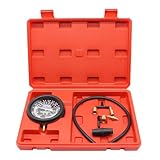
- 【Practical Functions】: The vacuum pressure gauge set accurately tests fuel pump pressure, quickly detects leaks in fuel...
- 【Wide Application】: The vacuum and fuel pump tester gauge is suitable for mechanical fuel pump carburetor engines in various...
- 【User-Friendly Design & Size】: The pressure gauge features a large 0.0-inch diameter dial with color-coded measurements for...
Best for: Wide-application diagnostics.
A 1.53-pound weight and 10.63 x 7.68 x 1.97-inch footprint make the UHANBUT tester easy to store while still covering a broad set of automotive checks. That compact size supports a buyer who wants one gauge kit for fuel pressure, vacuum line leaks, and other common engine complaints without carrying a bulky tool set.
UHANBUT says this vacuum pressure gauge set accurately tests fuel pump pressure and quickly detects leaks in fuel systems and vacuum lines. It also evaluates emission control devices, valves, mufflers, and exhaust systems, which gives it a wider diagnostic scope than a single-purpose gauge. The listing further calls out gas pipeline leaks, valve timing, worn piston rings and seals, and heating and air conditioning components, so it reaches into several systems that affect drivability. The model name is given as Fuel Pump and Vacuum Tester Gauge, and the manufacturer part number is UHANBUT-UNB-247. At 1.53 pounds, it is easy to carry, and the compact dimensions help it fit into a small toolbox or storage bin.
Pros
- Accurate fuel pump pressure testing supports diagnosis
- Wide system coverage includes emissions and exhaust
- Compact 10.63 x 7.68 x 1.97-inch size stores easily
- 1.53-pound weight improves portability
Cons
- The product data does not list adapters or a storage case, so accessory coverage is unclear
UHANBUT is a strong fit for someone who wants broad diagnostic reach in a small package. It suits buyers tackling multiple engine-system complaints from one simple vacuum gauge kit.
| Specification | Details |
|---|---|
| Manufacturer | UHANBUT |
| Brand | UHANBUT |
| Model | Fuel Pump and Vacuum Tester Gauge |
| Item Weight | 1.53 pounds |
| Product Dimensions | 10.63 x 7.68 x 1.97 inches |
| Manufacturer Part Number | UHANBUT-UNB-247 |
I’d suggest this for the buyer who wants the broadest practical diagnosis from a compact tool. The list of systems it can help check is long, and that makes it useful when the problem is not obviously limited to one component. It feels well matched to someone who does general automotive troubleshooting at home.
10. Lisle 20300 Vacuum Gauge and Fuel Pump Tester
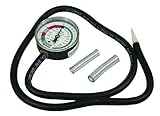
- Easy reading gauge assures accurate vacuum and pressure check
- Vacuum Units: 0-25 inch Hg and 0-800 mm Hg
- Pressure Units: 0-14 PSI and 0-1000 g/cm2
Best for: Simple easy-read gauge.
Lisle’s 0-25 inch Hg vacuum scale and 0-14 PSI pressure scale give this tester a clear, direct measurement range for everyday automotive checks. The 5.6-ounce weight makes it the lightest-feeling option in this group, which helps when the buyer wants a compact gauge that is easy to handle and read.
Lisle’s 20300 is presented as a vacuum gauge and fuel pump tester with easy-reading gauge face for accurate vacuum and pressure checks. The range details are very specific: vacuum units run from 0-25 inch Hg and 0-800 mm Hg, while pressure units go from 0-14 PSI and 0-1000 g/cm2. That makes the tool useful for buyers who want clear scaling rather than a vague analog reading. The plastic construction helps keep the gauge light, and the 10.1 x 2 x 4-inch dimensions keep it compact. It comes in a skin-pack and is listed as one item, which keeps the purchase simple for someone needing a single tester for routine engine diagnosis.
Pros
- 0-25 inch Hg vacuum range gives clear engine readings
- 0-14 PSI pressure range covers common fuel checks
- Plastic body keeps the tool lightweight
- 10.1 x 2 x 4-inch size is easy to store
Cons
- The listing does not mention adapters or a case, so accessory support is minimal on paper
Lisle is the practical choice for a buyer who wants a straightforward gauge with clearly defined measurement ranges. It works well for routine vacuum and fuel pump checks where simplicity matters more than a full accessory kit.
| Specification | Details |
|---|---|
| Brand | Lisle |
| Material | Plastic |
| Item Dimensions | 10.1 x 2 x 4 inches |
| Item Weight | 5.6 ounces |
| Number of Items | 1 |
I would pick this for someone who values a simple, easy-to-read gauge over extra accessories. The ranges are clearly stated, which makes it easier to know what the tool can do before it arrives. If your goal is straightforward vacuum and pressure checking with minimal fuss, this is a sensible option.
Quick Comparison Table of Top Automotive Vacuum Gauges
| Product Name | Gauge Size | Pressure Range | Storage Case | Best For | Check Price |
|---|---|---|---|---|---|
| Hromee Fuel Pump and Vacuum Tester | Standard gauge | 10 PSI | Yes | General diagnostics | Check Price |
| NYXOVA Vacuum and Fuel Pump Tester | Tester kit | 10 PSI | No | Engine troubleshooting | Check Price |
| OTC 5613 Vacuum/Pressure Gauge Kit with | Kit with case | Low pressure | Yes | Vacuum line checks | Check Price |
| HFS(R) Fuel Pump Pressure & Vacuum | 3.5-inch gauge | 10 PSI | Yes | Carburetor tuning | Check Price |
| Vacuum and Fuel Pump Tester Gauge | Tester kit | 10 PSI | No | Fuel pump testing | Check Price |
| Vacuum and Fuel Pump Tester Gauge | Tester kit | 10 PSI | No | Fuel pump testing | Check Price |
| 8MILELAKE Fuel Pump and Vacuum Tester | 3.5-inch gauge | 10 PSI | Yes | Leak detection | Check Price |
| DASBET Vacuum and Fuel Pump Tester | Tester kit | Unspecified PSI | No | Vacuum diagnostics | Check Price |
| Fuel Pump and Vacuum Tester Gauge | Gauge set | Unspecified PSI | No | System troubleshooting | Check Price |
| Lisle 20300 Vacuum Gauge and Fuel | Easy-read gauge | 0-14 PSI | No | Quick pressure checks | Check Price |
How to Choose the Right best automotive vacuum gauge
Gauge range and reading accuracy
Choose a gauge with a range that covers deep vacuum and quick changes without crowding the dial. For engine diagnosis, a clear scale that starts near zero vacuum and extends into the higher vacuum band gives you usable readings at idle, cruise, and under load. Good gauges show bold numbers, fine graduation marks, and a needle that settles fast instead of bouncing.
Digital units suit buyers who want exact numbers and backlit clarity; analog units suit buyers who want instant trend reading. Pick a 0–30 inHg range with crisp markings and a stable response for the clearest diagnosis.
Mounting style and visibility
Pick the mounting style that matches where you read it most often. An in-dash or podmounted gauge suits drivers who want constant visibility, while a handheld unit suits technicians who move between vehicles and test points. A dial around 2.5 to 4 inches reads well at a glance; smaller faces hide numbers, and oversized faces crowd tight cabins.
Strong daylight visibility matters, so look for high-contrast numerals and a bright face lamp for night checks. Choose a large-faced, illuminated pod gauge for permanent use or a compact handheld unit for flexible shop work.
| Type | Best for |
|---|---|
| In-dash | Drivers who want constant monitoring and clean integration |
| Podmounted | Performance setups with easy sightlines |
| Handheld | Shop testing across multiple vehicles |
Build quality and durability
Select a gauge with a housing and lens that survive constant vibration, heat, and handling. Metal cases hold alignment better than thin plastic shells, and reinforced bezels resist distortion around the dial. A hard, clear lens stays readable longer than soft plastic that scratches easily, especially in a greasy garage.
Check that the hose uses thick-walled material and that fittings lock securely, since weak connectors split or loosen during repeated use. Choose a metal-bodied gauge with a scratch-resistant lens and heavy-duty hose for the longest service life.
| Material | Best for |
|---|---|
| Metal housing | Frequent shop use and vibration resistance |
| Thick acrylic lens | Clear reading with decent impact resistance |
| Reinforced hose | Repeated connection and disconnection |
Included accessories and compatibility
Buy a kit that includes enough hose length and the right adapters for the vehicles you service. A longer hose gives you freedom to route around hot parts and keep the gauge in view, while a short hose works only for simple bench-style checks. The best kits include multiple connectors for common vacuum ports, plus a T-fitting for inline testing without removing existing lines.
If you work on mixed gasoline and diesel vehicles, choose a kit with broad adapter coverage and clearly labeled fittings. Pick the most complete adapter set for your vehicle mix and test setup.
| Accessory | Best for |
|---|---|
| Long hose | Flexible routing and dashboard visibility |
| Adapter set | Multiple port sizes and vehicle types |
| T-fitting | Inline diagnostics without disconnecting lines |
Ease of use and maintenance
Choose a gauge that makes setup, checking, and storage fast. A simple zeroing step keeps readings trustworthy, and clear calibration marks let you confirm accuracy without guessing. Straightforward instructions matter because vacuum testing depends on correct hookup and reading order.
After use, a smooth housing and wipe-clean lens save time when oil and dust collect on the tool. A rigid case or padded pouch protects the needle, hose, and fittings from bending or kinking in the toolbox.
Pick a gauge with clear markings, easy calibration checks, and a protective case for the least hassle in daily use.
Which Should You Choose?
- If you mainly need to test fuel pump output and catch vacuum leaks on a typical passenger car, choose a combo vacuum-and-fuel-pressure gauge kit with adapters that fit most vehicles.
- If you want a gauge for deeper diagnostics like worn rings, leaking valves, or a bad head gasket, choose a low-pressure gauge with clear vacuum markings and a wide measurement range.
- If you work in a shop or plan to use the tool often, choose a kit with a large, easy-to-read dial and a storage case for organized, repeat use.
- If your vehicle uses low-pressure fuel systems or you want more reach under the hood, choose a tester rated to around 10 PSI with a longer hose and multiple adapters.
Quick Best Automotive Vacuum Gauge Buying Checklist
- Confirm the gauge range matches common engine vacuum readings for accurate diagnostics.
- Choose a display style that stays easy to read in your garage or under the hood.
- Look for durable housing that can handle vibration, drops, and frequent use.
- Check hose and adapter compatibility with the vacuum ports you plan to test.
- Prioritize clear calibration marks so idle, cruise, and fault readings are easy to interpret.
- Pick a model with useful accessories such as fittings, a hose, or a storage case.
How an Automotive Vacuum Gauge Reads Engine Health
An automotive vacuum gauge measures pressure inside the intake manifold relative to atmospheric pressure. On a healthy gasoline engine at warm idle, the pistons create strong suction as the throttle is nearly closed, and that reading can reveal how efficiently the engine is breathing. Steady vacuum usually points to good sealing, correct timing, and proper idle control, while a low or unstable reading can suggest leaks, worn valves, late ignition timing, or restricted exhaust.
Because the gauge reacts quickly to changes in throttle position, it is useful for spotting problems that may not trigger a warning light. Many technicians also use it to observe engine load changes during acceleration and deceleration.
Mechanical, Digital, and Compound Gauge Designs
Automotive vacuum gauges come in several formats, and each has practical advantages. Mechanical gauges use a needle and a hose, giving immediate feedback with no electronics required. Digital gauges show readings on a screen and may be easier to read in low light or in a tight cabin.
Compound gauges measure both vacuum and pressure, making them useful for turbocharged or supercharged setups where positive boost is also relevant. The best style depends on how you plan to use the tool, the amount of dashboard space available, and whether you want a simple diagnostic instrument or a more versatile setup.
| Type | Best for | Trade-off |
|---|---|---|
| Mechanical | Fast, simple engine checks | Requires a direct hose connection |
| Digital | Easy-to-read displays | Needs power and electronic components |
| Compound | Vacuum and boost monitoring | May be more complex to install |
Where to Connect the Gauge on the Engine
Most vacuum gauges are connected to a full manifold vacuum source, not a ported vacuum line. Common connection points include a spare intake manifold nipple, a brake booster tee, or a dedicated vacuum port on the intake. The hose should be routed away from hot exhaust parts, sharp edges, and moving components, then sealed tightly to avoid introducing leaks.
If the line is too long, response can feel sluggish, so keep the run as short as practical. On some vehicles, using an inline restrictor or snubber helps dampen needle flutter and produces a steadier reading, especially on engines with cam overlap or uneven idle characteristics.
Common Reading Problems and What They Usually Mean
Interpreting a gauge is easier when you recognize the patterns behind the numbers. A low but steady reading often points to late ignition timing, a small vacuum leak, or a tired engine. A needle that drops and recovers repeatedly may indicate a sticking valve, ignition misfire, or restricted fuel delivery.
Rapid flutter at idle can come from valve train issues or an intake leak near one cylinder. If the reading rises briefly during deceleration and then falls quickly, the engine is usually responding normally.
The key is to compare the gauge behavior with engine speed, throttle position, and any drivability symptoms so you can narrow the cause instead of guessing.
Care, Calibration, and Storage Tips
Vacuum gauges last longer when they are handled carefully and checked periodically. Inspect the hose for cracks, hardening, or loose fittings, since even a small leak can distort the reading. Keep the lens clean and avoid exposing the gauge to prolonged vibration, heat, or moisture when it is stored in a toolbox or mounted in a vehicle.
If the needle does not return to zero when disconnected, the instrument may need calibration or may have been damaged by overpressure. It is also smart to cap the hose end after use so dirt does not enter the line.
A simple visual inspection before each test helps preserve accuracy and makes troubleshooting more dependable.
Frequently Asked Questions (FAQs)
What Does An Automotive Vacuum Gauge Measure?
An automotive vacuum gauge measures intake manifold vacuum in an engine, which reflects how well air is being drawn into the cylinders. The best automotive vacuum gauge helps diagnose idle quality, leaks, timing issues, and restricted airflow by showing changes in inches of mercury or similar scale markings.
Why Is Vacuum Reading Important For Engine Diagnosis?
Vacuum reading is important because it reveals how efficiently an engine is breathing at different operating conditions. A steady reading often suggests healthy sealing and timing, while fluctuating or low readings can point to vacuum leaks, worn components, or valve-train problems that need attention.
Should I Choose A Mechanical Or Digital Vacuum Gauge?
A mechanical automotive vacuum gauge is often preferred for quick, no-power diagnosis because it gives immediate needle movement and simple feedback. A digital model can offer clearer numbers and extra functions, but both should be chosen for readability, responsiveness, and accurate vacuum measurement.
What Gauge Range Works Best For Most Vehicles?
A gauge range that covers typical manifold vacuum values is best for most vehicles because it makes idle and cruise diagnostics easier to interpret. Look for a scale with clear markings in the common operating band so normal readings and problem readings are easy to separate.
How Important Is Hose Length And Adapter Compatibility?
Hose length and adapter compatibility are very important because they determine how easily the gauge connects to different test ports. The best automotive vacuum gauge should include a flexible hose and multiple fittings so you can reach the intake manifold or other vacuum sources without leaks.
Can A Vacuum Gauge Help Find Vacuum Leaks?
Yes, a vacuum gauge can help find vacuum leaks by showing lower-than-normal or unstable readings when the engine is running. The best automotive vacuum gauge makes leak diagnosis easier because small changes in needle position can reveal cracked hoses, loose fittings, or intake sealing problems.
How Do I Know If A Vacuum Gauge Is Easy To Use?
A vacuum gauge is easy to use if it has a clear dial, stable needle movement, and simple connection hardware. The best automotive vacuum gauge also includes easy-to-follow markings and durable fittings, so you can set it up quickly and trust the reading during testing.
Final Suggestions
In summary, the best automotive vacuum gauge gives you fast, reliable insight into engine health, helping you spot leaks, timing issues, and airflow problems with confidence. Its value comes from simple diagnosis, broad compatibility, and clear readings that make troubleshooting more efficient. Choose one that fits your testing needs, and you’ll be better prepared for smarter maintenance ahead.