Top 10 Best Blender For Blending Beans: Shocking Picks
The best blender for blending beans can transform tough legumes into smooth, usable textures with far less effort. In this guide, we examine how motor power, blade design, and jar materials affect performance when handling dense ingredients that often challenge standard appliances. A powerful bean blender must balance torque, heat control, and consistent circulation to avoid grainy results or stalled blending.
From smoothie prep to hearty sauces and protein-packed meals, the right model can change how efficiently your kitchen handles legumes. We also compare bean blenders and high-speed blenders through the lens of durability, capacity, and cleaning convenience.
Behind every smooth puree is a mix of engineering choices that matter more than most shoppers realize, and the details ahead reveal what separates average machines from standout performers.
Detailed Overview of the Best Blender for Blending Beans
1. nutribullet® Full-Size Blender Combo, 1200W, Dark Gray, NBF50500

- nutribullet Blender Combo will take your nutrition extraction to the next level with the versatility of both a multi-serving...
- Three precision speeds, a pulse function and the Extract program offer full control at the press of a button. 1200 Watts of power...
- Includes: (1) 1200 Watt Motor Base, (1) 64 oz (1.8L) Blender Pitcher with Lid and Vented Lid Cap, (1) Tamper, (1) 32 oz (900ml...

Best for: Large-batch bean blending.
A 64-ounce pitcher and 1200-watt motor give the NutriBullet combo enough room and force for cooked beans, soups, and smooth purees in one main container. The included tamper helps keep thick mixtures moving, so refried beans, white-bean dips, and hummus-style blends can stay even instead of stalling at the blade.
The 7.75 x 8.07 x 16.97-inch footprint keeps a full-size blender on the counter without spreading out too far, while the 64-fluid-ounce pitcher supports family-sized batches. Three precision speeds, a pulse function, and the Extract program give you different ways to work beans from chunky to silky. The vented lid cap helps when hot beans or soup need steam release, and the dishwasher-safe parts cut cleanup after sticky blends. The included 32-ounce cup adds a second option for smaller portions, so you are not forced to use the big pitcher for every batch. This setup suits cooks who make beans for dips, bowls, or meal prep and want one machine for both small and large jobs.
Pros
- 1200-watt motor handles thick bean mixtures
- 64-ounce pitcher suits larger batches
- Tamper keeps dense blends moving
- Dishwasher-safe parts simplify cleanup
Cons
- The single-serve cup is only 32 ounces, so very small bean batches are still handled in a relatively large vessel.
For bean purees, dips, and meal-prep portions, this combo gives you the size and control to work through thicker textures. It makes the most sense for households that want one blender for both big pitchers and smaller servings.
| Specification | Details |
|---|---|
| Brand | NutriBullet |
| Color | Gray |
| Capacity | 64 fluid ounces |
| Power | 1200 Watts |
| Product Dimensions | 7.75″D x 8.07″W x 16.97″H |
| Special Feature | Dishwasher Safe |
I’d point bean-focused shoppers to this one if they want a straightforward full-size blender that can handle heavier mixtures without making them work in tiny batches. The 64-ounce pitcher is the real advantage here, especially for hummus, bean soups, and refried beans. The tamper and multiple speed settings make thicker textures easier to control, which matters more than flashy extras for this use.
2. Ninja Kitchen System Pro, 1500W, 72oz Pitcher, 8-Cup, Black, BL770

- ALL-IN-ONE KITCHEN SYSTEM: Blend, chop, crush and more in this powerhouse blender and food processor combo.
- POWERFUL MOTOR:1500-watt motor base to crush ice, blend frozen fruit, and power through tough ingredients with the 2-horsepower...
- BLENDING TECHNOLOGY: The XL 72-oz.* pitcher, ideal for large batches and entertaining, features Total Crushing Blades that crush...
Best for: Heavy-duty batch crushing.
A 1500-watt motor and 72-ounce pitcher make the Ninja Kitchen System Pro a strong fit for cooked beans that need serious blending power. Its Total Crushing Blades are meant to break down tough ingredients fast, so thick bean mixtures, sauces, and large-batch purees can move from chunky to smooth with less stopping and scraping.
The 15.75 x 11.1 x 18.07-inch base gives this system a larger countertop presence, but it matches that footprint with a 2-horsepower motor and a blender-food-processor combo format. The 72-ounce pitcher is aimed at entertaining and big prep jobs, with a 64-ounce max liquid capacity for actual filling limits. The manual control style keeps operation simple when you want to adjust texture by eye, and the included 8-cup capacity note points to food-processing versatility for beans used in spreads or chopped fillings. For bean-heavy cooking, that mix of power and volume is useful when the goal is one big batch instead of several small ones.
Pros
- 1500-watt motor helps crush thick beans
- 72-ounce pitcher supports large batches
- Total Crushing Blades speed up breakdown
- Blender and food processor combo adds flexibility
Cons
- The listed 16-fluid-ounce capacity figure for one component makes the system less straightforward for small bean portions than a dedicated personal blender.
This is a good match for cooks who want a powerful all-in-one machine for bean dips, soups, and big family servings. It makes more sense when you plan to batch cook than when you only blend small amounts.
| Specification | Details |
|---|---|
| Brand | Ninja |
| Color | Black |
| Capacity | 16 fluid ounces |
| Product Dimensions | 15.75″D x 11.1″W x 18.07″H |
| Special Feature | Manual |
I’d choose this for bean blending when sheer power and batch size matter more than compact storage. The 1500-watt motor and big pitcher are the real draw if you regularly make hummus, bean soup, or freezer batches. It is more machine than a casual user needs, but for anyone processing tougher ingredients often, it feels appropriately serious.
3. Ninja Professional Blender, 1000W, Total Crushing Tech, 72oz Pitcher, BL610
- PROFESSIONAL POWER: 1000 watts of professional power can crush ice and breakdown any tough ingredient.Power source : Corded...
- XL CAPACITY: The 72 oz professional blender pitcher is excellent for making frozen drinks and creamy smoothies for the entire...
- INTELLIGENT TECHNOLOGY: Total Crushing Technology delivers unbeatable power with blades that pulverize and crush through ice...
Best for: Simple power for thick purees.
A 1000-watt motor and 72-ounce pitcher give the Ninja Professional Blender enough muscle for cooked beans, dips, and blended soups in family-size amounts. Total Crushing Technology is the key here, because it helps the blades keep working through dense ingredients that can leave weaker blenders grainy or uneven.
The 10.71 x 8.27 x 15.94-inch body is fairly compact for a full-size blender, and the 1.8-liter capacity translates to a useful everyday batch size for bean recipes. With 12.5 amps listed in the technical data, the machine is set up for serious countertop use rather than light mixing. The lightweight feature makes it easier to move or store when the blender is not on display. Its corded electric power source keeps it simple for regular kitchen use, and the 64-ounce max liquid capacity helps you stay within a practical fill line when making bean purees or thicker spreads.
Pros
- 1000-watt motor handles dense bean mixtures
- 72-ounce pitcher supports family portions
- Total Crushing Technology helps smooth out texture
- Lightweight design makes handling easier
Cons
- The pitcher is large, so very small bean batches can be harder to process efficiently without spreading ingredients thin.
For everyday bean soups, hummus, and smooth spreads, this blender gives you enough power without moving into oversized specialty territory. It is a practical pick if you want a familiar full-size model that can still tackle thick ingredients.
| Specification | Details |
|---|---|
| Brand | Ninja |
| Color | Black/Gray |
| Capacity | 1.8 liters |
| Power | 1000 watts |
| Amperage | 12.5 amps |
| Product Dimensions | 10.71″D x 8.27″W x 15.94″H |
| Special Feature | Lightweight |
My take is that this is one of the safer bets for shoppers who want bean-blending performance without stepping up to a huge, complicated machine. The 72-ounce pitcher is a real plus for soups and dips, and the 1000-watt motor should be enough for most cooked bean jobs. It feels like the right balance for regular home use rather than constant heavy-duty prep.
4. Countertop Blender Pro 2000W, Professional High-Speed Blender with Powerful Brushless

- 【2000W Copper Brushless Motor】The 2026 Countertop Blender features high-performance 2000W copper brushless motor delivers...
- 【25-Speed Adjustable Control】Our blender feature 25 adjustable speed settings, offering unmatched versatility in the kitchen...
- 【6-Blade Titanium Head】Our blender features a 6-blade titanium head for superior performance. Compared to standard 4-blade...
Best for: High-output bean pureeing.
A 2000W copper brushless motor and 2-liter capacity put this countertop blender in serious territory for beans, sauces, and thick purees. The adjustable speed control matters because cooked beans can go from coarse to silky fast, and having more control helps you stop before the texture gets too thin or foamy.
The 9.06 x 7.06 x 16.49-inch dimensions keep the unit relatively narrow for a high-power blender, while the 2-liter container gives enough room for larger bean batches and soup-style blends. The motor is described as reaching up to 28,000 RPM, which is the kind of speed that helps break down tough skins and produce a smoother finish. The 25-speed adjustment adds range for everything from a chunky bean spread to a very fine puree. The brushless motor format and the stated 5x longer life claim point to a machine meant for repeated use in everyday cooking. For bean-heavy recipes, that combination is about control and volume, not just raw power.
Pros
- 2000W motor tackles dense bean mixtures
- 2-liter capacity fits larger recipes
- 25 speed settings help refine texture
- Brushless motor is suited to repeated use
Cons
- No tamper is listed, so very thick bean mixtures may need manual stopping and scraping to keep moving.
This blender makes the most sense for people who regularly puree beans in bigger amounts and want plenty of speed control. It is a strong choice when texture precision matters as much as power.
| Specification | Details |
|---|---|
| Brand | Subry chefy |
| Color | Black |
| Capacity | 2 liters |
| Power | 2000W |
| Product Dimensions | 9.06″D x 7.06″W x 16.49″H |
| Special Feature | Adjustable Speed Control |
I’d recommend this to anyone who wants an aggressive blender for cooked beans and other thick mixtures, especially if they care about dialing in texture. The 25 speeds are the standout practical feature, because bean blends can change quickly from chunky to overly loose. If you make large batches often, the 2-liter capacity gives you useful room to work.
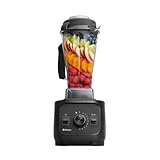
5. Vitamix VX1 Professional-Grade Blender, 64 oz. Container, Black
- VITAMIX PERFORMANCE: Built with the power, durability, and reliability of Vitamix, this heavy-duty blender creates...
- POWERFUL BLENDING: A 2.2 HP motor and aircraft-grade stainless-steel blades crush ice, frozen fruit, and fibrous greens; the...
- PRECISE ENGINEERING: Patented container optimizes performance by effectively moving ingredients through the blades, creating the...
Best for: Classic thick-blend performance.
A 64-ounce container paired with Vitamix’s classic blade geometry gives the VX1 a straightforward route to smoother bean purees. The included tamper is especially useful with dense mixtures, helping push cooked beans toward the blades when the batch is too thick to flow on its own.
The 9.5 x 7.75 x 19.6-inch footprint makes this a taller blender, and the black finish keeps the look simple on the counter. The 64-fluid-ounce capacity is enough for everyday family use without forcing you into oversized commercial equipment. The precise container geometry is matched with stainless-steel blades, a pairing that matters when blending beans into dips or soups that need a consistent finish. The included base, classic container, and tamper mean the essentials are all there in one package. Because the design focuses on creating a vortex, it is especially useful when you want thick ingredients pulled downward rather than sitting above the blade.
Pros
- 64-ounce container suits everyday batches
- Tamper helps with thick bean mixtures
- Stainless-steel blades support smooth output
- Container geometry helps ingredients recirculate
Cons
- Only one main container is included, so you do not get a smaller vessel for quick single-serving bean blends.
This is a strong pick for buyers who want a familiar full-size Vitamix layout for beans, soups, and purées. It fits best in kitchens where smooth texture and repeatable results matter more than extra attachments.
| Specification | Details |
|---|---|
| Brand | Vitamix |
| Color | Black |
| Capacity | 64 fluid ounces |
| Product Dimensions | 9.5″D x 7.75″W x 19.6″H |
I’d call this a very practical choice for bean blending if you want a reliable container-and-tamper setup rather than a bunch of extras. The 64-ounce size is convenient for family recipes, and the blade/container geometry should help with thicker blends. It feels especially appropriate for people who make bean soups or dips regularly and want a familiar, simple workflow.
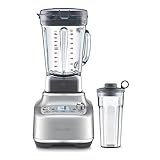
6. Breville BBL920BSS Super Q Blender for Kitchens, Brushed Stainless Steel
- Commercial-grade blender for home kitchens features a powerful motor, personal blender attachment, and noise suppression...
- SUPER QUICK AND POWERFUL: High-speed household blender has a powerful 1800 Watt motor (the highest possible rating), with 186mph...
- SMOOTHIES ON-THE-GO: Includes additional blade system to mix both food and drinks directly into your personal blender cup...
Best for: High-speed smooth texture.
An 1800-watt motor and 68-ounce capacity give the Breville Super Q a strong case for thick bean soups and silky purees. The noise suppression technology matters in a kitchen where high-power blending usually gets loud, and the programmable control adds convenience when you want repeatable results from one batch to the next.
The 8.15 x 10.47 x 17.95-inch body keeps the machine relatively compact for a commercial-grade blender, and the brushed stainless steel finish gives it a cleaner, more durable look on the counter. The 186 mph blade tip speed under load shows why this model can move fast through cooked beans and other dense ingredients. Its 68-fluid-ounce capacity sits between standard family use and larger batch cooking, giving you space without going oversized. The additional personal blender attachment expands use for smaller portions or drink-style recipes, and the included blade system for both food and drinks adds flexibility. For bean blending, that combination works well when one machine needs to do both soups and smaller sauces.
Pros
- 1800-watt motor handles dense ingredients
- 68-ounce capacity suits family batches
- Noise suppression technology reduces disruption
- Personal attachment adds smaller-batch flexibility
Cons
- The premium-sized feature set includes extra components, so it is more machine than needed if you only blend small bean portions.
If bean soups, smooth dips, and quieter high-power blending matter, this one is compelling. It is especially good for buyers who want one machine that can handle both larger and smaller recipes.
| Specification | Details |
|---|---|
| Brand | Breville |
| Color | Brushed Stainless Steel |
| Capacity | 68 fluid ounces |
| Power | 1800 Watt |
| Product Dimensions | 8.15″D x 10.47″W x 17.95″H |
| Special Feature | Programmable |
My view is that this suits someone who wants high-end blending performance for beans but also cares about everyday convenience. The larger pitcher and quieter operation make it more pleasant to use often, especially for soups or smooth purees. If you like the idea of handling both batch recipes and smaller servings in one system, this is a very appealing option.
7. Ganiza Smoothie Blender Max 1300W, Personal Kitchen Blender & Grinder

- MORE POWER & FASTER: Engineered with a 1300W peak power motor to instantly crush ice, whole nuts, and frozen fruits, unlocking...
- BLENDER & GRINDER COMBO: Features thickened 6-leaf stainless steel blade for finer blending and grinding than standard 4-leaf...
- ALL-DAY CAPACITY: No more limits from smaller cups. With two 37oz high-capacity portable cups, this smoothie maker is ideal for...
Best for: Portable bean blending cup set.
A 1300W peak-power motor and 37-ounce capacity make the Ganiza Smoothie Blender Max more compact than full-size countertop units, but still capable of crushing beans, nuts, and frozen ingredients. The 6-leaf stainless steel blade is the key advantage for finer blending, since denser mixtures benefit from extra cutting edges when texture matters.
The 5.5 x 5.5 x 14.7-inch footprint is small enough for limited counter space, and the portable format suits quick bean dips or single-serve purees. Multiple attachments, single-serve use, pulse technology, and a thermal protection system give it flexibility beyond a basic personal blender. The locking cup design allows hands-free operation, which helps when thicker bean mixtures need a secure fit during blending. The description also notes at least 15 seconds saved per use compared with lower-power blenders, so it is aimed at quick kitchen jobs rather than long batch sessions. For bean blending, the smaller capacity is useful when you want fast results and do not need a giant pitcher.
Pros
- 1300W peak motor handles thick blends
- 6-leaf stainless steel blade refines texture
- Compact 5.5-inch footprint saves space
- Single-serve design works for smaller portions
Cons
- The 37-ounce capacity is limited for large bean batches, so it is not the strongest choice for family-sized meal prep.
This is a smart option for smaller bean recipes, quick dips, and portable use. It makes the most sense for buyers who want a compact blender that still has enough power for denser ingredients.
| Specification | Details |
|---|---|
| Brand | Ganiza |
| Color | Black |
| Capacity | 37 fluid ounces |
| Product Dimensions | 5.5″D x 5.5″W x 14.7″H |
| Special Feature | Multiple Attachments, Portable, Pulse Technology, Single Serve, Thermal Protection System |
I’d point bean users toward this if they mostly make smaller portions and want something easy to store. The 6-leaf blade and 1300W peak power should be enough for smooth bean dips and quick purees, but the cup-sized setup is the real story. It is a better fit for convenience-focused cooking than for big-batch meal prep.
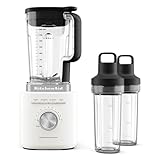
8. KitchenAid Pure Power Blender with 2 Blending Jars, 1700 Watt
- 1700 Watts Peak Power* *Laboratory measurement of peak input wattage, not the operational power at the blade; UL rated at...
- Customize your batch with 68 oz (2L) plastic jar for making plenty at once, or the Personal Blender Jar for a travel-friendly...
- Take along one of the two 16 oz (500 mL) Personal Blender Jar for on-the-go recipes
Best for: Flexible jars for bean blends.
A 1700-watt peak-power rating and two blending jars make the KitchenAid Pure Power Blender useful for both big bean batches and smaller servings. The 68-ounce jar gives you space for soups and spreads, while the personal jars let you make a quick portion without switching to a large container every time.
The 10 x 16 x 16.5-inch footprint gives this blender a substantial but manageable counter presence, and the porcelain white finish keeps it visually clean. The 68-ounce plastic jar is the main vessel for larger bean recipes, while the two 16-ounce personal jars are useful for single servings or transporting a small batch. Variable speed control lets you adjust texture as beans move from coarse to smooth, and the asymmetric blade design helps mix a wider range of consistencies. The detachable attachment and heavy-duty feature notes show that the machine is meant for regular kitchen use. For bean-based recipes, the two-jar setup is the practical advantage because it avoids forcing every blend into the same container size.
Pros
- 68-ounce jar suits larger bean recipes
- Two 16-ounce jars handle smaller portions
- Variable speed control helps texture tuning
- Detachable attachments add everyday flexibility
Cons
- The main technical capacity is listed as 4.3 pounds rather than a clear liquid volume, so capacity planning is less direct than on pitcher-first blenders.
This is a sensible pick for people who alternate between big bean batches and smaller single portions. The jar variety is what makes it useful, especially if you want one blender for both meal prep and everyday use.
| Specification | Details |
|---|---|
| Brand | KitchenAid |
| Color | Porcelain White |
| Special Feature | Adjustable Speed Control, Detachable Attachment, Heating, Heavy Duty |
| Product Dimensions | 10″D x 16″W x 16.5″H |
I like this for bean blending because the two jar sizes solve a real everyday problem: making a big pot of soup one day and a small dip the next. The variable speed control should help with texture, and the larger jar gives you enough room for batch cooking. It’s especially appealing if you want a versatile countertop blender rather than a single-purpose machine.
9. 1800W Countertop Blenders for Kitchen, Blender for Smoothie with 70

- 【Powerful Blendin【Powerful Blending Performance】 Built with an 1800W motor, speeds reaching 25,000 RPM, and a 6 blade...
- 【6 Preset Programs & Adjustable Speed】 Six types presets—Juice, Smoothies, Ice Crush, Soup, Sauce, and Grinder—take the...
- 【Lid Safety Lock & Thermal Protection】 A dual-tab locking lid helps keep ingredients contained and reduces splashing during...
Best for: Preset-driven bean control.
An 1800W motor and 25,000 RPM top speed give the H-Duka countertop blender enough force for beans, nut butters, and icy mixtures. The 6 smart presets matter because bean recipes often need different textures, and one-touch programs can make repeat prep more predictable.
The 9.25 x 8.1 x 19.7-inch dimensions place it in the full-size category, while the listed 4.4-pound capacity note points to a machine meant for substantial countertop use. The 3D 6-leaf stainless steel blades are a practical detail for dense ingredients, since more cutting edges help process cooked beans into smoother blends. Adjustable time, automatic cleaning, multiple speeds, pulse technology, and a touch control panel give you several ways to manage thickness and cleanup. The presets include Juice, Smoothies, Ice Crush, Soup, Sauce, and Grinder, which makes bean purees fit naturally into the machine’s menu. For cooks who want simpler repeatability, the preset approach is a strong advantage.
Pros
- 1800W motor handles dense bean recipes
- 6 smart presets simplify repeated use
- 3D 6-leaf blades support smoother texture
- Automatic cleaning helps after sticky blends
Cons
- The listed capacity is given as 4.4 pounds rather than a clear pitcher volume, so it is less intuitive for batch planning.
This blender works well for buyers who want preset convenience along with enough power for beans. It is especially useful if you like one-touch programs and easy cleanup after thick recipes.
| Specification | Details |
|---|---|
| Brand | H-Duka |
| Color | Black |
| Capacity | 4.4 pounds |
| Power | 1800W |
| Product Dimensions | 9.25″D x 8.1″W x 19.7″H |
| Special Feature | Adjustable Time, Automatic Cleaning, Multiple Speeds, Pulse Technology, Touch Control Panel |
For bean blending, I’d see this as a convenience-first option that still has real power. The presets are helpful if you make the same types of soups or dips often, and the automatic cleaning feature is a plus after sticky ingredients. It’s a good fit for someone who likes guided blending more than manual trial and error.
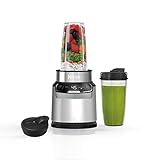
10. Ninja Nutri-Blender Pro with Auto iQ, 1100PW, (2) 24oz Cups,
- POWERFUL BLENDING PERFORMANCE: 1100-peak-watt motor powers through the toughest ingredients and pulverizes ice to snow in seconds...
- AUTO-IQ ONE-TOUCH PRESETS: 2 Auto-iQ preset programs combine unique timed pulsing, blending, and pausing patterns for one-touch...
- NUTRIENT EXTRACTION: Pro Extractor Blades Assembly unlocks hidden nutrition by breaking down whole fruits and veggies, including...
Best for: Single-serve bean blending.
Two 24-ounce cups and an 1100-peak-watt motor make the Ninja Nutri-Blender Pro a compact choice for bean dips, small sauces, and quick purees. The Pro Extractor Blades are the key detail for breaking down whole fruits and vegetables, which also helps when beans need a finer finish in smaller portions.
The 6.34 x 6.93 x 14.29-inch size keeps the blender compact enough for tighter counters and easy storage, while the Cloud Silver finish gives it a clean look. Auto-iQ presets add timed pulsing and blending patterns, so you can keep bean blends consistent without holding the controls yourself. The dishwasher-safe and BPA-free parts simplify cleanup and everyday handling, and the spout lids make the 24-ounce cups practical for taking a fresh blend on the go. Auto shut off adds a simple safety and convenience touch. For bean blending, the cup-based format is most useful when you want small servings or quick recipes rather than larger batches.
Pros
- 1100-peak-watt motor handles smaller bean blends
- Two 24-ounce cups suit single servings
- Auto-IQ presets reduce guesswork
- Dishwasher-safe parts simplify cleanup
Cons
- The 24-ounce cups are too small for large bean batches, so this is better for personal portions than meal prep.
This is a strong small-batch option for bean dips, breakfast blends, and single servings. It makes the most sense if you want speed, portability, and easy cleanup instead of a full-size pitcher.
| Specification | Details |
|---|---|
| Brand | Ninja |
| Color | Cloud Silver |
| Capacity | 24 fluid ounces |
| Product Dimensions | 6.34″D x 6.93″W x 14.29″H |
| Special Feature | Auto Shut Off, Dishwasher Safe, BPA Free, Pre-Programmed, Pro Extractor Blades |
I’d recommend this to anyone who mainly blends beans in small portions and wants a compact, easy-to-use setup. The cup size keeps things simple for one or two servings, and the preset programs help maintain consistency. It is not the right tool for big batches, but for personal bean dips or quick purees it is very practical.
Quick Comparison Table of Best Blenders for Blending Beans
| Product Name | Power | Capacity | Special Feature | Best For | Check Price |
|---|---|---|---|---|---|
| nutribullet® Full-Size Blender Combo, 1200W, Dark | 1200W | 64 oz | Dishwasher Safe | Everyday bean blending | Check Price |
| Ninja Kitchen System Pro, 1500W, 72oz | 1500W | 72 oz | Manual | Large batch use | Check Price |
| Ninja Professional Blender, 1000W, Total Crushing | 1000W | 1.8 L | Lightweight | Simple family blends | Check Price |
| Countertop Blender Pro 2000W, Professional High-Speed | 2000W | 2 L | Adjustable Speed | Heavy-duty blending | Check Price |
| Vitamix VX1 Professional-Grade Blender, 64 oz. | Powerful motor | 64 oz | Blends | Smooth bean purees | Check Price |
| Breville BBL920BSS Super Q Blender for | 1800W | 68 oz | Programmable | Quiet premium blending | Check Price |
| Ganiza Smoothie Blender Max 1300W, Personal | 1300W | 37 oz | Multiple Attachments | Single-serve recipes | Check Price |
| KitchenAid Pure Power Blender with 2 | 1700W | 68 oz | Heavy Duty | Versatile jar options | Check Price |
| 1800W Countertop Blenders for Kitchen, Blender | 1800W | 4.4 lb | Automatic Cleaning | Preset blending control | Check Price |
| Ninja Nutri-Blender Pro with Auto iQ | 1100W | 24 oz | Auto Shut Off | On-the-go blending | Check Price |
How to Choose the Best Blender for Beans
Motor power for dense beans
For beans, motor power matters more than cosmetic speed claims. Choose a blender with at least 1000 watts and enough torque to keep soaked or cooked beans moving without stalling; weak motors leave lumps and force repeated pulses. A low, useful speed range matters more than a long list of presets, because bean pastes need controlled starts and a faster finish for smoother puree.
Pick a high-torque full-size blender for frequent hummus, refried beans, or bean soups; choose a mid-power model only for small, soft batches.
| Type | Best for |
|---|---|
| 1000-1200W with multiple speeds | Most home cooks making smooth bean pastes |
| 1200W+ with high torque | Frequent thick blends and larger batches |
| Under 1000W | Small, very soft, fully cooked bean portions |
Jar design and capacity
Jar size and shape decide whether the beans circulate properly or just spin around the sides. Pick a jar that matches your usual batch size: 48-64 ounces suits family portions, while a smaller jar handles single-batch dips and spreads with less dead space. A tapered or vortex-style jar pulls beans toward the blades better than a wide, boxy container, and a widemouth opening makes adding liquid and scraping the paste easier.
Choose a mid-size, tapered jar for general use; choose a widemouth jar only when scraping and portioning matter most.
| Type | Best for |
|---|---|
| 48-64 oz tapered jar | Most bean recipes and family batches |
| 32-40 oz jar | Small batches, dips, and side dishes |
| Widemouth opening | Easy adding, scraping, and transferring |
Blade quality and blending efficiency
Blade quality sets the final texture, so look closely at the metal and the layout. Hardened stainless steel holds up to dense legumes, while thin or flimsy blades struggle to cut evenly and leave a gritty finish. Multipronged blade stacks or sharply angled blade assemblies break beans down faster than a simple two-blade setup, especially when you want a smooth puree instead of a coarse mash.
For the best bean blending, choose a blade assembly that chops and circulates at the same time; pick a simpler blade set only for softer, looser blends.
| Type | Best for |
|---|---|
| Multipronged stainless blade stack | Smoother bean purees and pastes |
| Angled multi-blade assembly | Faster breakdown of thick mixtures |
| Basic two-blade setup | Occasional lighter blending |
Durability and easy cleaning
Durability and cleaning should match how often you blend beans, because sticky residue and starch build up fast. Choose BPA-free, food-safe jars and lids, with thick walls and a solid base that resist clouding, cracking, and warping. Removable blade assemblies, dishwasher-safe parts, and simple gasket pieces make cleanup faster after thick pastes and bean soups.
Look for tight seals, firm lid fit, and minimal seams around the base, since those are the areas that usually collect leaks and residue. Pick easy-disassembly parts for daily use; choose heavier construction when you blend beans often.
- BPA-free or food-safe jar and lid materials
- Removable blades and dishwasher-safe parts
- Thick jar walls and a tight-sealing lid
- Few seams and a solid, leak-resistant base
Noise, stability, and safety features
Noise, stability, and safety matter because bean blends put a real load on the machine. Look for nonslip feet, a weighted base, and a wide stance so the blender stays planted while thick mixtures move. Secure lid-locking and overload protection are essential for heavy bean batches, since they prevent messes and motor strain.
If you blend often in apartments or shared kitchens, choose a model with lower operating noise and a well-fitted jar that does not rattle. Pick the sturdiest, quietest model for frequent use; choose a lighter machine only for occasional small batches.
Which Should You Choose?
- If you want to blend beans in larger batches for soups, dips, or meal prep, choose a full-size blender with a 64- to 72-ounce pitcher and at least 1000 watts.
- If you need extra power for very thick bean blends or want to crush other tough ingredients too, choose a high-power motor around 1500 to 2000 watts with strong stainless-steel blades.
- If you plan to make smaller bean-based portions like hummus, sauces, or single servings, choose a personal blender with blending cups and pulse or preset functions.
- If you want the smoothest texture from soaked beans and the most consistent results, choose a professional-grade blender with a tamper or texture-optimizing features.
Quick Best Blender For Blending Beans Buying Checklist
- Choose enough motor power for thick bean blends and stubborn textures.
- Select a jar size that fits your batch size and kitchen storage space.
- Check blade design for smooth, consistent purees without gritty bits.
- Prefer durable materials that can handle frequent blending and cleaning.
- Look for easy-clean parts such as removable blades or dishwasher-safe components.
- Prioritize safety features like a locking lid, stable base, and overload protection.
How Blenders Break Down Beans Into a Smoother Texture
Beans are dense, starchy, and high in fiber, so the best blender for blending beans needs more than just sharp blades. It has to create strong, repeated circulation that pulls the beans down toward the blade instead of letting them spin above it. A good jar shape, a sturdy motor, and a tamper or pulse function all help reduce grainy patches and missed pieces.
For cooked beans, adding enough liquid is especially important because it lowers resistance and helps the blender work evenly. If you want a puree for soups, dips, or batter, the goal is not only speed but consistent movement through the full batch.
Blender Types That Handle Beans Better
Different blender styles can process beans, but they do so with different levels of control and consistency. High-speed countertop blenders are usually the most effective for silky purees, while personal blenders work better for small portions. Immersion blenders are useful for direct pot blending, though they may leave a slightly more rustic texture.
The main trade-off is between batch size, power, and how finely the beans need to be broken down. If you regularly make bean-based sauces, a full-size blender offers more stable results.
For occasional small servings, a compact model can be enough if the beans are well cooked and blended with liquid.
| Type | Best for |
|---|---|
| Countertop blender | Large batches and very smooth bean purees |
| Personal blender | Small servings and quick blends |
| Immersion blender | Soup pots and easy cleanup |
| Food processor | Thicker bean spreads and coarse mashes |
Preparing Beans Before They Go Into the Blender
Preparation has a major effect on blending success. Beans should be fully cooked until soft enough to crush easily between your fingers; undercooked beans can leave a gritty texture and strain the machine. Draining some, but not all, cooking liquid can help the blades move the beans without turning the mixture watery.
If you are using canned beans, rinsing removes excess sodium and surface starch that can make the texture sticky. It also helps to remove tough skins or any fibrous bits when making an especially smooth puree.
Starting with warm beans can improve blending, but very hot mixtures should be handled carefully to avoid pressure buildup in a closed jar.
Cleaning and Maintenance After Bean Purees
Bean mixtures dry quickly and can leave a sticky film on jars, lids, and blade assemblies, so cleanup should happen soon after use. A simple rinse is not always enough if the puree has thickened around the bottom of the container. Filling the jar with warm water and a small amount of dish soap, then running the blender briefly, can loosen residue before handwashing.
Rubber seals and gaskets should also be checked, since starch can collect in small crevices. Regular maintenance matters because residue buildup can dull performance over time and create odors.
Keeping the blades, base vents, and lid parts clean helps the blender stay efficient for repeated bean blending.
Common Bean-Blending Mistakes to Avoid
Several avoidable mistakes can make bean purees lumpy or overly thin. Overfilling the jar is one of the biggest problems, because the beans need space to circulate. Using too little liquid can also cause the blades to stall, while too much liquid turns spreads and dips into soup-like mixtures.
Another common issue is running the blender continuously for too long without checking the texture; short pulses often give better control. Forgetting to scrape down the sides can leave whole beans stuck above the blade path.
Finally, blending very hot beans in a sealed container can create pressure, so the lid should be vented according to the manufacturer’s instructions when processing warm ingredients.
Frequently Asked Questions (FAQs)
What Makes A Blender Good For Blending Beans?
A blender is good for blending beans when it combines strong motor power, sharp blades, and a jar shape that keeps dense ingredients moving. The best blender for blending beans can turn cooked or soaked beans into smooth dips, spreads, and purees without leaving a grainy texture.
Do I Need A High-Power Blender For Beans?
Yes, a high-power blender for beans helps break down dense legumes more smoothly and with less strain. Strong torque matters because thick mixtures can stall weaker motors, especially when you are making hummus, bean soups, or refried bean bases.
Can A Regular Blender Handle Cooked Beans?
Yes, a regular blender for blending beans can handle cooked beans if the load is small and enough liquid is added. Softer beans blend more easily than dry or undercooked beans, but a more powerful model usually gives a smoother finish with less stopping and stirring.
What Jar Size Works Best For Bean Blending?
A medium-size jar is often best for blending beans because it gives enough room for circulation without leaving too much empty space. Smaller batches blend more evenly in a jar that matches the amount of beans, liquid, and seasonings you use.
Are Stainless Steel Blades Better For Beans?
Yes, stainless steel blades are a strong choice for a blender for blending beans because they resist wear and stay sharp through repeated use. Blades with a multi-angle design help pull thick bean mixtures toward the cutting zone for a finer, more even texture.
How Important Is Cleaning Ease For Bean Blenders?
Cleaning ease is very important in a blender for blending beans because thick pastes can stick to the jar, lid, and blade area. Dishwasher-safe parts, removable components, and smooth interior surfaces make cleanup faster and help prevent dried residue from building up.
What Safety Features Should I Look For?
Safety features matter in a blender for blending beans because thick mixtures can put extra stress on the machine. Look for a locking lid, non-slip base, and overload protection so the blender stays stable and shuts down safely if the motor is overworked.
Final Suggestions
Choosing the best blender for blending beans helps you create smoother dips, spreads, soups, and meal prep ingredients with less effort. A strong motor, efficient blades, and easy-clean design all make a real difference in everyday use. With the right model, you can blend beans confidently and enjoy better texture, convenience, and versatility in your kitchen.