Top 10 Best Scoring Knife Picks That Dominate
The best scoring knife can change how cleanly, safely, and consistently a cut is made. In tasks where precision matters, blade geometry, handle control, and material quality all influence the final result. From lightweight designs to high-tension cutting tools, the best scoring knife options are built to reduce drag, improve accuracy, and deliver smoother results on demanding surfaces.
This guide also explores close alternatives like scoring blades and precision cutters, along with key factors such as edge retention, grip comfort, and cutting control. Whether the goal is cleaner scoring lines or better workflow efficiency, the differences between models can be surprisingly significant.
The details behind these tools reveal far more than simple sharpness, and that is where the real comparison begins.
Detailed Overview of the Best Scoring Knife
1. “SAINT GERMAIN Premium Hand Crafted Bread Lame for Dough Scoring

- PREMIUM QUALITY: Premium hand crafted wood handle with stainless steel stick to attach replaceable blades. Built to last.
- METICULOUS CRAFTSMANSHIP: Beautifully designed to hold the lame firmly in place with a comfortable handle to achieve outstanding...
- LIFETIME WARRANTY REPLACEABLE BLADES: Blades are easily replaceable with standard razor blades (10 included). Replacement Blades...
Best for: Home bakers wanting classic control.
A handcrafted wood handle paired with a stainless steel stick gives this bread lame a familiar, steady scoring feel for sourdough and other doughs. The replaceable-blade setup makes it practical for repeated use, while the included 10 standard razor blades keep the tool useful right away. That combination suits bakers who want clean, intentional slashes.
The compact single-piece design centers on a premium wood handle and a stainless steel blade holder, so the tool feels balanced during delicate cuts. With 10 included replacement blades, you can keep scoring without scrambling for extras after a blade dulls. The replaceable-blade system accepts standard razor blades, which simplifies maintenance and keeps the lame versatile. Its protective storage piece adds safer handling between bakes, and the hand-crafted construction gives a more controlled grip than a basic utility blade. For bakers focused on ear formation, scoring depth, and repeatable patterns, the simple format keeps the learning curve low.
Pros
- Premium wood handle supports a comfortable grip during scoring
- Stainless steel stick holds the blade securely
- 10 included razor blades extend immediate use
- Replaceable-blade design works with standard razor blades
Cons
- No adjustable-angle mechanism, so blade angle depends on hand positioning alone.
A straightforward choice for bakers who want a traditional bread lame with practical extras. It fits best when clean scoring and easy blade replacement matter more than advanced adjustability.
| Specification | Details |
|---|---|
| Brand | Saint Germain Bakery |
| Number of Items | 1 |
| Unit Count | 1 Count |
| Included Blades | 10 standard razor blades |
| Handle Material | Wood |
| Blade Holder Material | Stainless steel |
| Model Number | SGW-500 |
| UPC | 638932846030 |
I’d point this toward bakers who want a familiar, no-fuss scoring tool with enough extras to start using it immediately. The wood handle and stainless steel stick make it appealing for anyone who values simple control over gimmicks, and the included blades reduce the need to source parts separately.
2. POWERTEC Heavy Duty Backer Board Scoring Knife, Ergonomic Grip, Dual

- INCLUDES: (1) Heavy Duty Backer Board Scoring Knife with Tungsten Carbide Blades
- PURPOSE: Create precise scores in cement backer board, laminates, roofing tile, and shingles for clean cuts and faster...
- ERGONOMIC: Backer cutter features a non-slip grip for comfort and safety throughout extended use, reducing hand fatigue during...

Best for: Tile and backer board work.
Dual tungsten carbide blades give this scoring knife the bite needed for cement backer board, laminates, roofing tile, and shingles. The heavy-duty format is aimed at making deep scores that separate material cleanly, which is useful when a standard knife would skate or require repeated passes. An ergonomic grip helps keep that cutting pressure manageable.
The included tungsten carbide blades are the key differentiator here, because they are made for hard construction materials rather than soft craft stock. Its non-slip grip supports extended cuts, which matters when you are scoring long sheets of backer board or laminate across a jobsite. The tool is sold as a single heavy-duty scoring knife, so it stays focused on one task instead of adding unnecessary parts. Dual blades help create a deeper line for cleaner breaks, and that can speed installation when you need panels to separate predictably. For remodel work, the knife is meant to handle repeated scoring without making the process feel fussy or inconsistent.
Pros
- Dual tungsten carbide blades cut hard surfaces more effectively
- Non-slip grip improves control during long scoring passes
- Heavy-duty build suits cement backer board and tile jobs
- Single-tool format keeps jobsite use simple
Cons
- No replacement blade count is listed, so blade supply planning is less clear than with kits that include extras.
A practical pick for installers who score backer board, laminate, or roofing materials on a regular basis. It is the more useful choice when grip comfort and hard-material cutting matter together.
| Specification | Details |
|---|---|
| Brand | POWERTEC |
| Unit Count | 1 Count |
| Number of Packs | 1 |
| Included Components | 1 Heavy Duty Backer Board Scoring Knife with Tungsten Carbide Blades |
| Model Number | 71903 |
| Manufacturer Part Number | 71903 |
| UPC | 843441127659 |
I see this as the right fit for someone cutting tougher sheet materials more than baking dough. The tungsten carbide blades and non-slip grip make sense if you value efficient scoring and steady handling on remodel tasks, especially when clean breaks are more important than a general-purpose blade.
3. Bread Lame Sourdough Scoring Tool, Extractable & Magnetic Bread Scoring

- Patent Design
- 【🧲 Enhanced Magnetic Closure & Secure Blade Lock】Say goodbye to flimsy, single-sided magnets! Our upgraded dual-sided...
- 【👍 Effortless & Safe Blade Change in Seconds】Ditch the complicated screw-on designs! Our innovative system makes blade...
Best for: Compact sourdough scoring control.
A dual-sided magnetic closure and slide-lock blade system make this bread lame feel secure in the hand and steady on the dough. At 1.44 ounces, it stays light enough for decorative scoring without dragging your wrist. The compact 5.47 x 2.56 x 0.55-inch size suits bakers who want a small, controlled scoring tool.
The security story is the standout here: the dual-sided magnetic closure keeps the lame shut, and the slide-lock feature holds the blade in place while you work. That matters when you are making multiple precise slashes and do not want wobble in the blade path. The 1.44-ounce weight keeps the tool nimble, which helps with quick decorative cuts and confidence on softer doughs. Its 5.47 x 2.56 x 0.55-inch package size also makes it easy to store in a drawer or baking kit. Because the blade mechanism is extractable, you get a scoring tool that feels more controlled than loose, single-hinge designs.
Pros
- Dual-sided magnetic closure keeps the lame securely shut
- Slide-lock blade system reduces blade wobble
- 1.44-ounce weight supports nimble handling
- Compact 5.47 x 2.56 x 0.55-inch size stores easily
Cons
- No extra blade count is listed in the product data, so replacement supply details are limited.
This suits bakers who want a small, secure scoring tool for detailed sourdough work. The locking mechanism and light weight make it a strong option for clean patterns and controlled slashes.
| Specification | Details |
|---|---|
| Package Dimensions | 5.47 x 2.56 x 0.55 inches |
| Item Weight | 1.44 ounces |
| Manufacturer | KacNacPro |
| Item model number | lamebread-01Knac |
I’d recommend this to home bakers who care about a secure blade feel and a compact tool that is easy to store. The locking system gives confidence during precise scoring, and the very light weight makes it easier to guide through decorative patterns without fighting the tool.
4. Professional Acrylic Plexiglass Sheet Cutter Scoring Knife Tool,With a Curved

- This acrylic hook knife tool is specially used to cut acrylic sheets or other plastic sheets. Acrylic sheets or other plastic...
- 1.Please mark the board with a pen,then use a ruler to place it according to the mark.2.Use the hook knife to draw a groove on the...
- 1.There is a ridge-like protrusion on the back of the hook knife. Place the hook knife under the acrylic board, align the...
Best for: Acrylic and plastic sheet cutting.
A curved hook blade gives this scoring knife a clean path for acrylic and other plastic sheets, where brittle material needs a shallow groove before snapping. The included box of blades adds practical backup for repeat workshop use. That combination makes it useful for precise panel marking and controlled separation in craft or fabrication work.
The hook-knife shape is the core advantage, because acrylic and plastic sheets are hard and brittle and usually need a guided groove first. Using a ruler along your marked line helps the blade create that groove more accurately, which improves the chance of a clean break afterward. The package includes both the hook knife and a box of blades, so the tool is set up for multiple cuts rather than a one-off job. Its single-piece unit count keeps the setup simple, and the design is focused on sheet scoring rather than general cutting. For people working with acrylic panels, the geometry is the real selling point, since it is meant to follow a straight line and score with control.
Pros
- Curved hook blade suits acrylic and plastic sheet scoring
- Included box of blades supports repeat use
- Single-tool format keeps the workflow simple
- Designed to cut a groove before snapping sheets
Cons
- It is specialized for acrylic and plastic sheets, so it is not the right choice for bread scoring or broad utility cutting.
A focused tool for makers who need clean scoring lines on brittle sheet material. It is most useful when precise grooves matter more than multipurpose versatility.
| Specification | Details |
|---|---|
| Brand | BAISALJI |
| Unit Count | 1 Count |
| Number of Packs | 1 |
| Included Components | Hook knife and a box of blades |
| Model Number | 726312787070 |
| Manufacturer Part Number | 726312787070 |
| UPC | 726312787070 |
I’d choose this for anyone cutting acrylic or plastic sheets who wants a tool shaped specifically for scoring grooves before a break. The hook blade makes more sense than a generic knife for brittle panels, and the included blade supply adds useful runway for repeated shop work.
5. 3-Pack Bread Lame, Professional Sourdough Scoring Tool Set

- 【3 Pack Bread Lame Set】Includes 3 Bread Lame Cutters, 10 replacement razor blades, and a scoring patterns booklet to inspire...
- 【Safe to Use】Unlike magnetic designs that may slip, our extractable bread scorer features a more stable spring structure to...
- 【Comfort Meets Precision】Our food-grade stainless steel blades make scoring dough effortless, giving you clean and precise...
Best for: Multi-tool sourdough baking kits.
Three bread lames plus 10 replacement razor blades make this set useful for bakers who want multiple scoring tools on hand. The extractable spring structure is aimed at steadier blade control, which matters when you are making repeat slashes through proofed dough. A scoring patterns booklet adds practical guidance for decorative bakes.
The 3-pack format is the headline feature, because it gives you several lames instead of a single tool that has to do everything. With 10 replacement razor blades included, the set supports ongoing use across multiple loaves and different scoring styles. The spring structure is meant to hold the blade securely, so the cutting edge stays more stable during the score. A scoring patterns booklet rounds out the kit by giving you visible design ideas instead of leaving you to improvise. Because it ships as a complete bundle with tutorial access and three cutters, it is well suited to anyone who bakes often and likes having backups ready in the drawer.
Pros
- 3-pack format gives you multiple lames for rotation
- 10 replacement razor blades extend the kit’s use
- Spring structure helps keep the blade secure
- Scoring patterns booklet supports decorative loaf designs
Cons
- The larger set adds extra pieces to store, so it is less minimal than a single-lame option.
A strong choice for frequent bakers who want backup tools and design guidance in one bundle. It makes the most sense when you score often and like having more than one lame ready to go.
| Specification | Details |
|---|---|
| Brand | DRAXZOR |
| Set Name | 3 Pack Bread Lame Set |
| Number of Items | 3 |
| Included Components | 10 PCS Razor Blades, 1PCS Full Tutorial Access, 3 Pack Bread Lames |
| Unit Count | 3 Count |
| Model Number | 3 Pack |
I think this is a good match for bakers who want more than one scoring tool and appreciate having guidance alongside the hardware. The three-lame format and included blades make it feel practical for regular baking sessions, especially if you like keeping one tool clean while another is in use.
6. QEP 1035952 9.5 in. Carbide Flooring Knife – Blue

- Color: Blue
- Height: 9.5 in.
- Material: Carbide
Best for: Lightweight flooring scoring tool.
At 9.5 inches tall and 0.28 pounds, this carbide flooring knife stays compact for scoring and cutting backerboard tasks. The carbide material is suited to harder building surfaces, and the blue finish makes it easy to spot in a work bag or on a jobsite. That combination favors users who want a small, lightweight utility knife for flooring prep.
The 9.5-inch height gives the knife enough reach for flooring and backerboard use without turning it into a bulky tool. Its 0.28-pound weight keeps hand strain down, especially when you are making repeat cuts over a workday. Carbide construction matters here because the blade material is intended for scoring tougher surfaces rather than soft stock. The blue color helps it stand out among other tools, which is useful in a crowded job box. Sold as one knife with one included backerboard scoring knife component, it keeps the setup plain and functional. For installers who want a small scoring tool instead of a heavy cutter, the dimensions are the main appeal.
Pros
- 9.5-inch height provides workable reach
- 0.28-pound weight keeps the tool light
- Carbide material suits tougher flooring jobs
- Blue color makes the knife easy to identify
Cons
- The single-knife setup does not include extra blades or accessories for different cutting styles.
A compact scoring knife for flooring and backerboard work when low weight matters. It is a sensible pick if you want a simple carbide tool rather than a fuller accessory kit.
| Specification | Details |
|---|---|
| Brand | QEP |
| Height | 9.5 in. |
| Material | Carbide |
| Weight | 0.28 lbs |
| Color | Blue |
| Included Components | One Backerboard Scoring Knife |
| Model Number | 10058 |
I’d suggest this for someone who wants a light carbide knife for straightforward flooring prep. It is not overcomplicated, and that is its appeal: the size, weight, and material all point to efficient use on hard sheet materials without a lot of extra bulk.
7. Upgraded Bread Lame with 10 Blades – Professional sourdough Scoring
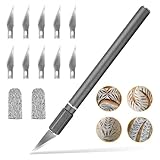
- Pro-Grade Precision Bread Lame. Engineered for perfection, our stainless steel bread scoring tool delivers ideal weight...
- Complete Sourdough Scoring Kit. The ultimate sourdough tools collection, featuring an adjustable-angle lame, 11 surgical-grade...
- Safety-First Scoring Knife. Our lame bread tool knives where the blade is held by a chuck-type clamp that you turn to close or...
Best for: Precision scoring with full kit.
A stainless steel bread scoring tool with 11 surgical-grade blades gives this kit a precise, controlled feel for sourdough patterns. The adjustable-angle lame and weighted stainless steel body are aimed at stable slashes, which helps when you want clean ear formation or decorative cuts. It also includes scoring templates for more repeatable results.
The stainless steel scoring tool is paired with 11 surgical-grade blades, so the set is built around accuracy and replacement readiness. The adjustable-angle lame helps you change the blade position for different scoring styles, which is useful when moving from simple boules to more detailed patterns. Weighted construction improves control during the slash, giving the blade a steadier path over the dough surface. The included scoring templates add another practical layer, since they make patterned cuts easier to repeat. The kit format makes sense for bakers who want more than a single implement; it combines the knife, blades, and guidance into one setup. If precision and adjustability are the priorities, this package covers the main bases.
Pros
- Stainless steel body supports controlled scoring
- 11 surgical-grade blades provide plenty of replacements
- Adjustable-angle lame allows different scoring positions
- Included scoring templates help repeat designs
Cons
- The kit includes multiple parts, so it takes more organization than a basic single-tool lame.
This is the pick for bakers who want a more complete scoring setup with adjustability and guidance. It works especially well when repeatable patterns and blade control matter most.
| Specification | Details |
|---|---|
| Brand | Junclyptic |
| Set Name | Complete Sourdough Scoring Kit |
| Number of Items | 1 |
| Included Components | One knift handes,10 blades,two finger cots |
| Model Number | Bread dao 888 |
| Unit Count | 1 Count |
I’d lean toward this if you want a more adjustable bread lame and appreciate having templates in the box. The stainless steel body and blade bundle make it a strong option for bakers who want consistency from loaf to loaf and do not mind a more feature-rich kit.
8. KneadAce Upgraded Extractable & Magnetic Bread Lame Dough Scoring Tool
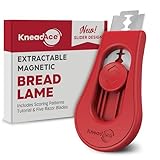
- Upgraded With Sliding Knob, This extractable bread scoring tool features a secure magnetic blade holder for safe, precise scoring...
- Convenient Storage Solution: Store this scoring lame on any metal surface, such as your refrigerator or oven. Say goodbye to...
- Comfort Meets Precision. Ergonomic handle ensures a comfortable grip, while sharp razors deliver clean and precise cuts. Master...
Best for: Magnetic storage and easy handling.
A magnetic blade holder with a sliding knob gives this bread lame secure blade placement and easy wall-or-fridge storage. The ergonomic handle is useful for comfortable scoring, while the included 5 razor blades keep the tool ready for multiple loaves. That mix works well for bakers who want tidy storage and controlled cuts.
The secure magnetic blade holder is the key feature, because it helps prevent blade slippage while you score. A sliding knob adds another layer of control, making the blade extraction process more deliberate than a loose-fit design. The ergonomic handle matters during longer baking sessions, since comfort can affect how steadily you guide the blade through the dough. The set includes 5 razor blades, which gives you a useful starter supply without making the kit overly large. The pattern guide and instructions help turn the lame into a more approachable tool for users who are still refining their scoring technique. For kitchen storage, the magnetic design lets you park it on a metal surface instead of losing it in a drawer.
Pros
- Magnetic blade holder helps prevent slippage
- Sliding knob improves blade control
- Ergonomic handle supports comfortable scoring
- 5 included razor blades keep the set usable
Cons
- It includes fewer blades than some larger kits, so frequent bakers may need replacements sooner.
A practical scoring tool for bakers who want safe blade storage and comfortable handling. It fits best when convenience and control matter more than having a large blade supply.
| Specification | Details |
|---|---|
| Brand | KNEADACE |
| Set Name | Bread Lame Essentials (1 Knife, 5 Blades, Pattern Guide) |
| Number of Items | 1 |
| Included Components | Bread Lame with Sliding Knob, 5 Razor Blades, Pattern Guide and Instructions |
| Model Number | KA03REDR2 |
| Unit Count | 1 Count |
| UPC | 860012716043 |
I’d recommend this to bakers who like practical storage and a comfortable grip in the same tool. The magnetic holder and sliding knob make it feel more controlled during use, and the pattern guide is helpful if you are still dialing in consistent scoring lines.
9. 1 Pack Carbide Scoring Cutter Knife for Laminate Vinyl Flooring

- Versatile Cutting Ability: our carbide scoring cutters are applied for marking and cutting various decorative panels; Suitable for...
- Long-lasting Carbide Blades: the hard alloy blades facilitate easy and sharp cuts and offer extended service life; We have...
- Innovative Angle Design: the elbow-designed head area of the blade allows for bending and snapping sheets through accurate...
Best for: Laminate and vinyl scoring.
A carbide scoring cutter with an elbow-angle design is made for laminate, vinyl flooring, LVP, linoleum, PMMA, acrylic, plastic, and soft tile sheets. Its 7.09-inch length and 3.52-ounce weight keep it compact for layout work and controlled scoring. That mix suits users who need one cutter for several decorative panel materials.
The carbide blade is the defining material choice, because it is intended for sharp, long-lasting scoring on hard sheet goods. At 7.09 x 1.57 x 1.18 inches, the cutter is compact enough to move easily across a workbench or jobsite. The 3.52-ounce weight helps keep the hand steady without making the tool feel bulky. Its elbow-angle design is meant to improve the cutting posture when marking and scoring decorative panels. Because the tool is listed for fiberboard, laminate, vinyl flooring, LVP, linoleum, PMMA, acrylic, plastic, and soft tile sheets, it covers a broad set of materials in one cutter. For users who want a scoring knife that handles multiple sheet types, that versatility is the main reason to choose it.
Pros
- Carbide blade supports long-lasting scoring
- Elbow-angle design improves cutting posture
- 7.09-inch length keeps the tool compact
- Works across laminate, vinyl, acrylic, and more
Cons
- It is a single cutter with no extra blades or accessories listed, so there is less backup included.
A versatile scoring knife for flooring and sheet-material work when you need one cutter for many surfaces. It is strongest for users who value compact size and material flexibility together.
| Specification | Details |
|---|---|
| Manufacturer | Lanties |
| Part Number | FL-Lanties-2886 |
| Item Weight | 3.52 ounces |
| Product Dimensions | 7.09 x 1.57 x 1.18 inches |
| Item model number | FL-Lanties-2886 |
| Item Package Quantity | 1 |
| Included Components | Carbide scoring cutter |
I’d consider this for anyone cutting a mix of laminate, vinyl, acrylic, or similar panels and wanting one compact tool to do it. The carbide edge and elbow-angle layout make it feel purpose-built for scoring rather than general cutting, which is exactly what many flooring jobs need.
10. 304 Stainless Steel Bread Lame Sourdough Scoring Tool with 10

- Premium Materials:Our bread lame dough scoring tool is made of 304 stainless steel ,which is durable and not easy to get rust.
- Precision Cuts for Perfect Bread: Our scoring tool features a high-carbon steel blade that is ultra-sharp to cut with ease and...
- Blade Replacement:Blades are easily replaceable with standard razor blades (10 included). Replacement Blades are Covered under...
Best for: Rust-resistant bread scoring tool.
304 stainless steel gives this bread lame a rust-resistant body for regular dough scoring, while the high-carbon steel blade provides the sharp edge needed for precise cuts. Ten included replacement blades keep the tool serviceable through repeated baking sessions. That combination is useful for bakers who want a durable-looking scoring tool with a straightforward replacement system.
The 304 stainless steel construction is the main structural feature, because it resists rust and keeps the lame suitable for kitchen storage and frequent handling. The high-carbon steel blade is the cutting element, and that matters when you want a sharp edge for confident slashes in proofed dough. With 10 included replacement razor blades, the tool stays practical over many bakes instead of fading after a few uses. The comfortable handle is meant to support steady scoring, which helps when shaping ear patterns or decorative lines. Sold as a set of 4 items, it gives more than just a single blade holder, though the data does not break down every piece. For bakers who want stainless construction and easy blade swaps, the core appeal is clear.
Pros
- 304 stainless steel body resists rust
- High-carbon steel blade delivers sharp cuts
- 10 included replacement blades add longevity
- Comfortable handle supports controlled scoring
Cons
- The product data does not list the full breakdown of all 4 items, so the complete kit contents are less specific.
A sensible choice for bakers who want a rust-resistant scoring tool with a sharp replaceable blade. It is most appealing when you value simple maintenance and a comfortable handle.
| Specification | Details |
|---|---|
| Brand | Gebena |
| Number of Items | 4 |
| Model Number | GB-US-1 |
| Manufacturer Part Number | GB-US-1 |
| Unit Count | 1 Count |
I’d point this to bakers who want a stainless-bodied lame that should hold up well in regular kitchen use. The combination of 304 stainless steel and a high-carbon blade makes it appealing for practical scoring work, especially if you prefer straightforward blade replacement over complicated mechanisms.
Quick Comparison Table of Top Scoring Knives
| Product Name | Material | Blade Type | Handle Type | Best For | Check Price |
|---|---|---|---|---|---|
| “SAINT GERMAIN Premium Hand Crafted Bread | Wood, steel | Replaceable blade | Comfort handle | Bread scoring | Check Price |
| POWERTEC Heavy Duty Backer Board Scoring | Carbide | Dual blades | Ergonomic grip | Backer board cuts | Check Price |
| Bread Lame Sourdough Scoring Tool, Extractable | Magnetic | Extractable blade | Secure lock | Sourdough scoring | Check Price |
| Professional Acrylic Plexiglass Sheet Cutter Scoring | Acrylic, steel | Curved hook | Straight handle | Acrylic sheets | Check Price |
| 3-Pack Bread Lame, Professional Sourdough Scoring | Metal | Extractable blade | Spring structure | Artisan bread | Check Price |
| QEP 1035952 9.5 in. Carbide Flooring | Carbide | Scoring knife | Standard handle | Flooring cuts | Check Price |
| Upgraded Bread Lame with 10 Blades | Stainless steel | Sharp blade | Hand handle | Precision scoring | Check Price |
| KneadAce Upgraded Extractable & Magnetic Bread | Magnetic | Extractable blade | Sliding knob | Easy bread scoring | Check Price |
| 1 Pack Carbide Scoring Cutter Knife | Carbide | Scoring cutter | Compact body | Flooring panels | Check Price |
| 304 Stainless Steel Bread Lame Sourdough | 304 stainless steel | High-carbon blade | Comfortable handle | Bread scoring | Check Price |
How to Choose the Right best scoring knife
Blade sharpness and scoring precision
For clean scoring, choose a knife with a thin, fine edge that bites the surface without tearing it. The best picks start lines cleanly, stay controlled on repeated passes, and keep the cut depth even from start to finish. A narrow, pointed tip helps begin marks exactly where you want them, while a slightly flexible but firm blade keeps pressure consistent.
Skip thick, blunt edges that force extra pressure and wander off line. For precision work, choose a slim blade with a sharp point and a fine, even grind; for rougher use, a broader edge is the wrong tool.
| Blade type | Best for |
|---|---|
| Fine-point utility blade | Short, accurate score lines and tight turns |
| Straight fine edge | Long, controlled passes with even depth |
| Thicker general-purpose edge | Basic cutting, not precision scoring |
Handle comfort and control
Comfort and control matter most when you score slowly and repeat the motion. Pick a handle with a secure, textured grip that stays planted even with damp hands, and look for a shape that fills the palm without forcing a tight pinch. Balanced knives feel steady near the blade rather than handle-heavy, which reduces wrist strain and keeps the point predictable.
Small hands do better with slim handles; larger hands need a fuller grip to avoid cramping. For detailed scoring, choose a medium-length handle with strong texture and neutral balance; for casual use, a simple straight handle is enough.
| Handle style | Best for |
|---|---|
| Slim, textured handle | Small hands and detailed control |
| Fuller contoured handle | Longer sessions and larger hands |
| Plain smooth handle | Light duty, less precise work |
Blade material and durability
Choose blade material based on how often you use the knife and how hard the scoring surface is. Stainless steel resists rust and stays reliable with less upkeep, making it the better choice for everyday buyers and damp environments. High-carbon steel holds a keen edge longer and handles repeated scoring better, but it needs prompt drying and care to prevent corrosion.
Good blades resist bending, keep their edge after repeated passes, and show even finishing on the spine and edge. For low-maintenance reliability, pick stainless steel; for maximum edge retention and frequent use, choose high-carbon steel.
| Material | Best for |
|---|---|
| Stainless steel | Easy care, moisture resistance, general use |
| High-carbon steel | Frequent scoring and stronger edge retention |
| Soft low-grade steel | Basic tasks only, not durable precision |
Safety and ease of use
Safety starts with a knife that controls the blade path and protects your fingers during short, precise strokes. Choose a model with a clear finger guard, a recessed edge, or a protected blade channel that limits slips. The knife should feel stable at the tip and not wobble when you press lightly into the material.
Simple blade changes matter too: look for a tool that opens cleanly, locks securely, and replaces blades without awkward disassembly. For frequent scoring, choose a guarded, stable knife with a straightforward blade-change system; for occasional use, a simpler protected design works well.
- Finger guard or recessed blade
- Secure lock or firm blade seat
- Stable tip control during light pressure
- Tool-free or simple blade replacement
Cleaning and maintenance needs
Cleaning and maintenance decide how well a scoring knife holds up over time. Choose smooth blade surfaces, minimal seams, and few deep crevices so residue wipes off quickly after use. A knife that needs constant scrubbing wastes time and leaves grime near the edge.
Sharpening needs also matter: harder steels stay sharp longer, while softer blades need more frequent touch-ups. Store the knife in a sheath, blade cover, or case that keeps the edge from rubbing against drawers and tools.
For the easiest upkeep, pick a smooth stainless blade with a protective sheath; for longer edge life, choose a harder blade and accept more sharpening care.
| Maintenance feature | Best for |
|---|---|
| Smooth blade and simple joins | Fast cleaning after use |
| Harder steel edge | Longer intervals between sharpening |
| Sheath or blade cover | Safe storage and edge protection |
Which Should You Choose?
- If you bake sourdough often and want a dependable everyday tool, choose a stainless steel bread lame with replaceable blades and a comfortable wood or ergonomic handle.
- If you want safer blade storage and easy handling while scoring decorative dough patterns, choose an extractable or magnetic bread scoring tool with a secure blade lock.
- If you need to score acrylic, plastic sheets, or brittle craft materials, choose a curved hook-style scoring knife made for sheet cutting.
- If your work involves backer board, laminate, vinyl flooring, or roofing materials, choose a heavy-duty carbide scoring knife with a firm grip and durable cutting edge.
Quick Best Scoring Knife Buying Checklist
- Check blade sharpness to ensure the best scoring knife makes clean, precise lines without tearing material.
- Choose a comfortable handle so the knife stays controlled during repeated scoring passes.
- Review blade material for durability, corrosion resistance, and long-term edge retention.
- Look for safety features such as a secure grip, protected edge, or guard design.
- Consider maintenance needs including sharpening frequency, cleaning ease, and replacement parts.
- Match the knife to your task by selecting a blade shape and size suited to the depth and precision you need.
How a scoring knife cuts cleanly without tearing the surface
A scoring knife is designed to create a controlled, shallow cut that weakens a material before a deeper break or fold. The edge is usually fine and pointed, which helps it start a line accurately and stay on track across paper, vinyl, drywall, leather, or similar materials. Rather than forcing a full cut in one pass, the blade removes just enough material to guide the next step.
That controlled approach reduces fraying, chipping, and wandering lines. The result depends on steady pressure, a stable surface, and the right angle of attack, because the knife is doing precision work rather than heavy slicing.
Understanding this function makes it easier to use the tool safely and get cleaner results.
Common scoring knife blade styles and what each one does
Scoring knives are available with different blade profiles, and each shape affects control, durability, and edge behavior. Straight blades are useful for general-purpose scoring and straightforward lines. Hooked or angled blades help pull through tougher surfaces with less skipping.
Retractable utility-style versions are convenient for storage and quick blade changes, while fixed-blade models often feel more rigid and precise in hand. Some blades are designed for soft materials, while others handle dense surfaces better.
The right profile depends on whether the goal is a light surface mark, a deeper guide line, or a repeated cut along a template. Matching the blade shape to the material is one of the simplest ways to improve consistency.
| Blade style | Best for |
|---|---|
| Straight edge | General scoring and clean guide lines |
| Hooked edge | Thicker or fibrous materials |
| Retractable utility | Portable use and blade protection |
| Fixed blade | Maximum rigidity and steady control |
Materials that affect blade life and cutting performance
The material used in a scoring knife blade plays a major role in how long it stays sharp and how it behaves under pressure. High-carbon steel can take a keen edge and is often easy to resharpen, but it may need more care to resist corrosion. Stainless steel offers better rust resistance and is practical for damp environments or frequent handling.
Carbide-tipped blades tend to hold their edge longer on abrasive materials, making them useful when repeated scoring would dull a standard edge quickly. Handle materials matter too, because grip texture and balance influence accuracy.
A comfortable, stable handle helps reduce hand fatigue and gives the user better control over the depth and direction of each pass.
Care and maintenance for consistent scoring results
Regular maintenance keeps a scoring knife predictable and safe to use. Wipe the blade after each session to remove adhesive, dust, or residue that can drag during a cut. If the blade begins to snag, dulling is usually the first cause, so replace or sharpen it before forcing the tool.
Check the handle, locking mechanism, and blade seat for looseness, because any movement can throw off the cut line. Store the knife with the edge covered or retracted to protect both the blade and nearby items.
A light coating of corrosion protection may help on blades that are not stainless, especially if they are used in humid spaces. Good care reduces accidents and helps maintain a smooth scoring action over time.
Safety habits that reduce slips, nicks, and uneven cuts
Safe use starts with a stable work area and a clear cutting path. Keep fingers away from the intended line and use a straightedge or guide whenever accuracy matters. Let the blade do the work instead of pressing harder than necessary, because excess force can make it jump or dig too deeply.
Wear appropriate hand protection when the material and task call for it, but make sure gloves do not reduce your grip or dexterity. Always cut away from the body and check that the blade is fully secured before starting.
If the material shifts, stop and reset it rather than trying to correct the line mid-cut. These habits lower the chance of injury and improve the quality of the scored line at the same time.
Frequently Asked Questions (FAQs)
What Makes The Best Scoring Knife Different From A Standard Utility Knife?
The best scoring knife differs from a standard utility knife because it is designed for controlled, shallow cuts that create clean score lines. It typically has a finer edge and better balance, which helps reduce slips and improves consistency on paper, leather, drywall, or similar materials.
How Important Is Blade Sharpness In A Scoring Knife?
Blade sharpness is essential in a scoring knife because a keen edge makes smoother, more accurate passes with less pressure. A sharper blade reduces tearing and wandering, especially when you need repeated, even lines on thin or delicate materials.
What Handle Features Should I Look For In The Best Scoring Knife?
The best scoring knife should have a handle that feels secure, balanced, and comfortable during detailed work. Textured grips, a tapered shape, and an appropriately sized handle improve control, especially when making short, precise cuts over longer sessions.
Which Blade Material Is Best For A Scoring Knife?
A scoring knife with high-quality stainless or high-carbon steel blades usually offers the best mix of edge retention and durability. Stainless steel resists corrosion well, while high-carbon steel often holds a sharper edge longer, making material choice important for frequent use.
Are Safety Features Important In A Scoring Knife?
Safety features are very important in a scoring knife because the tool is used with close hand control and repeated passes. A finger guard, locking mechanism, or secure sheath helps reduce accidental contact with the blade and supports safer storage between uses.
How Do I Maintain The Best Scoring Knife?
The best scoring knife stays effective with regular cleaning, careful drying, and periodic sharpening or blade replacement. Keeping the edge free of residue and storing the tool in a protective sleeve helps preserve precision and extends the knife’s useful life.
Can One Scoring Knife Work For Different Materials?
Yes, the best scoring knife can work across different materials if the blade shape and sharpness match the task. A finer blade suits light scoring, while a sturdier edge handles thicker surfaces better, so choosing the right model improves accuracy and reduces wear.
Final Suggestions
In summary, the best scoring knife combines sharpness, comfort, durability, and control to deliver cleaner, more precise results. With the right blade and handle design, it becomes a versatile tool for careful work across many materials. Choose confidently, and you’ll be ready for smoother, more accurate scoring every time.