Top 3 Best Chamber Vacuum Sealers: Must-See Picks
Best chamber vacuum sealers transform how foods, liquids, and bulk ingredients are preserved. Unlike external sealers, these machines create a controlled vacuum environment that helps manage moisture, reduce freezer burn, and improve seal consistency on pouches and bags. That precision makes them valuable for sous vide cooking, pantry storage, and professional kitchens where reliability matters.
In this guide to the best chamber vacuum sealers, we explore how vacuum chamber technology, sealing bars, pump strength, and build quality affect performance. You will also see why chamber vacuum sealer machines stand out for liquids, marinades, and tougher packaging materials, especially when airtight storage and food freshness are the goal.
The differences can be subtle, but the right details can change everything—keep reading to see what separates the strongest contenders from the rest.
Detailed Reviews of the Best Chamber Vacuum Sealers
1. Beelicious Pro DualCore CVS101 6.5QT Chamber Vacuum Sealer for Wet

- 【𝐃𝐮𝐚𝐥 𝐕𝐚𝐜𝐮𝐮𝐦 𝐙𝐨𝐧𝐞𝐬 & 𝟔 𝐋 𝐂𝐡𝐚𝐦𝐛𝐞𝐫】Seal liquids, soups...
- ...
- ...
Best for: Wet foods and larger bag users.
A 6.5QT chamber gives the Beelicious Pro enough room to seal liquids, soups, and powders without forcing the bag to stay outside the machine. The upper chamber measures about 300 x 260 x 80 mm, so pouches and larger chamber bags can sit inside for cleaner sealing on mixed food prep. Stainless steel construction keeps the body suited to regular countertop use.
Dual vacuum zones give this sealer two ways to work: the upper chamber handles smooth chamber bags, textured rolls, and bagged wet foods, while the lower work area seals bags that do not fit inside. The removable 12-inch sealing system matters if you want broader bag compatibility for batch packing. At 25.7 pounds, it has enough mass to stay planted during repeated sealing sessions, which helps when you are packaging several soups, sauces, or marinated items in a row. Corded electric power keeps output consistent, and the stainless steel finish is easy to match with other metal prep gear in a busy kitchen.
Pros
- 6.5QT chamber fits soups, powders, and liquids
- 12-inch dual seal system supports larger bags
- Stainless steel body suits frequent countertop use
- Dual vacuum zones handle both in-chamber and out-of-chamber sealing
Cons
- 25.7-pound weight makes it less convenient to move or store after use
Choose this model if your sealing work includes wet foods, mixed bag sizes, or frequent batch packing. The larger chamber and dual-zone setup make it a practical fit for home cooks who need more than a basic suction sealer.
| Specification | Details |
|---|---|
| Brand | Beelicious Pro |
| Material | Stainless Steel |
| Color | Stainless Steel |
| Item Weight | 25.7 pounds |
| Power Source | Corded Electric |
| Chamber Capacity | 6.5QT |
| Upper Chamber Size | 300 x 260 x 80 mm |
| Seal Length | 12 inches |
I’d point this one at buyers who regularly seal wet or messy foods and want a chamber that can keep up with bigger batches. The 6.5QT capacity and dual vacuum zones make it especially appealing if you use both chamber bags and out-of-chamber rolls. It feels most useful for practical kitchen work rather than occasional use.
2. Gasbye Chamber Vacuum Sealer – 5.3QT Large Chamber, Replaceable 11.5″

- [Removes Nearly All Air – Even from Ground Meat, Chunky Foods, and Liquids] Unlike traditional suction vacuum sealers that only...
- [Your All-in-One Food Preservation Solution] The Gasbye Chamber Vacuum Sealer effortlessly handles both solid and liquid...
- [5.3QT Chamber Capacity] When choosing a chamber vacuum sealer, chamber size is key—you need enough space to fit both the vacuum...
Best for: Everyday batch sealing for mixed foods.
A 5.3QT chamber gives the Gasbye room for ground meat, chunky vegetables, soups, and sauces without relying on bag-top suction alone. Its stainless steel body and 13.6 x 12.2 x 8.1 inch footprint keep the machine compact enough for a steady countertop spot while still offering a large internal sealing space. The 300W high-power pump adds the speed buyers want for repeat sealing.
This model removes air from the entire chamber, which matters when the food itself has gaps, liquid, or irregular texture. That full-chamber action helps the bag conform tightly around chunky ingredients instead of leaving pockets behind. The replaceable 11.5-inch sealing setup gives you a practical seal length for everyday meal prep and freezer packing, while the stainless steel finish is easier to keep aligned with other prep equipment. At 13.6 inches long, 12.2 inches wide, and 8.1 inches high, it keeps a manageable counter profile for a machine with this kind of capacity. The 300W pump is the main advantage if you seal often and want more consistent pull on mixed foods.
Pros
- 5.3QT chamber handles soups, sauces, and chunky food
- 300W pump supports stronger vacuum performance
- 11.5-inch sealing setup suits everyday batch packing
- 13.6 x 12.2 x 8.1 inch footprint fits a regular counter space
Cons
- 11.5-inch seal length is shorter than larger commercial-style chamber sealers
This is a strong fit if you want a chamber sealer that can deal with both wet foods and awkward chunks. The combination of a 5.3QT chamber and 300W pump makes it a sensible pick for regular home meal prep and freezer storage.
| Specification | Details |
|---|---|
| Brand | Gasbye |
| Material | Stainless Steel |
| Color | Stainless Steel |
| Product Dimensions | 13.6″L x 12.2″W x 8.1″H |
| Power Source | 300W High-Power Pump |
| Chamber Capacity | 5.3QT |
| Seal Length | 11.5 inches |
I’d recommend this to someone who wants a chamber vacuum sealer for mixed household use rather than specialty-only sealing. The 5.3QT chamber and 300W pump make it appealing for meat, soups, and vegetables in the same routine. It should satisfy buyers who want a compact footprint without giving up a roomy chamber for ordinary batch packing.
3. Avid Armor USV20 Chamber Vacuum Sealer Machine – High-Volume 11.5”
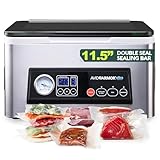
- Master Liquid Sealing Without Mess: Our chamber vacuum sealers with full-chamber pressure technology that equalizes vacuum power...
- Precision Vacuum & Seal Control: Dial in adjustable vacuum time (15 to 60 sec) and seal controls for consistent, repeatable...
- Compact Footprint For Easy Storage: Sous vide vacuum sealer is designed with a space-saving 14"Wx12"Dx8.25"H body and 17.55 lb...
Best for: Compact pick for controlled sealing.
A stainless steel chamber unit that stands just 3 inches tall, the Avid Armor USV20 gives countertop users a low-profile machine with precise control. Its 12.25 x 8.5 inch footprint keeps it compact, while the high-volume 11.5-inch sealing setup supports larger bags for soups, marinades, and fresh meat. The size makes it easier to fit in tighter kitchens.
Adjustable vacuum time from 15 to 60 seconds is the feature that gives this machine real control over delicate foods and dense cuts alike. You can tune the cycle so softer items are less likely to crush while still pulling enough air for freezer storage. Full-chamber pressure technology helps lock in liquids such as stews, marinades, and meat juices without messy suction at the bag opening. At 17.3 pounds, it is lighter than many chamber sealers, which helps if you need to shift it between prep sessions. The stainless steel build keeps the machine suited to regular food-prep use, and the 11.5-inch sealing width gives enough room for common household bags.
Pros
- 15 to 60 second vacuum control adds sealing precision
- 11.5-inch sealing setup handles larger household bags
- 17.3-pound weight is easier to reposition than heavier units
- 3-inch height fits under more storage spaces
Cons
- 11.5-inch sealing width is less generous than wider dual-seal chamber models
Pick this one if you care most about control and a compact footprint. The adjustable vacuum timing makes it a better match for cooks sealing both liquids and delicate foods in the same kitchen.
| Specification | Details |
|---|---|
| Brand | Avid Armor |
| Material | Stainless Steel |
| Color | stainless |
| Product Dimensions | 12.25″L x 8.5″W x 3″H |
| Item Weight | 17.3 pounds |
| Vacuum Time | 15 to 60 sec |
| Seal Length | 11.5 inches |
This is the one I’d point to for buyers who want a lower-profile chamber sealer with more hands-on control. The adjustable vacuum time makes it appealing if you seal a mix of liquids, soft foods, and denser items. It feels especially practical for smaller kitchens where counter height and storage space matter as much as sealing performance.
Quick Comparison Table of Top Chamber Vacuum Sealers
| Product Name | Capacity | Bag Compatibility | Weight | Best For | Check Price |
|---|---|---|---|---|---|
| Beelicious Pro DualCore CVS101 6.5QT Chamber | 6 L | Smooth/embossed | 25.7 lb | Liquids and powders | Check Price |
| Gasbye Chamber Vacuum Sealer – 5.3QT | 5.3 QT | 11.5″ bags | 300W pump | Chunky foods and liquids | Check Price |
| Avid Armor USV20 Chamber Vacuum Sealer | 11.5″ bags | Full-chamber | 17.3 lb | High-volume sealing | Check Price |
How to Choose the Best Chamber Vacuum Sealers?
Chamber size and food capacity
Choose chamber size from the food you seal most often, not from the biggest item you plan to process once in a while. A compact chamber fits snack bags, portioned meats, and small jars, but a cramped interior slows batch work and limits liquid-rich foods. For meal prep or small-scale production, pick a chamber that leaves clear space around the bag opening and enough depth for pouches, marinated cuts, and jars to sit flat.
Good picks list both chamber width and seal-bar length clearly; weak picks hide those numbers or leave almost no working room.
Vacuum strength and seal quality
Choose a machine with enough vacuum power to pull tight around dense foods and seal liquid-rich items without bubbles or wet seams. Strong units create a fast, even vacuum, then finish with a clean, uniform seal that stays flat from end to end. Look for a seal bar wide enough for the bags you use most, plus repeat-seal support for back-to-back runs.
Thin or patchy seals, slow pump recovery, and inconsistent edges are signs of weaker performance. For mixed-use sealing, pick a model with strong pump output and a long, reliable seal bar.
| Type | Best for |
|---|---|
| Basic single seal bar | Occasional dry foods and simple portions |
| Wide seal bar with repeat sealing | Frequent batch work and thicker bags |
| High-output pump | Dense cuts, marinades, and liquid-rich items |
Build quality and materials
Choose stainless steel construction when the sealer will see frequent use, long sealing sessions, or heavier bags. A solid body resists flexing, keeps the chamber aligned, and handles repeated opening and closing better than thin, lightweight shells. Check the lid for a sturdy hinge, the gasket for a tight, even seat, and the chamber finish for smooth corners that do not trap residue.
Weak fit around the lid, a flimsy control panel, or a loose hinge signals shorter service life. For regular home use, pick stainless steel with a firm lid, tight gasket, and precise panel fit.
| Material / part | Best for |
|---|---|
| Stainless steel body | Frequent sealing and heavier workloads |
| Rigid lid with strong hinge | Repeated daily operation |
| Smooth chamber finish | Quick cleanup and fewer residue traps |
Ease of use and cleaning
Choose a sealer that keeps control simple: clear buttons, plain cycle labels, and settings you can understand at a glance. A good layout separates vacuum time, seal time, and any marinate or soft-release function, so you do not guess during each cycle. Cleaning matters just as much, so look for a removable drip tray, rounded chamber edges, and surfaces you can wipe in one pass.
Hard-to-read controls, fixed cycles with no adjustment, and seams that catch food waste make maintenance tedious. For everyday convenience, pick a model with removable parts, smooth interior surfaces, and direct controls.
- Clear cycle labels for vacuum, seal, and marinate
- Removable tray or insert for spills
- Easy-wipe chamber walls and seal area
- Simple access to gasket and pump maintenance points
Useful features and safety functions
Choose features that match the foods you seal, not extras that sit unused. Pulse control and adjustable vacuum strength matter for soft foods, berries, and baked goods because they prevent crushing. Marinate modes save time for seasoned meats, while preset programs remove guesswork for repeat jobs.
Soft-air release protects delicate items from sudden pressure changes, and a secure lid lock keeps the cycle stable. Skip models with vague controls or no protection for fragile foods.
For mixed household use, pick a unit with pulse control, soft-air release, and at least one useful preset program.
| Feature | Best for |
|---|---|
| Pulse / adjustable vacuum | Delicate foods and fragile textures |
| Marinate mode | Seasoned meats and quick flavoring |
| Soft-air release | Protecting soft items at cycle end |
| Secure lid lock | Stable sealing and safer operation |
Which Should You Choose?
- If you seal soups, marinades, or other messy liquids often, choose a chamber sealer with full-chamber vacuum and strong liquid-handling performance.
- If you want room for larger batches of ground meat, chunky foods, or meal prep portions, choose a larger chamber size with a wide bag capacity.
- If you need a machine that can handle both smooth chamber bags and textured or embossed bags, choose a model with a bag-friendly chamber and versatile sealing compatibility.
- If counter space is limited but you still want reliable sealing for everyday wet and dry foods, choose a compact unit with a chamber around 5 to 6.5 quarts.
Quick Best Chamber Vacuum Sealers Buying Checklist
- Measure the chamber interior to ensure it fits the bag sizes and food portions you seal most often.
- Check vacuum power so the sealer can handle moist foods, marinades, and dense ingredients without weak results.
- Inspect seal quality for a wide, even seal bar that helps prevent leaks during storage.
- Review the build materials and choose sturdy components that can handle frequent kitchen use.
- Look for easy cleaning features such as smooth surfaces, removable trays, or simple wipe-down access.
- Confirm the control options include settings that match both delicate items and high-volume sealing tasks.
How Chamber Vacuum Sealers Remove Air Differently
Chamber vacuum sealers work by placing the entire bag inside a sealed chamber and then lowering the air pressure around it. Because the pressure inside the bag and the chamber equalize, liquids and moist foods stay put instead of being pulled out during sealing. This makes chamber units especially useful for soups, marinades, sauces, and other wet ingredients that are difficult to package with external sealers.
After the air is removed, the machine seals the bag and then returns the chamber to normal pressure, creating a tight closure. The result is a more consistent vacuum and a cleaner seal on a wider range of foods.
Chamber Sealers Versus External Vacuum Sealers
Chamber sealers and external vacuum sealers both remove air from packaging, but they do so in different ways and excel in different situations. Chamber models are typically better for liquids, small portions, and repeated use in professional or heavy home settings. External sealers, by contrast, are often more compact and work well with textured bags for dry foods.
Chamber machines usually use smoother chamber pouches, while external models depend on special embossed bags to allow air to escape. The right choice depends less on which device is better overall and more on what you plan to package most often and how often you will use it.
| Type | Best for | Typical bag style |
|---|---|---|
| Chamber sealer | Liquids, marinades, frequent sealing | Flat chamber pouches |
| External sealer | Dry foods, compact storage | Embossed vacuum bags |
| Double chamber style | High-volume workflow | Flat chamber pouches |
Bag Types and Food Compatibility
Not every vacuum bag is compatible with every chamber sealer, so matching the bag type to the machine matters. Most chamber models use smooth, non-embossed pouches that are designed to seal reliably under pressure. Bag thickness also affects durability: thicker bags offer more puncture resistance for bones, sharp edges, or frozen portions, while thinner bags can work well for softer foods and short-term storage.
Size matters too, because the bag must fit comfortably inside the chamber without blocking the seal bar. For foods with moisture, a proper chamber pouch helps prevent leaks and preserves a cleaner seal line.
| Bag type | Best for | Key advantage |
|---|---|---|
| Standard chamber pouch | General food storage | Reliable sealing |
| Thick chamber pouch | Sharp or dense foods | Better puncture resistance |
| Heat-resistant pouch | Warm-filled items | Improved seal stability |
Routine Care and Maintenance for Reliable Sealing
Regular maintenance helps a chamber vacuum sealer keep producing strong seals and consistent suction. After each use, wipe the chamber, seal bar, and gasket area to remove food residue or moisture that can interfere with the vacuum cycle. Check the lid gasket for cracks, flattening, or debris, since even small damage can reduce performance.
If your machine uses oil, follow the manufacturer’s service schedule and keep the oil at the correct level and cleanliness. It also helps to inspect the seal wire and replace worn parts before they fail.
Clean, dry, and properly stored equipment generally lasts longer and performs more predictably.
Common Mistakes That Can Affect Seal Quality
Several avoidable mistakes can lead to weak seals or messy packaging. Overfilling a bag is one of the most common issues, because food near the seal area can prevent a complete closure. Another problem is choosing a bag that is too small for the chamber, which can fold or wrinkle during the cycle.
Wet rims, grease, or crumbs along the seal line can also compromise the final seal. Users sometimes try to vacuum-seal hot liquids without enough headspace, which may cause splashing or overflow.
To improve results, leave space at the top of the bag, keep the seal area clean, and let very hot foods cool slightly before packaging.
Frequently Asked Questions (FAQs)
What Makes Chamber Vacuum Sealers Better For Liquids?
Chamber vacuum sealers handle liquids better because the whole bag sits inside a sealed chamber, allowing pressure to equalize before the seal is made. This design helps vacuum-pack soups, marinades, and wet foods without sucking liquid into the pump or weakening the seal.
How Important Is Chamber Size In A Vacuum Sealer?
Chamber size is very important in a chamber vacuum sealer because it determines the largest bag and food portion you can seal at once. A bigger chamber is helpful for meal prep, bulk ingredients, and jars, while a smaller unit suits compact kitchens and lighter use.
What Seal Quality Should I Look For In Chamber Vacuum Sealers?
Strong seal quality in chamber vacuum sealers means an even, continuous seal bar that closes bags securely without gaps or wrinkles. Look for consistent seal width and reliable heat control, because those details help keep food protected during storage and freezing.
Are Stainless Steel Chamber Vacuum Sealers Worth It?
Yes, stainless steel chamber vacuum sealers are worth it because they usually offer better durability, easier cleaning, and a more stable feel during frequent use. The sturdier housing also helps the machine stay aligned, which supports consistent sealing over time.
Can Chamber Vacuum Sealers Be Used For Marinating Food?
Yes, chamber vacuum sealers are excellent for marinating food because the reduced pressure helps liquid seasoning move into meats and vegetables more quickly. A marinate mode or short vacuum cycle can improve flavor absorption without needing long countertop soaking.
What Features Help Make Chamber Vacuum Sealers Easier To Use?
Easy-to-use chamber vacuum sealers usually include clear controls, preset programs, and a lid that locks smoothly without extra effort. Features like adjustable vacuum strength, soft-air release, and removable trays also make everyday sealing simpler and more convenient.
Who Benefits Most From Chamber Vacuum Sealers?
Home cooks, bulk shoppers, and small food businesses benefit most from chamber vacuum sealers because they can seal liquids, sauces, and large batches efficiently. The category is especially useful for anyone who wants longer food storage, cleaner packaging, and reliable professional-style results.
Final Suggestions
In summary, the best chamber vacuum sealers offer stronger liquid handling, dependable seals, and practical features that simplify food storage. They add real value for meal prep, bulk buying, and preserving delicate or wet ingredients with less mess. Choose the model that matches your space and workload, and you’ll be ready to seal smarter with confidence.