Top 10 Best Commercial Oven For Sourdough Bread
The best commercial oven for sourdough bread can define everything from crust development to crumb structure. In professional baking, precision heat, steam injection, and even thermal stability shape how a loaf performs in the oven, especially when artisan fermentation demands consistency. The best commercial oven for sourdough bread also influences production flow, energy efficiency, and batch uniformity, making it a critical choice for bakeries focused on quality and output.
Beyond simple baking capacity, sourdough baker’s oven designs, artisan bread ovens, and deck-style systems each bring different strengths in heat retention, moisture management, and baking surface performance. Understanding these technologies matters when evaluating stainless steel construction, control systems, and long-term reliability.
The details behind each model can separate a decent bake from a standout one, and that difference starts here.
In-depth Reviews of the Best Commercial Oven for Sourdough Bread
1. VEVOR Commercial Convection Oven, 47L/43Qt, Half-Size Conventional Oven Countertop, 1600W
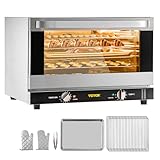
- 43Qt/47L Spacious Interior: Despite its compact structure, our commercial convection oven features a 43 Qt (47 L) inner capacity...
- All-Round Hot Air Circulation: Compared with deep-frying, baking with less oil & fat can help you cultivate a healthier eating...
- Stainless Body & Tempered Glass Door: The rugged stainless steel interior and exterior are extremely durable, rust...
Best for: Compact batch-baking pick.
A 43-quart interior gives the VEVOR countertop convection oven enough room for medium sourdough batches without taking over a prep line. The four-tier cavity measures 18.5 x 15.4 x 9.8 inches, so you can stage loaves and pans with breathing room. That size suits bakeries and small commercial kitchens that need steady production from a smaller footprint.
The 1600W heating system pairs with an efficient fan, which matters for sourdough because even airflow helps loaves spring and brown more consistently across multiple racks. Its 22 x 23 x 18-inch body stays countertop-friendly while still offering 47 liters of usable capacity for repeated bakes. Programmable controls let staff set repeatable cycles, reducing guesswork when timing fermentation windows and oven loading. The silver finish also fits easily into stainless-heavy work areas, and the half-size form factor makes it easier to slot into an existing production station without a full floor-space commitment.
Pros
- 43-quart capacity supports medium batch sourdough production
- 1600W output helps maintain steady baking heat
- Four-tier interior improves rack-by-rack loading flexibility
- Programmable controls support repeatable bake cycles
Cons
- No full-size deck format, so larger artisan boules may need split batches
This oven makes sense for bakeries that want reliable sourdough output from a smaller countertop unit. It is a practical fit when you need batch consistency more than a full walk-in footprint.
| Specification | Details |
|---|---|
| Brand | VEVOR |
| Capacity | 43 quarts |
| Capacity | 47 L |
| Product Dimensions | 22″D x 23″W x 18″H |
| Interior Dimensions | 18.5″ x 15.4″ x 9.8″ |
| Power | 1600W |
| Color | Silver |
| Special Feature | Programmable |
I’d point this one at smaller bakeries, cafes, or catering kitchens that bake sourdough in controlled batches. The combination of a 43-quart cavity, four tiers, and programmable operation makes it easier to keep production moving without overcommitting space. If your focus is consistent loaves from a countertop footprint, it is a sensible choice.
2. KoolMore 38 in. Full-Size Single Deck Commercial Natural Gas Convection

- Professional-Grade Convection Oven – A must-have for modern commercial kitchens this single-deck natural gas convection oven can...
- Three Large Capacity Baking Racks – This convection oven features 3 individual cooking racks with superior width and depth so...
- Quick and Easy Temp Adjustments – Temperature control is vital when cooking and baking. This convection oven boasts adjustable...

Best for: Full-size deck for busy bakeries.
Three large baking racks give the KoolMore natural gas convection oven the kind of staging space sourdough production needs in a commercial line. Its 7-cubic-foot full-size cabinet supports broader loaf runs, pastries, and mixed baking without constant tray shuffling. That layout works well when a bakery wants multiple batches moving through the same oven with less downtime.
The stainless-steel finish is paired with a natural gas convection heating method, which suits operations that want fast recovery between sourdough loads. A single-deck layout with three racks gives you room to rotate loaves while managing browning more closely. At 38 inches wide, this oven is clearly aimed at dedicated production space rather than a small countertop setup, so it fits better in kitchens that bake all day. The 7-cubic-foot size also helps when sourdough is just one part of a larger menu, because it can handle bread alongside pastries, cookies, and pizza without constant reconfiguration.
Pros
- 7-cubic-foot interior supports larger production runs
- Three baking racks allow rack rotation during baking
- Natural gas heating supports quick heat recovery
- Stainless-steel finish suits commercial kitchen cleanup
Cons
- Single-deck format limits vertical staging compared with multi-deck bread ovens
For bakeries that need a roomy gas oven for sourdough and other baked goods, this model offers straightforward capacity. It fits best where floor space is available and throughput matters more than a compact footprint.
| Specification | Details |
|---|---|
| Brand | KoolMore |
| Size | 7 cubic feet |
| Color | Stainless-Steel |
| Heating Method | Convection |
| Finish Type | Stainless Steel |
| Product Dimensions | 38 in. full-size |
| Configuration | Single Deck |
| Fuel Type | Natural Gas |
I’d consider this a solid match for a bakery that wants a traditional commercial gas setup for sourdough and mixed baking. The three-rack arrangement is useful when you need to manage multiple loaves without overcrowding. It makes the most sense in a kitchen that already runs natural gas and has room for a full-size deck unit.
3. VEVOR Commercial Convection Oven, 4.24 cu.ft Countertop Oven for Full-Size
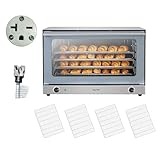
- Commercial Grade Performance: This commercial countertop convection oven features a large capacity and supports 208–240V...
- Four-Tier Large Capacity: With a spacious 120L capacity and four rack positions, this countertop convection oven can bake up to...
- Efficient and Rapid Heating: Powered by 3800–5000W and dual convection fans, this countertop oven uses hot air to distribute...
Best for: High-volume countertop production.
A 120-liter cavity puts the VEVOR full-size countertop convection oven in a different class for sourdough volume. Four rack positions let you organize large batches efficiently, and the commercial-voltage support means it is aimed at serious bakery use. That combination helps when the goal is repeated production with fewer pauses between loads.
The oven supports 208–240V commercial voltage, which is important in bakeries that need stable power for fast service. With 4 rack positions and a reported capacity for up to 88 egg tarts or 48 croissants per run, it signals serious batch throughput for small breads and shaped sourdough items. The 29.65 x 32.87 x 22.24-inch footprint is large enough for production work while still staying on a countertop platform. Programmable controls add repeatability, which helps when sourdough schedules must match proofing and bake timing across several trays.
Pros
- 120-liter capacity supports large sourdough batches
- Four rack positions improve batch organization
- 208–240V support suits commercial service setups
- Programmable controls help repeat bake timing
Cons
- Countertop size still demands substantial prep-space clearance
This is a strong option for bakeries that need high output from a countertop oven rather than a floor model. It fits best when sourdough production is frequent and consistent batch size matters.
| Specification | Details |
|---|---|
| Brand | VEVOR |
| Capacity | 120 liters |
| Product Dimensions | 29.65″D x 32.87″W x 22.24″H |
| Voltage | 208–240V commercial voltage |
| Rack Positions | 4 |
| Color | Silver |
| Special Feature | Programmable |
I’d recommend this to bakeries or cafes that want serious countertop throughput for sourdough and other laminated or shaped doughs. The 120-liter size and four rack positions make it easier to keep production organized under demand. If you have the electrical setup and the counter space, it can carry a lot of baking work without moving to a full floor oven.
4. TECHTONGDA Commercial Pizza Oven Gas Heating Triple Deck Pizza Oven

- Heating evenly:This pizza oven uses gas heating, which heats up fast and ensures even heating of food. The heat dissipation window...
- Independent control: The temperature of each layer of the oven can be controlled independently, and it can be used simultaneously...
- High quality material: The visual window of each layer is made of heat-tolerant transparent glass, and the state of the food in...
Best for: Triple-deck variety baker.
Three independent gas-heated decks give the TECHTONGDA pizza oven a strong advantage for sourdough bakeries that also handle mixed baking. Each layer can run separately or at the same time, so production can be split by batch type without tying up one chamber. That flexibility helps when bread service, pastries, and other foods need different schedules.
The oven’s 35.4 x 52.4 x 67.3-inch size reflects a large commercial footprint, and its 89.4-gallon capacity supports heavier kitchen output than countertop models. Independent temperature control for each layer means you can dedicate one deck to sourdough while using the others for different bakes. Gas heating brings fast warm-up and even heating, which matters when oven spring and crust color need consistency. The visual windows and heat-dissipation features also help staff monitor loads without unnecessary opening, reducing heat loss during active service.
Pros
- Three decks allow separate sourdough and pastry batches
- Independent layer control improves scheduling flexibility
- Gas heating supports quick warm-up and even heat
- Large 89.4-gallon capacity suits high-volume kitchens
Cons
- Large floor footprint limits use in smaller bakery spaces
This oven fits bakeries that need multi-deck flexibility more than a compact footprint. It is a practical choice when sourdough is part of a broader commercial baking program.
| Specification | Details |
|---|---|
| Brand | TECHTONGDA |
| Product Dimensions | 35.4″D x 52.4″W x 67.3″H |
| Capacity | 89.4 gallons |
| Color | silver |
| Heating Method | Gas Heating |
| Decks | Triple Deck |
| Independent Control | Yes |
I see this working best in a busy bakery or foodservice kitchen that needs multiple baking zones at once. The independent deck control is the main reason to choose it, especially if sourdough shares space with other baked goods. It is not a small-space solution, but it offers the scheduling flexibility larger operations need.
5. Commercial Convection Oven, Natural Gas, 60000 BTU, Double Deck, Four
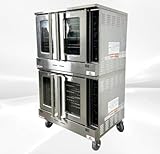
- This Electric Commercial Convection Oven could deliver 60000 BTU/hr, which could easily be used to warm, cook or bakery. The...
- Our Range has a overall size of 38""W X 31""D X 67""H, two Door with glass window. Crafted with anti-corrosion stainless steel and...
- The oven has a 60-minutes timer and temperature adjustment range from 150°F-500°F, controlled by the Dialing Knobs. The air...
Best for: Heavy-duty gas bakery workhorse.
A 60,000 BTU gas output gives the cooler depot double-deck oven the heat muscle to keep sourdough production moving. The 38 x 31 x 67-inch footprint and dual-door layout point to a serious commercial range, while the glass windows let staff check loaves without opening the chambers. That setup helps maintain stable bake conditions during busy service.
Porcelain enamel coated interiors make cleanup easier after flour dust, steam, and crumb buildup from repeated bread bakes. The anti-corrosion stainless steel and welded frame structure add the kind of commercial finish that suits daily use in a bakery line. A 60-minute timer supports scheduled sourdough bakes, and the temperature controls help manage crust development across both decks. Two doors with glass windows reduce unnecessary heat loss while giving visibility into rising loaves, which is valuable when timing spring and crust color in a high-volume bake cycle.
Pros
- 60,000 BTU output supports fast commercial heating
- Double-deck design increases baking throughput
- Porcelain enamel interior simplifies cleanup
- Glass-door visibility helps monitor sourdough without opening
Cons
- Natural gas setup requires dedicated kitchen infrastructure
This oven suits bakeries that want a serious gas-powered deck unit for frequent sourdough runs. It is especially useful where fast recovery and multi-deck output matter more than compact size.
| Specification | Details |
|---|---|
| Brand | cooler depot |
| Size | Large |
| Color | Grey |
| Heating Method | Convection |
| Finish Type | Brushed |
| Product Dimensions | 38″W x 31″D x 67″H |
| Timer | 60 minutes |
| Construction | Anti-corrosion stainless steel |
I’d choose this for a bakery that wants a rugged, gas-driven oven for regular sourdough and general production. The double deck and glass-door layout make it easier to manage timing and heat retention throughout a service window. If your kitchen already runs gas and needs throughput, it checks the right boxes.
6. Kratos Commercial Oven, Full Size Countertop Electric Convection Oven

- Holds (4) full size 18"x26" sheet pans on included wire shelves
- Dual-pane glass door retains heat and is cool to the touch, allowing you to monitor cooking progress without opening the oven door
- Easy to use dial controls ensure straightforward operation
Best for: Straightforward full-size electric option.
Four full-size 18 x 26-inch sheet pans fit inside the Kratos countertop convection oven, giving sourdough bakers a very practical batch size. The 3500-watt electric system and adjustable thermostat cover a wide temperature range, which helps when different doughs need different bake profiles. That combination works well for kitchens that want an easy-to-run electric unit with commercial capacity.
The dual-pane glass door helps retain heat while staying cool to the touch, so you can check loaf color without dropping chamber temperature. With a 150°F to 500°F thermostatic range, the oven covers proof-warm holding as well as hotter bread baking. Heavy-duty stainless steel construction supports repeated use in a commercial setting, and the included wire shelves make loading simpler. Its full-size countertop format gives sourdough bakers room for several loaves at once without requiring a floor-standing oven.
Pros
- Holds four full-size sheet pans for batch baking
- 3500-watt power supports strong electric heating
- 150°F to 500°F range covers broad bread needs
- Dual-pane glass door helps retain heat
Cons
- Countertop format may be limiting for very large bakery volumes
This is a sensible electric choice for operations that want dependable sourdough capacity without moving to a full floor unit. It works best when simplicity, visibility, and a wide temperature range matter.
| Specification | Details |
|---|---|
| Brand | Kratos |
| Color | Silver |
| Capacity | 4 load |
| Wattage | 3500 watts |
| Temperature Range | 150°F to 500°F |
| Construction | Heavy-duty stainless steel |
| Door | Dual-pane glass door |
| Shelf Capacity | (4) full size 18″x26″ sheet pans |
I’d recommend this to kitchens that want a dependable electric oven for sourdough without a complicated control scheme. The temperature range and sheet-pan capacity make it versatile enough for bread, proofing, and general baking. It is a practical fit if you value straightforward operation over a high-tech interface.
7. Commercial Countertop Convection Oven 60QT & 66L 110V-120V Half-size commercial

- Large Capacity: With a capacity of 60QT/66L and interior dimensions of 18.5 × 15.4 × 14.2 inches, this oven provides room for...
- Circulating Heat: An efficient fan circulates hot air throughout the oven cavity, helping food heat evenly. Compared with...
- Easy‑to‑clean stainless steel: The thickened oven body features a stainless steel interior and exterior for enhanced...
Best for: Mid-size countertop batch baker.
A 60-quart cavity with four adjustable wire racks gives the OVENGE countertop oven room for multi-level sourdough work. The double-layer glass door and door seal help hold heat in place, which matters when baking bread that depends on steady chamber conditions. That setup makes it a useful fit for kitchens that want flexible batch capacity in a countertop format.
The 22.83 x 20.47 x 24.49-inch footprint keeps it manageable for prep areas that cannot spare floor space, yet the 66-liter interior still supports sizable runs. Its adjustable thermostat and timer help staff match bake cycles to sourdough proof levels and crust targets. A warm function adds holding flexibility between batches, while the removable crumb tray makes cleanup simpler after repeated flour-heavy use. Because the four wire racks are adjustable, the oven can handle different pan heights more easily than a fixed-shelf design.
Pros
- 60-quart capacity supports medium batch sourdough
- Four adjustable wire racks improve loading flexibility
- Double-layer glass door helps retain heat
- Removable crumb tray simplifies cleanup
Cons
- 110V-120V power limits it to smaller commercial electrical setups
This oven fits bakeries and cafes that need a compact but capable sourdough unit. It balances usable capacity with countertop convenience, which is valuable when space is tight.
| Specification | Details |
|---|---|
| Brand | OVENGE |
| Color | Silver |
| Product Dimensions | 22.83″D x 20.47″W x 24.49″H |
| Capacity | 60 quarts |
| Capacity | 66L |
| Special Feature | Adjustable Rack, Adjustable Thermostat, Removable Crumb Tray, Timer, Warm Function |
| Voltage | 110V-120V |
I’d view this as a good middle-ground oven for sourdough production in a café or small bakery. The adjustable racks and warm function give it useful day-to-day flexibility, while the footprint stays manageable. It is the kind of oven that makes sense when you need dependable batch baking without a large installation.
8. Commercial Pizza Oven Double Deck Movable Electric Pizza Oven Stainless

- Efficient Cooking With Slate: This double-deck pizza oven features a slate that intensively absorbs heat during preheating, which...
- Versatile Cooking Options: Ideal for more than just pizzas, this electric oven can be used to bake a wide variety of items such as...
- Independent Layer Control: The double layer oven offers the flexibility of single or double-layer use,with each layer being...
Best for: Dual-deck electric flexibility.
A 75-liter double-deck layout gives the EQCOTWEA electric pizza oven a useful split for sourdough and other baked goods. Independent layer control lets each chamber run differently, so one deck can handle bread while the other handles pastries or additional loaves. That separation is valuable when production needs vary across the day.
The oven’s 22 x 35.4 x 29.1-inch footprint places it in a substantial but still practical commercial category. A slate surface absorbs heat intensively during preheating, which helps reduce baking time and moisture loss in food, two useful traits for sourdough crust development. It can fit six 8-inch pizzas or one 16-inch pizza, showing that it has enough chamber utility for mixed bread service. Adjustable temperature control gives staff more flexibility, and the movable electric format can help in kitchens that need a repositionable floor unit rather than a fixed deck oven.
Pros
- 75-liter capacity supports dual-deck production
- Independent layer control separates different bake runs
- Slate surface helps retain heat during preheating
- Adjustable temperature suits varied bread and pastry needs
Cons
- Pizza-oven format is less specialized for long artisan loaves
This model makes sense for kitchens that want one electric unit to cover sourdough and other baked items. It is especially useful when independent chambers and heat retention matter more than a traditional bread-oven profile.
| Specification | Details |
|---|---|
| Brand | EQCOTWEA |
| Color | Sliver |
| Product Dimensions | 22″D x 35.4″W x 29.1″H |
| Capacity | 75 liters |
| Special Feature | Adjustable Temperature, Independent Layer Control |
| Decks | Double Deck |
I’d pick this for a kitchen that needs layered flexibility rather than a bread-only oven. The independent controls are the main draw if sourdough shares production time with pizza, pastries, or other baked items. It is useful when you want more separation between batches without moving up to a much larger deck system.
9. Cadco XAFT-04HS-TD 23 5/8″ Bakerlux Touch Half-Size Heavy-Duty Digital Convection

- DIGITAL TOUCH CONTROLS FOR PRECISION BAKING: Easily program time, temp, and humidity with the XAFT-04HS-TD touch control...
- 4 SHELVES WITH HALF-SIZE SHEET PAN CAPACITY: This Cadco convection oven accommodates 4 half-size sheet pans, providing optimal...
- REVERSIBLE FAN FOR EVEN AIR CIRCULATION: The heavy-duty convection oven features a reversible fan with two speed settings to...
Best for: Precision digital baking control.
Digital touch controls give the Cadco Bakerlux oven a clear edge for sourdough bakers who want exact time, temperature, and humidity settings. Four shelves support half-size sheet pan production, and the 2.1-cubic-foot chamber keeps the footprint compact for commercial counters. That precision matters when consistent crust and oven spring are the priority.
The reversible fan helps move air evenly through the chamber, which is useful for sourdough because it reduces hot spots that can discolor crust. At 29 x 23.63 x 19.63 inches, the oven stays compact while still providing four-shelf capacity for busy service. Stainless steel construction fits well in commercial kitchens, and the programmable system allows repeatable settings across shifts. The ability to manage humidity is especially valuable for bread baking, since steam control can influence crust texture and loaf expansion during the early stages of the bake.
Pros
- Digital touch controls improve bake precision
- Humidity control supports sourdough crust management
- Four shelves handle half-size sheet pans
- Reversible fan promotes even air circulation
Cons
- 2.1-cubic-foot chamber is smaller than bulk batch ovens
This is a strong fit for bakeries that value control over sheer size. It works especially well when sourdough needs tight timing, repeatability, and humidity management in a compact unit.
| Specification | Details |
|---|---|
| Brand | Cadco |
| Color | Stainless Steel |
| Product Dimensions | 29″D x 23.63″W x 19.63″H |
| Capacity | 2.1 cubic feet |
| Special Feature | Programmable |
| Shelves | 4 |
| Control Type | Digital touch controls |
| Fan | Reversible fan |
I’d recommend this to operators who care most about control and consistency in sourdough baking. The digital interface and humidity management are the main reasons it stands out for bread work. If your batches are moderate and precision matters more than size, it is an excellent fit.
10. Half-Size Countertop Commercial Convection Oven 66Qt/62L

- Compact structure and spacious inner capacity: The dimensions of Culistra Commercial Covection Oven reaches 24"x23"x...
- High power and wide temperature control range: Culistra half-size electric convection oven has 1750W Power, Round heater plus high...
- Stainless steel structure & Double toughened visual glass: Culistra convection oven has Stainless Steel chamber and Stainless...
Best for: High-power, wide-capacity choice.
A 66-quart cavity with 1750W of power gives the Culistra countertop convection oven the capacity and heat support needed for sourdough batches. The 24 x 23 x 23-inch cavity includes four tiers with extra spacing, which is useful when taller loaves need room to rise without crowding. That makes it a good fit for batch bread baking in a compact footprint.
The round heater and high-speed motor are paired with double fans and circular heaters, which is a strong signal that heat distribution is a focus. Even temperature matters for sourdough because it helps loaves bake through more evenly from edge to center. The wide temperature control range gives staff room to adapt to different dough formulas, while the four-tier layout helps with staging multiple pans or loaves. At 23.4 x 23.4 x 23 inches, it remains countertop-friendly despite its larger cavity, which helps when production space is limited but output still needs to stay practical.
Pros
- 66-quart capacity supports larger batch production
- 1750W power strengthens heat delivery
- Four-tier layout helps with taller sourdough loaves
- Double fans improve even temperature circulation
Cons
- Countertop form leaves less room than a full floor oven
This oven suits bakeries that need more room than a small countertop unit can offer without moving to a floor model. It is a practical option for sourdough bakers who want strong airflow and flexible interior spacing.
| Specification | Details |
|---|---|
| Brand | Culistra |
| Color | Stainless Steel |
| Product Dimensions | 23.4″D x 23.4″W x 23″H |
| Capacity | 66 quarts |
| Capacity | 62L |
| Power | 1750W |
| Special Feature | Programmable |
| Interior Layout | 4 tier |
I’d put this on the list for bakeries that want a larger countertop oven with a practical interior layout for sourdough. The four tiers and airflow setup make it easier to handle multiple loaves without constantly reworking trays. It makes sense if you want stronger batch capacity in a space-conscious footprint.
Quick Comparison Table of Best Commercial Ovens for Sourdough Bread
| Product Name | Capacity | Heating Method | Size Type | Best For | Check Price |
|---|---|---|---|---|---|
| VEVOR Commercial Convection Oven, 47L/43Qt, Half-Size | 43 quarts | Convection | Countertop | Small batches | Check Price |
| KoolMore 38 in. Full-Size Single Deck | 7 cubic feet | Natural gas convection | Full-size | Bakery breads | Check Price |
| VEVOR Commercial Convection Oven, 4.24 cu.ft | 120 liters | Convection | Countertop | High-volume baking | Check Price |
| TECHTONGDA Commercial Pizza Oven Gas Heating | 89.4 gallons | Gas heating | Triple deck | Multi-layer baking | Check Price |
| Commercial Convection Oven, Natural Gas, 60000 | Large size | Convection | Double deck | Heavy-duty baking | Check Price |
| Kratos Commercial Oven, Full Size Countertop | 4 load | Electric convection | Countertop | Sheet-pan baking | Check Price |
| Commercial Countertop Convection Oven 60QT | 60 quarts | Convection | Countertop | Mid-size batches | Check Price |
| Commercial Pizza Oven Double Deck Movable | 75 liters | Electric | Double deck | Dual-deck baking | Check Price |
| Cadco XAFT-04HS-TD 23 5/8″ Bakerlux Touch | 2.1 cubic feet | Digital convection | Half-size | Precision baking | Check Price |
| Half-Size Countertop Commercial Convection Oven 66Qt/62L | 66 quarts | Electric convection | Countertop | Compact bakery use | Check Price |
How to Choose the Best Commercial Oven for Sourdough Bread
Heat retention and steam performance
For sourdough, heat retention matters more than raw wattage because the oven must keep the stone or chamber hot the moment the dough goes in. Choose a unit with thick insulation, heavy-duty baking deck or stone, and steam injection or humidity control that delivers a fast burst at the start of the bake, not a vague moisture feature. Good heat distribution shows up as loaves that brown evenly on every shelf, while poor distribution leaves pale backs, dark fronts, and weak oven spring.
Pick a deck or convection-combi oven with consistent chamber recovery and balanced steam for bakeries loading multiple loaves at once.
| Type | Best for |
|---|---|
| Stone deck with steam injection | Strong spring and crisp crust on artisan boules and batards |
| Convection with humidity control | Even browning across several trays of same-sized loaves |
| Multi-chamber oven | High-volume baking with separate heat zones and repeatable results |
Capacity and interior layout
Pick capacity around your real batch rhythm, not the largest cavity available. A small bakery doing mixed production needs an interior that fits the loaf count per cycle without crowding the walls, while a high-volume shop needs enough rack positions to keep production moving. Good spacing leaves room for dome rise and airflow around boule, batard, and pan loaves; poor spacing causes sticking, uneven crust, and blocked heat flow.
Measure for the actual bakeware too, including Dutch ovens, stones, and sheet pans. Choose a wider chamber with adjustable racks for mixed loaves, or a deeper deck format for consistent artisan batches.
| Layout | Best for |
|---|---|
| Wide, adjustable racks | Mixed loaf shapes and flexible batch sizes |
| Deep chamber with stone deck | Boules, batards, and Dutch oven baking |
| Multi-tray spacing | Pan loaves and repeated high-count production |
Temperature precision and controls
For sourdough, precise temperature control decides whether the oven finishes a controlled fermentation bake or overshoots into a thick crust before the center sets. Look for a unit that holds low-and-high ranges cleanly, with clear settings for preheat, loading, and finish stages. Digital controls give tighter repeatability for bakeries that standardize recipes, while manual dials suit operators who want fast, simple adjustments.
Recovery speed matters just as much as the setpoint: the chamber should rebound quickly after the door opens and dough goes in. Pick digital control for consistency across staff, or manual controls for simpler daily use.
| Control type | Best for |
|---|---|
| Digital programmable | Repeatable sourdough schedules and multi-shift teams |
| Manual dial controls | Simple operation with fewer settings to manage |
| Fast recovery system | Back-to-back loading with minimal temperature drop |
Build quality and daily durability
Daily commercial use demands materials that resist heat, moisture, flour dust, and constant wiping. Choose stainless steel on the exterior and key food-contact areas, because it cleans easily and handles corrosion better than painted surfaces. Heavy-duty hinges, reinforced seals, and solid door hardware matter because the oven opens and closes all day; weak parts create heat loss and downtime.
Good components feel tight, smooth, and stable, with no rattling panels or loose handles. Select a fully stainless, serviceable oven with commercial-grade hinges and seals for busy bakeries that run repeated sourdough cycles every day.
Cleaning, safety, and workflow
Cleaning, safety, and workflow decide how smoothly the oven fits into a real kitchen. Favor smooth interior corners, removable trays, and accessible crumb paths so flour and baked-on residue clear fast after service. Cool-touch handles, insulated doors, and automatic shutoffs protect staff during rushed loading and unloading.
Placement also matters: leave room for ventilation, door swing, and safe access to controls from the front line. Poor workflow forces awkward reaches and slows production; good workflow keeps the bake line moving.
Pick a front-access, easy-clean unit with safety shutoffs and clear ventilation clearance for tight, high-traffic kitchens.
Which Should You Choose?
- If you’re baking smaller sourdough batches in a tight kitchen or café counter space, choose a half-size countertop convection oven with around 43–66 quarts of capacity and 4-tier shelving.
- If you need to turn out large, frequent batches for a busy bakery or restaurant, choose a full-size commercial convection oven that fits full sheet pans and supports high-volume batch baking.
- If your operation runs on gas and you want fast heat recovery for crusty loaves, choose a natural gas convection oven or a gas-heated deck oven with strong, even heating.
- If you want the most control over sourdough fermentation, browning, and oven spring, choose a heavy-duty digital convection oven with programmable temperature and humidity settings.
Quick Best Commercial Oven For Sourdough Bread Buying Checklist
- Check steam capability to support crust expansion and a glossy, blistered finish.
- Verify temperature accuracy so sourdough bakes evenly from first loaf to last.
- Measure interior capacity to ensure your preferred batch size fits comfortably.
- Look for durable materials such as stainless steel, strong seals, and reinforced doors.
- Confirm easy-clean design with removable trays, smooth walls, and accessible corners.
- Review safety and workflow features like cool-touch handles, shutoffs, and practical door clearance.
How Steam Management Shapes Sourdough Oven Performance
Steam is one of the biggest factors separating an average commercial oven from one that produces bakery-quality sourdough. In the first stage of baking, steam keeps the crust surface flexible so the loaf can expand fully before it sets. It also helps create the glossy, blistered finish many bakers want.
In a commercial setting, the best ovens deliver steam quickly and evenly without cooling the chamber too much. Look for systems that recover heat fast after loading and that can maintain humidity across multiple trays or deck levels.
Poor steam distribution can cause uneven bloom, dull crust color, or dense areas near the edges of the oven.
| Steam method | Best for |
|---|---|
| Manual injection | Small batches and experienced operators |
| Integrated steam generator | High-volume sourdough production |
| Steam trays or pans | Basic moisture support in simpler ovens |
Deck Ovens Versus Convection Ovens for Artisan Loaves
Deck ovens and convection ovens handle sourdough in very different ways. Deck ovens transfer strong bottom heat through stone or steel surfaces, which is ideal for oven spring and a thick, crackling crust. Convection ovens use circulating air, so they heat more evenly overall and can speed up production, but they may dry the surface faster and require more careful steam control.
Many commercial bakeries use deck ovens for artisan loaves and convection ovens for pastries or mixed menus. The right choice depends on whether your priority is a classic hearth-style finish, consistent throughput, or flexibility across multiple product types.
| Oven type | Best for | Main trade-off |
|---|---|---|
| Deck oven | Artisan sourdough with strong crust development | Slower loading and batch rotation |
| Convection oven | High-speed, varied baking programs | Less hearth-style bottom heat |
| Combination oven | Flexible menus and controlled moisture | More complex operation |
Routine Cleaning and Maintenance That Protects Baking Quality
Regular cleaning matters because flour dust, baked-on residue, and mineral buildup can affect heat transfer and steam production. Scrape deck surfaces gently after cooling, empty crumb trays often, and wipe interior walls before residue hardens. If the oven uses a steam system, descale according to the manufacturer’s guidance to prevent clogged nozzles or weak output.
Gaskets, door seals, fans, and thermostats should also be inspected on a schedule because small faults can create temperature swings that sourdough will reveal quickly. A consistent maintenance routine extends equipment life and helps keep crust color, oven spring, and bake timing predictable from batch to batch.
Common Installation Requirements in Commercial Kitchens
Installing a commercial oven for sourdough is not just about finding floor space. Operators need enough clearance for heat dissipation, safe loading, and service access. Many ovens also require a specific electrical connection, gas line sizing, ventilation plan, and floor reinforcement depending on weight and output.
If the oven includes steam generation, water quality and drainage become important too. Before installation, confirm doorway dimensions, ceiling height, and whether nearby equipment will block door swing or tray movement.
Planning these details early avoids expensive layout changes and helps the oven run at stable temperatures from day one.
- Verify utility capacity before delivery
- Leave clearance for maintenance panels
- Check ventilation and hood requirements
- Confirm floor load limits for heavy units
- Plan water and drainage access for steam models
Operator Safety and Temperature Control Best Practices
Sourdough production often involves high temperatures, steam bursts, and heavy loading, so safe operation is essential. Staff should use heat-resistant gloves, long peel handles, and proper footwear to reduce burn and slip risks. Doors should be opened carefully to avoid steam exposure, and loading patterns should be standardized so bakers do not reach across hot zones unnecessarily.
Temperature control is equally important for product consistency: preheat fully, allow recovery time after loading, and avoid frequent door openings that drop chamber heat. Clear procedures help maintain both safety and bake quality, especially during busy production periods when mistakes are more likely.
Frequently Asked Questions (FAQs)
What Features Matter Most In A Commercial Oven For Sourdough Bread?
The most important features in a commercial oven for sourdough bread are steady heat, reliable steam, and accurate temperature control. These three factors help create strong oven spring, a crisp crust, and an evenly baked crumb, especially when loading multiple loaves in back-to-back batches.
Why Is Steam So Important For Sourdough Baking?
Steam is essential in a commercial oven for sourdough bread because it delays crust setting and allows the loaf to expand fully. It also supports a glossy finish and better bloom, especially during the first part of the bake when the dough needs the most flexibility.
How Much Capacity Should A Sourdough Commercial Oven Have?
The right capacity for a commercial oven for sourdough bread depends on how many loaves you bake per cycle and how large they are. Choose an interior with enough rack spacing for boule or batard loaves, plus room for airflow so heat reaches every side evenly.
What Temperature Range Works Best For Sourdough Loaves?
A commercial oven for sourdough bread should reach baking temperatures that stay stable through preheat, loading, and recovery. Consistent heat is more important than extreme heat, because sourdough needs a hot start for oven spring and a controlled finish for proper crumb structure.
Are Stainless Steel Ovens Better For Commercial Sourdough Baking?
Yes, stainless steel ovens are a strong choice for commercial sourdough baking because they resist corrosion, clean easily, and hold up to heavy daily use. They also pair well with sealed doors and solid hardware, which helps maintain consistent internal heat and moisture.
How Do I Compare Oven Controls For Sourdough Production?
Compare oven controls by looking for precise temperature settings, clear displays, and fast recovery after the door opens. A commercial oven for sourdough bread benefits from controls that make repeat baking simple, since even small temperature swings can affect crust color and loaf volume.
What Cleaning Features Should I Look For In A Sourdough Oven?
Look for easy-clean features in a commercial oven for sourdough bread such as removable trays, smooth interior panels, and accessible corners. These details reduce buildup from flour, steam, and baked residue, helping the oven stay sanitary and ready for repeated production without slowing service.
Final Suggestions
Choosing the best commercial oven for sourdough bread means prioritizing steam, stable heat, and enough capacity to match your production needs. The right model improves crust, crumb, and consistency while streamlining daily bakery workflow. With the right features in place, you can bake with greater confidence and build better results loaf after loaf.

