Top 7 Best Hepa Vacuum For Construction Dust
Best hepa vacuum for construction dust matters when fine debris, silica, and drywall powder can damage air quality and clog standard machines. On active jobsites, filtration technology is just as important as suction, because micron-sized particles can escape through weak seals and ordinary bags. The best HEPA vacuums for construction dust combine robust airflow, sealed canisters, and durable housings built for abrasive materials, while HEPA filtration helps trap hazardous dust before it recirculates.
From renovation cleanup to concrete work, these machines are engineered for demanding environments where dust control, debris collection, and long-term reliability all count. In this guide to the best hepa vacuum for construction dust, you’ll see what separates advanced jobsite vacuums from basic models—and why the differences matter more than most buyers realize.
In-depth Reviews of the Best Hepa Vacuum for Construction Dust
1. WECLEAN Shop Vac 4 Gallon 5.5 Peak HP Commercial Wet

- 【Commercial Wet and Dry Vacuum Cleaner】 The WECLEAN V7 is a versatile commercial grade wet dry vacuum that handles wet pickup...
- 【Portable Design with Accessory Storage】 The ergonomic handle is engineered for balanced stress and flexible operation, making...
- 【Powerful Suction & Large Capacity】 The WECLEAN Shop Vac V7 is equipped with a 1200W motor delivering 14-18 kPa of strong...

Best for: Portable wet-dry cleanup for mixed messes.
A 4-gallon tank gives the WECLEAN V7 enough room for construction dust, spills, and heavier debris before you need to stop and empty it. HEPA filtration makes the pickup more relevant for fine renovation dust, while the wet-and-dry format handles jobsite cleanup in one pass instead of separating tasks into different tools.
The commercial-grade wet/dry setup adds real flexibility on active work areas, especially when dust turns into damp messes after cleanup or sanding. A blower function expands its use beyond vacuuming, so you can clear sawdust from corners, thresholds, and garage edges without switching machines. The ergonomic handle helps keep carry stress balanced when moving between rooms or floors. A large accessory bag keeps attachments organized, which matters when you need the right nozzle quickly during a punch list. The electric power source also keeps runtime tied to the outlet, a practical fit for stationary shop or renovation work where continuous cleanup matters more than cordless mobility.
Pros
- 4-gallon capacity handles jobsite debris before emptying
- HEPA filter supports finer construction dust capture
- Wet/dry function covers dry dust and liquid cleanup
- Blower mode helps clear dust from edges and corners
Cons
- Corded electric power limits use to areas with outlet access
WECLEAN’s V7 makes sense for contractors and homeowners who want one vac for dust, spills, and light outdoor debris. It is a practical pick when portable cleanup matters more than specialty attachments or battery runtime.
| Specification | Details |
|---|---|
| Brand | WECLEAN |
| Capacity | 4 Gallons |
| Special Feature | HEPA Filtration |
| Filter Type | HEPA Filter |
| Power Source | Electric |
| Surface Recommendation | Dual Action |
I would put this in the hands of someone who wants a simple, mobile vacuum for renovation dust and mixed cleanup tasks. The 4-gallon size keeps it useful without feeling oversized, and the HEPA filtration is the key reason it belongs in a construction-dust roundup. If you need one machine that can handle wet and dry messes, it fits that role well.
2. WEN VC4710 10-Amp 5-Gallon Portable HEPA Wet/Dry Shop Vacuum and

- F9 HEPA filter helps fight pet dander and fine dust particles as small as 0. 3 microns
- Compact lightweight body and carrying handle allow for easy transportation and storage
- Versatile design doubles as both a blower and a vacuum
Best for: Compact HEPA pick for lighter jobsite cleanup.
A 5-gallon tank gives the WEN VC4710 a useful middle ground between portability and cleanup capacity, which helps when dust from sanding or demolition keeps building up. The 10-amp motor pairs with a HEPA setup that captures fine particles down to 0.3 microns, making it more relevant for construction dust than a standard shop vac.
The compact body and carrying handle make this vacuum easier to move from a garage to a room under renovation, and that matters when the cleanup points keep changing. A 5-foot dust hose gives enough reach for nearby debris without dragging the unit everywhere, while the two extension tubes help cover floors, trim, and awkward corners. The included utility nozzle and crevice nozzle give you two distinct cleanup approaches: broad pickup for open areas and narrow access for seams or edges. Onboard storage keeps those pieces organized, so the kit stays together between jobs. Corded electric power also supports steady use when the work site has outlet access and the cleanup stretch is longer than a quick pass.
Pros
- HEPA filter captures particles as small as 0.3 microns
- 5-gallon tank balances capacity and portability
- 10-amp motor provides jobsite-ready suction power
- Onboard storage keeps hose and nozzles organized
Cons
- 5-foot hose can feel short on larger rooms or wide-open spaces
This model fits users who want a compact HEPA vacuum for smaller construction cleanup and everyday dust control. It is especially practical when storage space is tight and the job still calls for fine-particle pickup.
| Specification | Details |
|---|---|
| Brand | WEN |
| Capacity | 5 Gallons |
| Motor | 10-Amp |
| Filter Type | Cartridge |
| Special Feature | Compact, HEPA, Lightweight, Portable, Wet/Dry |
| Power Source | Corded Electric |
| Surface Recommendation | Wood |
I’d recommend this to someone who needs a manageable vacuum for finish work, garage cleanup, or lighter renovation dust. The 5-gallon tank and compact body are the main advantages because they keep the unit easy to store and transport. If your priority is fine dust capture without stepping up to a larger extractor, this is a sensible choice.
3. DEWALT DWV010 HEPA Dust Extractor with Automatic Filter Cleaning, 8-Gallon
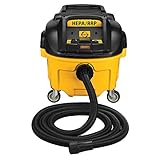
- Automatic Filter Clean of the dust extractor pulses every 30 seconds for continuous operation without stopping to clean filter
- 15-amp motor of DEWALT dust extractor delivers 150 CFM of airflow
- Power Tool Actuation controls the On/Off operations of the vacuum with a power tool
Best for: For nonstop dust extraction on active tools.
An 8-gallon dust extractor with automatic filter cleaning gives the DEWALT DWV010 a clear advantage on construction sites where dust keeps coming. The filter pulses every 30 seconds, so the vacuum can maintain airflow without frequent manual stops, and the 15-amp motor pushes 150 CFM for sustained extraction during heavier renovation work.
Power tool actuation lets the vacuum switch on and off with the connected tool, which is useful when sanding or cutting in repeated bursts. The universal hose connector adds a secure swivel connection, so hose handling stays less awkward during active work. Heavy-duty wheels improve movement around a site where the machine needs to roll with you rather than sit in one place. HEPA filtration is the key point for buyers focused on fine construction dust, especially when cleanup has to stay consistent through the day. Corded power also keeps output steady for extended use, which suits shop or remodel work better than short cleanup sessions.
Pros
- Automatic filter cleaning supports longer dust extraction runs
- 15-amp motor delivers 150 CFM airflow
- Power tool actuation syncs vacuum with tool use
- Heavy-duty wheels help move it around the jobsite
Cons
- Uses corded power, so it is less convenient where outlets are limited
This is the pick for users who want dust extraction that keeps up with power tools instead of a basic cleanup vac. It fits active renovation work where airflow, filter maintenance, and continuous operation matter most.
| Specification | Details |
|---|---|
| Brand | DEWALT |
| Capacity | 8 Gallons |
| Motor | 15-Amp |
| Airflow | 150 CFM |
| Special Feature | HEPA, Portable, Wheels |
| Filter Type | HEPA Filter |
| Power Source | Corded |
My advice is to choose this if your cleanup happens while you are cutting, sanding, or drilling rather than after the fact. The automatic filter cleaning and power tool actuation are the features that make it feel purpose-built for construction dust. It suits users who want fewer interruptions and more steady extraction through the workday.
4. Bosch VAC090AH 9 Gallon Dust Extractor with Auto Filter for

- AUTO CLEANING: With automatic filter cleaning, the BOSCH dust extractor VAC090AH cleans the filter every 15 seconds to help...
- PERFORMANCE: This vacuum includes a HEPA filter that captures 99.97 percent of particles at 0.3 microns or larger, while the...
- OSHA COMPLIANT: Featuring BOSCH PRO plus GUARD, an end to end dust collection system to help users move toward OSHA Silica Table...
Best for: High-airflow extractor for dust-heavy remodeling.
A maximum 150 CFM airflow and 97-inch static water lift give the Bosch VAC090AH the kind of suction profile that matters when dust extraction has to keep pace with tools. The 9-gallon capacity supports longer intervals between emptying, and the HEPA setup makes it relevant for renovation dust control rather than simple floor pickup.
Power Broker dial control lets you match suction to the application, which is useful when one job shifts from delicate cleanup to heavier debris. Power tool activation connects the vacuum to the tool switch, reducing extra steps during repetitive sanding or cutting. BOSCH PRO plus GUARD indicates an end-to-end dust collection approach, so the setup is aimed at keeping dust moving into the system rather than drifting back into the work area. The corded electric design suits fixed work zones where consistent output matters. Its wheels also make a difference on job sites, where moving a 9-gallon unit between rooms or stations is part of the routine.
Pros
- 150 CFM airflow supports demanding dust extraction
- 97-inch static water lift helps with stronger suction needs
- Power Broker dial matches suction to the task
- 9-gallon tank reduces emptying during longer jobs
Cons
- Corded electric operation keeps it tied to outlet access
Bosch gives you a serious extraction-focused vacuum for remodeling dust and tool-connected cleanup. It is a smart fit when you want suction control and capacity in one wheeled unit.
| Specification | Details |
|---|---|
| Brand | Bosch |
| Capacity | 9 Gallons |
| Maximum Airflow | 150 CFM |
| Static Water Lift | 97 in. |
| Special Feature | HEPA, High Power, Wet/Dry, Wheels |
| Filter Type | HEPA Filter |
| Power Source | Corded Electric |
| Surface Recommendation | Dust Extraction |
I’d point buyers toward this if their main concern is extraction performance during renovation, not just general cleanup. The airflow, static lift, and suction control all make it feel tuned for construction dust management. It should satisfy users who want a large-capacity corded machine that stays focused on dust collection.
5. Dustless Technologies HEPA Wet+Dry Pro Vacuum, 8 Gallon, Black (D1618)

- Certified HEPA system prevents harmful dust from bypassing filter
- 138-CFM/83” Water Lift motor picks up work site debris, large and small
- Hydrophobic polyester filter allows dry to wet pickup without changing filters
Best for: HEPA wet-dry vacuum for silica-sensitive work.
A certified HEPA system is the key feature on the Dustless Technologies HEPA Wet+Dry Pro Vacuum, and that matters when construction dust must stay contained instead of recirculating. The 8-gallon tank and 138-CFM motor give it the size and airflow to handle both larger debris and fine dust from active work sites.
The 83-inch water lift adds pulling strength for debris that sits deeper in seams, floor edges, or textured surfaces. A hydrophobic polyester filter allows dry-to-wet pickup without changing filters, which is useful when cleanup moves from sawdust to a damp spill. The semi-auto filter cleaning mechanism helps keep suction from falling off during longer sessions, and that matters on silica-aware jobs where consistent performance is the point. The exhaust port can attach to a hose and function as a blower, adding another cleanup option for clearing dust from corners or exterior areas. Corded electric power supports sustained use on all floors and active workspaces.
Pros
- Certified HEPA system helps contain harmful dust
- 138 CFM motor handles large and small debris
- Hydrophobic polyester filter supports wet and dry pickup
- Semi-auto filter cleaning helps maintain airflow
Cons
- No separate tank size variation, so the 8-gallon capacity may be more than small cleanup jobs need
This vacuum makes strong sense for users who want HEPA-level dust control with wet/dry flexibility. It is especially useful on sites where silica-conscious cleanup and steady suction both matter.
| Specification | Details |
|---|---|
| Brand | Dustless |
| Capacity | 8 Gallon |
| Airflow | 138 CFM |
| Water Lift | 83 in. |
| Filter Type | HEPA Filter |
| Special Feature | Dust Collection |
| Power Source | Corded Electric |
| Surface Recommendation | All floors |
I’d choose this for someone who wants a construction vacuum that takes dust containment seriously. The certified HEPA system and semi-auto cleaning are the reasons it belongs in a roundup focused on fine dust. It feels most appropriate for contractors or serious DIYers who need one machine that handles both dry debris and wet pickup.
6. DEWALT 20V MAX Shop Vacuum Wet and Dry, Shop Vac
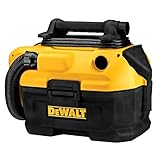
- Versatile Power Options - Choose between corded and cordless operation with this vac that can be powered with a 20V MAX battery...
- Large Tank Capacity - Empty a toilet or clogged pipe with an impressive 2-gallon tank capacity
- Easy Maintenance - Help minimize maintenance hassle with an easily accessible, washable, reusable-filter. On-Board Storage...
Best for: Portable hybrid vacuum for small jobsites.
The DEWALT 20V MAX Shop Vacuum gives you corded or cordless operation, which is valuable when cleanup moves between rooms, vehicles, and work areas. A 2-gallon tank keeps the unit compact, while the washable, reusable filter makes maintenance simpler for repeated construction-dust cleanup.
The dual-power setup is the defining feature here: you can run it with a 20V MAX battery or keep it corded when power is nearby. That flexibility helps on jobs where the work area changes often. On-board storage keeps attachments with the vacuum, so the unit stays organized when it travels with you. The easy-access washable filter reduces the hassle of routine maintenance, which matters when fine dust loads the filter quickly. The heavy-duty design gives it the toughness expected from a jobsite tool, and the all-floors recommendation makes it practical for mixed surfaces. The 2-gallon capacity is smaller than a full-size shop vac, but it keeps the tool lighter and more portable for quick cleanup tasks.
Pros
- Corded or cordless operation adds placement flexibility
- 2-gallon tank keeps the unit compact and portable
- Washable reusable filter simplifies maintenance
- On-board storage keeps accessories together
Cons
- 2-gallon capacity fills faster on larger renovation cleanup jobs
This model works best for users who want mobility and quick cleanup rather than a large dust collector. It is a good fit for smaller jobsite messes, vehicle cleanup, and spot vacuuming around construction work.
| Specification | Details |
|---|---|
| Brand | DEWALT |
| Capacity | 2 Gallons |
| Special Feature | Portable |
| Filter Type | HEPA Filter |
| Surface Recommendation | All floors |
| Power Source | Corded Electric |
I’d recommend this to someone who values flexibility more than raw tank size. The ability to switch between corded and cordless use is the big advantage, especially when the cleanup area changes during a project. It suits users who need a portable helper for dust, trim debris, and small wet-dry messes rather than full-day extraction work.
7. DEWALT 20V MAX Hand Vacuum, Cordless, for Wet or Dry

- Gore HEPA wet/dry filter traps 99.97% of dust at 0.3 microns
- Dual clean-up modes allow for debris removal with either the front utility nozzle or extendable rubber hose
- 1/2 gallon tank with heavy-duty latch is easy to empty and clean
Best for: Cordless HEPA option for quick cleanup.
A 1/2-gallon tank makes the DEWALT 20V MAX Hand Vacuum extremely compact for fast pickup of construction dust, drywall crumbs, and small dry or wet messes. The Gore HEPA wet/dry filter traps 99.97% of dust at 0.3 microns, which is the kind of capture rate that matters when you want fine particles contained after a cut or sanding pass.
Dual clean-up modes let you use either the front utility nozzle or the extendable rubber hose, so you can shift from flat surfaces to tighter edges without changing tools. The heavy-duty latch helps the small tank empty cleanly, and that matters because a compact vacuum needs easy dumping to stay practical. The washable filter can be cleaned with a tap or water rinse, which cuts downtime between uses. A large on/off switch makes one-handed operation simpler when the other hand is holding material or moving debris. Running on 20V Max DEWALT battery packs gives it the cordless convenience that works well for quick site cleanups and hard-to-reach spots.
Pros
- Gore HEPA filter traps 99.97% of dust at 0.3 microns
- Front nozzle and extendable hose provide two cleanup modes
- Washable filter supports easy maintenance
- Cordless battery power improves mobility on quick jobs
Cons
- 1/2-gallon tank requires frequent emptying during larger dust cleanup tasks
This hand vacuum fits users who need a fast, portable answer for small construction dust jobs. It works best when you want HEPA filtration without dragging out a full-size shop vac.
| Specification | Details |
|---|---|
| Brand | DEWALT |
| Capacity | 1/2 Gallon |
| Filter Type | HEPA Filter |
| Special Feature | HEPA, Portable, Wet/Dry/Washable Filter |
| Power Source | Battery Powered |
| Surface Recommendation | Hard Floor, Carpet |
I’d point this toward someone who wants a small, cordless cleanup tool for dust between larger vacuuming sessions. The HEPA filter spec is the main reason it stands out for construction-dust use, and the hose plus nozzle setup makes it more versatile than a basic hand vac. It is happiest in quick, repeated cleanup roles.
Quick Comparison Table of Best HEPA Vacuums for Construction Dust
| Product Name | Capacity | Power Source | HEPA Filter | Best For | Check Price |
|---|---|---|---|---|---|
| WECLEAN Shop Vac 4 Gallon 5.5 | 4 Gallon | Electric | HEPA Filtration | Wet dry cleanup | Check Price |
| WEN VC4710 10-Amp 5-Gallon Portable HEPA | 5 Gallon | Corded Electric | HEPA | Portable dust pickup | Check Price |
| DEWALT DWV010 HEPA Dust Extractor with | 8 Gallon | Corded | HEPA | Tool-linked extraction | Check Price |
| Bosch VAC090AH 9 Gallon Dust Extractor | 9 Gallon | Corded Electric | HEPA | High-power dust extraction | Check Price |
| Dustless Technologies HEPA Wet+Dry Pro Vacuum | 8 Gallon | Corded Electric | HEPA | Silica dust cleanup | Check Price |
| DEWALT 20V MAX Shop Vacuum Wet | 2 Gallon | Corded Electric | HEPA | Compact shop vacuum | Check Price |
| DEWALT 20V MAX Hand Vacuum, Cordless | 1/2 Gallon | Battery Powered | HEPA | Cordless spot cleanup | Check Price |
How to Choose the Right best hepa vacuum for construction dust
Filtration and dust containment
Choose a true HEPA unit that captures 99.97% of particles at 0.3 microns and keeps that performance under load, because construction dust includes drywall fines, silica, and concrete powder that escape weak filtration fast. A sealed system matters as much as the filter itself: look for gasketed filter doors, tight hose connections, and a closed bag path so dust does not leak back into the air. A good setup pairs a washable or replaceable prefilter with disposable collection bags, which keeps the HEPA cartridge cleaner for longer.
For drywall and concrete dust, pick the model with a true HEPA filter, sealed housing, and a bag-plus-prefilter setup for the cleanest jobsite air.
| Filtration setup | Best for | What to look for |
|---|---|---|
| True HEPA + sealed system | Silica, concrete, and drywall dust | 99.97% at 0.3 microns, gasketed covers, tight fittings |
| HEPA + prefilter + bag | Frequent sanding and demo dust | Disposable bags, washable prefilter, easy-change access |
| Basic filter stack | Light cleanup only | Loose seals, simple cartridges, minimal dust control |
Suction power and airflow
Pick suction and airflow together, not one without the other, because heavy debris needs pull while fine dust needs steady air movement. For construction cleanup, look for strong CFM first, then enough water lift to move packed dust from cracks, tool bases, and floor edges. Good shop-style vacs hold airflow under continuous use and do not choke when the bag fills or the filter starts loading up.
Lower-performing units lose pull quickly, leave grit behind, and struggle with mixed debris. For most jobsite users, choose a vacuum with high airflow, solid water lift, and stable performance during long cleanup runs.
| Performance level | Best for | Signal of a good pick |
|---|---|---|
| High airflow | Debris pickup and sweeping floors | Strong CFM and wide hose path |
| High water lift | Embedded dust and material in corners | Deep pull for fine grit and heavy fragments |
| Balanced output | General construction cleanup | Steady suction, no rapid fade, works with filter loading |
Capacity and jobsite convenience
Match tank size and reach to the size of your cleanup jobs, because a compact tank suits punch-list work while a larger drum reduces emptying on bigger remodels. A small renovation setup needs enough capacity for dust, screws, and chip fragments without becoming bulky on stairs. Large cleanup jobs need a bigger container, long hose, and a cord that reaches across rooms without constant replugging.
Onboard storage matters too: carry the crevice tool, floor head, and adapters on the unit so you spend less time hunting parts. For most contractors, pick a mid- to large-capacity vacuum with long reach and built-in accessory storage for faster moving between work zones.
| Capacity class | Best for | Convenience cue |
|---|---|---|
| Small tank | Trim work and tight renovations | Light weight, easy stair carry, quick dump |
| Mid tank | Room-by-room cleanup | Balance of mobility and less frequent emptying |
| Large tank | Whole-home or commercial cleanup | Fewer stops, longer hose reach, onboard tool storage |
Durability and build quality
Choose a rugged housing and hardware package that tolerates drops, bumps, and constant transport, because jobsite vacs ride in trucks, cross rough floors, and get moved around tools all day. Impact-resistant resin housings, reinforced corners, and thick latches hold up better than thin shells and flimsy clips. Wide wheels and a strong handle improve movement over cords, debris, and thresholds, while a motor shield or overload protection helps prevent fine dust from stressing the unit during long runs.
For daily construction use, pick a vacuum with heavy-duty latches, sturdy wheels, reinforced body panels, and clear dust protection around the motor.
| Build type | Best for | Durability signal |
|---|---|---|
| Reinforced resin body | Frequent transport and bumps | Thick shell, impact corners, tight seams |
| Heavy-duty wheel base | Large sites and uneven floors | Wide stance, durable axle, smooth rolling |
| Protected motor housing | Fine-dust jobs | Dust shields, overload protection, stable airflow path |
Maintenance and safety features
Choose maintenance features that keep the vacuum clean without slowing the job, because construction dust loads filters fast and unsafe disposal spreads it again. The best units give you easy front-access filters, simple bag changes, and clear filter-cleaning controls so you can restore airflow before performance drops. Automatic filter cleaning or pulse-clean systems help on heavy sanding jobs, while sealed disposal bags and closed canisters reduce exposure when emptying fine dust.
For power-tool cleanup, look for a vacuum with easy filter access, clog reduction, shutoff protection, and tool-triggered activation so it starts and stops with the saw, sander, or grinder. Pick that setup for the cleanest, safest daily use.
| Feature set | Best for | Buyer takeaway |
|---|---|---|
| Easy-access maintenance | Frequent filter and bag changes | Fast service, less downtime |
| Auto-clean or pulse-clean | Heavy fine dust loads | Better airflow retention during sanding |
| Tool-triggered collection | Power-tool cleanup | Cleaner workflow and less dust spread |
Which Should You Choose?
- If you need a compact all-purpose vac for light construction cleanup and tight storage, choose a 4- to 5-gallon portable wet/dry HEPA vacuum with blower capability.
- If you want the best protection for fine silica dust and continuous tool-connected cleanup, choose a true HEPA dust extractor with automatic filter cleaning and power-tool actuation.
- If you need strong suction for larger jobsite debris without constant filter clogging, choose an 8- to 9-gallon HEPA extractor with high airflow and a self-cleaning filter system.
- If you plan to move between tasks or work off-grid on small cleanup jobs, choose a cordless HEPA wet/dry vacuum with a small tank and easy-carry design.
Quick Best Hepa Vacuum For Construction Dust Buying Checklist
- Verify true HEPA filtration. Look for sealed filtration that captures fine construction dust without leaks.
- Check suction strength. Prioritize strong airflow and water lift for drywall dust, debris, and grit.
- Choose the right capacity. Match the tank size to the scale of your cleanup and jobsite needs.
- Inspect durability. Favor rugged housings, reinforced latches, and wheels built for rough transport.
- Review hose and cord reach. Longer reach improves mobility when working around large rooms or active tools.
- Make maintenance simple. Easy filter access and dust bag changes help keep performance consistent.
How HEPA Filtration Captures Construction Dust
HEPA filtration works by forcing dusty air through a dense fiber matrix that traps very small particles before they recirculate back into the room. For construction dust, that matters because cutting drywall, concrete, wood, and tile can release fine particles that stay airborne far longer than larger debris. A true HEPA filter is designed to capture microscopic dust that ordinary shop filters may miss, helping reduce the haze that settles on surfaces and in occupied spaces.
The best results come from pairing strong airflow with a well-sealed housing, so dust does not bypass the filter and return to the work area.
Why Sealed Housings Matter on Jobsite Vacuums
A HEPA filter alone is not enough if the vacuum body leaks around the filter compartment, hose connections, or dust bin. Construction dust is especially difficult because it is fine, abrasive, and easy to escape through tiny gaps. A sealed system keeps suction directed through the filtration path instead of letting dirty air leak out.
This is important during demolition, sanding, and concrete drilling, where dust loads can spike quickly. Look for tight latches, gasketed filter access, and sturdy hose fittings, since poor seals reduce both cleaning performance and indoor air control when dust levels are highest.
Wet and Dry Cleanup After Construction Work
Many jobsite vacuums handle both dry dust and liquid spills, but the cleanup process should still be separated by material type. Drywall dust, wood powder, and silica-containing debris should be collected dry with the proper HEPA setup. Wet pickup is useful for slurry, minor leaks, or final cleanup after washing surfaces, but moisture can damage filters that are not meant for liquid exposure.
If a vacuum is used for both tasks, the filter and collection chamber should be fully dried before returning to dust collection. This helps preserve suction, prevent odors, and avoid clumping that can clog the airflow path.
Keeping Filters and Bags Performing Well
Construction dust loads filters quickly, so regular care is essential to maintain strong suction and protect the motor. Pre-filters and disposable bags, when used, should be checked before they become packed with fine debris. A clogged filter can make the vacuum seem weak even if the motor is working normally.
Cleaning routines should follow the manufacturer’s guidance, especially for HEPA elements that are not meant to be washed. It is also smart to inspect the hose, wand, and intake for blockages after heavy sanding or demolition.
Consistent maintenance extends filter life and keeps dust capture more reliable from one project phase to the next.
Dust Control Mistakes That Reduce HEPA Performance
One common mistake is using a HEPA vacuum without the correct filter stage or bag setup for fine construction dust. Another is overfilling the container, which can disrupt airflow and push dust toward seals and exhaust paths. Users also sometimes let the vacuum run with a cracked lid, damaged gasket, or loose hose, which defeats the purpose of HEPA containment.
A final error is treating all debris the same; heavy chunks, nails, and wet material can damage internal parts or block the suction path. Careful setup, routine inspection, and proper debris sorting help the vacuum work as intended on messy construction sites.
Frequently Asked Questions (FAQs)
What Makes A Hepa Vacuum Suitable For Construction Dust?
A HEPA vacuum for construction dust is suitable when it uses sealed filtration, strong suction, and dust-tight collection to trap fine particles. That combination helps capture drywall powder, silica dust, and sawdust without releasing it back into the work area.
Why Is A Sealed System Important In A Construction Dust Vacuum?
A sealed system is important in a construction dust vacuum because it keeps microscopic dust from escaping through seams, filters, or the canister. This matters most with fine debris like drywall dust, where even small leaks can reduce air quality and cleanup results.
How Much Suction Power Do I Need For Construction Cleanup?
A construction dust vacuum needs enough suction power to lift heavy debris, fine powder, and embedded grit from floors and surfaces. Look for models that maintain airflow under load, since clogging can reduce pickup during long cleanup sessions.
Should I Choose A Bagged Or Bagless Hepa Vacuum For Jobsite Dust?
A bagged HEPA vacuum for jobsite dust is often easier to manage because it helps contain debris during disposal and reduces filter exposure. Bagless models can work well too, but they usually require more frequent filter cleaning to stay effective.
What Tank Size Works Best For Construction Dust?
The best tank size for construction dust depends on the job, but larger capacities reduce emptying during big cleanups. Smaller units are easier to move in tight spaces, while bigger tanks are better for remodels, sanding, and demolition debris.
How Do I Maintain A Hepa Vacuum Used On Construction Sites?
A HEPA vacuum used on construction sites should be maintained by cleaning or replacing pre-filters, checking seals, and emptying dust before it overloads the system. Regular maintenance keeps suction strong and helps the HEPA filter last longer under heavy dust conditions.
Can A Hepa Vacuum Handle Drywall And Silica Dust Safely?
Yes, a HEPA vacuum for construction dust can handle drywall and silica dust safely when it has true HEPA filtration and a fully sealed design. It should be used with proper disposal habits and compatible attachments to minimize airborne dust during cleanup.
Final Suggestions
Choosing the best hepa vacuum for construction dust helps keep job sites cleaner, safer, and more efficient by capturing fine particles before they spread. With the right balance of filtration, suction, capacity, and durability, it becomes a practical tool for remodeling, sanding, and daily cleanup. Invest in the right model, and your next project will feel cleaner from start to finish.