Top 10 Best Knife For Animal Defense: Must-See Picks
The best knife for animal defense is more than a simple blade; it is a carefully engineered tool shaped by materials, geometry, and control. In high-stress outdoor encounters, factors like grip texture, blade steel, edge retention, and sheath design can influence confidence and response time. This guide explores what separates a dependable defense knife from an ordinary field tool, while comparing close options such as an animal defense knife and a knife for animal protection.
You will also see how ergonomic handles, corrosion resistance, and tactical design affect real-world use across camping, hiking, and backcountry travel. The differences may seem subtle at first, but they can change everything when seconds matter, so keep reading to uncover what truly sets these blades apart.
Detailed Reviews of the Best Knife for Animal Defense
1. Tactical Spring Assisted Pocket Knife – Karambit Folding Knives for
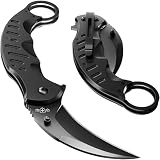
- Spring Assisted Karambit knife provides razor sharp cutting performance and high durability. Compact functional and stylish...
- Perfect tactical knife for everything - Camping, EDC, Hiking, Urban, Travel, Work, Self Defense, Bushcraft, Hunting, Fishing...
- Karambit knife features a handle ring for convenient forward and reverse grip. Lightweight and compact pocket CSGO karambit knife...
Best for: Compact carry for fast access.
A 2.9-inch blade in 440C stainless steel gives this karambit a sharp, compact edge that is easier to carry than larger fixed blades. The 7.6-inch overall length keeps it small enough for pocket use while still offering a curved cutting profile for close-quarters utility when an animal-defense carry knife needs to be quick to deploy.
The 60 HRC blade hardness adds real edge stability, so the knife can keep a sharp working edge through repeated use. At 4.06 oz, it stays light enough for everyday pocket carry without feeling bulky on a belt or in a pack. The aluminum handle helps keep the frame slim while still giving a firm gripping surface. A liner lock secures the blade in the open position, which matters when you want controlled handling during fast tasks. Spring-assisted opening also speeds deployment, and the folding design makes it easier to keep on hand for camping, travel, or urban carry where a compact defensive knife is preferred.
Pros
- 440C stainless steel blade for practical corrosion resistance
- 60 HRC hardness for stronger edge retention
- 2.9-inch blade keeps carry compact and discreet
- Spring-assisted opening for faster one-handed deployment
Cons
- The 2.9-inch blade is shorter than a full-size fixed blade, so it offers less reach in a defensive or outdoor encounter.
This is a sensible pocket option when compact size matters more than reach. It suits buyers who want a lightweight folding knife that stays accessible for general protection-minded carry.
| Specification | Details |
|---|---|
| Blade Material | 440C Stainless Steel |
| Handle Material | Aluminum |
| Blade Length | 2.9 inch |
| Overall Length | 7.6 inch |
| Weight | 4.06 oz |
| Lock Type | Liner Lock |
| Blade Hardness | 60 HRC |
| Number of Items | 1 |
I’d point this one at someone who wants a compact folding knife that can live in a pocket without much fuss. The spring assist and liner lock make it feel practical for fast access, and the smaller blade size is the main tradeoff. If your priority is easy carry rather than maximum blade length, this makes sense.
2. Mossy Oak 15-inch Survival Knife with Sheath, Fixed Blade Hunting

- 15" Fixed Blade Knife: Ultra-sharp combat knife, stronger than any hunting knife or bowie knife. Overall Length: 15 inch; Blade...
- Razor Sharp Clip Point Blade: The survival Knife is made of stainless steel for excellent hardness, improved edge retention and...
- Rubber Handle & Nylon Sheath: Classic rubber handle of survival knife, provides high friction and comfortable non-slip grip for...

Best for: Full-size fixed blade for hard use.
A 15-inch overall length gives this fixed blade the reach that smaller pocket knives cannot match, making it a strong pick when the buyer wants a substantial animal-defense knife for outdoor carry. The 10-inch stainless steel blade brings the mass and cutting surface needed for tougher field jobs, while the included sheath keeps the long profile manageable on a pack or belt.
The blade thickness is 5/32 inch, or 3.8 mm, which adds stiffness for hard contact and less flex in rough use. At 16.8 oz, it has the weight typical of a large survival knife, so it feels more like a field tool than a slim carry piece. The clip point blade shape improves control for precise cuts, and the saw back adds a second working edge for camp tasks. Stainless steel construction gives improved hardness, edge retention, and rust resistance, which matters when the knife sees wet outdoor conditions. The black anodized finish also helps the blade stay less reflective in camp or hunting settings.
Pros
- 15-inch length gives substantial reach for field carry
- 10-inch stainless steel blade suits heavier cutting tasks
- 3.8 mm thickness adds stiffness for demanding use
- Saw back clip point increases versatility outdoors
Cons
- At 16.8 oz, it is too large and heavy for pocket carry, so it works best as a belt or pack knife.
This knife fits buyers who want a big fixed blade instead of a compact folder. It is most useful for outdoor carry where reach, rigidity, and a sheath matter more than discreet everyday pocket size.
| Specification | Details |
|---|---|
| Overall Length | 15 inch |
| Blade Length | 10 inch |
| Thickness | 5/32 inch (3.8 mm) |
| Weight | 16.8 oz |
| Blade Material | Stainless Steel |
| Blade Shape | Clip Point |
| Included Components | Knife |
| Number of Items | 1 |
My take is that this belongs with buyers who actually want a large fixed blade for outdoor use, not just a compact knife. The size, thickness, and sheath make it better suited to camping, field carry, or a truck kit. If you want reach and a more substantial tool, this is the one to study first.
3. Purple Dragon D2 Steel Fixed Blade Knife with Sheath

- 【D2 Forged Blade with Matte Finish 】Forged from high-grade D2 high carbon steel and precision heat-treated to 59–61 HRC...
- 【Solid Craftsmanship & Premium Gifting Choice】This well‑built fixed‑blade survival knife features reliable build quality...
- 【Kydex Sheath & Easy Access】Built for field use, the precision-molded Kydex sheath delivers secure retention with a firm...
Best for: Tactical fixed blade with hard edge retention.
D2 high carbon steel hardened to 59–61 HRC gives this fixed blade the edge retention that matters when the knife is expected to stay sharp through repeated outdoor use. The matte black finish keeps the blade visually subdued, while the fixed-blade format gives the kind of direct control buyers often want in an animal-defense field knife.
The forged D2 blade is the main reason this model stands out, because D2 is known for holding an edge longer than many basic steels. Heat treatment to 59–61 HRC tightens that performance window, giving the blade a harder working edge for repeated cuts. The knife is listed as a camping tool, so the focus is practical field carry rather than pocket convenience. A storage case is included, which helps protect the blade in transit or in a pack. The matte finish also helps reduce glare and hides wear better than polished steel. With a single-knife package and adult sizing, it is straightforward for buyers who want a no-frills fixed blade for outdoor use.
Pros
- D2 high carbon steel for strong edge retention
- 59–61 HRC heat treatment for a harder cutting edge
- Matte black finish reduces glare and visual distraction
- Included storage case keeps the blade protected
Cons
- No sheath is listed in the included components, so carry protection depends on the storage case rather than a belt-ready holster.
This is a good fit for buyers who value blade steel more than extra accessories. It makes sense as a tough camping fixed blade when edge retention is the priority.
| Specification | Details |
|---|---|
| Blade Material | D2 High Carbon Steel |
| Blade Hardness | 59–61 HRC |
| Finish | Matte Black |
| Included Components | Storage Case |
| Number of Items | 1 |
| Model Number | KNIFE13 |
| Age Range Description | Adult |
I’d recommend this to someone who cares most about steel quality and a simple fixed-blade setup. The D2 and 59–61 HRC combination is the core value here, and the matte finish gives it a more subdued look for outdoor carry. If you want a blade-first knife without extra complexity, this is appealing.
4. Fixed Blade Knife with Sheath – D2 Steel Tactical Knives

- Razor-Sharp Blade – Crafted from D2 steel, our fixed blade knife features a full-length fuller groove that not only reduces...
- G10 Full-Tang Handle – Whether chopping, prying, or piercing, force is transmitted rigidly along the entire blade with no flex...
- Secure & Portable – The sheath closely conforms to the blade's profile without wobbling or scratching the edge. Even during...
Best for: Rigid full-tang knife for rough camp tasks.
D2 steel and a full-length fuller groove make this fixed blade a practical choice for buyers who want a knife that cuts smoothly without adding unnecessary bulk. The fuller reduces weight while helping minimize material sticking during chopping and slicing, which is useful when the knife may need to handle rough outdoor work in an animal-defense carry role.
The G10 full-tang handle is the key structural feature here, because full-tang construction transfers force along the entire blade-and-handle assembly for better control during prying or piercing. The fuller groove is not just cosmetic; it reduces blade weight and helps prevent material adhesion, so cuts feel less sticky on wood, rope, or other field materials. Because the blade is D2 steel, it brings tougher edge retention than common utility steels. The included sheath adds carry convenience for camping use. With the knife listed as a single adult item, it is aimed at straightforward field carry rather than a multi-tool format. That makes it more useful when the buyer wants one dedicated fixed blade for outdoor defense-minded use.
Pros
- D2 steel supports better edge retention for outdoor cutting
- Fuller groove reduces blade weight and sticking
- Full-tang construction improves force transfer and control
- G10 handle material is suited to rugged field handling
Cons
- The product data does not list blade length, so buyers cannot judge reach from the specs alone.
This is a solid option if you want a fixed blade that feels efficient in hand and practical in camp. The full-tang build and fuller groove make it better for users who expect real field work from the knife.
| Specification | Details |
|---|---|
| Blade Material | D2 Steel |
| Handle Material | G10 |
| Included Components | Sheath |
| Number of Items | 1 |
| Unit Count | 1 Count |
| Age Range Description | Adult |
My advice is to look at this one if you prefer a fixed blade with a more technical build than a basic camp knife. The fuller groove and full-tang handle are the features that matter most in real use. It suits buyers who want a strong, no-nonsense knife for outdoor carry and don’t mind that the published specs are fairly sparse.
5. GOOD WORKER Legal Pocket Knife with 2.95” Serrated Blade, Glass

- Upgraded Product. Our popular 6680 knife just got better - now featuring a premium bearing system for ultra-smooth action and a...
- 5 in 1 Knife. Black pocket knife for men equipped with a serrated blade, glass breaker, strap cutter, pocket clip, and lanyard...
- Legal in All States. Pocket knives (no spring) with blade under 3 INCHES are primarily tools and generally legal to own and carry...
Best for: Compact multitool folder for emergency carry.
A 2.95-inch serrated blade keeps this folding knife compact while the 5-in-1 setup adds utility that matters when carry space is limited. The 440C stainless steel blade and aluminum handle give the knife a practical mix of edge quality and light weight, making it more versatile than a plain pocket blade for outdoor defense-minded carry.
The premium bearing system is the standout mechanical detail, since it supports ultra-smooth action when opening and closing the knife. The five included functions are the serrated blade, glass breaker, strap cutter, pocket clip, and lanyard hole, so the knife covers both cutting and emergency-use tasks in one package. The blade is 2.95 inches, which keeps the folder manageable for pocket carry, while the aluminum handle helps keep overall weight reasonable. A lock type is listed, adding security in use, and the protective case gives it a better storage option than a loose pocket carry. For buyers who want a defensive carry knife with added rescue features, that mix is very practical.
Pros
- 2.95-inch serrated blade keeps the folder compact
- 440C stainless steel blade offers dependable edge quality
- Five functions add emergency utility beyond cutting
- Bearing system supports smoother opening action
Cons
- The serrated blade favors tearing and emergency cutting, so it is less precise than a plain-edge folder for fine slicing.
This is the right direction for buyers who want a pocket knife with emergency features, not just a blade. The compact size and included rescue tools make it appealing for everyday carry and outdoor backup use.
| Specification | Details |
|---|---|
| Blade Length | 2.95” |
| Blade Material | 440C Stainless Steel |
| Handle Material | Aluminum |
| Number of Items | 1 |
| Model Number | 6680 U |
| Age Range Description | Adult |
I’d choose this for someone who wants a compact folding knife with real emergency utility attached to it. The glass breaker and strap cutter make it more versatile than a standard pocket knife, and the serrated edge adds grab-and-cut capability. If rescue features matter as much as everyday cutting, this is a strong fit.
6. Smith & Wesson 9″ H.R.T Double Edged Boot Knife with

- DIMENSIONS: 9 inch (22.9 centimeter) overall length with a blade length of 4.7 inches (12.1 centimeter) and a weight of 7.7 ounces
- DURABLE: Blade is made of reliable 7Cr17MoV high carbon stainless steel with a black rubber wrapped handle
- DEPENDABLE: Quick and easy access with the convenient belt or boot sheath making it ideal for everyday carry
Best for: Boot knife for quick concealed carry.
A 9-inch overall length with a 4.7-inch double-edged blade gives this boot knife the reach and profile of a compact fixed blade for quick-access carry. The 7.7-ounce weight and black rubber wrapped handle keep it manageable, while the boot or belt sheath supports the kind of immediate carry many buyers want in an animal-defense knife.
The blade is made from 7Cr17MoV high carbon stainless steel, a practical choice when corrosion resistance and toughness both matter. The double-edged design gives cutting options from more than one side of the blade, and the hand guard helps keep the grip from slipping forward under pressure. At 9 inches overall, it stays compact enough for boot carry while still offering a useful 4.7-inch blade length. The lanyard hole adds another retention option for packing or carry setup. Because the sheath is made for belt or boot placement, this knife is aimed at immediate access rather than backpack storage. That makes it a better match for buyers who want a personal carry fixed blade with a discreet profile.
Pros
- 4.7-inch double-edged blade increases cutting versatility
- 7Cr17MoV stainless steel resists corrosion in outdoor use
- Boot or belt sheath supports fast access carry
- Hand guard improves grip security
Cons
- The double-edged blade makes it less suitable for buyers who want a simple utility knife for broad everyday cutting tasks.
This model fits buyers who want a compact fixed blade for accessible carry. It is especially useful when boot or belt placement matters more than large overall size.
| Specification | Details |
|---|---|
| Overall Length | 9 inch (22.9 centimeter) |
| Blade Length | 4.7 inches (12.1 centimeter) |
| Weight | 7.7 ounces |
| Blade Material | 7Cr17MoV High Carbon Stainless Steel |
| Handle Material | Black Rubber Wrapped |
| Included Components | 9″ H.R.T Double Edged Boot Knife |
| Number of Items | 1 |
| Age Range Description | Adult |
I like this for buyers who want a compact fixed blade they can place on a belt or in a boot without a lot of extra bulk. The size and sheath setup are the real selling points, and the hand guard adds confidence in use. If your priority is fast access and a smaller carry footprint, this is worth considering.
7. Outdoor Self Defense Pocket Knife, 9070 Pocket Folding Knife, D2

- CONVENIENT TO USE - This product is lightweight and easy to use, it can be used in installation, construction, hydraulics, cutting...
- PRODUCT FEATURES - The tool's coating prevents materials from sticking and has good sliding properties when cutting.
- SPECS - Blade Length is 3.5inches, Full Open Length is 8.1inches, Blade Width is 1 inch, Blade Thickness 3mm, Handle is...
Best for: Slim folder for wire and field cutting.
A 3.5-inch blade in a folding format makes this knife a practical carry piece for buyers who want a compact tool that still handles outdoor cutting jobs. The D2 steel blade and 5.5-ounce weight create a balance of edge strength and carry comfort that works well when a defense-minded knife also needs to serve as an everyday tool.
The blade profile is paired with a coating that prevents materials from sticking, which helps the knife slide through wire, leather, or aluminum more cleanly. With a 3.5-inch blade, 8.1-inch full open length, and 3 mm thickness, the knife stays slim enough for pocket carry while still offering usable leverage in the hand. The 4.7-inch handle gives enough gripping space for controlled work, and the 1-inch blade width helps keep the form factor narrow. At 5.5 oz, it is lighter than many fixed blades, which matters for everyday carry. The product is listed for installation, construction, hydraulics, and hiking, so it suits buyers who want one knife for work and outdoor use rather than a dedicated heavy chopper.
Pros
- D2 steel blade supports durable cutting performance
- 3.5-inch blade keeps the folder easy to carry
- Coating reduces sticking during cuts
- 5.5 oz weight stays manageable for everyday carry
Cons
- The folding design and 3 mm blade thickness make it less rigid than a fixed blade for hard defensive leverage.
This is a good fit for buyers who want a lighter carry knife with useful outdoor cutting capability. It makes the most sense for users who value portability and smoother slicing over fixed-blade rigidity.
| Specification | Details |
|---|---|
| Blade Length | 3.5 inches |
| Full Open Length | 8.1 inches |
| Blade Width | 1 inch |
| Blade Thickness | 3mm |
| Handle Length | 4.7 |
| Weight | 5.5oz |
| Included Components | 1 x 9070 Pocket Folding Knife |
| Age Range Description | Adult |
My view is that this works best for someone who wants a lighter folding knife for work and outdoor tasks, with animal-defense carry as a secondary need. The blade coating and D2 steel are useful features, and the size stays manageable in a pocket. If you want a slim folder that can handle varied cutting jobs, this is a sensible pick.
8. Fixed Blade Knife, 4.8″ Tactical Knife Survival Knife Outdoor Hunting
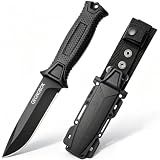
- Premium Durability And Quality: This super sharp outdoor knife is made of high-quality stainless steel, this fixed blade knife...
- Full Tang Construction: Engineered with a 5mm thick full-tang spine, this camping knife fixed blade provides outstanding stability...
- Ergonomic Anti-Slip Handle: The textured ABS handle ensures a secure, designed for long-term comfort and control, non-slip grip...
Best for: Full-tang field knife with thick spine.
A 5mm thick full-tang spine gives this fixed blade the kind of stability that matters when the knife has to take impact in camping or defensive field use. The stainless steel blade is paired with a sheath, making it a straightforward carry option for buyers who want a hard-use outdoor knife rather than a folding model.
The 4.8-inch blade size keeps the knife compact enough for pack carry while still offering more control than a tiny pocket blade. Full-tang construction is the big structural benefit here, because a 5mm spine helps the knife resist flex when batoning firewood or carving tough material. Stainless steel construction adds practical corrosion resistance, and the product description calls out use on wood, rope, and game, so it is aimed at broad outdoor utility. The included sheath makes carry simpler, and the adult sizing keeps the focus on general field use. Because the knife is listed for bushcrafting, fishing, hiking, hunting, peeling, and skinning, it fits buyers who want one fixed blade for many outdoor tasks, not a specialty-only knife.
Pros
- 5mm thick full-tang spine adds rigidity
- 4.8-inch blade keeps the knife versatile and portable
- Stainless steel blade supports corrosion resistance
- Included sheath improves field carry convenience
Cons
- The product data does not list handle material, so buyers cannot compare grip texture from the spec sheet alone.
This is a practical fixed blade for buyers who want structure and thickness more than folding convenience. It makes sense as a camp and field knife with enough backbone for rough work.
| Specification | Details |
|---|---|
| Blade Length | 4.8″ |
| Blade Material | Stainless Steel |
| Spine Thickness | 5mm |
| Included Components | 1*Fixed Blade Knife, Sheath |
| Number of Items | 1 |
| Age Range Description | Adult |
I’d suggest this to someone who wants a sturdy fixed blade for camping and outdoor work with a sheath included. The 5mm full-tang spine is the main reason to look at it, since that gives the knife a more robust feel under load. If your use leans toward field tasks and general preparedness, this is a reasonable match.
9. Gerber Ultimate Fixed Blade Knife w/Sheath, Knife Sharpener, Ferro Rod

- DURABLE SURVIVAL GEAR: The Gerber Ultimate survival knife features a half-serrated, stainless steel drop point blade, a textured...
- INNOVATIVE DESIGN: Multifunctional rugged sheath houses a sharpening stone and a ferrocerium rod fire starter, enhancing your...
- OUTDOOR ESSENTIALS: Survival knife perfect for hunting, fishing, bushcraft, and everyday carry; An essential addition to your...
Best for: Multifunction survival knife kit.
A half-serrated stainless steel drop point blade gives this Gerber a mix of slicing control and aggressive cutting ability, while the included sheath, sharpener, ferro rod, and whistle turn it into a complete survival kit. For buyers seeking an animal-defense knife with emergency support gear, that bundled format is a real advantage.
The textured rubber grip improves handling in wet or cold conditions, which matters when the knife needs to stay secure during outdoor use. The hammer pommel adds another field tool function, and the sheath houses both a sharpening stone and a ferrocerium rod, so the knife package supports maintenance and fire-starting in one place. The blade is stainless steel with a drop point shape, a useful combination for controlled cutting and general survival work. The included whistle adds an emergency signaling option that a plain knife cannot provide. Because the knife is listed for bushcrafting, camping, carving, fishing, hiking, hunting, skinning, whittling, and more, it is one of the most versatile entries here for buyers who want more than a blade alone.
Pros
- Half-serrated stainless steel blade adds cutting versatility
- Rubber grip improves control in outdoor conditions
- Sheath includes sharpener and ferro rod
- Whistle and hammer pommel expand survival utility
Cons
- The sheath-based accessory system adds bulk compared with a plain fixed blade, so it is less minimal for those who want only a knife.
This is the strongest pick for buyers who want a survival package rather than a single-purpose blade. It works especially well when the knife needs to travel with fire-starting and signaling gear.
| Specification | Details |
|---|---|
| Handle | Textured Rubber Grip |
| Model Number | 31-003941 |
| Number of Items | 1 |
| Age Range Description | Adult |
I’d recommend this to buyers who want a knife plus the survival accessories that often get bought separately. The sheath-mounted sharpener and fire starter are the features that make it especially practical. If you want one outdoor tool that covers cutting, maintenance, and emergency signaling, this is an easy one to favor.
10. SOG Small Fixed Blade Knife – Instinct Boot Knife, EDC

- SMALL KNIFE WITH SHEATH: The SOG Instinct is the perfect small fixed blade knife for your EDC gear; tactical neck knife measures...
- LIGHTWEIGHT EDC KNIFE: 2.3 oz. Slim necklace knife is a great everyday carry knife; use as a belt knife or boot knife, and quickly...
- FULL TANG FIXED BLADE KNIFE: Durable satin-polished 5Cr15MoV stainless steel construction handles various work tasks as a backup...
Best for: Tiny fixed blade for discreet carry.
At 5.9 inches total length and 2.3 ounces, this SOG fixed blade is one of the most compact carry options in the group. The small size makes it easy to keep on a belt, on a neck, or in a boot, which is useful when a buyer wants an animal-defense knife that stays out of the way until needed.
The satin-polished 5Cr15MoV stainless steel blade gives the knife a practical corrosion-resistant build for everyday carry. Full-tang construction adds structural confidence even though the knife is small, and the swivel sheath clip makes access simpler from different carry positions. At 2.3 oz, it is noticeably lighter than larger fixed blades, so it is easier to carry all day without dragging on clothing or gear. The model is listed as a hunting knife and outdoor/camping knife, which places it in the category of compact utility rather than heavy chopping. The sheath is included, so the knife arrives as a complete carry package instead of a bare blade. That combination makes it useful for buyers who want a discreet fixed blade rather than a bigger defensive tool.
Pros
- 5.9-inch total length keeps the knife highly compact
- 2.3 oz weight supports all-day carry
- Full-tang construction adds structural confidence
- Swivel sheath clip improves carry versatility
Cons
- The very small size limits reach and leverage compared with larger fixed blades.
This is a smart option for buyers who prioritize minimal carry size above all else. It makes the most sense as a discreet backup knife rather than a primary heavy-use blade.
| Specification | Details |
|---|---|
| Total Length | 5.9 inches |
| Weight | 2.3 oz |
| Blade Material | 5Cr15MoV Stainless Steel |
| Construction | Full Tang |
| Included Components | Instinct Satin Black G-10 |
| Model Number | NB1002-CP |
| Age Range Description | Adult |
I’d point this toward someone who wants a very small fixed blade that disappears into a carry setup. The lightweight build is its main advantage, and the included sheath makes it easier to use as a boot or neck knife. If you want something discreet and simple rather than large and imposing, this fits well.
Quick Comparison Table of Best Knives for Animal Defense
| Product Name | Blade Type | Blade Material | Length | Best For | Check Price |
|---|---|---|---|---|---|
| Tactical Spring Assisted Pocket Knife | Folding karambit | 440C stainless | 2 in | Compact self-defense | Check Price |
| Mossy Oak 15-inch Survival Knife with | Fixed blade | Stainless steel | 15 in | Heavy-duty defense | Check Price |
| Purple Dragon D2 Steel Fixed Blade | Fixed blade | D2 steel | Stealth style | Outdoor defense | Check Price |
| Fixed Blade Knife with Sheath | Fixed blade | D2 steel | Full-tang | Smoother cutting | Check Price |
| GOOD WORKER Legal Pocket Knife with | Folding pocket | Serrated blade | 2.95 in | Everyday carry | Check Price |
| Smith & Wesson 9″ H.R.T Double | Boot knife | 7Cr17MoV steel | 4.7 in | Quick access | Check Price |
| Outdoor Self Defense Pocket Knife, 9070 | Folding knife | D2 steel | Lightweight | Portable defense | Check Price |
| Fixed Blade Knife, 4.8″ Tactical Knife | Fixed blade | Stainless steel | 4.8 in | Bushcraft use | Check Price |
| Gerber Ultimate Fixed Blade Knife w/Sheath | Fixed blade | Stainless steel | Drop point | Survival tasks | Check Price |
| SOG Small Fixed Blade Knife | Fixed blade | Stainless steel | 5.9 in | Compact EDC | Check Price |
How to Choose the Right best knife for animal defense?
Blade strength and point design
Choose a fixed blade over a folder when stability matters, because the blade stays solid under pressure and gives you a stronger point of control in close-range defensive carry. A folder belongs only when compact pocket carry is your top priority, but the lock must be one-handed, rigid, and free of blade play; weak locks and thin pivots fail the test. For tip shape, pick a reinforced drop point or spear point with enough tip strength for controlled work, not a needle-like tip that bends easily.
Look for a spine thickness around 3-4 mm, full or near-full tang construction, and a plain edge that keeps sharpness after repeated use. For the best knife for animal defense, choose a fixed-blade drop point with a 3-4 mm spine and a solid lock only when portability comes first.
| Type | Best for |
|---|---|
| Fixed blade | Maximum stability, strength, and fast control |
| Folding blade with strong lock | Compact carry when a fixed blade is impractical |
| Drop point or spear point | Controlled point strength without a fragile tip |
Handle grip and ergonomics
Choose a handle that stays locked in your hand when wet, because animal-defense use often happens outdoors, under stress, and with slippery gloves or damp skin. Deep texture, rubberized panels, or a grippy composite beat glossy metal or smooth polymer. A handle that fills the hand without feeling bulky gives better control, so look for a length that leaves no finger hanging off the end and supports a full four-finger grip.
A small finger guard or pronounced choil improves security during fast movement, especially with gloves. Balance matters too: a handle-heavy knife feels clumsy, while a neutral balance point tracks better.
For the best knife for animal defense, pick a medium-length handle with aggressive texturing and a clear guard; choose slimmer handles only when you need deep concealment and lighter carry.
| Handle type | Best for |
|---|---|
| Textured rubber or G10 | Wet, cold, or gloved use |
| Full-length grip with guard | Secure control during rapid movement |
| Slim compact handle | Low-bulk carry and quick concealment |
Carry method and accessibility
Pick the carry method that matches how fast you need to reach the knife, because access matters more than the carry position itself. A sheath with strong retention keeps the blade secure but should release cleanly with one direct draw; overly tight sheaths slow you down, and loose sheaths are unsafe. Belt carry gives the fastest access for most users, boot carry works for backup placement, and pack carry fits hikers who want hidden storage with less immediate reach.
Ambidextrous sheaths and reversible clips are the right choice for left- or right-hand access, and a low-profile setup keeps the knife concealed without burying it too deep. For the best knife for animal defense, choose a belt sheath with firm retention and reversible carry; use boot or pack carry only when your clothing and routine demand it.
| Carry method | Best for |
|---|---|
| Belt sheath | Fastest everyday access |
| Boot carry | Backup placement and concealment |
| Pack carry | Hiking or storage-focused use |
Material quality and corrosion resistance
Choose materials that keep working after rain, sweat, and repeated outdoor exposure, because corrosion and impact damage shorten service life fast. Stainless steel with strong rust resistance handles humid or wet conditions better than carbon steel, while a coated blade adds extra protection as long as the coating is even and durable. Full-tang construction is the strongest choice, since the blade steel runs through the entire handle and resists hard use better than partial tangs.
For handle materials, pick G10, micarta, reinforced nylon, or dense rubber composites; they shrug off impact and weather better than cheap hollow-feeling plastics. For the best knife for animal defense, choose a stainless full-tang knife with a corrosion-resistant coating and a rugged synthetic handle.
| Material | Best for |
|---|---|
| Stainless steel | Rust resistance in wet weather |
| Coated steel | Extra protection against exposure |
| Full tang with G10 or micarta | Maximum strength and durability |
Safety, legality, and responsible use
Check legality before you buy, because knife laws, blade-length limits, and carry restrictions vary by location and by how you plan to carry it. A secure lock or positive retention system matters for safety in the field, but it should still allow deliberate, controlled opening and closing without accidental release. A quality sheath or locking mechanism prevents unintended contact during movement, while a finger guard and jimping improve control during handling.
Responsible use depends on practice: learn a safe draw, keep the edge oriented away from your body, and know when distance and retreat are the correct response. For the best knife for animal defense, choose a legal carry option with a secure sheath or lock and spend time on basic handling and awareness training before relying on it.
- Confirm local blade-length and carry rules before purchase.
- Choose a secure sheath or locking system with no accidental release.
- Practice safe drawing, re-sheathing, and edge control.
- Prioritize distance, awareness, and escape over close contact.
Which Should You Choose?
- If you want a discreet everyday carry option with quick one-hand opening, choose a compact folding knife with a spring-assisted blade and a secure locking mechanism.
- If you want the strongest, most dependable option for rough outdoor use, choose a full-tang fixed blade around 10 inches or larger with a sheath.
- If you want a knife that prioritizes edge retention and hard-use cutting, choose a fixed blade made from D2 steel with a tough, corrosion-resistant finish.
- If you want a lightweight backup knife for hiking, camping, or close-range carry, choose a small fixed blade or boot knife with a 3-5 inch blade and a slim sheath.
Quick Best Knife For Animal Defense Buying Checklist
- Choose a fixed blade for stronger control and fewer moving parts.
- Prioritize a secure grip with textured handle scales or finger grooves.
- Look for corrosion-resistant steel that holds up in rain, mud, and sweat.
- Check sheath quality so the knife stays protected and easy to access.
- Confirm blade size and shape suit your carry needs and handling comfort.
- Review local knife laws before carrying any defensive blade outdoors.
How a Defensive Knife Creates Space Against an Animal
A defensive knife is not meant to overpower an animal; it is meant to create enough space for escape. In practice, that means a blade is used as a last-resort tool while the priority stays on barriers, distance, and retreat. A compact, controllable knife is easier to keep oriented in a stressful encounter, especially when movement is awkward or visibility is poor.
The most important benefit is not reach alone, but the ability to maintain control if you need to redirect an animal long enough to back away. Because adrenaline affects grip and judgment, simple handling is usually safer than fancy techniques.
Any knife used for this purpose should be carried and accessed in a way that supports quick, deliberate movement rather than fumbling.
Fixed Blade vs Folding Knife for Emergency Animal Defense
Fixed blades and folding knives both have roles, but they behave differently under pressure. A fixed blade is generally faster to deploy and has fewer moving parts to fail, which can matter in an emergency. Folding knives are more compact for everyday carry, yet they require a reliable opening method and a locking mechanism that stays secure under force.
For animal defense, the priorities are strength, easy access, and retention during movement. Blade length also affects handling: short blades are often easier to control in close quarters, while longer blades can feel less maneuverable.
The right style depends on how the knife will be carried and the environment you move through.
| Type | Best for | Trade-off |
|---|---|---|
| Fixed blade | Fast deployment | Less discreet carry |
| Folding knife | Everyday carry | Slower opening |
| Short blade | Close control | Less reach |
| Longer blade | More distance | Harder to manage |
Blade Maintenance That Preserves Reliability in the Field
A defensive knife only helps if it opens cleanly and cuts predictably. Dirt, moisture, and residue can slow deployment or make a blade feel sticky in the hand. Regular cleaning with a dry cloth after use, followed by light lubrication on pivot points for folding knives, helps maintain smooth action.
Edge care matters too: a dull blade can require more force, which increases the chance of losing control. For fixed blades, inspect the handle scales and sheath fit so the knife does not loosen during carry.
Corrosion resistance is also useful in wet climates or after exposure to sweat. Storage in a dry place reduces rust and keeps the edge from degrading between outings.
Common Handling Errors That Reduce Effectiveness
Many problems with defensive knives come from handling mistakes rather than blade choice. Gripping too tightly can reduce dexterity and make it harder to adjust under stress. Another common error is carrying the knife in a position that is difficult to reach with either hand, which wastes time when you need it most.
Some people also rely on a blade without thinking about footing, escape routes, or nearby obstacles. In a real encounter, poor awareness can make even a capable knife useless.
Practicing smooth access, safe re-sheathing, and controlled movement helps prevent panic-driven mistakes. A knife should support escape, not become the focus of the encounter.
- Keep the carry position consistent.
- Practice accessing the knife one-handed.
- Avoid re-sheathing under stress unless it is clearly safe.
- Stay aware of your surroundings and exit path.
Non-knife Deterrents That Should Come First
Before relying on a knife, it is wise to consider less confrontational deterrents that can stop or slow an animal without close contact. Flashlights can help in low light, making it easier to spot movement and present yourself clearly. Loud voices, firm body language, and creating distance often discourage curious or uncertain animals.
In some settings, a whistle or alarm can draw attention and interrupt approach behavior. Carrying tools designed for warning and visibility can reduce the chance that a knife ever leaves its sheath.
The main idea is simple: the best defense is usually one that keeps you farther away from the animal while improving your ability to leave the area safely.
| Alternative | Primary benefit | Limit |
|---|---|---|
| Flashlight | Improves visibility | Needs battery power |
| Whistle | Creates attention | May not affect all animals |
| Firm voice | Signals confidence | Requires calm control |
| Escape route planning | Supports safe retreat | Depends on surroundings |
Frequently Asked Questions (FAQs)
What Blade Style Is Best For Animal Defense?
A fixed-blade knife is best for animal defense because it is stronger, faster to deploy, and less likely to fail under stress. A full-tang design with a sturdy point and a 3- to 5-inch blade usually offers better control than a folding knife.
Why Does Handle Grip Matter In A Defensive Knife?
A secure handle grip matters in a defensive knife because wet, sweaty, or gloved hands can easily slip during a sudden encounter. Textured scales, a finger guard, and a handle that fills the palm improve control and reduce the chance of accidental loss.
What Blade Length Should I Look For?
A moderate blade length is best for animal defense because it balances reach, control, and easier carry. Blades around 3 to 5 inches are common since they are large enough to be useful but still manageable in tight spaces.
Is Stainless Steel A Good Choice For Outdoor Use?
Yes, stainless steel is a good choice for outdoor use in a best knife for animal defense because it resists rust from rain, sweat, and humidity. A quality stainless or coated blade also needs less maintenance, which matters when the knife is carried regularly.
How Important Is The Sheath For A Defense Knife?
The sheath is very important for a defense knife because it protects the edge, prevents accidental cuts, and keeps the blade accessible when needed. A rigid sheath with secure retention and smooth draw access is safer than a loose or flimsy holder.
Should I Choose A Serrated Edge Or Plain Edge?
A plain edge is usually better for animal defense because it is easier to control, sharpen, and use with precision. Serrations can help with some cutting tasks, but a clean plain edge often gives more predictable handling in a high-stress situation.
What Should I Check Before Carrying One?
You should check local laws, safe carry rules, and your own training before carrying a best knife for animal defense. Legal restrictions can affect blade length, concealment, and public carry, while regular practice improves safe handling and quick access.
Final Suggestions
Choosing the best knife for animal defense means focusing on strength, grip, corrosion resistance, and safe carry rather than flashy extras. The right blade can offer dependable protection, practical outdoor utility, and faster access when conditions are uncertain. With careful selection and responsible use, you can carry with greater confidence and peace of mind.