Top 10 Best Material For Heat Sink: Ultimate Picks
Best material for heat sink selection can shape how effectively a device manages heat under pressure. In electronics, LED systems, and power hardware, material choice influences thermal conductivity, weight, corrosion resistance, and overall cooling efficiency. The best material for heat sink designs often depends on how much heat must move, how compact the build is, and how reliably the system must perform.
Aluminum heat sink options, copper heat sink alternatives, and advanced metal alloys each bring different strengths to the table. Beyond raw performance, factors like fin design, heat dissipation, and manufacturing precision can determine whether a component stays stable or runs too hot.
The differences are more important than they first appear, and the details behind them can change everything—so keep reading to see what separates the strongest contenders.
In-depth Reviews of the Best Material for Heat Sink
1. Pastall 100 PCS (8 Different Sizes) Heatsink Kit for Raspberry

- ❤ The 100 PCS (8 Different Sizes) heatsink kit with conductive adhesive tape, Easy to use and could effectively provide good...
- ❤ As a Raspberry Pi heat sink (using as raspberry pi 4/5 heatsink/raspberry pi 3B+ heatsink), it has good heat dissipation...
- ❤ The heat sink is equipped with high-performance thermal conductive adhesive, high viscosity, durable and long lasting.
Best for: Raspberry Pi builders needing copper contact.
Copper heat spreaders in a 100-piece kit give Raspberry Pi boards and other single-board computers plenty of contact options for taming hot chips and regulators. The small 0.55 x 0.55 x 0.27 inch footprint makes it easier to fit around headers, cases, and crowded component layouts without blocking nearby parts.
The mix of 100 pieces across 8 different sizes matters when you are matching the sink to uneven chip heights, memory packages, and power sections. Copper is the key material here, so heat moves away from the component quickly before it builds up under a case. The included conductive adhesive tape simplifies installation on Raspberry Pi 4, Raspberry Pi 5, and Raspberry Pi 3B+ boards, and the 0.14 kg kit weight stays easy to store with your electronics tools. Its compatibility list also covers single-board computers and general electronic components, which makes it useful beyond one project. The compact 0.55-inch square size on the smallest piece helps with tight layouts where clearance matters.
Pros
- Copper heatsink material for strong heat transfer
- 100 pieces with 8 different sizes for flexible fitting
- 0.55 x 0.55 x 0.27 inch compact size for tight boards
- Conductive adhesive tape included for quicker mounting
Cons
- The smallest-piece focus means large, high-power parts may need multiple sinks or a larger format.
This kit fits builders who want copper contact and size variety in one box. It works best for Raspberry Pi systems and small electronics where placement is as important as cooling.
| Specification | Details |
|---|---|
| Brand | Pastall |
| Material | Copper |
| Quantity | 100 PCS |
| Sizes | 8 Different Sizes |
| Product Dimensions | 0.55″L x 0.55″W x 0.27″H |
| Compatibility | Raspberry Pi, Single-board Computers, Electronic Components |
| Item Weight | 0.14 kg |
I would point Raspberry Pi tinkerers to this one first if they want copper instead of generic aluminum. The size assortment is the real value because it helps match different chips and regulators without improvising. If you are cooling a board with several hot spots, having 100 pieces on hand makes layout work much easier.
2. Easycargo 20pcs 9mm Small mini Heatsink Kit 9x9x5mm + 3M

- Includes 20 pieces black anodized aluminum heatsink 9mm
- Pre-applied 3M 8810 thermal conductive adhesive tape backing
- Can be applied for passive cooling of Stepper Drive, MOSFET, VRM GPU, Vram, IC Chips etc.
Best for: Tiny electronics and compact chip cooling.
Black anodized aluminum in a 20-piece set keeps the profile low at just 9 x 9 x 5 mm, which is exactly the kind of size that slips onto cramped driver boards and ICs. The pre-applied 3M 8810 thermal conductive adhesive tape backing lets small parts get cooling contact without extra cutting or messy setup.
Each heatsink measures 0.35 x 0.35 x 0.20 inch, so the footprint stays small enough for MOSFETs, VRM chips, GPU memory, and stepper driver modules. Aluminum is the material here, which keeps weight down while still adding a useful heat path away from the component. The set includes 20 pieces, giving you multiple spares for boards with several hot chips or for testing fit on different layouts. At 0.58 g per piece, they add almost no load to the board. The black anodized finish also helps them blend into darker hardware and keeps the package visually tidy on exposed builds.
Pros
- 9 x 9 x 5 mm size fits tiny chips and tight layouts
- 20-piece count covers multiple small components
- Pre-applied 3M 8810 adhesive tape speeds installation
- Black anodized aluminum keeps the profile compact and light
Cons
- The very small footprint limits coverage on larger heat sources that need more surface area.
This set makes sense for builders working with dense boards and small chips. It is a practical pick when fit, low mass, and adhesive-backed mounting matter more than sheer size.
| Specification | Details |
|---|---|
| Brand | Easycargo |
| Material | Aluminum |
| Quantity | 20 pieces |
| Dimensions | 9mm x 9mm x 5mm |
| Product Dimensions | 0.35″L x 0.35″W x 0.2″H |
| Adhesive | 3M 8810 thermal conductive adhesive tape backing |
| Item Weight | 13 g |
I would choose this for small electronics work where the chip area is tiny and placement space is limited. The pre-applied tape is a genuine convenience because it avoids extra prep. If you are cooling a handful of MOSFETs, VRMs, or ICs, the 20-pack gives enough coverage to handle a few projects.
3. Large Aluminum Heatsink 4.72”x2.72”x1.06” inch /120x69x27mm Heat Sink Cooling Black
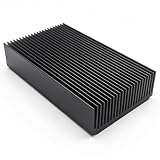
- 1.Black anodized aluminum heatsink; Material: Aluminium
- 2.Fin :22 pcs ; Color: Black
- 3.Size : 120 x 69 x 27mm/ 4.72""(L) x 2.72""(W) x 1.06""(H)
Best for: Large single-sink coverage for hot components.
A 120 x 69 x 27 mm aluminum body with 22 fins gives this heatsink the surface area needed for bigger devices that need passive cooling. The black anodized finish is more than cosmetic, since it pairs with the fin layout to help move heat away from power parts, amplifiers, and board-mounted hardware.
The 4.72 x 2.72 x 1.06 inch size makes this a strong fit when a component needs one substantial sink instead of several tiny ones. With 22 fins, the design adds air-contact area across the block, which is useful for PC parts, power transistors, FETs, voltage regulators, and NVMe SSD external drive enclosures. Aluminum keeps the unit practical for a broad range of electronics, and the 220 g weight reflects the larger mass that helps buffer temperature spikes. The wide compatibility list also includes adapters, SCRs, MOSFETs, ICs, and network devices, so it can cover many heat-generating layouts. This is the kind of sink you reach for when board space is available and you want one substantial cooling surface.
Pros
- 120 x 69 x 27 mm size covers larger hot zones
- 22 fins increase air contact for better passive cooling
- Black anodized aluminum suits many electronics builds
- 220 g mass supports larger power-handling applications
Cons
- Its 4.72-inch length can be too large for compact cases or tightly packed boards.
This is a practical choice for users who need a larger aluminum sink rather than a collection of small pads. It works especially well on power-heavy electronics where size and fin area matter most.
| Specification | Details |
|---|---|
| Brand | Awxlumv |
| Material | Aluminum |
| Dimensions | 120 x 69 x 27 mm |
| Product Dimensions | 4.72″L x 2.72″W x 1.06″H |
| Fin Count | 22 pcs |
| Color | Black |
| Item Weight | 220 g |
I like this for users who have room for one larger heat spreader and want a straightforward aluminum solution. The fin count gives it an advantage on parts that run warm for long periods. If your project uses regulators, power transistors, or a board that needs passive cooling, this is a sensible pick.
4. 4Pcs Heatsink 80 x 40 x 11mm Black Aluminum Heat

- Heat Sinks 4Pcs Heatsink Kit 80 x 40 x 11mm Black Aluminum Heat Sink Radiator Cooler
- Packaging: Includes 4 black Gokano aluminum radiators
- Pre-coated thermal tape backing, Designed to maximize its surface area in contact with the cool air

Best for: 4-pack for medium electronics and LEDs.
Four black aluminum radiators at 80 x 40 x 11 mm give this kit enough size to serve LEDs, 3D printers, and FPV gear without crowding the board. The pre-coated thermal tape backing helps each sink bond to a chassis or component surface quickly, which matters when you want cooling contact with minimal setup.
Each sink measures 3.15 x 1.57 x 0.43 inches, a mid-size footprint that works well when the component is neither tiny nor full-board large. Aluminum is the base material, so the sinks stay manageable in weight while still helping draw heat into the surrounding air. The set includes 4 pieces, which is useful if you are cooling several identical modules or want one spare for a future build. At 4.97 ounces each, they are substantial enough for a passive cooling job without feeling bulky on a moderate electronics assembly. The chassis-mount style also makes them a good match for enclosures and mounted electronics that benefit from a clean, fixed attachment point.
Pros
- 80 x 40 x 11 mm size suits medium-size electronics
- 4-piece kit covers multiple matching components
- Pre-coated thermal tape backing speeds mounting
- Chassis mount compatibility supports enclosure installs
Cons
- The 4-piece count may be too few if you need to cool many separate boards or chips.
This kit fits users who need a moderate-sized aluminum sink for a few identical spots. It is especially sensible for enclosures, LEDs, and printer parts where easy attachment matters.
| Specification | Details |
|---|---|
| Brand | Gokano |
| Material | Aluminum |
| Quantity | 4 pcs |
| Dimensions | 80 x 40 x 11 mm |
| Product Dimensions | 3.1″L x 1.5″W x 0.42″H |
| Mounting Type | Chassis Mount |
| Item Weight | 4.97 ounces |
I would use this when the target is a medium-sized component and not a tiny chip. The 4-pack is useful if you have a few matching parts to cool on the same project. For LEDs, 3D printer hardware, or FPV equipment, the balance of size and tape-backed installation is appealing.
5. GeeekPi 102pcs Heatsink Kit with Conductive Adhesive Tape, Cooler Heat
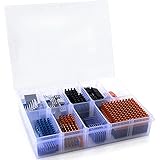
- Well Packaged - With a storage box for 102pcs heatsinks, it perfectly divides the heat sinks into 17 categories.
- Multiple applications - It can Cool Raspberry Pi VRM VRAM CPU GPU Small IC Laptop 3D Printers Stepper Motor Modules TMC...
- Good heat dissipation effect - Various Aluminum and Copper heat sinks with Thermal Conductive Adhesive Tape for cooling Raspberry...
Best for: Mixed-size kit for Raspberry Pi projects.
A 102-piece kit with a storage box gives you multiple heatsink sizes in one organized set, which is useful when Raspberry Pi boards and small modules all need different footprints. Copper is part of the mix here, so the kit aims at faster heat pickup on hot spots rather than one fixed-size solution.
The 17-category storage box is a practical detail because it keeps the assorted sinks separated instead of loose in a drawer. With 102 pieces, you can cover several Raspberry Pi areas, VRM stages, VRAM, CPU, GPU, and small ICs while still having extras for experimentation. The product also lists compatibility with certain 3D printer components, which broadens its use beyond single-board computers. The 1.57 x 1.57 x 0.43 inch product dimension reflects the packed kit rather than a single sink, so the set stores neatly in a parts bin. Aluminum and copper appear in the mix, letting you choose based on the heat source and available space.
Pros
- 102-piece assortment offers many fit options
- 17-category storage box keeps sizes organized
- Copper included for stronger heat transfer on hot spots
- Works with Raspberry Pi and certain 3D printer components
Cons
- The kit-level packaging means you still need to sort and match sizes before installation.
This is a smart buy for makers who want a broad selection rather than one-size cooling. It suits Raspberry Pi owners especially well when multiple chips on one board need different sink sizes.
| Specification | Details |
|---|---|
| Brand | GeeekPi |
| Quantity | 102pcs |
| Material | Copper |
| Product Dimensions | 1.57″L x 1.57″W x 0.43″H |
| Compatibility | Raspberry Pi, certain 3D Printer components |
| Storage | Storage box with 17 categories |
| Item Weight | 222 g |
I would recommend this to anyone who keeps several small boards and modules on the workbench. The big advantage is flexibility: you are not forced into one sink size. If your cooling needs vary from board to board, the assortment and storage box make the kit easy to live with.
6. 2Pcs Anodized Aluminum Heat Sink with Blue Pre-Applied Thermal Adhesive

- 1. Color gold anodized aluminum heatsink, Slotted design, fast heat dissipation, high hardness and oxidation resistance.
- 2. Size: 70×22×6mm/ 2.76"L x 0.87"W x 0.24"H, Ultra-slim & lightweight design, won’t block other components or affect...
- 3. Wide Compatibility: Slim size 6 mm thick, perfect for long strip chip, motherboard module, router, set-top box, industrial...
Best for: Slim components and low-clearance installs.
A 70 x 22 x 6 mm aluminum sink keeps the profile ultra-slim, which is useful when a router, set-top box, or board module has little vertical clearance. The slotted design helps air move across the fins, giving the part a practical passive-cooling shape without adding much bulk.
The 2.76 x 0.87 x 0.24 inch size is narrow enough to fit on long strip chips and motherboard modules without blocking nearby hardware. The gold anodized aluminum finish adds an oxidation-resistant surface, which is helpful on exposed electronics that sit in warm enclosures. At only 20 g, the heatsink stays very light, so it is easier to place on delicate boards and compact control units. The burr-free smooth edges matter in real use because they reduce the chance of snagging cables or pressing into adjacent components during installation. Compatibility covers routers, set-top boxes, industrial control boards, thermoelectric Peltier applications, and other small electronic parts, making it a versatile low-profile option.
Pros
- 70 x 22 x 6 mm slim profile fits low-clearance spaces
- Slotted design supports passive cooling airflow
- Gold anodized aluminum adds oxidation resistance
- 20 g weight keeps strain low on compact boards
Cons
- The narrow 6 mm thickness limits how much heat capacity it can absorb compared with larger sinks.
This sink makes sense when height is the main constraint. It is a good match for compact devices that need a neat, low-profile aluminum solution.
| Specification | Details |
|---|---|
| Brand | Awxlumv |
| Material | Aluminum |
| Dimensions | 70 x 22 x 6 mm |
| Product Dimensions | 2.76″L x 0.87″W x 0.24″H |
| Color | Gold anodized |
| Compatibility | Router, Set-Top Box, Circuit Board, Thermoelectric Peltier, Electronic Chip Module |
| Item Weight | 20 g |
I would choose this for tight internal layouts where clearance matters as much as cooling. The slim shape and light weight make it easier to place on small devices. If your project involves routers, control boards, or set-top boxes, this is an efficient fit.
7. Large Aluminum Heat Sink 2.71″x2.71″x1.41″/ 69x69x36mm Heatsink High Power Cooling

- 1. Product Name: large heat sink ( anodized aluminum heatsink); Material: aluminium; Color: sliver.(Sufficient materials only...
- 2. Size: 2.71 x 2.71 x 1.41 inch / 69 mm x 69mmx 36mm (L*W*H)
- 3. The Quantity of fins: 27pcs; Base board thickness:4.6mm, Fins board thickness:0.6-1mm; Fin spacing:1.99-2.12mm; Fin height...
Best for: High-power passive cooling in a compact block.
A 69 x 69 x 36 mm anodized aluminum block with 27 fins gives this heatsink enough fin area to move heat away from higher-power electronics. The 4.6 mm base board thickness helps spread heat into the fin array, which is useful when a component runs continuously rather than in short bursts.
The 2.71 x 2.71 x 1.41 inch size keeps it compact for the amount of cooling surface it brings. With 27 fins, plus 31.4 mm fin height and 1.99 to 2.12 mm fin spacing, the design is tuned for airflow across the fin stack instead of a plain slab. The aluminum body is paired with a silver finish, and the 6 ounce weight shows it has enough material for serious passive cooling without becoming overly bulky. Compatibility spans GPU backplates, Peltier coolers, LED PCB boards, chargers, amplifiers, transistors, routers, and semiconductors. That broad use list tells you it is meant for hot-running parts that need dependable surface area.
Pros
- 27 fins provide extensive air-contact area
- 4.6 mm base thickness helps spread heat into the fins
- 69 x 69 x 36 mm form balances size and cooling area
- Wide compatibility suits many high-power electronics
Cons
- Its 1.41-inch height can interfere with low-profile covers or crowded enclosures.
This is a sensible option when you need a compact but fin-dense aluminum sink. It works well for users cooling hardware that stays warm for long sessions.
| Specification | Details |
|---|---|
| Brand | Awxlumv |
| Material | Aluminum |
| Dimensions | 69 x 69 x 36 mm |
| Product Dimensions | 2.71″L x 2.71″W x 1.41″H |
| Fin Count | 27pcs |
| Base Board Thickness | 4.6mm |
| Fin Spacing | 1.99-2.12mm |
| Item Weight | 6 ounces |
I like this one for hardware that needs passive cooling but still has some room for height. The fin structure is the main appeal because it gives the air more surface to work with. For GPUs, amplifiers, and Peltier-based projects, it is a practical aluminum choice.
8. M.2 Heatsink Cooler 2280 SSD Double-Sided Heat Sink with Thermal

- 【Designed for desktop PC/PS5】- Perfectly fit for Samsung 860 EVO, 960 EVO, 970 EVO, 970 Pro, 980 Pro, PS5 etc. this M.2 SSD...
- 【Main body material】- Aluminum alloy, silver plating (helps eliminate static electricity), anodic oxidation surface treatment...
- 【Thermal Pads】- with good thermal conductivity ability. Low viscosity, with no damage to the M.2 SSD.
Best for: PS5 and desktop M.2 SSD cooling.
A double-sided aluminum alloy sink for 2280 SSDs targets the M.2 form factor directly, which matters when a desktop PC or PS5 needs more controlled SSD temperatures. The silver-plated body and anodic oxidation surface treatment add a cleaner finish while the thermal pads provide direct contact without damaging the drive.
At 3 x 0.95 x 0.4 inches, the heatsink is shaped for the 2280 SSD length rather than a generic board, so it fits more naturally on compatible drives. It is listed for Samsung 860 EVO, 960 EVO, 970 EVO, 970 Pro, and 980 Pro, along with PS5 use, which tells you it is aimed at common performance SSDs. The silver plating is noted as helping eliminate static electricity, while the aluminum alloy body keeps the part practical for computer installs. The thermal pads have low viscosity and good thermal conductivity, so the mounting process stays gentle on the SSD surface. Compatibility with single-sided Type drives is an important detail for buyers matching the heatsink to their storage layout.
Pros
- 2280 SSD form factor fits M.2 storage drives directly
- Double-sided design supports more complete drive coverage
- Silver plating helps reduce static electricity
- Thermal pads offer conductive contact with low viscosity
Cons
- It is specific to M.2 SSDs, so it will not help general motherboard or GPU cooling.
This is the right kind of sink for users cooling an SSD rather than a motherboard chip. It is especially relevant for PS5 and desktop M.2 installs where fit matters as much as heat transfer.
| Specification | Details |
|---|---|
| Brand | SGTKJSJS |
| Material | Aluminum |
| Product Dimensions | 3″L x 0.95″W x 0.4″H |
| Compatibility | Desktop PCs, PS5, and specific M.2 NVME SSDs |
| Main Body Material | Aluminum alloy |
| Surface Treatment | Anodic oxidation |
| Item Weight | 0.04 kg |
I would point SSD owners here if they want a heatsink matched to the 2280 format. The fit list is the big advantage because it reduces guesswork for common drives and PS5 installs. If your main concern is SSD temperature management, this is a focused solution.
9. Aluminum Large Heatsink, 11.8″X5.51″X0.79″ Heat Sink Radiator Circuit Board Cooling

- [Large Area Heat Dissipation]: The fins increase the area of the board and thus provide for greater heat transfer.The aluminum...
- [Wide Application]: Cooling Accessary is designed for high-power home LED lights or aquarium LED devices. Suitable for IC circuit...
- [Heatsink Specification]: SIZE: 300*140*20mm / 11.81*5.51*0.78"(Please make sure that the size of the heat sink fits that of...
Best for: Large surface area for board-level cooling.
A 11.81 x 5.51 x 0.78 inch aluminum heatsink gives circuit boards and high-power LED setups a broad cooling surface to work with. The finned layout is the key feature here, since more surface contact with cooling air helps dissipate heat from large electronics assemblies.
The size alone shows why this is suited to bigger jobs: it spans nearly a foot in length and over five inches in width, so it can cover wide boards or long LED modules. Aluminum keeps the structure practical for mounting, while the 570 g weight reflects a substantial piece of material that can absorb and spread heat over a large area. The product description points to IC circuit boards, motherboards, triodes, MOS tubes, and T0-3P high-power tubes, so it is clearly meant for more demanding electronics. Universal compatibility adds flexibility for custom projects. The emphasis on the largest surface area means this sink is aimed at airflow-based cooling rather than a tiny contact patch.
Pros
- 11.81 x 5.51 x 0.78 inch size covers large boards
- Aluminum construction keeps large-area cooling practical
- 570 g mass supports broad heat spreading
- Universal compatibility works across many electronics
Cons
- Its very large footprint makes it unsuitable for compact enclosures or dense component layouts.
This sink is a fit when the project has room and the thermal load is spread across a large area. It makes the most sense for board-level cooling and oversized LED applications.
| Specification | Details |
|---|---|
| Brand | Tyenaza |
| Material | Aluminum |
| Product Dimensions | 11.81″L x 5.51″W x 0.78″H |
| Compatibility | Universal |
| Item Weight | 570 g |
I would only choose this when the build has enough room to use a very large sink properly. The value is in the surface area, not compactness. For large LED rigs, broad circuit boards, or custom electronics with space to spare, it is a practical aluminum option.
10. 4Pcs 14mm Aluminum Heatsink with Thermal Conductive Adhesive Tape 100
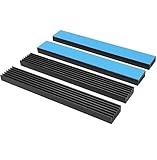
- 1.Product Name :14mm anodized aluminum heatsink Cooling 7Fin heat sink strip; Material : Aluminum alloy, made of Aluminum...
- 2.Pre-applied blue thermal conductive adhesive tape backing, easy attach to the application with no cutting to do.
- 3.Size : 100mm x 14mm x 6mm / 3.94"L x 0.55"W x 0.24"H(L*W*H)
Best for: Strip-style cooling for chips and memory.
Four 14 mm-wide heatsinks made from Aluminum 6063 give this set a clear advantage for chip strips, RAM, LED modules, and similar flat electronics. The 100 x 14 x 6 mm size with 7 fins and pre-applied blue thermal conductive adhesive tape makes mounting straightforward while keeping the sinks narrow and low-profile.
Each piece measures 3.94 x 0.55 x 0.24 inches, so the shape runs long and slim rather than bulky. Aluminum alloy, specifically Aluminum 6063, is named in the data and is paired with good thermal conductivity, which is the core reason this style works for electronics cooling. The 4-piece count covers several parts on a board or lets you cool a matching set of modules together. Because the adhesive tape is pre-applied, there is no cutting or extra tape prep before installation. The product is listed for electronic chips, ICs, RAM, LEDs, power transistors, semiconductors, and similar parts, making it a versatile choice for narrow contact areas. The panel-mount style also suits clean, fixed placement on hardware surfaces.
Pros
- Aluminum 6063 supports good thermal conductivity
- 100 x 14 x 6 mm strip shape fits narrow chips and RAM
- Pre-applied blue thermal adhesive tape simplifies mounting
- 4-piece kit covers multiple board spots
Cons
- The narrow strip format is less useful for wide or irregular heat sources.
This kit is a strong match for long chip rows and other flat components. It works best when you need a slim aluminum sink with easy adhesive-backed installation.
| Specification | Details |
|---|---|
| Brand | Awxlumv |
| Material | Aluminum |
| Material Grade | Aluminum 6063 |
| Quantity | 4 pcs |
| Dimensions | 100mm x 14mm x 6mm |
| Product Dimensions | 0.55″W x 3.94″L x 0.24″H |
| Mounting Type | Panel Mount |
I would recommend this to readers cooling chips laid out in strips, especially RAM and LED sections. The Aluminum 6063 detail matters because it points to a material choice suited to heat transfer. If your project needs slim, adhesive-backed sinks for several small parts, this set is a good fit.
Quick Comparison Table of Best Heat Sink Materials for Electronics
| Product Name | Material | Size | Compatibility | Best For | Check Price |
|---|---|---|---|---|---|
| Pastall 100 PCS (8 Different Sizes) | Copper | 0.55″ x 0.55 | Raspberry Pi | Small boards | Check Price |
| Easycargo 20pcs 9mm Small mini Heatsink | Aluminum | 9mm x 9mm | Universal | Tiny chips | Check Price |
| Large Aluminum Heatsink 4.72”x2.72”x1.06” inch /120x69x27mm | Aluminum | 120 x 69 x 27mm | Computer devices | High-power cooling | Check Price |
| 4Pcs Heatsink 80 x 40 x | Aluminum | 80 x 40 x 11mm | Electronics | Passive cooling | Check Price |
| GeeekPi 102pcs Heatsink Kit with Conductive | Copper | 1.57″ x 1.57 | Raspberry Pi | Mixed small parts | Check Price |
| 2Pcs Anodized Aluminum Heat Sink with | Aluminum | 70 x 22 x 6mm | Circuit boards | Slim installs | Check Price |
| Large Aluminum Heat Sink 2.71″x2.71″x1.41″/ 69x69x36mm | Aluminum | 69 x 69 x 36mm | PC, GPU | Large cooling | Check Price |
| M.2 Heatsink Cooler 2280 SSD Double-Sided | Aluminum | 3″ x 0.95 | M.2 SSDs | SSD cooling | Check Price |
| Aluminum Large Heatsink, 11.8″X5.51″X0.79″ Heat Sink | Aluminum | 11.81″ x 5.51 | Universal | Maximum surface area | Check Price |
| 4Pcs 14mm Aluminum Heatsink with Thermal | Aluminum | 100 x 14 x 6mm | LEDs, CPU | Strip components | Check Price |
How to Choose the Best Material for Heat Sink
Thermal conductivity and heat spreading
Choose the material with the highest thermal conductivity that fits your part size and airflow path, because fast heat spreading matters more than raw headline numbers alone. Copper moves heat away from the source fastest and reduces hot spots under sustained load, while aluminum spreads heat well enough for most compact sinks and keeps fin temperatures more even when the base is properly thick. A good pick has a flat base, uniform fin spacing, and no obvious thickness drop at the center.
For heavy continuous heat, choose copper or a copper-base hybrid; for general-purpose cooling, choose aluminum with a wide base and dense, even fins.
| Type | Best for |
|---|---|
| Copper | Highest heat spreading and hot-spot control |
| Aluminum | Balanced cooling with good fin coverage |
| Copper base + aluminum fins | Strong source-side pickup with lower mass |
Weight, strength, and mounting fit
Match the material to the mounting load and the device weight limit, because a sink that is too heavy can flex boards, stress clips, and spoil contact pressure. Heavier copper works best when the chassis, screws, and board layout support it; lighter aluminum is the safer choice for compact electronics, vertical boards, and vibration-prone installs. Check for a rigid base, square edges, and mounting holes that line up cleanly with standard hardware.
A good fit keeps the base flat against the chip and uses the full clamp force without bowing. For small boards and tight mounts, pick aluminum; for reinforced assemblies with strong fasteners, pick copper or a hybrid sink.
| Type | Best for |
|---|---|
| Light aluminum sink | Low stress, easy mounting, board-safe installs |
| Solid copper sink | Strong thermal load with reinforced hardware |
| Hybrid construction | High performance with moderated weight |
Corrosion resistance and surface finish
Pick the finish that protects the metal without hurting contact quality, especially in humid rooms, outdoor enclosures, or systems that run for long periods. Bare copper can oxidize and darken, so plated or coated surfaces hold up better and stay easier to maintain; anodized aluminum gives strong corrosion resistance and a cleaner surface for handling. A good finish is even, thin, and free of flaking, pitting, or rough patches that raise thermal resistance at the interface.
Use anodized aluminum for general durability, and choose plated copper when you want long service life with a stable, clean mating surface.
- Anodized aluminum: strong corrosion resistance and low maintenance
- Plated copper: durable contact surface with better oxidation control
- Coated finishes: best for humid or dusty environments
Cost, machinability, and manufacturing ease
Choose the material that matches your production method, because good machinability shortens lead time and keeps fin geometry consistent. Aluminum is easiest to extrude, stamp, and machine into thin fins, so it suits high-volume parts with tight repeatability. Copper cuts well for custom blocks and small runs, but it takes more effort and tool wear than aluminum.
Cast parts work for complex shapes, yet they need careful surface control to avoid rough bases and uneven fins. For custom prototypes, pick machined aluminum or copper; for repeatable high-volume sinks, pick extruded aluminum with a clean, uniform fin profile.
| Type | Best for |
|---|---|
| Extruded aluminum | High-volume production and consistent fin shapes |
| Machined copper | Custom, high-performance prototypes |
| Cast alloy | Complex geometry with lower fabrication effort |
Applicationspecific thermal needs
Match the material to the thermal load first, then decide whether passive airflow or a fan will carry the rest. For low-power devices, aluminum handles the job cleanly because it sheds heat well with a modest fin stack and a lighter footprint. For higher heat density, copper or a copper-base hybrid gives better source-side pickup, and active airflow makes those fins far more effective.
A good sink has enough fin area, a base thickness that matches the heat source, and dimensions that fit the enclosure without blocking airflow paths. For low-power passive systems, choose aluminum; for high-heat active systems, choose copper or a copper-base hybrid.
Which Should You Choose?
- If you need a simple drop-in solution for a Raspberry Pi or other small board, choose a small multi-size kit with conductive adhesive tape.
- If you’re cooling compact chips like MOSFETs, VRMs, or GPU memory, choose a mini black anodized aluminum heatsink around 9 x 9 x 5 mm with pre-applied thermal tape.
- If you need stronger passive cooling for a larger power transistor, SSD, or board area, choose a medium-to-large aluminum heatsink with lots of fins and a wider footprint.
- If your priority is maximum heat spreading across a bigger surface, choose a large aluminum heatsink with a tall fin design and high-contact thermal tape backing.
Quick Best Material For Heat Sink Buying Checklist
- Confirm thermal conductivity. Choose a material that transfers heat efficiently from the base into the fins.
- Check weight limits. Make sure the heat sink material will not overload the board or mounting points.
- Inspect corrosion protection. Prefer finishes or alloys that resist oxidation and surface wear.
- Evaluate manufacturability. Select a material that can be shaped, machined, or extruded cleanly for your design.
- Match the cooling method. Verify the material works well with passive airflow or forced-air cooling.
- Balance performance and value. Pick the option that delivers the best thermal results without unnecessary material cost.
How Heat Sink Material Moves Heat Away From Components
The best material for a heat sink is usually the one that transfers heat quickly from the device into the surrounding air with the least resistance. Thermal conductivity matters most, because a high-conductivity material spreads heat away from the hot spot before it can damage nearby parts. Aluminum is popular because it offers a strong balance of conductivity, weight, and machinability.
Copper conducts heat even better, which is useful when a component produces concentrated heat in a small area. In practice, the material works together with fin shape and surface area, so a good heat sink is not just about raw conductivity.
A material that spreads heat efficiently helps every fin do more of the cooling work.
Aluminum vs Copper in Heat Sink Design
Aluminum and copper are the two most common choices, and each has a clear role in thermal design. Aluminum is lighter and easier to machine, so it is often used for larger finned heatsinks and enclosures where weight matters. Copper has higher thermal conductivity, making it a strong option for rapidly moving heat away from a dense hotspot.
Many designs combine both metals: a copper base can pull heat from the source, while aluminum fins dissipate it across a wider area. The right choice depends on the heat load, size limits, and whether the part must stay lightweight.
Neither metal is universally superior; each solves a different cooling problem well.
| Type | Best for | Key trade-off |
|---|---|---|
| Aluminum | General-purpose cooling | Lower conductivity than copper |
| Copper | High heat density | Heavier and harder to machine |
| Aluminum with copper base | Balanced performance | More complex construction |
Why Surface Finish and Anodizing Matter
Material performance is only part of the story; surface treatment can change how well a heat sink behaves in real use. Bare metal surfaces reflect more heat than darker, treated finishes, which is why anodized aluminum is common in electronics. Anodizing also improves corrosion resistance and creates a durable oxide layer that helps the part survive humid or dusty environments.
That said, a coating should not be so thick that it blocks thermal contact where the component touches the base. On copper, protective plating is often used to reduce oxidation and keep the surface stable over time.
A well-finished heat sink is easier to maintain and more reliable in long-running systems.
Heat Sink Compatibility With the Rest of the Thermal Stack
The best material for a heat sink only works properly when it fits the full cooling path. A heatsink must match the thermal interface material, mounting pressure, and component package shape so heat can move efficiently from chip to metal. For example, a highly conductive copper base will not help much if the contact surface is uneven or the pad is too thick.
In compact builds, a lighter aluminum sink may also be easier to support on the board without stressing solder joints. Compatibility matters with airflow too, because dense fin structures need enough air movement to perform well.
Thinking of the heatsink as one part of a complete thermal stack helps avoid weak links.
- Check base flatness against the component surface.
- Match mounting hardware to the sink’s weight.
- Use a thermal interface material suited to the gap size.
- Verify airflow direction before final installation.
Common Material Mistakes That Reduce Cooling Performance
One frequent mistake is assuming the highest-conductivity metal automatically gives the best result. In reality, a heavy copper sink may underperform if the enclosure cannot support it or if airflow is poor. Another issue is mixing metals without considering corrosion, since dissimilar metals can react in damp conditions.
People also overlook the importance of fin spacing: a material with excellent conductivity still needs open geometry to release heat effectively. Using too much thermal paste can also hurt performance by creating an insulating layer instead of a thin bond.
The best results come from matching material properties to the environment, not from choosing the most impressive specification on paper.
Frequently Asked Questions (FAQs)
What Is The Best Material For Heat Sink Overall?
The best material for heat sink use is usually aluminum because it offers a strong balance of thermal performance, low weight, and easy manufacturing. Aluminum is common for finned designs, while copper is chosen when maximum heat transfer matters more than weight or cost.
Why Is Aluminum Often Used For Heat Sinks?
Aluminum is often used for heat sinks because it dissipates heat well and stays lightweight enough for compact devices. Its machinability also makes it easy to extrude into thin fins, which increases surface area and improves cooling efficiency in many designs.
When Should Copper Be Chosen Over Aluminum?
Copper should be chosen over aluminum when the heat source is intense and rapid heat spreading is critical. Copper moves heat very efficiently, but it is heavier and usually more expensive, so it fits high-performance applications with tighter thermal demands.
Does Surface Finish Affect Heat Sink Performance?
Yes, surface finish affects heat sink performance because coatings and oxidation can change heat transfer and long-term reliability. A smooth, properly treated surface improves contact with the source, while anodizing or plating can help protect the material from corrosion without hurting usability.
How Does Heat Sink Material Affect Weight And Mounting?
Heat sink material affects weight and mounting because denser metals place more stress on brackets, boards, and screws. Aluminum is easier to support in portable or compact systems, while copper may require stronger mounting hardware and more careful alignment.
Can Mixed-Material Heat Sinks Improve Cooling?
Yes, mixed-material heat sinks can improve cooling by combining a copper base with aluminum fins for a practical balance of performance and weight. The copper base pulls heat away quickly, while aluminum fins spread it efficiently across a larger cooling area.
What Should I Consider Besides Thermal Conductivity?
You should consider corrosion resistance, weight, cost, and manufacturability besides thermal conductivity when selecting a heat sink material. A material that cools well but is too heavy, difficult to shape, or prone to oxidation may not work well in real-world use.
Final Suggestions
Choosing the best material for heat sink use comes down to balancing conductivity, weight, durability, and cost. Aluminum works well for most designs, while copper excels in demanding applications that need faster heat spreading. By matching the material to the workload and mounting needs, you can improve reliability and thermal control with confidence.