Top 5 Best Rv Refrigerator Thermometer Picks
The best rv refrigerator thermometer can make a major difference in food safety and appliance performance on the road. In compact RV cooling systems, even slight temperature swings can affect freshness, spoilage risk, and overall efficiency. That is why a reliable refrigerator temperature monitor, a digital fridge thermometer, and smart sensing technology matter more than many travelers realize.
Material quality, probe design, display clarity, and temperature range all play a role in how well these tools handle vibration, airflow changes, and frequent door openings. For RV owners who depend on consistent cooling, the details behind calibration, sensor accuracy, and alarm features are worth a closer look.
The best rv refrigerator thermometer is not just about reading numbers—it is about understanding which features actually protect your food when conditions change unexpectedly.
In-depth Reviews of the Best RV Refrigerator Thermometer
1. Lasubst Digital Refrigerator Thermometer 2 Pack for Fridge Freezer Cooler

- Clear & Easy-to-Read Display: Large LCD screen with bold numbers for quick temperature checks at a glance
- Wide Temperature Range: Accurately measures temperatures from -4℉ to 122℉ with a precision of +/- 1.8℉, meeting your needs...
- Durable & Waterproof Design: Built with an IPX3 waterproof rating, designed to withstand moisture inside fridges or other humid...

Best for: Simple dual-pack for fridge checks.
Two thermometers in one pack give you a spare or a second location to monitor, and the large LCD makes temperature checks quick from across a cramped RV fridge. The compact white ABS bodies suit tight storage spaces where you want a clear reading without extra bulk, while the included CR2032 batteries get both units working out of the box.
Each unit measures from -4°F to 122°F with +/- 1.8°F precision, so you can verify both refrigerator and freezer zones without guessing. The IPX3 waterproof rating matters in a humid RV environment because condensation is common around door seals and cold shelves. A stand, hang, or attach setup gives you placement options inside the compartment, which helps if your shelves are already crowded. The package includes 2 fridge thermometers, 2 CR2032 batteries, and a screwdriver, so setup is straightforward. UL specification compliance adds another layer of confidence for regular household-style appliance use.
Pros
- 2-count package covers more than one compartment
- Large LCD display makes readings easy to scan
- IPX3 waterproof rating suits humid fridge interiors
- ABS outer material keeps both units lightweight and compact
Cons
- No wireless alerts, so you must open the door to check readings
For RV owners who want a straightforward, no-fuss temperature check, this two-pack covers the basics well. It is especially useful when you want one thermometer in the fridge and another in the freezer compartment.
| Specification | Details |
|---|---|
| Brand | Lasubst |
| Display Type | LCD |
| Special Feature | High Accuracy, Large Display, Waterproof |
| Outer Material | Acrylonitrile Butadiene Styrene |
| Color | White |
| Unit Count | 2 Count |
| Included Components | 2 Fridge Thermometers, 2 CR2032 Batteries, 1 Screwdriver |
| Specification Met | UL |
| Product Care Instructions | Freezer Safe, Wipe Clean |
| Age Range (Description) | Adult |
I’d point this toward RV users who want a simple, readable thermometer without extra setup. The two-pack is the real advantage here: you can monitor two spots at once or keep a backup on hand. If you prefer a clear screen, battery included, and a compact footprint, this is an easy fit.
2. Freezer Fridge Thermometer Wireless with Alarm Refrigerator Thermometer

- 【Refrigerator Freezer Thermometer with Alarm, Widely Used】: With 330FT/100M Monitoring Range, it can be used in the FRIDGE and...
- 【2 Customizable Temperature Alerts】: Once the temperature exceeds the preset range, the alert will continue to sound for...
- 【Battery Powered, USB for 3 Adjustable Backlight】: When powered by battery (not included), you can read the rv refrigerator...
Best for: Wireless monitoring for distant storage.
A 330FT/100M monitoring range makes this model useful when your RV fridge or freezer is out of sight, and the wireless setup keeps temperature data available without opening the door. The digital display pairs with updated readings every 30 seconds, so you can watch changes more closely than with a basic dial thermometer.
Two customizable temperature alerts give this unit its main edge, because the alarm can continue sounding for 1 minute and reach up to 90DB when preset limits are crossed. That makes it practical for travel days, campsite storage, or any setup where you cannot check frequently. USB connectivity adds flexibility for power, while battery power keeps it usable in more mobile situations. The backlight has 3 adjustable levels, which helps in dim RV cabinets or at night. The plastic outer material keeps the unit light, and wipe-clean care makes maintenance simple after routine use.
Pros
- 330FT/100M range supports remote monitoring
- 2 customizable temperature alerts help catch unsafe changes
- 90DB alarm is easy to hear in a busy RV
- 3 adjustable backlight levels improve nighttime visibility
Cons
- The unit is battery powered and also uses USB, so you need a power plan for setup
This is a strong pick for anyone who wants alerts instead of manual checking. It makes the most sense in an RV or travel trailer where the fridge may be tucked away and temperature swings need fast notice.
| Specification | Details |
|---|---|
| Brand | HODIK |
| Display Type | Digital |
| Connectivity Technology | Usb |
| Special Feature | 2 Temperature Alerts |
| Power Source | Battery Powered, Usb for 3 Adjustable Backlight |
| Outer Material | Plastic |
| Color | Multicolored |
| Product Care Instructions | Wipe Clean |
| Age Range (Description) | Adult |
I’d recommend this to RV users who care most about alerts and remote visibility. The long monitoring range and audible alarm make it better than a simple refrigerator gauge when you are away from the rig or moving around a campsite. If you want a more hands-off temperature monitor, this one is the practical choice.
3. 2 Pack Refrigerator Thermometer for Fridge Freezer Cooler RV Accessories
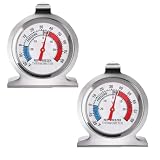
- Large, Easy-to-Read Dial- The oversized 2-inch dial features clear blue and red color zones that let you see at a glance whether...
- Accurate Temperature Monitoring- Measures temperatures from -20 to 80°F (-30 to 30°C), covering the full range needed for...
- Flexible Placement Options- The hook and panel design allows you to hang the thermometer or place it standing on any shelf. It...
Best for: Battery-free dial for quick checks.
An oversized 2-inch dial gives this thermometer a clear read at a glance, and the battery-free design means it works anywhere you place it without charging or replacements. The silver glass-and-stainless-steel build fits well in a fridge, freezer, or cooler where you want a simple analog check and no electronics to manage.
The temperature span runs from -20 to 80°F, which covers the range needed for fridge and freezer monitoring as well as RV coolers and wine coolers. Blue and red zones on the dial make the safe refrigerator area easy to spot, so you do not need to interpret numbers every time. The analog display keeps operation simple, and the included storage case gives you a place to keep the thermometer when you are not using it. Because it is hand wash only, care stays basic and low effort. The glass and stainless steel outer materials also give it a familiar, durable appliance-style feel.
Pros
- Battery-free operation avoids replacements and charging
- 2-inch dial is easy to read quickly
- Blue and red zones simplify safe temperature checks
- Glass and stainless steel construction suits appliance storage
Cons
- No connectivity or alarm, so it only provides a local visual reading
For RV owners who prefer a no-electronics thermometer, this is a clean, practical option. It works best when you want a simple dial you can glance at during routine fridge checks.
| Specification | Details |
|---|---|
| Brand | Andelov |
| Display Type | Analog |
| Special Feature | Battery Free |
| Outer Material | Glass, Stainless Steel |
| Color | Silver |
| Unit Count | 1 Count |
| Connectivity Technology | No Connectivity |
| Product Care Instructions | Hand Wash Only |
| Included Components | Storage Case |
| Age Range (Description) | Adult |
I like this one for people who want the least complicated RV refrigerator thermometer possible. The big dial and battery-free operation make it dependable for quick checks, especially if you do not want screens, alarms, or extra setup. It is a sensible pick for straightforward temperature monitoring inside a compact fridge or cooler.
4. Camco 42114 Thermometer – Refrigerator/Freezer/Dry Storage

- Monitor The Internal Temperature Of Your Refrigerator Or Freezer.Fit Type: Universal Fit
- Easy To Read Dial
- Hooks, Hangs Or Stands Alone
Best for: Metal dial for rugged placement.
Stainless steel construction gives this Camco thermometer a rugged, wipe-clean body that works well in a refrigerator, freezer, or dry storage area. The built-in base lets it stand on a flat shelf, while the hook-and-hang options make it easier to place where an RV layout actually has room.
The easy-to-read analog dial measures from -20°F to 80°F, giving you coverage for both chilled and frozen storage without switching tools. Universal fit helps it work in different compartments, which matters when RV shelves and racks vary from one setup to another. Because it is hand powered, there is no battery management to worry about, and the waterproof feature adds peace of mind in damp refrigerator environments. The stainless steel outer material is the key practical detail here, since it can sit in a cold, humid appliance while still being simple to clean. The included thermometer arrives as a single unit, so it is a focused, space-efficient choice.
Pros
- Stainless steel body handles fridge and freezer placement
- Built-in base lets it stand on a shelf
- Hook or hang options fit wire racks well
- -20°F to 80°F dial covers common storage zones
Cons
- Single-unit package means you need another thermometer for a second compartment
This model suits RV owners who want a simple, durable thermometer with flexible placement. It is especially useful if you need a unit that can stand, hang, or sit on a rack without fuss.
| Specification | Details |
|---|---|
| Brand | Camco |
| Display Type | Analog |
| Special Feature | Waterproof |
| Outer Material | Stainless Steel |
| Color | Stainless Steel |
| Unit Count | 1 Count |
| Product Care Instructions | Freezer Safe, Wipe Clean |
| Included Components | thermometer |
| Power Source | Hand_powered |
| Age Range (Description) | Adult |
I’d choose this for someone who wants a dependable, low-maintenance thermometer that can sit or hang wherever space allows. The stainless steel body and simple dial make it easy to live with in an RV refrigerator. If you do not need alarms or wireless features, it is an easy, practical pick.
5. Freezer Thermometer with Alarm – Digital Refrigerator Temperature Monitor with

- [Dual-Probe Monitoring: Track 2 Locations] Unlike single-probe models, this refrigerator thermometer comes with 1 host and...
- [Reliable Freezer Alarm with 330FT Range] Receive instant visual and audible alerts when temperatures exceed your preset limits...
- [Accurate Digital Thermometer & Backlit Display] Monitor indoor temps (-14.2℉~140℉) and outdoor probe temps...
Best for: Two-sensor monitoring for two zones.
One host and two sensors make this thermometer useful when you need to track two spots at once, such as a fridge and freezer or two separate coolers. The digital display and wireless connectivity keep the reading system organized, while the backlit screen helps when you are checking temperatures in dim RV storage spaces.
Dual-probe monitoring is the main advantage here because it lets you watch two locations simultaneously instead of moving one probe around. The wireless design is paired with a 330FT range, which helps if the sensors are installed in hard-to-reach compartments. Instant visual and audible alerts warn you when temperatures pass preset limits, so you can react before food storage drifts too far. The package includes one host and two sensors, making it a full monitoring setup rather than a single-point checker. With an adult-focused design and a backlit display, it is geared toward users who want more oversight than a standard fridge thermometer provides.
Pros
- 1 host plus 2 sensors track two locations at once
- 330FT wireless range supports flexible placement
- Visual and audible alerts help catch temperature changes fast
- Backlit digital display improves readability in low light
Cons
- Requires 4 AAA batteries, so you need to keep spares on hand
This is a strong option for RV owners who want to monitor more than one compartment at the same time. It makes the most sense when you need ongoing oversight for both fridge and freezer temperatures.
| Specification | Details |
|---|---|
| Brand | LSNDRG |
| Display Type | Digital |
| Connectivity Technology | Wireless |
| Special Feature | Backlit |
| Unit Count | 1 Count |
| Included Components | Instruction Manual |
| Number of Batteries | 4 AAA batteries required. |
| Age Range (Description) | Adult |
| Item Length | 300 inches |
| Color | 13 |
I’d recommend this to RV users who need more than a basic thermometer and want two-location monitoring. The dual sensors are the real value, especially if you are balancing a fridge and freezer or two separate cold storage areas. If you want alerts and remote checking in one package, this is the most feature-rich pick here.
Quick Comparison Table of Top RV Refrigerator Thermometers
| Product Name | Display Type | Power Source | Key Feature | Best For | Check Price |
|---|---|---|---|---|---|
| Lasubst Digital Refrigerator Thermometer 2 Pack | LCD | Battery | Large display | Easy fridge checks | Check Price |
| Freezer Fridge Thermometer Wireless with Alarm | Digital | Battery/USB | Wireless alarm | Remote monitoring | Check Price |
| 2 Pack Refrigerator Thermometer for Fridge | Analog | Battery free | 2-inch dial | Simple RV use | Check Price |
| Camco 42114 Thermometer – Refrigerator/Freezer/Dry Storage | Analog | Hand powered | Stainless steel | Durable storage | Check Price |
| Freezer Thermometer with Alarm – Digital | Digital | AAA batteries | Dual-probe | Two-zone monitoring | Check Price |
How to Choose the Right Best RV Refrigerator Thermometer
Temperature accuracy and range
Choose a thermometer that reads accurately in the refrigerator-safe zone and still tracks freezer temperatures without guessing. For an RV fridge, a clear target range is 0°F to 50°F, with the best units showing small changes in 1-degree steps and updating quickly after the door closes. Poor picks use vague markings, slow response, or ranges that stop short of freezer conditions.
Choose a compact digital model with a clear digital readout and fast sensor response for the most dependable food checks.
| Type | Best for |
|---|---|
| 0°F to 50°F range, 1-degree increments | Most RV owners who need fridge and freezer monitoring |
| Wide range with fast refresh | Travelers who check temperatures often |
| Narrow range or coarse markings | Basic use without precise food-safety tracking |
Display type and readability
Pick the display that stays readable in a dark coach without forcing the door open for long. Digital screens with large numbers give the fastest glance check, while analog dials work best only when the face is oversized and the pointer is easy to see. Backlit displays help in dim storage areas, and bold digits beat small LCDs every time.
Poor readability costs you time and lets cold air escape. Choose a large-number digital thermometer with backlight for the easiest daily use, especially in low-light RV interiors.
| Display | Best for |
|---|---|
| Large digital screen with backlight | Dim RV interiors and quick checks |
| Oversized analog dial | Simple, no-battery monitoring |
| Small screen or tiny dial | Fixed indoor kitchens with easy visibility |
Mounting and placement options
Match the mounting style to how your fridge moves and how you access it. Hanging models suit wire shelves, magnetic versions work on metal surfaces, standing units fit flat shelves, and clip-on designs stay put on bins or racks. The best choice sits securely through bumps and does not tip, slide, or block airflow.
Check that the sensor sits where your food actually stays, not right next to a vent or the door. Choose a magnetic or clip-on thermometer for travel stability, and pick a hanging or standing unit only when it locks into your shelf layout.
| Mounting type | Best for |
|---|---|
| Magnetic | Metal fridge walls and fast placement |
| Clip-on | Wire shelves and bumpy travel |
| Hanging | Open shelving and simple setup |
| Standing | Flat shelves with enough space |
Durability and build quality
Choose a thermometer with a tough housing, moisture-resistant materials, and a battery compartment that closes firmly. RV refrigerators face vibration, condensation, and frequent handling, so thin plastic and loose battery doors fail fast. Good models have sealed or tightly fitting cases, smooth edges, and controls that do not feel flimsy.
Look for a unit that can handle cold damp air without fogging, cracking, or draining batteries from shaky contacts. Choose a rugged, moisture-resistant thermometer with a secure battery compartment for long-term RV use and fewer breakdowns on the road.
Alerts, memory, and convenience features
Pick alert and memory features when you want the thermometer to do more than show the current number. High and low alarms warn you when the fridge drifts out of safe range, and memory functions reveal temperature swings after driving, door openings, or power changes. Keep the interface simple: a few clearly labeled buttons, an obvious alarm indicator, and an easy reset matter more than extra modes.
Poor convenience features create confusion; good ones save time and protect food. Choose a simple digital thermometer with alarms and min/max memory for the best mix of safety and daily ease.
Which Should You Choose?
- If you want a simple, easy-to-scan check for a fridge or RV cooler, choose a digital thermometer with a large LCD display and a wide temperature range.
- If you need to monitor a fridge or freezer from across the RV or outside storage area, choose a wireless thermometer with a long-range remote sensor and alarm alerts.
- If you prefer a no-fuss, battery-light option for quick spot checks, choose a large-dial thermometer with clear safe-zone color markings and a hang-or-stand design.
- If you want to track temperatures in two spots at once, choose a dual-probe thermometer with separate sensors for different compartments.
Quick Best Rv Refrigerator Thermometer Buying Checklist
- Check accuracy first choose a thermometer that gives dependable readings in a narrow temperature range.
- Pick a readable display select digits or markings you can see quickly inside a dim RV refrigerator.
- Match the mounting style make sure it can hang, stand, or attach securely without shifting on the road.
- Review alarm features look for audible or visual alerts if temperatures move out of the safe zone.
- Confirm durability choose a sturdy build that can handle vibration, moisture, and frequent door openings.
- Keep maintenance simple favor a model with easy battery access, simple cleaning, and hassle-free recalibration.
How an RV Refrigerator Thermometer Reads Temperature Differently Than a House Model
An RV refrigerator thermometer is designed to give a realistic picture of conditions inside a compact, moving appliance, where temperatures can shift more than they do in a home kitchen. Because RV fridges often run on absorption cooling, they may cool unevenly between shelves and can react slowly after a door opening or a change in outside temperature. A thermometer helps you see those swings instead of guessing from the dial setting alone.
For the most useful reading, place the sensor in the center area of the refrigerator, away from walls, vents, and food containers that can trap or block airflow. That position usually provides a more balanced measurement of what your food is actually experiencing.
Digital, Analog, and Remote Thermometers Compared
Different thermometer styles suit different camping routines. Analog models are simple, dependable, and easy to read at a glance, making them a good fit for travelers who want minimal setup. Digital units often provide clearer numbers and may show minimum and maximum readings, which is helpful when the refrigerator cycles throughout the day.
Remote thermometers add convenience by letting you check temperatures from outside the RV or even while sitting under the awning. The trade-off is usually extra setup or batteries.
If you want a quick visual check, analog works well; if you want records of temperature changes, digital is often more informative; if convenience matters most, remote monitoring is the most practical option.
| Type | Best for | Main advantage |
|---|---|---|
| Analog | Basic everyday use | Simple and easy to read |
| Digital | Tracking temperature swings | More precise display |
| Remote | Hands-off monitoring | Checks from a distance |
Where to Place the Thermometer Inside the Refrigerator
Placement has a big effect on how useful the reading will be. The best spot is usually near the middle shelf, since that area tends to reflect the average temperature of the compartment. Avoid placing the thermometer directly against the back wall, near the cooling fins, or right next to the door, because those zones can be artificially cold or warm.
If your refrigerator has a fan, keep the sensor out of the direct airflow path so the reading does not fluctuate too sharply. Some owners also keep a second unit in the freezer section to check whether both compartments are performing properly.
A stable placement method matters more than frequent moving, because consistency makes temperature trends easier to trust.
Common Temperature Mistakes RV Owners Make
One common mistake is relying on the refrigerator knob instead of verifying the actual internal temperature. Another is packing the compartment too tightly, which blocks air circulation and creates warm pockets around food. Leaving the door open too long while loading groceries can also cause temperatures to rise faster than expected.
Many owners forget that an RV refrigerator may need time to settle after a long drive or after parking on an incline. It is also easy to misread the results if the thermometer is placed near a cold wall or directly in the door bin.
Checking the thermometer at the same time each day gives a much better sense of performance than judging it after only one short reading.
- Do not place the sensor near vents or walls.
- Do not overload shelves with tightly packed items.
- Do not assume a setting number equals the true temperature.
- Do not check only once after a door opening.
Cleaning and Maintaining Your Refrigerator Thermometer
Regular care helps a thermometer stay accurate and easy to use. Wipe the casing with a soft damp cloth to remove condensation, dust, or food residue, but avoid soaking it unless the manufacturer specifically says it is waterproof. If the model uses a battery, inspect the compartment for corrosion or looseness, especially after long storage periods.
Digital thermometers may benefit from occasional comparison with a known reference temperature, such as ice water, to confirm that they are still reading correctly. For clip-on or hanging styles, check that the mount is secure so the device does not shift when the RV is moving.
Storing the thermometer in a dry place during the off-season can also reduce wear and extend its useful life.
Frequently Asked Questions (FAQs)
Why Is An Rv Refrigerator Thermometer Important?
An RV refrigerator thermometer is important because it helps you verify that food stays in a safe cold zone even when travel, outside heat, or uneven cooling affects the cabinet. Reliable readings let you spot problems early and protect perishables before they spoil.
What Features Matter Most In The Best Rv Refrigerator Thermometer?
The best RV refrigerator thermometer should combine accurate readings, a clear display, and a mount that stays secure in motion. Alarms, memory tracking, and a wide temperature range are especially useful because RV fridges can fluctuate more than home units.
Should I Choose A Digital Or Analog Rv Refrigerator Thermometer?
A digital RV refrigerator thermometer is usually easier to read at a glance, especially in low light or cramped spaces. Analog models can be simpler and battery-free, but digital versions often offer alarms, memory, and faster, more precise temperature checks.
Where Should I Place An Rv Refrigerator Thermometer?
An RV refrigerator thermometer should be placed in the middle of the food compartment, not directly against a wall or cooling vent. That position gives a more accurate picture of the average interior temperature and helps you avoid misleading hot or cold spots.
How Often Should I Check An Rv Refrigerator Thermometer?
An RV refrigerator thermometer should be checked daily when you are traveling or frequently opening the door. Regular checks help you catch temperature swings quickly, especially after driving on rough roads, restocking food, or changing cooling settings.
Do Alarm Features Help With Rv Refrigerator Monitoring?
Yes, alarm features help with RV refrigerator monitoring because they warn you when temperatures drift out of a safe range. Audible or visual alerts are especially valuable in an RV, where you may not notice a problem until food has already warmed too much.
What Makes A Thermometer Durable Enough For Rv Use?
A durable RV refrigerator thermometer should have a sturdy housing, secure mounting, and components that tolerate vibration and humidity. Strong battery access and a compact design also matter because road movement and frequent door openings can wear down weaker models quickly.
Final Suggestions
Choosing the best rv refrigerator thermometer helps you keep food safer, monitor cooling more confidently, and react quickly to temperature swings on the road. With the right mix of accuracy, readability, and secure mounting, it becomes a small tool that delivers real peace of mind. Pick the features that fit your travel routine, and you’ll be ready for smoother trips ahead.