Top 10 Best Trekking Knife Picks That Impress
The best trekking knife is more than a simple blade; it is a compact tool shaped by field demands, safety, and material innovation. On rugged trails, the difference between a dependable trekking blade and an average pocket tool can affect cutting control, packing efficiency, and confidence in unpredictable conditions. Modern trekking knife designs now blend corrosion-resistant steels, ergonomic handles, locking mechanisms, and lightweight construction to handle camp tasks without excess bulk.
As hikers compare trekking knives, outdoor knives, and trail-ready blades, the details matter: edge retention, grip texture, blade profile, and overall durability can change how a tool performs under pressure. This guide explores those features closely, because the right choice often reveals itself in the details you almost overlook at first glance.
Detailed Reviews of the Best Trekking Knife
1. 15-in-1 Tactical Survival Walking Stick & Hiking Staff – Heavy-Duty

- Unbreakable: Crafted from machined aluminum alloy 6061-T6, our Heavy Duty Staff is built to conquer any situation, supporting the...
- Unmatched Worth: Brace yourself for astonishing value with this cane. Ingeniously combining the functionalities of costly tools...
- Perfectly Customizable: Discover the ultimate flexibility and convenience of our adjustable collapsible stick. It effortlessly...

Best for: All-in-one trail backup stick.
Machined from 6061-T6 aluminum alloy, this trekking staff carries the kind of rigid construction that matters when a trail pole has to do more than steady a stride. The heavy-duty body supports a person’s weight, so it can serve as both walking aid and survival tool on hikes, camps, and rough approaches.
A single unit includes tubes plus multiple tools, which turns one carry item into a compact backup kit instead of separate accessories. The 15-in-1 layout packs utility into the staff itself, so you can reduce what stays in your pack while still keeping practical gear close at hand. Built by Prime Adventure, it is positioned as a trekking, hiking, and walking stick in one format, making it useful for long days where support and tool access both matter. The aluminum alloy construction also helps the staff stay relevant across repeated outings, especially when you want one item that can cover mobility and field tasks without changing gear.
Pros
- 6061-T6 aluminum alloy adds structural strength for hard use
- 15-in-1 layout combines multiple trail tools in one carry
- Supports a person’s weight for walking assistance
- Includes tubes plus multiple tools for broader utility
Cons
- No separate sheath or dedicated carry bag is listed, so the included tools stay bundled in the staff itself.
This makes sense for buyers who want a trekking staff with real utility instead of a simple pole. It fits hikers who value one-piece convenience and multi-tool coverage on mixed terrain.
| Specification | Details |
|---|---|
| Brand | Prime Adventure |
| Material | 6061-T6 Aluminum Alloy |
| Item Type | Hiking/Trekking/Walking Stick |
| Number of Items | 1 |
| Unit Count | 1 Count |
| Included Components | Tubes + Multiple Tools |
| UPC | 197644340248 |
I would point this toward hikers and trekkers who want a staff that does more than offer balance. The aluminum alloy construction and integrated tool set make it appealing for outdoor trips where you prefer fewer loose items in your pack. If you want a survival-leaning walking stick with broad utility, this one is easy to understand and easy to justify.
2. Rhino USA Survival Hiking Stick Multi-Tool, Collapsible Walking Staff

- BUILT-IN KIT WITH COMPASS AND FISHING LINE - Compass, Fire Starter, Fishing Line and Tackle, Screwdriver, and Bottle Opener Stored...
- HEAVY-DUTY ALUMINUM CONSTRUCTION - Built From Anodized Aluminum Textured Grip Surface and Paracord Lanyard Included for Active...
- ADJUSTABLE HEIGHT AND RUBBER-TIP STABILITY - Rubber Tip Provides Shock Absorption and Protection on Rocky and Uneven Terrain...
Best for: Compact trail kit with staff.
A built-in kit with a compass, fire starter, fishing line and tackle, screwdriver, and bottle opener makes this collapsible walking staff more than a simple support pole. That combination gives a trekker immediate access to navigation, ignition, and small repair tools without packing a separate pouch for each item.
Rhino USA includes the storage bag with the set, which keeps the tool kit organized before and after a hike. The item highlight calls out a 14-in-1 multi-tool layout and a lightweight foldable stick at 2.12 lbs, so the tradeoff is clear: more capability than a basic pole while staying practical for backpacking and camping. The anodized aluminum construction adds a hard-use feel, and the textured grip surface helps the staff stay manageable during active trekking. A paracord lanyard and rubber tip round out the setup for outdoor use and ground contact.
Pros
- 14-in-1 layout adds navigation, fire, and repair tools
- 2.12 lbs makes it manageable for backpacking carry
- Anodized aluminum construction suits repeated trail use
- Rubber tip and paracord lanyard add control and stability
Cons
- The tools are stored in the bag, so they are not all immediately exposed on the staff itself.
This is a strong pick for hikers who want a staff plus essential field tools in one package. It makes the most sense for camping, trekking, and backpacking when organization and light carry matter.
| Specification | Details |
|---|---|
| Brand | Rhino USA |
| Material | Anodized Aluminum |
| Included Components | Storage Bag |
| Number of Pieces | 1 |
| Number of Items | 1 |
| Model Number | AC-TOHIKST-BLK |
| Manufacturer Part Number | AC-TOHIKST-BLK |
I see this as the better choice for someone who wants a trekking stick with real emergency utility instead of a plain pole. The compass and fire starter are especially useful when you are moving through unfamiliar terrain and want backup tools close by. If you appreciate a foldable format with a practical accessory bag, this one should fit your style well.
3. Gerber Paraframe Mini EDC Folding Pocket Knife, Fine Edge, Stainless

- DURABLE EDC GEAR: The Gerber Paraframe Mini folding pocket knife features a 2.2" plain edge stainless steel clip point blade with...
- INNOVATIVE DESIGN: Lightweight handle and easy access pocket clip make the Paraframe Mini ideal for daily carry; durable stainless...
- OUTDOOR ESSENTIALS: This small pocket knife is perfect for tactical knife enthusiasts, hunters, tradesmen, and the everyday carry...
Best for: Pocketable EDC blade for trails.
A 2.2-inch plain edge stainless steel clip point blade gives this folding knife the compact size many hikers want for light camp jobs. The nail nick and pocket clip make it easy to carry and access, which matters when you need a small knife for carving, fishing prep, or general trail tasks without extra bulk.
Gerber pairs the blade with a frame lock handle design, so the knife is set up for controlled everyday use rather than loose carry. The lightweight handle keeps the profile manageable in a pocket, and the included belt clip adds another carry option for outdoor days. The stainless steel blade suits routine exposure to wet conditions better than a plain carbon option, and the 2.2-inch length keeps it within the small-knife category for precise work. Recommended uses include camping, carving, fishing, hiking, and mincing, which tells you exactly where this mini folder fits in a trekking kit.
Pros
- 2.2-inch blade is compact for trail carry
- Stainless steel blade suits outdoor moisture
- Frame lock handle supports controlled use
- Pocket clip and nail nick improve carry and access
Cons
- The 2.2-inch blade is short, so it is better for light tasks than heavier camp cutting.
This is a smart pick for hikers who want a small, easy-carry blade rather than a larger survival knife. It works best as a secondary trekking tool for light cutting jobs and everyday carry.
| Specification | Details |
|---|---|
| Brand | Gerber |
| Model Name | PARAFRAME MINI |
| Blade Length | 2.2″ |
| Blade Material | Stainless Steel |
| Blade Edge | Plain Edge |
| Blade Shape | Clip Point |
| Included Components | Belt Clip |
| Age Range Description | Adult |
I would recommend this to hikers who want a compact knife that disappears into a pocket but still handles useful camp chores. The short blade and clip point shape make it practical for detail work rather than heavy chopping. If your trekking setup already includes larger gear and you just want a dependable small folder, this one fits neatly.
4. Gerber Ultimate Fixed Blade Knife w/Sheath, Knife Sharpener, Ferro Rod

- DURABLE SURVIVAL GEAR: The Gerber Ultimate survival knife features a half-serrated, stainless steel drop point blade, a textured...
- INNOVATIVE DESIGN: Multifunctional rugged sheath houses a sharpening stone and a ferrocerium rod fire starter, enhancing your...
- OUTDOOR ESSENTIALS: Survival knife perfect for hunting, fishing, bushcraft, and everyday carry; An essential addition to your...
Best for: Full survival sheath knife.
A half-serrated stainless steel drop point blade puts this fixed knife in the survival category from the start. The textured rubber grip, hammer pommel, emergency whistle, and sheath with integrated sharpener and fire starter give a trekker a more complete field kit in one knife package.
Gerber includes the knife, sheath with sharpener, firestarter, and whistle, so the system is organized before you leave the trailhead. The drop point blade shape is useful for controlled cutting, while the half-serrated edge adds extra bite when fibrous material comes up in camp or on the trail. The rugged sheath houses a sharpening stone and a ferrocerium rod, which means maintenance and ignition gear travel with the blade. Recommended uses cover bushcrafting, camping, carving, fishing, hiking, hunting, peeling, skinning, and whittling, making it one of the broadest-use options here for outdoor work.
Pros
- Half-serrated drop point blade adds versatility
- Textured rubber grip improves control in outdoor conditions
- Sheath includes sharpener and ferrocerium rod
- Emergency whistle adds a separate safety tool
Cons
- It is a fixed blade, so it takes more space than a folding knife in a pocket system.
This is the strongest fit for buyers who want a knife-centered survival kit rather than a simple trekking blade. It works especially well for hikers who value bundled fire, sharpening, and signaling tools.
| Specification | Details |
|---|---|
| Brand | Gerber |
| Model Name | Ultimate Survival Knife |
| Recommended Uses | Bushcrafting, Camping, Carving, Fishing, Hiking, Hunting, Mincing, Peeling, Skinning, Whittling |
| Age Range Description | Adult |
| Number of Items | 1 |
| Unit Count | 1 Count |
I like this for hikers who want one knife that covers cutting, sharpening, fire-starting, and signaling in the same kit. The fixed-blade format makes it more serious than a casual folder, which is useful if your trips involve bushcraft or extended time outdoors. If you want a trekking knife with a true survival focus, this is one of the most capable setups here.
5. Tactical Hiking Stick Trekking Pole Multifunctional

- All-in-One 14-in-1 Survival Kit Built In: R Koda Multi-Functional Tactical Survival Walking Pole isn't just a walking stick - it's...
- Adjustable Height for Hiking Comfort: Tailor the stick to your ideal height for maximum support and comfort during hiking or...
- Durable and Lightweight Construction: Made from anodized aluminum, this hiking stick is strong, lightweight, and designed for...
Best for: Trail pole with packed survival tools.
An all-in-one 14-in-1 survival kit is built into this tactical hiking stick, so the pole itself carries the tools a hiker would otherwise pack separately. Screwdriver, fire starter, compass, and bottle opener are stored inside the system, which makes it useful for hiking, camping, and outdoor survival trips.
R² Koda lists the stick as adjustable height for hiking comfort, which is important when a trekking pole has to match the user instead of forcing one fixed position. The included components list screwdriver, starter, compass, tackle, bottle opener, and other tools, so the pole addresses basic field needs beyond simple support. The item highlight identifies it as walking stick survival gear kit for outdoor adventure and camping, making its role clear. A one-unit package and the model RKTHS-01A keep the offering straightforward for buyers who want a single integrated trail aid rather than a collection of add-ons.
Pros
- 14-in-1 setup consolidates common trail tools
- Adjustable height helps match hiking comfort
- Compass and fire starter cover navigation and ignition
- Single-unit kit keeps the carry straightforward
Cons
- The exact folded or extended size is not listed, so fit details are limited before purchase.
This is a practical choice for hikers who want a survival-minded trekking pole with tools already inside it. It suits buyers who value utility and comfort in one package and do not want to assemble a kit from separate pieces.
| Specification | Details |
|---|---|
| Brand | R² Koda |
| Model Number | RKTHS-01A |
| Item Highlight | Walking Stick Survival Gear Kit for Outdoor Adventure, Camping |
| Number of Items | 1 |
| Unit Count | 1 Count |
| Number of Packs | 1 |
My take is that this is for buyers who want a trekking pole with utility first and extra gear second. The adjustable height matters if you share gear or hike varied terrain, and the built-in tools are useful when you want fewer things hanging from your pack. It should satisfy someone looking for a camping-ready support stick with broad function.
6. GoldPig Tactical Hiking Stick, 48″ Aluminum, Tungsten Tip, 6-Piece

- Sturdy Screw-Together Design: Our Thanksgiving gift Tactical Hiking Stick 6-segment threaded pole design aims to provide a stable...
- Durable Tungsten Carbide Tip: The micro-serrated tungsten carbide tip offers strong traction on many surfaces, including ice and...
- Multi-Tool Functionality: Be prepared with integrated features including a compass for navigation, a flathead screwdriver tip for...
Best for: Modular pole for rough terrain.
A 6-segment threaded pole design gives this trekking stick a modular structure that is easy to break down and reassemble for travel. The 48-inch aluminum body and tungsten carbide tip make it a strong match for hikers who want a pole that can handle rocky or icy ground while carrying a few survival extras.
GoldPig includes a compass, screwdriver, whistle, and carry pouch, so the pole arrives with basic navigation and utility pieces already matched to the staff. The micro-serrated tungsten carbide tip is the standout field feature because it is meant for traction on ice and rock, which is exactly where a trekking knife or stick setup often needs more bite. The modular design helps with packing and storage, and the aluminum build keeps the pole in a familiar lightweight trekking category. Because it is a 48-inch pole, users get a clearly defined full-length staff for hiking support and trail balance.
Pros
- 48-inch length gives full trekking support
- 6-segment threaded design packs down for travel
- Tungsten carbide tip improves traction on ice and rock
- Carry pouch and tools add practical trail utility
Cons
- The product is a trekking pole system rather than a knife, so cutting tasks still require a separate blade.
This is a good fit for hikers who prioritize pole performance on mixed terrain and want a few compact tools included. It makes the most sense for trail travel, everyday walks, and conditions where tip grip matters.
| Specification | Details |
|---|---|
| Brand | GoldPig |
| Length | 48″ |
| Design | 6-Piece |
| Tip Material | Tungsten Carbide |
| Included Components | Compass, Screwdriver, Trekking Poles, Whistle |
| Number of Items | 1 |
| Unit Count | 1 Count |
| Item Highlight | Modular design, includes compass, screwdriver & whistle. Carry pouch. |
I would choose this for someone who wants a modular trekking pole more than a traditional knife-first tool. The tungsten carbide tip is the main reason, since grip on rock and ice can matter more than extra accessories on certain routes. If your trips involve rough footing and you like packable gear, this one has a clear purpose.
7. Opinel Colorama Series No. 8 – Stainless Steel Everyday Carry
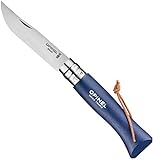
- FLAGSHIP SIZE: The Number 8 is the most sold and versatile size in the ever-growing line of Opinel folding pocket knives, earning...
- PATENTED VIROBLOC: A hallmark of Opinel everyday carry knives since it’s invention in 1955, the Virobloc ring offers a unique...
- INOX BLADE: We use Sandvik 12C27 Modified Stainless Steel. It is anti-corrosive thanks to the addition of chrome and requires no...
Best for: Classic folder with secure lock.
A 3.35-inch stainless steel blade makes this Opinel No. 8 a true carry-first trekking knife with enough length for routine camp tasks. The Virobloc safety ring is the key feature, because it locks the blade during use, transport, and storage, which helps the knife stay controlled in a pack or pocket.
Opinel states the open length at 7.5 inches and the blade length at 3.35 inches, a pairing that gives you a familiar working size without moving into bulky territory. The Virobloc mechanism has two sections, one fixed and one sliding, which is the sort of straightforward safety detail many hikers appreciate when hands are cold or busy. As part of the Colorama series, the knife is a standard folding pocket knife with one included piece and adult sizing. Its utility focus makes it a good match for everyday carry, which translates well to trekking when you want a simple blade that travels cleanly.
Pros
- 3.35-inch blade offers useful cutting reach
- Virobloc ring locks blade in use and storage
- 7.5-inch open length gives a comfortable working size
- Stainless steel blade suits routine outdoor carry
Cons
- It does not include survival extras like a fire starter or whistle, so it is a knife-only carry.
This works best for hikers who want a straightforward folding knife with a dependable lock. It is a clean choice for everyday trekking use when simplicity matters more than bundled extras.
| Specification | Details |
|---|---|
| Brand | OPINEL |
| Model Name | Opinel Colorama No. 8 |
| Blade Length | 3.35″ |
| Open Length | 7.5″ |
| Blade Material | Stainless Steel |
| Included Components | Knife |
| Number of Items | 1 |
| Item Type Name | Pocket Knife |
I’d recommend this to hikers who like a classic folding knife that stays simple and easy to trust. The lock is the real selling point for trekking use because it helps with safe handling in camp and on the move. If you want a clean everyday-carry blade without extra survival gear cluttering the design, this is a strong option.
8. Pocket Knife with 3.74″ Sharp Blade, Fire Starter, Whistle &

- HIGH-QUALITY DESIGN: Made of 440C stainless steel. The durable blade is hardened to 60 HRC. Lock type: liner lock. The handle is...
- SURVIVAL KNIFE SET: Folding knife with a sharp blade, a firestarter rod, and a whistle. The handle is wrapped with a paracord...
- SAFE & RELIABLE DESIGN: Easy one-handed use. Effortlessly deploy the blade with a simple press, saving you time in emergencies or...
Best for: Compact survival folder with extras.
Made from 440C stainless steel and hardened to 60 HRC, this folding knife brings a tougher edge profile than many basic camping folders. The 3.74-inch blade, liner lock, firestarter rod, whistle, and paracord lanyard make it a compact survival set for hikers who want more than a plain blade.
Grand Way lists an overall length of 8.46 inches and a weight of 4.23 oz, which tells you the knife stays pocketable while still offering enough handle to control the cut. The plastic handle keeps the package simple, and the pocket clip adds convenient carry for daily use on the trail. The liner lock is a practical detail for one-handed tasks because it keeps the blade secured during work. With camping as the recommended use, the set’s whistle and firestarter rod make sense for people who want a few emergency aids attached to their everyday trekking knife.
Pros
- 440C steel hardened to 60 HRC supports sharp-edge retention
- 3.74-inch blade balances reach and control
- Firestarter rod and whistle add survival utility
- Pocket clip and paracord lanyard improve carry and grip
Cons
- The plastic handle is functional but less refined than metal or wood scales in the hand.
This is a sensible pick for hikers who want a small survival folder with a harder blade and a few emergency extras. It fits everyday carry well and covers common trail tasks without becoming bulky.
| Specification | Details |
|---|---|
| Brand | Grand Way |
| Model Name | 6772 |
| Blade Material | 440C Stainless Steel |
| Blade Length | 3.74″ |
| Overall Length | 8.46″ |
| Weight | 4.23 oz |
| Lock Type | Liner Lock |
I’d put this in the hands of a hiker who wants a compact blade with useful extras and a tougher edge spec. The 60 HRC hardness is what makes it more interesting than a basic budget folder, especially if you expect frequent cutting. If you want a trekking knife that also covers emergency signaling and ignition, this package makes sense.
9. Opinel Trekking Series – Stainless Steel Everyday Carry Folding Pocket

- The flagship size of the collection! The No8 is the most sold and versatile size in the ever growing line of Opinel folding...
- This knife features the Virobloc safety rings. Invented by marcel Opinel in 1955, the Virobloc safety ring is fitted to all...
- In addition to locking the blade open (safety while in Use), it is now possible to lock the blade closed (safety on the Go).
Best for: Versatile trekking folder with safety lock.
A stainless steel folding knife from Opinel’s Trekking Series gives this No. 8 a familiar outdoor format with a simple carry profile. The Virobloc safety ring stands out because it locks the blade open for use and closed for transport, which is helpful when a trekking knife has to move safely between trail and pocket.
Opinel identifies this as a No. 8 Trekking Knife with adult sizing and a single included knife, so the package stays minimal and easy to understand. The safety ring is cut from stainless steel and uses two sections, one fixed and one sliding, which is a practical mechanical detail for everyday handling. As a daily-carry knife, it is meant for routine use rather than survival add-ons, and that focus can be a plus for hikers who want less clutter. The product’s Trekking Series branding also makes it a natural fit for trail carry where a dependable folder matters more than extra accessories.
Pros
- Virobloc safety ring locks blade open and closed
- Trekking Series focus suits daily outdoor carry
- Stainless steel construction suits routine field use
- Single-knife package keeps setup simple
Cons
- No extra tools are included, so it covers cutting only.
This fits hikers who want a classic folding trekking knife with a secure lock and no unnecessary extras. It is a good match for everyday trail carry when simplicity is the priority.
| Specification | Details |
|---|---|
| Brand | OPINEL |
| Model Name | No. 8 Trekking Knife |
| Recommended Uses For Product | Daily Carry |
| Included Components | Knife |
| Age Range Description | Adult |
| Number of Items | 1 |
| Unit Count | 1 Count |
| Item Type Name | Folding Pocket Knife |
I like this for someone who wants a no-frills trekking folder with a dependable lock. The appeal is in the straightforward design and the familiarity of the No. 8 size, which many people find comfortable for daily use. If your priority is a clean, simple knife for light camp and trail work, this is an easy recommendation.
10. 8.6 Pocket Knife with Wood Handle & Glass Breaker &

- Black pocket knife for men is made of high quality materials: handle material – rosewood and metal, blade – 440C stainless...
- Easy to use. This knife features thumb studs for smooth, one-handed blade use. The reliable liner lock ensures the blade stays...
- Rosewood Handle & Black Oxade Coating. Relatively heavy compared to some other woods, which can provide a good balance to the...
Best for: Wood-handled emergency folder.
Rosewood and metal on the handle give this folding pocket knife a more substantial carry feel than plain plastic scales, while the 440C stainless steel blade is hardened to 60 HRC for edge strength. The 3.66-inch blade, glass breaker, and pocket clip make it a trekking option for hikers who want both cutting utility and emergency readiness.
Grand Way lists a 5-inch handle and an 8.66-inch overall length, so the knife offers a full-sized grip for controlled work without moving into fixed-blade territory. The liner lock helps keep the blade secure during use, and the thumb studs support smooth one-handed opening. Recommended uses include bushcrafting, camping, emergency, hiking, and hunting, which frames this as a more serious outdoor carry knife than a casual folder. The glass breaker adds a specific emergency function that can matter during road or vehicle travel to and from the trail, while the wood-and-metal handle gives it a more classic build than many synthetic folders.
Pros
- Rosewood and metal handle adds a distinctive carry feel
- 440C blade hardened to 60 HRC supports tougher use
- Glass breaker adds emergency functionality
- Thumb studs and liner lock aid quick, secure handling
Cons
- At 6.88 oz, it is heavier than many compact folders in this class.
This is a good fit for hikers who want a sturdier folding knife with emergency capability built in. It makes sense for trail users who value a fuller handle and do not mind extra weight in exchange for more function.
| Specification | Details |
|---|---|
| Brand | Grand Way |
| Model Name | 0207 W |
| Blade Material | 440C Stainless Steel |
| Blade Length | 3.66″ |
| Handle Length | 5″ |
| Overall Length | 8.66″ |
| Weight | 6.88 oz |
| Lock Type | Liner Lock |
I would choose this for someone who wants a trekking knife with a bit more presence in the hand and a built-in emergency tool. The glass breaker is the standout addition because it expands the knife beyond routine campsite cutting. If you like wood-accented gear and want a folder that feels ready for more than light use, this one is appealing.
Quick Comparison Table of Top Trekking Knives for Outdoor Use
| Product Name | Blade Type | Material | Size | Best For | Check Price |
|---|---|---|---|---|---|
| 15-in-1 Tactical Survival Walking Stick | Multi-tool staff | 6061-T6 aluminum | Walking stick | Hiking support | Check Price |
| Rhino USA Survival Hiking Stick Multi-Tool | Survival staff | Anodized aluminum | Collapsible | Camping trips | Check Price |
| Gerber Paraframe Mini EDC Folding Pocket | Folding pocket | Stainless steel | 2.2″ blade | EDC hiking | Check Price |
| Gerber Ultimate Fixed Blade Knife w/Sheath | Fixed blade | Stainless steel | Drop point | Survival use | Check Price |
| Tactical Hiking Stick Trekking Pole Multifunctional | Survival pole | Aluminum | Tactical pole | Outdoor survival | Check Price |
| GoldPig Tactical Hiking Stick, 48″ Aluminum | Tactical staff | Aluminum | 48″ pole | Trail travel | Check Price |
| Opinel Colorama Series No. 8 | Folding pocket | Stainless steel | No. 8 | Daily carry | Check Price |
| Pocket Knife with 3.74″ Sharp Blade | Folding knife | 440C steel | 3.74″ blade | Camping survival | Check Price |
| Opinel Trekking Series – Stainless Steel | Folding pocket | Stainless steel | No. 8 | Daily carry | Check Price |
| 8.6 Pocket Knife with Wood Handle | Folding knife | 440C steel | 8.6″ overall | Hiking bushcraft | Check Price |
How to Choose the Right best trekking knife
Blade shape and cutting tasks
Choose the blade shape around your main trail jobs. A plain straight edge slices food, batons tinder, and carves clean feather sticks with less drag, while a serrated section bites fast into rope, webbing, and tougher fibrous material. For tip work, look for a fine, pointed tip for carving and detail cuts; a drop-point gives control and strong all-around use, while an overly narrow tip is easier to damage.
For packability, a 3.5 to 4.5 inch blade gives the best mix of control and reach; shorter blades are easier to pack, longer blades suit heavier camp tasks.
| Type | Best for |
|---|---|
| Straight edge | Food prep, carving, and precise slicing |
| Serrated section | Rope, straps, and fast bite on tough fibers |
| Drop-point | General trekking use with strong tip control |
| 3.5-4.5 inch blade | Most campers who want balance and carry comfort |
Steel type and edge retention
Pick steel by the trail conditions you face and how often you sharpen on the move. For wet climates, stainless steels with strong corrosion resistance keep maintenance simple and stay cleaner after rain, stream crossings, or damp sheaths. For easy field sharpening, choose a steel that takes a quick edge without special gear; a moderately hard steel is easier to touch up than very hard blades.
For the best balance, look for good edge retention without brittle behavior, because a trekking knife needs both cutting life and toughness. Buyers who want low-fuss reliability should choose corrosion-resistant stainless; buyers who sharpen often and want fast touch-ups should choose a mid-hardness steel with proven toughness.
| Steel choice | Best for |
|---|---|
| High-corrosion stainless | Wet, humid, or coastal trekking |
| Mid-hardness stainless | Easy field sharpening and steady all-round use |
| Higher edge-retention steel | Long cutting sessions with fewer touch-ups |
| Tougher blade steel | Rough camp work and harder prying contact |
Handle comfort and grip security
Focus on grip security first, then comfort over long use. A good trekking handle stays secure with wet hands or gloves, so look for textured scales, rubberized panels, jimping, or deep finger grooves that keep the blade from twisting. The handle should fill the palm without forcing a tight pinch; too thin causes pressure spots, while too bulky reduces control on fine cuts.
A balanced knife sits near the index finger or slightly forward of center, which cuts fatigue during repeated chores. The best pick for most trekkers is a medium-size handle with textured grip zones and neutral balance; smaller hands should choose a slimmer profile, while heavy users should choose a fuller handle with soft edges.
| Handle type | Best for |
|---|---|
| Textured rubber or G10-style grip | Wet, cold, or gloved use |
| Contoured full-size handle | Long sessions and reduced hand strain |
| Slim handle | Light carry and precise cutting |
| Neutral balance | General trekking with lower fatigue |
Safety features and carry options
Treat safety and carry as part of the knife, not an accessory. A strong lock needs clean engagement with no wobble, and the blade should open and close with controlled resistance rather than loose movement. For fixed-blade trekking knives, the sheath should hold the knife firmly, cover the edge fully, and allow one-handed return without snagging.
Carry matters too: belt carry suits quick access, pocket carry suits compact folders, and pack carry works best when the sheath is flat and secure. The right choice is a knife with a dependable lock or a snug sheath plus the carry style you use every day.
| Carry type | Best for |
|---|---|
| Locking folder | Compact carry and quick pocket access |
| Fixed blade with molded sheath | Secure retention and frequent camp use |
| Belt carry | Fast access on the trail |
| Pack-friendly sheath | Low-profile carry inside a backpack |
Maintenance and trail readiness
Choose a knife that stays easy to clean after food prep and wood work, because trail maintenance starts with simple habits. A smooth blade finish and fewer crevices around the handle make dirt easier to remove, while full-tang or simple construction reduces places where moisture hides. After use, wipe the blade dry, clear sap or food residue, and keep the edge lightly oiled in wet conditions.
For sharpening, a blade that responds well to a small pocket stone, ceramic rod, or compact sharpener is the most practical choice. The best trekking knife for most users is one with simple construction, rust resistance, and an edge that sharpens quickly with basic field tools; demanding users should choose a tougher blade that still takes a clean edge.
- Look for simple blade geometry and easy-to-wipe surfaces.
- Choose rust-resistant steel for damp or mixed-weather trips.
- Carry a compact sharpener that matches the blade angle.
- Prefer handles without deep seams that trap grime.
Which Should You Choose?
- If you want a compact knife for light camp tasks and daily carry, choose a small folding knife with a 2–3.5 inch stainless steel blade and a secure lock.
- If you need a rugged blade for repeated outdoor cutting, batoning, or emergency prep, choose a fixed-blade knife with a full tang, a drop-point shape, and a sheath with extras like a sharpener or ferro rod.
- If your priority is survival backup on long treks or remote hikes, choose a multitool-style trekking option with built-in fire starter, whistle, compass, or fishing gear.
- If you want maximum support and a tool that doubles as walking aid on rough terrain, choose a heavy-duty trekking staff or collapsible hiking stick with aluminum construction and a reinforced tip.
Quick Best Trekking Knife Buying Checklist
- Choose the right blade length for your usual trekking and camp tasks so the knife stays practical and easy to carry.
- Check the steel type for a balance of corrosion resistance, toughness, and easy sharpening on the trail.
- Test the handle grip for comfort and control, especially if you expect wet weather or glove use.
- Inspect the locking system to make sure the blade opens, closes, and stays secure during use.
- Review the sheath or carry method so the knife rides safely on your belt, pack, or pocket.
- Plan for maintenance by choosing a model that is easy to clean, dry, and sharpen in the field.
Blade Steels and Edge Retention in Trekking Knives
Blade steel has a major influence on how a trekking knife performs after days of repeated use. Harder steels usually hold an edge longer, which is helpful when you are cutting cord, preparing kindling, or trimming food on the trail. Softer steels can be easier to sharpen in the field and may resist chipping better under rough use.
Stainless options are popular for wet environments because they handle moisture more easily, while carbon steels are often favored for their sharpness and simple maintenance. The best choice depends on whether you value low upkeep, easy resharpening, or long-lasting sharpness.
| Type | Best for |
|---|---|
| Stainless steel | Wet or humid trips |
| Carbon steel | Easy field sharpening |
| High-hardness steel | Long edge retention |
| Moderate hardness steel | Balanced trail use |
Fixed Blade vs Folding Trekking Knives
Fixed blades and folding knives solve different trail problems. A fixed blade is generally stronger, quicker to deploy, and easier to clean after cutting food, rope, or wood. It is often preferred for heavy outdoor tasks and wet conditions.
Folding knives are more compact and easier to carry in a pocket or small pack compartment, which makes them convenient for light use and travel. They usually require more attention around the pivot and locking mechanism to keep them working smoothly.
If your trips involve frequent camp chores, a fixed blade often makes more sense; for lighter packing and occasional cutting, a folder can be practical.
| Type | Best for |
|---|---|
| Fixed blade | Heavy-duty camp tasks |
| Folding knife | Compact everyday carry |
| Locking folder | Safer one-handed use |
| Non-locking folder | Light cutting only |
How to Care for a Trekking Knife on the Trail
Good maintenance keeps a trekking knife reliable when you are far from home. Wipe the blade dry after use, especially if it has contacted rain, salt, or acidic foods. A thin film of protective oil can help reduce corrosion, but avoid overapplying it near food-prep tasks.
Keep the edge sharp with a compact stone or field sharpener rather than waiting until the blade becomes dull. Check screws, handles, and sheaths regularly so nothing loosens during movement.
If your knife has a folding mechanism, clean dirt from the pivot area before storing it. Consistent care extends both safety and performance.
- Dry the blade after each use
- Remove grit from the edge and pivot
- Touch up the edge before it gets dull
- Store it in a dry sheath or pouch
Safe Trail Use and Everyday Handling Habits
Safe use matters just as much as cutting performance. Always cut away from your body and keep your free hand behind the blade path. Use a stable surface when slicing food or trimming cord so the knife does not slip.
A secure grip is important in wet weather, when gloves, rain, or cold hands can reduce control. When passing a knife to another person, offer the handle first with the blade pointed safely away.
Never leave a knife loose in a pack where it can damage gear or cause injury. If the knife has a sheath or lock, make sure it is fully engaged before moving through brush or rocky terrain.
- Cut on a stable surface whenever possible
- Keep fingers clear of the blade line
- Engage the sheath or lock before carrying
- Pass the handle first to another person
Trekking Knife Alternatives for Specialized Outdoor Tasks
Not every trail job calls for the same blade. For food preparation, a small camp knife or multitool blade may be enough and can be easier to manage than a larger trekking knife. If you mainly need to cut cord, repair gear, or open packages, a lightweight multitool can replace a dedicated knife in many situations.
For wood processing, a small folding saw is often more efficient and safer than forcing a knife to do chopping work. Some hikers also carry a compact utility blade for dirty tasks and reserve their main knife for food and general camp use.
Matching the tool to the job improves efficiency and reduces wear.
| Tool | Best for |
|---|---|
| Multitool | Repairs and light cutting |
| Folding saw | Wood cutting |
| Small camp knife | Food prep |
| Utility blade | Disposable or dirty tasks |
Frequently Asked Questions (FAQs)
What Blade Shape Works Best For A Trekking Knife?
A straight or mildly curved blade works best for a trekking knife because it handles carving, slicing, and camp prep with control. A slightly pointed tip helps with detail work, while a full-serrated edge is less versatile for everyday trail tasks.
What Steel Is Best For A Trekking Knife?
Stainless steel is often best for a trekking knife because it resists rust in rain, humidity, and muddy conditions. Look for a steel that still sharpens easily in the field, since trail use can dull the edge faster than home use.
How Important Is Handle Material On A Trekking Knife?
Handle material is very important on a trekking knife because grip security affects safety and control. Textured scales, rubberized grips, or contoured polymer handles help prevent slipping when hands are wet, cold, or wearing gloves.
Should A Trekking Knife Have A Locking Blade?
Yes, a locking blade is a strong safety feature for a trekking knife because it keeps the blade stable during heavy cutting. A reliable lock reduces accidental closure, which matters when you are carving wood, preparing food, or working with force.
What Size Is Ideal For A Trekking Knife?
A medium-sized trekking knife is usually ideal because it balances usefulness and portability. Blades that are long enough for camp chores but compact enough for easy pack storage tend to be the most practical on long walks and overnight trips.
How Do I Maintain A Trekking Knife On The Trail?
Maintain a trekking knife by wiping the blade dry after use, especially after cutting food or working in wet conditions. A small sharpening tool and occasional oil on metal parts help preserve the edge and reduce corrosion during multi-day trips.
Is A Sheath Necessary For A Trekking Knife?
Yes, a sheath is necessary for a trekking knife because it protects the edge and makes carry safer. A well-fitting sheath should hold the knife securely, cover the blade fully, and stay stable whether clipped to a belt or stored in a pack.
Final Suggestions
Choosing the best trekking knife comes down to a strong blade, a comfortable grip, and dependable safety features that match real trail use. The right knife adds confidence, versatility, and efficiency for camp chores, food prep, and small outdoor tasks. With the right balance of durability and portability, you can head out prepared and ready for whatever the trail brings.